Samacheer Kalvi 11th Maths Guide Chapter 11 Integral Calculus Ex 11.5

Tamilnadu State Board New Syllabus Samacheer Kalvi 11th Maths Guide Pdf Chapter 11 Integral Calculus Ex 11.5 Text Book Back Questions and Answers, Notes.

Tamilnadu Samacheer Kalvi 11th Maths Solutions Chapter 11 Integral Calculus Ex 11.5

Integrate the following functions with respect to x

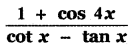
Question 1.
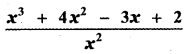
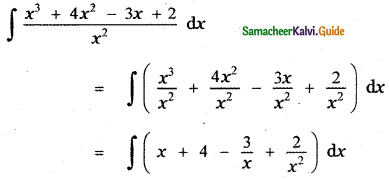
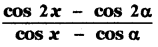
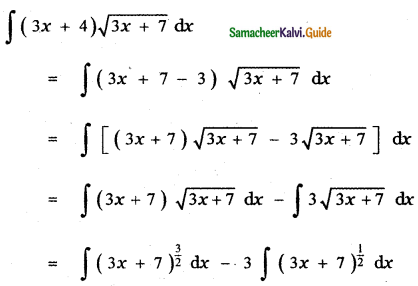
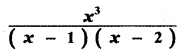
Samacheer Kalvi 11th Maths Guide Chapter 11 Integral Calculus Ex 11.5 1
Answer:
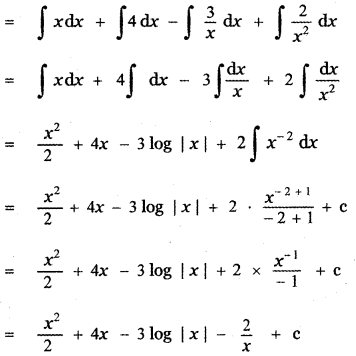
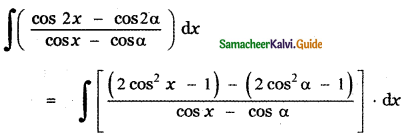
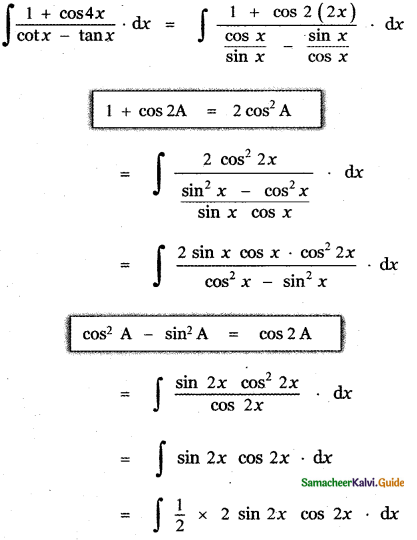
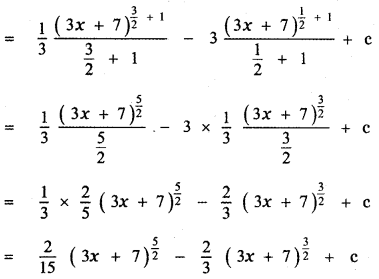
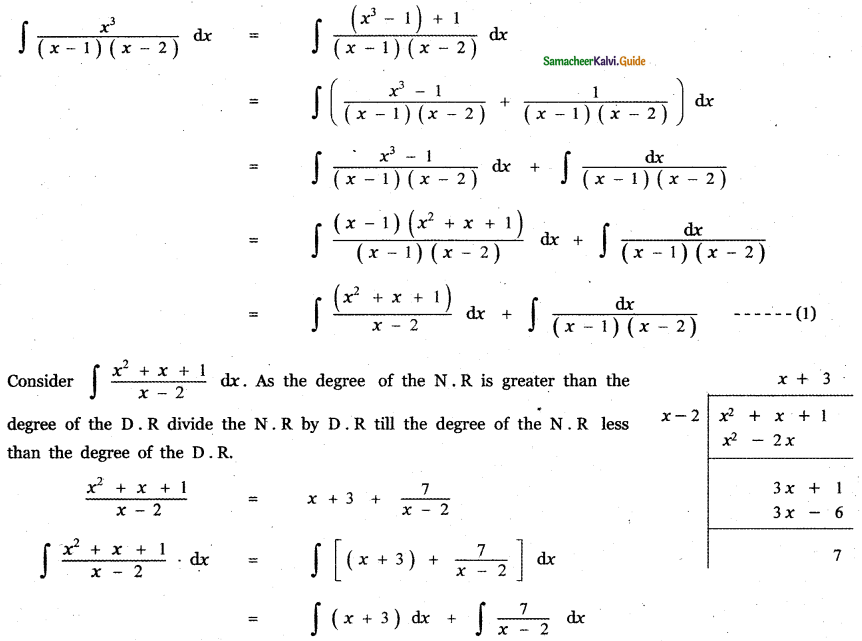
Samacheer Kalvi 11th Maths Guide Chapter 11 Integral Calculus Ex 11.5 2
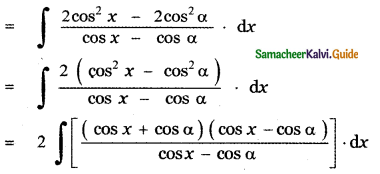
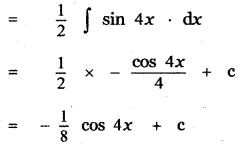
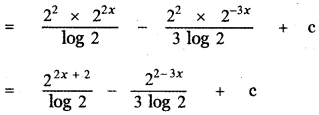
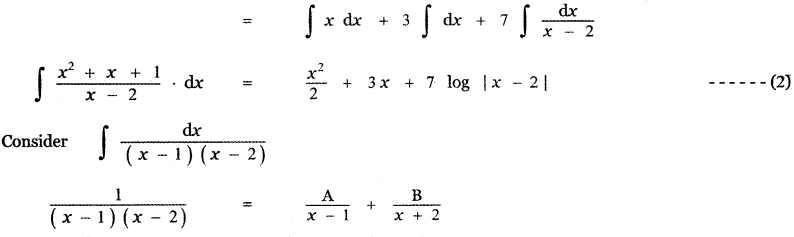
Samacheer Kalvi 11th Maths Guide Chapter 11 Integral Calculus Ex 11.5 3

Samacheer Kalvi 11th Maths Guide Chapter 11 Integral Calculus Ex 11.5

Question 2.
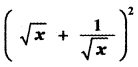
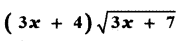
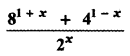
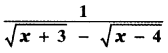
Samacheer Kalvi 11th Maths Guide Chapter 11 Integral Calculus Ex 11.5 4
Answer:
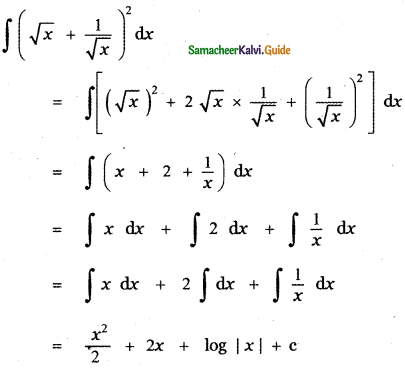
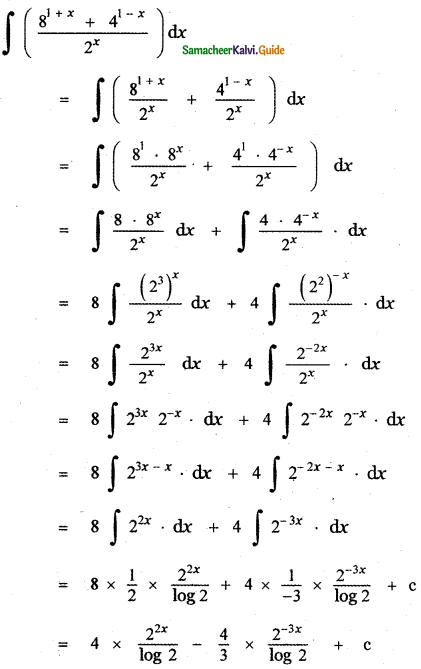
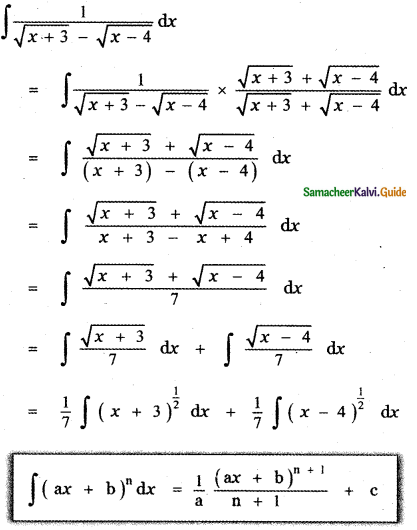
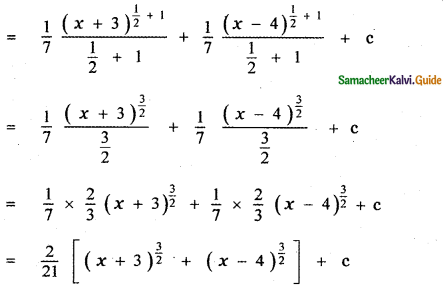
Samacheer Kalvi 11th Maths Guide Chapter 11 Integral Calculus Ex 11.5 5

Question 3.
(2x – 5) (3x + 4x)
Answer:
∫(2x – 5) (3x + 4x) dx
= ∫(72 x + 8x2 – 180 – 20x) dx
= ∫ 72 x dx + ∫82x2 dx – ∫180 dx – ∫2o x dx
= 72∫x dx + 8∫x2dx – 180 ∫dx – 20 ∫x dx
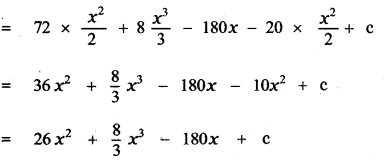
Samacheer Kalvi 11th Maths Guide Chapter 11 Integral Calculus Ex 11.5 6

Question 4.
cot2 x + tan2 x
Answer:
∫cot2 x + tan2 x
= ∫(cosec2x – 1 + sec2x – 1) dx
= ∫(cosec2x + sec2x – 2) dx
= ∫cosec2x dx + ∫sec2x dx – ∫2 dx
= – cot x + tan x – 2x + c
= tan x – cot x – 2x + c

Samacheer Kalvi 11th Maths Guide Chapter 11 Integral Calculus Ex 11.5

Question 5.
Samacheer Kalvi 11th Maths Guide Chapter 11 Integral Calculus Ex 11.5 7
Answer:
Samacheer Kalvi 11th Maths Guide Chapter 11 Integral Calculus Ex 11.5 8
[cos 2x = cos2x – sin2x-1
cos 2x = 2 cos2x – 1]

Samacheer Kalvi 11th Maths Guide Chapter 11 Integral Calculus Ex 11.5 9
Samacheer Kalvi 11th Maths Guide Chapter 11 Integral Calculus Ex 11.5 10
= 2 ∫(cos x + cos α) dx
= 2 ∫ cos x dx + 2 ∫ cos α dx
= 2 ∫ cos x dx + 2 ∫ cos α ∫ dx
= 2 sin x + 2 cos α(x) + c
= 2 sin x + 2x cos α + c

Question 6.
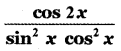
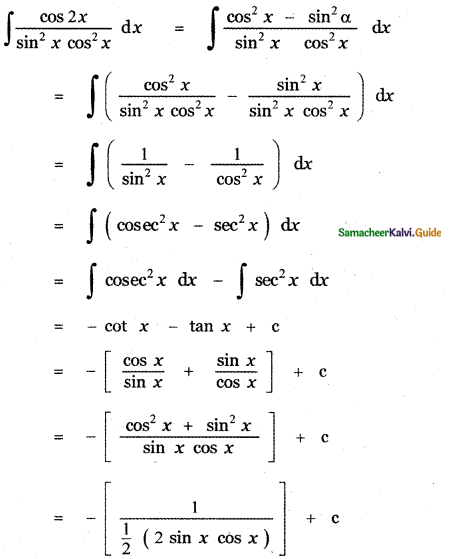
Samacheer Kalvi 11th Maths Guide Chapter 11 Integral Calculus Ex 11.5 11
Answer:
Samacheer Kalvi 11th Maths Guide Chapter 11 Integral Calculus Ex 11.5 12
Samacheer Kalvi 11th Maths Guide Chapter 11 Integral Calculus Ex 11.5 13

Samacheer Kalvi 11th Maths Guide Chapter 11 Integral Calculus Ex 11.5

Question 7.
\(\frac{3+4 \cos x}{\sin ^{2} x}\)
Answer:
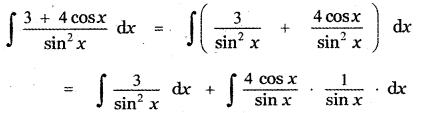
Samacheer Kalvi 11th Maths Guide Chapter 11 Integral Calculus Ex 11.5 14
= 3 ∫ cosec2 x dx + 4 ∫ cot x cosec x . dx
= 3 ∫ cosec2 x dx + 4 ∫ cosec x cot x dx
= 3 × – cot x + 4 × – cosec x + c
= – 3 cot x – 4 cosec x + c

Question 8.
\(\frac{\sin ^{2} x}{1+\cos x}\)
Answer:
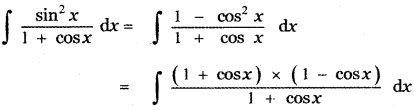
Samacheer Kalvi 11th Maths Guide Chapter 11 Integral Calculus Ex 11.5 15
= ∫ (1 – cos x) dx
= ∫ dx – ∫ cos x dx
= x – sin x + cannot

Question 9.
\(\frac{\sin 4 x}{\sin x}\)
Answer:

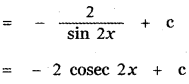
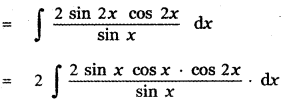
Samacheer Kalvi 11th Maths Guide Chapter 11 Integral Calculus Ex 11.5 16
[sin 2A = 2 sin A cos A]
Samacheer Kalvi 11th Maths Guide Chapter 11 Integral Calculus Ex 11.5 17
= 4 ∫ cos 2x cos x . dx
= 2 ∫ 2 cos 2x cosx . dx
= 2 ∫ [cos(2x + x) + cos(2x – x)] dx
[2 cos A cos B = cos (A + B) + cos (A – B)]
= 2 ∫ (cos 3x + cos x) dx
= 2 ∫ cos 3x dx + 2 ∫ cos x dx
= 2 \(\frac{\sin 3 x}{3}\) + 2 sin x + c
= 2 [\(\frac{\sin 3 x}{3}\) + sin x] + c

Samacheer Kalvi 11th Maths Guide Chapter 11 Integral Calculus Ex 11.5

Question 10.
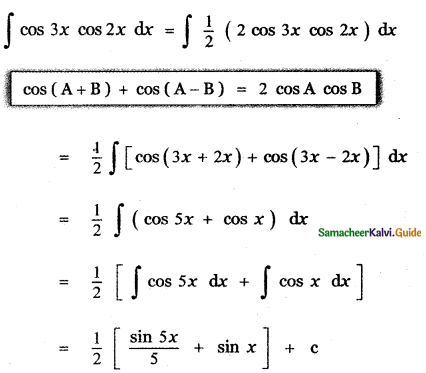
cos 3x cos 2x
Answer:
Samacheer Kalvi 11th Maths Guide Chapter 11 Integral Calculus Ex 11.5 18

Question 11.
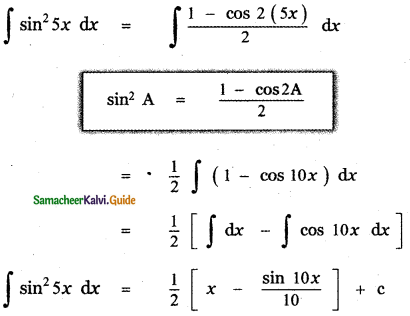
sin2 5x
Answer:
Samacheer Kalvi 11th Maths Guide Chapter 11 Integral Calculus Ex 11.5 19

Samacheer Kalvi 11th Maths Guide Chapter 11 Integral Calculus Ex 11.5

Question 12.
Samacheer Kalvi 11th Maths Guide Chapter 11 Integral Calculus Ex 11.5 20
Answer:
Samacheer Kalvi 11th Maths Guide Chapter 11 Integral Calculus Ex 11.5 21
[sin 2A = 2 sin A cos A]
Samacheer Kalvi 11th Maths Guide Chapter 11 Integral Calculus Ex 11.5 22

Question 13.
ex log a ex
Answer:
∫ex log a ex = ∫e log ax . ex . dx
= ∫ ax ex . dx
= ∫ (ae)x . dx
[∫ax . dx = \(\frac{\mathrm{a}^{x}}{\log \mathrm{a}}\) + c]
= \(\frac{(\mathrm{ae})^{x}}{\log (\mathrm{ae})}\) + c

Samacheer Kalvi 11th Maths Guide Chapter 11 Integral Calculus Ex 11.5

Question 14.
Samacheer Kalvi 11th Maths Guide Chapter 11 Integral Calculus Ex 11.5 23
Answer:
Samacheer Kalvi 11th Maths Guide Chapter 11 Integral Calculus Ex 11.5 24
Samacheer Kalvi 11th Maths Guide Chapter 11 Integral Calculus Ex 11.5 25

Samacheer Kalvi 11th Maths Guide Chapter 11 Integral Calculus Ex 11.5

Question 15.
Samacheer Kalvi 11th Maths Guide Chapter 11 Integral Calculus Ex 11.5 26
Answer:
Samacheer Kalvi 11th Maths Guide Chapter 11 Integral Calculus Ex 11.5 27
Samacheer Kalvi 11th Maths Guide Chapter 11 Integral Calculus Ex 11.5 28

Samacheer Kalvi 11th Maths Guide Chapter 11 Integral Calculus Ex 11.5

Question 16.
Samacheer Kalvi 11th Maths Guide Chapter 11 Integral Calculus Ex 11.5 29
Answer:
Samacheer Kalvi 11th Maths Guide Chapter 11 Integral Calculus Ex 11.5 30
Samacheer Kalvi 11th Maths Guide Chapter 11 Integral Calculus Ex 11.5 31

Samacheer Kalvi 11th Maths Guide Chapter 11 Integral Calculus Ex 11.5

Question 17.
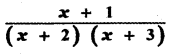
Samacheer Kalvi 11th Maths Guide Chapter 11 Integral Calculus Ex 11.5 32
Answer:
Samacheer Kalvi 11th Maths Guide Chapter 11 Integral Calculus Ex 11.5 33
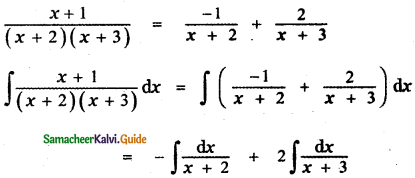
Put x = – 3
– 3 + 1 = A (- 3 + 3) + B (- 3 + 2)
– 2 = A × 0 + B (- 1)
B = 2

Put x = – 2
– 2 + 1 = A(- 2 + 3) + B(- 2 + 2)
– 1 = A × 1 + B × 0
A = – 1
Samacheer Kalvi 11th Maths Guide Chapter 11 Integral Calculus Ex 11.5 34
= – log |x + 2| + 2 log |x + 3| + c
= 2 log |x + 3| – log |x + 2|+ c

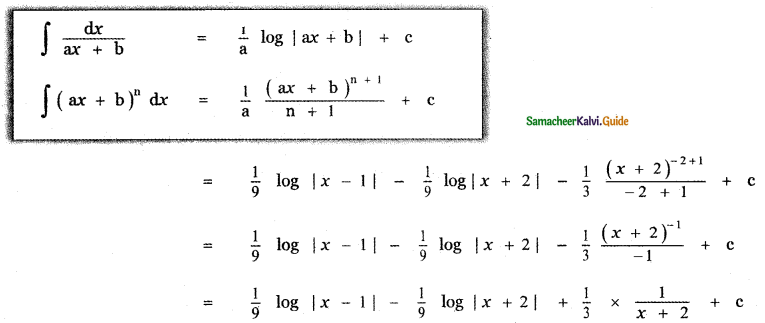
Question 18.
Samacheer Kalvi 11th Maths Guide Chapter 11 Integral Calculus Ex 11.5 35
Answer:
Samacheer Kalvi 11th Maths Guide Chapter 11 Integral Calculus Ex 11.5 36
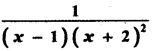
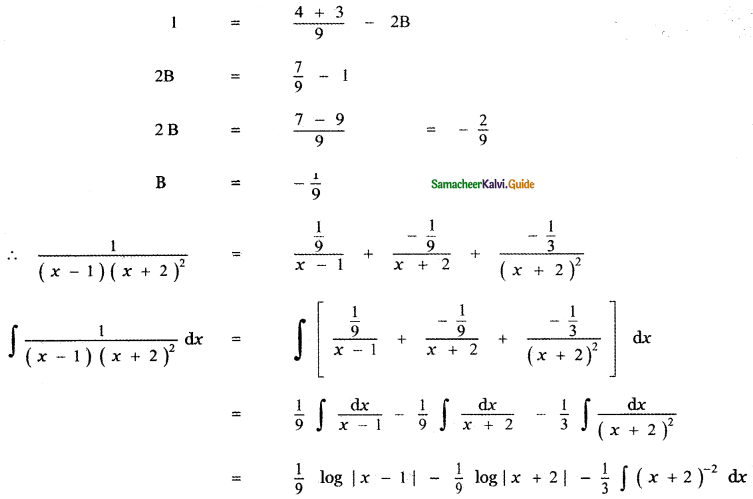
1 = A(x + 2)2 + B (x – 1) (x + 2) + C (x – 1)

Put x= -2
1 = A(- 2 + 2)2 + B(- 2 – 1) (- 2 + 2) + C(- 2 – 1)
1 = A × 0 + B × 0 + C × – 3
C = \(\frac{1}{3}\)

Put x = 1
1 = A(1 + 2)2 + B (1 – 1) (1 + 2) + C(1 – 1)
1 = A × 32 + B × 0 + C × 0
A = \(\frac{1}{9}\)

Samacheer Kalvi 11th Maths Guide Chapter 11 Integral Calculus Ex 11.5

Put x = 0
1 = A (0 + 2)2 + B (0 – 1) (0 + 2) + C (0 – 1)
1 = A × 4 – 2B – C
1 = \(\frac{1}{9}\) × 4 – 2B + \(\frac{1}{3}\)
1 = \(\frac{4}{9}+\frac{1}{3}\) – 2BSamacheer Kalvi 11th Maths Guide Chapter 11 Integral Calculus Ex 11.5 37
Samacheer Kalvi 11th Maths Guide Chapter 11 Integral Calculus Ex 11.5 38

Samacheer Kalvi 11th Maths Guide Chapter 11 Integral Calculus Ex 11.5

Question 19.
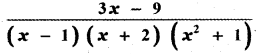
Samacheer Kalvi 11th Maths Guide Chapter 11 Integral Calculus Ex 11.5 39
Answer:
Samacheer Kalvi 11th Maths Guide Chapter 11 Integral Calculus Ex 11.5 40
3x – 9 = A(x + 2) (x2 + 1) + B(x – 1) (x2 + 1) + (Cx + D) (x – 1) (x + 2)
3x – 9 = A (x + 2) (x2 + 1) + B(x – 1) + (x2 + 1) + Cx (x – 1) (x + 2) + D (x – 1) (x + 2)

Put x = – 2
3 × – 2 – 9 = A (- 2 + 2) ((2)2 + 1) + B(- 2 – 1) ((- 2)2 + 1) + C(- 2) (- 2 – 1) (- 2 + 2) + D(- 2 – 1) (- 2 + 2)
– 6 – 9 = A × 0 + B × (-3) (4 + 1) + C × 0 + D × 0
-15 = B ×- 3 × 5
-15 = – 15B ⇒ B = 1

Put x = 1
3 × 1 – 9 = A(1 + 2) (12 + 1) + B(1 – 1) (12 + 1) + C × 1 (1 – 1) (1 + 2) + D(1 – 1) (1 + 2)
3 – 9 = A × 3 × 2 + B × 0 + C × 0 + D × 0
– 6 = 6A ⇒ A = – 1

Put x = 0
3 × 0 – 9 = A(0 + 2) (02 + 1) + B(0 – 1) (02 + 1) + C × 0 (0 – 1) (0 + 2) + D(0 – 1) (0 + 2)
– 9 = 2A – B + 0 – 2D
– 9 = 2A – B – 2D
– 9 = – 2 × – 1 – 1 – 2D
– 9 = – 2 – 1 – 2D
9 = 3 + 2D
⇒ 2D = 9 – 3
⇒ 2D = 6 ⇒ D = 3

Put x = – 1
3 × – 1 – 9 = A(- 1 + 2) ((1)2 + 1) + B(- 1 – 1) ((- 1)2 + 1)) + C × – 1 × (- 1 – 1) (- 1 + 2) + D(- 1 – 1) (- 1 + 2)
– 3 – 9 = A × 1(1 + 1)+ B × (- 2) (1 + 1) – C × – 2 + D × – 2 × 1
– 12 = 2A – 4B + 2C – 2D
– 12 = 2 × -1 – 4 × 1 + 2C – 2 × 3
– 12 = – 2 – 4 + 2C – 6
– 12 = – 12 + 2C ⇒ C = 0

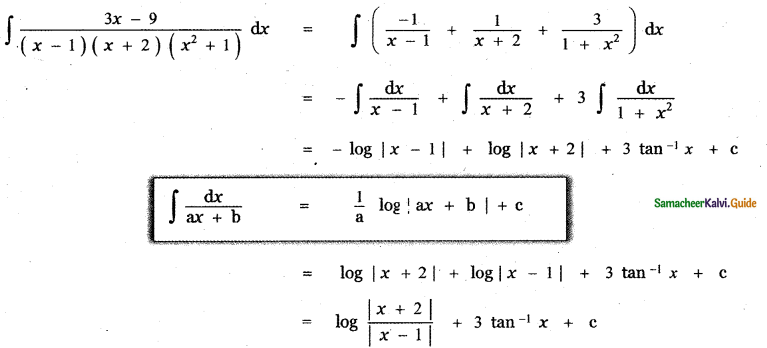
Samacheer Kalvi 11th Maths Guide Chapter 11 Integral Calculus Ex 11.5 41
Samacheer Kalvi 11th Maths Guide Chapter 11 Integral Calculus Ex 11.5 42

Samacheer Kalvi 11th Maths Guide Chapter 11 Integral Calculus Ex 11.5

Question 20.
Samacheer Kalvi 11th Maths Guide Chapter 11 Integral Calculus Ex 11.5 43
Answer:
Samacheer Kalvi 11th Maths Guide Chapter 11 Integral Calculus Ex 11.5 44
Samacheer Kalvi 11th Maths Guide Chapter 11 Integral Calculus Ex 11.5 45
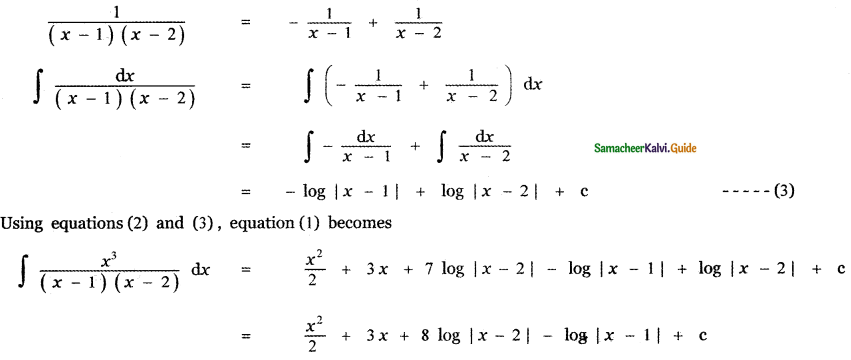
1 = A(x – 2) + B(x – 1)

put x = 2
1 = A(2 – 2) + B(2 – 1)
1 = A × 0 + B × 1
B = 1

Samacheer Kalvi 11th Maths Guide Chapter 11 Integral Calculus Ex 11.5

Put x = 1
1 = A(1 – 2) + B(1 – 1)
1 = A × – 1 + B × 0
A = – 1
Samacheer Kalvi 11th Maths Guide Chapter 11 Integral Calculus Ex 11.5 46

Samacheer Kalvi 12th Maths Guide Chapter 8 Differentials and Partial Derivatives Ex 8.5

Tamilnadu State Board New Syllabus Samacheer Kalvi 12th Maths Guide Pdf Chapter 8 Differentials and Partial Derivatives Ex 8.5 Textbook Questions and Answers, Notes.

Tamilnadu Samacheer Kalvi 12th Maths Solutions Chapter 8 Differentials and Partial Derivatives Ex 8.5

Question 1.
If w(x, y) = x³ – 3xy + 2y², x, y ∈ R, find the linear approximation for w at (1, -1) linear approximation for w at (1, -1)
Solution:
w(x, y) = x³ – 3xy + 2y², x, y ∈ R, (1, -1)
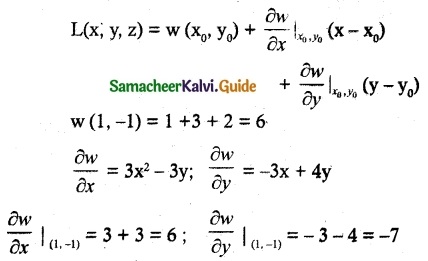
Samacheer Kalvi 12th Maths Guide Chapter 8 Differentials and Partial Derivatives Ex 8.5 1
∴ L(x, y, z) = 6 + 6(x – 1) -7(y + 1)
L (x, y, z) = 6x – 7y – 7

Samacheer Kalvi 12th Maths Guide Chapter 8 Differentials and Partial Derivatives Ex 8.5

Question 2.
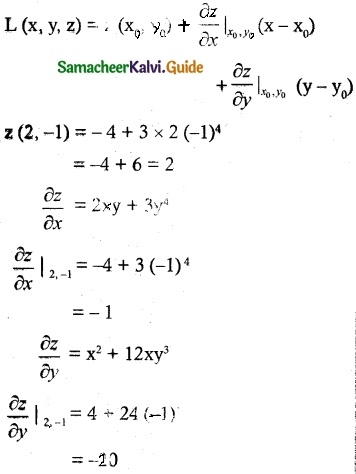
Let z (x, y) = x² y + 3xy4, x, y ∈ R. Find the linear approximation for z at (2, -1).
Solution:
Samacheer Kalvi 12th Maths Guide Chapter 8 Differentials and Partial Derivatives Ex 8.5 2
L (x, y, z) = 2 – (x – 2) – 20 (y + 1)
= 2 – x + 2 – 20y – 20
= -x – 20y – 16
= -(x + 20y + 16)

Samacheer Kalvi 12th Maths Guide Chapter 8 Differentials and Partial Derivatives Ex 8.5

Question 3.
If v (x, y) = x² – xy + \(\frac { 1 }{ 4 }\)y² + 7, x, y ∈ R find the differential dv.
Solution:
First let us find vx, vy
Now, vx = \(\frac{\partial v}{\partial x}\) = 2x – y
vy = \(\frac{\partial v}{\partial y}\) = -x + \(\frac { 1 }{ 2 }\) y
The differential is
dv = vx dx + vy dy
dv = (2x – y) dx + (\(\frac { 1 }{ 2 }\) y – x) dy

Samacheer Kalvi 12th Maths Guide Chapter 8 Differentials and Partial Derivatives Ex 8.5

Question 4.
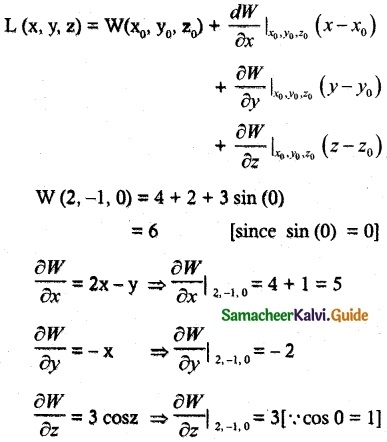
Let W (x, y, z) = x² – xy + 3sinz, x, y, z ∈ R. Find the linear approximation at (2, -1, 0).
Solution:
W (x, y, z) = x² – xy + 3sinz, x, y, z ∈ R
Samacheer Kalvi 12th Maths Guide Chapter 8 Differentials and Partial Derivatives Ex 8.5 3
L (x, y, z) = 6 + 5 (x – 2)- 2 (y + 1) + 3 (z)
= 6 + 5x – 10 – 2y – 2 + 3z
= 5x – 2y + 3z – 6

Samacheer Kalvi 12th Maths Guide Chapter 8 Differentials and Partial Derivatives Ex 8.5

Question 5.
Let V (x, y, z) = xy + yz + zx, x, y, z ∈ R. Find the differential dV.
Solution:
V(x, y, z) = xy + yz + zx
Vx = y + z
Vy = x + z
Vz = y + x
The differential is dV = (y + z) dx + (x + z) dy + (y + x) dz

Samacheer Kalvi 12th Maths Guide Chapter 8 Differentials and Partial Derivatives Ex 8.5

Samacheer Kalvi 12th Maths Guide Chapter 8 Differentials and Partial Derivatives Ex 8.3

Tamilnadu State Board New Syllabus Samacheer Kalvi 12th Maths Guide Pdf Chapter 8 Differentials and Partial Derivatives Ex 8.3 Textbook Questions and Answers, Notes.

Tamilnadu Samacheer Kalvi 12th Maths Solutions Chapter 8 Differentials and Partial Derivatives Ex 8.3

Question 1.
Evaluate \(\lim _{(x, y) \rightarrow(1,2)}\) g(x, y), if the limit exists where g(x, y) = \(\frac { 3x^2-xy }{ x^2+y^2+3 }\)
Solution:
\(\lim _{(x, y) \rightarrow(1,2)}\) g(x, y) = \(\lim _{(x, y) \rightarrow(1,2)}\) \(\frac { 3x^2-xy }{ x^2+y^2+3 }\)
= \(\frac { 3(1)-1×2 }{ 1+4+3 }\)
= \(\frac { 1 }{ 8 }\)

Samacheer Kalvi 12th Maths Guide Chapter 8 Differentials and Partial Derivatives Ex 8.3

Question 2.
Evaluate \(\lim _{(x, y) \rightarrow(0,0)}\) cos(\(\frac { x^3+y^2 }{ x+y+2 }\)), if the limit exists.
Solution:
\(\lim _{(x, y) \rightarrow(0,0)}\) cos(\(\frac { x^3+y^2 }{ x+y+2 }\))
= cos (\(\frac { 0+0 }{ 0+0+2 }\))
= cos 0
= \(\lim _{(x, y) \rightarrow(0,0)}\) cos(\(\frac { x^3+y^2 }{ x+y+2 }\)) = 1

Question 3.
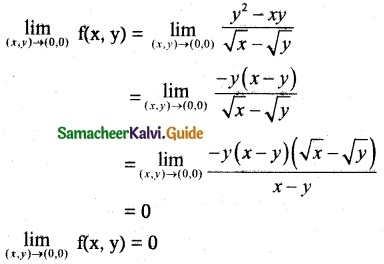
Let f(x, y) \(\frac { y^2-xy }{ √x-√y }\) for (x, y) ≠ (0, 0) show that \(\lim _{(x, y) \rightarrow(0,0)}\) f(x, y) = 0
Solution:
f(x, y) = \(\frac { y^2-xy }{ √x-√y }\)
Samacheer Kalvi 12th Maths Guide Chapter 8 Differentials and Partial Derivatives Ex 8.3-1

Samacheer Kalvi 12th Maths Guide Chapter 8 Differentials and Partial Derivatives Ex 8.3

Question 4.
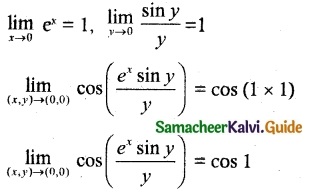
Evaluate \(\lim _{(x, y) \rightarrow(0,0)}\) cos(\(\frac { e^xsin y }{ y }\)), if the limit exists.
Solution:
Samacheer Kalvi 12th Maths Guide Chapter 8 Differentials and Partial Derivatives Ex 8.3-2

Question 5.
Let g(x, y) = \(\frac { x^2y }{ x^4+y^2 }\) for (x, y) ≠ (0, 0) and f(0, 0) = 0
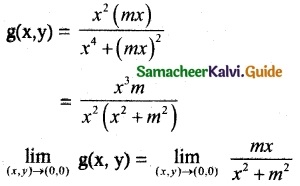
(i) Show that \(\lim _{(x, y) \rightarrow(0,0)}\) g(x, y) = 0 along every line y = mx, m ∈ R
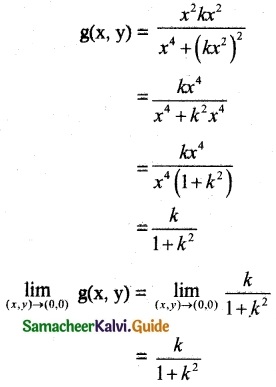
(ii) Show that \(\lim _{(x, y) \rightarrow(0,0)}\) g(x, y) = \(\frac { k }{ 1+k^2 }\) along every parabola y = kx², k ∈ R\{0}
Solution:
(i) Let g(x, y) = \(\frac { x^2y }{ x^4+y^2 }\) for (x, y) ≠ (0, 0) and f(0, 0) = 0
Let y = mx
Samacheer Kalvi 12th Maths Guide Chapter 8 Differentials and Partial Derivatives Ex 8.3-3
= 0
Hence proved

(ii) for parabola y = kx²
Samacheer Kalvi 12th Maths Guide Chapter 8 Differentials and Partial Derivatives Ex 8.3-4
Hence proved

Samacheer Kalvi 12th Maths Guide Chapter 8 Differentials and Partial Derivatives Ex 8.3

Question 6.
Show that f (x, y) = \(\frac { x^2-y^2 }{ y^+1 }\) is continuous at every (x, y) ∈ R²
Solution:
Let (a, b) ∈ R² be an arbitrary point.
We shall investigate the continuity of f at (a,b).
That is, we shall check if all the three conditions for continuity hold for f at (a, b)
To check first condition, note that
f(a, b) = \(\frac { a^2-b^2 }{ b^2+1 }\) is defined
Next we want t0 find lf \(\lim _{(x, y) \rightarrow(a,b)}\) f(x, y) exist or not
so we calculate \(\lim _{(x, y) \rightarrow(a,b)}\) x² – y² = a² – b² and
\(\lim _{(x, y) \rightarrow(a,b)}\) y² + 1 = b² + 1
By the properties of limit we see that
\(\lim _{(x, y) \rightarrow(a,b)}\) f(x, y) = \(\frac { x^2-y^2 }{ y^2+1 }\) = \(\frac { a^2-b^2 }{ b^2+1 }\) = f(a, b) = L exists
Now, we note that \(\lim _{(x, y) \rightarrow(a,b)}\) f(x, y) = L = f(a, b).
Hence f satisfies all the there conditions for continuity of f at (a, b).
Since (a, b) is an arbitrary point in R², we conclude that f is continuous at every point of R².

Samacheer Kalvi 12th Maths Guide Chapter 8 Differentials and Partial Derivatives Ex 8.3

Question 7.
Let g (x, y) = \(\frac { e^ysinx }{ x }\) for x ≠ 0 and g(0, 0) = 1 shoe that g is continuous at (0, 0)
Solution:
g(x, y) = \(\frac { e^ysinx }{ x }\)
To check first condition,note that
\(\lim _{(x, y) \rightarrow(0,0)}\) g(x, y) = \(\lim _{(x, y) \rightarrow(0,0)}\) \(\frac { e^ysinx }{ x }\) = 1 is defined
Next \(\lim _{(x, y) \rightarrow(0,0)}\) g(x, y) = \(\frac { e^ysinx }{ x }\) = 1 = L Exist
Now we note \(\lim _{(x, y) \rightarrow(0,0)}\) g(x, y) = L = g(0, 0)
Hence g satisfies all the three conditions for; continuity of g at (0, 0).
We conclude that g is continuous at (0, 0).

Samacheer Kalvi 12th Maths Guide Chapter 8 Differentials and Partial Derivatives Ex 8.3

Samacheer Kalvi 12th Maths Guide Chapter 8 Differentials and Partial Derivatives Ex 8.4

Tamilnadu State Board New Syllabus Samacheer Kalvi 12th Maths Guide Pdf Chapter 8 Differentials and Partial Derivatives Ex 8.4 Textbook Questions and Answers, Notes.

Tamilnadu Samacheer Kalvi 12th Maths Solutions Chapter 8 Differentials and Partial Derivatives Ex 8.4

Question 1.
Find the partial dervatives of the following functions at indicated points.
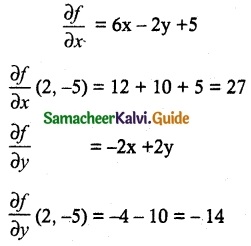
(i) f(x, y) = 3x² – 2xy + y² + 5x + 2, (2, -5)
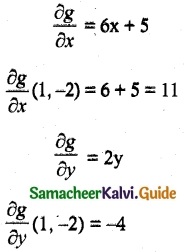
(ii) g(x, y) = 3x² + y² + 5x + 2, (2, -5)
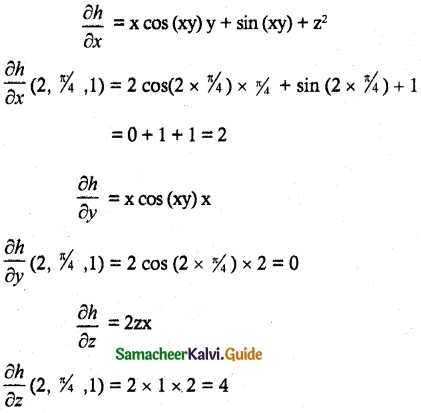
(iii) h(x, y, z) = x sin (xy) + z² x, (2, π/4, 1)
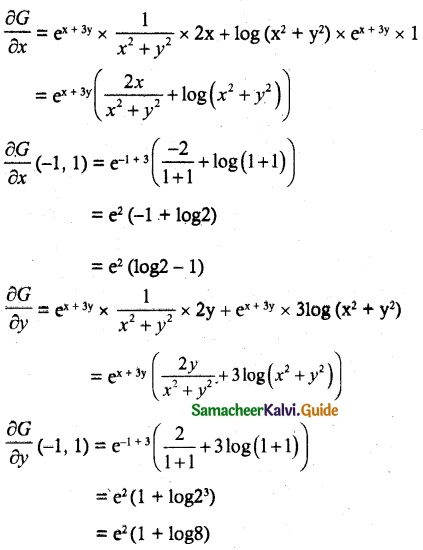
(iv) G(x, y) = ex + 3y log (x² + y²), (-1, 1)
Solution:
(i) f(x, y) = 3x² – 2xy + y² + 5x + 2, (2, -5)
Samacheer Kalvi 12th Maths Guide Chapter 8 Differentials and Partial Derivatives Ex 8.4 1

(ii) g(x, y) = 3x² + y² + 5x + 2, (2, -5)
Samacheer Kalvi 12th Maths Guide Chapter 8 Differentials and Partial Derivatives Ex 8.4 2

(iii) h(x, y, z) = x sin (xy) + z² x, (2, π/4, 1)
Samacheer Kalvi 12th Maths Guide Chapter 8 Differentials and Partial Derivatives Ex 8.4 3

(iv) G(x, y) = ex + 3y log (x² + y²), (-1, 1)
Samacheer Kalvi 12th Maths Guide Chapter 8 Differentials and Partial Derivatives Ex 8.4 4

Samacheer Kalvi 12th Maths Guide Chapter 8 Differentials and Partial Derivatives Ex 8.4

Question 2.
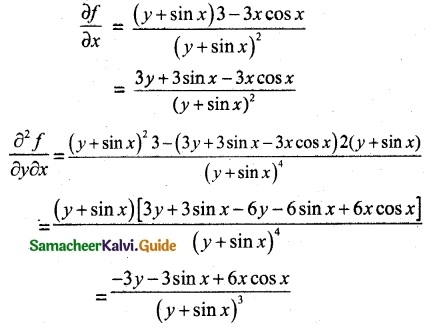
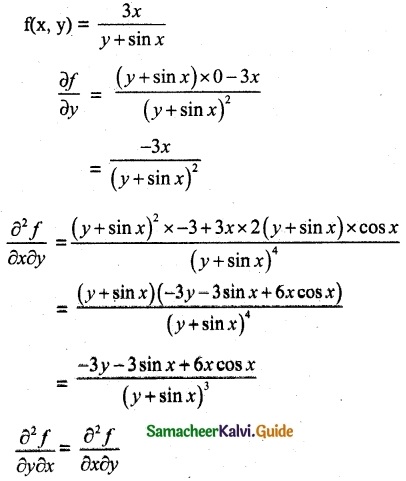
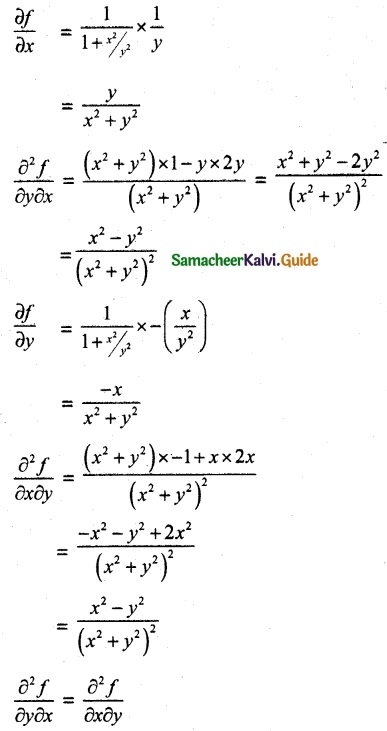
For each of the following functions find the fx, and fy and show that fxy = fyx
(i) f(x, y) = \(\frac { 3x }{ y+sinx }\)
(ii) f(x, y) = tan-1(x/y)
(iii) f(x, y) = cos (x² – 3xy)
Solution:
(i) f(x, y) = \(\frac { 3x }{ y+sinx }\)
Samacheer Kalvi 12th Maths Guide Chapter 8 Differentials and Partial Derivatives Ex 8.4 5

Samacheer Kalvi 12th Maths Guide Chapter 8 Differentials and Partial Derivatives Ex 8.4 6

(ii) f(x, y) = tan-1(x/y)
Samacheer Kalvi 12th Maths Guide Chapter 8 Differentials and Partial Derivatives Ex 8.4 7

(iii) f(x, y) = cos (x² – 3xy)
\(\frac{\partial f}{\partial x}\) = -sin (x² – 3xy) × (2x – 3y)
\(\frac{\partial^2 f}{\partial y \partial x}\) = – sin (x² – 3xy) x – 3 + (2x – 3y) × [-cos (x² – 3xy)] × – 3x
= 3 sin (x² – 3xy) + 3x (2x – 3y) cos (x² – 3xy)
\(\frac{\partial f}{\partial x}\) = – sin (x² – 3xy) × -3x
= 3x sin (x² – 3xy)
\(\frac{\partial^2 f}{\partial x \partial y}\) = 3sin (x² – 3xy) + 3x cos (x² – 3xy) (2x – 3y)
∴ \(\frac{\partial^2 f}{\partial y \partial x}\) = \(\frac{\partial^2 f}{\partial x \partial y}\)

Samacheer Kalvi 12th Maths Guide Chapter 8 Differentials and Partial Derivatives Ex 8.4

Question 3.
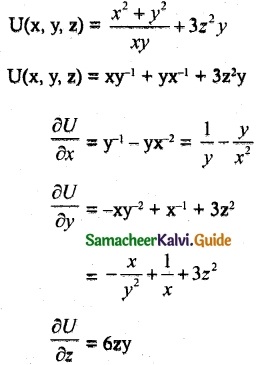
If U (x, y, z) = \(\frac { x^2+y^2 }{ xy }\) + 3z²y, find \(\frac{\partial U}{\partial x}\), \(\frac{\partial U}{\partial y}\) and \(\frac{\partial U}{\partial z}\)
Solution:
Samacheer Kalvi 12th Maths Guide Chapter 8 Differentials and Partial Derivatives Ex 8.4 8

Question 4.
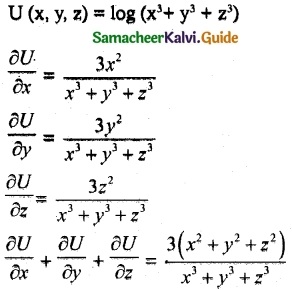
If U(x, y, z) = log (x³ + y³ + z³) find
\(\frac{\partial U}{\partial x}\) + \(\frac{\partial U}{\partial y}\) + \(\frac{\partial U}{\partial z}\)
Solution:
Samacheer Kalvi 12th Maths Guide Chapter 8 Differentials and Partial Derivatives Ex 8.4 9

Samacheer Kalvi 12th Maths Guide Chapter 8 Differentials and Partial Derivatives Ex 8.4

Question 5.
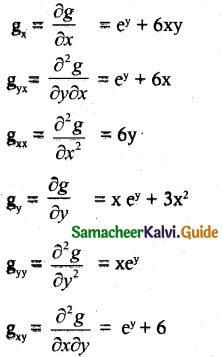
For each of the following functions find the gxy, gxx, gyy and gyx
(i) g(x, y) = x ey + 3x²y
(ii) g(x, y) = log (5x + 3y)
(iii) g(x, y) = x² + 3xy – 7y + cos(5x)
Solution:
(i) g(x, y) = x ey + 3x²y
Samacheer Kalvi 12th Maths Guide Chapter 8 Differentials and Partial Derivatives Ex 8.4 10

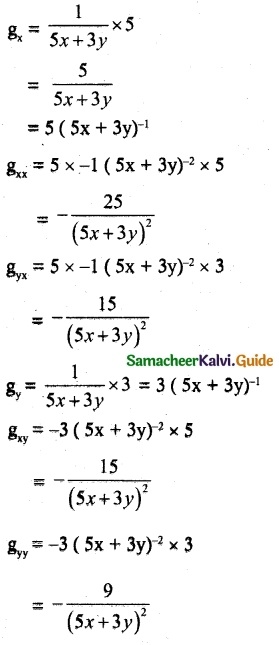
(ii) g(x, y) = log (5x + 3y)
Samacheer Kalvi 12th Maths Guide Chapter 8 Differentials and Partial Derivatives Ex 8.4 11

(iii) g(x, y) = x² + 3xy – 7y + cos(5x)
gx = 2x+ 3y – sin 5x × 5
gx = 2x+ 3y – 5 sin 5x
gxx = 2 – 25 cos 5x
gyx = 3
gy = 3x – 7
gyy = 0
gxy = 3

Samacheer Kalvi 12th Maths Guide Chapter 8 Differentials and Partial Derivatives Ex 8.4

Question 6.
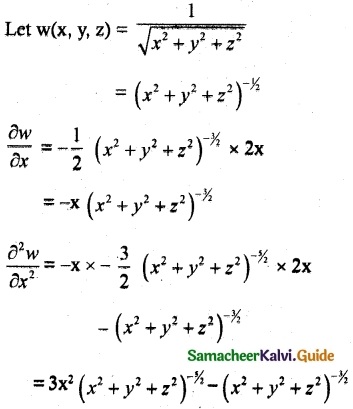
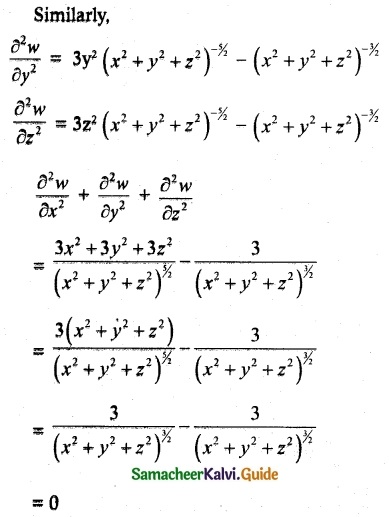
Let w(x, y, z) = \(\frac { 1 }{ \sqrt{x^2+y^2+z^2} }\) = 1, (x, y, z) ≠ (0, 0, 0), show that \(\frac{\partial^ w}{\partial x^2}\) + \(\frac{\partial^2 w}{\partial y^2}\) + \(\frac{\partial^2 w}{\partial z^2}\) = 0
Solution:
Samacheer Kalvi 12th Maths Guide Chapter 8 Differentials and Partial Derivatives Ex 8.4 12
Samacheer Kalvi 12th Maths Guide Chapter 8 Differentials and Partial Derivatives Ex 8.4 13

Question 7.
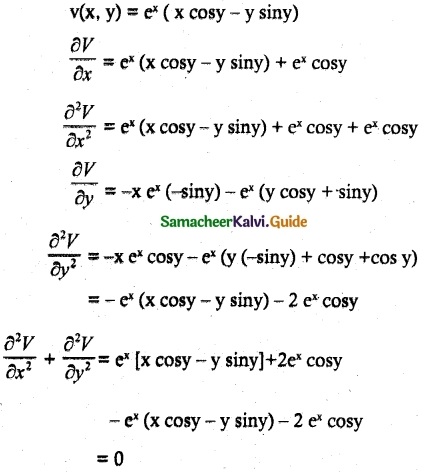
If V (x, y) = ex ( x cosy – y siny), then Prove that \(\frac{\partial^2 V}{\partial x^2}\) + \(\frac{\partial^2 V}{\partial y^2}\) = 0
Solution:
Samacheer Kalvi 12th Maths Guide Chapter 8 Differentials and Partial Derivatives Ex 8.4 14

Question 8.
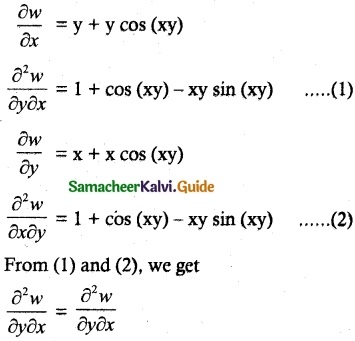
If w (x, y) = xy + sin (xy), then Prove that \(\frac{\partial^2 w}{\partial y \partial x}\) = \(\frac{\partial^2 w}{\partial x \partial y}\)
Solution:
Now, w (x, y) = xy + sin (xy)
Samacheer Kalvi 12th Maths Guide Chapter 8 Differentials and Partial Derivatives Ex 8.4 15

Samacheer Kalvi 12th Maths Guide Chapter 8 Differentials and Partial Derivatives Ex 8.4

Question 9.
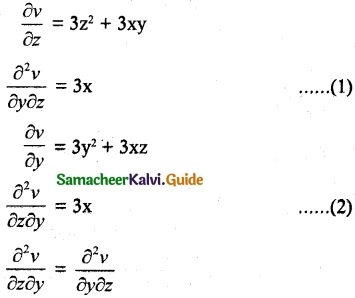
If v(x, y, z) = x³ + y³ + z³ +3xyz, Show that \(\frac{\partial^2 v}{\partial y \partial z}\) = \(\frac{\partial^2 v}{\partial z \partial y}\)
Solution:
v (x, y, z) = x³ + y³ + z³ + 3xyz
Samacheer Kalvi 12th Maths Guide Chapter 8 Differentials and Partial Derivatives Ex 8.4 16

Question 10.
A from produces two types of calculates each week, x number of type A and y number of type B. The weekly revenue and cost functions = (in rupees) are
R (x, y) = 80x + 90y + 0.04xy – 0.05x² – 0.05y² and C (x, y) = 8x + 6y + 2000 respectively.
(i) Find the Profit function P(x, y).
(ii) Find \(\frac{\partial P}{\partial x}\) (1200, 1800) and \(\frac{\partial P}{\partial y}\) (1200, 1800) and interpret these results.
Solution:
(i) Profit = Revenue – Cost
= (80x + 90y + 0.04 xy – 0.05 x2 – 0.05y2) – (8x + 6y + 2000)
= 80x + 90y + 0.04 xy – 0.05 x2 – 0.05y2 – 8x – 6y – 2000
P(x, y) = 72x + 84y + 0.04 xy – 0.05 x2 – 0.05y2 – 2000

(ii) \(\frac{\partial P}{\partial x}\) = 72 + 0.04y – 0.1 x
\(\frac{\partial P}{\partial x}\) (1200, 1800) = 72 + 0.04 × 1800 – 0.1 × 1200
= 72 + 72 – 120
= 144 – 120
= 24
\(\frac{\partial P}{\partial y}\) = 84 + 0.04x – 0.1 y
\(\frac{\partial P}{\partial y}\) (1200, 1800) = 84 + 0.04 × 1200 – 0.1 × 1800
= 84 + 48 – 180
= 132 – 180
= -48

Samacheer Kalvi 12th Maths Guide Chapter 8 Differentials and Partial Derivatives Ex 8.4

Samacheer Kalvi 11th Maths Guide Chapter 10 Differentiability and Methods of Differentiation Ex 10.4

Tamilnadu State Board New Syllabus Samacheer Kalvi 11th Maths Guide Pdf Chapter 10 Differentiability and Methods of Differentiation Ex 10.4 Text Book Back Questions and Answers, Notes.

Tamilnadu Samacheer Kalvi 11th Maths Solutions Chapter 10 Differentiability and Methods of Differentiation Ex 10.4

Find the derivatives of the following:

Question 1.
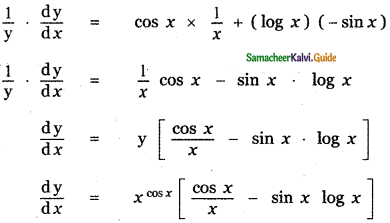
y = xcos x
Answer:
y = xcos x
Taking log on both sides
log y = log xcos x
log y = cos x log x
Differentiating with respect to x
Samacheer Kalvi 11th Maths Guide Chapter 10 Differentiability and Methods of Differentiation Ex 10.4 1

Samacheer Kalvi 11th Maths Guide Chapter 10 Differentiability and Methods of Differentiation Ex 10.4

Question 2.
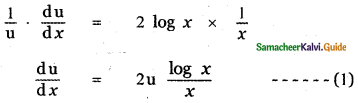
y = xlog x + (log x)x
Answer:
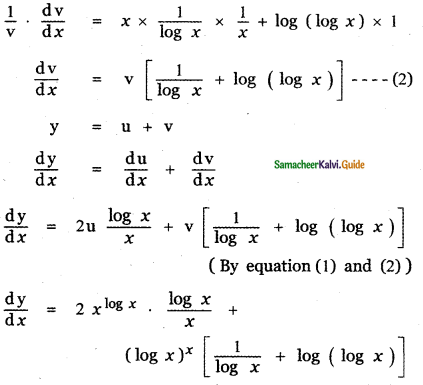
y = xlog x + (log x)x
Let u = xlog x, v = (log x)x
log u = log xlog x
log u = (log x) (log x)
log u = (log x)2
Samacheer Kalvi 11th Maths Guide Chapter 10 Differentiability and Methods of Differentiation Ex 10.4 2
v = (log x)x
log v = log (log x)x
log v = x log (log x)
Samacheer Kalvi 11th Maths Guide Chapter 10 Differentiability and Methods of Differentiation Ex 10.4 3

Samacheer Kalvi 11th Maths Guide Chapter 10 Differentiability and Methods of Differentiation Ex 10.4

Question 3.
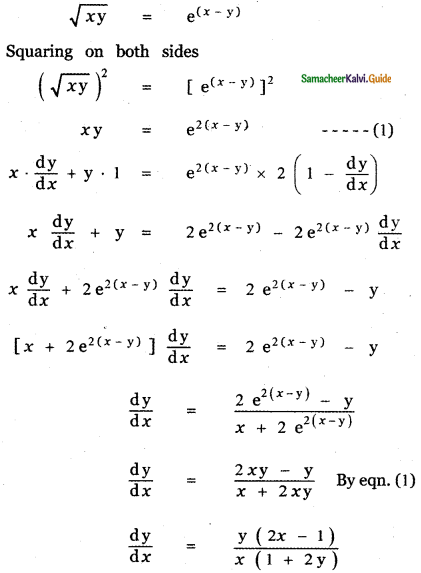
\(\sqrt{x y}\) = e(x – y)
Answer:
Samacheer Kalvi 11th Maths Guide Chapter 10 Differentiability and Methods of Differentiation Ex 10.4 4

Question 4.
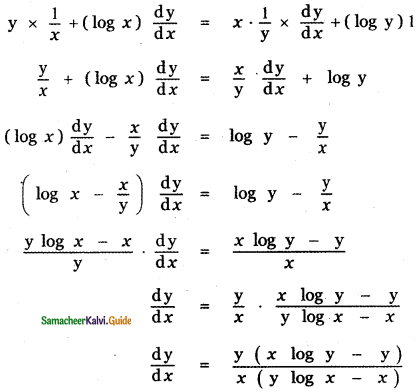
xy = yx
Answer:
xy = yx
Taking log on both sides
log xy = log yx
y log x = x log y
Differentiate with respect to x
Samacheer Kalvi 11th Maths Guide Chapter 10 Differentiability and Methods of Differentiation Ex 10.4 5

Samacheer Kalvi 11th Maths Guide Chapter 10 Differentiability and Methods of Differentiation Ex 10.4

Question 5.
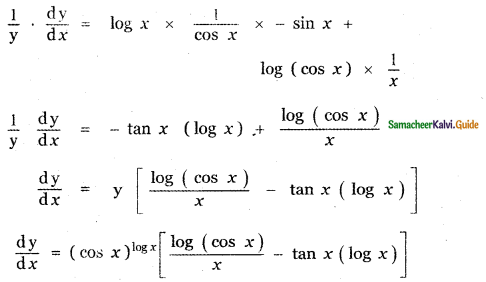
(cos x)log x
Answer:
y = (cos x)log x
Taking log on both sides
log y = log (cos x)log x
log y = (log x) log (cos x)
Differentiating with respect to x
Samacheer Kalvi 11th Maths Guide Chapter 10 Differentiability and Methods of Differentiation Ex 10.4 6

Question 6.
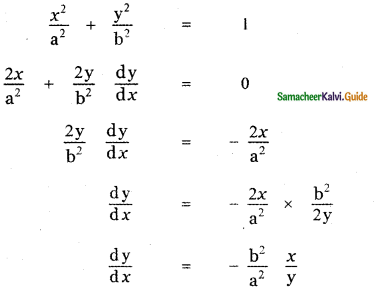
\(\frac{x^{2}}{a^{2}}+\frac{y^{2}}{b^{2}}=1\)
Answer:
Samacheer Kalvi 11th Maths Guide Chapter 10 Differentiability and Methods of Differentiation Ex 10.4 7

Samacheer Kalvi 11th Maths Guide Chapter 10 Differentiability and Methods of Differentiation Ex 10.4

Question 7.
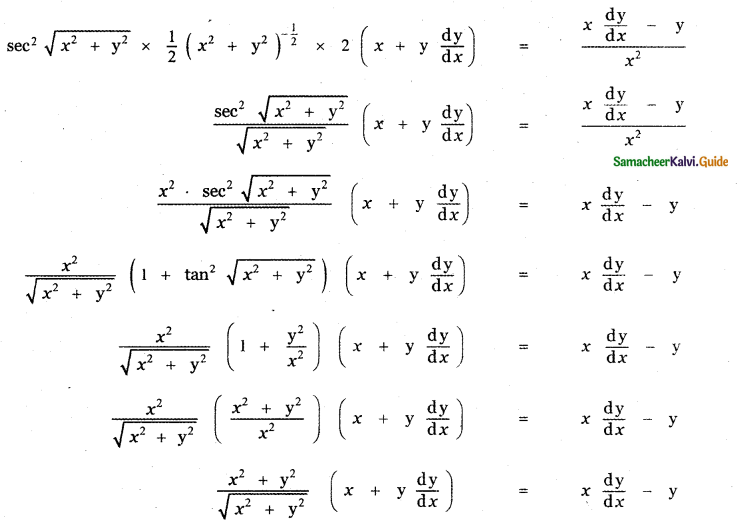
\(\sqrt{x^{2}+y^{2}}=\tan ^{-1}\left(\frac{y}{x}\right)\)
Answer:
Samacheer Kalvi 11th Maths Guide Chapter 10 Differentiability and Methods of Differentiation Ex 10.4 8
Samacheer Kalvi 11th Maths Guide Chapter 10 Differentiability and Methods of Differentiation Ex 10.4 9
Samacheer Kalvi 11th Maths Guide Chapter 10 Differentiability and Methods of Differentiation Ex 10.4 10

Samacheer Kalvi 11th Maths Guide Chapter 10 Differentiability and Methods of Differentiation Ex 10.4

Question 8.
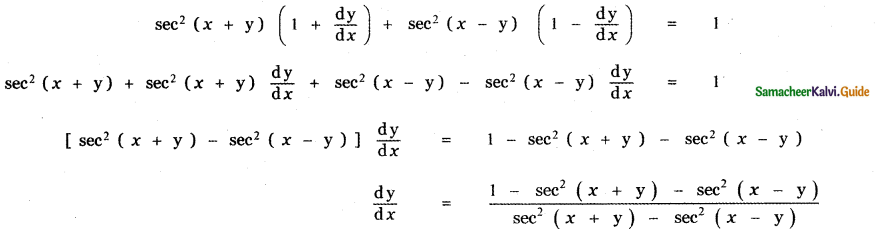
tan (x + y) + tan (x – y) = x
Answer:
tan (x + y) + tan (x – y) = x
Differentiating with respect to x
Samacheer Kalvi 11th Maths Guide Chapter 10 Differentiability and Methods of Differentiation Ex 10.4 11

Question 9.
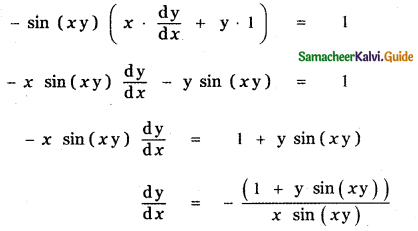
If cos(xy) = x, show that
\(\frac{d y}{d x}=\frac{-(1+y \sin (x y))}{x \sin x y}\)
Answer:
cos (xy) = x
Differentiating with respect to x
Samacheer Kalvi 11th Maths Guide Chapter 10 Differentiability and Methods of Differentiation Ex 10.4 12

Question 10.
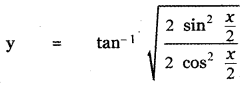
\(\tan ^{-1} \sqrt{\frac{1-\cos x}{1+\cos x}}\)
Answer:
Let y = \(\tan ^{-1} \sqrt{\frac{1-\cos x}{1+\cos x}}\)
[1 – cos 2θ = 2 sin2θ and 1 + cos 2θ = 2 sin2 θ]
Samacheer Kalvi 11th Maths Guide Chapter 10 Differentiability and Methods of Differentiation Ex 10.4 13
Samacheer Kalvi 11th Maths Guide Chapter 10 Differentiability and Methods of Differentiation Ex 10.4 14

Samacheer Kalvi 11th Maths Guide Chapter 10 Differentiability and Methods of Differentiation Ex 10.4

Question 11.
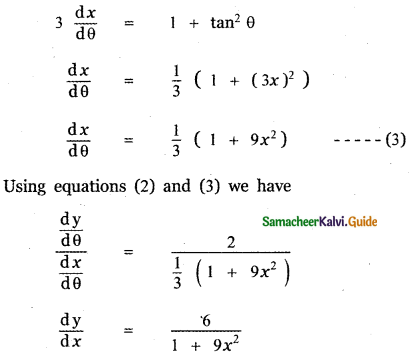
tan-1 = \(\left(\frac{6 x}{1-9 x^{2}}\right)\)
Answer:
Samacheer Kalvi 11th Maths Guide Chapter 10 Differentiability and Methods of Differentiation Ex 10.4 15
Samacheer Kalvi 11th Maths Guide Chapter 10 Differentiability and Methods of Differentiation Ex 10.4 16

Question 12.
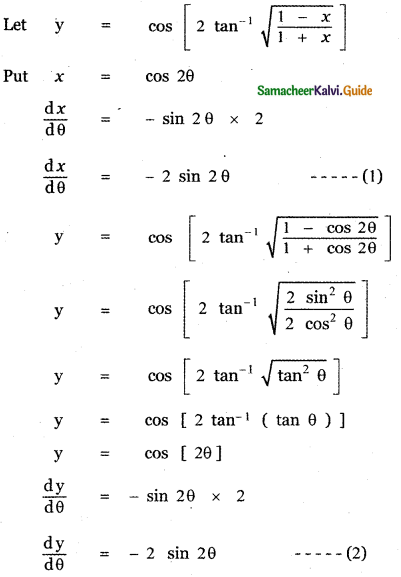
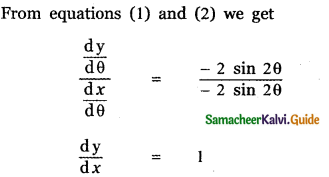
\(\cos \left(2 \tan ^{-1} \sqrt{\frac{1-x}{1+x}}\right)\)
Answer:
Samacheer Kalvi 11th Maths Guide Chapter 10 Differentiability and Methods of Differentiation Ex 10.4 17
Samacheer Kalvi 11th Maths Guide Chapter 10 Differentiability and Methods of Differentiation Ex 10.4 18

Samacheer Kalvi 11th Maths Guide Chapter 10 Differentiability and Methods of Differentiation Ex 10.4

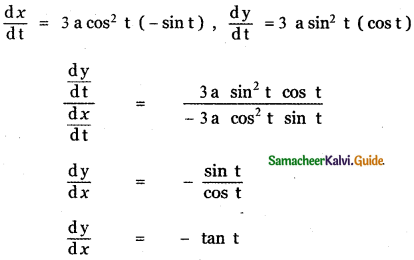
Question 13.
x = a cost ; y = a sin3t
Answer:
x = a cost , y = a sin3t
Samacheer Kalvi 11th Maths Guide Chapter 10 Differentiability and Methods of Differentiation Ex 10.4 19

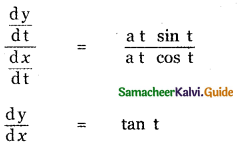
Question 14.
x = a (cos t + t sin t);
y = a (sin t – t cos t)
Answer:
x = a (cos t + t sin t) , y = a (sin t – t cos t)
\(\frac{d x}{d t}\) = a [- sin t + t cos t + sin t ]
\(\frac{d x}{d t}\) = at cos t —— (1)
y = a (sin t – t cos t)
\(\frac{d x}{d t}\) = a [cos t – (t × – sin t + cos t × 1)]
\(\frac{d x}{d t}\) = a[cos t + t sin t – cos t]
\(\frac{d x}{d t}\) = at sin t —— (2)
From equations (1) and (2) we get
Samacheer Kalvi 11th Maths Guide Chapter 10 Differentiability and Methods of Differentiation Ex 10.4 20

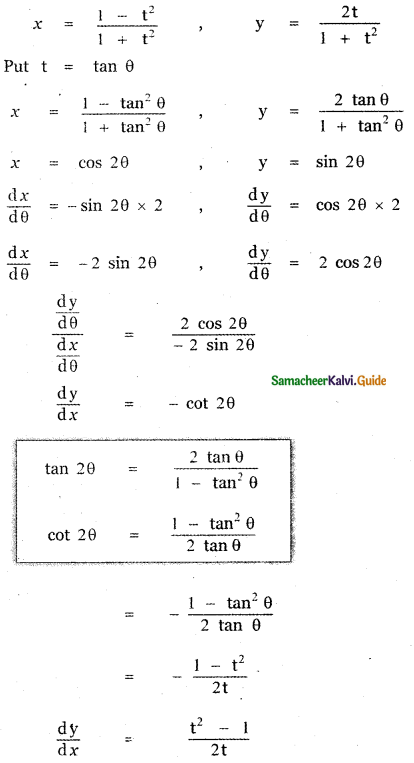
Question 15.
x = \(\frac{1-t^{2}}{1+t^{2}}\) , y = \(\frac{2 t}{1+t^{2}}\)
Answer:
Samacheer Kalvi 11th Maths Guide Chapter 10 Differentiability and Methods of Differentiation Ex 10.4 21

Samacheer Kalvi 11th Maths Guide Chapter 10 Differentiability and Methods of Differentiation Ex 10.4

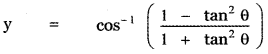
Question 16.
cos-1\(\left(\frac{1-x^{2}}{1+x^{2}}\right)\)
Answer:
Let y = cos-1\(\left(\frac{1-x^{2}}{1+x^{2}}\right)\)
Put x = tan θ
Samacheer Kalvi 11th Maths Guide Chapter 10 Differentiability and Methods of Differentiation Ex 10.4 22
y = cos-1 (cos 2θ)
y = 2θ
y = 2 tan-1 x
Samacheer Kalvi 11th Maths Guide Chapter 10 Differentiability and Methods of Differentiation Ex 10.4 23

Question 17.
sin-1 (3x – 4x3)
Answer:
Let y = sin-1 (3x – 4x3)
Put x = sin θ
y = sin-1 (3 sin θ – 4 sin3 θ)
y = sin-1 (sin 3θ)
y = 3θ
y = 3 sin-1 x
\(\frac{d y}{d x}=\frac{3}{\sqrt{1-x^{2}}}\)

Question 18.
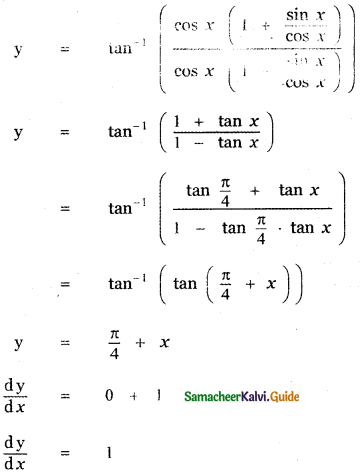
tan-1 \(\left(\frac{\cos x+\sin x}{\cos x-\sin x}\right)\)
Answer:
Let y = tan-1 \(\left(\frac{\cos x+\sin x}{\cos x-\sin x}\right)\)
Samacheer Kalvi 11th Maths Guide Chapter 10 Differentiability and Methods of Differentiation Ex 10.4 24

Samacheer Kalvi 11th Maths Guide Chapter 10 Differentiability and Methods of Differentiation Ex 10.4

Question 19.
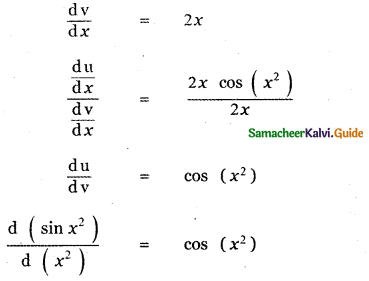
Find the derivative of sin x2 with respect to x2.
Answer:
Let u = sin x2
\(\frac{\mathrm{d} \mathrm{u}}{\mathrm{d} x}\) = cos (x2) × 2x
\(\frac{\mathrm{d} \mathrm{u}}{\mathrm{d} x}\) = 2x cos (x2)
Let v = x2
Samacheer Kalvi 11th Maths Guide Chapter 10 Differentiability and Methods of Differentiation Ex 10.4 25

Question 20.
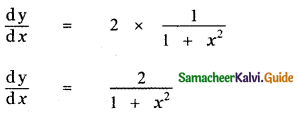
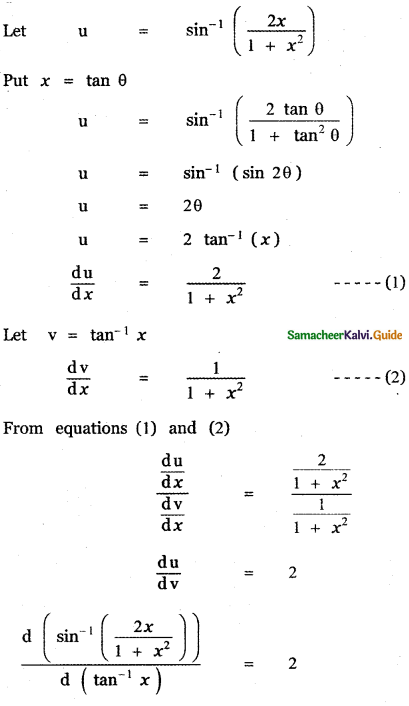
Find the derivative of sin-1\(\left(\frac{2 x}{1+x^{2}}\right)\) with respect to tan-1 x.
Answer:
Samacheer Kalvi 11th Maths Guide Chapter 10 Differentiability and Methods of Differentiation Ex 10.4 26

Samacheer Kalvi 11th Maths Guide Chapter 10 Differentiability and Methods of Differentiation Ex 10.4

Question 21.
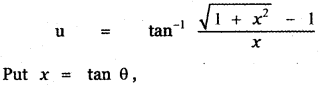
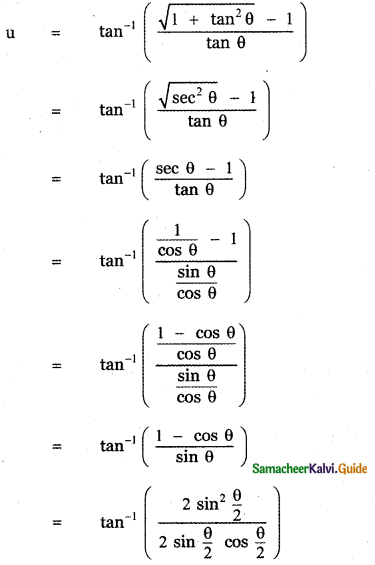
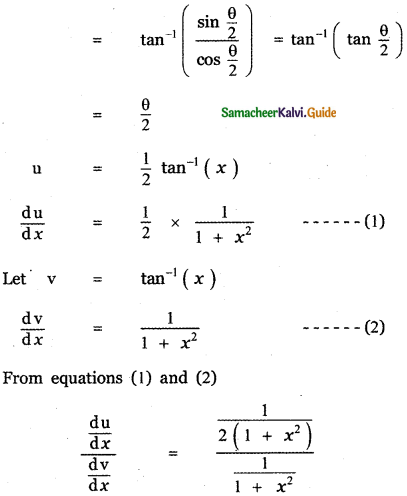
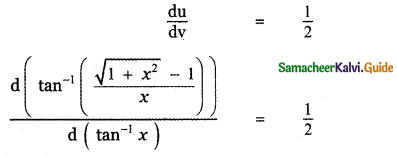
If u = tan-1\(\frac{\sqrt{1+x^{2}}-1}{x}\) and v = tan-1x, find \(\frac{\mathrm{du}}{\mathrm{dv}}\)
Answer:
Samacheer Kalvi 11th Maths Guide Chapter 10 Differentiability and Methods of Differentiation Ex 10.4 27
Samacheer Kalvi 11th Maths Guide Chapter 10 Differentiability and Methods of Differentiation Ex 10.4 28
Samacheer Kalvi 11th Maths Guide Chapter 10 Differentiability and Methods of Differentiation Ex 10.4 29
Samacheer Kalvi 11th Maths Guide Chapter 10 Differentiability and Methods of Differentiation Ex 10.4 30

Samacheer Kalvi 11th Maths Guide Chapter 10 Differentiability and Methods of Differentiation Ex 10.4

Question 22.
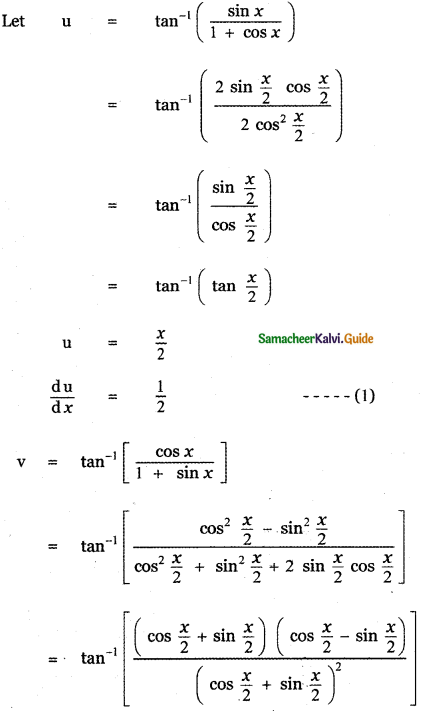
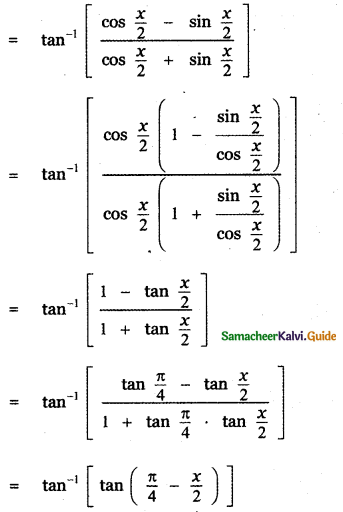
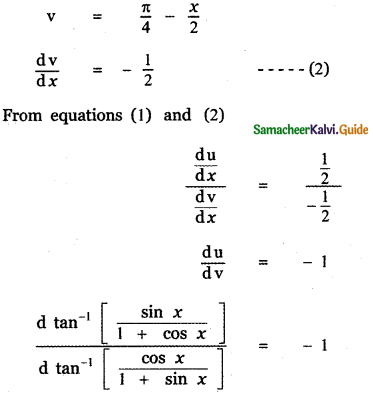
Find the derivative with tan-1\(\left(\frac{\sin x}{1+\cos x}\right)\) with respect to tan-1\(\left(\frac{\cos x}{1+\sin x}\right)\)
Answer:
Samacheer Kalvi 11th Maths Guide Chapter 10 Differentiability and Methods of Differentiation Ex 10.4 31
Samacheer Kalvi 11th Maths Guide Chapter 10 Differentiability and Methods of Differentiation Ex 10.4 32
Samacheer Kalvi 11th Maths Guide Chapter 10 Differentiability and Methods of Differentiation Ex 10.4 33

Samacheer Kalvi 11th Maths Guide Chapter 10 Differentiability and Methods of Differentiation Ex 10.4

Question 23.
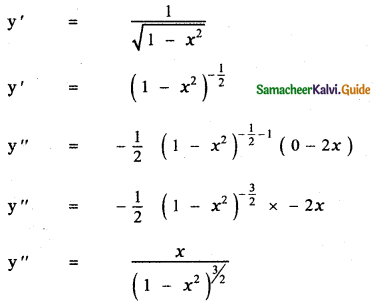
If y = sin-1x then find y”.
Answer:
y = sin-1 x
Samacheer Kalvi 11th Maths Guide Chapter 10 Differentiability and Methods of Differentiation Ex 10.4 34

Question 24.
If y = etan-1x, show that (1 + x2) y” + (2x – 1) y’ = 0
Answer:
y = etan-1x
y = etan-1x \(\left(\frac{1}{1+x^{2}}\right)\)
⇒ y’ = \(\frac{y}{1+x^{2}}\) ⇒ y'(1 + x2) = y
differentiating w.r.to x
y’ (2x) + (1 + x2) (y”) = y’
(i.e.) (1 + x2) y” + y’ (2x) – y’ = 0
(i.e.) (1 + x2) y” + (2x – 1) y’ = 0

Question 25.
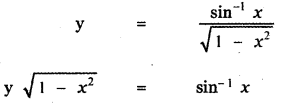
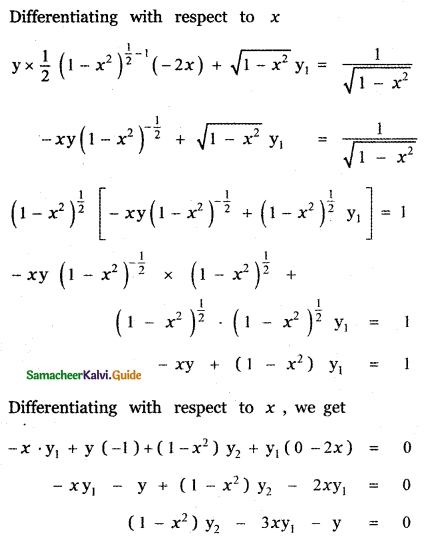
If y = \(\frac{\sin ^{-1} x}{\sqrt{1-x^{2}}}\), show that (1 – x2)y2 – 3xy1 – y = 0.
Answer:
Samacheer Kalvi 11th Maths Guide Chapter 10 Differentiability and Methods of Differentiation Ex 10.4 35
Samacheer Kalvi 11th Maths Guide Chapter 10 Differentiability and Methods of Differentiation Ex 10.4 36

Samacheer Kalvi 11th Maths Guide Chapter 10 Differentiability and Methods of Differentiation Ex 10.4

Question 26.
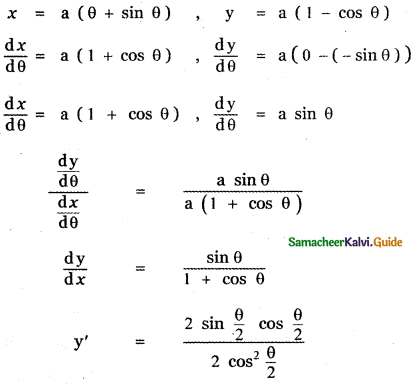
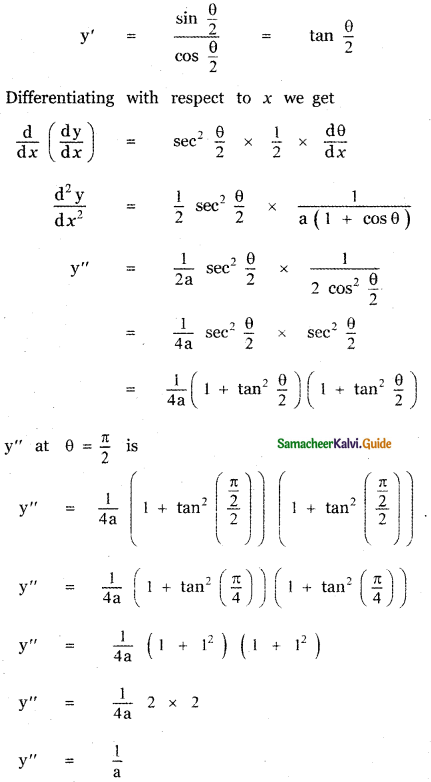
If x = a (θ + sin θ), y = a (1 – cos θ) then prove that at θ = \(\frac{\pi}{2}\), y” = \(\frac{1}{a}\)
Answer:
Samacheer Kalvi 11th Maths Guide Chapter 10 Differentiability and Methods of Differentiation Ex 10.4 37
Samacheer Kalvi 11th Maths Guide Chapter 10 Differentiability and Methods of Differentiation Ex 10.4 38

Question 27.
If sin y = x sin (a + y), the prove that \(\frac{d y}{d x}=\frac{\sin ^{2}(a+y)}{\sin a}\), a ≠ nπ
Answer:
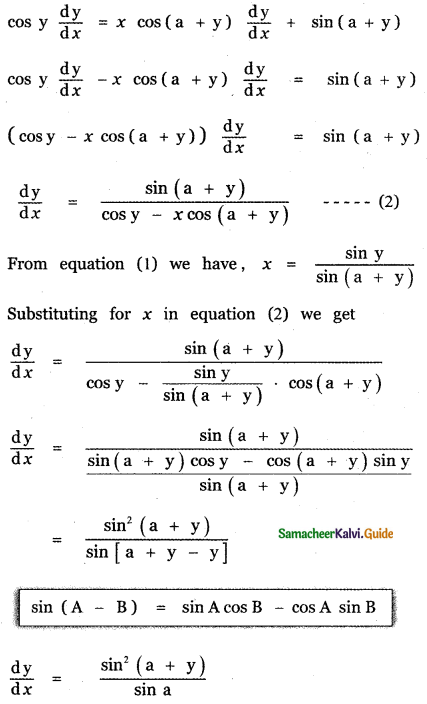
Given sin y = x sin (a + y) ——- (1)
Differentiating with respect to x , we get
cos y \(\frac{\mathrm{dy}}{\mathrm{d} x}\) = x cos (a + y) (0 + \(\frac{\mathrm{dy}}{\mathrm{d} x}\)) + sin (a + y) . 1
Samacheer Kalvi 11th Maths Guide Chapter 10 Differentiability and Methods of Differentiation Ex 10.4 39

Samacheer Kalvi 11th Maths Guide Chapter 10 Differentiability and Methods of Differentiation Ex 10.4

Question 28.
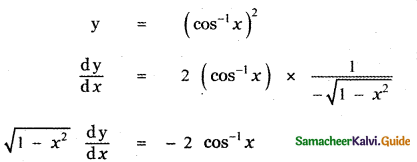
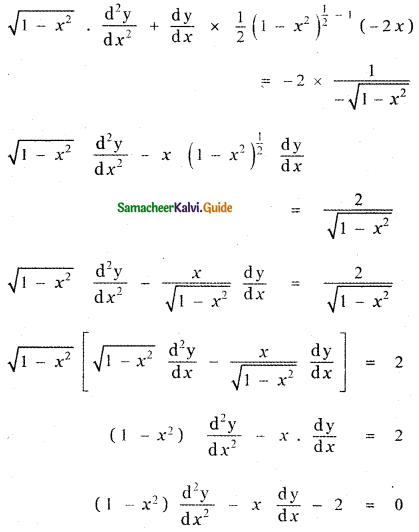
If y = (cos-1 x)2, prove that (1 – x2) \(\frac{\mathrm{d}^{2} \mathrm{y}}{\mathrm{d} x^{2}}\) – x \(\frac{\mathrm{dy}}{\mathrm{d} x}\) – 2 = 0. Hence find y2 when x = 0.
Answer:
Samacheer Kalvi 11th Maths Guide Chapter 10 Differentiability and Methods of Differentiation Ex 10.4 40
Samacheer Kalvi 11th Maths Guide Chapter 10 Differentiability and Methods of Differentiation Ex 10.4 41

Samacheer Kalvi 11th Maths Guide Chapter 10 Differentiability and Methods of Differentiation Ex 10.3

Tamilnadu State Board New Syllabus Samacheer Kalvi 11th Maths Guide Pdf Chapter 10 Differentiability and Methods of Differentiation Ex 10.3 Text Book Back Questions and Answers, Notes.

Tamilnadu Samacheer Kalvi 11th Maths Solutions Chapter 10 Differentiability and Methods of Differentiation Ex 10.3

Differentiate the following:

Question 1.
y = (x2 + 4x + 6)5
Answer:
Let = u = x2 + 4x + 6
⇒ \(\frac{d u}{d x}\) = 2x + 4
Now y = u5 ⇒ \(\frac{d y}{d x}\) = 5u4
∴ \(\frac{d y}{d x}=\frac{d y}{d u} \times \frac{d u}{d x}\) = 5u4 (2x + 4)
= 5(x2 + 4x + 6)4 (2x + 4)
= 5 (2x + 4) (x2 + 4x + 6)4

Samacheer Kalvi 11th Maths Guide Chapter 10 Differentiability and Methods of Differentiation Ex 10.3

Question 2.
y = tan 3x
Answer:
y = tan 3x
[ y = f(g(x)
\(\frac{\mathrm{dy}}{\mathrm{d} x}\) = f'(g(x)) . g'(x)]
\(\frac{\mathrm{dy}}{\mathrm{d} x}\) = sec2 3x . \(\frac{\mathrm{d}}{\mathrm{d} x}\) (3x)
\(\frac{\mathrm{dy}}{\mathrm{d} x}\) = sec23x × 3
\(\frac{\mathrm{dy}}{\mathrm{d} x}\) = 3 sec2 3x

Question 3.
y = cos (tan x)
Answer:
Put u = tan x
\(\frac{d u}{d x}\) = sec2x
Now y = cos u ⇒ \(\frac{d u}{d x}\) = -sin u
Now \(\frac{d y}{d x}=\frac{d y}{d u} \times \frac{d u}{d x}\)
= (-sin u) (sec2x)
= -sec2 (sin (tan x))

Question 4.
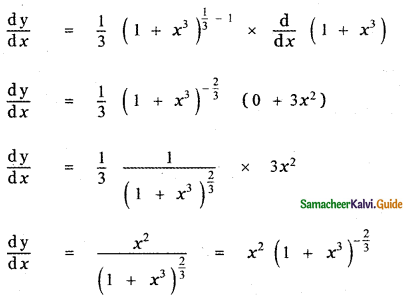
y = \(\sqrt[3]{1+x^{3}}\)
Answer:
y = \(\sqrt[3]{1+x^{3}}\)
y = (1 + x3)1/3
[ y = f(g(x)
\(\frac{\mathrm{dy}}{\mathrm{d} x}\) = f'(g(x)) . g'(x)]
Samacheer Kalvi 11th Maths Guide Chapter 10 Differentiability and Methods of Differentiation Ex 10.3 1

Samacheer Kalvi 11th Maths Guide Chapter 10 Differentiability and Methods of Differentiation Ex 10.3

Question 5.
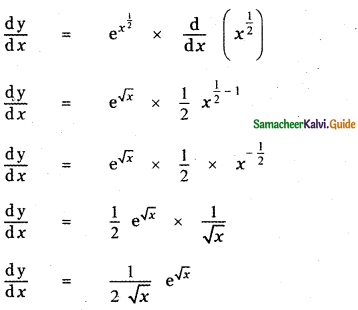
y = \(\mathrm{e}^{\sqrt{x}}\)
Answer:
y = \(\mathrm{e}^{\sqrt{x}}\)
y = \(e^{x^{\frac{1}{2}}}\)
[ y = f(g(x)
\(\frac{\mathrm{dy}}{\mathrm{d} x}\) = f'(g(x)) . g'(x)]
Samacheer Kalvi 11th Maths Guide Chapter 10 Differentiability and Methods of Differentiation Ex 10.3 2

Question 6.
y = sin (ex)
Answer:
y = sin (ex)
[ y = f(g(x)
\(\frac{\mathrm{dy}}{\mathrm{d} x}\) = f'(g(x)) . g'(x)]
y = cos (ex) . \(\frac{\mathrm{d}}{\mathrm{d} x}\) (ex)
y = cos ((ex)) . ex
y = ex cos (ex)

Question 7.
F(x) = (x3 + 4x)7
Answer:
F(x) = (x3 + 4x)7
[ y = f(g(x)
\(\frac{\mathrm{dy}}{\mathrm{d} x}\) = f'(g(x)) . g'(x)]
F’ (x) = 7 (x3 + 4x)7 – 1 \(\frac{\mathrm{d}}{\mathrm{d} x}\) (x3 + 4x)
= 7 (x3 + 4x)6 (3x2 + 4)
= 7 (3x2 + 4) (x3 + 4x)6

Samacheer Kalvi 11th Maths Guide Chapter 10 Differentiability and Methods of Differentiation Ex 10.3

Question 8.
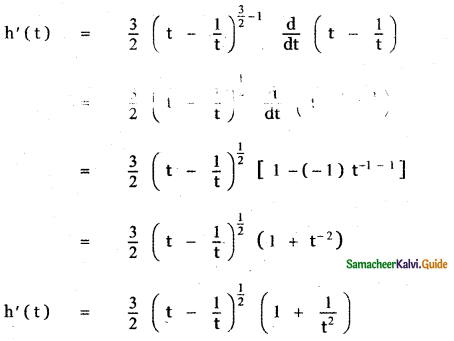
h (t) = \(\left(t-\frac{1}{t}\right)^{\frac{3}{2}}\)
Answer:
h (t) = \(\left(t-\frac{1}{t}\right)^{\frac{3}{2}}\)
[ y = f(g(x)
\(\frac{\mathrm{dy}}{\mathrm{d} x}\) = f'(g(x)) . g'(x)]
Samacheer Kalvi 11th Maths Guide Chapter 10 Differentiability and Methods of Differentiation Ex 10.3 3

Question 9.
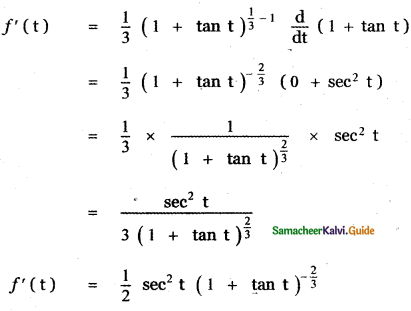
f(t) = \(\sqrt[3]{1+\tan t}\)
Answer:
f(t) = \(\sqrt[3]{1+\tan t}\)
f(t) = (1 + tan t)1/3
[ y = f(g(x)
\(\frac{\mathrm{dy}}{\mathrm{d} x}\) = f'(g(x)) . g'(x)]
Samacheer Kalvi 11th Maths Guide Chapter 10 Differentiability and Methods of Differentiation Ex 10.3 4

Samacheer Kalvi 11th Maths Guide Chapter 10 Differentiability and Methods of Differentiation Ex 10.3

Question 10.
y = cos (a3 + x3)
Answer:
y = cos (a3 + x3)
[ y = f(g(x)
\(\frac{\mathrm{dy}}{\mathrm{d} x}\) = f'(g(x)) . g'(x)]
\(\frac{\mathrm{dy}}{\mathrm{d} x}\) = – sin (a3 + x3) \(\frac{\mathrm{d}}{\mathrm{d} x}\) (a3 + x3)
\(\frac{\mathrm{dy}}{\mathrm{d} x}\) = – sin (a3 + x3) (0 + 3x2)
\(\frac{\mathrm{dy}}{\mathrm{d} x}\) = – 3x2 sin (a3 + x3)

Question 11.
y = e-mx
Answer:
y = e-mx
[ y = f(g(x)
\(\frac{\mathrm{dy}}{\mathrm{d} x}\) = f'(g(x)) . g'(x)]
\(\frac{\mathrm{dy}}{\mathrm{d} x}\) = e-mx × \(\frac{\mathrm{d}}{\mathrm{d} x}\) (- mx)
\(\frac{\mathrm{dy}}{\mathrm{d} x}\) = e-mx × – m
\(\frac{\mathrm{dy}}{\mathrm{d} x}\) = – m e-mx = – my

Question 12.
y = 4 sec 5x
Answer:
y = 4 sec 5x
[ y = f(g(x)
\(\frac{\mathrm{dy}}{\mathrm{d} x}\) = f'(g(x)) . g'(x)]
\(\frac{\mathrm{dy}}{\mathrm{d} x}\) = 4 × sec 5x × tan 5x \(\frac{\mathrm{d}}{\mathrm{d} x}\) (5x)
\(\frac{\mathrm{dy}}{\mathrm{d} x}\) = 4 sec 5x tan 5x × 5 × 1
\(\frac{\mathrm{dy}}{\mathrm{d} x}\) = 20 sec 5x tan 5x

Samacheer Kalvi 11th Maths Guide Chapter 10 Differentiability and Methods of Differentiation Ex 10.3

Question 13.
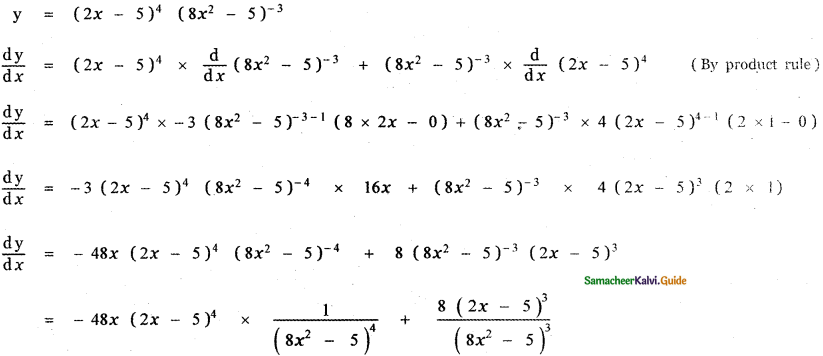
y = (2x – 5)4 (8x2 – 5) – 3
Answer:
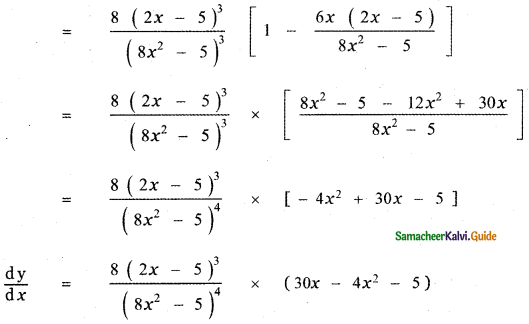
Samacheer Kalvi 11th Maths Guide Chapter 10 Differentiability and Methods of Differentiation Ex 10.3 5
Samacheer Kalvi 11th Maths Guide Chapter 10 Differentiability and Methods of Differentiation Ex 10.3 6

Question 14.
y = (x2 + 1) \(\sqrt[3]{x^{2}+2}\)
Answer:
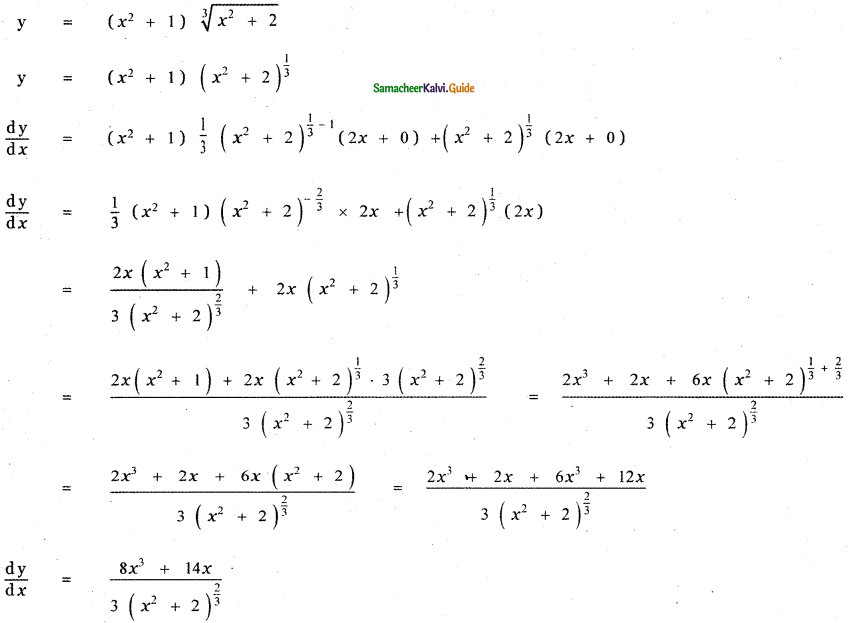
Samacheer Kalvi 11th Maths Guide Chapter 10 Differentiability and Methods of Differentiation Ex 10.3 7

Samacheer Kalvi 11th Maths Guide Chapter 10 Differentiability and Methods of Differentiation Ex 10.3

Question 15.
y = x e-x2
Answer:
y = xe-x2
y = uv where u = x and v = e-x2
Now u’ = 1 and v’ = e-x2 (-2x)
v’ = – 2xe-x2
Now y = uv ⇒ y’ = uv’ + vu’
(i.e.) \(\frac{d y}{d x}\) = x[-2xe-x2] + e-x2 (1)
= e-x2 (1 – 2x2)

Question 16.
s(t) = \(\sqrt[4]{\frac{t^{3}+1}{t^{3}-1}}\)
Answer:
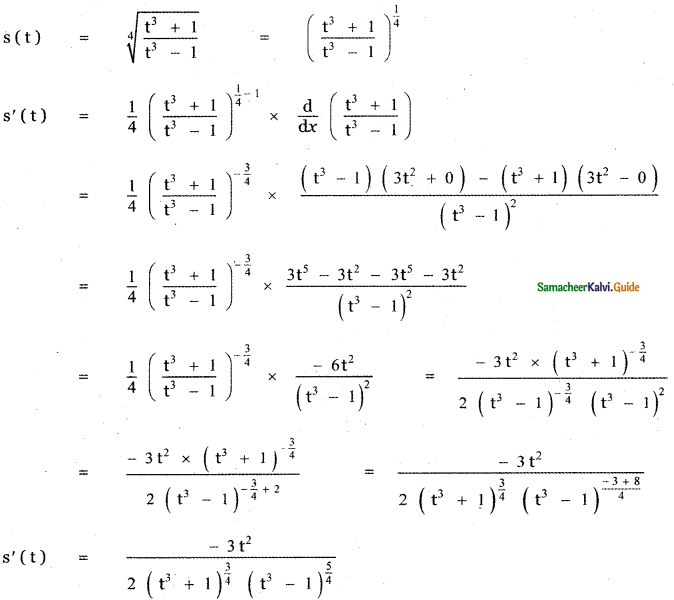
Samacheer Kalvi 11th Maths Guide Chapter 10 Differentiability and Methods of Differentiation Ex 10.3 8

Question 17.
f(x) = \(\frac{x}{\sqrt{7-3 x}}\)
Answer:
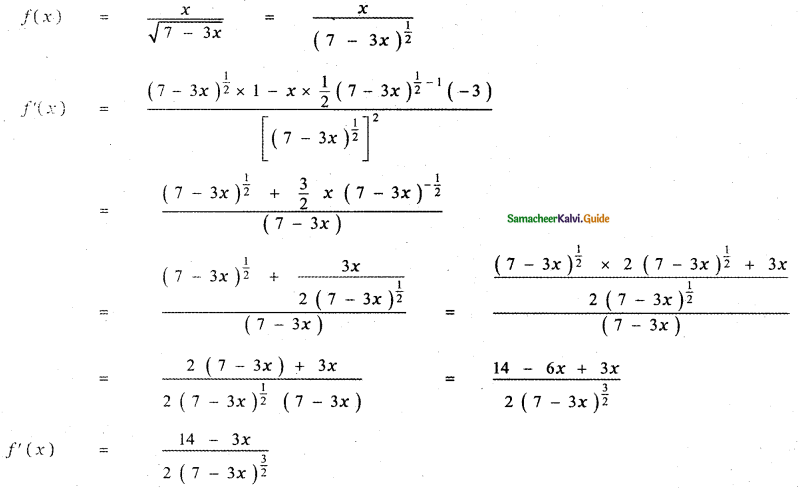
Samacheer Kalvi 11th Maths Guide Chapter 10 Differentiability and Methods of Differentiation Ex 10.3 9

Samacheer Kalvi 11th Maths Guide Chapter 10 Differentiability and Methods of Differentiation Ex 10.3

Question 18.
y = tan (cos x)
Answer:
y = tan (cos x)
[ y = f(g(x)
\(\frac{\mathrm{dy}}{\mathrm{d} x}\) = f'(g(x)) . g'(x)]
\(\frac{\mathrm{dy}}{\mathrm{d} x}\) = sec2 (cos x) × \(\frac{\mathrm{d}}{\mathrm{d} x}\) (cos x)
= sec2 (cos x) × – sin x
\(\frac{\mathrm{dy}}{\mathrm{d} x}\) = -sin x . sec2 (cos x)

Question 19.
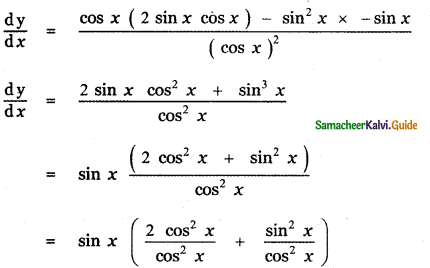
y = \(\frac{\sin ^{2} x}{\cos x}\)
Answer:
y = \(\frac{\sin ^{2} x}{\cos x}\)
Samacheer Kalvi 11th Maths Guide Chapter 10 Differentiability and Methods of Differentiation Ex 10.3 10
= sin x (2 + tan2x)
= sin x (1 + 1 + tan2x)
\(\frac{\mathrm{dy}}{\mathrm{d} x}\) = sin x (1 + sec2 x)

Question 20.
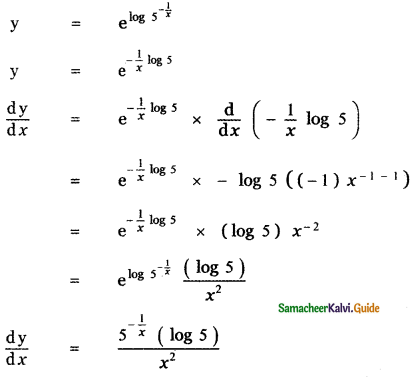
y = \(5^{\frac{-1}{x}}\)
Answer:
y = \(5^{\frac{-1}{x}}\)
Samacheer Kalvi 11th Maths Guide Chapter 10 Differentiability and Methods of Differentiation Ex 10.3 11

Samacheer Kalvi 11th Maths Guide Chapter 10 Differentiability and Methods of Differentiation Ex 10.3

Question 21.
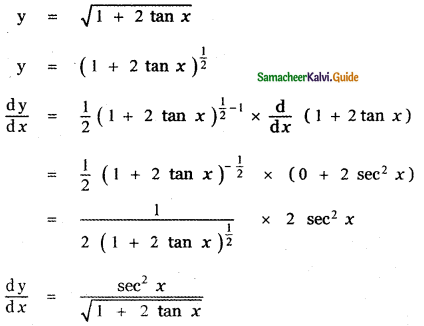
y = \(\sqrt{1+2 \tan x}\)
Answer:
Samacheer Kalvi 11th Maths Guide Chapter 10 Differentiability and Methods of Differentiation Ex 10.3 12

Question 22.
y = sin3x + cos3x
Answer:
y = sin3x + cos3x
Here u = sin3 x = (sin x)3
⇒ \(\frac{d u}{d x}\) = 3 (sin x)2 (cos x)
= 3sin2x cos x
v = cos3x = (cos x)3
⇒ \(\frac{d v}{d x}\) = 3 (cos x)2 (-sin x) = -3 sin x cos2x
Now y = u + v ⇒ \(\frac{d y}{d x}=\frac{d u}{d x}+\frac{d v}{d x}\)
= 3 sin2x cos x – 3sin x cos2x
= 3 sin x cos x (sin x – cos x)

Question 23.
y = sin2 (cos kx)
Answer:
y = sin2 (cos kx)
y = f(g(x)
\(\frac{\mathrm{dy}}{\mathrm{d} x}\) = f'(g(x)) . g'(x)]
\(\frac{\mathrm{dy}}{\mathrm{d} x}\) = 2 sin (cos kx) × cos (cos kx) × -sin kx × k × 1
\(\frac{\mathrm{dy}}{\mathrm{d} x}\) = sin (2 cos kx) × -k sin kx
\(\frac{\mathrm{dy}}{\mathrm{d} x}\) = -k sin kx . sin (2 cos kx)

Samacheer Kalvi 11th Maths Guide Chapter 10 Differentiability and Methods of Differentiation Ex 10.3

Question 24.
y = (1 + cos2)6
Answer:
y = (1 + cos2)6
y = f(g(x)
\(\frac{\mathrm{dy}}{\mathrm{d} x}\) = f'(g(x)) . g'(x)]
\(\frac{\mathrm{dy}}{\mathrm{d} x}\) = 6(1 + cos2x)6-1 (0 + 2 cos x × -sin x)
\(\frac{\mathrm{dy}}{\mathrm{d} x}\) = 6(1 + cos2x)5 × – 2 sin x cos x
\(\frac{\mathrm{dy}}{\mathrm{d} x}\) = -6 sin 2x (1 + cos2)5

Question 25.
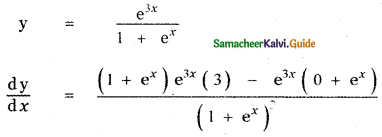
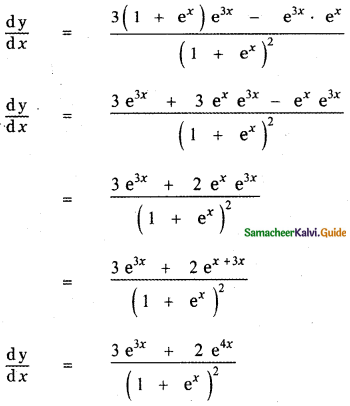
y = \(\frac{e^{3 x}}{1+e^{x}}\)
Answer:
Samacheer Kalvi 11th Maths Guide Chapter 10 Differentiability and Methods of Differentiation Ex 10.3 13
Samacheer Kalvi 11th Maths Guide Chapter 10 Differentiability and Methods of Differentiation Ex 10.3 14

Question 26.
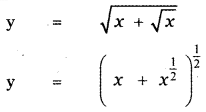
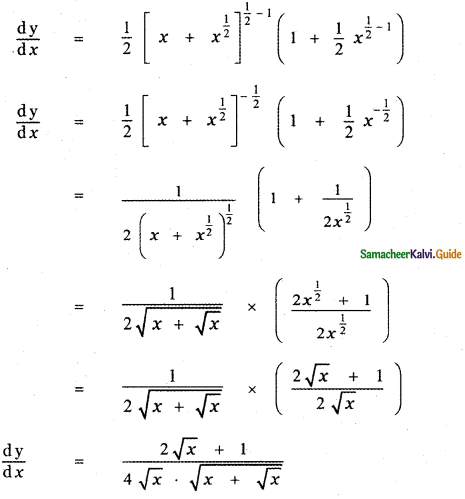
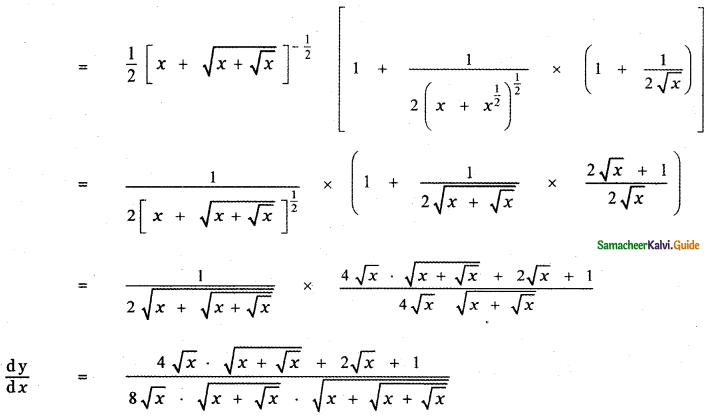
y = \(\sqrt{x+\sqrt{x}}\)
Answer:
Samacheer Kalvi 11th Maths Guide Chapter 10 Differentiability and Methods of Differentiation Ex 10.3 15
[y = f(g(x))
\(\frac{\mathrm{d} \mathrm{y}}{\mathrm{d} x}\) = f'(g(x)) . g'(x)]
Samacheer Kalvi 11th Maths Guide Chapter 10 Differentiability and Methods of Differentiation Ex 10.3 16

Samacheer Kalvi 11th Maths Guide Chapter 10 Differentiability and Methods of Differentiation Ex 10.3

Question 27.
y = ex cos x
Answer:
y = ex cos x
\(\frac{\mathrm{d} \mathrm{y}}{\mathrm{d} x}\) = ex cos x (x – sinx + cos x . 1)
\(\frac{\mathrm{d} \mathrm{y}}{\mathrm{d} x}\) = ex cos x (cos x – x sin x)

Question 28.
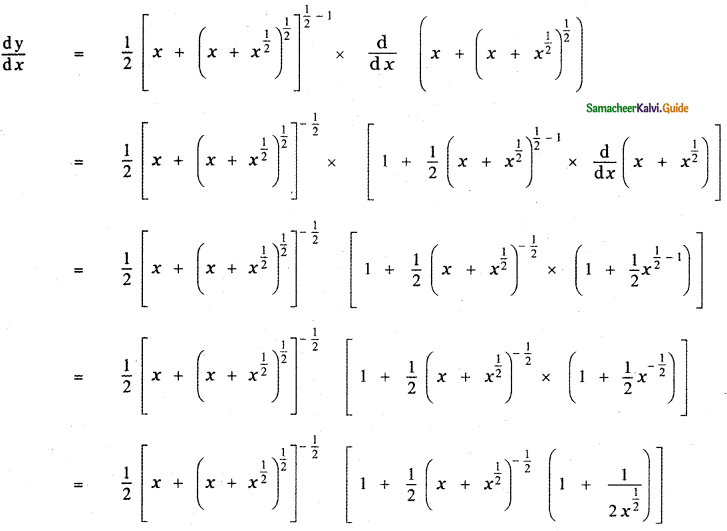
y = \(\sqrt{x+\sqrt{x+\sqrt{x}}}\)
Answer:
Samacheer Kalvi 11th Maths Guide Chapter 10 Differentiability and Methods of Differentiation Ex 10.3 17
[y = f(g(x))
\(\frac{\mathrm{d} \mathrm{y}}{\mathrm{d} x}\) = f'(g(x)) . g'(x)]
Samacheer Kalvi 11th Maths Guide Chapter 10 Differentiability and Methods of Differentiation Ex 10.3 18Samacheer Kalvi 11th Maths Guide Chapter 10 Differentiability and Methods of Differentiation Ex 10.3 19

Question 29.
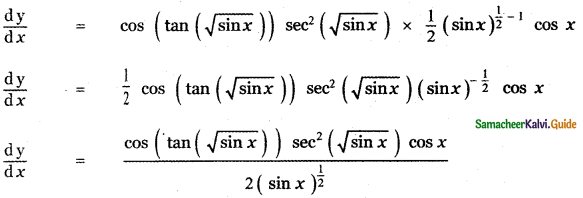
y = sin (tan (\(\sqrt{\sin x}\)))
Answer:
y = sin (tan (\(\sqrt{\sin x}\)))
y = f(g(x))
\(\frac{\mathrm{d} \mathrm{y}}{\mathrm{d} x}\) = f'(g(x)) . g'(x)]
Samacheer Kalvi 11th Maths Guide Chapter 10 Differentiability and Methods of Differentiation Ex 10.3 20

Samacheer Kalvi 11th Maths Guide Chapter 10 Differentiability and Methods of Differentiation Ex 10.3

Question 30.
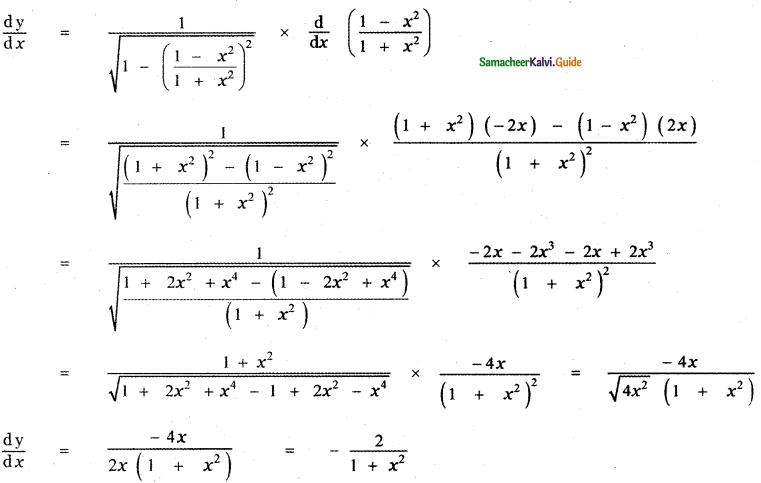
y = sin-1\(\left(\frac{1-x^{2}}{1+x^{2}}\right)\)
Answer:
y = sin-1\(\left(\frac{1-x^{2}}{1+x^{2}}\right)\)
[y = f(g(x))
\(\frac{\mathrm{d} \mathrm{y}}{\mathrm{d} x}\) = f'(g(x)) . g'(x)]
Samacheer Kalvi 11th Maths Guide Chapter 10 Differentiability and Methods of Differentiation Ex 10.3 21

Samacheer Kalvi 11th Maths Guide Chapter 10 Differentiability and Methods of Differentiation Ex 10.2

Tamilnadu State Board New Syllabus Samacheer Kalvi 11th Maths Guide Pdf Chapter 10 Differentiability and Methods of Differentiation Ex 10.2 Text Book Back Questions and Answers, Notes.

Tamilnadu Samacheer Kalvi 11th Maths Solutions Chapter 10 Differentiability and Methods of Differentiation Ex 10.2

Find the derivatives of the following functions with respect to corresponding independent variables:

Question 1.
f(x) = x – 3 sin x
Answer:
f(x) = x – 3 sinx
= f'(x) = 1 – 3 (cos x)
= 1 – 3 cos x

Samacheer Kalvi 11th Maths Guide Chapter 10 Differentiability and Methods of Differentiation Ex 10.2

Question 2.
y = sin x + cos x
Answer:
y = sin x + cos x
\(\frac{d y}{d x}\) = cos x – sin x

Question 3.
f(x) = x sin x
Answer:
f(x) = uv
⇒ f'(x) = uv’ + vu’ = u\(\frac{d u}{d x}\) + v\(\frac{d v}{d x}\)
Now u = x ⇒ u’ = 1
v = sin x ⇒ v’ cos x
f'(x) = x (cos x) + sin x(1)
= x cos x + sin x

Question 4.
y = cos x – 2 tan x
Answer:
y = cos x – 2 tan x
\(\frac{d y}{d x}\) = – sin x – 2 sec2 x

Question 5.
g(t) = t3 cos t
Answer:
g(t) = t3 cost (i.e.) u = t3 and v = cos t
let u’ = \(\frac{d u}{d x}\) and v’= \(\frac{d v}{d x}\) = (-sint)
g'(t) = uv’ + vu’
g'(t) = t3 (-sin t) + cos t (3t2)
= -t3 sin t + 3t2 cos t

Samacheer Kalvi 11th Maths Guide Chapter 10 Differentiability and Methods of Differentiation Ex 10.2

Question 6.
g(t) = 4 sec t + tan t
Answer:
g(t) = 4 sec t + tan t
g'(t) = 4 sec t tan t + sec2t

Question 7.
y = ex sin x
Answer:
y = ex sin x
⇒ y = uv’ + vu’
Now u = ex ⇒ u’ = \(\frac{d u}{d x}\) ex
v = sin x ⇒ v’ = \(\frac{d v}{d x}\) cos x
i.e. y’ = ex (cos x) + sin x (ex)
= ex [sin x + cos x]

Question 8.
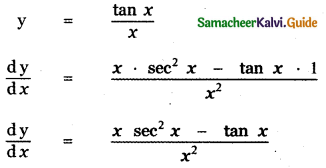
y = \(\frac{\tan x}{x}\)
Answer:
Samacheer Kalvi 11th Maths Guide Chapter 10 Differentiability and Methods of Differentiation Ex 10.2 1

Question 9.
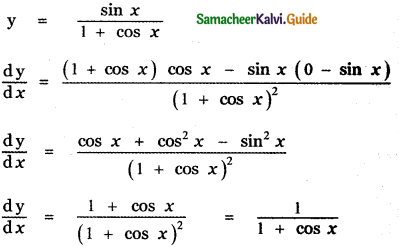
y = \(\frac{\sin x}{1+\cos x}\)
Answer:
Samacheer Kalvi 11th Maths Guide Chapter 10 Differentiability and Methods of Differentiation Ex 10.2 2

Question 10.
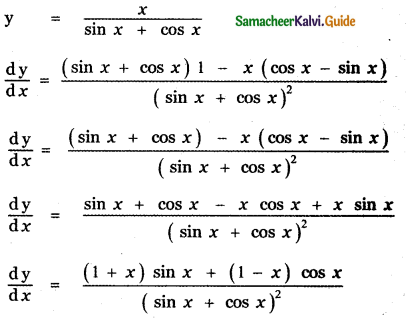
y = \(\frac{x}{\sin x+\cos x}\)
Answer:
Samacheer Kalvi 11th Maths Guide Chapter 10 Differentiability and Methods of Differentiation Ex 10.2 3

Samacheer Kalvi 11th Maths Guide Chapter 10 Differentiability and Methods of Differentiation Ex 10.2

Question 11.
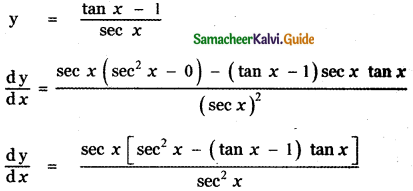
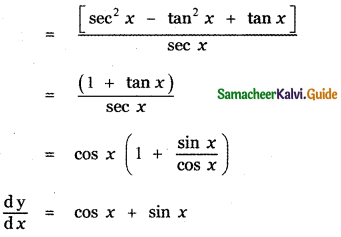
y = \(\frac{\tan x-1}{\sec x}\)
Answer:
Samacheer Kalvi 11th Maths Guide Chapter 10 Differentiability and Methods of Differentiation Ex 10.2 4
Samacheer Kalvi 11th Maths Guide Chapter 10 Differentiability and Methods of Differentiation Ex 10.2 5

Question 12.
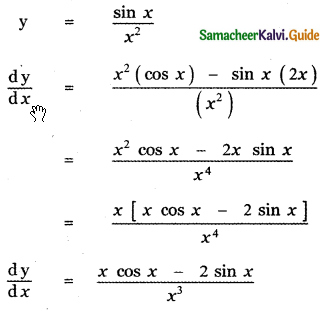
y = \(\frac{\sin x}{x^{2}}\)
Answer:
Samacheer Kalvi 11th Maths Guide Chapter 10 Differentiability and Methods of Differentiation Ex 10.2 6

Question 13.
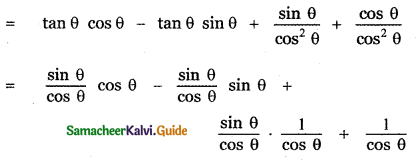
y = tan θ (sin θ + cos θ)
Answer:
y = tan θ (sin θ + cos θ)
\(\frac{d y}{d x}\) = tan θ (cos θ – sin θ) + (sin θ + cos 0) sec2 θ
= tan θ cos θ – tan θ sin θ + sin θ sec2θ + cos θ sec2θ
Samacheer Kalvi 11th Maths Guide Chapter 10 Differentiability and Methods of Differentiation Ex 10.2 7
= sin θ – sin2θ sec θ + tan θ sec θ + sec θ
= sin θ + (1 – sin2θ) sec θ + sec θ tan θ
= sin θ + cos2θ × \(\frac{1}{\cos \theta}\) + sec θ tan θ
= sin θ + cos θ + sec θ tan θ

Samacheer Kalvi 11th Maths Guide Chapter 10 Differentiability and Methods of Differentiation Ex 10.2

Question 14.
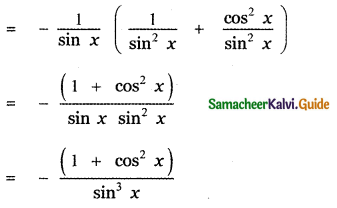
y = cosec x . cot x
Answer:
y = cosec x . cot x
\(\frac{d y}{d x}\) = cosec x × – cosec2 x + cot x × – cosec x cot x
= – cosec3 x – cosec x cot2 x
= – cosec x (cosec2 x + cot2 x)
Samacheer Kalvi 11th Maths Guide Chapter 10 Differentiability and Methods of Differentiation Ex 10.2 8

Question 15.
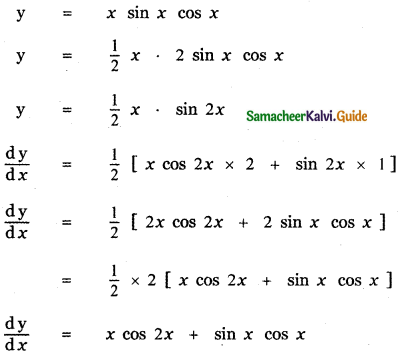
y = x sin x cos x
Answer:
Samacheer Kalvi 11th Maths Guide Chapter 10 Differentiability and Methods of Differentiation Ex 10.2 9

Question 16.
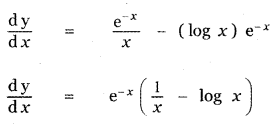
y = e-x . log x
Answer:
y = e-x . log x
\(\frac{d y}{d x}\) = e-x × \(\frac{1}{x}\) + (log x) e-x (-1)
Samacheer Kalvi 11th Maths Guide Chapter 10 Differentiability and Methods of Differentiation Ex 10.2 10

Question 17.
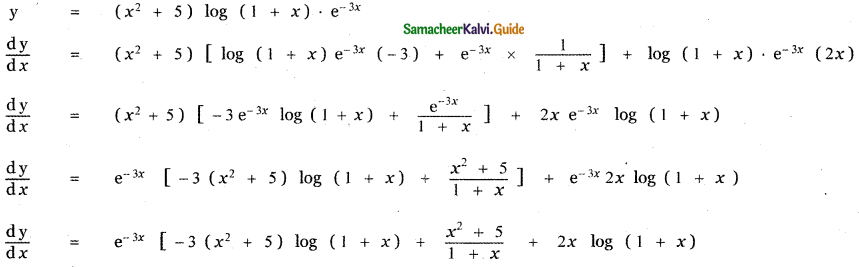
y = (x2 + 5) log (1 + x) e-3x
Answer:
Samacheer Kalvi 11th Maths Guide Chapter 10 Differentiability and Methods of Differentiation Ex 10.2 11

Samacheer Kalvi 11th Maths Guide Chapter 10 Differentiability and Methods of Differentiation Ex 10.2

Question 18.
y = sin x0
Answer:
Samacheer Kalvi 11th Maths Guide Chapter 10 Differentiability and Methods of Differentiation Ex 10.2 12

Question 19.
y = log10 x
Answer:
y = log10 x
y = logex . log10e
Samacheer Kalvi 11th Maths Guide Chapter 10 Differentiability and Methods of Differentiation Ex 10.2 13

Samacheer Kalvi 11th Maths Guide Chapter 10 Differentiability and Methods of Differentiation Ex 10.2

Question 20.
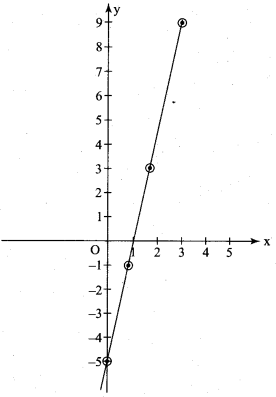
Draw the function f'(x) if f(x) = 2x2 – 5x + 3
Answer:
f(x) = 2x2 – 5x + 3
f'(x) = 4x – 5 which is a linear function
(i.e.) y = 4x – 5

Samacheer Kalvi 11th Maths Guide Chapter 10 Differentiability and Methods of Differentiation Ex 10.2 16

Samacheer Kalvi 11th Maths Guide Chapter 10 Differentiability and Methods of Differentiation Ex 10.1

Tamilnadu State Board New Syllabus Samacheer Kalvi 11th Maths Guide Pdf Chapter 10 Differentiability and Methods of Differentiation Ex 10.1 Text Book Back Questions and Answers, Notes.

Tamilnadu Samacheer Kalvi 11th Maths Solutions Chapter 10 Differentiability and Methods of Differentiation Ex 10.1

Question 1.
Find the derivatives of the following functions using the first principle.
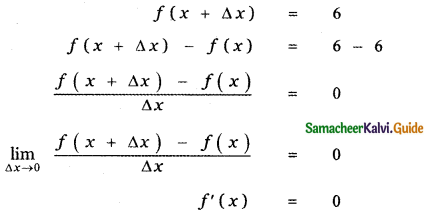
(i) f(x) = 6
(ii) f(x) = -4x + 7
(iii) f(x) = -x2 + 2
Answer:
(i) f(x) = 6
Samacheer Kalvi 11th Maths Guide Chapter 10 Differentiability and Methods of Differentiation Ex 10.1 1

Samacheer Kalvi 11th Maths Guide Chapter 10 Differentiability and Methods of Differentiation Ex 10.1

(ii) f(x) = – 4x + 7,
f(x + Δx) = -4(x + Δx) + 7
f(x + Δx) – f(x) = [-4(x + Δx) + 7] – [-4x + 7]
f(x + Δx) – f(x) = [-4(x + Δx) + 7] + 4x – 7
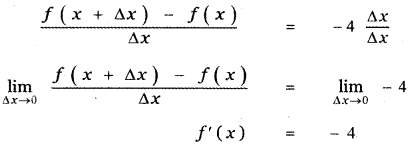
f(x + Δx) – f(x) = -4 Δx
Samacheer Kalvi 11th Maths Guide Chapter 10 Differentiability and Methods of Differentiation Ex 10.1 2

(iii) f(x) = -x2 + 2
f (x + Δx) = – (x + Δx)2 + 2
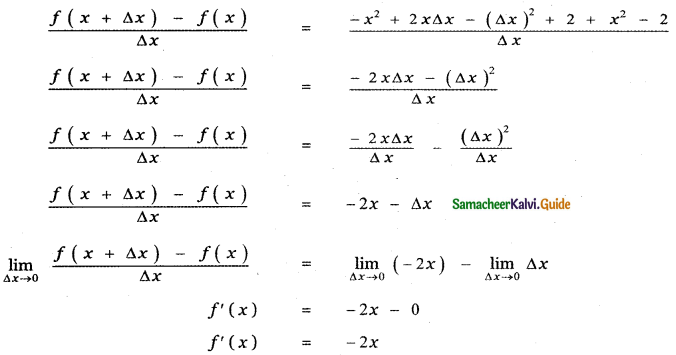
f (x + Δx) – f(x) = – [x2 + 2x Δx + (Δx)2] + 2 – [- x2 + 2]
Samacheer Kalvi 11th Maths Guide Chapter 10 Differentiability and Methods of Differentiation Ex 10.1 3

Samacheer Kalvi 11th Maths Guide Chapter 10 Differentiability and Methods of Differentiation Ex 10.1

Question 2.
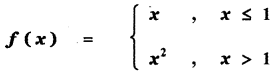
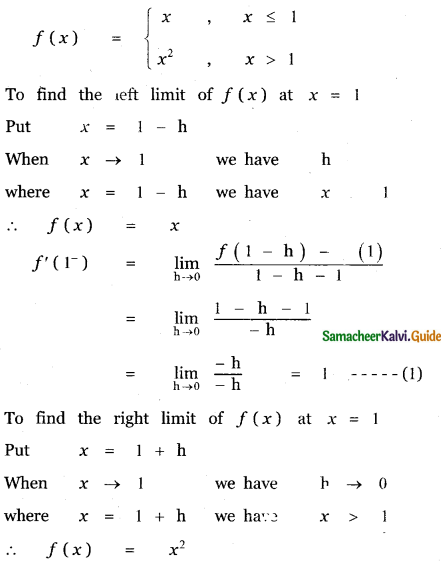
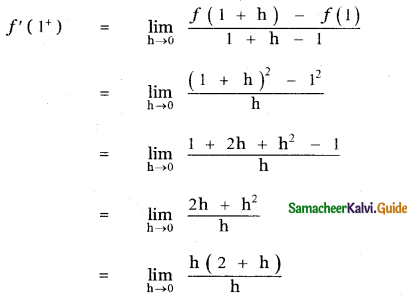
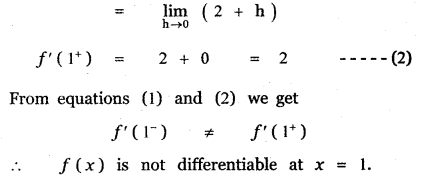
Find the derivatives from the left and from the right at x = 1 (if they exist) of the following functions. Are the functions differentiable at x = 1?
(i) f (x) = |x – 1|
Answer:
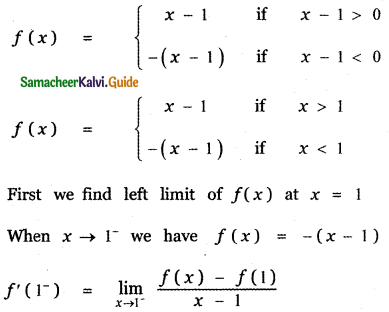
Samacheer Kalvi 11th Maths Guide Chapter 10 Differentiability and Methods of Differentiation Ex 10.1 5
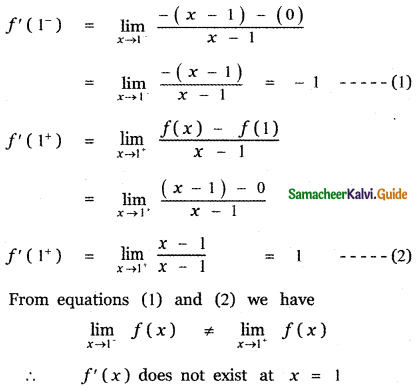
Samacheer Kalvi 11th Maths Guide Chapter 10 Differentiability and Methods of Differentiation Ex 10.1 6

Samacheer Kalvi 11th Maths Guide Chapter 10 Differentiability and Methods of Differentiation Ex 10.1

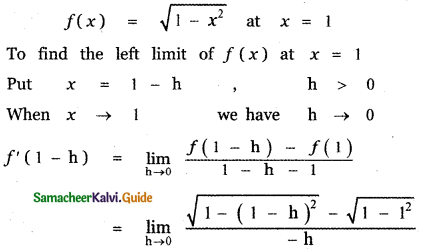
(ii) f (x) = \(\sqrt{1-x^{2}}\)
Answer:
Samacheer Kalvi 11th Maths Guide Chapter 10 Differentiability and Methods of Differentiation Ex 10.1 7
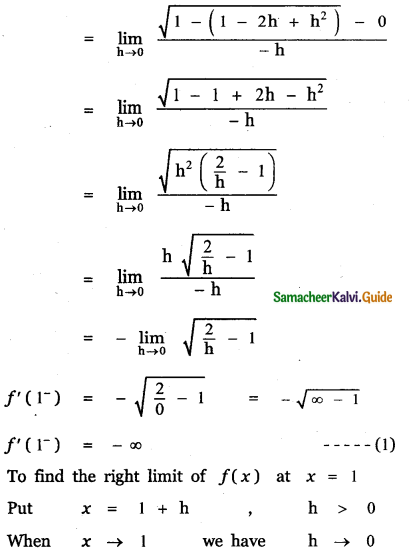
Samacheer Kalvi 11th Maths Guide Chapter 10 Differentiability and Methods of Differentiation Ex 10.1 8
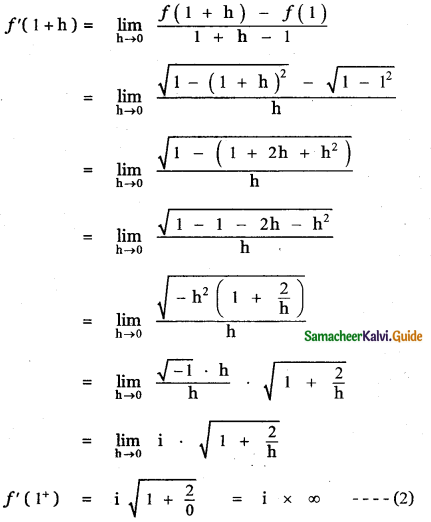
Samacheer Kalvi 11th Maths Guide Chapter 10 Differentiability and Methods of Differentiation Ex 10.1 9
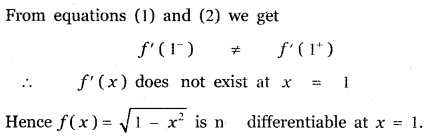
Samacheer Kalvi 11th Maths Guide Chapter 10 Differentiability and Methods of Differentiation Ex 10.1 10

Samacheer Kalvi 11th Maths Guide Chapter 10 Differentiability and Methods of Differentiation Ex 10.1

(iii) Samacheer Kalvi 11th Maths Guide Chapter 10 Differentiability and Methods of Differentiation Ex 10.1 4
Answer:
Samacheer Kalvi 11th Maths Guide Chapter 10 Differentiability and Methods of Differentiation Ex 10.1 11
Samacheer Kalvi 11th Maths Guide Chapter 10 Differentiability and Methods of Differentiation Ex 10.1 12
Samacheer Kalvi 11th Maths Guide Chapter 10 Differentiability and Methods of Differentiation Ex 10.1 13

Samacheer Kalvi 11th Maths Guide Chapter 10 Differentiability and Methods of Differentiation Ex 10.1

Question 3.
Determine whether the following function is differentiable at the indicated values.
(i) f(x) = x |x| at x = 0
Answer:
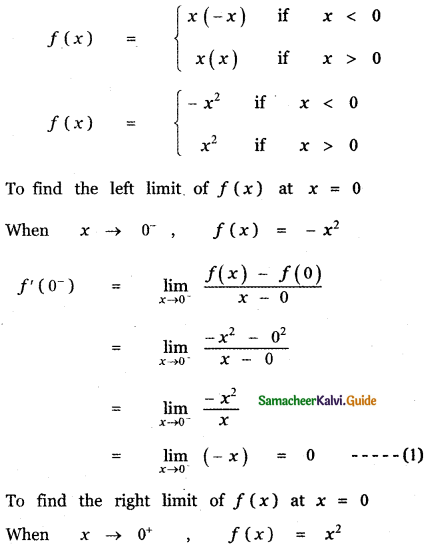
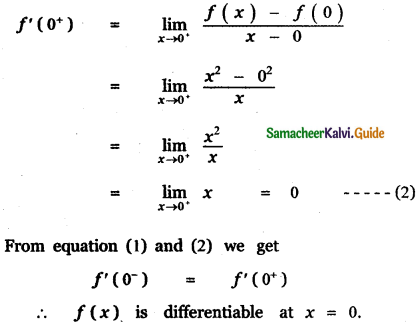
Samacheer Kalvi 11th Maths Guide Chapter 10 Differentiability and Methods of Differentiation Ex 10.1 14
Samacheer Kalvi 11th Maths Guide Chapter 10 Differentiability and Methods of Differentiation Ex 10.1 15

Samacheer Kalvi 11th Maths Guide Chapter 10 Differentiability and Methods of Differentiation Ex 10.1

(ii) f(x) = |x2 – 1|at x = 1
Answer:
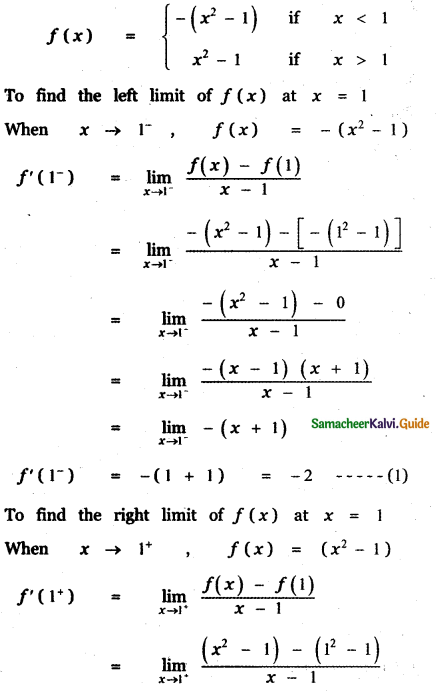
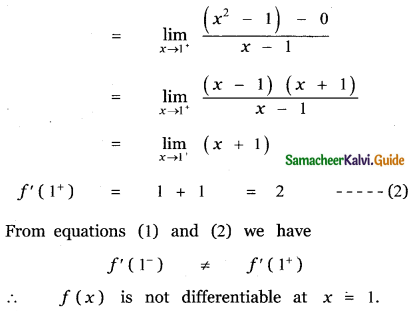
Samacheer Kalvi 11th Maths Guide Chapter 10 Differentiability and Methods of Differentiation Ex 10.1 16
Samacheer Kalvi 11th Maths Guide Chapter 10 Differentiability and Methods of Differentiation Ex 10.1 17

Samacheer Kalvi 11th Maths Guide Chapter 10 Differentiability and Methods of Differentiation Ex 10.1

(iii) f(x) = |x| + |x – 1| at x = 0, 1
Answer:
To find the limit at x = 0
First we find the left limit of f(x) at x = 0
When x = 0  |x| = -x and
|x – 1| = -(x – 1)
∴ When x = 0 we have
f(x) = -x – (x – 1)
f(x) = -x – x + 1 = -2x + 1
f(0) = 2 × 0 + 1 = 1
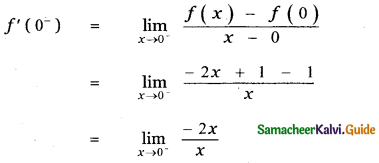
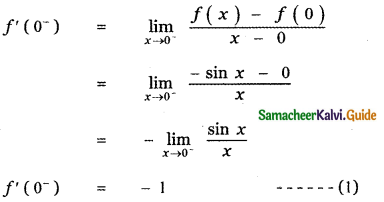
Samacheer Kalvi 11th Maths Guide Chapter 10 Differentiability and Methods of Differentiation Ex 10.1 18
f'(0 = – 2 ……… (1)
∴When x = 0+ we have
|x| = x and |x – 1| = – (x – 1)
∴ f(x) = x – (x – 1)
f(x) = x – x + 1
f(x) = 1
f(0) = 1
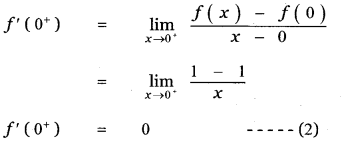
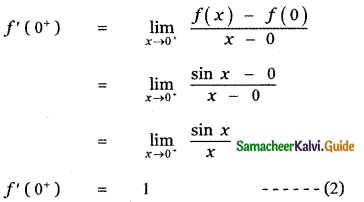
Samacheer Kalvi 11th Maths Guide Chapter 10 Differentiability and Methods of Differentiation Ex 10.1 19
From equations (1) and (2) , we get
f'(0) ≠ f’(0+)
∴ f(x) is not differentiable at x = 0.
To find the limit at x = 1
First we find the left limit of f (x) at x = 1
When x = 1 , |x| = x and
|x – 1| = -(x – 1)
∴ f(x) = x – (x – 1)
f(x) = x – x + 1 = 1
f(x) = 1
f(1) = 1
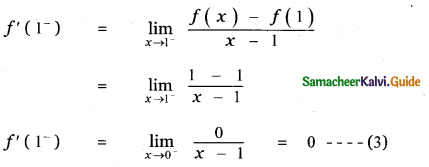
Samacheer Kalvi 11th Maths Guide Chapter 10 Differentiability and Methods of Differentiation Ex 10.1 20
When x = 1+ , |x| = x and
|x – 1| = x – 1
When x = , |x| = x and
|x – 1| = x – 1
∴ f(x) = x + x – 1 = 2x – 1
f(1) = 2 × 1 – 1 = 2 – 1 = 1
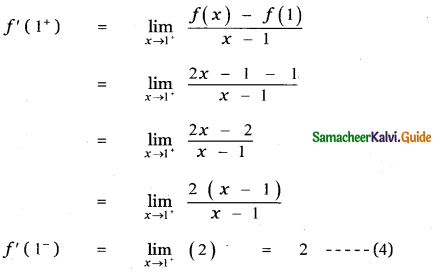
Samacheer Kalvi 11th Maths Guide Chapter 10 Differentiability and Methods of Differentiation Ex 10.1 21
From equations (3) and (4) , we get
f’(1) ≠ f'(1+)
∴ f (x) is not differentiable at x = 1

Samacheer Kalvi 11th Maths Guide Chapter 10 Differentiability and Methods of Differentiation Ex 10.1

(iv) f(x) = sin |x| at x = 0
Answer:
First we find the left limit of f (x) at x = 0
When x = 0, |x| = -x
∴ f(x) = sin (-x) = -sin x
f(0) = -sin 0 = 0
Samacheer Kalvi 11th Maths Guide Chapter 10 Differentiability and Methods of Differentiation Ex 10.1 22
Next we find the right limit of f (x) at x = 0
When x = 0+ |x| = x
∴ f(x) = sin x
f(0) = sin 0 = 0
Samacheer Kalvi 11th Maths Guide Chapter 10 Differentiability and Methods of Differentiation Ex 10.1 23
From equations (1) and (2) , we get
f’(0) ≠ f'(0+)
∴ f (x) is not differentiable at x = 0.

Samacheer Kalvi 11th Maths Guide Chapter 10 Differentiability and Methods of Differentiation Ex 10.1

Question 4.
Show that the following functions are not differentiable at the indicated value of x
(i) Samacheer Kalvi 11th Maths Guide Chapter 10 Differentiability and Methods of Differentiation Ex 10.1 24
Answer:
First we find the left limit of f(x) at x = 2
When x = 2, then x ≤ 2
∴ f(x) = -x + 2
f(2) = -2 + 2 = 0
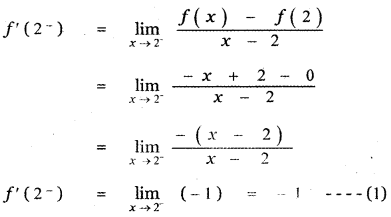
Samacheer Kalvi 11th Maths Guide Chapter 10 Differentiability and Methods of Differentiation Ex 10.1 25
Next we find the right limit of f(x) at x = 2
When x = 2+, then x > 2
∴ f(x) = 2x – 4
f(2) = 2 × 2 – 4 = 4 – 4 = 0
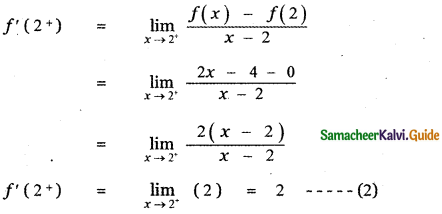
Samacheer Kalvi 11th Maths Guide Chapter 10 Differentiability and Methods of Differentiation Ex 10.1 26
From equation (1) and (2), we get
f’(2) ≠ f'(2+)
∴ f (x) is not differentiable at x = 2

(ii) Samacheer Kalvi 11th Maths Guide Chapter 10 Differentiability and Methods of Differentiation Ex 10.1 27
Answer:
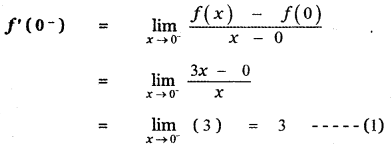
First we find the left limit of f (x) at x = 0
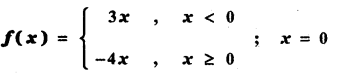
When x = 0, then x < 0
∴ f(x) = 3x
f(0) = 3 × 0 = 0
Samacheer Kalvi 11th Maths Guide Chapter 10 Differentiability and Methods of Differentiation Ex 10.1 28
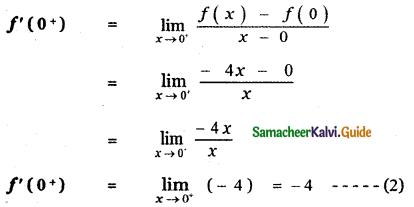
Next we find the right limit of f (x) at x = 0
When x = 0+, then x ≥ 0
∴ f(x) = -4x
f(0) = -4 × 0 = 0
Samacheer Kalvi 11th Maths Guide Chapter 10 Differentiability and Methods of Differentiation Ex 10.1 29
From equations (1) and (2) , we get
f'(0) ≠ f'((0+)
∴ f (x) is not differentiable at x = 0

Samacheer Kalvi 11th Maths Guide Chapter 10 Differentiability and Methods of Differentiation Ex 10.1

Question 5.
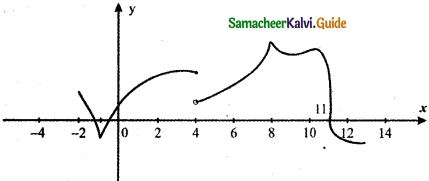
The graph of f is shown below. State with reasons that x values (the numbers), at which f is not differentiable.
Samacheer Kalvi 11th Maths Guide Chapter 10 Differentiability and Methods of Differentiation Ex 10.1 30
Answer:
We know A function f is not differentiable at a point x0 belonging to the domain of f if one of the following situations holds
(i) f has a vertical tangent at x0
(ii) The graph of f comes to a point at x0 (either a sharp edge ∨ or a sharp peak ∧)
For the given graph f
At x = – 1 , a sharp edge ∨
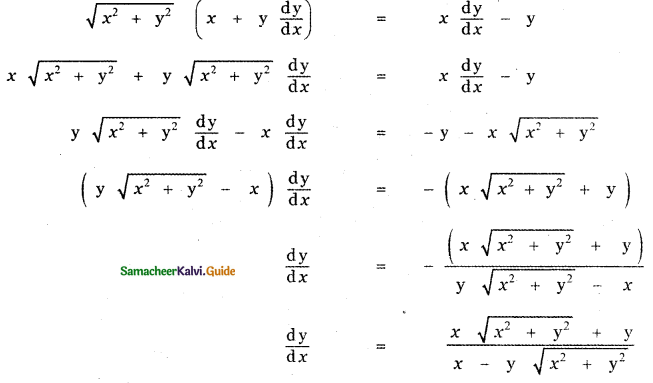
At x = 8, a sharp peak ∧
At x = 4 , discontinuity
At x = 11, perpendicular tangent
∴ The given graph is not differentiable at
x = – 1, 8, 4, 11

Question 6.
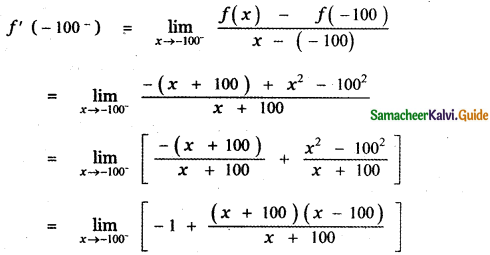
If f(x) = |x + 100| + x2, test whether f’(-100) exists.
Answer:
f(x) = |x + 100| + x2
First let us find the left limit of f( x) at x = – 1100
When x < – 100 ,
f(x) = – (x + 100) + x2
f(- 100) = – (- 100 + 100) + (- 100)2
f(- 100) = 1002
Samacheer Kalvi 11th Maths Guide Chapter 10 Differentiability and Methods of Differentiation Ex 10.1 31
Samacheer Kalvi 11th Maths Guide Chapter 10 Differentiability and Methods of Differentiation Ex 10.1 32
= -1 – 100 – 100
f’ (-100) = -201 ——– (1)
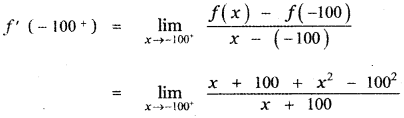
Next let us find the right limit of f( x) at x = -100
when x > – 100
f(x) = x + 100 + x2
f(- 100) = – 100 + 100 + (- 100)2
f(- 100) = 1002
Samacheer Kalvi 11th Maths Guide Chapter 10 Differentiability and Methods of Differentiation Ex 10.1 33
f'(-100+) = – 199 ……… (2)
From equation (1) and (2) , we get
f’(- 100) ≠ f'(- 100+)
∴ f’ (x) does not exist at x = -100
Hence, f'(- 100) does not exist

Samacheer Kalvi 11th Maths Guide Chapter 10 Differentiability and Methods of Differentiation Ex 10.1

Question 7.
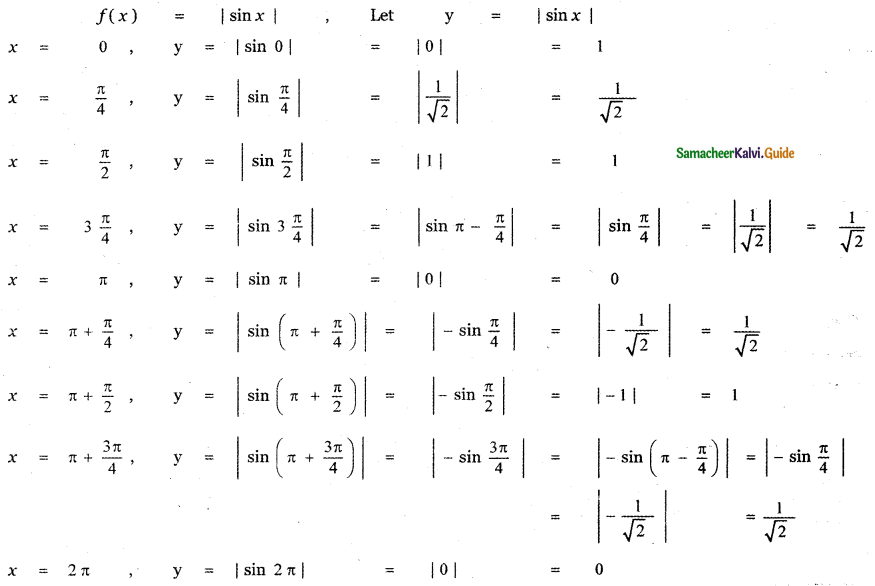
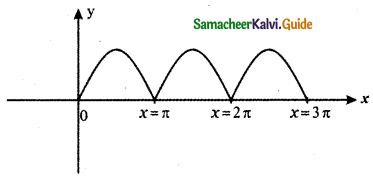
Examine the differentiability of functions in R by drawing the diagrams. (i) |sin x| (ii) |cos x|
(i) |sin x|
Answer:
Samacheer Kalvi 11th Maths Guide Chapter 10 Differentiability and Methods of Differentiation Ex 10.1 35
Samacheer Kalvi 11th Maths Guide Chapter 10 Differentiability and Methods of Differentiation Ex 10.1 36
At the points, x = 0, π, 2π, 3π, ……….. the graph of the given function has a sharp edge V.
∴ At these points, the function is not differentiable.
∴ The function y = |sin x| is not differentiable at
x = nπ, for all n ∈ Z.
Samacheer Kalvi 11th Maths Guide Chapter 10 Differentiability and Methods of Differentiation Ex 10.1 37

Samacheer Kalvi 11th Maths Guide Chapter 10 Differentiability and Methods of Differentiation Ex 10.1

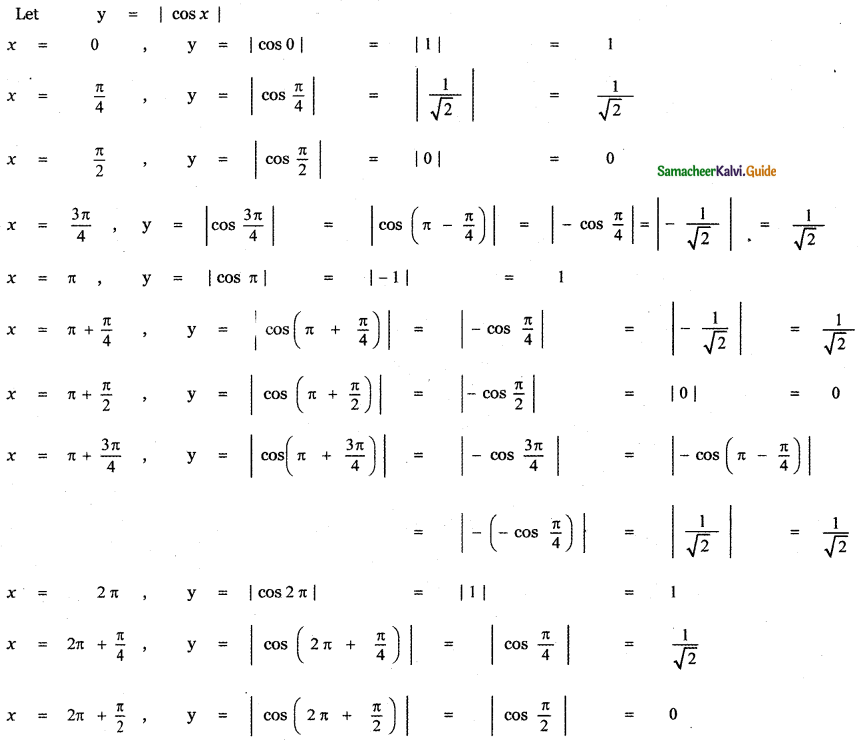
(ii) |cos x|
Answer:
Samacheer Kalvi 11th Maths Guide Chapter 10 Differentiability and Methods of Differentiation Ex 10.1 38

Samacheer Kalvi 12th Bio Zoology Guide Chapter 8 Microbes in Human Welfare

Tamilnadu State Board New Syllabus Samacheer Kalvi 12th Bio Zoology Guide Pdf Chapter 8 Microbes in Human Welfare Text Book Back Questions and Answers, Notes.

Tamilnadu Samacheer Kalvi 12th Bio Zoology Solutions Chapter 8 Microbes in Human Welfare

12th Bio Zoology Guide Microbes in Human Welfare Text Book Back Questions and Answers

Samacheer Kalvi 12th Bio Zoology Guide Chapter 8 Microbes in Human Welfare

Question 1.
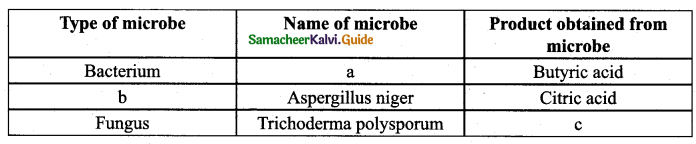
Which of the following microorganism is used for production of citric acid in industries?
(a) Lactobacillus bulgaris
(b) Penicillium citrinum
(c) Aspergillus niger
(d) Rhizopus nigricans
Answer:
(c) Aspergillus niger

Question 2.
Which of the following pair is correctly matched for the product produced by them?
(a) Acetobacter aceti – Antibiotics
(b) Methanobacterium – Lactic acid
(c) Penicilium notatum – Acetic acid
(d) Saccharomyces cerevisiae – Ethanol
Answer:
(d) Saccharomyces cerevisiae – Ethanol

Samacheer Kalvi 12th Bio Zoology Guide Chapter 8 Microbes in Human Welfare

Question 3.
The most common substrate used in distilleries for the production of ethanol is
(a) Soyameal
(b) Groundgram
(c) Molasses
(d) Com meal
Answer:
(c) Molasses

Question 4.
Cry toxins obtained from Bacillus thuringiensis are effective against for ………….
{a) Mosquitoes
(b) Flies
(c) Nematodes
(d) Bollworms
Answer:
(d) Bollworms

Question 5.
Cyclosporin – A is an immunosuppressive drug produced from ………….
(a) Aspergillus niger
(b) Manascus purpureus
(c) Penicillium notatum
(d) Trichoderma polysporum
Answer:
(d) Trichoderma polysporum

Samacheer Kalvi 12th Bio Zoology Guide Chapter 8 Microbes in Human Welfare

Question 6.
Which of the following bacteria is used extensively as a bio-pesticide?
(a) Bacillus thurigiensis
(b) Bacillus subtilis
(c) Lactobacillus acidophilus
(d) Streptococcus lactis
Answer:
(a) Bacillus thurigiensis

Question 7.
Which of the following is not involved in nitrogen fixation?
(a) Pseudomonas
(b) Azotobacter
(c) Anabaena
(d) Nostac
Answer:
(a) Pseudomonas

Question 8.
CO2 is not released during
(a) Alcoholic fermentation
(b) Lactate fermentation
(c) Aerobic respiration in animals
(d) Aerobic respiration in plants
Answer:
(b) Lactate fermentation

Question 9.
The purpose of biological treatment of waste water is to ………….
(a) Reduce BOD
(b) Increase BOD
(c) Reduce sedimentation
(d) Increase sedimentation
Answer:
(a) Reduce BOD

Samacheer Kalvi 12th Bio Zoology Guide Chapter 8 Microbes in Human Welfare

Question 10.
The gases produced in anaerobic sludge digesters are ………….
(a) Methane, oxygen and hydrogen sulphide.
(b) Hydrogen sulphide, methane and sulphur dioxide.
(c) Hydrogen sulphide, nitrogen and methane.
(d) Methane, hydrogen sulphide and CO2
Answer:
(d) Methane, hydrogen sulphide and CO2

Question 11.
How is milk converted into curd? Explain the process of curd formation?
Answer:
The LAB bacteria grows in milk and convert it into curd, thereby digesting the milk protein casein. A small amount of curd added to fresh milk as a starter or inoculum contains millions of Lactobacilli, which under suitable temperature (< 40°C) multiply and convert milk into curd. Curd is more nutritious than milk as it contains a number of organic acids and vitamins.

Question 12.
Give any two bioactive molecules produced by microbes and state their uses.
Answer:

Bioactive molecules from microbe Uses
a. Lipases Used in detergent formulations for removing oily stains from the laundry.
b. Streptokinase Used as “Clot buster” to remove clots from blood vessels.

Question 13.
What is biological oxygen demand?
Answer:
The BOD (Biochemical oxygen demand or Biological oxygen demand). BOD refers to the amount of the oxygen that would be consumed, if all the organic matter in one litre of water were oxidized by bacteria. The sewage water is treated till the BOD is reduced. The greater the BOD of the waste water more is its polluting potential.

Samacheer Kalvi 12th Bio Zoology Guide Chapter 8 Microbes in Human Welfare

Question 14.
Explain the role of cry-genes in genetically modified crops.
Answer:

Bacillus thuringiensis is a soil-dwelling bacterium which is commonly used as a biopesticide and contains a toxin called cry toxin. Scientists have introduced this toxin-producing gene into cotton and have raised genetically engineered insect resistant cotton plants.

During sporulation Bacillus thuringiensis produces crystal proteins called Delta-endotoxin which is encoded by cry genes. Delta-endotoxins have specific activities against the insects of the orders Lepidoptera, Diptera, Coleoptera and Hymenoptera. When the insects ingest the toxin crystals their alkaline digestive tract denatures the insoluble crystals making them soluble. The cry toxin then gets inserted into the gut cell membrance and paralyzes the digestive tract. The insect then stops eating and starves to death.

Question 15.
Write the key features of organic farming.
Answer:

  • Protecting soil quality using organic materials and encouraging biological activity.
  • Indirect provision of crop nutrients using soil microorganisms.
  • Nitrogen fixation in soils using legumes.
  • Weed and pest control based on methods like crop rotation, biological diversity, natural predators, organic manures and suitable chemical, thermal and biological interventions.

Samacheer Kalvi 12th Bio Zoology Guide Chapter 8 Microbes in Human Welfare

Question 16.
Justify the role of microbes as a bio-fertilizer.
Answer:
Biofertilisers are formulation of living microorganisms that enrich the nutrient quality of the soil. They increase physico – chemical properties of soils such as soil structure, texture, water holding capacity, cation exchange capacity and pH by providing several nutrients and sufficient organic matter. The main sources of biofertilisers are bacteria, fungi and cyanobacteria. Rhizobium is a classical example for symbiotic nitrogen fixing bacteria. This bacterium infects the root nodules of leguminous plants and fixes atmospheric nitrogen into organic forms. Azospirillum and Azotobacter are free living bacteria that fix atmospheric nitrogen and enrich the nitrogen content of soil.

A symbiotic association between a fungus and the roots of the plants is called mycorrhiza. The fungal symbiont in these associations absorbs the phosphorus from soil and transfers to the plant. Plants having such association show other benefits such as resistance to rootbome pathogens, tolerance to salinity, drought, enhances plant growth and developments.

For example, many members of the genus Glomus form mycorrhiza. Cyanobacteria (or) blue green algae (BGA) are prokaryotic free-living organisms which can fix nitrogen. Oscillatoria, Nostoc, Anabaena, Tolypothrix are well known nitrogen fixing cyanobacteria. Their importance is realized in the water logged paddy fields where Cyanobacteria multiply and fix molecular nitrogen. Cyanobacteria secrete growth promoting substances like indole-3-acetic acid, indole-3 – butyric acid, naphthalene acetic acid, amino acids, proteins, vitamins which promotes plant growth and production.

Biofertilisers are commonly used in organic farming methods. Organic farming is a technique, which involves cultivation of plants and rearing of animals in natural ways. This process involves the use of biological materials, avoiding synthetic substances to maintain soil fertility and ecological balance thereby minimizing pollution and wastage.

Key features of organic farming

  • Protecting soil quality using organic materials and encouraging biological activity.
  • Indirect provision of crop nutrients using soil microorganisms.
  • Nitrogen fixation in soils using legumes.
  • Weed and pest control based on methods like crop rotation, biological diversity, natural predators, organic manures and suitable chemical, thermal and biological interventions.

Samacheer Kalvi 12th Bio Zoology Guide Chapter 8 Microbes in Human Welfare

Question 17.
Write short notes on the following.
(a) Brewer’s yeast
(b) Ideonella sakaiensis
(c) Microbial fuel cells
Answer:
(a) Brewer’s yeast – Saccharomyces cerevisiae is a widely used fungal species in preparation & softening of bakery products like dough.

(b) Ideonella sakaiensis is a bacterium is used to recycle PET plastics. The enzyme PETase and MHETase in the bacterium breakdown the PET plastics into terephthalic acid & ethylene glycol.

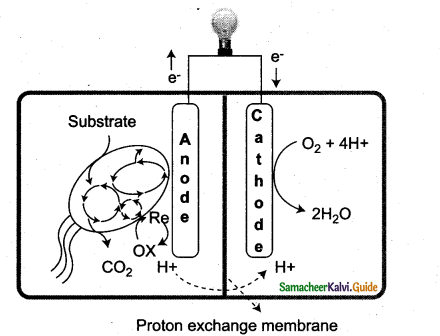
(c) A microbial fuel cell is a bio-electrochemical system that drives an electric current by using bacteria and mimicking bacterial interaction found in nature. Microbial fuel cells work by allowing bacteria to oxidize and reduce organic molecules. Bacterial respiration is basically one big redox reaction in which electrons are being moved around. A MFC consists of an anode and a cathode separated by a proton exchange membrane. Microbes at the anode oxidize the organic fuel generating protons which pass through the membrane to the cathode and the electrons pass through the anode to the external circuit to generate current.
Samacheer Kalvi 12th Bio Zoology Guide Chapter 8 Microbes in Human Welfare 1
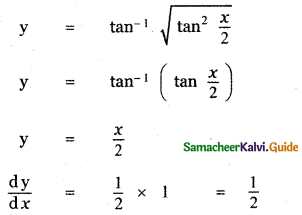
Question 18.
List the advantages of biogas plants in rural areas.
Answer:
Biogas is used for cooking and lighting. The technology of biogas production was developed in India mainly due to the efforts of Indian Agricultural Research Institute (IARI) and Khadi and Village Industries Commission (KVIC).

Question 19.
When does antibiotic resistance develop?
Answer:
Antibiotic resistance occurs when bacteria develop the ability to defeat the drug designed to kill or inhibit their growth. It is one of the most acute threat to public health. Antibiotic resistance is accelerated by the misuse and over use of antibiotics, as well as poor infection prevention control. Antibiotics should be used only when prescribed by a certified health professional. When the bacteria become resistant, antibiotics cannot fight against them and the bacteria multiply. Narrow spectrum antibiotics are preferred over broad spectrum antibiotics. They effectively and accurately target specific pathogenic organisms and are less likely to cause resistance.

Samacheer Kalvi 12th Bio Zoology Guide Chapter 8 Microbes in Human Welfare

Question 20.
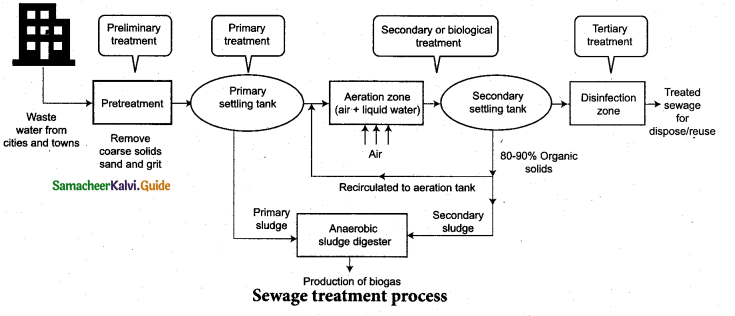
What is the key difference between primary and secondary sewage treatment?
Answer:
Primary Treatment:

  1. Physical foam
  2. Solid materials and particulate organic and inorganic materials are removed from sewage.
  3. Principles involved are setting, sedimentation, and filtration.

Secondary Treatment:

  1. Biological foam
  2. Organic matters are removed by using microbes.
  3. Principles involved in aeration and aerobic microbial degradation.

12th Bio Zoology Guide Microbes in Human Welfare Additional Important Questions and Answers

12th Bio Zoology Guide Microbes in Human Welfare One Mark Questions and Answers

Question 1.
The leavering of the dough during fermentation is due to
(a) Formation of ethyl alchohol
(b) Formation of CO2
(c) Formation of oxygen
(d) Action of zymase enzyme
Answer:
(b) Formation of CO2

Question 2.
Match list I with list II

Raw Material Product
(a) Germinated barley malt (i) Wine
(b) Fermented sugarcane (ii) toddy
(c) Fermented sap of palm tree (iii) Rum
(d) Fermented grape juice (iv) Beer

Answer:
a – iv, b – iii, c – ii, d – i

Samacheer Kalvi 12th Bio Zoology Guide Chapter 8 Microbes in Human Welfare

Question 3.
Name the person who was the first to use the term antibiotic.
(a) Selman Waksman
(b) Alexander Flemming
(c) Earnest Chain
(d) Howard Florey
Answer:
(a) Selman Waksman

Question 4
……………. is commonly referred as the Queen of drugs.
Answer:
Penicillin

Question 5.
Tetracycline is a …………………..
(i) bactericidal antibiotic
(ii) bacteriastatic antibiotic
(iii) narrow spectrum antibiotic
(iv) Broad spectrum antibiotic

(a) i and iii
(b) ii and iii
(c) i and iv
(d) ii and iv
Answer:
(d) ii and iv

Samacheer Kalvi 12th Bio Zoology Guide Chapter 8 Microbes in Human Welfare

Question 6.
Chlortetracycline was isolated from the culture ……………….
(a) Streptomyces aureofaciens
(b) Streptomyces griseus
(c) Streptococcus lactis
(d) Aspergillus niger
Answer:
(a) Streptomyces aureofaciens

Question 7.
Identify the name and the formula of industrial alcohol.
(a) Butanol, C4H9OH
(b) Propanol, C3H7OH
(c) Ethanol, C2H5OH
(d) Methanol, CH3OH
Answer:
(c) Ethanol, C2H5OH

Question 8.
Pick the bacterial species which is not used in ethanol formation.
(a) Zymomonas mobilis
(b) Sarcina ventriculi
(c) Saccharomyces cerevisiae
(d) Streptomyces aureofaciens
Answer:
(d) Streptomyces aureofaciens

Question 9.
Match the Microbes with the respective organic acids

Microbes Organic acids
(a) Aspergillus species (i). Acetic acid
(b) Acetobatem species (ii) Citric acid
(e) Rhizopus species (iii) Butyric acid
(d) Clostridium species (iv) Fumaric acid

Answer:
a-ii, b -i, c- iv, d-iii

Samacheer Kalvi 12th Bio Zoology Guide Chapter 8 Microbes in Human Welfare

Question 10.
Human insulin is being commercially produced from a transgenic species of…………………
(a) Escherichia
(b) Mycobacterium
(c) Streptococcus
(d) Penicillin
Answer:
(a) Escherichia

Question 11.
Select the correct statement from the following.
(a) Primary treatment of sewage involves biological oxidation
(b) Excreta of cattle is commonly called Gobur
(c) Delta endotoxin of Bacillus thuringiensis is encoded by pen-genes.
(d) Trichoderma is a free-timing bacteria very common in root ecosystem.
Answer:
(a) Escherichia

Question 12.
Oil strains in laundry can be removed using ……………….
(a) Peptidane
(b) Protease
(c) Amylase
(d) Lipase
Answer:
(d) Lipase

Samacheer Kalvi 12th Bio Zoology Guide Chapter 8 Microbes in Human Welfare

Question 13.
Find the odd sentence out.
(i) Biogas primarily consists of methane with CO2 and hydrogen
(ii) The greater the BOD of wastewater the more its polluting potential
(iii) World biofuel day is observed on 10th August
(iv) Cyclosporin A is obtained from Trichoderma polysporum.

(a) i and iii
(b) ii and iv
(c) i and iv
(d) none of the above
Answer:
(d) none of the above

Question 14.
Match with correct pair
(a) Biofertilizer (i) Bacillus thuringiensis
(b) Bioremediation (ii) Rhizobium
(c) Biopesticide (iii) Pseudomonas
(d) Bioherbicide (iv) Phytophthora palmivora
Answer:
a – ii, b – iii, c-i, d-iv

Question 15.
Name the genus of virus which are used as effective Biocontrol agent.
Answer:
Nucleopolyhedrovirus

Samacheer Kalvi 12th Bio Zoology Guide Chapter 8 Microbes in Human Welfare

Question 16.
Statement 1: Prebiotics are the compounds in food that induce the growth of beneficial microbes
Statement 2: LAB is a probiotic
(a) Statement 1 is correct. Statement 2 is incorrect.
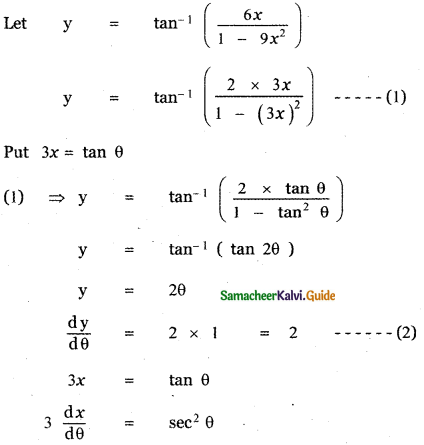
(b) Statement 1 is incorrect. Statement 2 is correct.
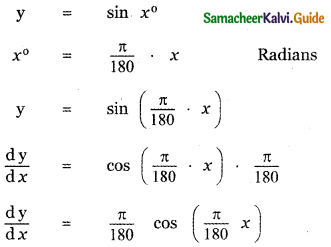
(c) Both statements 1 and 2 are incorrect.

(d) Both statements 1 and 2 are correct.
Answer:
(d) Both statements 1 and 2 are correct.

Question 17.
‘Statement 1: Saccharomyces cerevisiae is commonly called as Baker’s yeast.
Statement 2: Yogurt is produced by the fermentation of milk by saccharomyces cerevisiae
(a) Statement 1 is correct. Statement 2 is incorrect.
(b) Statement 1 is incorrect. Statement 2 is correct.
(c) Both statements 1 and 2 are incorrect.
(d) Both statements 1 and 2 are correct.
Answer:
(a) Statement 1 is correct. Statement 2 is incorrect.

Question 18.
The flavour in the yogurt is due to ………………..
(a) Formaldehyde
(b) Lactate
(c) Acetaldehyde
(d) Caesin
Answer:
(c) Acetaldehyde

Samacheer Kalvi 12th Bio Zoology Guide Chapter 8 Microbes in Human Welfare

Question 19.
Assertion (A): Streptomycin is an antibiotic.
Reason (R): Antibiotic are microbial chemicals inhibits the growth of pathogenic microbe.
(a) A is right R is wrong.
(b) R explains A.
(c) A and R are wrong.
(d) A and R are right. R cannot explain A. ‘
Answer:
(b) R explains A

Question 20.
Assertion (A): Oenology deals with study of wine and its preparation.
Reason (R): Zymology deals with the biochemical process of fermentation and its uses.
(a) A is right R is wrong.
(b) R explains A.
(c) A and R are wrong.
(d) A and R are right. R cannot explain A.
Answer:
(d) A and R are right. R can not explain A.

Question 21.
In primary sewage treatment, the floating debris are removed by………………….
(a) Distillation
(b) Sedimentation
(c) Sequential filtration
(d) Biological oxidation
Answer:
(c) Sequential filtration

Samacheer Kalvi 12th Bio Zoology Guide Chapter 8 Microbes in Human Welfare

Question 22.
Yamuna Action Plan was a bilateral project signed between ……………..
(a) India and Pakistan Government
(b) India and Japan Government
(c) India and China Government
(d) India and Srilanka Government
Answer:
(b) India and Japan Government

Question 23.
Select the correct option denoting the proper sequence of sewage tratment.
(a) Filtration, Sedimentation, Aeration, Biological oxidation and UV radiation
(b) Sedimentation, Filtration, Biological oxidation, Aeration and UV radiation.
(c) Filtration, Aeration, Biological oxidation, Sedimentation and UV radiation.
(d) UV radiation, Sedimentation, Filtration, Biological oxidation and Aeration.
Answer:
(a) Filtration, Sedimentation, Aeration, Biological oxidation and UV radiation.

Question 24.
The Ganga action plan was launched on ………………..
Answer:
14th January 1986.

Question 25.
Which of the following plant species is the most suitable oilseed for biodirect production?
(a) Ground nut
(b) Areca nut
(c) Jatropha curcas
(d) Phyllanthus anarus
Answer:
(c) Jatropha curcas

Samacheer Kalvi 12th Bio Zoology Guide Chapter 8 Microbes in Human Welfare

Question 26.
Match the following medicinal products with their microbial source.
(a) Humulin (z) Streptococcus
(b) Statins (ii) Trichoderma polysporum
(c) Cyclosporin A (z’z’z) Monascus purpureus
(d) Streptokinase (z’v) E-coli
Answer:
a – iv, b – iii, c – ii, d-i

12th Bio Zoology Guide Microbes in Human Welfare Two Marks Questions and Answers

Question 1.
What does LAB stands for? Give two examples.
Answer:

  1. LAB stands for Lactic Acid Bacteria
  2. Examples for LAB: Lactobacillus lactis, Streptococcus lactis.

Question 2.
Define LAB.
Answer:
Lactic Acid bacteria (LAB) are the probiotics that check the growth of pathogenic microbes in the stomach and other digestive parts. .

Question 3.
Given below are the food products obtained by microbial action. Name the respective organism responsible for their production, (a) Swiss Cheese (6) Bread dough
Answer:
(a) Swiss Cheese – Propionibacterium shermanii
(b) Bread dough – Saccharomyces cerevisiae

Samacheer Kalvi 12th Bio Zoology Guide Chapter 8 Microbes in Human Welfare

Question 4.
What is SCP?
Answer:
Single cell protein refers to edible unicellular microorganisms like Spirulina. Protein extracts from pure or mixed cultures of algae, yeasts, fungi or bacteria may be used as ingredient or as a substitute for protein rich foods and is suitable for human consumption or as animal feed.

Question 5.
What is fermentor?
Answer:
A fermentor (bioreactor) is a closed vessel with adequate arrangement for aeration, agitation, temperature, pH control and drain or overflow vent to remove the waste biomass of cultured microorganisms along-with their products.

Question 6.
What are antibiotics?
Answer:
Antibiotics are chemical substances produced by microorganisms which can kill or retard the growth of other disease causing microbes even in low concentration. Antibiotic means “against life”.

Question 7.
Give reason, (a) Flavour in Yogurt (6) Large holes in Swiss Cheese
Answer:
(a) The flavour in yogurt is due to acetaldehyde formation.
(b) Large holes in Swiss Cheese is due to more C02 production by propionibacterium shermanii.

Samacheer Kalvi 12th Bio Zoology Guide Chapter 8 Microbes in Human Welfare

Question 8.
Name few industrial microbial products.
Answer:
Beverages, antibiotics, organic acids, amino acids, vitamins, biofuels, single-cell protein, enzymes, steroids, vaccines, pharmaceutical drugs.

Question 9.
Name few home-made micorbial products.
Answer:
Yogurt, Paneer, Curd, Idli batter, Bread dough.

Question 10.
Who derived the term antibiotic? Name the antibiotic which he discovered.
Answer:
The term antibiotic was used first by Selman Waksman in 1943. He discovered Streptomycin.

Samacheer Kalvi 12th Bio Zoology Guide Chapter 8 Microbes in Human Welfare

Question 11.
The first antibiotic was extracted from fungus. Who had done it? And also mention the fungal species used.
Answer:
Alexander Flemming, discovered the first antibiotic from the fungus Penicillium notatum and Pencillium Chrysogenum.

Question 12.
Write as example for (a) Bacteriostatic antibiotic (b) Bactericidal antibiotic
Answer:
Bacteriostatic antibiotic – Eg: Tetracycline.
Bactericidal antibiotic – Eg: Streptomycin.

Question 13.
Name any four antibiotics.
Answer:
Erythromycin, Chloromycetin, Neomycin, Kenamycin.

Question 14.
Compare Broad-spectrum antibiotics with narrow-spectrum antibiotics.
Answer:
Broad-spectrum antibiotics act against a wide range of disease-causing bacteria. Narrow-spectrum antibiotics are active against a selected group of bacterial types.

Samacheer Kalvi 12th Bio Zoology Guide Chapter 8 Microbes in Human Welfare

Question 15.
Define (a) Antibiosis (A) Superbugs
Answer:
(a) Antibiosis: Property of antibiotics to. kill microbes.
(b) Superbugs: Bacterial strains gained resistance against antibiotics.

Question 16.
What is studied under zymology and oenology?
Answer:

  • Zymology deals with the biochemical process of fermentation and its application.
  • Oenology deals with study of wine and winemaking.

Question 17.
Saccharomyces cerevisiae is called as brewer’s yeast. Justify.
Answer:
Saccharomyces cerevisiae commonly called brewer’s yeast is used for fermenting malted cereals and fruit juices to produce various alcoholic beverages. Wine and beer are produced without distillation, whereas whisky, brandy and rum are obtained by fermentation and distillation.

Question 18.
How wine is made? Which organism is involved in the process.
Answer:

  • Wine is made by the fermentation of grape juice.
  • Grape juice is fermented by different strains of Saccharomyces cerevisiae into alcohol.

Question 19.
Name the 2 types of grape wine. How they differ from one another?
Answer:
Grape wine is of two types, red wine and white wine. For red wine, black grapes are used including skins and sometimes the stems also are used. In contrast white wine is produced only from the juice of either white or red grapes without their skin and stems.

Samacheer Kalvi 12th Bio Zoology Guide Chapter 8 Microbes in Human Welfare

Question 20.
Saccharomyces Cerevisiae is a widely used fungus in making beverages. Considering this complete the table by mentioning the raw material and respective product.
Samacheer Kalvi 12th Bio Zoology Guide Chapter 8 Microbes in Human Welfare 2
Answer:
A – Wine, B – Germinated barley, C – Whisky, D — Rum

Question 21.
Ethanol is a industrial alcohol – Justify.
Answer:
Saccharomyces cerevisiae is the major producer of ethanol (C2H5OH). It is used for industrial, laboratory and fuel purposes. So ethanol is referred to as industrial alcohol.

Question 22.
Name the bacterial species involved in ethanol production.
Answer:
Zymomonas mobilis and Sarcina ventriculi.

Question 23.
What are the substrates used in producing industrial alcohol.
Answer:
Molasses, Com, Potatoes, Wood wastes.

Question 24.
Write the equation for alcoholic fermentation.
Answer:
Samacheer Kalvi 12th Bio Zoology Guide Chapter 8 Microbes in Human Welfare 3

Question 25.
Complete the table by filling with respective organic acid and microbes.

Organic Acid Microbes
Acetic acid ………..W………..
………..X……….. Aspergillus niger
Fumaric acid ………..Y………..
………..Z……….. Clostridium butyricum

Answer:
W- Acetobacter aceti
X – Citric acid,
Y – Rhizopus oryzae,
Z – Butyric acid

Samacheer Kalvi 12th Bio Zoology Guide Chapter 8 Microbes in Human Welfare

Question 26.
Genetically engineered Streptococci is used in medicine. How?
Answer:
Genetically engineered Streptococci are used as “clot buster” for, removing clots from the blood vessels of patients who have undergone myocardial infarction.

Question 27.
Write a brief note on Cyclosporin A.
Answer:
Cyclosporin A, an immunosuppressant used in organ transplantation is produced from the fungus Trichoderma polysporum. It is also used for its anti-inflammatory, anti-fungal and anti-parasitic properties.

Question 28.
State the source of statins and its medical role.
Answer:

  • Statins is obtained from Monascus Purpureus (yeast fungus).
  • It competitively inhibits the enzyme responsible for cholesterol synthesis there by reducing the blood cholesterol level.

Question 29.
Expand and define BOD.
Answer:
BOD – Biological Oxygen Demand (or) Biochemical Oxygen Demand
BOD refers to the amount of the oxygen that would be consumed, if all the organic matter in one litre of water were oxidized by bacteria.

Question 30.
Define activated sludge.
Answer:
Once the BOD of sewage water is reduced significantly, the effluent is then passed into a settling tank where the bacterial “floes” are allowed to sediment. This sediment is called activated sludge.

Samacheer Kalvi 12th Bio Zoology Guide Chapter 8 Microbes in Human Welfare

Question 31.
Give a brief account on Ganga action plan.
Answer:
The Ganga action plan was launched on 14th January 1986. The main objective of the programme is to improve the water quality of River Ganges by interception, diversion and treatment of domestic sewage and to identify grossly polluting units to prevent pollution.

Question 32.
Name the biocontrol agents used to get rid of Aphids & mosquito larvae.
Answer:
Lady bird beetle & Dragon flies.

Question 33.
How insect resistant plants are developed using Bacillus thuringiensisl
Answer:
Bacillus thuringiensis is a soil dwelling bacterium which is commonly used as a biopesticide and contains a toxin called cry toxin. Scientists have introduced this toxin producing genes into cotton and have raised genetically engineered insect resistant cotton plants.

Question 34.
Which group of insects can be controlled by using delta-endotoxins of Bt-crops?
Answer:
Lepidoptera, Diptera, Coleoptera and Hymenoptera.

Question 35.
Name the two viruses that acts as biocontrol agents.
Answer:
Buculoviruses and Nucleopolyhedrovirus

Question 36.
Rhizobium is a bacteria but acts as bio-fertilization. How?
Answer:
Rhizobium is symbiotic nitrogen-fixing bacteria that infects the root nodules of leguminous plants and fixes free atmospheric nitrogen into organic forms.

Samacheer Kalvi 12th Bio Zoology Guide Chapter 8 Microbes in Human Welfare

Question 37.
Give any two examples for free-living nitrogen-fixing bacteria.
Answer:
Azospirillum and Azotobacter

Question 38.
Name a few blue-green algae (BGA).
Answer:
Oscillatoria, Nostoc, Anabaena, Tolypothrix

Question 39.
Define organic farming.
Answer:
Organic farming is a technique, which involves the cultivation of plants and rearing of animals in natural ways. This process involves the use of biological materials, avoiding synthetic substances to maintain soil fertility and ecological balance thereby minimizing pollution and wastage.

Question 40.
Pseudomonas putida and pollution abatement – comment.
Answer:
Pseudomonas putida is a genetically engineered, multi plasmid hydrocarbon-degrading bacterium. These bacteria can digest the hydrocarbons in the oil spills helps to overcome water pollution.

Question 41.
Complete the following equation by identifying the microbes involved in bioremediation.
Samacheer Kalvi 12th Bio Zoology Guide Chapter 8 Microbes in Human Welfare 4
Answer:
A – Ideonella sakaiensis
B – Dehalococcoides species.

Samacheer Kalvi 12th Bio Zoology Guide Chapter 8 Microbes in Human Welfare

12th Bio Zoology Guide Microbes in Human Welfare Three Marks Questions and Answers

Question 1.
Differentiate between Prebiotics and Probiotics.
Answer:
Prebiotics :
Prebiotics are compounds in food (fibers) that induce the growth or activity of beneficial microorganisms.

Probiotics :
Probiotics are live microorganisms intended to provide health benefits when consumed, generally by improving or restoring the gut flora.

Question 2.
How yogurt is produced?
Answer:
Yogurt is produced by bacterial fermentation of milk, and lactic acid is produced as a byproduct. Microorganisms such as Streptococcus thermophilus and Lactobacillus bulgaricus coagulate the milk protein and convert the lactose in the milk to lactic acid. The flavour in yogurt is due to acetaldehyde.

Question 3.
Name the scientists who were awarded Nobel Prize in 1945 for discovering the penicillin drug & its role as an antibiotic.
Answer:
(a) Alexander Fleming (b) Earnest Chain (c) Howard Florey

Question 4.
Both Tetracycline and Streptomycin are broad-spectrum antibiotics yet functionally discriminate. How?
Answer:
Though Tetracycline & Streptomycin are broad-spectrum antibiotics, Tetracycline acts as a bacteriostatic antibiotic whereas streptomycin acts as a bactericidal antibiotic against both gram-positive and gram-negative bacteria.

Question 5.
Under which condition does a microbe gains resistance against antibiotics?
Answer:
Antibiotic resistance occurs when bacteria develop the ability to defeat the drug designed to kill or inhibit their growth. It is one of the most acute threats to public health. Antibiotic resistance is accelerated by the misuse and overuse of antibiotics, as well as poor infection prevention control. Antibiotics should be used only when prescribed by a certified health professional. When the bacteria become resistant, antibiotics cannot fight against them and the bacteria multiply. Narrow spectrum antibiotics are preferred over broad-spectrum antibiotics. They effectively and accurately target specific pathogenic organisms and are less likely to cause resistance.

Samacheer Kalvi 12th Bio Zoology Guide Chapter 8 Microbes in Human Welfare

Question 6.
Write a short on “Pathaneer”.
Answer:
In some parts of South India, a traditional drink called pathaneer is obtained from fermenting sap of palms and coconut trees. A common source is tapping of unopened spadices of coconut. It is a refreshing drink, which on boiling produces jaggery or palm sugar. When pathaneer is left undisturbed for few hours it gets fermented to form today with the help of naturally occurring yeast, to form a beverage that contains 4 percent alcohol. After 24 hours toddy becomes unpalatable and is used for the production of vinegar.

Question 7.
Explain in simple about the production process of industrial alcohol.
Answer:
The process of ethanol production starts by milling a feedstock followed by the addition of dilute or fungal amylase (enzyme) from Aspergillus to break down the starch into fermentable sugars. Yeast is then added to convert the sugars to ethanol which is then distilled off to obtain ethanol which is upto 96 percent in concentration. Ethanol and biodiesel represents the first generation of biofuel technology. Ethanol is often used as a fuel, mainly as a biofuel additive for gasoline

Question 8.
Write the percent of alcohol in Beer, Wine and Distilled spirits
Answer:
Beer – 3 to 5 % alcohol; Wine – 9 to 14% alcohol; Distilled spirits – 35 to 50% alcohol.

Samacheer Kalvi 12th Bio Zoology Guide Chapter 8 Microbes in Human Welfare

Question 9.
Complete the table.
Samacheer Kalvi 12th Bio Zoology Guide Chapter 8 Microbes in Human Welfare 5
Answer:
A – Germinatd Barley;
B- Rum;
C- Fermented sap of palm and coconut tree;
D- Saccharomyces cerevisiae.

Question 10.
Name the enzymes used as clarifier for Bottled juices.
Answer:
PeCtinase, Protease, Cellulase.

Question 11.
Write a short note on bio diesel.
Answer:
Biodiesel is a fuel made from vegetable oils, fats or greases. Biodiesel fuel can be used in diesel engines without altering the engine. Pure biodiesel is non-toxic, biodegradable and produces lower level of air pollutants than petroleum-based diesel fuel. The Government of India approved the National Policy on Biofuels in December 2009 and identified Jatropha curcas as the most suitable oilseed for biodiesel production. Pongamia species is also a suitable choice for production of biodiesel.

Question 12.
Name the act enforced by government to conserve water bodies. Also mention its objectives.
Answer:
National river conservation plan (NRCP) was enacted in 1995 to improve the water quality of the rivers, which are the major fresh water resources in our country. This important assignment taken up under the NRCP includes,

  • To capture the raw sewage flowing into the river through open drains and divert them for treatment.
  • Setting up sewage treatment plants for treating the diverted sewage.
  • Construction of low cost sanitation toilets to prevent open defecation on river banks.

Samacheer Kalvi 12th Bio Zoology Guide Chapter 8 Microbes in Human Welfare

Question 13.
Give an account on MFC.
Answer:
A microbial fuel cell is a bio-electrochemical system that drives an electric current by using bacteria and mimicking bacterial interaction found in nature. Microbial fuel cells work by allowing bacteria to oxidize and reduce organic molecules. Bacterial respiration is basically one big redox reaction in which electrons are being moved around. A MFC consists of an anode and a cathode separated by a proton exchange membrane. Microbes at the anode oxidize the organic fuel generating protons which pass through the membrane to the cathode and the electrons pass through the anode to the external circuit to generate current.

Question 14.
How Bacillus thuringiensis provides insect resistance?
Answer:
During sporulation Bacillus thuringiensis produces crystal proteins called Delta-endotoxin which is encoded by cry genes. Delta-endotoxins have specific activities against the insects of the orders Lepidoptera, Diptera, Coleoptera and Hymenoptera. When the insects ingest the toxin crystals their alkaline digestive tract denatures the insoluble crystals making them soluble. The cry toxin then gets inserted into the gut cell membrance and paralyzes the digestive tract. The insect then stops eating and starves to death.

Question 15.
Give an account on Weedicides.
Answer:
Weedicides are substances, which destroy weeds without harming the useful plants. Bioweedicides are compounds and secondary metabolites derived from microbes such as fungi, bacteria or protozoa. The first bioherbicide developed in 1981 was a Mycoheribicide derived from the fungus Phytophthora palmivora. It controls the growth of strangler vine in citrus crops.

Question 16.
What are the Bio-fertilizers? Mention their role in agriculture?
Answer:
Biofertilisers are the formulation of living microorganisms that enrich the nutrient quality of the soil. They increase physicochemical properties of soils such as soil structure, texture, water holding capacity, cation exchange capacity and pH by providing several nutrients and sufficient organic matter.

Samacheer Kalvi 12th Bio Zoology Guide Chapter 8 Microbes in Human Welfare

Question 17.
What is mycorrhiza? How does it benefit the plants?
Answer:
A symbiotic association between a fungus and the roots of the plants is called mycorrhiza. The fungal symbiont in these associations absorbs the phosphorus from soil and transfers to the plant. Plants having such association show other benefits such as resistance to rootbome pathogens, tolerance to salinity, drought, enhances plant growth and developments. For example, many members of the genus Glomus form mycorrhiza.

Question 18.
Write a brief note on Cyanobacteria & its significances.
Answer:
Cyanobacteria (or) blue-green algae (BGA) are prokaryotic free-living organisms that can fix nitrogen. Oscillatoria, Nostoc, Anabaena, Tolypothrix are well known nitrogen-fixing cyanobacteria. Their importance is realized in the waterlogged paddy fields where Cyanobacteria multiply and fix molecular nitrogen. Cyanobacteria secrete growth-promoting substances like indole-3-acetic acid, indole-3- butyric acid, naphthalene acetic acid, amino acids, proteins, vitamins which promote plant growth and production.

Question 19.
Define bio-remediation and its types.
Answer:
The use of naturally occurring or genetically engineered microorganisms to reduce or degrade pollutants is called bioremediation. Bioremediation is less expensive and more sustainable than other remediations available. It is grouped into in-situ bioremediation (treatment of contaminated soil or water in the site) and ex-situ bioremediation (treatment of contaminated soil or water that is removed from the site and treated).

Samacheer Kalvi 12th Bio Zoology Guide Chapter 8 Microbes in Human Welfare

12th Bio Zoology Guide Microbes in Human Welfare Five Marks Questions and Answers

Question 1.
Explain the role of microbes in the production of enzymes & bio-active molecules?
Answer:
Microbes used for the production of chemicals like organic acids and enzymes. Examples of organic acid producers are Aspergillus niger for citric acid, Acetobacter aceti for acetic acid, Rhizopus oryzae for fumaric acid, Clostridium butyricum for butyric acid and Lactobacillus for lactic acid.

Yeast (Saccharomyces cerevisiae) and bacteria are used for the commercial production of enzymes. Lipases are used in detergent formulations and are used for removing oily stains from the laundry. Bottled juices are clarified by the use of pectinase, protease and cellulase. Rennet can also be used to separate milk into solid curds for cheese making. Streptokinase ’ produced by the bacterium Streptococcus and genetically engineered Streptococci are used as “clot buster” for removing clots from the blood vessels of patients who have undergone myocardial infarction.

Cyclosporin A, an immunosuppressant used in organ transplantation is produced from the fungus Trichoderma polysporum. It is also used for its anti-inflammatory, anti-fungal and anti-parasitic properties. Statins produced by the yeast Monascus purpureus have been used to lower blood cholesterol levels. It acts by competitively inhibiting the enzyme responsible for the synthesis of cholesterol. Recombinant human insulin has been produced predominantly using E. coli and Saccharomyces cerevisiae for therapeutic use in humans.

Question 2.
Describe the stages of the Sewage treatment process.
Answer:
Sewage treatment is usually performed in the following three stages.
Samacheer Kalvi 12th Bio Zoology Guide Chapter 8 Microbes in Human Welfare 6

Primary treatment: Primary treatment involves the physical removal of solid and particulate organic and inorganic materials from the sewage through filtration and sedimentation. Floating debris is removed by sequential filtration. Then the grit (soil and small pebbles) are removed by sedimentation. All solids that settle form the primary sludge and the supernatant forms the effluent. The effluent from the primary settling tank is taken for secondary treatment.

Secondary treatment or biological treatment: The primary effluent is passed into large aeration tanks where it is constantly agitated mechanically and air is pumped into it. This allows vigorous growth of useful aerobic microbes into floe (masses of bacteria associated with fungal filaments to form mesh-like structures). While growing, these microbes consume the major part of the organic matter in the effluent.

This significantly reduces the BOD (Biochemical oxygen demand or Biological oxygen demand). BOD refers to the amount of oxygen that would be consumed if all the organic matter in one liter of water were oxidized by bacteria. The sewage water is treated till the BOD is reduced. The greater the BOD of the wastewater more is its polluting potential. Once the BOD of sewage water is reduced significantly, the effluent is then passed into a settling tank where the bacterial “floes” are allowed to sediment.

This sediment is called activated sludge. A small part of activated sludge is pumped back into the aeration tank to serve as the inoculum. The remaining major part of the sludge is pumped into large tanks called anaerobic sludge digesters. Here, the bacteria which grow anaerobically, digest – the bacteria and the fungi in the sludge. During this digestion, bacteria produce a mixture of gases such as methane, hydrogen sulfide and CO2. These gases form biogas and can be used as a source of energy.

Tertiary treatment: Tertiary treatment is the final process that improves the quality of the wastewater before it is reused, recycled or released into natural water bodies. This treatment removes the remaining inorganic compounds and substances, such as nitrogen and phosphorus. UV is an ideal disinfectant for wastewater since it does not alter the water quality – except for inactivating microorganisms. UV is a chemical free process that can completely replace the existing chlorination system and also inactivates chlorine-resistant microorganisms like Cryptosporidium and Giardia.

Samacheer Kalvi 12th Bio Zoology Guide Chapter 8 Microbes in Human Welfare

Question 3.
How microbes are used in Gobar gas production?
Answer:
Biogas is a mixture of different gases produced by the breakdown of organic matter in the absence of oxygen. Biogas can be produced from raw materials such as agricultural wastes, manure, municipal wastes, plant material, sewage, food waste, etc., Biogas is produced under anaerobic condition, when the organic materials are converted through microbiological reactions into gas and organic fertilizer.

Biogas primarily consists of methane (63 percent), along with CO2 and hydrogen. Methane producing bacteria are called methanogens and one such common bacterium is Methanobacterium. Biogas is devoid of smell and bums with a blue flame without smoke. The Methanogens are also present in anaerobic sludge and rumen of cattle. In rumen, these bacteria help in the breakdown of cellulose. The excreta of cattle called dung is commonly called “Gobar”. Gobar gas is generated by the anaerobic decomposition of cattle dung. It consists of methane, CO2 with some hydrogen, nitrogen and other gases in trace amounts.

In a biogas plant, anaerobic digestion is carried out in an air tight cylindrical tank known as digester. It is made up of concrete bricks and cement or steel. Bio-wastes are collected and slurry of dung is fed into this digester. It has a side opening into which organic materials for digestion are incorporated for microbial activity.

Anaerobic digestion is accomplished in three stages: solubilization, acidogenesis and methanogenesis. The outlet is connected to a pipe to supply biogas. The slurry is drained through another outlet and is used as fertilizer. Biogas is used for cooking and lighting. The technology of biogas production was developed in India mainly due to the efforts of Indian Agricultural Research Institute (IARI) and Khadi and Village Industries Commission (KVIC).

Question 4.
Bioremediation & microbes – Discuss.
Answer:
Aerobic microbes degrade the pollutants in the presence of oxygen. They mainly degrade pesticides and hydrocarbons. Pseudomonas putida is a genetically engineered microorganism (GEM). Ananda Mohan Chakrabarty obtained patent for this recombinant bacterial strain. It is multiplasmid hydrocarbon-degrading bacterium which can digest the hydrocarbons in the oil spills.

Nitrosomonas europaea is also capable of degrading benzene and a variety of halogenated organic compounds including trichloroethylene and vinyl chloride. Ideonella sakaiensis is currently tried for recycling of PET plastics. These bacteria use PETase and MHETase enzymes to breakdown PET plastic into terephthalic acid and ethylene glycol.

Anaerobic microbes degrade the pollutants in the absence of oxygen. Dechloromonas aromatica has the ability to degrade benzene anaerobically and to oxidize toluene and xylene. Phanerochaete chrysosporium an anaerobic fungus exhibits strong potential for bioremediation ‘ of pesticides, polyaromatic hydrocarbons, dyes, trinitrotoluene, cyanides, carbon tetrachloride, etc.,

Dehalococcoides species are responsible for anaerobic bioremediation of toxic trichloroethene to nontoxic ethane. Pestalotiopsis microspora is a species of endophytic fungus capable of breaking down and digesting polyurethane. This makes the fungus a potential candidate for bioremediation projects involving large quantities of plastics.

Samacheer Kalvi 12th Bio Zoology Guide Chapter 8 Microbes in Human Welfare

Higher Order Thinking Skills (HOTs) Questions

Question 1.
One can notice large holes in Swiss cheese. Which bacterium is responsible for these holes. What are these holes due to?
Answer:
Propionibacterium shermanii.
The holes are due to the formation of large amount of carbon-di-oxide during fermentation.

Question 2.
Name the resource agent of statins. How does this bioactive molecule functions in our body?
Answer:
Monascus purpureus (Yeast).
Statins acts effectively to reduce the blood cholestrol level.

Question 3.
Cyclosporin-A is an immuno supprenant. Suggest any one area where it can be used efficiently? Explan.
Answer:
Being an immuno-suppresant, cyclosporin-A can be used in organ transplant surgeries/pattent to overcome graft rejection.

Samacheer Kalvi 12th Bio Zoology Guide Chapter 8 Microbes in Human Welfare

Question 4.
Name the blank spaces a, b, and c of the given table:
Samacheer Kalvi 12th Bio Zoology Guide Chapter 8 Microbes in Human Welfare 7
Answer:
(a) Clostridium butyricum
(b) Fungus
(c) Cyclosporin A

Samacheer Kalvi 12th Bio Zoology Guide Chapter 9 Applications of Biotechnology

Tamilnadu State Board New Syllabus Samacheer Kalvi 12th Bio Zoology Guide Pdf Chapter 9 Applications of Biotechnology Text Book Back Questions and Answers, Notes.

Tamilnadu Samacheer Kalvi 12th Bio Zoology Solutions Chapter 9 Applications of Biotechnology

12th Bio Zoology Guide Applications of Biotechnology Text Book Back Questions and Answers

Question 1.
The first clinical gene therapy was done for the treatment of ……………………..
(a) AIDS
(b) Cancer
(c) Cystic fibrosis
(d) SCID
Answer:
(d) SCID

Question 2.
Dolly, the sheep was obtained by a technique known as ……………………..
(a) Cloning by gene transfer
(b) Cloning without the help of gametes
(c) Cloning by tissue culture of somatic cells
(d) Cloning by nuclear transfer
Answer:
(d) Cloning by nuclear transfer

Samacheer Kalvi 12th Bio Zoology Guide Chapter 9 Applications of Biotechnology

Question 3.
The genetic defect adenosine deaminase deficiency may be cured permanently by ……………………..
(a) Enzyme replacement therapy
(b) periodic infusion of genetically engineered lymphocytes having ADA cDNA
(c) administering adenosine deaminase activators
(d) introducing bone marrow cells producing ADA into embryo at an early stage of development.
Answer:
(d) introducing bone marrow cells producing ADA into embryo at an early stage of development.

Question 4.
How many amino acids are arranged in the two chains of Insulin?
(a) Chain A has 12 and Chain B has 13
(b) Chain A has 21 and Chain B has 30 amino acids
(c) Chain A has 20 and chain B has 30 amino acids
(d) Chain A has 12 and chain B has 20 amino acids
Answer:
(b) Chain A has 21 and Chain B has 30 amino acids

Samacheer Kalvi 12th Bio Zoology Guide Chapter 9 Applications of Biotechnology

Question 5.
PCR proceeds in three distinct steps governed by temperature, they are in order of………………………
(a) Denaturation, Annealing, Synthesis
(b) Synthesis, Annealing, Denaturation
(c) Annealing, Synthesis, Denaturation
(d) Denaturation, Synthesis, Annealing
Answer:
(a) Denaturation, Annealing, Synthesis

Question 6.
Which one of the following statements is true regarding DNA polymerase used in PCR?
(a) It is used to ligate introduced DNA in recipient cells
(b) It serves as a selectable marker
(c) It is isolated from a Virus
(d) It remains active at a high temperature
Answer:
(d) It remains active at a high temperature

Question 7.
ELISA is mainly used for……………………..
(a) Detection of mutations
(b) Detection of pathogens
(c) Selecting animals having desired traits
(d) Selecting plants having desired traits
Answer:
(b) Detection of pathogens

Question 8.
Transgenic animals are those which have
(a) Foreign DNA in some of their cells
(b) Foreign DNA in all their cells
(c) Foreign RNA in some of their cells
(d) Foreign RNA in all their cells
Answer:
(b) Foreign DNA in all their cells

Samacheer Kalvi 12th Bio Zoology Guide Chapter 9 Applications of Biotechnology

Question 9.
Recombinant Factor VIII is produced in the …………………….. cells of the Chinese Hamster
(a) Liver cells
(b) blood cells
(c) ovarian cells
(d) brain cells
Answer:
(c) ovarian cells

Question 10.
Vaccines that use components of a pathogenic organism rather than the whole organism are called ……………………..
(a) Subunit recombinant vaccines
(b) attenuated recombinant vaccines
(c) DNA vaccines
(d) conventional vaccines
Answer:
(a) Subunit recombinant vaccines

Question 11.
Mention the number of primers required in each cycle of PCR. Write the role of primers and DNA polymerase in PCR. Name the source organism of the DNA polymerase used in PCR.
Answer:

  • For each cycle of PCR two primers are required.
  • Primers are the small fragments of single-stranded DNA or RNA that serve as a template for initiating DNA polymerization.
  • DNA polymerase is an enzyme that synthesizes DNA molecules by pairing the Deoxyribo Nucleotides leading to the formation of new strands.
  • DNA polymerase used in PCR is Taq polymerase which is isolated from a thermophilic bacteria called Thermus aquatics.
  • Taq polymerase will remain active ever at a very high temperature (80°C) and hence used in the PCR amplification technique.

Samacheer Kalvi 12th Bio Zoology Guide Chapter 9 Applications of Biotechnology

Question 12.
How is the amplification of a gene sample of interest carried out using PCR?
Answer:
Denaturation, renaturation or primer annealing, and synthesis or primer extension, are the three steps involved in PCR. The double-stranded DNA of interest is denatured to separate into two individual strands by high temperature. This is called denaturation. Each strand is allowed to hybridize with a primer (renaturation or primer-annealing). The primer-template is used to synthesize DNA by using Taq – DNA polymerase.

During denaturation, the reaction mixture is heated to 95 °C for a short time to denature the target DNA into single strands that will act as a template for DNA synthesis. Annealing is done by the rapid cooling of the mixture, allowing the primers to bind to the sequences on each of the two strands flanking the target DNA.

During primer extension or synthesis the temperature of the mixture is increased to 75°C for a sufficient period of time to allow Taq DNA polymerase to extend each primer by copying the single-stranded template. At the end of incubation, both single template strands will be made partially double-stranded. The new strand of each double-stranded DNA extends to a variable distance downstream. These steps are repeated again and again to generate multiple forms of the desired DNA. This process is also called DNA amplification.
Samacheer Kalvi 12th Bio Zoology Guide Chapter 9 Applications of Biotechnology 1

Question 13.
What has genetically engineered Insulin?
Answer:
The insulin synthesized by recombinant DNA technology is called genetically engineered Insulin. It was the first-ever pharmaceutical product of rDNA technology. In 1986, human insulin was marked under the trade name Humulin.

Samacheer Kalvi 12th Bio Zoology Guide Chapter 9 Applications of Biotechnology

Question 14.
Explain how “Rosie” is different from a normal cow.
Answer:
Rosie was the first transgenic cow. It produced human protein-enriched milk, which contained the human alpha-lactalbumin (2.4 gm/liter). This milk was a nutritionally balanced food for infants than the normal milk of cows.

Question 15.
How was Insulin obtained before the advent of rDNA technology? What were the problems encountered?
Answer:
Conventionally, Insulin was isolated and refined from the pancreas of pigs and cows to treat diabetic patients. Though it is effective, due to minor structural changes, the animal insulin caused allergic reaction in a few patients.

Question 16.
ELISA is a technique based on the principles of antigen-antibody reactions. Can ~ this technique be used in the molecular diagnosis of a genetic disorder such as Phenylketonuria?
Answer:
Yes, ELISA test can be done to diagnose phenylketonuria. The affected person does not produce the enzyme phenylalanine hydroxylase. If specific antibodies are developed against the enzyme and ELISA is performed, the unaffected person will show positive result due to antigen and antibody reaction, whereas the affected individual produces negative results. [Note: phenylketonuria is an inherited metabolic disorder that causes the accumulation of phenylalanine (an amino acid) in body cells due to defect in the synthesizing of an enzyme phenylalanine hydroxylase]

Question 17.
Gene therapy is an attempt to correct a Genetic defect by providing a normal gene into the individual. By this the function can be restored. An alternate method would be to provide gene product known as enzyme replacement therapy, which would also restore the function. Which in your opinion is a better option? Give reasons for your answer.
Answer:
Though both Gene therapy and Enzyme replacement therapy helps to restore genetic defects, Gene therapy is much better than Enzyme replacement therapy. Because, in Gene therapy, once the defective gene is repaired using a normal gene, the affected individual gains complete recovery whereas, in Enzyme replacement therapy, the respective enzyme or protein has to be provided periodically and does not offer a permanent cure. Moreover, when compared to Gene therapy, Enzyme replacement therapy is highly expensive.

Samacheer Kalvi 12th Bio Zoology Guide Chapter 9 Applications of Biotechnology

Question 18.
What are transgenic animals? Give examples.
Answer:
Transgenesis is the process of introduction of extra (foreign/exogenous) DNA into the genome of the animals to create and maintain stable heritable characters. The foreign DNA that is introduced is called the transgene and the animals that are produced by DNA manipulations are called transgenic animals or genetically engineered or genetically modified organisms. e.g. Mice, Cow

Question 19.
If a person thinks he is infected with HIV, due to unprotected sex, and goes for a blood test. Do you think a test such as ELISA will help? If so why? If not, why?
Answer:
Yes, ELISA is a highly sensitive and precise procedure and can detect antigens even in the range of a nanogram. So, it can be used to detect HIV in blood.’

Question 20.
Explain how ADA deficiency can be corrected?
Answer:
The right approach for SCID treatment would be to give the patient a functioning ADA which breaks down toxic biological products.

In some children ADA deficiency could be cured by bone marrow transplantation, where defective immune cells could be replaced with healthy immune cells from a donor. In some patients it can be treated by enzyme replacement therapy, in which functional ADA is injected into the patient.

During gene therapy the lymphocytes from the blood of the patient are removed and grown in a nutrient culture medium. A healthy and functional human gene, ADA cDNA encoding this enzyme is introduced into the lymphocytes using a retrovirus. The genetically engineered lymphocytes are subsequently returned to the patient. Since these cells are not immortal, the patient requires periodic infusion of such genetically engineered lymphocytes. The disease could be cured permanently if the gene for ADA isolated from bone marrow cells are introduced into the cells of the early embryonic stages.

Samacheer Kalvi 12th Bio Zoology Guide Chapter 9 Applications of Biotechnology

Question 21.
What are DNA vaccines?
Answer:
Genetic immunization by using DNA vaccines is a novel approach that came into being in 1990. The immune response of the body is stimulated by a DNA molecule. A DNA vaccine consists of a gene encoding an antigenic protein, inserted onto a plasmid, and then incorporated into the cells in a target animal. DNA instructs the cells to make antigenic molecules which are displayed on its surfaces. This would evoke an antibody response to the free-floating antigen secreted by the cells. The DNA vaccine cannot cause the disease as it contains only copies of a few of its genes. DNA vaccines are relatively easy and inexpensive to design and produce.

Question 22.
Differentiate between Somatic cell gene therapy and Germline gene therapy.
Answer:
Somatic Cell Gene Therapy:

  1. Therapeutic genes transferred into the somatic cells.
  2. Introduction of genes into bone marrow cells, blood cells, skin cells, etc.
  3. It Will not be inherited in later generations.

Germ Line Gene Therapy:

  1. Therapeutic genes transferred into the germ cells.
  2. Genes introduced into eggs and sperms.
  3. Heritable and passed on to later generations.

Samacheer Kalvi 12th Bio Zoology Guide Chapter 9 Applications of Biotechnology

Question 23.
What are stem cells? Explain its role in the field of medicine.
Answer:
Stem cells are undifferentiated cells found in most of multicellular animals. These cells maintain their undifferentiated state even after undergoing numerous mitotic divisions.

Stem cell research has the potential to revolutionize the future of medicine with the ability to regenerate damaged and diseased organs. Stem cells are capable of self-renewal and exhibit ‘cellular potency’. Stem cells can differentiate into all types of cells that are derived from any of the three germ layers ectoderm, endoderm, and mesoderm.

Question 24.
One of the applications of biotechnology is ‘gene therapy” to treat a person born with a hereditary disease
(i) What does “gene therapy” mean?
(ii) Name the hereditary disease for which the first clinical gene therapy was used.
(iii) Mention the steps involved in gene therapy to treat this disease.
Answer:
(i) Gene therapy is the process in which the defective genes are replaced with normal genes leading to the expression of the proper phenotype.
(ii) SCID (Severe Combined Immuno Deficiency) disease was the first disease treated by using gene therapy.
(iii) There are two strategies involved in gene therapy namely; Gene augmentation therapy, which involves the insertion of DNA into the genome to replace the missing gene product; and Gene inhibition therapy, which involves insertion of the anti-sense gene which inhibits the expression of the dominant gene.

Question 25.
PCR is a useful tool for early diagnosis of Infectious disease. Elaborate.
Answer:
The specificity and sensitivity of PCR is useful for the diagnosis of inherited disorders (genetic diseases), viral diseases, bacterial diseases, etc., The diagnosis and treatment of a particular disease often require identifying a particular pathogen. Traditional methods of identification involve culturing these organisms from clinical specimens and performing metabolic and other tests to identify them.

The concept behind PCR-based diagnosis of infectious diseases is simple – if the pathogen is present in a clinical specimen its DNA will be present.
Its DNA has unique sequences that can be detected by PCR, often using the clinical specimen (for example, blood, stool, spinal fluid, or sputum) in the PCR mixture.

Samacheer Kalvi 12th Bio Zoology Guide Chapter 9 Applications of Biotechnology

Question 26.
What are recombinant vaccines? Explain the types.
Answer:
Vaccines developed by using recombinant DNA technology are called recombinant vaccines. Subunit recombinant vaccines, attenuated recombinant vaccines, DNA vaccines are the types of recombinant vaccines.

Question 27.
Explain why cloning of Dolly, the sheep was such a major scientific breakthrough?
Answer:
The development of Dolly was a remarkable achievement in the scientific field and it demonstrates that the DNA from differentiated adult cells can also be used to develop into an entire organism.

Question 28.
Mention the advantages and disadvantages of cloning.
Answer:

  • Offers benefits for clinical trials and medical research. It can help in the production of proteins and drugs in the field of medicine.
  • Aids stem cell research.
  • Animal cloning could help to save endangered species.
  • Animal and human activists see it as a threat to biodiversity saying that this alters evolution which will have an impact on populations and the ecosystem.
  • The process is tedious and very expensive.
  • It can cause animals to suffer.
  • Reports show that animal surrogates were manifesting adverse outcomes and cloned animals were affected with the disease and have a high mortality rate.
  •  It might compromise human health through the consumption of cloned animal meat.
  • Cloned animals age faster than normal animals and are less healthy than the parent organism as discovered in Dolly
  • Cloning can lead to the occurrence of genetic disorders in animals.
  • More than 90% of cloning attempts fail to produce viable offspring.

Samacheer Kalvi 12th Bio Zoology Guide Chapter 9 Applications of Biotechnology

Question 29.
Explain how recombinant Insulin can be produced.
Answer:
Production of insulin by recombinant DNA technology started in the late 1970s. This technique involved the insertion of a human insulin gene on the plasmids of E. coli. The polypeptide chains are synthesized as a precursor called pre-pro insulin, which contains A and B segments linked by a third chain (C) and preceded by a leader sequence. The leader sequence is removed after translation and the C chain is excised, leaving the A and B polypeptide chains

Question 30.
Explain the steps involved in the production of recombinant hGH.
Answer:
Using recombinant DNA technology hGH can be produced. The gene for hGH is isolated from the human pituitary gland cells. The isolated gene is inserted into a plasmid vector and then is transferred into E. coli. The recombinant E. coli then starts producing human growth hormone. The recombinant E. coli are isolated from the culture and mass production of hGH is carried out by fermentation technology.

12th Bio Zoology Guide Applications of Biotechnology Additional Important Questions and Answers

12th Bio Zoology Guide Applications of Biotechnology One Mark Questions and Answers

Question 1.
Statement 1: Human Insulin is a polypeptide Statement 2: It is composed of 52 amino acids
(a) Statement 1 is true. Statement 2 is false.
(b) Statement 1 is false. Statement 2 is true.
(c) Both statements 1 and 2 are true.
(d) Both statements 1 and 2 are false.
Answer:
(a) Statement 1 is true. Statement 2 is false.

Question 2.
Statement 1: Rosie was the first transgenic goat.
Statement 2: Meat is enriched with human protein.
(a) Statement 1 is true. Statement 2 is false.
(b) Statement 1 is false. Statement 2 is true.
(c) Both statements 1 and 2 are true. ‘
(d) Both statements 1 and 2 are false.
Answer:
(d) Both statements 1 and 2 are false.

Samacheer Kalvi 12th Bio Zoology Guide Chapter 9 Applications of Biotechnology

Question 3.
Statement 1: Recombinant Hepatitis B vaccine is a live vaccine.
Statement 2: It is obtained by cloning HB antigen gene in yeast.
(a) Statement 1 is true. Statement 2 is false.
(b) Statement 1 is false. Statement 2 is true.
(c) Both statements 1 and 2 are true.
(d) Both statements 1 and 2 are false.
Answer:
(b) Statement 1 is false. Statement 2 is true.

Question 4.
Statement 1: ADA deficiency was the first disease treated by gene therapy.
Statement 2: ADA is an autosomal recessive metabolic disorder.
(a) Statement 4 is true. Statement 2 is false.
(b) Statement 1 is false. Statement 2 is true.
(c) Both statements 1 and 2 are true.
(d) Both statements 1 and 2 are false.
Answer:
(c) Both statements 1 and 2 are true.

Question 5.
Statement 1: Attenuated recombinant vaccines are live vaccines.
Statement 2: Polio is a live vaccine.
(a) Statement 1 is true. Statement 2 is false.
(b) Statement 1 is false. Statement 2 is true.
(c) Both statements 1 and 2 are true.
(d) Both statements 1 and 2 are false.
Answer:
(c) Both statements 1 and 2 are true.

Samacheer Kalvi 12th Bio Zoology Guide Chapter 9 Applications of Biotechnology

Question 6.
Assertion (A): Interferons are used to treat herpes zoster.
Reason (R): Interferons are antiviral proteins.
(a) R explains A.
(b) Both A and Rare incorrect.
(c) A is correct. R is incorrect. y
(d) A and R are correct. R does not explain A.
Answer:
(a) R explains A.

Question 7.
Assertion (A): PCR is an amplification technique used in biotechnology.
Reason (R): Using PCR multiple copies of DNA can be generated.
(a) R explains A.
(b) Both A and Rare incorrect.
(c) A is correct. R is incorrect.
(d) A and R are correct. R does not explain A.
Answer:
(a) R explains A.

Question 8.
The B-chain of Insulin is composed of ………………….. amino acids
(a) 70
(b) 30
(c) 45
(d) 60
Answer:
(b) 30

Samacheer Kalvi 12th Bio Zoology Guide Chapter 9 Applications of Biotechnology

Question 9.
The gene for the formation of factor VIII is located in ……………….
(a) 20th Chromosome
(b) 12th Chromosome
(c) X-chromosome
(d) Y-chromosome
Answer:
(c) X-chromosome

Question 10.
The genetic defect in the synthesis of factor VIII results in……………….
(a) Polycythemia
(b) Anaemia
(c) Thalassemia
(d) Haemophilia
Answer:
(c) Haemophilia

Question 11.
Name the scientists who discovered Interferons?
Answer:
Alick Issac and Jean Lindemann

Question 12.
Which is the first synthetic vaccine produced?
(a) Polio Vaccine
(b) Hepatitis B Vaccine
(c) BCG Vaccine
(d) MMR Vaccine
Answer:
(A) Hepatitis B Vaccine

Question 13.
Identify the incorrect statement.
(i) The first clinical gene therapy was given by French Anderson.
(ii) For a four-year-old boy with ADA deficiency.
(iii) ACD is an autosomal dominant metabolic disorder.
(iv) Where patients have non-functioning B – lymphocytes.
(a) i and iv only
(b) ii, iii and iv
(c) i, ii and iv
(d) all the above
Answer:
(b) ii, iii and iv

Samacheer Kalvi 12th Bio Zoology Guide Chapter 9 Applications of Biotechnology

Question 14.
Identify the correct statement(s).
(i) Totipotency is the ability of single cell to produce a whole organism.
(ii) Pluripotency refers to ability of stem cell with apotential to differentiate into any kind of germ layers.
(iii) Unipotency refers to ability of stem cell to differentiate into one cell type.
(iv) Oligopotency refers to stem cells to differentiate into few cell types.
(a) i and iii (b) ii and iv (c) i and iv (d) all the above
Answer:
(d) all the above

Question 15.
Identify those proper sequence of ELISA testing.
(a) Coating → Blocking → Detection → Read out
(b) Detection → Read out → Coating → Blocking
(c) Read out→ Coating→ Detection → Blocking
(d) Blocking → Detection → Read out → Coating
Answer:
(a) Coating → Blocking → Detection→ Read out

Question 16.
PCR technique was developed by
(a) Eva Engvall
(b) Peter Perlmanin
(c) Kary Mullis
(d) Wilmut
Answer:
(c) Kary Mullis

Samacheer Kalvi 12th Bio Zoology Guide Chapter 9 Applications of Biotechnology

Question 17.
Arrange the steps of PCR in proper sequence.
(a) Denaturation, Primer extension, Renaturation
(b) Renaturation, Denaturation, Primer extension
(c) Primer extension, Denaturation, Renaturation
(d) Denaturation, Renaturation, Primer extension
Answer:
(d) Denaturation, Renaturation, Primer extension

Question 18.
The first cloned organism was………….
(a) Goat
(b) Cow
(c) Sheep
(d) Pig
Answer:
(c) Sheep

Question 19.
The first transgenic clone of sheep was called as ……………….
(a) Rosie
(b) Dolly
(c) Sameera
(d) Joel
Answer:
(b) Dolly

Samacheer Kalvi 12th Bio Zoology Guide Chapter 9 Applications of Biotechnology

Question 20.
In the cloning process of Dolly, how many embryos were implemented by Ian Wilmut and Campbell, out of which one successful Dolly was developed?
(a) 267
(b) 211
(c) 287
(d) 307
Answer:
(b) 277

Question 21.
The term Biotechnology was coined by…………..
Answer:
Karl Ereky

Samacheer Kalvi 12th Bio Zoology Guide Chapter 9 Applications of Biotechnology

12th Bio Zoology Guide Applications of Biotechnology Two Marks Questions and Answers

Question 1.
How insulin controls blood sugar level?
Answer:
Insulin controls the blood sugar level by facilitating the cellular uptake and utilisation of glucose for the release of energy.

Question 2.
State the role of Somatostatin and Somatotropin in human beings.
Answer:
Both somatostatin and somatotropin are peptide hormones which helps in growth and development by increasing the uptake of amino acids and promoting protein synthesis.

Question 3.
Mention the manifestation of the disease – Haemophilia-A
Answer:
Haemophilia A is a X-linked disease which is characterized by prolonged clotting time and * internal bleeding.

Question 4.
Define Interferons.
Answer:
Interferons are proteinaceous, antiviral, species specific substances produced by mammalian cells when infected with viruses. They stimulate the cellular DNA to produce antiviral enzymes which inhibit viral replication and protect the cells.

Samacheer Kalvi 12th Bio Zoology Guide Chapter 9 Applications of Biotechnology

Question 5.
Who discovered Interferons? On which basis it was classified?’
Answer:
Interferons were discovered by Alick Isaacs and Jean Lindemann in 1957. It is classified as a, P and y interferons based on the structure.

Question 6.
Name the disease that are treated by using interferons.
Answer:
Interferons are used for the treatment of various diseases like cancer, AIDS, multiple sclerosis, hepatitis C and herpes zoster.

Question 7.
Recombinant vaccines are better than conventional ones – Justify.
Answer:
The recombinant vaccines are generally of uniform quality and produce less side effects as compared to the vaccines produced by conventional methods.

Samacheer Kalvi 12th Bio Zoology Guide Chapter 9 Applications of Biotechnology

Question 8.
Point out four types of recombinant vaccines.
Answer:

  1. Subunit recombinant vaccines
  2. Attenuated recombinant vaccines
  3. Edible vaccines
  4. DNA vaccines

Question 9.
What are subunit recombinant vaccines? Mention its advantages.
Answer:
Vaccines that use components of a pathogenic organism rather than the whole organism are called subunit vaccines. The advantages of these vaccines include their purity in preparation, stability and safe use.

Question 10.
Define Attenuated recombinant vaccines.
Answer:
Attenuated recombinant vaccines include genetically modified pathogenic organisms (bacteria or viruses) that are made nonpathogenic and are used as vaccines. Such vaccines are referred to as attenuated recombinant vaccines.

Samacheer Kalvi 12th Bio Zoology Guide Chapter 9 Applications of Biotechnology

Question 11.
List out the benefits of recombinant vaccines.
Answer:
Vaccines produced by recombinant techniques have definite advantages like producing target proteins, long-lasting immunity and trigger immune response only against specific pathogens with less toxic effects.

Question 12.
Name the two strategies involved in gene therapy
Answer:

  1. Gene augmentation therapy.
  2. Gene inhibition therapy.

Question 13.
Comment on SCID.
Answer:
ADA deficiency or SCID (Severe Combined Immuno Deficiency) is an autosomal recessive metabolic disorder. It is caused by the deletion or dysfunction of the gene coding for ADA enzyme. In these patients the nonfunctioning T-Lymphocytes cannot elicit immune responses against invading pathogens.

Question 14.
Differentiate between Gene augmentation therapy and gene inhibition therapy.
Answer:
Gene augmentation therapy which involves insertion of DNA into the genome to replace the missing gene product and Gene inhibition therapy which involves insertion of the anti sense gene which inhibits the expression of the dominant gene.

Samacheer Kalvi 12th Bio Zoology Guide Chapter 9 Applications of Biotechnology

Question 15.
Define the terms (a) Totipotency (b) Unipotency
Answer:
Totipotency is the ability of a single cell to divide and produce all of the differentiated cells in an organism.
Unipotency refers to the ability of the stem cells to differentiate into only one cell type.

Question 16.
What are the best sources of stem cells in mammals?
Answer:
Placenta, Umbilical cord, amniotic sac, amniotic fluid.

Question 17.
Write the names of any two molecular diagnostic techniques used for early diagnosis of diseases?\
Answer:
(a) Polymerase Chain Reaction (PCR) technique.
(b) Enzyme Linked Immuno Sorbent Assay (ELISA)

Question 18.
What does ELISA stands for? Who invented this technique?
Answer:
Enzyme-Linked ImmunoSorbent Assay (ELISA). It was invented by Eva Engvall and Peter Perlman.

Question 19.
Name the various kinds of ELISA.
Answer:
There are four kinds of ELISA namely, Direct ELISA, Indirect ELISA, sandwich ELISA and competitive ELISA.

Samacheer Kalvi 12th Bio Zoology Guide Chapter 9 Applications of Biotechnology

Question 20.
Simply define the PCR technique. Also mention its inventor.
Answer:
The Polymerase Chain Reaction (PCR) is an invitro amplification technique used for synthesizing multiple identical copies (billions) of DNA of interest. The technique was developed by Kary Mullis in the year 1983.

Question 21.
Expand PCR and name the steps involved in the process.
Answer:
PCR – Polymerase Chain Reaction.
Denaturation, Renaturation or Primer annealing and Primer extension are the three steps in PCR technique.

Question 22.
For which disease does the first clinical gene therapy was done? Who accomplished it?
Answer:
The first clinical gene therapy was done for SCID. Severe Combined Immuno Deficiency disease is caused by ADA deficiency. It was done by French Anderson in 1990.

Question 23.
Define Transgenesis.
Answer:
Transgenesis is the process of introduction of foreign DNA (exogenous DNA) into the genome of the other organism to create and maintain stable heritable characters.

Samacheer Kalvi 12th Bio Zoology Guide Chapter 9 Applications of Biotechnology

Question 24.
What are the Genetically Modified Organisms?
Answer:
Transgenesis is the process of introduction of extra (foreign/ exogenous) DNA into the genome of the animals to create and maintain stable heritable characters. The foreign DNA that is introduced is called the transgene and the animals that are produced by DNA manipulations are called transgenic animals or the genetically engineered or genetically modified organisms.

Question 25.
What does Biological Product refers to?
Answer:
A biological product is a substance derived from a living organism and used for the prevention or treatment of disease. These products include antitoxins, bacterial and viral vaccines, blood products and hormone extracts.

Question 26.
Define cloning. Name the first organism developed by cloning.
Answer:
Cloning is the process of producing genetically identical individuals of an organism either naturally or artificially. The first cloned organism is a sheep named Dolly.

Samacheer Kalvi 12th Bio Zoology Guide Chapter 9 Applications of Biotechnology

Question 27.
Who developed Dolly? How many embryos were aborted to develop a single Dolly?
Answer:
Dolly- The first cloned organism (sheep) was developed by Ian Wilmut and Campbell. Out of 29 embryos implanted only one Dolly was developed.

Question 28.
Define Biotechnology.
Answer:
Biotechnology is defined as “any technological application that uses biological systems, living organisms or derivatives thereof, to make or modify products or processes for specific use”.

12th Bio Zoology Guide Applications of Biotechnology Three Marks Questions and Answers

Question 29.
Briefly explain the structure of insulin.
Answer:
Human insulin is synthesized by the (5 cells of Islets of Langerhans in the pancreas. It is formed of 51 amino acids which are arranged in two polypeptide chains, A and B. Polypeptide chain A has 21 amino acids while the polypeptide chain B has 30 amino acids. Both A and B chains are attached together by disulfide bonds.

Samacheer Kalvi 12th Bio Zoology Guide Chapter 9 Applications of Biotechnology

Question 30.
Who was the first to discover the role of insulin against diabetes? From which organism does was insulin isolated?
Answer:
Best and Banting in 1921, isolated insulin from the pancreatic islets of a dog and demonstrated its effectiveness against diabetes.

Question 31.
How “Rosie” differs from a normal cow? Explain.
Answer:
Rosie, the first transgenic cow produced human protein-enriched milk, which contained the human alpha-lactalbumin. The protein-rich milk (2.4 gm/litre) was a nutritionally balanced food for new bom babies than the normal milk produced by the cows.

Question 32.
Point out any two microbes that play a crucial role in recombinant DNA technology.
Answer:

  1. Saccharomyces cerevisiae
  2. Escherichia coli

Samacheer Kalvi 12th Bio Zoology Guide Chapter 9 Applications of Biotechnology

Question 33.
What are Edible vaccines?
Answer:
Edible vaccines are prepared by molecular pharming using the science of genetic engineering. Selected genes are introduced into plants and the transgenic plants are induced to manufacture the encoded protein. Edible vaccines are mucosal targeted vaccines which cause stimulation of both systemic and mucosal immune response. At present edible vaccines are produced for human and animal diseases like measles, cholera, foot and mouth disease and hepatitis.

Question 34.
How the recombinant hepatitis B vaccine is produced in the laboratory?
Answer:
Recombinant hepatitis B vaccine as a subunit vaccine is produced by cloning hepatitis B surface antigen (HbsAg) gene in the yeast, Saccharomyces cerevisiae.

Question 35.
Suggest few methods to treat SCID.
Asnwer:
SCID caused by ADA deficiency could be cured by bone marrow transplantation where defective immune cells could be replaced with healthy immune cells from donor. It can also be treated by enzyme replacement therapy in which functional ADA is injected into patient’s body where it breaks down toxic biological product.

Samacheer Kalvi 12th Bio Zoology Guide Chapter 9 Applications of Biotechnology

Question 36.
How gene therapy is done to treat ADA deficiency?
Answer:
During gene therapy, the lymphocytes from the blood of the patient are removed and grown in a nutrient culture medium. A healthy and functional human gene, ADA cDNA encoding this enzyme is introduced into the lymphocytes using a retrovirus. The genetically engineered lymphocytes are subsequently returned to the patient. Since these cells are not immortal, the patient requires a periodic infusion of such genetically engineered lymphocytes. The disease could be cured permanently if the gene for ADA isolated from bone marrow cells is introduced into the cells of the early embryonic stages.

Question 37.
How does Somatic cell therapy differ from germline gene therapy?
Answer:
Somatic cell therapy involves the insertion of a fully functional and expressible gene into a target somatic cell to correct a genetic disease permanently whereas Germline gene therapy involves the introduction of DNA into germ cells which is passed on to successive generations. Gene therapy involves the isolation of a specific gene and making its copies and inserting them into target cells ’to make the desired proteins.

Question 38.
Differentiate between Pluripotency and Multipotency.
Answer:
Pluripotency: refers to a stem cell that has the potential to differentiate into any of the three germ layers-ectoderm, endoderm, and mesoderm.
Multipotency: refers to the stem cells that can differentiate into various types of cells that are related. For example, blood stem cells can differentiate into lymphocytes, monocytes, neutrophils etc.

Samacheer Kalvi 12th Bio Zoology Guide Chapter 9 Applications of Biotechnology

Question 39.
Write a short note on stem cell banks.
Answer:
Stem cell banking is the extraction, processing and storage of stem cells, so that they may be used for treatment in the future, when required. Amniotic cell bank is a facility that stores stem cells derived from amniotic fluid for future use. Stem cells are stored in banks specifically for use by the individual from whom such cells have been collected and the banking costs are paid. Cord Blood Banking is the extraction of stem cells from the umbilical cord during childbirth. While the umbilical cord and cord blood are the most popular sources of stem cells, the placenta, amniotic sac and amniotic fluid are also rich sources in terms of both quantity and quality.

Question 40.
State any two uniqueness of the ELISA test.
Answer:
ELISA is highly sensitive and can detect antigen even in nanograms.
ELISA test does not require radioisotopes or radiation counting apparatus.

Question 41.
What is the ELISA test?
Answer:
ELISA – Enzyme-Linked ImmunoSorbent Assay is a biochemical procedure done to detect the presence of specific antibodies or antigens or hormones in a sample of serum, urine etc.

Samacheer Kalvi 12th Bio Zoology Guide Chapter 9 Applications of Biotechnology

Question 42.
Elucidate the methodology of the ELISA test.
Answer:
During diagnosis, the sample suspected to contain the antigen is immobilized on the surface of an ELISA plate. The antibody specific to this antigen is added and allowed to react with the immobilized antigen. The anti-antibody is linked to an appropriate enzyme-like peroxidase. The unreacted anti-antibody is washed away and the substrate of the enzyme (hydrogen peroxidase) is added with certain reagents such as 4-chloronaphthol. The activity of the enzyme yields a coloured product indicating the presence of the antigen.

Question 43.
Whether PCR is applicable for RNA molecules? Explain.
Answer:
The PCR technique can also be used for amplification of RNA in which case it is referred to as reverse transcription PCR (RT-PCR). In this process, the RNA molecules (mRNA) must be converted to complementary DNA by the enzyme reverse transcriptase. The cDNA then serves as the template for PCR.

Question 44.
How PCR helps forensic personnel?
Answer:
PCR technique can also be used in the field of forensic medicine. A single molecule of DNA from bloodstains, hair, semen of an individual is adequate for amplification by PCR. The amplified DNA is used to develop a DNA fingerprint which is used as an important tool in forensic science. Thus, PCR is very useful for the identification of criminals. PCR is also used in the amplification of a specific DNA segments to be used in gene therapy.

Samacheer Kalvi 12th Bio Zoology Guide Chapter 9 Applications of Biotechnology

Question 45.
Role of PCR in phylogenetics. Explain.
Answer:
The differences in the genomes of two different organisms can be studied by PCR. PCR is very important in the study of evolutions, more specifically phylogenetics. As a technique that can amplify even minute quantities of DNA from any source, like hair, mummified tissues, bones or any fossilized materials.

Question 46.
Enumerate the use of biological products.
Answer:
Antibodies are substances that react against the disease-causing antigens and these can be produced using transgenic animals as bioreactors. Monoclonal antibodies, which are used to treat cancer, heart disease and transplant rejection are produced by this technology. Natural protein adhesives are non-toxic, biodegradable and rarely trigger an immune response, hence could be used to reattach tendons and tissues, fill cavities in teeth, and repair broken bones.

Question 47.
Name the principles underlying the cloning technique.
Answer:
(a) Nuclear transfer (b) Totipotency (the ability of a cell to develop into an entire organism)

Samacheer Kalvi 12th Bio Zoology Guide Chapter 9 Applications of Biotechnology

12th Bio Zoology Guide Applications of Biotechnology Five Marks Questions and Answers

Question 48.
Explain in detail about stem cell therapy.
Answer:
Stem cells are undifferentiated cells found in most multicellular animals. These cells maintain their undifferentiated state even after undergoing numerous mitotic divisions.

Stem cell research has the potential to revolutionize the future of medicine with the ability to regenerate damaged and diseased organs. Stem cells are capable of self-renewal and exhibit ‘cellular potency’. Stem cells can differentiate into all types of cells that are derived from any of the three germ layers ectoderm, endoderm arid mesoderm.

In mammals, there are two main types of stem cells – embryonic stem cells (ES cells) and ‘ adult stem cells. ES cells are pluripotent and can produce the three primary germ layers ectoderm, mesoderm and endoderm. Embryonic stem cells are multipotent stem cells that can differentiate into a number of types of cells. ES cells are isolated from the epiblast tissue of the inner cell mass of a blastocyst. When stimulated ES can develop into more than 200 cells types of the adult body. ES cells are immortal ie. they can proliferate in a sterile culture medium and maintain their undifferentiated state.

Adult stem cells are found in various tissues of children as well as adults. An adult stem cell or somatic stem cell can divide and create another cell similar to it. Most of the adult stem cells are multipotent and can act as a repair system of the body, replenishing adult tissues. The red bone marrow is a rich source of adult stem cells.
The most important and potential application of human stem cells is the generation of cells and tissues that could be used for cell-based therapies. Human stem cells could be used to test new drugs.

Samacheer Kalvi 12th Bio Zoology Guide Chapter 9 Applications of Biotechnology

Question 49.
Describe the role of PCR in clinical field.
Answer:
PCR In Clinical Diagnosis: The specificity and sensitivity of PCR is useful for the diagnosis of inherited disorders (genetic diseases), viral diseases, bacterial diseases, etc., The diagnosis and treatment of a particular disease often require identifying a particular pathogen. Traditional methods of identification involve culturing these organisms from clinical specimens and performing metabolic and other tests to identify them.

The concept behind PCR-based diagnosis of infectious diseases is simple – if the pathogen is present in a clinical specimen its DNA will be present. Its DNA has unique sequences that can be detected by PCR, often using the clinical specimen (for example, blood, stool, spinal fluid, or sputum) in the PCR mixture. PCR is also employed in the prenatal diagnosis of inherited diseases by using chorionic villi samples or cells from amniocentesis. Diseases like sickle cell anemia, P-thalassemia and phenylketonuria can be detected by PCR in these samples. cDNA from PCR is a valuable tool for diagnosis and monitoring retroviral infections – eg. Tuberculosis by Mycobacterium tuberculosis.

Several virally induced cancers, like cervical cancer caused by Papillomavirus, can be detected by PCR. Sex of human beings and live stocks, embryos fertilized in-vitro can be determined by PCR by using primers and DNA probes specific for sex chromosomes. PCR technique is also used to detect sexlinked disorders in fertilized embryos.

Question 50.
Enumerate the steps involved in producing transgenic animals.
Answer:
The various steps involved in the production of transgenic organisms are,

  • Identification and separation of the desired gene.
  • Selection of a vector (generally a virus) or direct transmission.
  • Combining the desired gene with the vector.
  • Introduction of the transferred vector into cells, tissues, embryo or mature individual.
  • Demonstration of integration and expression of a foreign gene in transgenic tissue or animals. Transgenic animals such as mice, rat, rabbit, pig, cow, goat, sheep and fish have been produced.

Samacheer Kalvi 12th Bio Zoology Guide Chapter 9 Applications of Biotechnology

Question 51.
List out the uses of Transgenesis.
Answer:

  • Transgenesis is a powerful tool to study gene expression and developmental processes in higher organisms.
  • Transgenesis helps in the improvement of genetic characters in animals.Transgenic animals serve as good models for understanding human diseases which help in the investigation of new treatments for diseases. Transgenic models exist for many human diseases such as cancer, Alzheimer’s, cystic fibrosis, rheumatoid arthritis and sickle cell anemia.
  • Transgenic animals are used to produce proteins which are important for medical and pharmaceutical applications.
  • Transgenic mice are used for testing the safety of vaccines.
  • Transgenic animals are used for testing toxicity in animals that carry genes which make them sensitive to toxic substances than non-transgenic animals exposed to toxic substances and their effects are studied.
  • Transgenesis is important for improving the quality and quantity of milk, meat, eggs and wool production in addition to testing drug resistance.

Question 52.
Describe the procedure by which Dolly was developed.
Answer:
Dolly was the first mammal (Sheep) clone developed by Ian Wilmut and Campbell in 1997. Dolly, the transgenic clone was developed by the nuclear transfer technique and the phenomenon of totipotency. Totipotency refers to the potential of a cell to develop different cells, tissues, organs and finally an organism.

The mammary gland udder cells (somatic cells) from a donor sheep (ewe) were isolated and subjected to starvation for 5 days. The udder cells could not undergo normal growth cycle, entered a dormant stage and became totipotent. An ovum (egg cell) was taken from another sheep (ewe) and its nucleus was removed to form an enucleated ovum. The dormant mammary gland cell/udder cell and the enucleated ovum were fused. The outer membrane of the mammary cell was ruptured allowing the ovum to envelop the nucleus.

The fused cell was implanted into another ewe which served as a surrogate mother. Five months later dolly was bom. Dolly was the first animal to be cloned from a differentiated somatic cell taken from an adult animal without the process of fertilization.

Samacheer Kalvi 12th Bio Zoology Guide Chapter 9 Applications of Biotechnology

Question 53.
What are the ethical issues about cloning.
Answer:
Biotechnology has given to the soceity cheap drugs, better fruits and vegetables, pest-resistant crops, indigenous cure to diseases and lot of controversy. This is mainly because the major part of the modem biotechnology deals with genetic manipulations. People fear that these genetic manipulations may lead to unknown consequences.

The major apprehension of recombinant DNA technology is that unique microorganism either inadvertently or deliberately for the purpose of war may be developed that could cause epidemics or environmental catastrophe. Although many are concerned about the possible risk of genetic engineering, the risks are in fact slight and the potential benefits are substantial.

Higher Order Thinking Skills (HOTs) Questions

Question 1.
The immune system of a person is suppressed,. In ELISA test, the result is positive (i) Name the disease associated with this.
(ii) Why did he loose his immunity?
Answer:
AIDS caused by Human Immuno Virus.
In AIDS, the pathogen destroys the T-lymphocytes which forms the major immune resouce of our body.

Question 2.
Why do children cured by enzyme replacement therapy for ADA deficiency need periodic treatment? Suggest a permanent solution for this issue.
Answer:
During gene therapy the lymphocytes from the blood of the patient are removed and grown in a nutrient culture medium. A healthy and functional human gene, ADA cDNA encoding this enzyme is introduced into the lymphocytes using a retrovirus. The genetically engineered lymphocytes are subsequently returned to the patient. Since these cells are not immortal, the patient requires periodic infusion of such genetically engineered lymphocytes. The disease could be cured permanently if the gene for ADA isolated from bone marrow cells are introduced into the cells of the early embryonic stages.

Question 3.
Saccharomyces cerevisiae, acts as a best host than Encherichia coli for the production of recombinant interferons. Yes or No? Support your answer.
Answer:
Yes. The Saccharomyces cerevisiae, is the best source of recombinant interferon than E-coli. Since E-coli does not possess the machinery for glycolysation of protein.

Samacheer Kalvi 12th Bio Zoology Guide Chapter 9 Applications of Biotechnology

Question 4.
Isolation of blood to treat Haemophilia A is practically impossible. Give reason.
Answer:
a) Requirement of large quantity of blood.
b) Risk of transmission of blood related diseases like AIDS.

Question 5.
Functional Insulin differs from its pre-hormonal form. How?
Answer:
Pro-Insulin contains A and B segments linked by a C – chain and preceded by a leader sequence. Whereas the functional Insulin contains only A and B chain formed by the excision of C-chain and leaders sequence after translation.

Question 6.
Whether PCR can be done for RNA molecules? Explain.
Answer:
The PCR technique can also be used for amplification of RNA in which case it is referred to as reverse transcription PCR (RT-PCR). In this process, the RNA molecules (mRNA) must be converted to complementary DNA by the enzyme reverse transcriptase. The cDNA then serves as the template for PCR.

Samacheer Kalvi 12th Bio Zoology Guide Chapter 9 Applications of Biotechnology

Question 7.
Suggest any two techniques for early diagnosis of bacterial/viral human diseases.
Answer:
PCR and ELISA