Samacheer Kalvi 11th English Guide Supplementary Chapter 2 A Shot in the Dark

Tamilnadu State Board New Syllabus Samacheer Kalvi 11th English Guide Pdf Supplementary Chapter 2 A Shot in the Dark Text Book Back Questions and Answers, Summary, Notes.

Tamilnadu Samacheer Kalvi 11th English Solutions Supplementary Chapter 2 A Shot in the Dark

11th English Guide A Shot in the Dark Text Book Back Questions and Answers

4. Answer the following questions in a Paragraph of about 100 – 150 words:

Question a.
Describe the youth’s strange behaviour when he was in the train.
Answer:
The young man who entered the coach gave out a smothered curse. He was engaged in searching for something elusive angrily and uselessly. From time to time, he dug a sixpenny bit out of a waistcoat pocket and stared at it sadly, then resumed his search. He voluntarily broke the silence. He exclaimed that Mr. Sletherby was-going to Bill Manor. He introduced himself as Bertie, the younger son of Mrs. Saltpen-Jago.

He admitted that he was away for about six months and had not seen his own mother. Making use of the lucky coincidence that he was going to Brill Manor, he asked for a loan of three pounds as he had lost his sovereign purse and was desperately in need of help. He promised to meet him on the subsequent Monday.
“There is no need to suffer silently and there is no shame in seeking help.”

Samacheer Kalvi 11th English Guide Supplementary Chapter 2 A Shot in the Dark

Question b.
How did Sletherby’s judgment of Bertie turn out to be a wrong one?
Answer:
Philip companion in the train was a young man who was searching for something frantically. The young man introduced himself as Bertie the son of Saltpen Jago. Bertie had left his purse behind after sealing an envelope with crest on the purse. Bertie needed three pounds desperately and asked Sletherby to lend it to him.

He explained that the Saltpen crest was that of a demi-lion. Sletherby pointed out to him that his mother’s letter had a greyhound courant crest. Bertie stated that it was the Jago crest. He further added that his mother’s hair was dark brown similar to his.

Philip had mistaken him for fraud because he knew that Jago had a type of blonde hair. Sletherby sat dumbstruck on learning that Mrs. Honario Saltpen Jago had changed her dark brown hair to a blonde just five weeks ago. Then he realized that his judgment of Bertie turned out to be the wrong one.

Question c.
As Sletherby, would you apologize to Bertie for your rude behavior? Give reasons.
Answer:
Of course, yes. I would earnestly apologize for mistaking Bertie to be a fraud. I would explain the circumstantial evidence which really worked against him. The crest of a greyhound I had found in his mom’s letter and the present altered color of his mom’s hair had clouded my judgment against him. I would admit that I could have offered at least two pounds to help him overcome the problem caused by his carelessness. I would express my regrets for leaving him behind furious and disappointed.
“Life becomes easier when you learn to accept the apology you never got. ”

Samacheer Kalvi 11th English Guide Supplementary Chapter 2 A Shot in the Dark

ஆசிரியரைப் பற்றி:

ஹெக்டர் ஹியுமன்ரோ (1870-1916) என்பது Saki யின் இயர்பெயர். இவர் ‘சகி’ என்ற புனைப்பெயரை தன் எழுத்துக்களுக்காக வைத்துக்கொண்டார். H.H.Munro என்ற இன்னும் ஒரு பெயரைக் கொண்ட இவர் ஒரு பிரித்தானிய எழுத்தாளர்.

இவரின் எழுத்துக்கள், நகைச்சுவையாகவும், புதினம் நிறைந்ததாகவும், திகியூட்டக் கூடியதாகவும், இங்கிலாந்து நாட்டு அரசர் எட்வர் காலத்து கமூகத்தையும், பண்பாட்டையும் கிண்டல் செய்வதாகவும் அமைந்திருக்கும்.

சிறுகதை எழுதுவதில் மிகச் சிறந்தவர். இவரின் எழுத்துக்கள் O’Henry யின் எழுத்துக்களை ஒப்பிடப்பட்டதாக இருக்கும். இவர் சார்லஸ்மாட் என்பவருடன் இணைந்து The Watched Pot என்ற நாட்கத்தையும் எழுதியுள்ளார்.

Samacheer Kalvi 11th English Guide Supplementary Chapter 2 A Shot in the Dark

இக்கதையைப் பற்றி:

பிலிப் ஸ்லெதர்பை என்பவர் அரசியல்வாதியாக விரும்பும் நபர். தனக்கு அரசியலில் ஆதரவு கிடைக்க அருகில் உள்ள ஊரில் வசிக்கும் சால்ட்பென் ஜாகோ என்ற மிக பிரபலமான பெண்மணியை சந்தித்து அவரோடு தங்கி விருந்துண்ண இரயிலில் பயணம் மேற்கொண்டார்.

இரயில் பெட்டியில் அவரின் அருகில் ஒரு இளைஞன் இருப்பதையும், அவன் எதையோ தேடிக் கொண்டிருப்பதையும், மேலும் அந்த இளைஞன் சால்ட்பென் ஜாகோவின் இரண்டாவது மகனென்றும், தான் அருகிலுள்ள கிராமத்தில் மூன்று நாட்கள் தங்கி மீன்பிடிக்கப்போவதாகவும், வீட்டில் இருந்து வரும் அவசரத்தில் பணம் எடுத்து வர மறந்து விட்டதாகவும் கூறினான்.

ஆகவே பிலிப் ஸ்லெதர்பையிடம் தனக்கு பணம் தந்து உதவுமாறு கேட்டுக் கொண்டான். அவனிடம் ஸ்லெதர்பை அவன் குடம்பமுத்திரையை கேட்க அவனும் சொன்னான். பின்னர் அவனின் தாயைப் பற்றி கேட்டு தெரிந்து கொண்டார்.

முதலில் பணம் தருவதாக ஒப்புக்கொண்டு விட்டு, பின்னர் இளைஞன் சொன்னது பொய் என்று நினைத்துக்கொண்டு பணம் தர மறுத்துவிட்டார். தன் புத்திசாலிதனத்தை நினைத்து மெச்சுகிறார். ஆனால் இருதியில் இளைஞன் சொன்ன பதில் உண்மையானது என தெரிந்து கொள்கிறார்.

Samacheer Kalvi 11th English Guide Supplementary Chapter 2 A Shot in the Dark

A Shot in the Dark Summary in Tamil

பிலிப் ஸ்லேதர்பை காலியான இரயில் பெட்டியில் இனிமையான உணர்வுடன் ஏற்றுக்கொள்ளக்கூடிய லாபகரமான பயணம் செல்ல இருந்தார். அவர் Brill Manor என்ற கிரமத்து வீட்டில் தனது புதிய நண்பரான Mrs.Saltpen – Jagoவின் வீட்டிற்க்கு பிலிட் ஸ்லெதர்பி பயணமனார். திருமதி.

சால்ட்பென் ஜகோ லண்டன் மாநகரில் ஒரு முக்கிய நபராக மதிக்கப்படுபவர். மிகவும் முக்கியமாக Chalkshire நாட்டில் செல்வாக்குடன் இருப்பவர்.

அந்த நாட்டின் கிழக்கு வட்டாரத்திற்கு Philip Sletherby மீது தனிப்பட்ட ஈர்ப்பு உண்டு. தற்போது உள்ள அரசின் சட்ட சபையில் ஒருவர்,மற தேர்தலை விரும்பாத நபர், அந்த கூட்டத்தில் Sletherby ஒரு வெற்றியாளராக பேசப்படுபவர். அவருக்கு யோகம் இருந்தால் அந்த பதவி கிடைக்கும்.

Mrs.Saltpen Jago செயல் கண்டிப்பாக ஒரு தாக்கத்தை ஏற்படுத்தும். அரசியல் தலைவர்களுக்கு சிறிய தோழமைக்கான உணவு விருந்து Honorio வில் நடத்தப்பட்டது. அப்போது அங்கு அவர் Saltpen Jago வை பார்த்து ஆனந்தமடைந்தார். அவள் அவரை வெள்ளி முதல் செவ்வாய் வரையிலான நாட்களில் தனது நாட்புற விருந்தினர் இல்லத்தில், விருந்திற்க்கு வருமாறு அழைத்திருந்தாள்.

Samacheer Kalvi 11th English Guide Supplementary Chapter 2 A Shot in the Dark

மிகவும் நன்றிக்குரியதாக இருந்தது. அவர் கட்டாயமாக அவளுடைய ஆதரவையும் அவரது பதவிக்கான உத்தரவாத்தையும் தக்கவைத்து கொள்ள வேண்டும். அவர் அவ்வாறு செய்ய தவறிவிட்டால் சாதாரண தலைவர்கள் அவரிடம் உள்ள ஆர்வத்தை குறைத்து கொள்வார்கள்.

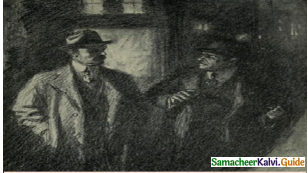
பிளாட்பாரத்தில் அதிகமாக பயணிகள் அவர்களுடைய ரயிலை எதிர்பார்த்து காத்திருக்க Sletherby தனக்கு கட்சிக்காரர் ஒருவரை கண்டறிந்து (espied) அவனை ஜன்னல் ஓரம் அழைத்து பேசினார். ஓ, நீங்கள் Mrs Saltpen Jago வுடன் வாரத்தின் இறுதி நாட்களை கழிக்க போகிறீர்களா?

உங்களுக்கு நல்ல நேரம் இருக்கிறது . விருந்து அளிப்பதில் அவர் புகழ்பெற்றவர். அந்த சட்டசபையின் திட்டத்திற்கு உனக்கு உதவியாக இருப்பாள். சரி நான் போய் வருகிறேன்.

Samacheer Kalvi 11th English Guide Supplementary Chapter 2 A Shot in the Dark 1

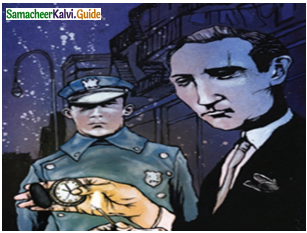
Sletherby அவர் நண்பரை அனுப்பிவிட்டு ஜன்னலை மூடிவிட்டு, தன் மடியில் இருந்த பத்திரிக்கையில் தன் கவனத்தை கொண்டு சென்றார். இரண்டு தாள்கள் கூட படித்திருக்காத நேரத்தில், மற்றொருவர் அந்த பெட்டியில் இருப்பதை பார்த்தார். பயணத்தில் அவரோடு இருப்பவர் சுமார் இருபத்து இரண்டு வயது மதிக்கத்தக்க ஒரு வாலிபர்.

Samacheer Kalvi 11th English Guide Supplementary Chapter 2 A Shot in the Dark

கருமையான முடி, வெள்ளை நிற தோற்றம், பட்டிக்காட்டில் உள்ள பைத்தியக்காரன் போல இருந்தது அவன் தோற்றம். அவன் தீவிரமாக ஒரு பொருளை தேடுவதில் ஈடுபட்டு கொண்டிருந்தான். நேரத்துக்கு நேரம் தன் பையில் உள்ள ஆறு அனாவை எடுத்து கவலையோடு பார்த்து கொண்டிருந்தான்.

அடுத்து இவையனைத்தையும் பார்த்த நான் சிகரெட் பாக்ஸ் தீப்பெட்டி, சாவிகள், வெள்ளி pencil பெட்டி, மற்றும் ரயில் டிக்கெட் அனைத்தையும் எடுத்து அருகில் உள்ள இருக்கையில் போட்டேன். இதில் உள்ள எதுவும் அவனுக்கு நிம்மதி அளிக்கவில்லை.

அவன் அவனை முன்பைவிட இப்போது கொஞ்சம் சத்தமாகவே திட்டிக்கொண்டான். அவனது கொடுரமான கொஞ்சம் அதிகமான குணங்கள் எதையும் Sletherby கண்டுகொள்ளாமல் அவரது பத்திரிக்கையை மறுபடியும் வாசிக்க தொடங்கினார்.

”நீங்கள் Mrs Saltpen Jagoடன் Brill Manor ல் தங்க போகிறீர்கள் என்று சொன்னதை நான் கேட்டேன் என்று அவன் ஆச்சரியத்துடன் சொன்னான். என்ன ஒரு சந்திப்பு!” என்ன ஒரு பொருத்தம்! அவர்கள் என் அம்மா திங்கள் கிழமை மாலை நான் அங்கு இருப்பேன். அப்போது நாம் சந்திக்கலாம். நான் இன்னும் உங்களுக்கு யார் என்று அறியாதவன் தான்.

ஆறுமாதங்கள் நடந்த விஷயமாவது தெரியுமா? என் அம்மாவைப் பார்த்து பல நாட்களாகிறது. இவ்வளவு நேரம் சுற்றி வந்திருக்கிறேன். நான் மிகவும் அறுவருப்பான செயலை செய்து விட்டேன். ‘நீ ஒன்றை தொலைத்துவிட்டாய் அப்படித்தானே?” Sletherby வினவினார்.

Samacheer Kalvi 11th English Guide Supplementary Chapter 2 A Shot in the Dark

அப்படியேதும் இல்லை , நான் வரும் போது பணப்பையை (sovereign purse) எடுத்து வர மறந்துவிட்டேன். அதில் நான்கு பவுண்ட் காசு இருந்தது. எனது மொத்த சொத்தும் அது தான். அது என் பாக்கெட்டில் இருந்தது. இப்போது தான் நான் தொடங்கினேன். பிறகு ஒரு கடிதத்தில் seal வைக்க வேண்டி இருந்தது. அப்போது அந்த பை எனக்கு பொக்கிஷம் போல் இருந்தது. அதை எடுத்து ஸ்டாம்ப் seal செய்தேன்.

இரட்டை வடிகட்டிய முட்டாள் போல் அடுத்து அதை டேபிளில் வைத்தேன். வெள்ளி காசுகள் கொஞ்சம் இருந்தது. ஆனால் Taxi மற்றும் டிக்கெட் எடுத்ததில் இருந்த ஆறு காசுகள் (sixpenny) மட்டுமே மீதம் உள்ளது. நான் மூன்று நாள் ஒரு விடுதியில் தங்கி மீன் பிடிக்கப் போகிறேன். என்னை அங்கு யாருக்கும் தெரியாது.

என் வார இறுதி கணக்கு உபயோகிப்பவர்க்கு கொடுக்கும் காசு, மற்றும் வண்டி வாடகை, நிலையத்தில் இருந்து வந்தது, என்னுடைய Brill டிக்கெட், எல்லாம் எப்படியும் இரண்டு அல்லது மூன்று பவுண்ட் இருக்கும் அப்படிதானே.

அதனால் எனக்கு பத்து பவுண்ட் மற்றும் மூன்று காசு நீங்கள் தந்து உதவினால் நன்றாக இருக்கும். அது என் நெறுக்கடியிலிருந்து காக்கும் என்றார். “நான் அதை கொடுக்கமுடியும் என நினைக்கிறேன் ” என்று Sletherby சிறுது நேரம் கழித்து கூறினார்.

Samacheer Kalvi 11th English Guide Supplementary Chapter 2 A Shot in the Dark

மிக்க நன்றி, மிகவும் மகிழ்ச்சி இது உங்கள் நல்ல மனதைக்காட்டுகிறது. எனது அம்மாவின் நெருங்கிய நண்பரை சந்திக்க வாய்ப்பு இருக்கிறது. “தனியே பணத்தை விட்டு எங்கும் செல்ல கூடாது” என்பது எனக்கொரு பாடம். அது என் பாக்கெட்டில் இருக்க வேண்டும். இது எல்லாருக்கும் தெரிந்த ஒன்று தான். நமக்கு ஏற்றது போல் பொருளை மாற்றக் கூடாது.

தேவை இல்லாமல் அதை மாற்ற நினைக்க கூடாது. இப்போதும் பணப்பையில் எனது அடையாளம் உள்ளது” என்றார். “சரி உன்னுடைய அடையாளம் என்ன? என்று Sletherby கேட்டார். ”சாதாரணமான ஒன்று இல்லை ” என வாலிபன் கூறினான். ஒரு சிறு சிங்கம் கிராஸ் குறுக்கு போன்ற அடையாளத்தை காலில் வைத்திருக்கும்.

உனது அம்மா ” எனக்கு எழுதிய கடிதத்தில் ரயில்களில் குறிப்பை கொடுத்தார். நான் யோசிப்பது சரி யென்றால், அவள் புத்தகத்தில் உள்ள அடையாளம் ஒரு சாம்பல் நிற வேட்டை நாய்” Sletherby கவனித்தார். அவரது குரலில் ஒரு நடுக்கம் இருந்தது.

Samacheer Kalvi 11th English Guide Supplementary Chapter 2 A Shot in the Dark 2

”அது Jagoவின் முத்திரை ” அந்த வாலிபன் பதில் அளித்தான், அந்த சிறு சிங்கம் Saltpenனின் முத்திரை” எங்களுக்கு இரண்டையும் உபயோகிக்க அதிகாரம் உண்டு. நான் சிறு சிங்கத்தை தான் உபயோகிப்பேன்,. ஏனெனில் நாங்கள் உண்மையான ஸால்ட்பென்கள்.

சிறிது நேரம் அமைதி நிலவியது. அந்த வாலிபன் மீன் பிடிக்க தேவையான பொருளை (tackle) சேகரித்து கொண்டிருத்தான்.

Samacheer Kalvi 11th English Guide Supplementary Chapter 2 A Shot in the Dark

”நான் உன் அம்மாவிடம் பலமுறை உரையாடி இருந்தாலும் ஒரு முறை கூட அவர்களை சந்தித்ததில்லை” என்றார், என்னுடைய அறிமுகம் அவளுடன் அரசியல் மூலமே. அவள் உன்னைப்போல் இருப்பாளா? நான் platform-ல் அவளைக் கண்டால் அடையாளம் காண வேண்டும்.

அவர்கள் என்னைப்போல் இருப்பார்கள். என்னைப் போலவே கருஞ்சாம்பல் முடி மற்றும் நல்ல நிறம். அது உங்கள் குடும்பத்தில் ஓடுகிறது. “இது வெளியே செல்லும் தருணம்” என நினைக்கிறேன். ” போய் வருகிறேன்” என Sletherby கூறினார்.

“நீங்கள் அந்த மூன்று பவுண்டை மறந்து விட்டீர்கள்”. அந்த வாலிபன் கூறினான் அவனது பெட்டி கதவை திறந்து விட்டு அவனது பொருட்களை வெளியே தள்ளினான்.

“உனக்கு மூன்று பவுண்ட் மற்றும் மூன்று சில்லிங் தர எனக்கு விருப்பம் இல்லை.” Sletherby கூறினார் “ஆனால் நீங்கள் கூறினீர்கள்……’

ஆம் உனது கதையை கேட்டதும் எனக்கு சந்தேகம் எழுந்தது. உனது அடையாளத்தின் வித்தியாசத்தை உனக்கு சிறப்பாக சொல்ல தெரியவில்லை. பிறகு உனக்கு வலை விரித்தேன். உனது அம்மாவை பார்த்ததில்லை என்று கூறினேன். நான் அவளை கடைசி திங்கள் கிழமை சந்தித்தேன். அவர்கள் தங்க நிறமுடியில் வித்தியாசமாக இருந்தார்.

ரயில் நகர, Saltpen Jago குடும்ப கௌரவத்தை நடைமேடையிலேயே திட்டி தீர்த்துவிட்டு சென்றார்.

Samacheer Kalvi 11th English Guide Supplementary Chapter 2 A Shot in the Dark

”ஆம், அவர் ஒரு வித்தியாசத்தை பிடித்துக்கொண்டு அவரது மீன்பிடி கதையை என்னிடம் சொல்லி இருக்கக் கூடாது”. Sletherby சிரித்தார். அவரின் பொழுது போக்கு ஒரு சுவாரஸ்யமான கதையை மாலை நேரம் உணவின் போது சொல்வார். அவருடைய கூர்மையான வலைவீச்சு அவருக்கு கைத்தட்டு பெற்றுத்தரலாம்.

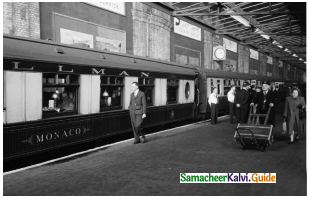
“வளம் மற்றும் புத்தி கூர்மை பெற்ற மனிதன் என்று அவர் இன்னும் சொன்னார். அவர் கற்பனைகளின் சாகசம் அவரது உணவின் பார்வையாளரை இழுக்கும். நடைமேடையில் ஒரு உயர்ந்த மனிதன் கனிவாகவும் ஆர்வமாகவும் இவரை வரவேற்றார். K.C அவரை அதே வண்டியில் தான் பயணம் புரிந்துள்ளார்.

”வணக்கம் sletherby! நீங்கள் பிரில்லில் இந்த வார நாட்களை செலவழிக்க போகிறீர்களா. மிக நன்று. நாளை ஒரு சுற்று Golf விளையாடலாம். உங்களுக்கான பதிலடியை Hoylakeல் கொடுப்பேன் …அது கேவலமாக இருக்காது.

கிராமங்கள் வழியே செல்லம்போது உந்த அசம்பாவிதமும் நடக்காது. ஓ! இங்கே தான்; நமக்காக காத்திருக்கும் கார், நன்றாக உள்ளது, அப்படித்தானே”.

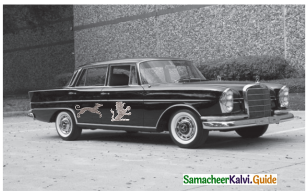
K.C வைத்திருக்கும் இந்த கார் மிகவும் விலையுயர்ந்த வண்டி ஆகும். நேர்த்தியான, சௌகர்யமான மற்றும் லோகோ மோடிவ் ஆற்றல் கொண்டது. அதன் நயமுள்ள கோடுகள் மற்றும் வடிவங்கள் எண்ணற்ற விதத்தில் சக்கரங்கள் கொண்டு அமைந்த வாகனம். ஹோட்டல் லவுஞ்சில் நிற்கும் வாகனம் போல் காட்சி அளித்தது.

”குதிரைகள் இழுக்கும் பலவிதமான கார்களை எனது தாத்தா உபயோகித்தார், அப்படித்தானே “, வழக்கறிஞர் கூறினார். Sletherby தெரிந்துகொள்வதற்காக இதன் குணங்கள், அதன் அமைப்பு மற்றும் செயலாற்றும் தன்மை அனைத்தையும் அவர் கூறினார்.

Samacheer Kalvi 11th English Guide Supplementary Chapter 2 A Shot in the Dark

Sletherby யாரையும் கவனிக்கவில்லை. அவரிடம் விவரிக்கும் (expounded) அனைத்தையும் அவர் கவனிக்கவில்லை. அவரது கண்கள் கதவை நோக்கி இருந்தது. அங்கே இரண்டு முத்திரை இருந்தன. சாம்பல் நிற courant மற்றும் சிறு சிங்கம் காலில் குறுக்கு சிலுவை வைத்திருந்தது.

Samacheer Kalvi 11th English Guide Supplementary Chapter 2 A Shot in the Dark 3

K.C இவரின் மௌனத்தை கண்காணிக்கவில்லை. ரயில் பயணத்தின் ஒரு மணி நேரமும் அமைதியாக இருந்தார். அவரது நாக்கு அவருக்கு பேச நேரமும் அளிக்கவில்லை . அரசியல் பேச்சுகள், பொது விஷயங்கள் பொதுவாக அரியப்பட்ட விஷயங்கள் என அனைத்தும் அவரிடம் இருந்து பொழியப்பட்டது.

கார் கிராமபுற சாலையில் போய் கொண்டிருந்தது. Dublin கூலிகளின் வேதனைகள் prince Designate of Albania (அல்போனிய இளவரசன்) பொது வாழ்வு பற்றியும், சான்விட்சிலிரந்து ஒன்பதாவது துளையில் நடந்த Sandwich விஷயங்கள் பற்றியும் கூறினார். Dutchess of Pathshire டங்கோ Tea பற்றியும் கூறினார். Brill கதவுகளில் கார் நுழையும் போது K.C அவரை பார்த்தார். அவர் பணியாளர்களின் குணங்களை பார்த்தார்.

Samacheer Kalvi 11th English Guide Supplementary Chapter 2 A Shot in the Dark

“அறிவார்ந்த பெண், நன்றாக யோசிப்பவர். தெளிவாக தனிநபரை எங்கு ஏற்ற வேண்டும் இறக்க வேண்டும் என அறிந்தவர். செல்வாக்குடைய பெண். ஆனால் ஓய்வில்லாத வேலையால் அவளை கெடுத்து கொள்கிறாள். கடினம் ஏதும் இல்லை. நல்ல தோற்றம் கூட, இன்னும் அந்த காரியத்தை செய்கிறாள்.”

“மாற்றம்?” Sletherby மொழிந்தார்,”என்ன மாற்றம்?”

“என்ன மாற்றம்? நீ சொல்ல தேவையில்லை. ஓ, இப்போது தான் அவளை பார்த்திருக்கிறாய். அவள் அழகிய அடர்ந்த Brown முடி கொண்டவள். அது அவள் நிறத்திற்கு பொருந்தியுள்ளது; ஒரு நாள், ஐந்து வாரம் கழித்து, எல்லாருக்கும் அதிர்ச்சி கொடுத்தார். அழகிய மஞ்சள் நிற முடியில் (blonde)வந்தார். இதோ வந்துவிட்டோம். உனக்கு என்ன ஆயிற்று? நீங்கள் நோய் வாய்ப்பட்டிருக்கிறீர்கள்.

Samacheer Kalvi 12th Bio Botany Guide Chapter 8 Environmental Issues

Tamilnadu State Board New Syllabus Samacheer Kalvi 12th Bio Botany Guide Pdf Chapter 8 Environmental Issues Text Book Back Questions and Answers, Notes.

Tamilnadu Samacheer Kalvi 12th Bio Botany Solutions Chapter 8 Environmental Issues

12th Bio Botany Guide Environmental Issues Text Book Back Questions and Answers

I. Choose the correct answer
Question 1.
Which of the following would most likely help to slow down the greenhouse effect.
a) Converting tropical forests in to grazing land for cattle.
b) Ensuring that all excess paper packing is buried to ashes.
c) Redesigning landfill dumps to allow methane to be collected.
a) Promoting the use of private rather than puplic transport.
Answer:
c) Redesigning landfill dumps to allow methane to be collected.

Question 2.
With respect to Eichhornia.
Statement A: It drains off oxygen from water and is seen growing in standing water.
Statement B: It is an indigenous spicies of our country.
a) Statement A is correct and Statement B is wrong.
b) Both Statements A and B are correct.
c) Statement A is correct and Statement B is wrong.
d) Both Statements A and Bare wrong.
Answer:
a) Statement A is correct and Statement B is wrong.

 Samacheer Kalvi 12th Bio Botany Guide Chapter 8 Environmental Issues

Question 3.
Find the wrongly matched pair.
a) Endemism – Species confined to a region and not found anywhere else.
b) Hotspots – Western ghats.
c) Ex-situ Conservation – Zoological parks.
d) Sacred groves – Saintri hills of Rajasthan.
e) Alien sp. Of India – Water hyacinth.
Answer:
e) Alien sp. Of India – Water hyacinth.

Question 4.
Depletion of which gas in the atmosphere can lead to an increased incidence of skin cancer?
a) Ammonia
b) Methane
c) Nitrous oxide
d) Ozone
Answer:
d) Ozone.

Question 5.
One green house gas contributes 14% of total global warming and another contributes 6%. These are respectively identified as
a) N2O and CO2
b) CFCS and N2O
c) CH4 and CO2
d)CH4 and CFCS
Answer:
b) CFCS and N2O.

 Samacheer Kalvi 12th Bio Botany Guide Chapter 8 Environmental Issues

Question 6.
One of the chief reasons among the following for the depletion in the number of species making endangered is.
a) over hunting and poaching
b) green house effect
c) competition and predation
d) habitat destruction
Answer:
d) habitat destruction.

Question 7.
Deforestation means
a) growing plants and trees in an area where there is no forest
b) growing plants and trees in an area where the forest is removed
c) growing plants and trees in a pond
d) removal of plants and trees
Answer:
d) removal of plants and trees.

Question 8.
Deforestation does not lead to
a) Quick nutrient cycling
b) soil erosion
c) alternation of local weather conditions
d) Destruction of natural habitat weather conditions
Answer:
a) Quick nutrient cycling.

 Samacheer Kalvi 12th Bio Botany Guide Chapter 8 Environmental Issues

Question 9.
The unit for measuring ozone thickness
a) Joule
b) Kilos
c) Dobson
d) Watt
Answer:
c) Dobson

Question 10.
People’s movement for the protection of environment in sirsi of Karnataka is
a) Chipko movement
b) Amirtha Devi Bishwas movement
c) Appiko movement
d) None of the above
Answer:
c) Appiko movement.

Question 11.
The plants which are grown in silivpasture system are
a) Sesbania and Acacia
b) Solenum and Crotalaria
c) Clitoria and Begonia
d) Teak and sandal
Answer:
a) Sesbania and Acacia.

Question 12.
What is the ozone hole?
Answer:
The decline in the thickness of the ozone layer over restricted area is called Ozone hole.

 Samacheer Kalvi 12th Bio Botany Guide Chapter 8 Environmental Issues

Question 13.
Give four examples of plants cultivated in commercial agroforestry.
Answer:
Commercial Agroforestry includes Casuarina, Eucalyptus, Malai vembu, Teak and Kadambu trees.

Question 14.
Expand CCS.
Answer:
CCS – Carbon capture and storage.

  • Carbon capture and storage is a technology of capturing carbon dioxide and inject it deep into the underground rocks at a depth of 1 km (or) more.
  • It is an approach to mitigate global warming.

Example:

  • It is capturing CO2 released from industries and power plants.
  • Such as declining oil fields, gas fields saline aquifers and unmineable coal have been suggested as storage sites.
  • Various safe sites have been selected for permanent storage.
  • liquid storage in ocean and solid storage by reduction of CO2 with metal oxide to produce stable carbonates.
  • It is also known as Geological sequestration.

Question 15.
How do forests help in maintaining the climate?
Answer:

  • Forest regulate co2 levels in the atmosphere.
  • If greater the forest area more CO2 is removed and the impact of global climate change is decreased.
  • They regulate ecosystem, protect biodiversity, play an integral part in the carbon cycle.
  • In the tropics water evaporates naturally from trees, increasing cloud cover and keeping temperature cooling.

 Samacheer Kalvi 12th Bio Botany Guide Chapter 8 Environmental Issues

Question 16.
How do sacred groves help in the conservation of biodiversity?
Answer:
These are the patches or grove of cultivated trees which are community protected and are based on strong religious belief systems which usually have a significant religious connotation for protecting the community. Each grove is an abode of a deity mostly village God Or Goddesses like Aiyanar or Amman.

448 grooves were documented throughout Tamil Nadu, of which 6 groves (Banagudi shola, Thirukurungudi and Udaiyankudikadu, Sittannnavasal, Puthupet and Devadanam) were taken up for detailed floristic and faunistic studies. These groves provide a number of ecosystem services to the neighbourhood like protecting watersheds, fodder, medicinal plants, and microclimate control.

Question 17.
Which one gas is most abundant out of the four commonest greenhouse gases? Discuss the effect of this gas on the growth of plants?
Answer:
CO2 Carbon-di-oxide is the most abundant among greenhouse gases.

  • Low agricultural productivity in tropics.
  • Frequent heat waves (weeds, pests, fungi, need warmer temperature)
  • increase of vectors and epidemics
  • strong storms and intense flood damage.
  • Water crisis and decreased irrigation
  • Change in flowing seasons and pollinators
  • Change in species distributional ranges.
  • Speakes extinction.

 Samacheer Kalvi 12th Bio Botany Guide Chapter 8 Environmental Issues

Question 18.
Suggest a solution to water crisis and explain its advantages.
Answer:
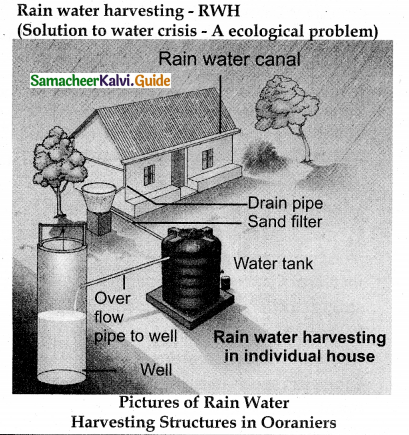
Rainwater harvesting is the accumulation and storage of rain water for reuse in-site rather than allowing it to run off. Rainwater can be collected from rivers, roof tops and the water collected is directed to a deep pit. The water percolates and gets stored in the pit. RWH is a sustainable water management practice implemented not only in urban area but also in agricultural fields, which is an important economical cost effective method for the future. Environmental benefits of Rain Water Harvesting:

  1. Promotes adequacy of underground water and water conservation.
  2. Mitigates the effect of drought.
  3. Reduces soil erosion as surface run-off is reduced.
  4. Reduces flood hazards.
  5. Improves groundwater quality and water table / decreases salinity.
  6. No land is wasted for storage purpose and no population displacement is involved.
  7. Storing water underground is an eco-friendly measure and a part of sustainable water storage strategy for local communities.

Samacheer Kalvi 12th Bio Botany Guide Chapter 8 Environmental Issues 1

Question 19.
Explain afforestation with case studies.
Answer:
Afforestation:

  • Afforestation is planting of trees where there was no previous tree coverage and the conversion of non-forested lands into forests by planting suitable trees to retrieve the vegetation.
  • Example: Slopes of dams afforested to reduce water run-off, erosion and siltation. It can also provide a range of environmental services including carbon sequestration, water retention.

The Man who Single-Handedly Created a Dense Forest

  • Jadav “Molai” Payeng (born 1963) is an environmental activist has single-handedly planted a forest in the middle of a barren wasteland.
  • This Forest Man of India has transformed the world’s largest river island, Majuli, located on one of India’s major rivers, the Brahmaputra, into a dense forest, home to rhinos, deers, elephants, tigers and birds. And today his forest is larger than Central Park.
  • Former vice-chancellor of Jawahar Lai Nehru University, Sudhir Kumar Sopory named Jadav Payeng as Forest Man of India, in the month of October 2013.
  • He was honoured at the Indian Institute of Forest Management during their annual event ‘Coalescence1.
  • In 2015, he was honoured with Padma Shri, the fourth highest civilian award in India.
  • He received honorary doctorate degree from Assam Agricultural University and Kaziranga University for his contributions.

Tamil Nadu Afforestation project TAP I:

TaP I
objectives:

  • It aimed to uplight the quality and life of villagers, abutting forest areas.
  • It is resolve the degraded forests in Tamil Nadu

Tap II
objectives

  • To restore the ecological equilibrium of the forests, watersheds and adjacent villages of Tamil Nadu.
  • To improve the quality of the life of inhabitants through reforestation. Water conservation and sustained community action.

 Samacheer Kalvi 12th Bio Botany Guide Chapter 8 Environmental Issues

Question 20.
What are the effects of deforestation and benefits of agroforestry?
Answer:

Effects of deforestation:

  1. Burning of forest wood release stored carbon, a negative impact just opposite of carbon sequestration.
  2. Trees and plants bind the soil particles. The removal of forest cover increases soil erosion and decreases soil fertility. Deforestation in dry areas leads to the formation of deserts.
  3. The amount of runoff water increases soil erosion and also creates flash flooding, thus reducing moisture and humidity.
  4. The alteration of local precipitation patterns leading to drought conditions in many regions. It triggers adverse climatic conditions and alters water cycle in ecosystem.
  5. It decreases the bio-diversity significantly as their habitats are disturbed and disruption of natural cycles.
  6. Loss of livelihood for forest dwellers and rural people.
  7. Increased global warming and account for one-third of total CO2 emission.
  8. Loss of life support resources, fuel, medicinal herbs and wild edible fruits.

Benefits of agroforestry:

  1. It is an answer to the problem of soil and water conservation and also to stabilise the soil (salinity and water table) reduce landslide and water run-off problem.
  2. Nutrient cycling between species improves and organic matter is maintained.
  3. Trees provide micro climate for crops and maintain CO2 balanced, atmospheric temperature and relative humidity.
  4. Suitable for dry land where rainfall is minimum and hence it is a good system for alternate land use pattern.
  5. Multipurpose tree varieties like Acacia are used for wood pulp, tanning, paper and firewood – industries.
  6. Agro-forestry is recommended for the following purposes. It can be used as Farm Forestry for the extension of forests, mixed forestry, shelter belts and linear strip plantation.

12th Bio Botany Guide Environmental Issues Additional Important Questions and Answers

I. Match
Question 1.
Match the column I with column II and select correct option

Column IColumn II
A. Methane1. Thickness of ozone layer
B. u v radiation2. Global warming
C. 0.3cm (or) 300DU3. Tanning burning and skin cancer
D. Nitrogenous fertilizers and aerosols4. 20 times as effective as CO2

Option:
a) A – 4,B – 3, C – 1, D – 2
b) A – 3, B – 2, C – 1, D – 4.
c) A – 2, B – 1, C – 3, D – 4.
d) A – 1, B – 3, C – 2, D – 4.
Answer:
a) A – 4,B – 3, C – 1, D – 2

 Samacheer Kalvi 12th Bio Botany Guide Chapter 8 Environmental Issues

Question 2.
Match the column I with column II and select correct option

Column IColumn II
A. Ozone depletion1. September 16
B. world ozone Day2. Chlorofluorocarbon
C. Kyoto protocol3. 1987
D. Montreal protocol4. 2007

Option:
a) A – 1,B – 2, C – 3, D – 4
b) A – 2, B – 1, C – 4, D – 3.
c) A – 2, B – 3, C – 4, D – 1
d) A – 3, B – 2, C – 1, D – 2.
Answer:
b) A – 2, B – 1, C – 4, D – 3

Question 3.
Match the column I with column II and select correct option

Column IColumn II
A. Pinus1. Nitrate pollution
B. Petunia2. Indicator of heavy metal
C. Gladiolus3. SO2 pollution
D. Black locurst tree4. Fluoride pollution

Option:
a) A – 3, B – 1, C – 4, D – 2.
b) A – 2, B – 3, C – 4, D – 1.
c) A – 1, B – 2, C – 3, D – 4.
d) A – 3, B – 2, C – 1, D – 4.
Answer:
a) A – 3, B – 1, C – 4, D – 2

 Samacheer Kalvi 12th Bio Botany Guide Chapter 8 Environmental Issues

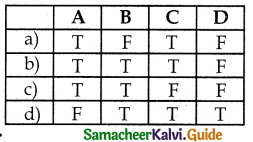
II. State True or False and choose the correct option

Question 1.
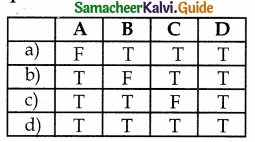
A – Eichhornia crassiper decreases the oxygen content of water bodies.
B – Prosopis juliflora enrich soil nutrient and important local species growth.
C – Petunia and chrysanthemum are referred as nitrate phytoindicators.
D – Robinia pseudoacocia is a indicator of heavy metal contamination.
Option:
Samacheer Kalvi 12th Bio Botany Guide Chapter 8 Environmental Issues 2
Answer:
b) A – T, B – F, C – T, D – T

Question 2.
A) Jadav “molai payeng” is an forest man of India.
B) The world largest river island, Majuli located on major rivers the Brahmaputra.
C) In 2015 he was honoured with padma shri award in India.
D) He was a student of forest management student.
Option:
Samacheer Kalvi 12th Bio Botany Guide Chapter 8 Environmental Issues 3
Answer:
b) A – T, B – T, C – T, D – F.

III. Choose the incorrect statement

Question 1.
Choose the incorrect statement related to effects of ozone depletion.
a) Juvenile mortality of animal, Increased incidence of mutations.
b) Increases the incidence of cataract, throat and lung irritation, emphysema, skin cancer.
c) Flood/ drought, sea water rise, Imbalance in ecosystem affecting flora and fauna.
d) Diminishing the functioning of immune system is not related to ozone depletion.
Answer:
d) Diminishing the functioning of immune system is not related to ozone depletion.

Question 2.
Choose the incorrect statement related to forestry.
a) The tank foreshore plantations have been a major source of firewood in Tamilnadu.
b) The production of woody plants combined with pasture is referred to silvopasture system.
c) Trees provide micro climate for crops and maintain 02 – CO2 balance.
d) Agro-forestry is an integration of trees, animals, water bodies and humans.
Answer:
d) Agro-forestry is an integration of trees, animals, water bodies and humans

 Samacheer Kalvi 12th Bio Botany Guide Chapter 8 Environmental Issues

IV. Choose the correct statement

Question 1.
Choose the correct statement from the following.
a) Agricultural drones are animals used to do heavy agricultural works.
b) CARTOSAT-2 is used to watch border surveillance.
c) The production of flowering plants combined with pasture is reffered to silvopasture system.
d) GTS is a satellite navigation system used to determine the ground position of an object
Answer:
b) and d)

V. Pick out the odd one out and give Reason

Question 1.
In-situ, Ex-situ, National parks, Biosphere Reserves, Remote seming.
a) Remote seming, while other are related to biodiversity conservation.
b) National parks, while others are man made project.
c) Biosphere reserves, detecting and monitoring the physical characteristic of an area.
d) None of the above.
Answer:
a) Remote seming, while other are related to biodiversity conservation.

Question 2.
Reduces flood hazards, decreases salinity Reduces soil erosion, carbon sink.
a) Reduces soil erision. while others are related to Rainwater harvesting system.
b) Carbon sink, while others are related to benefits of Rain water harvesting.
c) Decreases salinity, while others are related to rain water harvesting.
d) Reduces soil erosion, while others are eco friendly method.
Answer:
b) Carbon sink, while others are related to benefits of Rain water harvesting

 Samacheer Kalvi 12th Bio Botany Guide Chapter 8 Environmental Issues

Question 3.
Lichens, Ficus, Pinus, Rose, Gladiolus.
a) Lichens, while others are SO2 pollution.
b) Gladiolus is the heavy metal indicator, while others are related to SO2 pollution.
c) Gladiolus. while others are indicator for SO2 pollution.
d) Pinus is the nitrate indicator, while others are SO2pollution.
Answer:
c) Gladiolus. while others are indicator for SO2 pollution

VI. Pictorial questions

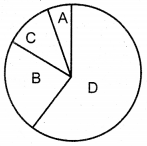
Question 1.
Relative contribution of green house gas are shown below. Which one of the given option is correct?
Samacheer Kalvi 12th Bio Botany Guide Chapter 8 Environmental Issues 4
a) A – others, B – CH4, C – CFC, D – O2
b) A – CH4, B – CO2, C – O2,D – CFC
c) A – CO2, B – CH4, C – CFC, D – O2
d) A – others, B – CH4, C – CFC, D – CO2
Answer:
d) A – others, B – CH4, C – CFC, D – CO2

 Samacheer Kalvi 12th Bio Botany Guide Chapter 8 Environmental Issues

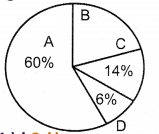
Question 2.
Examine the diagram Which is showing the percentage. Find out the Green house gas related to its percentage.
Samacheer Kalvi 12th Bio Botany Guide Chapter 8 Environmental Issues 5

Answer:
a) CO2 CH4 CFC others

VII. Assertion and Reason

Question 1.
Assertion: Sacred groves and sacred lakes are community protected Bio-diversity conservation.
Reason: Which are based on strong religious belief system,
a) A is correct R is wrong.
b) A is correct but R does not explains A.
c) A is correct and R is the correct explanation for A
d) A and R are wrong.
Answer:
c) A is correct and R is the correct explanation for A.

Question 2.
Assertion : Appiko movement started in Gubbi Gadde village sirsi in karnataka by panduranga Hegde.
Reason: It is started to protest against felling of trees, monoculture, forest policy and deforestation
a) Both are wrong.
b) A and R is correct
c) A is correct R- does not explains A.
d) A is wrong R is correct.
Answer:
b) A and R is correct

 Samacheer Kalvi 12th Bio Botany Guide Chapter 8 Environmental Issues

VIII. Spot the error

Question 1.
Biosphere Reserves, National parks and wildlife sanctuaries are community protected Bio-diversity conservation.
Answer:
Biosphere Reserves,National parks and wild life sanctuaries are Goverment protected Bio-diversity conservation.

IX. Choose the incorrect pair

Question 1.
Choose the incorrect pair.
A) Protein Bank-Fodder production.
B) Livefence, foddertree – Erythrina spp.
C) Agro forestry – Extension of forest, mixed forestry.
D) Social forestry-Jadav,Molaipayeng.
Answer:
D) Social forestry-Jadav,Molai payerg

 Samacheer Kalvi 12th Bio Botany Guide Chapter 8 Environmental Issues

X. Read the following statement with two blanks A and B select the correct option for blank A and B.

Question 1.
Eichhornia crassipes is an invasive weed native to south America. It affects the growth of A and finally leads to B.

AB
a) Phytoplankton1) eutrophication
b) Prosopis2) oxygen content
c) Topography3) geology
d) Plants4) environmental issues

Answer:
a) Phytoplankton – 1) eutrophication

XI. Fill in the blanks Answers

1. ………………. is another long term method to store carbon.
Answer:
Biochar

2. …………………. is the total amount of green house gases produced by human activated.
Answer:
Carbon foot print

3. Eating indigenous fruits and products are reduce ………………
Answer:
Carbon foot print

 Samacheer Kalvi 12th Bio Botany Guide Chapter 8 Environmental Issues

4. The forest, soil, ocean are …………………. and landfills are ………….. sinks.
Answer:
Natural, artificia
Dobson unit

5. The thickness of the ozone column of air is measured in terms of ………………
Answer:
Chloro fluro carban

6. …………………. is the anthropogenic greenhouse gas.
Answer:
Tank Foreshore

7. _____ plantations have been a major source of fire wood in Tamilnadu.
Answer:
Plantations

8. World ozone Day is celebrated on ……………….
September 16

 Samacheer Kalvi 12th Bio Botany Guide Chapter 8 Environmental Issues

XII Choose the correct option

Question 1.
Which creates a breeding habitat for disease causing mosquito Anopheles?
a) Eichhornia crassipes
b) Lantana camara
c) Prosopis juliflora
d) Parthenium hysterophorus
Answer:
a) Eichhornia crassipes

Question 2.
Which one the activities is replacement of conventional electrification project solar panels or other energy efficient boilers?
a) Clean Development Mechanism (CDM)
b) Chloro Fluoro Carbon (CFC)
c) Certified Emission Reduction (CER)
d) TamilNadu Afforestation Project (TAP)
Answer:
a) Clean Development Mechanism (CDM)

Question 3.
Some of the major species cultivated in Agroforestry for commercial use:
a) Erythrina, Albizzia
b) Malaivembu, Kadambu
c) Acacia, Azadirachta Indica
d) Sesbania, Acacia
Answer:
b) Malaivembu, Kadambu

Question 4.
Which one of the following is not a carbon sequestration method?
a) Forest conservation and soil conservation
b) Carbon foot print
c) Biochar
d) Increasing the number of animals.
Answer:
d) Increasing the number of animals.

 Samacheer Kalvi 12th Bio Botany Guide Chapter 8 Environmental Issues

Question 5.
Chlorella, sceuedesmus, chroococcus and chlamydomonas are used globally for
a) conservation movement
b) micro climate.
c) carbon sequestration
d) Biochar preparation.
Answer:
c) Carbon sequestration

Question 6.
Botanical garden, zoological park, in-vitro conservation, cryo preservation, seedling, tissue culture and DNA banks are ………………..
a) Sacred groves
b) In-situ conservation.
c) Ex-situ conservation
d) Appiko movement
Ans:
c) Ex-situ conservation

Question 7.
…………….. grooves were documented through out Tamil Nadu
a) 446
b) 447
c) 448
d) 449
Answer:
c) 448

 Samacheer Kalvi 12th Bio Botany Guide Chapter 8 Environmental Issues

Question 8.
Species which is present in some part of continent or present in single island is.
a) Endemic
b) Epidemic
c) Pandamic
d) Sporadic
Answer:
a) Endemic

Question 9.
Approximately one third of India flora have been identified in Indian Himalayas, Peniris India, and Andaman nicobar island it is ……………… species.
a) pandamic
b) epidemic
c) endemic
d) sporadic
Answer:
c) endemic.

Question 10.
Bentinckia condappana tree, which is endemic to………………… of Tamil Nadu and kerala
a) Western ghats
b) Peninsular
c) Coastal
d) Slope
Answer:
a) Western ghats.

 Samacheer Kalvi 12th Bio Botany Guide Chapter 8 Environmental Issues

Question 11.
Lianas, Nepenthes khasiyana is endemic to …………….. of meghalaya
a) Western ghat
b) Peninsular
c) Meghalaya
d) Khasi hills
Answer:
d) Khasi hills

Question 12.
Macroalgae and Maine grasses and Mangloves have ability to mitigate ………………..
a) N2O
b) CFC
c) CO2
d) CH4
Answer:
c) CO2

Question 13.
Trees like Eugenia Caryo phyllata, Tecomastans cinnamomum verum have high capacity to sequester …………….
a) N2O
b) Carbon
c) Methane
d) CFC
Answer:
b) Carbon

 Samacheer Kalvi 12th Bio Botany Guide Chapter 8 Environmental Issues

Question 14.
Which one of the following is an alien invasive species?
a) Mangifera indica
b)Eichhornia crassipes
c) Solanum nigrum
d) Zizipus jujupa
Answer:
b) Eichhornia crassipes

Question 15.
Environmental management tool is an …………………
a) Biodiversity Impact assessment
b) Environmental Impact assessment
c) Bio monitoring
d) G I S
Answer:
b) Environmental Impact assessment

Question 16.
……………. system is used in mining, Aviation, surveying agricultural and marie ecosystem.
a) GIS
b) GPS
c) BIA
d) EIA
Answer:
b) GPS

 Samacheer Kalvi 12th Bio Botany Guide Chapter 8 Environmental Issues

Question 17.
InSAT3DR Satellites used in …………………….
a) Earth observation
b) Communication
c) Disaster management
d) Weather forecasting
Answer:
c) Disaster management

Question 18.
Now a days, scientists suggest carbon sequestration is a solution for global warming. The reason is
a) The balance between photosynthesis and respiration is disturbed
b) The absorption process of plants from the soil is disturbed
c) Due to high intensity of light respiration process is disturbed
d) Carbon sequestration is not the solution for global warming.
Answer:
d) Carbon sequestration is not the solution for global warming.

Question 19.
Reforestation refers to
a) Chipko movement
b) Development of forest in an area which was already subjects to deforestation
c) Development of forest through cultivabel land
d) None of there
Answer:
b) Development of forest in an area which was already subjects to deforestation.

 Samacheer Kalvi 12th Bio Botany Guide Chapter 8 Environmental Issues

Question 20.
World’s must problematic aquatic weed is
a) Clitoria
b) Parthenium
c) Eichhornia crassipes
d) sesbania
Answer:
c) Eichhornia crassipes.

Question 21.
Which of the following gas related to release cars with catalytic converter and buring of organic matter.
a) CO2
b) Methane
c) N2O
d) CFC
Answer:
c) N2O

Question 22.
The Ozone layer of troposphere is called
a) Middle Ozone
b) Ozone Shield
c) Bad Ozone
d) Good Ozone
Answer:
c) Bad Ozone

 Samacheer Kalvi 12th Bio Botany Guide Chapter 8 Environmental Issues

Question 23.
Which one of the following is a livefence of fodder?
a) Gliricidia sepium
b) Nerium
c) Aloevera
d) Chrysanthemum
Answer:
a) Gliricidia sepium

Question 24.
Coral bleeching observed in Gulf of mannar, Tamil Nadu due to ………………..
a) Decreases of fresh water
b) Low rainfall
c) Green house
d) Dust particles
Answer:
c) green house

Question 25.
Read the following statement and fill it with correct answer in the blank A and B the ozone layer of the troposphere is called A and the ozone layer of startosphere is known as B ……………..
a) important, useful
b) bad and lower
C) bad zone, good zone
d) good zone,bad zone
Answer:
c) bad zone, good zone

 Samacheer Kalvi 12th Bio Botany Guide Chapter 8 Environmental Issues

Question 26.
The purple and blue colours of ozone picture indicate ……………. ozone.
a) Least
b) High
c) Medium
d) Large
Answer:
a) Least

Question 27.
The yellow and red colours of ozone picture indicate ……………….. ozone.
a) more
b) medium
c) low
d) least
Answer:
a) more

Question 28.
The objective of clean development mechanism are/is
a) Prevention of dangerous climate change
b) Reduction of emission of green house gases
c) Both (a) and (b)
d) Reduction of electricity generation and its need.
Answer:
c) Both (a) and (b)

 Samacheer Kalvi 12th Bio Botany Guide Chapter 8 Environmental Issues

Question 29.
Remote sensing is .
a) Mapping ocean bottom and its resources
b) Mapping forest fire
c) Mapping species distribution
d) all the above
Answer:
d) all the above

Question 30.
Bentinckia and Baccaurea are …………….. plants.
a) Invasive species
b) Endemic
c) Silvopasture
d) None of these
Answer:
b) Endemic

Question 31.
Eichornia. prosopis are plants ………………….
a) endemic
b) Invasive
c) Silvopasture
d) None of these
Answer:
b) Invasive

 Samacheer Kalvi 12th Bio Botany Guide Chapter 8 Environmental Issues

Question 32.
The management of forest and afforestation on barren lands is …………………..
a) agroforestry
b) Silvopasture
c) Social forestry
d) Afforestation
Answer:
c) Social forestry

Question 33.
Which is fast growing and more adopted species?
a) Invasive species
b) epidemic species
c) Pandamic species
d) Wild species
Answer:
a) Invasive species

Question 34.
The plant species (or) community acts as a measure of enviornmental conditions is referred as …………….
a) Both b and d
b) Plant indicators
c) Protocol
d) Biological indicators
Answer:
b) Plant indicators

 Samacheer Kalvi 12th Bio Botany Guide Chapter 8 Environmental Issues

Question 35.
The international treaty called …………….. (1987) was held in Canada on substances that deplete ozone layer.
a) Montreal Protocol
b) Kyoto protocol
c) CDM
d) CER
Answer:
a) Montreal Protocol

XIII. Two Marks

Question 1.
Why the green house gases cause global warming
Answer:

  • Green House effect is a process by which radiant heat from the sun is captured by gas in the atmosphere that increase the temperature of the earth.
  • The gases that capture the heat are called Green Hosue gases includes CO2, CH4, N2O and CFC.

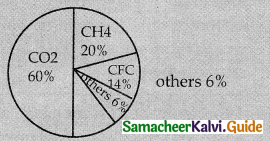
Question 2.
Draw the pie diagram which shows Relaitive contribution of green house gases.
Answer:

  • Green House effect is a process by which radiant heat from the sun is captured by gas in the atmosphere that increase the temperature of the earth.
  • The gases that capture the heat are called Green House gases includes CO2, CH44, N2Oand CFC
    Samacheer Kalvi 12th Bio Botany Guide Chapter 8 Environmental Issues 6

Question 3.
Why dust and humid night than dust free nights? (or) Does clouds and dust particles cause global warming?
Answer:

  • Yes, clouds and dust particles can also produce Green House effect.
  • That is why clouds dust and humid nights are warmer than clear dust free dry nights.

Global warming

  • The increase in mean global temperature due to increased concentration of green house gases is called global warming.

 Samacheer Kalvi 12th Bio Botany Guide Chapter 8 Environmental Issues

Question 4.
Differentiate bad ozone from good ozone.
Answer:

Bad ozonegood ozone
The ozone layer of the troposphere is called bad zone. This layer does not involve in the absorption of U.V radiation from the sun.The ozone laye of stratosphere is known as good zone because this layer act as a shield for absorbing the UV radiation coming from the sun.

Question 5.
Which is indicating the least ozone part and more ozone part of the atmosphere?
Answer:

  • The colour view of total ozone indicating the least ozone part and more ozone part.
  • The purple and blue colours are where there is the least ozone.
  • The yellows and reads are where there is more ozone.

Question 6.
What would be the result of ozone depletion on living organisms?
Answer:

  • UVB radiation destroys biomolecules (skin aging) and damaging living tissues.
  • UV radiation causing DNA damage, enhancing skin cancer.

 Samacheer Kalvi 12th Bio Botany Guide Chapter 8 Environmental Issues

Question 7.
Is there any hole in the ozone?
Answer:

  • No. If the ozone chield is damaged by the chlorofluoro carbon widely used in refrigeration, aerosol, chemicals used as cleaners in industries.
  • The decline in the thickness of the ozone layer over restricted area is called ozone hole.

Question 8.
What are the main objectives of Montreal protocol?
Answer:
The main goal of it is gradually eliminating the production and consumption of ozone depleting substances and to limit their damage on the earth’s ozone layer.

Question 9.
What is Agroforestry?
Answer:

  • Agroforestry is an integration of trees crops and livestock on the same plot of land.
  • The main objective is on the interaction among them.

 Samacheer Kalvi 12th Bio Botany Guide Chapter 8 Environmental Issues

Question 10.
What is silvopasture? (or) What is of degraded forests recreation forestry?
Answer:

  • The production of wood plants combined with pasture is referred to silvopasture system.
  • The trees and shrubs may be used primarily to produce fodder for livestock (or) grown for timber, fuel wood and fruit (or) to improve the soil.

Question 11.
Differentiate Agroforestry and Social forestry.
Answer:

Agro forestrySocial forestry
Agro forestry is an integration of trees crops and livestock on the same plot of landIt is a sustainable management of forest by local communities.
The main objective is on the interaction among themThe main objective is carbon sequestration depollution, deforestation forest restoration and providing indirect employment.

Question 12.
What could be the causes for deforestation?
Answer:

  • The conversion of forest into agricultural plantation and livestock ranching is a major cause of deforestation.
  • Developmental activities like road construction electric tower lines and dams.

 Samacheer Kalvi 12th Bio Botany Guide Chapter 8 Environmental Issues

Question 13.
Who is called as Forest Man of India? Why?
Answer:

  • Former vice Chancellor of Jawaharlal Nehru University Sudhir Kumar named Jadav payeng as Forest Man of India.
  • He has transformed the world’s largest river island Majuli (located on river of Brahmaputra) into dense forest, home to rhinos, deers, elephants, tigers and birds.

Question 14.
What is invasive species?
Answer:
A non – native species to the ecosystem (or) country that spreads naturally, interferes with native species, poses a serious threat to the ecosystem and cause economic loss.

Question 15.
Conservation movement – What does it signifies.
Answer:
A community level participation can help in preservation and conservation of our environment.

 Samacheer Kalvi 12th Bio Botany Guide Chapter 8 Environmental Issues

Question 16.
What is Five F’s? Which is related to what?
Answer:

  • > Main aim of chipko movement was to give a slogan of Five – Fs. food, fodder, fuel, fibre and fertilizer.
  • > It make the communities self sufficiency in their basic needs.

Question 17.
Each grove is an abode of a diety mostule Village God (or) Goddesses, like Aiyanar (or) Amman – What does it states?
Answer:

  • There are called scared groves.
  • The patches (or) grove of cultivated trees which are community protected and based on religeous belief system.
  • There are 448 groves were documented through out Tamilnadu.

Question 18.
What is Biochar?
Answer:

  • It is another Long term method to store carbon.
  • Plants are partly burnt such as crop waste woods to become carbon rich slow decomposing substances called Biochar.

 Samacheer Kalvi 12th Bio Botany Guide Chapter 8 Environmental Issues

Question 19.
What is carbon foot print?
Answer:
C.F.P is the total amount of green house gases produced by human activities such as agriculture,Industries, deforestation, waste disposal burning fossil fuel directly (or) indrectly.

Question 20.
What are the benefits related to environmental impact assessment?
Answer:

  • Benefit are healthier environment.
  • Maintenance of bio diversity
  • Decreased resource usage.
  • Reduction in gas emission and environment damage.

Question 21.
What is Biomonitoring?
Answer:
The act of observing and assessing the current state ongoing
a) changes in ecosystem
b) bio diversity components
c) landscape including natural habitat
d) population and species.

 Samacheer Kalvi 12th Bio Botany Guide Chapter 8 Environmental Issues

Question 22.
What is Agricultural drone?
Answer:

  • Agricultural drone is an unmanned aerial vehicle to help increased crop production and monitor crop, growth.
  • Farmers can see their fields from the sky.

Question 23.
What are the uses of agricultural drone (or) Bio monitoring?
Answer:

  • This bird’s – eye – view instrument can reveal many issues such as irrigation problems, soil variation pest and fungal infestations
  • It is also used for cost effective safe method of spraying pesticides and fertilizers.

Question 24.
What Geographic Information system?
Answer:

  • GIS is a computer system for capturing storing, checking, and displaying data related to positions on earths surface.
  • Also manipulate, analyse, manage and present special (or) geographic data.

 Samacheer Kalvi 12th Bio Botany Guide Chapter 8 Environmental Issues

Question 25.
What are the scope of GPS satellite? (or) (Global Positioning System)
Answer:

  • Global positioning system is satellite navigation system used to determine the ground position of an object.
  • A constellation of approximately 30 well spaced Satellites that orbit the earth and make it possible geographic location.
    eg:- Mining, surveying Agricultural and marine ecosystem.

Question 26.
Which is providing exact picture and data on identification of even a single tree to large area and wild lifor for classification?
Answer:
Remote sensing is the process of datelining and monitoring the physical characteristics of an area by measuring its reflected and emitted radiation at a distance from the target area.

Question 27.
What are green house gases?
Answer:

  • The gases that capture heat are called Green house gases.
  • Which includes CO2 , CH4 , Nitrous oxide (N2O) chioro fluoro carbon.

 Samacheer Kalvi 12th Bio Botany Guide Chapter 8 Environmental Issues

Question 28.
If you buy imported fruit like Kilvi indirectly it increases (GFP) carbon foot print. How?
Answer:
The fruit has travelled a long distance in shipping (or) airlines thus emitting tons of cO2.

Question 29.
Which is names of Alien invasive species?
Answer:

  • Eichhornia crassipes
  • Prosopisjuliflora
  • parthenium hysterophorus

Question 30.
Define carbon sink. Give an example
Answer:
Any system having the capacity to accumulate more atmospheric carbon during a given time interval than releasing CO2
Example :- forest, soil, clean are natural sinks, Landfills are artificial sinks.

 Samacheer Kalvi 12th Bio Botany Guide Chapter 8 Environmental Issues

XIV. Three Marks

Question 1.
What are the effects of Green House Gases? Give example.
Answer:

  • Increase in green house gases leads to irreversible changes in ecosystem and climatic patterns.
  • eg:- Coral bleaching observed in Gulf of mannen Tamilnadu. [coral system is affected by increase in temperature]

Question 2.
Why we want to control global warming? Write the (or) effects of global warming.
Answer:

  • Rise in global temperature which causes sea levels to rise as polar ice caps and glaciers begin to melt causing submergence of many coastal cities in many parts of the world.
  • There will be drastic change in whether patterns bringing more floods (or) droughts in some areas
  • Biological diversity may get modified.

Question 3.
What are the reasons for global warming?
Answer:

  • Drastic increase in population resulted in demand for more productivity of food, fibres fuels.
  • Which led to many environmental issues in agriculture, land use modification resulting in loss of biodiversity, land degradation reducing in fresh water availability resulting man mode global warming.

 Samacheer Kalvi 12th Bio Botany Guide Chapter 8 Environmental Issues

Question 4.
Global warming is a threatening problem nowadays. What are the stratifies to deal with it?
Answer:

  • Increasing the vegetation cover, grow more trees.
  • Reducing the use of fossil fuels and green house gases.
  • Minimising use of nitrogenous fertilizers and aerosols.

Question 5.
Why ozone layer is known as ozone shield?
Answer:
Ozone layer is a region of earth’s stratosphere that absorbs most of the sun’s ultra violet radiation. So it is called as ozone shield.

Question 6.
What is Dobson unit?
Answer:

  • DU is the unit of measurement for total ozone.
  • One DU (0.001 atm.cm) is the number of molecules of ozone that would be required to create a layer of pure ozone 0.01 mm thick at a temperature of 0°C and a pressure of atmosphere.
  • Total ozone layer over the earth surface is 0.3 centimetres (3mm) thick and is writtern can we ozone

 Samacheer Kalvi 12th Bio Botany Guide Chapter 8 Environmental Issues

Question 7.
Can we see ozone layer?
Answer:

  • It is not very strong layer but it will contribute blue colour to the sky even at the very low concentration.
  • We can visualize by using satellites.

Question 8.
Why was Montreal protocol signed?
Answer:

  • During 1970’s research findings indicated that man – made chlorofluoro carbons reduce and convert ozone molecules in the atmosphere.
  • Vienna conference provided the frame works necessary to create regulative measures in the form of Montreal protocol to climate production and consumption of ozone depleting substances.

Question 9.
What is Montreal protocol? What is its aim?
Answer:

  • The international treaty called the Montreal protocol (1987) was held in Canada on substances that deplete ozone layer.
  • The main goal of it is gradually eliminating the production and consumption of ozone depleting substances and to limit their damage on the earth ozone layer.

 Samacheer Kalvi 12th Bio Botany Guide Chapter 8 Environmental Issues

Question 10.
What is clean development mechanism (or) Kyoto protocol?
Answer:

  • CDP (or) protocol (2007) provides project based mechanisms with two objectives.
  • To prevent dangerous climate change and to reduce green house gas emissions.
  • It help the countries to reduce (or) limit emission and stimulate sustainable development.
    eg:- Replacement of conventional electrification projects with solar panels (or) other energy efficient boilers.

Question 11.
Differentiate protein Bank from live fence of fodder trees and hedges.
Answer:

Protein BankLive fence of fodder trees and hedges
Various multipurpose trees are planted in and around farm lands and range lands mainly for fodder production.Various fodder trees and hedges are planted as live fence to protect the property from stray animals.
eg: Acacia nilotica, Azadirachta indica, Albizzia lebbek.eg: Gliricidia sepiutn Sesbania grandi flora Acacia spp.

Question 12.
What is social forestry?
Answer:

  • It refers to the sustainable management of forests by local communities.
  • de-pollution, deforestation, forest restoration and providing indirect employment.
  • Its refers to the management of forests and afforestation of barren lands.

 Samacheer Kalvi 12th Bio Botany Guide Chapter 8 Environmental Issues

Question 13.
Why forestry extension centres are important? (or) What ae the major activities of forestry extension centre?
Answer:

  • Training on tree growing methods.
  • Publicity and information regarding tree growing
  • Raising and supply of seedlings on subsidy.
  • Awareness creation among school children and youth about the importance of forests through training camps.

Question 14.
Forest, soil, ocean are called natural sink why? (or) What is carbon sink?
Answer:
Any system having the capacity to accumulate more atmospheric carbon during a given time interval than releasing CO2.
eg: Landfills are artificial sinks forest, soil, ocean are natural sinks.

Question 15.
Why Eichhorinia crassipes is called Terror of Bengal?
Answer:

  • Its widespread growth affects the growth of phytoplanktons and finally changing the aquatic ecosystem.
  • It also decreases the oxygen content of the water bodies which leads to eutrophication.
  • It poses a threat to human health because it creates a breeding habitat for disease causing mosquitoes and snails.

 Samacheer Kalvi 12th Bio Botany Guide Chapter 8 Environmental Issues

Question 16.
Differentiate Chipko movement and Appiko movement.
Answer:

Chipko movementAppiko movement
People protested by hugging trees together which were felled by a sports good company.This movement started to protest against felling of trees , monoculture forest policy and deforestation.
It was started by the tribal women of Himalayas Later transformed into chipko movement by Sunderlal Bahuguna.It was started in Gubbi Gadde Village near Sirsin in Karnataka by Pandurang Hedge.

Question 17.
Differentiate in – Situ conservation and ex-site conservation.
Answer:

In – Situ conservationEx – Situ conservation
Conservation and management of genetic resources in their natural habitat.It is a method of conservation. Where species are protected outside their natural environment.
It includes animal species forest trees medicinal and aromatic plants under threat are conserved by this method.
eg: National parks and Bisphere Reserve
It includes botanical garden, Zoological park gene, pollen, seed, seeking, tissue culture and DNA banks.

 Samacheer Kalvi 12th Bio Botany Guide Chapter 8 Environmental Issues

Question 18.
What is Geological sequent ration?
Answer:
Various safe sites have been selected for permanent storage, liquid storage in the ocean and solid storage by reduction of CO2 called Geological sequestration.

Question 19.
Write the benefits of environmental impact assessment.
Answer:

  • A healthier environment.
  • Maintenance of biodiversity
  • Decrased resource usage.
  • Reduction in gas emission and environment damage.

Question 20.
What is environmental impact assessment?
Answer:

  • It is an environmental management tool.
  • It helps to regulate and recommend optimal use of natural resources with minimum impact on ecosystem and biotic communication.

 Samacheer Kalvi 12th Bio Botany Guide Chapter 8 Environmental Issues

Question 21.
What is Bio – diversity impact Assessment?
Answer:
It can be defined as a decision supporting tool to help biodiversity development planning and implementation.

Question 22.
How Bio – diversity impacts can be assessed?
Answer:

  • Change in land use and cover
  • Fragmentation and isolation
  • External inputs such as emissions, effluents and chemicals impact on endemic and threatened flora and faura.

Question 23.
Write a short note on production of methane?
Answer:
Methane is 20 times as effective as CO 2 at trapping heat in the atmosphere.
It sources are attributed paddy cultivation, cattle rearing, bacteria in water bodies, fossil fuel production. Ocean, non – wetland soils and forest/wild fires.

 Samacheer Kalvi 12th Bio Botany Guide Chapter 8 Environmental Issues

Question 24.
Write a note on (N2O) Nitrous Oxide?
Answer:

  • It is naturally produced in oceans from biological sources of soil and water due to microbial actions and rainforests.
  • Man-made sources include nylon and nitric acid production, use of fertilizers in agriculture manures cars with catalytic converter and burning of organic matter.

Question 25.
Write the significances of lakes.
Answer:

  • Water bodies like lakes, ponds not only provide us a number of environmental benefits but they strengthen our economy as well as our quality of life like health.
  • Lakes as a storage of rain water provides drinking water, improves ground water level and preserve the fresh water bio-diversity and habitat of the area where in occurs
  • In terms of services lakes offer sustainable solutions to key issues of water management and climatic influences and benefits like nutrient retention, influencing local rainfall removal of pollutants, phosphorous and nitrogen and carbon sequestration.

 Samacheer Kalvi 12th Bio Botany Guide Chapter 8 Environmental Issues

XV. Five Marks

Question 1.
Define Global warming. Write the reasons for it what are green hours Gases? What are the human activities lead to produce green house effect?
Answer:
Global Warming

  • The increase in mean global temperature due to increased concentration of green house gases is called global warming.

Reasons for global warming

  • Drastic increase in population resulted in demand for more productivity of foof, fibres fuels.
  • Which led to many environmental issues in agriculture, land use modification resulting in loss of biodiversily, land degradation reduction in fresh water availanility resulting man made global warming.

green house gases

  • The gases that capture heat are called Green house Gases.
  • Which includes CO2, CH4, Nitrous oxide (N2O) and chlorofluoro carbon.

Human activities lead to produce the green house effect.
– Human activities lead to produce the green house effect by

  • Buring fossil, which release CO2 and CH4
  • Way of Agriculture and animal husbandry practice.
  • Electrical gadgets like refrigerator and air conditioners release chloro fluoro carbons.
  • The fertilizers used in Agriculture which release N2O
  • The emissions from automoblies.

 Samacheer Kalvi 12th Bio Botany Guide Chapter 8 Environmental Issues

Question 2.
Write about Natural and anthropogenic sources of Green House Gases Emission.
Answer:
CO2 (Carbon dioxide)

  • Coal based power plants, by the burning of fossil fuels for electricity generation.
  • Combustion of fuels in the engines of automoniles, commercial vehicles and air plances contribute the most of global warming.
  • Agricultural practices like stubble burning result in emission of CO2
  • Natural from organic matter, volcanoes, warm oceans and sediments.

Methane

  • Methane is 20 times as effective as CO2 at trapping heat in the atomosphere.
  • Its sources are paddv cultivations field cattle rearing, bacteria in water bodies , fossil fuel production, ocean, non-wetland soils and forest/ wild fires.

N2O (Nitrous oxide)

  • It is naturally produced in Oceans from biological sources of soil and water due to microbial actions and rainforest.
  • Man-made sources include nylon and nitric acid production, use of fertilizers in agriculture, manures, cars with catalytic com orter and burning of organic matter.

Question 3.
What are the effects of Global warming on plants? (or) What are the changes may occur on plants and climate due to global warming?
Answer:
Global Warming Effects on Plants

  • Low agriclutural productivity in tropics.
  • Frequent heat waves (Weeds, pests, fungineed warmer temperature).
  • Increase of vectors and epidemics.
  • Strong storms and intense flood damage
  • Water crisis and decreased irrigation.
  • Change in flowering seasons and pollinators.
  • Change in Species distributional ranges.
  • Species extinction.

 Samacheer Kalvi 12th Bio Botany Guide Chapter 8 Environmental Issues

Question 4.
The presence (or) absence of certain plants indicates the state of environment by its response. What does it called ? Give some examples.
Answer:
Plant indicators

  • The presence (or) absence of certain plants indicate the state environment by their response.
  • The plant species or plant community acts as a measure of environmental conditions, it is referred as biological indicatores or phytoindicators or plant indicators.

Examples

PlantsIndicator for
1. Lichens, Ficus, Pinus, Rose SO2pollution
2. Petunia, ChrysanthemumNitrate
3. GladiolusFlouride pollution
4. Robinia pseudoacacia (Black locust tree)Indicator of heavv metal contamination.

Question 5.
If the ozone layer is affected, U-V radiations on the sun will reach the earth surface and sure many damage.
Can you list out some effects of ozone depletion?
Answer:
Effects of Ozone depletion.
The main ozone depletion are:

  • Increases the incidence of cataract, throat and lung irritation and aggravation of asthma or emphysema, skin cancer and diminishing the functioning of immune system in human beings.
  • Juvenile mortality of animals.
  • Increased incidence of mutations.
  • In plants, photosynthetic chemicals will be affected and therefore photosynthesis will be inhibited. Decreased photosyntheses is will result in increased atmospheric CO2 resulting in global warming and also shortage of food leading to food crisis.
  • Increase in temperature changes the climate and rainfall pattern which may result in flood/drought, sea water rise, imbalance in ecosystems affecting flora and fauna.

 Samacheer Kalvi 12th Bio Botany Guide Chapter 8 Environmental Issues

Question 6.
Write an essay on ozone.
Answer:
Ozone shield

  • Ozone layer is a region of earth’s stratosphere that absorbs most of the sun’s ultra violet radiation. So it is called as ozone shield.

Ozone HOLE

  • No. If the ozone shield is damaged by the cholrofluorocarbons widely used in refrigeration, aerosol, chemicals used as cleanes in industries.
  • The decline in the thickness of the ozone layer over restricted area is called ozone hole.

Montreal protocol

  • During 1970s research findings indicated that man-made chlorofluoro carbons reduce and convert ozone molecules in the atmosphere.
  • Vienna conference provided the frame works necessary to create regulative measures in the form of montreal protocol to elimate production and consumption of ozone depleting substances.
  • The international treaty called the montreal protocol (1987) was held in Canada on substances that deplete ozone layer.
  • The main goal of it is gradually eliminating the production and consumption of ozone depleting substances and to limit their damage on the earths ozone layer.

Kyoto protocol

  • C D M (or) protocol (2007) provides project based mechanisms with two objectives.
  • To prevent dangerous climate change and to reduce green house gas emissions.
  • It help the contries to reduce (or) limit emission and stimulate sustainable development
  • eg: Replacement of conventional electrification projects with solar panels (or) other energy efficient boilers.

Question 7.
Write the objectives and achievements of Afforestation.
Answer:
Afforestation Objectives

  • To increase forest cover, planting more trees, increases
  • O2
  • production and air quality.
  • Rehabilitation of degraded forests to increase carbon fixation and reducing CO2 from atmosphere.
  • Raising bamboo plantations.
  • Mixed plantations of minor forest produce and medicinal plants.
  • Regeneration of indigenous herbs/ shrubs. Awareness creation, monitoring and evaluation.

Achievements

  • Degraded forests were restored.
  • Community assets like overhead tanks bore- wells, hand pumps, community halls, libraries, etc were established.
  • Environmental and ecological stability was maintained.
  • Conserved bio-diversity, wildlife and genetic resources.
  • Involvement of community especially women in forest management.

 Samacheer Kalvi 12th Bio Botany Guide Chapter 8 Environmental Issues

Question 8.
What is Bio-Diversity conservation movement.
Answer:
Conservation movement

  • A community level participation can help in preservation and conservation of our environement.
  • Our environment is a common treasure for all the living organisms on earth. Every individual should be aware of this and participate actively in the programs meant for the conservation of the local environment.
  • Indian histroy has witnessed many people movements for the protection of environment.

Chipko Movement

  • The tribal women of Himalayas protested against the exploitation of forests in 1972. Later on it transformed into Chipkon Movement by Sundarlal Bahuguna in , Mandle village of Chamoli district in 1974.
  • People protested by hugging trees together which were felled by a sports goods company.

Features of chipko Movement

  • This movement remained non political
  • It was a voluntary movement based on Gandhian thought.
  • It was concerned with the ecological balance of nature.
  • Main aim of Chipko movement was to give a slogan of five F’s _ Food, Fodder, Fuel, Fibre and Fertilizer, to make the communities self sufficient in all their basic needs.

Appiko Movement

  • The famous Chipko Andolen in the Himalayas inspired the villagers of Uttar Karnataka to launch a similar movement to save their forests.
  • This, movement started in Gubbi Gadde a small village near Sirsi in Karnataka by Panduranga Hegde.
  • This movement started to protest against felling of trees, monoculture, forest policy and deforestation.

 Samacheer Kalvi 12th Bio Botany Guide Chapter 8 Environmental Issues

Question 9.
Write about endemic centre’s and endemic plants.
Answer:

  • Endemic Centres and Endemic Plants.
  • Endemic species ar plants and animals that exist only in one geographic region.
  • It may be due to various reasons such as isolation, interspecific interactions, seeds dispersal problems.
  • There are 3 Megacentres of endmism and 27 microendemic centres in India.
  • That is ¡nid an Himalayas,Peninsular India and Andaman nicobar islands.
  • A large percentage of Endemic Poaceae. Apiaceae, Asteraceae and Orchidaceae.
Endemic plantsHabitName of endemic centre
Baccaurea CourtallensisTreeSouthern Western Ghats.
Agasthiyamalaia PaucifloraTreePeninsular India.
Bentinckia CondappanaTreeWestern ghats of Tamil Nadu and Kerala

Question 10.
Write about two approach to mitigate global warming.
Answer:
Carbon Capture and Storage (CCS)

  • Carbon capture and storage is a téchnology of capturing carbondioxide and injects it deep into
    the underground rocks into a depth of 1 km
  • Various safe sites have been selected for permanent storage i.n various deep geological
    formations, liquid storage in the Ocean and solid storage by reduction of CO 2 with metal oxide to
    produce stable carbonates. It is also known as Geological sequestration.

Carbon Sequestration

  • Carbon sequestration is the process of capturing and storing CO 2 which reduces the amount of
    CO 2 in the atmosphere with a goal of reducing global climate change.
  • Carbon sequestration occurs naturally by plants and in ocean.
  • Terrestrial sequestration is typically accomplished through forest and soil conservation practices that enhance the storage carbon.
  • As an example microalgae such as species of Chiorella, Scenedesmus, Chroococcus and Chiamydomonas are used globally for CO 2sequestration.
  • Macroalgae and marine grasses and mangroves are also have ability to mitigate carbon – di – oxide.

 Samacheer Kalvi 12th Bio Botany Guide Chapter 8 Environmental Issues

Question 11.
What is Carbon foot print ? How will you reduce this CFP?
Answer:
Carbon Foot Print (CPF)

  • Every human activity leaves a mark just like our footprint. This Carbon foot print is the total amount of green house gases produced by human activities such as agriculture, industries, deforestation, waste disposal, buring fossil etc.

To Reduce carbon foot print

  • Eating indigenous fruits and products.
  • Reduce useofyour electronic devices.
  • Reduce travelling
  • Do not buy fast and preserved, processed, packed foods.
  • Plant a garden
  • Less consumption of meat and sea food. Poultry requires little space, nutrients and less pollution comparing cattle farming.
  • reduce use of Laptops (when used for 8 hours, it releases nearly 2 kg, of CO2 annually).
  • Line dry your clothes.

Question 12.
Write an essay on Environmental impact Assesment and its benefits.
Answer:
Environmental Impact Assessment (EIA)

  • Environment Impact Assessment is an environment management tool.
  • It helps to regulate and recommend optimal use of natural resources with minimum impact on ecosystem and biotic communities.
  • It is used to predict the environmental consequences of future, (example : river, projects, dams, highway projects.)
  • It reduces environmental stress thus helping utilization of natural resources and disposal of wastes to avoid environemental degradation.

The benefits of EIA to society

  • A healthier environment
  • Maintenance of biodiversity
  • Decreased resource usage
  • Reduction in gas emission and environment demage.

 Samacheer Kalvi 12th Bio Botany Guide Chapter 8 Environmental Issues

Question 13.
Write about Bio-diversity impact Assesment and How will you anses its impact.
Answer:
Biodiversity Impact Assessment (BI A)

  • Biodiversity Impact Assessment can be defined as a decision supporting tool to help biodiversity inclusive of development, planning and implementation.

Bio-diversity Impacts can be assessed by

  • Change in land use and cover.
  • Fragmentation and isolation.
  • Extraction
  • External inputs such as emissions, effluents and chemicals.
  • Introduction of invasive, alien or genetically modified species.
  • Impact on endemic and threatened flora and fauna.

Question 14.
What is Geographic Information system? What are its importance?
Answer:
Geographic Information System

  • GIS is a computer system for capturing, storing checking and displaying data related to positions on Earth’s surface. Also to manipulate, analyse, manage and present spacial or geographic data.
  • GPS is a satellite navigation system used to determine the ground position of an object. It is a constellation of approximately 30 well spaced satellites that orbit the earth and make it possible geographic location.

Importance of GIS

  • Environmental impact assessment.
  • Disaster management.
  • Zoning of landslide hazard
  • Determination of land cove and land use
  • Estimation of flood damage.
  • Management of natural resources.
  • Soil mapping
  • Wetland mapping
  • Irrigation management and identification of volcanic hazard.
  • Vegatation studies and mapping of threatened and endemic species.

 Samacheer Kalvi 12th Bio Botany Guide Chapter 8 Environmental Issues

Question 15.
What is Remote sensing and what are its uses?
Answer:
Remote Sensing

  • Remote Sensing is the process of detecting and monitoring the physical characteristics of an area by measuring its reflected and emitted radiation at a distance from the targeted area. It is an tool used in conservation practices by giving exact picture and data on identification of even a single tree to large area of vegetation and wild life.
  • Mapping of forest fire and species distribution.
  • Mapping ocean bottom and its resources.

Applications of Satellites

Name of the SatellitesYear of LaunchApplication
SCATSAT-ISep 2016Weather forecasting, cyclone prediction and tracking services in India
INSAT 3DRSep 2016Disaster management

Samacheer Kalvi 11th English Guide Supplementary Chapter 1 After Twenty Years

Tamilnadu State Board New Syllabus Samacheer Kalvi 11th English Guide Pdf Supplementary Chapter 1 After Twenty Years Text Book Back Questions and Answers, Summary, Notes.

Tamilnadu Samacheer Kalvi 11th English Solutions Supplementary Chapter 1 After Twenty Years

11th English Guide After Twenty Years Text Book Back Questions and Answers

5. Anwer the following questions in a paragraph of about 150 words each:

Question a.
Compare and contrast the character of Jimmy wells and Bob with suitable references.
Answer:
I think Jimmy Wells has been more successful in his career than his friend. It is not because he became a guardian of peace. It is a question of personal ethics. He was concerned with the means to achieve his end. He led a contented life and gained respect from colleagues and the general public as an honest officer. In twenty years Jimmy Wells had developed a good physique and a slight swagger. There was an air of pride in his movements. Bob, on the other hand, wasn’t bothered about the means. He just wanted to make money even violating the laws of the land.

Money is, of course, a measure of success but the end never justifies means. Bob may have been more successful in making money. But he is haunted by the fear of being arrested all the time. He is cunning and escapes the law. He is hated by police for breaking the law and hurting innocent citizens of the country. The guardian of law is bold and sure. But Bob is all the time perturbed and afraid. Thus ill-gotten wealth doesn’t give Bob peace of mind. I believe both the characters are well-made Jimmy, an ordinary person without much ambition but holding on to the path of virtue. But Bob has received his character in order to make money. Bob is like an art lover who has sold his eyes to buy a beautiful painting.

Samacheer Kalvi 11th English Guide Supplementary Chapter 1 After Twenty Years

Question b.
“Means should justify the end.” Explain this adage with reference to O.Henry’s story.
Answer:
When ‘Means justify the end’, ethical consideration focuses on what you do not the consequences of what you’ve done. In this story, “After Twenty Years” by O Henry. Jimmy goes out to find a job despite leaving his friend. Jimmy is doing his ethical consideration of work as he is an honest po¬lice officer. Jimmy has established himself as a respected policeman of integrity and decency.

Silky Bob and Jimmy Wells are both good friends and keep promises. It is pretty remarkable that silky Bob and Jimmy agree to meet each other. Later, but one is a cop and the other is a criminal. We know that Jimmy wells is a man of honour. Jimmy valued being a police officer, but he valued the memory of Bob’s friendship. He had a difficult choice to arrest him.

Jimmy can’t bring himself to do it but whatever the situation may be, he couldn’t give up the duty. That’s why he gets another cop to do it. Though he is his best friend Jimmy’s identity was more about being a cop than about being Bob’s friend. Finally, the means of Jimmy’s heart is justified at the end. That he did his job honestly.

Question c.
“Tell me who your friends are and I shall tell you who you are” How will you explain this statement in the light of Jimmy’s and Bob’s friendship?
Answer:
We can’t fully agree with the statement “Tell me who your friends are and I shall tell you who you are”. This adage may be applicable to those friends who behave like “birds of the same feather” and involve in any activity with a common purpose. But this does not apply to those who live by different value systems personal and professional ethics. In this story, Bob and Jimmy Wells had been life-time friends. Jimmy Wells became, guardian of peace but Bob becomes a criminal wanted by Chicago police, Very often we tend to regard “a friend” as a life-time companion. A friend is one with who we need not conceal our real physical or psychological problems.

One does not wear a mask in front of a friend. A friend usually rushes to help another unsought in times of trouble. All these impressions are relevant only to those who travel the same path of virtue and socially accepted norms and cultural expectations. But a childhood friend who has chosen the evil path to make money is a ‘long lost friend’ with whom one may not like to continue the friendship. So, proverbs need to be taken with a pinch of salt. They may not be relevant on all occasions or apply to all always.

Samacheer Kalvi 11th English Guide Supplementary Chapter 1 After Twenty Years

ஆசிரியரைப் பற்றி:

ஓ.கென்றி (1862-1910) மிகச் சிறந்த பிரபலமான சிறுகதை எழுத்தாளர். வில்லியம் சிட்னி போர்ட்டர் என்பது இவரின் இயற்பெயராகும். இவருடைய கவிதைகள் நியூயார்க் நகர மக்களின் எளிய வாழ்க்கையை பற்றியே அமைக்கப்பட்டு இருக்கும். இவரின் சிறுகதைகள் உலகில் பிரசிதிப்பெற்றவை.

சூழ்நிலைகளுக்க ஏற்றவாறு கதைகள் அமைக்கப்பட்டு இருக்கும். ஆனால் கதையின் முடிவில் யாரும் எதிர்பாராத திருப்பம் அமையும். கதைகளில் வரும் நகைச்சுவை, வார்த்தை வடிவமைப்பு அனைத்தும் சிறப்பானவை. 1902 முதல் இவர் சிறந்த எழுத்தாளராக நீயூயார்க் நகரில் எழுதத் தொடங்கினார். 381 சிறுகதைகளை இவர் எழுதியுள்ளார்.

ஞாயிறு வார இதளில், தி நீயூயார்க் வேல்டு என்ற தலைப்பில் இவரின் கதைகள் வெளிவந்து கொண்டிருக்கின்றன. 1905ல் ஓ ஹென்றியின் After twenty years என்ற சிறுகதை ஞாயிறு வார இதளில் வெளியிடப்பட்டது. ஓ ஹென்றியின் கதை சொல்லும் விதத்தை பின்பற்றி எழுத்தாளர் ஜெயகாந்தன் தமிழில் சிறுகதைகள் எழுதியுள்ளார். The four million, The gift of the magi etc இவரின் பல படைப்புகள் ஆகும்.

Samacheer Kalvi 11th English Guide Supplementary Chapter 1 After Twenty Years

கதைச் சுருக்கம்:

நீயூயார்க் நகரின் ஒரு முனையில் இரவு ரோந்து பணியில் ஈடுபட்டிருக்கும் ஒரு காவலர் தனியாக நிற்க்கும் ஒரு நபரை காண்கிறார். தனியாக நிற்பவரின் பெயர் பாப் என்றும், அவர் 20 ஆண்டுகளுக்கு முன் தன் நண்பனை இதே இடத்தில் வைத்து சந்திப்பதாக ஒப்பந்தம் போட்டு இருந்ததாகவும் கூறினார். அக்காவலரும் அதை கேட்டுவிட்டு அங்கிருந்து சென்றுவிட்டார்.

சிறுது நேரத்தில் இன்னொரு நபர் அங்கு வந்து தன் பெயர் ஜிம்மி என சொல்லுகிறார். ஆனால் வெளிச்சத்தில் பாப் தன் நண்பன் ஜிம்மியின் முகத்தை பார்த்த போது அதிர்ந்துபோனார். ஏனெனில் பாப் பார்த்த அந்த நபர் ஜிம்மி இல்லை. அவரும் ஒரு காவலர். அந்த காவலர் பாப்பிடம் ஒரு கடிதம் கொடுத்ததார்.

அந்த கடிதத்தில் முதலில் வந்ததுதான் அவரின் நண்பர் ஜிம்மி என்றும் மேலும் காத்திருப்பவர் சிகாக்கோ காவலர்களால் தேடப்பட்டு வரும் குற்றவாளி பாப் எனவும் அவர் சிகரெட் பற்ற வைக்க தீக்குச்சியை உரசிய போது வந்த வெளிச்சத்தில் அதை தெரிந்து கொண்டதாகவும் எழுதி இருந்தது. இதை படித்ததும் பாப் அதிர்ந்து போனார்.

Samacheer Kalvi 11th English Guide Supplementary Chapter 1 After Twenty Years

After Twenty Years Summary in Tamil

காவல் அதிகாரி ஒருவர் சிறந்த உடல் தோற்றத்துடன் அந்த தெருவில் ரோந்து பணியில் ஈடுபட்டிருந்தார். அவரது நடை செயற்கையான ஒன்றல்ல. ஏனெனில் அங்கு அவரைத் தவிர வேறு யாருமில்லை. அப்பொழுது நேரம் சுமார் 10 மணி இருக்கும். மழைக் காற்றும் மேகமும் தெருவை வெறிச்சோடச் செய்திருந்தது.

அந்த காவல் அதிகாரி வழியில் இருந்த வீட்டுக் கதவுகளை சோதனை செய்து கொண்டே நடந்த விதம், கையில் வைத்திருந்த குச்சியை அவர் சுழற்றிய விதம், அவரது கூரிய பார்வை அனைத்தும் அவர் ஒரு ரோந்து அதிகாரி என்பதை காண்பித்தது. அந்த தெருவில் எப்பொழுதும் ஆட்கள் இருப்பார்கள் பெட்டிக் கடைகளும், உணவு விடுதிகளும் தவிர மற்ற கடைகள் பூட்டப்பட்டிருந்தன.

ஒரு கட்டிடத்தின் அருகே அவர் மெதுவாக நடந்து வந்தார். ஒரு இருண்ட இரும்புக் கடை முன்பு ஒரு மனிதன் வாயில் பற்றவைக்காத ஒரு புது சிகரெட்டுடன் சாய்ந்து நின்று கொண்டிருந்தார். அந்த காவலர் தன்னிடம் வருவதைக் கண்டு அம்மனிதன் வேகமாக பேசத் தொடங்கினான்.

Samacheer Kalvi 11th English Guide Supplementary Chapter 1 After Twenty Years

“ஐயா, நான் ஒரு நண்பருக்காகக் காத்துக்கொண்டிருக்கிறேன். இச்சந்திப்பு இருபது ஆண்டுகளுக்கு முன்பு திட்டமிடப்பட்டது உங்களுக்கு நான் கூறுவது வேடிக்கையாக இருக்கலாம். இருபது ஆண்டுகளுக்கு முன்பு இந்த கடை இருக்கும் இடத்தில் பெரிய Joe Brandy’s உணவு விடுதி இருந்தது.”

” ஐந்து வருடங்களுக்கு முன்பு தான் அது இடிக்கப்பட்டது” என்றார் அந்த காவலர்

அம்மனிதன் தன் வாயிலிருந்து சிகரெட்டை பற்ற வைத்த போது அவனது முகத்தில் இரு கூரிய விழிகளும், வலது இமையின் மேல் ஒரு வெண் தழும்பும் தெளிவாகத் தெரிந்தது. அவனது கழுத்தை சுற்றி இருந்த துணியில் ஒரு அழகிய பெரிய வைரம் பதிக்கப்பட்டிருந்தது.

Samacheer Kalvi 11th English Guide Supplementary Chapter 1 After Twenty Years 1

இருபது ஆண்டுகளுக்கு முன்பு இதே இரவில் நான் எனது நெருங்கிய நண்பன் ஜிம்மியுடன் அந்த விடுதியில் உணவருந்திக் கொண்டிருந்தேன். நாங்கள் இந்த நியூயார்க்கில் தான் சகோதரர்கள் போன்று வளர்ந்தோம். அப்போது எனது வயது 18 அவனது வயது 20. அந்த மறுநாள் நான் மேற்கு நோக்கி பணம் சம்பாதிக்க செல்லவிருந்தேன். ஆனால் அவனை யாராலும் நியூயார்க்கை விட்டு வெளியே அனுப்பவே முடியாது.

Samacheer Kalvi 11th English Guide Supplementary Chapter 1 After Twenty Years

ஏனெனில் அவனுக்கு அதுமட்டுமே உலகம். எனவே அன்று நாங்கள் சரியாக 20 வருடங்கள் கழித்து எந்த சூழலில் இருந்தாலும், அதே இடத்தில் சந்திப்பதாக ஒப்பந்தம் செய்து கொண்டோம் அந்த கால அவகாசத்திற்குள் விதி எங்களை அதன் திட்டப்படி இழுத்துச் சென்றிக்கும் என்று நம்பினோம்.

“மிகவும் சுவாரஸ்யமாக இருக்கிறது ஒருவேளை எனக்குத்தான் இருபது ஆண்டுகள் பெரிதாகத் தெரிகிறதோ!” என்றார் அக்காவலர் “இடையில் நீங்கள் உங்கள் நண்பரைச் சந்திக்கவே இல்லையா?”

“சந்தித்தோம். ஆனால் ஓரிரு ஆண்டுகளில் மீண்டும் தொடர்பற்றுப் போனோம். மேற்கத்திய நாடுகள் மிகப் பரந்தது. அதனால் அங்கு சுற்றி திரிந்தே நாட்கள் கழிந்துவிட்டது. எனக்கு தெரியும் ஜிம்மி உயிரோடு இருந்தால் கண்டிப்பாக என்னை சந்திக்க வருவானென்று.

ஏனெனில் அவன் தான் இந்த உலகத்திலேயே நேர்மையானவன், சிறந்த மனத்திடம் உடையவன். அவன் ஒருபோதும் என்னை மறக்கமாட்டான். ஆயிரம் மையில்கல் கடந்து இன்று இந்த இடத்தில் நிற்க நான் வந்திருக்கிறேன். நான் என் நண்பனைச் சந்தித்தால் என் துன்பம் தகுமானது தான்.

Samacheer Kalvi 11th English Guide Supplementary Chapter 1 After Twenty Years

அம்மனிதன் தனது பாக்கெட்டிலிருந்து ஒரு வைரம் பதிக்கப்பட்ட கைக்கடிகாரத்தை எடுத்தான்.

“பத்து மணியாக இன்னும் மூன்று நிமிடங்கள் உள்ளன. இருபது வருடங்களுக்கு முன்பு நாங்கள் பிரிந்த போது சரியாக பத்துமணி”

“நான் சவால் விடுகிறேன். ஜிம்மிநான் சம்பாதித்ததில் பாதியாவது அவனும் சம்பாதித்து இருப்பான். அவன் மிகவும் நல்லவன் என்றாலும் இயற்கையில் மிகவும் மெதுவாகசெயல்படுவான். நான் இந்த நிலைக்கு வர பல திறமைசாலிகளுடன் போராட வேண்டியிருந்தது. அவனே நியுயார்கிலியே தன்னை முடக்கிக் கொண்டவன் மேற்கிலிருந்து வந்த நான் ஒரு மாற்றத்தை ஏற்படுத்த வேண்டும்.”

அந்த காவலர் தனது கையிலிருந்த குச்சியை சுழட்டியவாறு நகர ஆரம்பித்தார்.

“நான் கிளம்புகிறேன் உங்களது நண்பர் வருவார் என நம்புகிறேன். நேரத்திற்கு வருமாறு அவரை அழைப்பீர்களா?”

“இல்லை, இன்னுமொரு அரைமணிநேரம் நான் காத்திருப்பேன். அவன் இந்த உலகத்தில் உயிருடன் இருந்தால், கண்டிப்பாக வருவான்.

Samacheer Kalvi 11th English Guide Supplementary Chapter 1 After Twenty Years 2

“சரி நான் வருகிறேன்”, என்று கூறிவிட்டு அந்த காவலர் தனது வழக்கமான தோரணையுடன் ரோந்து பணியைத் தொடர்ந்தார்.

அப்பொழுது சாரல் கலந்த தென்றல் காற்று நிலையாக வீசிக் கொண்டிருந்தது. அங்கிருந்த ஒருசில பாதசாரிகளும் தங்களது சட்டை காலரை உயர்த்தி கையை பாக்கெட்டில் வைத்தவாறு விரைந்து கொண்டிருந்தனர். ஆனால் இரும்புக்கடை முன் அம்மனிதர் வாயில் ஒரு சிகரெட்டுடன் தன் பாலிய நண்பனுக்காக காத்துக் கொண்டிருந்தார்.

ஒரு இருபது நிமிடங்களுக்கு பின் ஒரு உயர்ந்த மனிதன் நீள கோட்டுடன் எதிர் திசையிலிருந்து, காத்துக் கொண்டிருந்த அம்மனிதரை நோக்கி வந்தார்.

Samacheer Kalvi 11th English Guide Supplementary Chapter 1 After Twenty Years

அந்த புது மனிதர் இவரிடம் வந்து “நீர் தான் பாப் என்பவரா?” என்று சந்தேகத்துடன் கேட்டார். நீ ஜிம்மி தானே என்று மகிழ்ச்சியில் கத்தினார்.

அந்த புது மனிதர் பாபின் இரு கைகளையும் பிடித்து “என்னை ஆசீர்வதியுங்கள்” என்றார். இது நிச்சயமாக பாப் தான். “நீ வருவாய் என்று எனக்குத் தெரியும். இருபது ஆண்டுகள் மிக நீளமானது தான். அந்த ஹோட்டல் இப்போது இருந்திருந்தால் அங்கே மீண்டும் சாப்பிட்டிருக்கலாம். மேற்கில் நீ எப்படி இருக்கிறாய்?”

”மிகவும் கடினமாக இருந்தது. அது நான் எதிர் பார்த்தது தான். நீ மிகவும் மாறிவிட்டாய், ஜிம்மி “நீ இவ்வளவு உயரமாய் இருப்பாய் என நான் நினைக்கவே இல்லை”.

“ஆமாம் எனது இருபதாவது வயதில் நான் சிறிது வளர்ந்தேன்”. “நியூயார்க்கில் நீ எப்படி இருக்கிறாய் ஜிம்மி?”

Samacheer Kalvi 11th English Guide Supplementary Chapter 1 After Twenty Years

”ஏதோ இருக்கிறேன் நகர அலுவலங்கள் ஒன்றில் ஒரு நல்ல வேலையில் உள்ளேன் வா நாம் நடந்து கொண்டே நமது கடந்த காலத்தைப் பற்றி பேசுவோம்”. மேற்கிலிருந்து வந்த பாப் தனது வெற்றிகளை மிகப் பெருமையாகப் பேசினான் ஜிம்மி மிகவும் ஆர்வமாய் கேட்டுக் கொண்டிருந்தார்.

அந்த தெருமுனையிலிருந்த மருந்துக்கடை வெளிச்சத்தில் அந்த நபரின் முகத்தை பார்த்த பாப் திடுக்கிட்டு நின்றான். “நீ ஜிம்மி வெல்ஸ் அல்ல” இருபது வருடம் நீளமானது தான். ஆனால் ஒருவரின் மூக்கை சப்பையாக மாற்ற முடியாது.

Samacheer Kalvi 11th English Guide Supplementary Chapter 1 After Twenty Years 3

“ஆனால் சில நேரங்களில் காலம் நல்லவர்களை கெட்டவர்களாக மாற்றிவிடுகிறது” என்றார் அந்த உயர்ந்த மனிதர். “நீ பத்து நிமிடம் எங்களது பிடியில் இருந்தாய் பாப் நீ எங்களிடமிருந்து தப்பிவிடுவாய் என்றெண்ணி சிக்காக்கோ காவல்துறை தகவல் அனுப்பிக் கொண்டே இருக்கிறது. நீயா இவ்வளவு அமைதியாய் செல்கிறாய்? மிகவும் சிலிர்க்கிறது நாம் காவல் நிலையத்துக்குச் செல்லும் முன் இந்த கடிதத்தை படிக்க வேண்டும்.

இதை ரோந்து அலுவலர் வெல்ஸ் உன்னிடம் தரச் சொன்னார்”.

பாப் அந்த சிறிய தாளை பிரித்து படிக்க ஆரம்பித்த போது நிலையாக இருந்த அவனது கைகள் வாசிக்க வாசிக்க நடுங்க ஆரம்பித்தன. ஆனால் அதில் எழுதப்பட்டிருந்தது ஒரு சிறிய வாக்கியமே.

Samacheer Kalvi 11th English Guide Supplementary Chapter 1 After Twenty Years

பாப், நாம் திட்டமிட்ட நேரத்தில் குறித்த இடத்திற்கு நான் வந்தேன். ஆனால் நீ சிகரெட் பற்றவைத்த வெளிச்சத்தில் நீ தான் சிகாகோவில் தேடப்படும் குற்றவாளி என்பதை அறிந்து கொண்டேன். இருந்தாலும் என்னால் இயலாத காரணத்தால், உன்னை கைது செய்ய இந்த காவலரை அனுப்பினேன் “.
ஜிம்மி.

Samacheer Kalvi 12th Bio Zoology Guide Chapter 2 Human Reproduction

Tamilnadu State Board New Syllabus Samacheer Kalvi 12th Bio Zoology Guide Pdf Chapter 2 Human Reproduction Text Book Back Questions and Answers, Notes.

Tamilnadu Samacheer Kalvi 12th Bio Zoology Solutions Chapter 2 Human Reproduction

12th Bio Zoology Guide Human Reproduction Text Book Back Questions and Answers

Samacheer Kalvi 12th Bio Zoology Guide Chapter 2 Human Reproduction

Question 1.
The mature sperms are stored in the ………………..
(a) Seminiferous tubules
(b) Vas deferens
(c) Epididymis
(d) Seminal vesicle
Answer:
(c) Epididymis

Question 2.
The male sex hormone testosterone is secreted from ………………….
(a) Sertoli cells
(b) Leydig cell
(c) Epididymis
(d) Prostate gland
Answer:
(b) Leydigcell

Samacheer Kalvi 12th Bio Zoology Guide Chapter 2 Human Reproduction

Question 3.
The glandular accessory organ which produces the largest proportion of semen is …………………
(a) Seminal vesicle
(b) Bulbourethral gland
(c) Prostate gland
(d) Mucous gland
Answer:
(a) Seminal vesicle

Question 4.
The male homologue of the female clitoris is …………………
(a) Scrotum
(b) Penis
(c) Urethra
(d) Testis
Answer:
(b) Penis

Samacheer Kalvi 12th Bio Zoology Guide Chapter 2 Human Reproduction

Question 5.
The site of embryo implantation is the …………………
(a) Uterus
(b) Peritoneal cavity
(c) Vagina
(d) Fallopian tube
Answer:
(a) Uterus

Question 6.
The foetal membrane that forms the basis of the umbilical cord is ………………..
(a) Allantois
(b) Amnion
(c) Chorion
(d) Yolk sac
Answer:
(a) Allantois

Samacheer Kalvi 12th Bio Zoology Guide Chapter 2 Human Reproduction

Question 7.
The most important hormone in initiating and maintaining lactation after birth is .. ………………….
(a) Oestrogen
(b) FSH
(c) Prolactin
(d) Oxytocin
Answer:
(c) Prolactin

Question 8.
Mammalian egg is …………………
(a) Mesolecithal and non-cleidoic
(b) Microlecithal and non-cleidoic
(c) Alecithal and non-cleidoic
(d) Alecithal and cleidoic
Answer:
(c) Alecithal and non-cleidoic

Question 9.
The process which the sperm undergoes before penetrating the ovum is …………………..
(a) Spermiation
(b) Cortical reaction
(c) Spermiogenesis
(d) Capacitation
Answer:
(d) Capacitation

Question 10.
The milk secreted by the mammary glands soon after child birth is called ………………….
(a) Mucous
(b) Colostrum
(c) Lactose
(d) Sucrose
Answer:
(b) Colostrum

Samacheer Kalvi 12th Bio Zoology Guide Chapter 2 Human Reproduction

Question 11.
Colostrum is rich in …………………
(a) Ig E
(b) Ig A
(c) Ig D
(d) Ig M
Answer:
(b) Ig A

Question 12.
The Androgen Binding Protein (ABP) is produced by…………………
(a) Leydig cells
(b) Hypothalamus
(c) Sertoli cells
(d) Pituitary gland
Answer:
(c) Sertoli cells

Question 13.
Which one of the following menstrual irregularities is correctly matched?
(a) Menorrhagia – excessive menstruation
(b) Amenorrhoea – absence of menstruation
(c) Dysmenorrhoea – irregularity of menstruation
(d) Oligomenorrhoea – painful menstruation
Answer:
(b) Amenorrhoea – absence of menstruation

Samacheer Kalvi 12th Bio Zoology Guide Chapter 2 Human Reproduction

Question 14.
Find the wrongly matched pair
(a) Bleeding phase – fall in oestrogen and progesterone
(b) Follicular phase – rise in oestrogen
(c) Luteal phase – rise in FSH level
(d) Ovulatory phase – LH surge
Answer:
(c) Luteal phase – rise in FSH level

Answer the following type of questions:

Assertion (A) and Reason (R)
(a) A and R are true, R is the correct explanation of A
(b) A and R are true, R is not the correct explanation of A
(c) A is true, R is false
(d) Both A and R are false

Question 15.
A – In human male, testes are extra abdominal and lie in scrotal sacs.
R – Scrotum acts as thermoregulator and keeps temperature lower by 2°C for normal sperm production.
Answer:
(a) A and R are true, R is the correct explanation of A

Question 16.
A – Ovulation is the release of ovum from the Graafian follicle.
R – It occurs during the follicular phase of the menstrual cycle.
Answer:
(c) A is true, R is false

Samacheer Kalvi 12th Bio Zoology Guide Chapter 2 Human Reproduction

Question 17.
A – Head of the sperm consists of acrosome and mitochondria.
R – Acrosome contains spiral rows of mitochondria.
(d) Both A and R are false
Answer:
(d) Both A and R are false

Question 18.
Mention the differences between spermiogenesis and spermatogenesis.
Answer:

  1. Spermiogenesis: Transformation of spermatids into mature sperm.
  2. Spermatogenesis: Spermatogenesis is the sequence of events in the seminiferous tubules of testes that produces male gametes, the sperms.

Question 19.
At what stage of development are the gametes formed in newborn males and females?
Answer:
In males, at puberty, the spermatogonia (sperm mother cells) begin to undergo meiotic division and produces sperms throughout life, whereas in females during the stage of foetal development, the germinal epithelial cells undergo mitosis and produce oogonia (egg mother cells) and they further enter prophase-I of meiosis-I forming primary oocytes and get arrested. No more oogonia is formed further. At puberty, out of million eggs (prime oocytes) produced at birth only 300-400 will ovulate till menopause.

Question 20.
Expand the acronyms

  1. FSH
  2. LH
  3. hCG
  4. hPL

Answer:

  1. FSH – Follicle Stimulating Hormone
  2. LH – Luteinizing Hormone
  3. HCG – Human Chorionic Gonadotropin
  4. HPL – human Placental Lactogen

Samacheer Kalvi 12th Bio Zoology Guide Chapter 2 Human Reproduction

Question 21.
How is polyspermy avoided in humans?
Answer:
Once fertilization is accomplished, cortical granules from the cytoplasm of the ovum form a barrier called the fertilization membrane around the ovum preventing further penetration of other sperms. Thus polyspermy is prevented.

Question 22.
What is colostrum? Write its significance.
Answer:
The mammary glands secrete a yellowish fluid called colostrum during the initial few days after parturition. It has less lactose than milk and almost no fat, but it contains more proteins, vitamin A and minerals. Colostrum is also rich in antibodies. This helps to protect the infant’s digestive tract against bacterial infection.

Question 23.
Placenta is an endocrine tissue. Justify.
Answer:
During pregnancy, the placenta acts as a temporary endocrine gland and produces large quantities of human Chorionic Gonadotropin (hCG), human Chorionic Somatomammotropin (hCS) or human Placental Lactogen (hPL), oestrogens and progesterone which are essential For a normal pregnancy. A hormone called relaxin is also secreted during the later phase of pregnancy which helps in relaxation of the pelvic ligaments at the time of parturition.


Question 24.
Draw a labeled sketch of a spermatozoan.
Answer:
Samacheer Kalvi 12th Bio Zoology Guide Chapter 2 Human Reproduction 1

Question 25.
What is inhibin? State its functions.
Answer:
inhibin is a hormone secreted by Sertoli cells of the testes which are involved in the negative feedback control of sperm production.

Samacheer Kalvi 12th Bio Zoology Guide Chapter 2 Human Reproduction

Question 26.
Mention the importance of the position of the testes in humans.
Answer:
The testes are positioned in such a way hanging out from the body in scrotal sac that provides optimal temperature 2°C to 3°C lower than internal body temperature for effective sperm production.

Question 27.
What is the composition of semen?
Answer:
Semen or seminal fluid is a milky white fluid which contains sperms and seminal plasma, which is secreted from the seminal vesicles, prostate gland, and bulbourethral glands.

Question 28.
Name the hormones produced from the placenta during pregnancy.
Answer:
human Chorionic Gonadotropin (hCG)
human Placental Lactogen (hPL)
Relaxin.

Question 29.
Define gametogenesis.
Answer:
Gametogenesis is the process of formation of gametes i.e., sperms and ovary from the primary sex organs in all sexually reproducing organisms. Meiosis plays the most significant role in the process of gametogenesis.

Question 30.
Describe the structure of the human ovum with a neat labelled diagram.
Answer:
Human ovum is non-cleidoic, alecithal and microscopic in nature. Its cytoplasm called ooplasm contains a large nucleus called the germinal vesicle. The ovum is surrounded by three coverings namely an inner thin transparent vitelline membrane, middle thick zona pellucida and outer thick coat of follicular cells called corona radiata. Between the vitelline membrane and zona pellucida is a narrow perivitelline space.
Samacheer Kalvi 12th Bio Zoology Guide Chapter 2 Human Reproduction 2

Samacheer Kalvi 12th Bio Zoology Guide Chapter 2 Human Reproduction

Question 31.
Give a schematic representation of spermatogenesis and oogenesis in humans.
Answer:
Samacheer Kalvi 12th Bio Zoology Guide Chapter 2 Human Reproduction 3

Question 32.
Explain the various phases of the menstrual cycle.
Answer:
Menstrual cycle: The menstrual or ovarian cycle occurs approximately once in every 28/29 days during the reproductive life of the female from menarche (puberty) to menopause except during pregnancy. The cycle of events starting from one menstrual period till the next one is called the menstrual cycle during which cyclic changes occur in the endometrium every month. Cyclic menstruation is an indicator of normal reproductive phase.

Menstrual cycle comprises of the following phases:

  1. Menstrual phase
  2. Follicular or proliferative phase
  3. Ovulatory phase
  4. Luteal or secretory phase

1. Menstrual phase: The cycle starts with the menstrual phase when menstrual flow occurs and lasts for 3-5 days. Menstrual flow is due to the breakdown of endometrial lining of the uterus, and its blood vessels due to decline in the level of progesterone and oestrogen. Menstruation occurs only if the released ovum is not fertilized. Absence of menstruation may be an indicator of pregnancy. However it could also be due to stress, hormonal disorder and anaemia.

2. Follicular or proliferative phase: The follicular phase extends from the 5th day of the cycle until the time of ovulation. During this phase, the primary follicle in the ovary grows to become a fully mature Graafian follicle and simultaneously, the endometrium regenerates through proliferation. These changes in the ovary and the uterus are induced by the secretion of gonadotropins like FSH and LH, which increase gradually during the follicular phase. It stimulates follicular development and secretion of oestrogen by the follicle cells.

3. Ovulatory phase: Both LH and FSH attain peak level in the middle of the cycle (about the 14th day). Maximum secretion of LH during the mid cycle called LH surge induces the rupture of the Graafian follicle and the release of the ovum (secondary oocyte) from the ovary wall into the peritoneal cavity. This process is called as ovulation.

4. Luteal or secretory phase: During luteal phase, the remaining part of the Graafian follicle is transformed into a transitory endocrine gland called corpus luteum. The corpus luteum secretes large amount of progesterone which is essential for the maintenance of the endometrium. If fertilization takes place, it paves way for the implantation of the fertilized ovum.

5. The uterine wall secretes nutritious fluid in the uterus for the foetus. So, this phase is also called as secretory phase. During pregnancy all events of menstrual cycle stop and there is no menstruation. In the absence of fertilization, the corpus luteum degenerates completely and leaves a scar tissue called corpus albicans. It also initiates the disintegration of the endometrium leading to menstruation, marking the next cycle.

Samacheer Kalvi 12th Bio Zoology Guide Chapter 2 Human Reproduction

Question 33.
Explain the role of oxytocin and relaxin in parturition and lactation.
Answer:

  1. Relaxin is the hormone secreted by the placenta that causes the contraction of pelvic joints and promotes parturition (childbirth).
  2. Oxytocin causes the Let-down reflex – the actual ejection of milk from the alveoli of mammary glands. Oxytocin also stimulates the uterus to regain its pre-pregnancy size after childbirth.

Question 34.
Identify the given image and label its parts marked as a, b, c and d.
Answer:
Samacheer Kalvi 12th Bio Zoology Guide Chapter 2 Human Reproduction 4
The given image is the diagram of human egg cell or ovum,
a-vitelline membrane; b- Nucleus; c- Zona pellucida; d- Corona radiata

Question 35.
The following is the illustration of the sequence of ovarian events (a-i) in a human female.
Samacheer Kalvi 12th Bio Zoology Guide Chapter 2 Human Reproduction 5

(a) Identify the figure that illustrates ovulation and mention the stage of oogenesis it represents.
(b) Name the ovarian hormone and the pituitary hormone that have caused the above- mentioned events.
(c) Explain the changes that occurs in the uterus simultaneously in anticipation.
(d) Write the difference between C and H.
Answer:
(a) A- Primordial follicle; B- Primary follicle; C- Secondary follicle; D-Tertiary follicle; E- Mature graafian follicle; F- Ovulation (release of egg); G- Empty Graafian follicle; H- Corpus luteum; I – Corpus albicans.

(b) Pituitary hormones: Follicle Stimulating Hormones (FSH) and Lutenizing Hormone (LH). Ovarian hormones: Estrogen and Progesterone.

(c) At the start of menstrual cycle, the endometrium of uterus starts regenerating through proliferation of cells induced by FSH and CH. After ovulation, the progesterone secreted by corpus luteum prepares the endometrium (uterine wall) to receive the egg if it is fertilized.

(d) C- Secondary follicle
H – Corpus luteum
During development of ovum, the primary follicle gets surrounded by many layers of granular Cells and forms a new layer called secondary follicle.

Corpus luteum is the empty graafian follicle that remains after ovulation. It acts as a transitory endocrine gland secreting progesterone to maintain pregnancy.

Samacheer Kalvi 12th Bio Zoology Guide Chapter 2 Human Reproduction

12th Bio Zoology Guide Human Reproduction Additional Important Questions and Answers

12th Bio Zoology Guide Human Reproduction One Mark Questions and Answers

Question 1.
The developing spermatoza are nourished by………………..
(a) Leydig cells
(b) Sertoli cells
(c) Follicular cells
(d) Epididymis
Answer:
(b) Sertoli cells

Question 2.
Identify the correct sequence of reproductive events in human beings.
(a) Insemination, Implantation, Fertilization, Parturition and Placentation.
(b) Implantation, Fertilization, Insemination, Placentation and Parturition.
(c) Implantation, Insemination, Fertilization, Parturition and Placentation.
(d) Insemination, Fertilization, Implantation, Placentation and Parturition.
Answer:
(d) Insemination, Fertilization, Implantation, Placentation and Parturition.

Question 3.
Expulsion of baby from the mother’s womb is referred as ………………
(a) Ejection
(b) Relaxation
(c) Parturition
(d) Implantation
Answer:
(c) Parturition

Samacheer Kalvi 12th Bio Zoology Guide Chapter 2 Human Reproduction

Question 4.
Match the Column I with Column II

Column IColumn II
(a) Ley dig cell(i) Inhibin
(b) Sertoli cells(ii) Testosterone
(c) Corpus luteum(iii) Relaxin
(d) Placenta(iv) progesterone

(a) a – ii, b – i, c- iv, d – Hi
(b) a – i, b – iii, c – ii, d – ii
(c) a – iv, b – iii, c – i, d- ii
(d) a – iii, b – iv, c – ii, d-i
Answer:
(a) a-ii, b -i, c- iv, d – iii

Question 5.
Which of the following statement is not correct?
(i) Interstitial cells are seen surrounding the seminiferous tubule.
(ii) Nurse cells secrete inhibin.
(iii)Males have single prostate gland which encircles the urethra.
(iv) Insemination, Fertilization, Implantation, Placentation and Parturition.
(a) i and ii
(b) iii only
(c) iii and iv
(d) iv only
Answer:
(d) iv only

Question 6.
Assertion (A): In scrotum, the temperature is maintained 2 – 3°C lower than body temperature.
Reason (R): Reduced temperature results in efficient sperm production.
(a) R explains A.
(b) A is right R is wrong.
(c) A and R are right. R does not explains A.
(d) Both A and R are wrong.
Answer:
(a) R explains A.

Samacheer Kalvi 12th Bio Zoology Guide Chapter 2 Human Reproduction

Question 7.
Assertion (A): The acrosome of the sperm cell contains sperm lysin.
Reason (R): Sperm lysin destroys the deformed sperm cells.
(a) R explains A.
(b) A is right, R is wrong.
(c) A and R are right. R does not explains A.
(d) Both A and R are wrong.
Answer:
(A) A is right, R is wrong.

Question 8.
Assertion (A): Human ovum is non – cieidoic
Reason (R): Human does not contain yolk.
(a) R explains A.
(b) A is right, R is wrong.
(c) A and R are right. R does not explains A.
(d) Both A and R are wrong.
Answer:
(c) A and R are right. R does not explains A.

Question 9.
Assertion (A): Menopause refers to the absence of menstruation during pregnancy.
Reason (R): Ovulation occurs during menstrual phase.
(a) R explains A.
(b) A is right, R is wrong.
(c) A and R are right. R does not explains A.
(d) Both A and R are wrong.
Answer:
(d) Both A and R are wrong.

Question 10.
Assertion (A): Cervix is common site of ectopic pregnancies
Reason (R): Implantation of fertilized ovum outside uterus.
(a) A is wrong, R is right.
(b) A is right, R is wrong.
(c) A and R are right. R does not explains A.
(d) Both A and R are wrong.
Answer:
(a) A is wrong, R is right.

Samacheer Kalvi 12th Bio Zoology Guide Chapter 2 Human Reproduction

Question 11.
Which of the following contributes to the seminal plasma?
(i) Cowper’s gland
(ii) Seminal vesicles
(iii) Prostate gland
(iv) Bulbourethral gland

(a) ii, iii and ii
(b) i, ii, and iii
(c) i, iii and iv
(d) all the above
Answer:
(d) all the above

Question 12.
Organ of copulation in human female is ……………
(a) Cevix
(b) Fundus
(c) Vagina
(d) Uterus
Answer:
(c) Vagina

Question 13.
Identify the gland which is homologous to the Cowper’s glands of male.
(a) Bartholin’s gland
(b) Bulbourethral gland
(c) Prostate gland
(d) Skene’s gland
Answer:
(a) Bartholin’s gland

Samacheer Kalvi 12th Bio Zoology Guide Chapter 2 Human Reproduction

Question 14.
Find out the proper sequence representing the parts of female reproductive system.
(a) Vagina → Ovary → Uterus → Cervix →Infundibulum → Oviduct
(b) Vagina → Ovary → Oviduct → Infundibulum → Cervix → Uterus
(c) Ovary → Infundibulum → Oviduct → Uterus → Cervix → Vagina
(d) Oviduct → Ovary → Uterus → Infundibulum Vagina → Cervix
Answer:
(c) Ovary → Infundibulum → Oviduct → Uterus → Cervix → Vagina

Question 15.
Samacheer Kalvi 12th Bio Zoology Guide Chapter 2 Human Reproduction 6
(a) Spermatogenesis
(b) Spermiation
(c) Spermiogenesis
(d) Gametogenesis
Answer:
(c) Spermiogenesis

Question 16.
An adult male produces an average of…………….. sperms per day
(a) 200 million
(b) 300 million
(c) 300 billion
(d) 120 million
Answer:
(a) 200 million

Question 17.
Statement (1): During spermiation, the sperms are released into the cavity of I seminiferous tubule.
Statement (2): During spermiogenesis, the spermatids get mature into sperms.
(a) Statement 1 is correct; statement 2 is incorrect.
(b) Statement 1 is incorrect; statement 2 is correct.
(c) Both the statements 1 and 2 are correct.
(d) Both the statements 1 and 2 are incorrect.
Answer:
(c) Both the statements 1 and 2 are correct.

Samacheer Kalvi 12th Bio Zoology Guide Chapter 2 Human Reproduction

Question 18.
Statement (1): Siamese twins are conjoined twins who are joined during birth. Statement (2): Dizygotic twins will be of same sex.
(a) Statement 1 is correct; statement 2 is incorrect.
(b) Statement 1 is incorrect; statement 2 is correct.
(c) Both the statements 1 and 2 are correct.
(d) Both the statements 1 and 2 are incorrect.
Answer:
(a) Statment 1 is correct; statement 2 is incorrect.

Question 19.
Statement (1): The endometrium acts as transitory endocrine gland secreting progesterone
Statement (2): Progesterone maintain pregnancy
(а) Statement 1 is correct; statement 2 is incorrect.
(б) Statement 1 is incorrect; statement 2 is correct.
(c) Both the statements 1 and 2 are correct.
(d) Both the statements 1 and 2 are incorrect.
Answer:
(b) Statement 1 is incorrect; statement 2 is correct

Question 20.
Statement (1): Human pregnancy lasts for 35 weeks.
Statement (2): During gestation, embryo’s heat develops during 12th week.
(a) Statement 1 is correct; statement 2 is incorrect.
(b) Statement 1 is incorrect; statement 2 is correct.
(c) Both the statements 1 and 2 are correct.
(d) Both the statements 1 and 2 are incorrect.
Answer:
(d) Both the statements 1 and 2 are incorrect.

Samacheer Kalvi 12th Bio Zoology Guide Chapter 2 Human Reproduction

Question 21.
Statement (1): Menstrual cycle occurs once in every 29 days.
Statement (2): The average age of menopause is 45-50 years.
(a) Statement 1 is correct; statement 2 is incorrect.
(b) Statement 1 is incorrect; statement 2 is correct.
(c) Both the statements 1 and 2 are correct.
(d) Both the statements 1 and 2 are incorrect.
Answer:
(c) Both the statements 1 and 2 are correct.

Question 22.
The first ejaculation of the semen in male is called as ………………..
Answer:
Spermarche

Question 23.
Identify the mismatched pair.
(a) Castration – Orchidectomy
(b) Spermiogenesis – Release of sperms into the cavity of seminiferous tubule
(c) Ovulation – Release of egg from ovary
(d) Capacitation – Process enabling the sperm to penetrate the egg.
Answer:
(b) Spermiogenesis – Release of sperms into the cavity of seminiferous tuble.

Question 24.
Given below are the extra embryonic membranes of which identify the outermost membrane.
(a) Amnion
(b) Chorion
(c) Yolk sac
(d) Allantois
Answer:
(b) Chorion

Question 25.
Identify the given figure and select the correct option representing X, Y and Z.
Samacheer Kalvi 12th Bio Zoology Guide Chapter 2 Human Reproduction 7
Samacheer Kalvi 12th Bio Zoology Guide Chapter 2 Human Reproduction 8
Answer:
(b) Acrosome, Nucleus and Mitochondria

Samacheer Kalvi 12th Bio Zoology Guide Chapter 2 Human Reproduction

Question 26.
The entire process of spermatogenesis takes about days
(a) 60 days
(b) 44 days
(c) 64 days
(d) 50 days
Answer:
(c) 64 days

Question 27.
Observe the diagram and select the correct option denoting the proper sequence of parts.
Samacheer Kalvi 12th Bio Zoology Guide Chapter 2 Human Reproduction 9 Samacheer Kalvi 12th Bio Zoology Guide Chapter 2 Human Reproduction 10
Answer:
(b) Fimbriae, Infundibulum, Uterus and Isthmus

Question 28.
Pick out the incorrect statements.
(a) The upper rounded portion of uterus is fundus.
(b) Uterus open into vagina through narrow cervix.
(c) Cervix is the organ of copulation in female.
(d) Vagina extends from the cervix and opens to exterior.
Answer:
(c) Cervix is the organ of copulation in female.

Samacheer Kalvi 12th Bio Zoology Guide Chapter 2 Human Reproduction

Question 29.
What is the role of fimbriae?
(a) Secretion of oestrogen and prolactin.
(b) Helps in the collection of the ovum after ovulation.
(c) Attaches the ovary to the abdominal cavity.
(d) Connects oviduct with ovary.
Answer:
(b) Helps in the collection of the ovum after ovulation.

Question 30.
Name the enzyme found in the acrosomal tip of sperm cell.
Answer:
Hyaluronidase

Question 31.
Which is not a correct statement regarding Oogenesis?
(i) During foetal development, cells in germinal epithelium of foetal ovary undergo , mitosis and produce oogonia.
(ii) Oogonial cell divide and enter into prophase I of meiosis I and from primary oocytes.
(iii)Primary oocytes later develop into primary follicles.
(iv) No oogonia is formed or added after the foetal birth.
(a) Only i
(b) ii and iii
(c) iv only
(d) None of the above
Answer:
(d) None of the above .

Question 32.
In embryo development of human beings, how long does it takes for a zygote to convert into morula?
(a) 24hrs
(b) 36hrs
(c) 48hrs
(d) 72hrs
Answer:
(d) 72 hrs

Samacheer Kalvi 12th Bio Zoology Guide Chapter 2 Human Reproduction

Question 33.
Identify the hormone which is produced only during the time of pregnancy
(a) Relaxin
(b) Oxytocin
(c) Progesterone
(d) Cortisol
Answer:
(a) Relaxin

Question 34.
The type of antibodies present in colostrum.
(a)IgE
(b) IgM
(c) IgA
(d) IgB
Answer:
(c) IgA

12th Bio Zoology Guide Human Reproduction Two Marks Questions and Answers

Question 1.
Enumerate the functions of reproductive system.
Answer:
The reproductive system has four main functions namely,

  • to produce the gametes namely sperms and ova
  • to transport and sustain these gametes
  • to nurture the developing offspring
  • to produce hormones

Samacheer Kalvi 12th Bio Zoology Guide Chapter 2 Human Reproduction

Question 2.
Define the terms (a) Insemination (6) Fertilization.
Answer:
(a) Insemination: Transfer of sperms by the male into the female genital tract.
(b) Fertilization: Fusion of male and female gametes to form zygote, called fertilization.

Question 3.
What are seminiferous tubules? Mention its role.
Answer:
Seminiferous tubules are highly coiled tubules seen in the lobules of testis. They occupy 80% – of testicular substance. They are the site for sperm production.

Question 4.
Name the cells noticed in the epithelial layer of seminiferous tubule.
Answer:
(a) Sertoli cells or Nurse cells
(b) Spermatogonic cells or male germ cells.

Question 5.
Mention the role epididymis.
Answer:

  • Epididymis is a temporary store house for sperms.
  •  Sperms undergo physiological maturation, increased motility and fertilizing capacity inside epididymis.

Question 6.
Seminal plasma is acidic or alkaline. Write its composition.
Answer:

  • Seminal plasma is alkaline in nature.
  • It contains fructose, ascorbic acid, prostaglandins and a coagulating enzyme called vesiculase.

Samacheer Kalvi 12th Bio Zoology Guide Chapter 2 Human Reproduction

Question 7.
Define Semen.
Answer:
Semen or seminal fluid is a milky white fluid which contains sperms and the seminal plasma, which is secreted from the seminal vesicles, prostate gland and the bulbourethral glands.

Question 8.
Why do males have Penis?
Answer:

  • Penis is the male external genitalia.
  • It functions as both excretory and copulatory organ.
  • It is made of special tissue that erects the penis to facilitate insemination.

Samacheer Kalvi 12th Bio Zoology Guide Chapter 2 Human Reproduction

Question 9.
Point out the female accessory organs.
Answer:
Fallopian tubes, Uterus and Vagina.

Question 10.
Define the nature of uterus.
Answer:
The uterus or womb is a hollow, thick-walled, muscular, highly vascular and inverted pear shaped structure lying in the pelvic cavity between the urinary bladder and rectum.

Question 11.
What are the components that make up external genitalia female?
Answer:
Labia Majora, Labia Minora, Hymen and Clitoris.

Question 12.
Name the accessory reproductive glands in female which are homologous to (a) Cowper’s gland and (b) Prostate gland.
Answer:
In female, Bartholin’s gland is homologous to Cowper’s gland and Skene’s gland is homologous to prostate gland.

Question 13.
Define Gametogenesis.
Answer:
Gametogenesis is the process of formation of gametes i.e., sperms and ovary from the primary sex organs in all sexually reproducing organisms. Meiosis plays the most significant role in the process of gametogenesis.

Question 14.
Define the terms (a) Spermiogenesis (b) Spermiation
Answer:
(a) Spermiogenesis : Transformation of spermatids into mature sperm.
(b) Spermiation : Release of mature sperm into the lumen of seminiferous tubule.

Question 15.
What do you mean by ‘Sperm lysin’? Mention its function.
Answer:

  • Sperm lysin is a proteolytic enzyme secreted in the acrosome of sperm.
  • It helps to penetrate the ovum during fertilization.
  • It is also called as hyaluronidase.

Samacheer Kalvi 12th Bio Zoology Guide Chapter 2 Human Reproduction

Question 16.
Name the four phases of menstrual cycle.
Answer:

  1. Menstrual phase
  2. Follicular or proliferative phase
  3. Ovulatory phase
  4. Luteal or secretory phase

Question 17.
What is corpus albicans?
Answer:
In the absence of fertilization, the corpus luteum degenerates completely and leaves a scar tissue called corpus albicans. It also initiates the disintegration of the endometrium leading to menstruation, marking the next cycle.

Question 18.
Define menopause.
Answer:
Menopause is the phase in a women’s life when ovulation and menstruation stops. The average age of menopause is 45-50 years. It indicates the permanent cessation of the primary functions 1 of the ovaries.

Question 19.
When does capacitation occurs? Define it.
Answer:
The sperms deposited in the female reproductive tract undergo capacitation. It is a bio chemical event that makes the sperm to penetrate and fertilize the egg.

Question 20.
Write a brief note on ectopic pregnancy?
Answer:
If the fertilized ovum is implanted outside the uterus it results in ectopic pregnancy. About 95 percent of ectopic pregnancies occur in the fallopian tube. The growth of the embryo may cause internal bleeding, infection and in some cases even death due to rupture of the fallopian tube.

Samacheer Kalvi 12th Bio Zoology Guide Chapter 2 Human Reproduction

Question 21.
Point out the extra embryonic membranes of human embryo.
Answer:
(a) amnion
(b) Chorion
(c) allantois
(d) Yolk nac

Question 22.
What is placenta?
Answer:
Placenta is a temporary endocrine organ formed during pregnancy and it connects the foetus to the uterine wall through the umbilical cord. It is the organ by which the nutritive, respiratory and excretory functions are fulfilled.

Question 23.
Name the organs developed from embryonic ectoderm.
Answer:
Brain and spinal cord (CNS), peripheral nervous system (PNS), epidermis and its derivatives and mammary glands.

Samacheer Kalvi 12th Bio Zoology Guide Chapter 2 Human Reproduction

Question 24.
Mention the hormones secreted by the placenta during pregnancy.
Answer:

  • human Chorionic Gonadotropin (hCG)
  • human Chorionic Somatomammotropin (hCS)
  • human Placental Lactogen (hPL)
  • Oestrogen and progesterone and relaxin.

Question 25.
Name the hormones that are secreted in human only during pregnancy.
Answer:

  • human Chorionic Gonadotropin (hCG)
  • human Chorionic Somatomammotropin (hCS)
  • relaxin

Question 26.
State the role of relaxin.
Answer:
Relaxin is an hormone secreted by the placenta during the later phase of pregnancy. It helps in relaxation of pelvis during child birth.

Question 27.
Define parturition and labour.
Answer:
Parturition is the completion of pregnancy and giving birth to the baby. The series of events that expels the infant from the uterus is collectively called “labour”.

Question 28.
What do you mean by ‘false labour’?
Answer:
Throughout pregnancy the uterus undergoes periodic episodes of weak and strong contractions, fhese contractions called Braxter-Hick’s contractions lead to false labour.

Samacheer Kalvi 12th Bio Zoology Guide Chapter 2 Human Reproduction

Question 29.
Explain the term C-section.
Answer:
When normal vaginal delivery is not possible due to factors like position of the baby and nature of the placenta, the baby is delivered through a surgical incision in the woman’s abdomen and uterus. It is also termed as abdominal delivery or Caesarean Section or ‘C’ Section.

12th Bio Zoology Guide Human Reproduction Three Marks Questions and Answers

Question 1.
Compare gametogenesis with organogenesis.
Answer:

GametogenesisOrganogenesis
. 1 Formation of gametes i.e., Sperm and Ova.Formation of tissues, organs and organ system.
2 It takes place in gonads.2 It takes place in gonads. It takes place in the embryonic germ layers.

Question 2.
What are primary reproductive organs? What role does they play in organisms?
Answer:
The primary reproductive organs namely the ovary and testis are responsible for producing the ova and sperms respectively. Hormones secreted by the pituitary gland and the gonads help in the development of the secondary sexual characteristics, maturation of the reproductive system and regulation of normal functioning of the reproductive system.

Question 3.
Scrotum acts as a thermoregulator – Justify.
Answer:
The scrotum is a sac of skin that hangs outside the abdominal cavity. Since viable sperms cannot be produced at normal body temperature, the scrotum is placed outside the abdominal cavity to provide a temperature 2-3°C lower than the normal internal body temperature. Thus, the scrotum acts as a thermoregulator for spermatogenesis.

Samacheer Kalvi 12th Bio Zoology Guide Chapter 2 Human Reproduction

Question 4.
Write any three statements on Sertoli cells.
Answer:

  • Sertoli cells are elongated and pyramidal cells.
  • They provide nourishment to sperm till maturation. ‘
  • They secrete a hormone called inhibin which is involved in negative feedback control of sperm production.

Question 5.
Give a brief account on leydig cells.
Answer:

  • Interstitial cells of Leydig are seen embedded in the soft connective tissue surrounding the seminiferous tubules.
  • These cells are endocrine natured and produce testosterone (androgen).
  • These cells are characteristic to mammalian testes.

Question 6.
Name the accessory glands of male reproductive system.
Answer:

  • A pair of seminal vesicles.
  • A pair of bulbourethral gland (Cowper’s gland).
  • A single prostate gland.

Question 7.
State the location and secretion of prostate gland.
Answer:
The prostate encircles the urethra and is just below the urinary bladder and secretes a slightly acidic fluid that contains citrate, several enzymes and prostate specific antigens.

Samacheer Kalvi 12th Bio Zoology Guide Chapter 2 Human Reproduction

Question 8.
Write a note on hymen.
Answer:
The external opening of the vagina is partially closed by a thin ring of tissue called the hymen. The hymen is often tom during the first coitus (physical union). However in some women it remains intact. It can be stretched or tom due to a sudden fall or jolt and also during strenuous physical activities such as cycling and horseback riding, etc., and therefore cannot be considered as an indicator of a woman’s virginity.

Question 9.
“Role of hormones in spermatogenesis” – comment on the statement.
Answer:
Spermatogenesis starts at the age of puberty and is initiated due to the increase in the release of Gonadotropin Releasing Hormone (GnRH) by the hypothalamus. GnRH acts on the anterior pituitary gland and stimulates the secretion of two gonadotropins namely Follicle Stimulating Hormone (FSH) and Lutenizing Hormone (LH). FSH stimulates testicular growth and enhances the production of Androgen Binding Protein (ABP) by the Sertoli cells and helps in the process of spermiogenesis. LH acts on the Leydig cells and stimulates the synthesis of testosterone which in turn stimulates the process of spermatogenesis.

Question 10.
Define menstrual cycle.
Answer:
The menstrual or ovarian cycle occurs approximately once in every 28/29 days during the reproductive life of the female from menarche (puberty) to menopause except during pregnancy. The cycle of events starting from one menstrual period till the next one is called the menstrual cycle during which cyclic changes occurs in the endometrium every month. Cyclic menstruation is an indicator of normal reproductive phase.

Question 11.
Luteal phase of menstrual cycle is also called as secretory phase. Why?
Answer:
After ovulation, the graafian follicle turns into corpus luteum (a transistory endocrine gland) which secrets progesterone. Progesterone maintain endometrium for implantation of fertilized ovum, the endometrium of uterus also secretes nutritious fluid for the foetus. Hence this phase is also referred as secretory phase.

Question 12.
Menstrual hygiene is essential for women. Why?
Answer:
Menstrual hygiene is vital for good health, well-being, dignity, empowerment and productivity of women. The impact of poor menstrual hygiene on girls is increased stress levels, fear and embarrassment during menstruation. This can keep girls inactive during such periods leading to absenteeism from school.

Samacheer Kalvi 12th Bio Zoology Guide Chapter 2 Human Reproduction

Question 13.
Name the absorbents or materials used to manage menstruation.
Answer:
Clean and safe absorbable clothing materials, sanitary napkins, pads, tampons and menstrual cups have been identified as materials used to manage menstruation.

Question 14.
Explain acrosomal reaction.
Answer:
The follicular cells of egg are held together by an adhesive cementing substance called hyaluronic acid. The acrosomal membrane disintegrates releasing the proteolytic enzyme, hyaluronidase during sperm entry through the corona radiata and zona pellucida. This is called
acrosomal reaction.

Question 15.
Differentiate between monozygotic and Dizygotic twins.
Answer:
Monozygotic twins:

  1. Monozygotic (Identical) twins are produced when a single fertilized egg splits into two during the first cleavage.
  2. They are of the same sex, look alike and share the same genes.

Dizygotic twins:

  1. Dizygotic (Fraternal) twins are produced when two separate eggs are fertilized by two separate sperms.
  2. The twins may be of the same sex or different sex and are non-identical.

Question 16.
What is morula?
Answer:
The first cleavage in zygote produces two identical cells called blastomeres. These produce 4 cells, then 8 and so on. After 72 hours of fertilization, a loose collection of cells forms a berry shaped cluster of 16 or more cells called the morula.

Samacheer Kalvi 12th Bio Zoology Guide Chapter 2 Human Reproduction

Question 17.
Explain gastrulation.
Answer:
The inner cell mass in the blastula is differentiated into epiblast and hypoblast immediately after implantation. The hypoblast is the embryonic endoderm and the epiblast is the ectoderm. The cells remaining in between the epiblast and the endoderm form the mesoderm. Thus the transformation of the blastocyst into a gastrula with the primary germ layers by the movement of the blastomeres is called gastrulation.

Question 18.
Name the three primary germ layers of embryo. Also mention any three organs or ortgan systems developing from each layer.
Answer:

Germ LayersOrgan (or) Organ System
a. EctodermCentral nervous system, Peripheral nervous system and mammary gland.
b. MesodermCartilage and bones, muscles and urinogenital organs.
c. EndodermEpithelium of respiratory tract, liver and thyroid gland.

Question 19.
Define lactation and explain its hormonal background.
Answer:
Lactation is the production of milk by mammary glands. The mammary glands show changes during every menstrual cycle, during pregnancy and lactation. Increased level of oestrogens, progesterone and human Placental Lactogen (hPL) towards the end of pregnancy stimulate the hypothalamus towards prolactin – releasing factors. The anterior pituitary responds by secreting prolactin which plays a major role in lactogenesis.

Question 20.
What is “let-down reflex”?
Answer:
Oxytocin causes the “Let-Down” reflex the actual ejection of milk from the alveoli of the mammary glands. During lactation, oxytocin also stimulates the recently emptied uterus to contract, helping it to return to pre – pregnancy size.

Question 21.
Explain Foetal-ejection reflex.
Answer:
As the pregnancy progresses, increase in the oestrogen concentration promotes uterine contractions. These uterine contractions facilitate moulding of the foetus and downward movement of the foetus. The descent of the foetus causes dilation of cervix of the uterus and vaginal canal resulting in a neurohumoral reflex called Foetal ejection reflex or Ferguson reflex. This initiates the secretion of oxytocin from the neurohypophysis which in turn brings about the powerful contraction of the uterine muscles and leads to the expulsion of the baby through the birth canal. ‘

Samacheer Kalvi 12th Bio Zoology Guide Chapter 2 Human Reproduction

Question 22.
Give an account on uterine wall layers.
Answer:
The wall of the uterus has three layers of tissues. The outermost thin membranous serous layer called the perimetrium, the middle thick muscular layer called myometrium and the inner glandular layer called endometrium. The endometrium undergoes cyclic changes during the menstrual cycle while myometrium exhibits strong contractions during parturition.

12th Bio Zoology Guide Human Reproduction Five Marks Questions and Answers

Question 1.
Describe the structure of human ovary.
Answer:

  • Ovaries are the primary female sex organ producing eggs (ovum).
  • They are located one on each side of lower abdomen (pelvis).
  • The ovary is attached in pelvic wall uterus by an ovarian ligament called mesovarium.
  • It is an elliptical structure of 2-4 cm long
  • Each ovary is covered by thin cuboidal germinal epithelium encloses ovarian stroma.
  • Below germinal epithelium is a dense connective tissue called tunica albuginea.
  • The stroma is differentiated into outer cortex and inner medulla.
  • The cortex is dense and granular due to follicular cells at varying development stages.
  • The medulla is a loose connective tissue with blood vessels, lymph vessels and nerve fibres.

Samacheer Kalvi 12th Bio Zoology Guide Chapter 2 Human Reproduction

Question 2.
Explain the structure and function of mammary glands.
Answer:
The mammary glands are modified sweat glands present in both sexes. It is rudimentary in the males and functional in the females. A pair of mammary glands is located in the thoracic region. It contains glandular tissue and variable quantities of fat with a median nipple surrounded by a pigmented area called the areola. Several sebaceous glands called the areolar glands are found on the surface and they reduce cracking of the skin of the nipple. Internally each mammary gland consists of 2-25 lobes, separated by fat and connective tissues. Each lobe is made up of lobules which contain acini or alveoli lined by epithelial cells.

Cells of the alveoli secrete milk. The alveoli open into mammary tubules. The tubules of each lobe join to form a mammary duct. Several mammary ducts join to form wider mammary ampulla which is connected to the lactiferous duct in the nipple. Under the nipple, each lactiferous duct expands to form the lactiferous sinus which serves as a reservoir of milk. Each lactiferous duct opens separately by a minute pore on the surface of the nipple.

Normal development of the breast begins at puberty and progresses with changes during each menstrual cycle. In non-pregnant women, the glandular structure is largely underdeveloped and the breast size is largely due to amount of fat deposits. The size of the breast does not have an influence on the efficiency of lactation.

Question 3.
Describe the spermatogenesis with diagram.
Answer:
Spermatogenesis is the sequence of events in the seminiferous tubules of the testes that produce the male gametes, the sperms.
During development, the primordial germ cells migrate into the testes and become immature germ cells called sperm mother cells or spermatogonia in the inner surfaces of the seminiferous tubules. The spermatogonia begin to undergo mitotic division at puberty and continue throughout life. In the first stage of spermatogenesis, the spermatogonia migrate among sertoli cells towards the central lumen of the seminiferous tubule and become modified and enlarged to form primary spermatocytes which are diploid with 23 pairs i.e., 46 chromosomes.

Some of the primary spermatocytes undergo first meiotic division to form two secondary spermatocytes which are haploid with 23 chromosomes each. The secondary spermatocytes undergo second meiotic division to produce four haploid spermatids. The spermatids are transformed into mature spermatozoa (sperms) by the process called spermiogenesis. Sperms are finally released into the cavity of seminiferous tubules by a process called spermiation.

Samacheer Kalvi 12th Bio Zoology Guide Chapter 2 Human Reproduction 11

The whole process of spermatogenesis takes about 64 days. At any given time, different regions of the seminiferous tubules contain spermatocytes in different stages of development. The sperm production remains nearly constant at a rate of about 200 million sperms per day. Spermatogenesis starts at the age of puberty and is initiated due to the increase in the – release of Gonadotropin Releasing Hormone (GnRH) by the hypothalamus.

GnRH acts on the anterior pituitary gland and stimulates the secretion of two gonadotropins namely Follicle Stimulating Hormone (FSH) and Lutenizing Hormone (LH). FSH stimulates testicular growth and enhances the production of Androgen Binding Protein (ABP) by the sertoli cells and helps in the process of spermiogenesis. LH acts on the Leydig cells and stimulates the synthesis of testosterone which in turn stimulates the process of spermatogenesis.

Samacheer Kalvi 12th Bio Zoology Guide Chapter 2 Human Reproduction

Question 4.
Describe the structure of human spermatozoan.
Answer:
The human sperm is a microscopic, flagellated and motile gamete. The whole body of the sperm is enveloped by P plasma membrane and is composed of a head, neck and a tail. The head comprises of two parts namely acrosome and nucleus. Acrosome is a small cap like pointed structure present at the tip of the nucleus and is formed mainly from the Golgi body of the spermatid. It contains hyaluronidase, a proteolytic enzyme, popularly known as sperm lysin which I helps to penetrate the ovum during fertilization.

The nucleus is flat and oval. The neck is very short and is present between F the head and the middle piece. It contains the proximal centriole towards the nucleus which plays a role in the first division of the zygote and the distal centriole gives rise to the axial filament of the sperm. The middle piece possesses mitochondria spirally twisted around the axial filament called mitochondrial spiral or nebenkem. It produces energy in the form of ATP molecules for the movement of sperms.

The tail is the longest part of the sperm and is slender and tapering. It is formed of a central ! axial filament or axoneme and an outer protoplasmic sheath. The lashing movements of the tail push the sperm forward.
Samacheer Kalvi 12th Bio Zoology Guide Chapter 2 Human Reproduction 12

Question 5.
Explain the process of oogenesis.
Answer:
Oogenesis is the process of development of the female gamete or ovum or egg in the ovaries.
During foetal development, certain cells in the germinal epithelium of the foetal ovary divide by mitosis and produce millions of egg mother cells or oogonia. No more oogonia are formed or added after birth. The oogonial cells start dividing and enter into Prophase-I of meiotic division-I to form the primary oocytes which are temporarily arrested at this stage. The primary oocytes then get surrounded by a single layer of granulosa cells to form the primordial or primary follicles. A large number of follicles degenerate during the period from birth to puberty, so at puberty only 60,000 to 80,000 follicles are left in each ovary.

The primary follicle gets surrounded by many layers of granulosa cells and a new theca layer to form the secondary follicle. A fluid filled Oogenesis space, the antrum develops in the follicle and gets transformed into a tertiary follicle. The theca layer gets organized into an inner theca interna and an outer theca externa. At this time, the primary oocyte within the tertiary follicle grows in size and completes its first meiotic division and forms the secondary oocyte. It is an unequal division resulting in the formation of a large haploid secondary oocyte and a first polar body. The first polar body disintegrates.

During fertilization, the secondary oocyte undergoes second meiotic division and produces a large cell, the ovum and a second polar body. The second polar body also degenerates. The tertiary follicle eventually becomes a mature follicle or Graafian follicle. If fertilisation does not take place, second meiotic division is never completed and the egg disintegrates. At the end of gametogenesis in females, each primary oocyte gives rise to only one haploid ovum.
Samacheer Kalvi 12th Bio Zoology Guide Chapter 2 Human Reproduction 13

Samacheer Kalvi 12th Bio Zoology Guide Chapter 2 Human Reproduction

Question 6.
Write a note on embryonic membranes.
Answer:
The extra embryonic membranes include amnion, yolk sac, allantois and chorion. They protect the embryo from dessication, mechanical shock, absorption of nutrients, gaseous exchange and placental formation.

Embryonicmembrane Function
a. AmnionInner most two layered membrane with amniotic fluid providing buoyancy to embryo from injury, regulates temperature and acts as medium for foetal movement.
b. ChorionOutermost layer covering and protecting the embryo.
c. AllantoisForms a outpocketing of embryonic tissue at the tail of yolk sac which forms umbilical cord that links embryo to placenta and finally becomes the part of urinary bladder.
d. Yolk sacForms a part of gut and acts a source of earliest blood cells and blood vessels.

Question 7.
Name the three primary germ layers of embryo. Also mention any three organs or organ systems developing from each layer.
Answer:

Germ LayersOrgan (or) Organ System
a. EctodermCentral nervous system, Peripheral nervous system and mammary gland.
b. MesodermCartilage and bones, muscles and urinogenital organs.
c. EndodermEpithelium of respiratory tract, liver and thyroid gland.

Higher Order Thinking Skills (HOTs) Questions

Question 1.
Give the alternate terminologies for (a) Spermatogonia (b) Embryonic ectoderm
Answer:
(a) Spermatogonia = Sperm mother cell
(b) Embryonic ectoderm = hypoblast

Samacheer Kalvi 12th Bio Zoology Guide Chapter 2 Human Reproduction

Question 2.
Mention the production site and action site of following hormones.
(a) GnRH (b) Relaxin
Answer:

HormoneProduction SiteAction Site
GnRHHypothalamusPituitary gland
RelaxinPlacentaPelvic joints and cervix

Question 3.
May 28th is celebrated as annual Menstrual Hygiene Day (MHD). State its importance.
Answer:
MHD aims to create awareness of importance for women and girls to hygienically manage their menstruation. Menstrual hygiene is vital for good health, well-being, dignity, empowerment and productivity of women.

Samacheer Kalvi 12th Bio Zoology Guide Chapter 2 Human Reproduction

Question 4.
Suggest few hygiene tips to face healthy and happy menses.
Answer:

  • Change the napkins periodically for 4 to 6 hours.
  • Wash your genitals properly using clean lukewarm water.
  • Avoid using soaps and vaginal hygiene products.
  • Discard the sanitary napkins by incinerating.
  • Wear clean and comfortable underwear. Avoid tight clothing.
  • Have healthy diet rich in Iron content and vitamins.

Samacheer Kalvi 11th English Guide Poem 6 The Hollow Crown

Tamilnadu State Board New Syllabus Samacheer Kalvi 11th English Guide Pdf Poem 6 The Hollow Crown Text Book Back Questions and Answers, Summary, Notes.

Tamilnadu Samacheer Kalvi 11th English Solutions Poem 6 The Hollow Crown

11th English Guide The Hollow Crown Text Book Back Questions and Answers

A. Fill in the blanks using the words given in the box to complete the summary of the poem:

Samacheer Kalvi 11th English Guide Poem 6 The Hollow Crown 5

King Richard the Second, had surrendered to his (a)__________ cousin, Bollingbroke. He experienced deep distress at the horror of his circumstances. In that desperate situation, he speaks of (b) __________, (c) _______, (d)__________ and other things connected with death. He spoke of how people leave nothing behind and can call nothing their own, except for the small patch of (e) _______, where they will be buried. King Richard yielded to dejection and talked of all the different ways in which defeated kings suffer how some had been deposed, (f)_________ in war, (g) _______ by their wives, and so forth. He attributed this loss of lives to (h) _______, who he personified as the jester who watches over the shoulder of every ruler, who mocks kings by allowing them to think their human flesh, was like (i) _______ brass.

However, Death penetrates through the castle walls, silently and unnoticed like a sharp (j) _______. Thus bidding (k)_________ to him and all his pride forever. Finally, Richard appealed to his soldiers not to mock his mere flesh and blood by showing (l) _________ and respect to him. He added that he too needed bread to live, felt want, tasted (m) _______ and needed (n) _______. He concluded thus, urging his men not to call him a (o)__________ as he was only human, just like the rest of them.

Samacheer Kalvi 11th English Guide Poem 6 The Hollow Crown

Answer:
(a) Rebellious
(b) Graves
(c) Worms
(d) Epitaphs
(e) Barren- earth
(f) Slain
(g) Poisoned
(h) Death
(i) Impregnable
(j) Pin
(k) Farewell
(l) Reverence
(m) Grief
(n) Friends
(0) King

Ba. Fill in the blanks with appropriate words from the box and complete the statements suitably:

Samacheer Kalvi 11th English Guide Poem 6 The Hollow Crown 6

Question 1.
Shravan never keeps his promises. His friends know that his words are _____.
Answer:
hollow

Question 2.
The spectators died laughing at the ______ of the clown.
Answer:
antics

Question 3.
The businesswoman wished to _____ all her riches to an orphanage, after her death.
Answer:
Scoffing

Question 4.
The fortress was _________ and could not be conquered by the enemies.
Answer:
impregnable

Question 5.
Alexander the Great, wished to conquer many lands and ________ the entire world.
Answer:
monarchise.

Samacheer Kalvi 11th English Guide Poem 6 The Hollow Crown

Bb. Complete the Passage given below with suitable words from the box:

Samacheer Kalvi 11th English Guide Poem 6 The Hollow Crown 7

Lima, a (a)________ and (b)________ woman, kept (c)_________ at her colleagues and went on taxing them with hard labour. Though they were (d) ________to her, she being their head, they were offended and filled with (e) _____. It so happened, that Lima was (f)_______ from her high position due to a serious blunder she had committed. Lima, having lost all her (g)_______ and glory, realized how arrogant she had been. She gave up her pride and with (h) sought an apology from everyone. She thus turned over a new leaf and bid (j)________ to them.

Answer:
(a) Pomp
(b) Consulted
(c) Scoffing
(d) Ceremonious
(e) sorrow
(f) deposed
(g) reverence
(h) vain
(i) farewell.

Samacheer Kalvi 11th English Guide Poem 6 The Hollow Crown

C. From your understanding of the Poem, answer the following questions briefly in a sentence or two:

Question 1.
What do the three words, ‘graves, worms, and epitaphs,’ refer to?
Answer:
Graves, epitaphs and worms refers to death and what happens to man after its visit.

Question 2.
What does the executor mentioned in the poem do?
Answer:
The executor mentioned in the poem fulfills our wishes.

Question 3.
Who is Boling broke? Is he a friend or foe?
Answer:
Bolingbroke is a foe. He was a cousin of King Richard II. But the power craze turned him into a foe.

Question 4.
Are all deposed Kings slain by the deposer?
Answer:
No. All Kings are not slain by the deposer.

Question 5.
What does the crown of rulers stand for?
Answer:
Crown of kings stands for power and the right to rule a kingdom.

Samacheer Kalvi 11th English Guide Poem 6 The Hollow Crown

Question 6.
What hides within the crown and Laughs at the King’s grandeur?
Answer:
The ghosts (soul) hide within the crown and laughs at the King’s grandeur.

Question 7.
What does ‘flesh’ mean here?
Answer:
Flesh means the human body here.

Question 8.
What are the various functions and objects given up by a defeated king?
Answer:
The defeated king gives up his life, power, and pride.

Question 9.
How does the king establish that he and his subjects are equal in the end?
Answer:
In the end, both their needs are common. The king and his subjects need bread to live. They fed wants and taste grief. They need friends. They are equal to other common men.

Question 10.
Bring out King Richard’s feeling when he was defeated.
Answer:
King Richard feels distress at the horror of the circumstances. He speaks of death as the final conqueror.

Samacheer Kalvi 11th English Guide Poem 6 The Hollow Crown

D. Explain the following lines with reference to the context:

I. “ Our lands, our lives and all, are Boling broke’s.
And nothing can we call our own but death

Reference: These lines are from the poem “The Hollow Crown” by William Shakespeare. The poem is an excerpt from the play “Richard II”.
Context: Richard II after being defeated by his rebellious cousin Bolingbroke says these words in dejection.
Explanation: Henry II is routed in the war. Some of his loyal nobles try to cheer him up. But Richard II faces the hard reality. He openly admits his failure. He says their lands, lives and all belong to the victor Bolingbroke. They can call nothing but death as their own.
Comment: Death is inevitable.

II. “All murdered- for within the hollow crown that rounds the mortal temples of a king Keeps Death his court, _____

Reference:
These lines are taken from the Poem – “The Hollow Crown”, Poet – “William Shakespeare”.
AmContext:
Here the poet talks about the temporary license to ‘Monarchise’
Explanation:
Richard said that the crown is empty in the middle and this shows the power of the ruler is not permanent. Anytime it may be lost.

Samacheer Kalvi 11th English Guide Poem 6 The Hollow Crown

III. ‘Comes at the last, and with a little pin Bores through his castle wall and farewell king’

Reference:
These lines are taken from the Poem – “The Hollow Crown”, Poet – “William Shakespeare”.
Context:
Here the poet talks about entering of death.
Explanation:
Death penetrates through the castle walls, silently and unnoticed like a sharp pin, thus bid¬ding death to him and all his pride forever.

IV. ‘How can you say to me, I am a king

Reference:
These lines are taken from the Poem – “The Hollow Crown”, Poet – “William Shakespeare”.
Context:
Here the king Richard II urged his men not to call him king /
Explanation:
King Richard II said that he too needed bread to live, tasted grief, and needed friends. Sp concluded that he was not a king only human, just like the rest of them.

Samacheer Kalvi 11th English Guide Poem 6 The Hollow Crown

Read the poetic lines and answer the question given below:

1. “Make dust our paper and with rainy eyes write sorrow on the bosom of the earth”.

Question a.
What do ‘dust’ and ‘rainy eyes’ refer to?
Answer:
‘Dust’ refers to paper and ‘Rainy eyes’ refers to writing instruments.

Question b.
Where do they write their sorrow?
Answer:
They write their sorrow on the bosom of the earth.

2. “Our lands, our lives and all are Boling broke’s and nothing can we call our own but death”.

Question.
Whom does their lands and lives belong to?
Answer:
It belongs to Boling broke.

Question b.
What is remaining for them?
Answer:
‘Death’ is remaining for them.

3. ‘Taste grief, need friends subjected thus. How can you say to me, I am a king?

Question a.
Who needs friends?
Answer:
The king needs friends.

Question b.
Who does ‘I’ refer to?
Answer:
‘I’ refers to the king Richard II.

Samacheer Kalvi 11th English Guide Poem 6 The Hollow Crown

Additional Appreciation questions:

4. “Let’s talk of graves, of warms and epitaphs
make dust our paper and with rainy eyes”

Question a.
Who is the speaker?
Answer:
King Richard II is the speaker.

Question b.
What does he talk about?
Answer:
He talks about deadly grave and the worms, which are found in the grave and epitaphs.

Question c.
What is meant by epitaph?
Answer:
Epitaphs bear the appreciatory words of dead ones and written on the tombs.

5. Write sorrow on the bosom of the earth
Let’s choose executors and talk of wills.

Question a.
What type of feelings does he want to write?
Answer:
He wants to write his melancholic feeling.

Question b.
What does he mean by bosom of the earth?
Answer:
He means the heart of the people.

6. ‘Allowing him a breath, a little scene,
To monarchize, be feared and kill with looks”.

Question a.
What is he allowed to have?
Answer:
He is allowed to breathe while he is in court.

Question b.
Whose looks kill him?
Answer:
The court jester’s look kills him.

Question c.
Why did he feel fear?
Answer:
He feels fear due to the hallucination of health and torture which he is going to face afterwards.

Samacheer Kalvi 11th English Guide Poem 6 The Hollow Crown

Fa. Read the poem once again carefully and identify the figure of speech that has been used in each of the following lines from the poem:

Poetic LinesFigure of Speech
1. “Let’s talk of graves, of worms, and epitaphs; Make dust our paper, and with rainy eyes Write sorrow on the bosom of the earth”.Metaphor
2. “And yet not so – for what can we bequeath Save our deposed bodies to the ground?”Rhetorical Question
3. “Keeps Death his court, and there the antic sits,…”Personification
4. “How can you say to me, I am a king?”Rhetorical Question
5. “Scoffing his state and grinning at his pomp,…”Internal Rhyme
6. “Bores through his castle wall, and farewell king!”Personification
7. Which serves as paste and cover to our bones.Simile

Fb. Pick out the alliteration from the following lines: underlines

Question i.
“Our lands, our lives, and all, are Boling Broke’s,…”
Answer:
“Our lands, our lives, and all, are Boling Broke’s,…”

Question ii.
“And tell Sad Stories of the death of kings:”
Answer:
“And tell Sad Stories of the death of kings:”

Question iii.
“Comes at the Last, and with A Little pin…”
Answer:
“Comes at the Last, and with A Little pin…”

Samacheer Kalvi 11th English Guide Poem 6 The Hollow Crown

Paragraph:

Question 1.
What are the causes for King Richard’s grief?
Question 2.
How are eternal truths and wisdom brought to the reader here?

The poem is an extract from William Shakespeare’s play King Richard the second. King Rich¬ard the second had surrendered to his rebellious deep distress at the horror of his circumstances.

“Let’s talk of graves, of worms, and epitaphs”

In that desperate situation, he speaks of graves, worms, epitaphs, and things connected with death. He spoke of how people leave nothing behind and call nothing their own. Except for the small path of barren-earth where they will be buried.

“Our lands, our lives, and all, are Boling broke’s
And nothing can we call our own but death”.

Richard yielded to dejection and talked of all different ways in which defeated kings suffer how some had been deposed, slain in war, poisoned by their wives, and so forth.

“Some haunted by the ghosts they have deposed
some poisoned by their wives, some sleeping killed”

He attributed this loss of lives to farewell, who he personified as the jester who catches over the shoulder of every ruler, who mocks kings by allowing them to think their human flesh was like impregnable brass. However Death penetrates through the castle walks, silently, and unnoticed like a sharp pin, thus bidding death to him and all his pride forever.

“Comes at the last, and with a little pin
Bores through his castle wall and farewell king!”

Finally, Richard appealed to his soldiers not to mock his mere flesh and blood by showing reverence and respect to him. He added that he too needed bread to live felt want, tasted grief, and needed friends. He concluded thus, urging his men not to call him a king as he was only human just like the rest of them.

“I live with bread like you, feel want,
Taste grief, need friends, Subjected thus,
How can you say to me I am King?”

Samacheer Kalvi 11th English Guide Poem 6 The Hollow Crown

கவிஞரைப் பற்றி:

மேடை நாடகங்களின் தந்தை என்று கருதப்படுபவர் வில்லியம் சேக்ஸ்பியர் (1564-1616). இங்கிலாந்தில் ஸ்ட்ராட்போர்ட் என்னும் ஊரில் ஜாண் ஷேக்ஸ்பியர் என்பவரின் மகனாகப்பிறந்த இவர் தன் பள்ளி படிப்பை முடிக்கவில்லை . இலண்டன் சென்ற இவர் அங்கு நாடக நிறுவனத்தில் சேர்ந்து நடித்து நாடகங்கள் எழுதி புகழ்பெற்றார்.

இவர் 39நாடகங்களையும் 154 Sonnetகளையும், இரண்டுநெடுங்கதைகளையும் எழுதியுள்ளார். Dramatic poesy என்பது சேக்ஸ்பியர் காலத்தில் மிகவும் பிரபலமான வடிவமாக இருந்தது. இவர் நகைச்சுவை, சரித்திர நாடகங்கள், ஆகியன எழுதி தனது இலக்கிய முத்திரையை அழுத்தமாகப் பதித்துள்ளார். சேக்ஸ்பியர் இலக்கியத்தை விட சொல்லில் அறிவாளி என்று விமர்சகர்கள் கூறுகின்றனர்.

கவிதைப் பற்றி:

எவ்வளவு பெரிய அரசனாக இருந்தாலும் மரணம் என்பது நிச்சயம் அரசனுக்கும் உண்டு. ஏனெனில் அரசனும் மனிதன் தான். அவன் சாகா வரம் பெற்றவன் அல்ல. மனிதர்களைப் போல அவனும் மரணிப்பவனே.

அதிகாரம் அவனிடம் உள்ளது. அவன் கடவுள் அல்ல என்பதை இக்கவிதை வலியுறுத்துகிறது. நேற்று பிறந்தவன் வாழ்ந்தவன் இன்று இல்லாமல் போய்விடுகிறார். இக்கவிதை இதை தெளிவாக சொல்கிறது.

Samacheer Kalvi 11th English Guide Poem 6 The Hollow Crown

The Hollow crown Summary in Tamil

நாம் கல்லறைகள், புழுக்கள், கல்லறை கல்வெட்டுகள் பற்றிப்பேசுவோம்
மண்ணையே காகிதமாக்கி, கண்களின் நீர் சொரிய பூமியின் மார்பின் மீது நம் துயரத்தை எழுதுவோம்
நம் உயிலை நிறைவேற்றுபவர்களை தேர்ந்தெடுத்து
நம் உயிலைப்பற்றி பேசுவோம் என்றாலும் அதிகாரம்
அகற்றப்பட்ட நம் உடல்களை
இந்த மண்ணுக்கு தருவதைத் தவிர
வேறு எதை சொத்தாக்கி விட்டுச் செல்ல முடியும்.

நம் நிலங்கள் மக்கள் மற்ற யாவும் போலிங்ரோக்கினுடையது
நமது எழும்புகளை மூடியுள்ள குழைக்கப்பட்ட மண் உள்ள அந்தக்களர்
நிலமான சிறிய இடம் மற்றும் மரணத்தையும் தவிர வேறொன்றும்
நமக்கு சொந்தம் என சொல்ல இயலாது.

Samacheer Kalvi 11th English Guide Poem 6 The Hollow Crown

கடவுளின் நிமித்தம் நாம் இங்கு நிலத்தில் அமர்ந்து மரித்துப்போன
மன்னர்களின் சோகக்கதைகளைப் பேசுவோம்.
எவ்வாறு சிலர் அரியணையிலிருந்து அகற்றப்பட்டனர் என்றும், எவ்வாறு
சிலர் தங்கள் மனைவிகளால் விஷம் வைத்து கொல்லப்பட்டனர் என்றும்
சிலர் தூக்கத்திலேயே கொல்லப்பட்டனர் என்றும் பேசுவோம்
எல்லாரும் எப்படியோ கொலை செய்யப்பட்டனர்

Samacheer Kalvi 11th English Guide Poem 6 The Hollow Crown 1                                  Samacheer Kalvi 11th English Guide Poem 6 The Hollow Crown 4

எவ்வாறெனில் மன்னரின் நெற்றியை சுற்றி வைக்கப்ட்டுள்ள
கிரீடத்தின் உள்ளே மரணம் தன் அரசவையை நடத்துகிறது
அங்குதான் கோமாளித்தனம் அமர்த்திருக்கிறது.
அது மன்னனின் தேசத்தைக்குறித்து பரிகாசம் பேசுகிறது.
அவனது படாடோபத்தைப்பார்த்து சிரிக்கிறது
எனினும், ஒரு கணநேர இடைவெளிக்கு ஒரு சிறு காட்சி அரங்கேற அனுமதிக்கப்படுகிறது
அவன், தன் தேசத்தின் மேல் அதிகாரம் செலுத்துகிறான்.

Samacheer Kalvi 11th English Guide Poem 6 The Hollow Crown 2                              Samacheer Kalvi 11th English Guide Poem 6 The Hollow Crown 3

பிறரை அச்சம் கொள்ள வைக்கிறான்
தன் பார்வையிலேயே பிறரைக்கொல்கிறான்
அவனுக்குள்ளே சுயமும் பயனற்ற அகந்தையும் நுழைகிறது தனது
உயிரைச்சுற்றியுள்ள இந்த உடலின் சதை
ஏதோ, பித்தளை போல் ஊடுருவ முடியாததது என எண்ணம் கொள்ள வைக்கிறது.

Samacheer Kalvi 11th English Guide Poem 6 The Hollow Crown

இறுதியாய், ஒரு சிறு ஊசி அவனது சதையான கோட்டைச் சுவரினை
ஊடுருவ, மன்னனே போய் வா
உங்கள் தலைகளை வஸ்த்திரங்களால் மூடி சதையையும் ரத்தத்தையும்
மரியாதை செய்து பரிகாசம் செய்யாதீர்கள்.
நீங்கள் செய்யும் பயபக்தியான மரியாதை மரபுகள், சடங்கு முறைகள்
சம்பிராதாயமான கடமைகளை விட்டுவிடுங்கள்.
இது காறும், நீங்கள் என்னை தவறாக எண்ணி வந்தீர்கள். நானும்
உங்களைப் போலவே ரொட்டியை சாப்பிட்டுத்தான் வாழ்கிறேன்.
என் தேவைகளை உணர்கிறேன். துயரத்தை ருசிக்கிறேன்.
நண்பர்களை நாடுகிறேன். இவ்வாறு ஆன பின்பு, நீங்கள் எப்படி நான் ஒரு அரசன் என என்னிடம் சொல்லலாம்?

Samacheer Kalvi 11th Maths Guide Chapter 9 Limits and Continuity Ex 9.3

Tamilnadu State Board New Syllabus Samacheer Kalvi 11th Maths Guide Pdf Chapter 9 Limits and Continuity Ex 9.3 Text Book Back Questions and Answers, Notes.

Tamilnadu Samacheer Kalvi 11th Maths Solutions Chapter 9 Limits and Continuity Ex 9.3

Question 1.
(a) Find the left and right limits of
Samacheer Kalvi 11th Maths Guide Chapter 9 Limits and Continuity Ex 9.3 1
Answer:
Samacheer Kalvi 11th Maths Guide Chapter 9 Limits and Continuity Ex 9.3 2
Samacheer Kalvi 11th Maths Guide Chapter 9 Limits and Continuity Ex 9.3 3

(b) f(x) = tan x at x = \(\frac{\pi}{2}\)
Answer:
To find the left limit of f(x) at x = \(\frac{\pi}{2}\)
Samacheer Kalvi 11th Maths Guide Chapter 9 Limits and Continuity Ex 9.3 4

Evaluate the following limits.

Question 2.
Samacheer Kalvi 11th Maths Guide Chapter 9 Limits and Continuity Ex 9.3 5
Answer:
Samacheer Kalvi 11th Maths Guide Chapter 9 Limits and Continuity Ex 9.3 6
Samacheer Kalvi 11th Maths Guide Chapter 9 Limits and Continuity Ex 9.3 7

Question 3.
Samacheer Kalvi 11th Maths Guide Chapter 9 Limits and Continuity Ex 9.3 8
Answer:
Samacheer Kalvi 11th Maths Guide Chapter 9 Limits and Continuity Ex 9.3 9

Question 4.
Samacheer Kalvi 11th Maths Guide Chapter 9 Limits and Continuity Ex 9.3 10
Answer:
Samacheer Kalvi 11th Maths Guide Chapter 9 Limits and Continuity Ex 9.3 11

Question 5.
Samacheer Kalvi 11th Maths Guide Chapter 9 Limits and Continuity Ex 9.3 12
Answer:
Samacheer Kalvi 11th Maths Guide Chapter 9 Limits and Continuity Ex 9.3 13

Question 6.
Samacheer Kalvi 11th Maths Guide Chapter 9 Limits and Continuity Ex 9.3 14
Answer:
Samacheer Kalvi 11th Maths Guide Chapter 9 Limits and Continuity Ex 9.3 15

Question 7.
Samacheer Kalvi 11th Maths Guide Chapter 9 Limits and Continuity Ex 9.3 16
Answer:
Samacheer Kalvi 11th Maths Guide Chapter 9 Limits and Continuity Ex 9.3 17

Question 8.
Show that
(i) Samacheer Kalvi 11th Maths Guide Chapter 9 Limits and Continuity Ex 9.3 18
Answer:
Samacheer Kalvi 11th Maths Guide Chapter 9 Limits and Continuity Ex 9.3 19

(ii) Samacheer Kalvi 11th Maths Guide Chapter 9 Limits and Continuity Ex 9.3 20
Answer:
Samacheer Kalvi 11th Maths Guide Chapter 9 Limits and Continuity Ex 9.3 21
Samacheer Kalvi 11th Maths Guide Chapter 9 Limits and Continuity Ex 9.3 22

(iii) Samacheer Kalvi 11th Maths Guide Chapter 9 Limits and Continuity Ex 9.3 23
Answer:
Samacheer Kalvi 11th Maths Guide Chapter 9 Limits and Continuity Ex 9.3 24
1 = A(n + 1) + Bn
Put n = 0
1 = A (0 + 1) + B × 0
A = 1
Put n = -1
1 = A (-1 + 1) + B (-1)
1 = 0 – B ⇒ B = -1

Samacheer Kalvi 11th Maths Guide Chapter 9 Limits and Continuity Ex 9.3 26

Question 9.
An important problem in fishery science is to estimate the number of fish presently spawning in streams and use this information to predict the number of mature fish or “recruits” that will return to the rivers during the reproductive period. If S is the number of spawners and R the number of recruits, “Beverton – Holt spawner recruit function” is R(S) = \(\frac{\mathbf{s}}{(\alpha \mathbf{S}+\beta)}\) where α and β are positive constants. Show that this function predicts approximately constant recruitment when the number of spawners is sufficiently large.
Answer:
Given R(s) = \(\frac{\mathbf{s}}{(\alpha \mathbf{S}+\beta)}\)
where S is the number of spawners, R is the number of recruits. α, β are positive constants.
When the number of spawners is sufficiently large s → ∞
Samacheer Kalvi 11th Maths Guide Chapter 9 Limits and Continuity Ex 9.3 27
Samacheer Kalvi 11th Maths Guide Chapter 9 Limits and Continuity Ex 9.3 28
When the number of spawners is sufficiently large, the number of recruits is \(\frac{1}{\alpha}\)

Question 10.
A tank contains 5000 litres of pure water. Brine (very salty water) that contains 30 grams of salt per litre of water is pumped into the tank at a rate of 25 litres per minute. The concentration of saltwater after t minutes (in grams per litre) is C(t) = \(\frac{30 t}{200+t}\) What happens to the concentrations as t → ∞
Answer:
Given the concentration of saltwater after t minutes is
C(t) = \(\frac{30 t}{200+t}\)
To find the concentration of saltwater after t → ∞
Samacheer Kalvi 11th Maths Guide Chapter 9 Limits and Continuity Ex 9.3 29

Samacheer Kalvi 11th Maths Guide Chapter 9 Limits and Continuity Ex 9.2

Tamilnadu State Board New Syllabus Samacheer Kalvi 11th Maths Guide Pdf Chapter 9 Limits and Continuity Ex 9.2 Text Book Back Questions and Answers, Notes.

Tamilnadu Samacheer Kalvi 11th Maths Solutions Chapter 9 Limits and Continuity Ex 9.2

Question 1.
Samacheer Kalvi 11th Maths Guide Chapter 9 Limits and Continuity Ex 9.2 1
Answer:
Samacheer Kalvi 11th Maths Guide Chapter 9 Limits and Continuity Ex 9.2 2
Samacheer Kalvi 11th Maths Guide Chapter 9 Limits and Continuity Ex 9.2 3

Samacheer Kalvi 11th Maths Guide Chapter 9 Limits and Continuity Ex 9.2

Question 2.
Samacheer Kalvi 11th Maths Guide Chapter 9 Limits and Continuity Ex 9.2 4
Answer:
Samacheer Kalvi 11th Maths Guide Chapter 9 Limits and Continuity Ex 9.2 5

Question 3.
Samacheer Kalvi 11th Maths Guide Chapter 9 Limits and Continuity Ex 9.2 6
Answer:
Samacheer Kalvi 11th Maths Guide Chapter 9 Limits and Continuity Ex 9.2 7

Samacheer Kalvi 11th Maths Guide Chapter 9 Limits and Continuity Ex 9.2

Question 4.
Samacheer Kalvi 11th Maths Guide Chapter 9 Limits and Continuity Ex 9.2 8
Answer:
Samacheer Kalvi 11th Maths Guide Chapter 9 Limits and Continuity Ex 9.2 9

Question 5.
Samacheer Kalvi 11th Maths Guide Chapter 9 Limits and Continuity Ex 9.2 10
Answer:
Samacheer Kalvi 11th Maths Guide Chapter 9 Limits and Continuity Ex 9.2 11

Samacheer Kalvi 11th Maths Guide Chapter 9 Limits and Continuity Ex 9.2

Question 6.
Samacheer Kalvi 11th Maths Guide Chapter 9 Limits and Continuity Ex 9.2 12
Answer:
Samacheer Kalvi 11th Maths Guide Chapter 9 Limits and Continuity Ex 9.2 13
Samacheer Kalvi 11th Maths Guide Chapter 9 Limits and Continuity Ex 9.2 14

Question 7.
Samacheer Kalvi 11th Maths Guide Chapter 9 Limits and Continuity Ex 9.2 15
Answer:
Samacheer Kalvi 11th Maths Guide Chapter 9 Limits and Continuity Ex 9.2 16
Samacheer Kalvi 11th Maths Guide Chapter 9 Limits and Continuity Ex 9.2 17

Samacheer Kalvi 11th Maths Guide Chapter 9 Limits and Continuity Ex 9.2

Question 8.
Samacheer Kalvi 11th Maths Guide Chapter 9 Limits and Continuity Ex 9.2 18
Answer:
Samacheer Kalvi 11th Maths Guide Chapter 9 Limits and Continuity Ex 9.2 19

Samacheer Kalvi 11th Maths Guide Chapter 9 Limits and Continuity Ex 9.2

Question 9.
Samacheer Kalvi 11th Maths Guide Chapter 9 Limits and Continuity Ex 9.2 20
Answer:
Samacheer Kalvi 11th Maths Guide Chapter 9 Limits and Continuity Ex 9.2 21
Samacheer Kalvi 11th Maths Guide Chapter 9 Limits and Continuity Ex 9.2 22

Samacheer Kalvi 11th Maths Guide Chapter 9 Limits and Continuity Ex 9.2

Question 10.
Samacheer Kalvi 11th Maths Guide Chapter 9 Limits and Continuity Ex 9.2 23
Answer:
Samacheer Kalvi 11th Maths Guide Chapter 9 Limits and Continuity Ex 9.2 24

Samacheer Kalvi 11th Maths Guide Chapter 9 Limits and Continuity Ex 9.2

Question 11.
Samacheer Kalvi 11th Maths Guide Chapter 9 Limits and Continuity Ex 9.2 25
Answer:
Samacheer Kalvi 11th Maths Guide Chapter 9 Limits and Continuity Ex 9.2 26
Samacheer Kalvi 11th Maths Guide Chapter 9 Limits and Continuity Ex 9.2 27

Samacheer Kalvi 11th Maths Guide Chapter 9 Limits and Continuity Ex 9.2

Question 12.
Samacheer Kalvi 11th Maths Guide Chapter 9 Limits and Continuity Ex 9.2 28
Answer:
Samacheer Kalvi 11th Maths Guide Chapter 9 Limits and Continuity Ex 9.2 29

Samacheer Kalvi 11th Maths Guide Chapter 9 Limits and Continuity Ex 9.2

Question 13.
Samacheer Kalvi 11th Maths Guide Chapter 9 Limits and Continuity Ex 9.2 30
Answer:
Samacheer Kalvi 11th Maths Guide Chapter 9 Limits and Continuity Ex 9.2 31
Samacheer Kalvi 11th Maths Guide Chapter 9 Limits and Continuity Ex 9.2 32

Samacheer Kalvi 11th Maths Guide Chapter 9 Limits and Continuity Ex 9.2

Question 14.
Samacheer Kalvi 11th Maths Guide Chapter 9 Limits and Continuity Ex 9.2 33
Answer:
Samacheer Kalvi 11th Maths Guide Chapter 9 Limits and Continuity Ex 9.2 34

Samacheer Kalvi 11th Maths Guide Chapter 9 Limits and Continuity Ex 9.2

Question 15.
Samacheer Kalvi 11th Maths Guide Chapter 9 Limits and Continuity Ex 9.2 35
Answer:
Samacheer Kalvi 11th Maths Guide Chapter 9 Limits and Continuity Ex 9.2 36
Samacheer Kalvi 11th Maths Guide Chapter 9 Limits and Continuity Ex 9.2 37

Samacheer Kalvi 12th Bio Zoology Guide Chapter 1 Reproduction in Organisms

Tamilnadu State Board New Syllabus Samacheer Kalvi 12th Bio Zoology Guide Pdf Chapter 1 Reproduction in Organisms Text Book Back Questions and Answers, Notes.

Tamilnadu Samacheer Kalvi 12th Bio Zoology Solutions Chapter 1 Reproduction in Organisms

12th Bio Zoology Guide Reproduction in Organisms Text Book Back Questions and Answers

Samacheer Kalvi 12th Bio Zoology Guide Chapter 1 Reproduction in Organisms

Question 1.
In which type of parthenogenesis are only males produced?
(a) Arrhenotoky
(b) Thelytoky
(c) Amphitoky
(d) Both a and b
Answer:
(a) Arrhenotoky

Question 2.
Animals giving birth to young ones:
(a) Oviparous
(b) Ovoviviparous
(c) Viviparous
(d) Both a and b
Answer:
(c) Viviparous

Question 3.
The mode of reproduction in bacteria is by ……………..
(a) Formation of gametes
(b) Endospore formation
(c) Conjugation
(d) Zoospore formation
Answer:
(c) Viviparous

Samacheer Kalvi 12th Bio Zoology Guide Chapter 1 Reproduction in Organisms

Question 4.
In which mode of reproduction variations are seen?
(a) Asexual
(b) Parthenogenesis
(c) Sexual
(d) Both a and b
Answer:
(c) Sexual

Question 5.
Assertion and reasoning questions:
In each of the following questions there are two statements. One is assertion (A) and other is reasoning (R). Mark the correct answer as
A. If both A and R are true and R is correct explanation for A
B. If both A and R are true but R is not the correct explanation for A
C. If A is true but R is false
D. If both A and R are false

I. Assertion: In bee society, all the members are diploid except drones.
Reason: Drones are produced by parthenogenesis.
A B C D
Answer:
(I) A

II. Assertion: Offsprings produced by asexual reproduction are genetically identical to the parent.
Reason: Asexual reproduction involves only mitosis and no meiosis.
A B C D
Answer:
(II) A

Samacheer Kalvi 12th Bio Zoology Guide Chapter 1 Reproduction in Organisms

III. Assertion: Viviparous animals give better protection to their offsprings.
Reason: They lay their eggs in the safe places of the environment.
A B C D
Answer:
(III) C

Question 6.
Name an organism where cell division is itself a mode of reproduction.
Answer:
Amoeba

Question 7.
Name the phenomenon where the female gamete directly develops into a new organism with an avian example.
Answer:
Parthenogenesis is the phenomenon where the unfertilized female gamete (egg) develops into a new individual.
e.g. Turkey

Samacheer Kalvi 12th Bio Zoology Guide Chapter 1 Reproduction in Organisms

Question 8.
What is parthenogenesis? Give two examples from animals.
Answer:
Development of an egg into a complete individual without fertilization is known as parthenogenesis. It was first discovered by Charles Bonnet in 1745.
E. g. Honey bees, Aphis.

Question 9.
Which type of reproduction is effective – Asexual or sexual and why?
Answer:
Sexual reproduction is highly effective than asexual reproduction since the offsprings produced are genetically different from parents causing variations. Variation leads to evolution.

Question 10.
The unicellular organisms which reproduce by binary fission are considered immortal. Justify.
Answer:
In unicellular organisms during binary fission, the entire cell (organism) divides completely to form two daughter cells which later on develop into adult and the process goes on repeatedly during each division leading to immortality of cell (organism). Hence unicellular organisms like amoeba are ‘biologically immortal’.

Question 11.
Why is the offspring formed by asexual reproduction referred as a clone?
Answer:
Offsprings developed by asexual reproduction are referred to as clones since they are genetically & morphologically similar to this parent.

Samacheer Kalvi 12th Bio Zoology Guide Chapter 1 Reproduction in Organisms

Question 12.
Why are the offsprings of oviparous animal at a greater risk as compared to offsprings of viviparous organisms?
Answer:
Oviparous animals are egg-layers. The eggs containing embryo are laid out of their body and are highly susceptible to environmental factors (temperature, moisture etc.) and predators. Whereas, in viviparous animals, the embryo develops inside the body of female and comes out as young ones. Hence offsprings of oviparous animals are at risk compared to viviparous animal.

Question 13.
Give reasons for the following:

  1. Some organisms like honey bees are called parthenogenetic animals
  2. A male honey bee has 16 chromosomes whereas its female has 32 chromosomes

Answer:

  1. Among honey bees, the queen bee and worker bees develop from fertilized eggs whereas the drones develop from unfertilized eggs. Hence the honey bees are parthenogenetic animals showing incomplete parthenogenesis.
  2. Female honey bees (Queen or worker bees) are diploid having 32 chromosomes since they develop from the fertilized egg. On the other hand, the male honey bees (drones) develop from unfertilized egg possessing only 16 chromosomes (i.e., Haploid)

Question 14.
Differentiate between the following:
(a) Binary fission in amoeba and multiple fission in Plasmodium
(b) Budding in yeast and budding in Hydra
(c) Regeneration in lizard and Planaria
Answer:
(a) Binary fission in amoeba and multiple fission in Plasmodium

Binary fission in amoebaMultiple fission
In binary fission of amoeba, the plane of division is hard to observe. The nucleoli disintegrates. The nucleus divides mitotically forming two nucleus. The cell constricts in middle, so the cytoplasm divides forming two daughter cells.In Multiple fission of plasmodium, the oocyte or schizont divides into many similar daughter cells simultaneously. Nucleus undergoes repeated mitosis producing many nuclei without the division of cytoplasm. Later the cytoplasm divides & encircles each nucleus forming many daughter cells oocyte undergoes sporogony forming sporozoites. Schizont undergoes schizogony forming merozoites.

(b) Budding in yeast and budding in Hydra

Budding in YeastBudding in Hydra
Yeast is xxxx cellular organism in which the bud develops as a small protuberance following the nuclear division and finally detached to new individualHydra is a multicellular organism where the bud xxxxxx from the parents body, grows gradually and finally gets detached.

(c) Regeneration in lizard and Planaria

Regeneration of LizardRegeneration of Planaria
If the tail of the lizard is cut and removed, a new tail will regenerate in damaged part. In lizard only the new tail is regenerated.If a planarian worm get cut then each half regenerates the lost part resulting in two worms.
In planaria, the cut removed part developed into an entire worm.

Question 15.
How is juvenile phase different from reproductive phase?
Answer:

Juvenile phaseReproduction phase
Juvenile phase is the period of growth between the brith of an organism and before its reproductive maturity. Reproductive phase is the period of growth after juvenile phase when an individual attain reproductive maturity and reproduces.

Question 16.
What is the difference between syngamy and fertilization?
Answer:
Syngamy & fertilization both are more similar terms with a difference that syngamy refers to the process of fusion of two gametes forming zygote while fertilization refers to the process of being fertile.

Samacheer Kalvi 12th Bio Zoology Guide Chapter 1 Reproduction in Organisms

12th Bio Zoology Guide Reproduction in Organisms Additional Important Questions and Answers

12th Bio Zoology Guide Reproduction in Organisms One Mark Questions and Answers

I. Choose the Correct Answer:

Question 1.
Transverse binary fission is noticed in…………………………
(a) Amoeba
(b) Planaria
(c) Ceratium
(d) Vorticella
Answer:
(b) Planaria

Question 2.
Multiple fission occurring in the oocyte of plasmodium is called……………………….
(a) Schizogony
(b) Merogamy
(c) Syngamy
(d) Sporogony
Answer:
(d) Sporogony

Samacheer Kalvi 12th Bio Zoology Guide Chapter 1 Reproduction in Organisms

Question 3.
Taenia solium requires ……………………….as a secondary host to complete its life cycle.
(a) Mosquito
(b) pig
(c) dog
(d) human
Answer:
(b) pig

Question 4.
Which type of parthenogenesis only females are produced?
(a) Arrhenotoky
(b) Amphitoky
(c) Thelytoky
(d) Both (a) and (b)
Answer:
(c) Thelytoky

Question 5.
Which among the following animal is not a continuous breeder?
(a) Hen
(b) Rabbit
(c) Honey bees
(d) Frogs
Answer:
(d) Frogs

Samacheer Kalvi 12th Bio Zoology Guide Chapter 1 Reproduction in Organisms

Question 6.
Match the following.

Asexual reproductionOrganisms
(a) Endogenous buddingi. Star fish
(b) Parthenogenesisii. Taenia solium
(c) Fragmentationiii. Noctiluca
(d) Regenerationiv. Honey bees

Answer:
a – in, b -iv, c-ii, d-i

Question 7.
Identify the incorrect statement regarding parthenogenesis.
(a) Development of sperm without fertilization.
(b) It was first discovered by Charles Bonnet.
(c) Honey bees exhibit incomplete parthenogenesis.
(d) Amphitoky is a type of natural parthenogenesis.
Answer:
(a) Development of sperm without fertilization.

Question 8.
Oblique binary fission is seen in……………………….
Answer:
Dinoflagellates

Samacheer Kalvi 12th Bio Zoology Guide Chapter 1 Reproduction in Organisms

Question 9.
The process by which gravid proglottids of tapeworm gets cut off is called…………………………..
Answer:
apolysis

Question 10.
The concept of regeneration was first noticed in……………………….
Answer:
Hydra

Question 11.
Fusion of small sized, morphologically different gametes is called……………………….
Answer:
merogamy

Question 12.
Identify the wrong statement.
(a) Oviparous animals lays eggs.
(b) Viviparous animals give rise to young ones.
(c) Ovoviviparous animals lays eggs and then hatch it to young ones.
(d) Amphibians are oviparous animals.
Answer:
(c) Ovoviviparous animals lays eggs and then hatch it to young ones.

Samacheer Kalvi 12th Bio Zoology Guide Chapter 1 Reproduction in Organisms

Question 13.
Assertion (A): Organisms show three phases in their life cycle.
Reason (R): Juvenile phase is a degenerative phase.
(a) A is correct R but is incorrect. ‘
(b) Both A and R are correct
(c) R is the correct explanation for A
(d) A is not correct but R is correct
Answer:
(a) A is correct R but is incorrect.

Question 14.
Match the statements.

(a) Regeneration is the regrowth of injured region.(i) Sponges asexually reproduces by gemmule formation.
(b) Regular cutoff of mature proglottids.(ii) Plasmotomy is noticed in giant amoeba.
(c) Hard, spherical structures containing food-laden archaeocytes.(iii) Morphallaxis is a character of Hydra
(d) Division of multinucleate parent into many multinucleate individuals.(iv) Taenia solium needs two hosts for its life cycle.

Answer:
a – iii, b – iv, c-i,d- ii.

Question 15.
The ploidy of males produced by arrhenotoky parthenogenesis is
Answer:
haploid

Samacheer Kalvi 12th Bio Zoology Guide Chapter 1 Reproduction in Organisms

Question 16.
Identify the mismatched pair.
(a) Paedogenesis- Liver fluke
(b) Strobilation- Aurelia
(c) Amphitoky- Honey bee
(d) Encystment- Amoeba
Answer:
(c) Amphitoky – Honey bee

Question 17.
Identify the proper sequence.
(a) juvenile phase, senescent phase, vegetative phase
(b) juvenile phase, maturity phase, senescent phase
(c) vegetative phase, maturity phase, juvenile phase
(d) senescent phase, juvenile phase, vegetative phase
Answer:
(b) juvenile phase, maturity phase, senescent phase

Samacheer Kalvi 12th Bio Zoology Guide Chapter 1 Reproduction in Organisms

Question 18.
Match the following:

Types of syngamyOrganisms
(a) Autogamyi. Monocystis
(b) Exogamyii. Trichonympha
(c) Hologamyiii. Human beings
(d) Isogamyiv. Paramecium

Answer:
a -iv, b-iii, c- ii, d-i

Question 19.
Which of the following types of asexual reproduction is noticed in Amoeba?
(a) Sporulation
(b) Encystment
(c) Binary fission
(d) All the above
Answer:
(d) All the above

Samacheer Kalvi 12th Bio Zoology Guide Chapter 1 Reproduction in Organisms

Question 20.
Pick out the organism whose fertilization occurs internally.
(a) reptiles
(b) sponges
(c) pisces
(d) amphibians
Answer:
(a) reptiles

Question 21.
Assertion (A): Asexual reproduction is called blastogenic reproduction.
Reason (R): It is accomplished by mitotic and meiotic divisions.
(a) A and R are correct
(b) A is correct but R is incorrect
(c) Both A and R are incorrect
(d) R is the correct explanation for A
Answer:
(b) A is correct but R is incorrect

Question 22.
Egg laying hen is an example for
(a) Thelytoky
(b) Ovovivipary
(c) Vivipary
(d) Ovipary
Answer:
(d) Ovipary

Samacheer Kalvi 12th Bio Zoology Guide Chapter 1 Reproduction in Organisms

Question 23.
Assertion (A): Syngamy refers to the fusion of two haploid gametes.
Reason (R): Syngamy leads to zygote formation.
(a) A and R are correct.
(b) A and R are incorrect.
(c) R is not the right explanation for A
(d) A is correct but R is incorrect.
Answer:
(a) A and R are correct.

Question 24.
Human beings are an example for ………………..breeders.
Answer:
continuous

12th Bio Zoology Guide Reproduction in Organisms Two Marks Questions and Answers

Question 1.
Why asexual reproduction is called somatogenic reproduction?
Answer:
Asexual reproduction is usually by amitotic or mitotic division of the somatic (body) cells, – hence is also known as somatogenic or blastogenic reproduction.

Samacheer Kalvi 12th Bio Zoology Guide Chapter 1 Reproduction in Organisms

Question 2.
Name the four types of fission seen in animals.
Answer:
Binary fission, Multiple fission, Sporulation and Strobilation.

Question 3.
Define fission.
Answer:
Fission is the division of the parent body into two or more identical daughter individuals.

Question 4.
Differentiate between transverse binary fission and longitudinal binary fission.
Answer:
Transverse binary fission

  1. Plane of division runs along the transverse axis of the organism
  2. Example: Paramecium

Longitudinal binary fission :

  1. Plane of division runs along the longitudinal axis of the organism.
  2. Example: Euglena

Question 5.
Define Plasmotomy with example.
Answer:
Plasmotomy is the division of multinucleated parent into many multinucleate daughter individuals with the division of nuclei. Nuclear division occurs later to maintain normal number of nuclei. Plasmotomy occurs in Opalina and Pelomyxa (Giant Amoeba).

Samacheer Kalvi 12th Bio Zoology Guide Chapter 1 Reproduction in Organisms

Question 6.
What do you mean by regeneration in living organisms? Mention its types.
Answer:
Regeneration is the regrowth of injured region.
It is of two types

  1. Morphallaxis
  2. Epimorphosis.

Question 7.
How is the fertilization of amphibians differs from aves based on site?
Answer:
In amphibians the fertilization is external (taking place outside the body of female organism) whereas internal fertilization takes place in aves.

Question 8.
What is Paedogamy?
Answer:
Paedogamy is the sexual union of young individuals produced immediately after the division of the adult parent cell by mitosis.

Question 9.
Write a brief note on conjugation.
Answer:
Conjugation is the temporary union of the two individuals of the same species. During their union both individuals, called the conjugants exchange certain amount of nuclear material (DNA) and then get separated. Conjugation is common among ciliates, e.g. Paramecium, Vorticella and bacteria (Prokaryotes).

Samacheer Kalvi 12th Bio Zoology Guide Chapter 1 Reproduction in Organisms

Question 10.
Classify animal breeding based on time.
Answer:
On the basis of time, breeding animals are of two types: seasonal breeders and continuous bud enlarges, develops a mouth and a circle of tentacles at its free end. When fully grown, the breeders. Seasonal breeders reproduce at particular period of the year such as frogs, lizards, most birds, deers etc., Continuous breeders continue to breed throughout their sexual maturity e.g. honey bees, poultry, rabbit etc.

Question 11.
Define Vivipary.
Answer:
Vivipary is a condition in which animals give rise to live young ones after being nourished in the uterus though the placenta. E.g. human.

Question 12.
List out the four types of binary fission.
Answer:

  1. Simple irregular binary fission
  2. Transverse binary fission
  3. Longitudinal binary fission
  4. Oblique binary fission

Question 13.
Repeated fission is a type of multiple fission. Yes or No? Why?
Answer:
Yes. If multiple fission produces four or many daughter individuals by equal cell division and the young ones do not separate until the process is complete, then this division is called repeated fission e.g. Vorticella.

Samacheer Kalvi 12th Bio Zoology Guide Chapter 1 Reproduction in Organisms

Question 14.
Define apolysis.
Answer:
The detachment of gravid proglottids either singly or in groups from the body of tapeworm is called apolysis.

12th Bio Zoology Guide Reproduction in Organisms Three Marks Questions and Answers

Question 15.
Compare schizogony with sporogony of plasmodium.
Answer:
Schizogony

  1. In schizogony, the multiple fission occurs in the schizont.
  2. It results in the formation of merozoites.

Sporogony :

  1. In sporogony, the multiple fission occurs in the oocyte.
  2. It results in the formation of sporozoites.

Question 16.
Write a short note on encystment in amoeba.
Answer:
During unfavorable conditions (increase or decrease in temperature, scarcity of food) Amoeba withdraws its pseudopodia and secretes a three-layered, protective, chitinous cyst wall around it and becomes inactive. This phenomenon is called encystment. When conditions become favourable, the encysted Amoeba divides by multiple fission and produces many minute amoebae called pseudopodiospore or amoebulae. The cyst wall absorbs water and breaks off liberating the young pseudopodiospores, each with a fine pseudopodia. They feed and grow rapidly to lead an independent life.

Samacheer Kalvi 12th Bio Zoology Guide Chapter 1 Reproduction in Organisms

Question 17.
How exogenous buds are developed by Hydra?
Answer:
When buds are formed on the outer surface of the parent body, it is known as exogenous budding e.g. Hydra. In Hydra when food is plenty, the ectoderm cells increase and form a small elevation on the body surface. Ectoderm and endoderm are pushed out to form the bud. The bud contains an interior lumen in continuation with the parent’s gastrovascular cavity. The bud enlarges, develops a mouth and a circle of tentacles at its free end. When fully grown, the bud constricts at the base and finally separates from the parent body and leads an independent life.

Question 18.
Apolysis favours Taenia solium. How?
Answer:
In the tapeworm, Taenia solium the gravid (ripe) proglottids are the oldest at the posterior end of the strobila. The gravid proglottids are regularly cut off either singly or in groups from the posterior end by a process called apolysis. This is very significant since it helps in transferring the developed embryos from the primary host (man) to find a secondary host (pig).

Question 19.
What is autogamy?
Answer:
– In autogamy, the male and female gametes are produced by the same cell or same organism and both the gametes fuse together to form a zygote e.g. Actinosphaerium and Paramecium.

Question 20.
What is exogamy?
Answer:
In exogamy, the male and female gametes are produced by different parents and they fuse to form a zygote. So it is biparental. e.g. Human – dioecious or unisexual animal.

Question 21.
Give the definition for

  1. Arrhenotoky
  2. Thelytoky
  3. Amphitoky

Answer:

  1. Arrhenotoky: In this type only males are produced by parthenogenesis, eg: honey bees
  2. Thelytoky: In this type of parthenogenesis only females are produced by parthenogenesis. e.g.: Solenobia
  3. Amphitoky: In this type parthenogenetic egg may develop into individuals of any sex. e.g.: Aphis.

Samacheer Kalvi 12th Bio Zoology Guide Chapter 1 Reproduction in Organisms

Question 22.
What is Incomplete parthenogenesis? Explain with example.
Answer:
Incomplete parthenogenesis is a type of reproduction in which both sexual reproduction and parthenogenesis occurs. Example: In honey bees, the fertilized eggs develop into queen bee and worker bees, whereas the unfertilized eggs develop into drones (male).

Question 23.
Explain briefly the nature of Ovovivipary.
Answer:
In Ovoviviparous animals, the embryo develops inside the egg and remains in the mother’s body until they are ready to hatch. This method of reproduction is similar to viviparity but the embryos have no placental connection with the mother and receive their nourishment from the egg yolk. Ovoviviparity is seen in fishes like sharks.

Question 24.
Point out any six modes of asexual reproduction seen in animals.
Answer:

  1. fission
  2. budding
  3. fragmentation
  4. sporulation
  5. regeneration
  6. gemmule formation.

Question 25.
Enumerate the types of syngamy.
Answer:

  1. Autogamy
  2. Exogamy
  3. Hologamy
  4. Paedogamy
  5. Merogamy
  6. Isogamy
  7. Anisogamy
  8. Conjugation

Samacheer Kalvi 12th Bio Zoology Guide Chapter 1 Reproduction in Organisms

Question 26.
Name the types of animals based on embryonic development with an example for each.
Answer:

  1. Oviparous animals e.g., Birds
  2. Viviparous animals e.g., Human beings
  3. Ovoviviparous animals e.g., Shark

Question 27.
Write a short note on the phases of the life cycle.
Answer:

  1. Juvenile phase – Period of growth between birth of an individual and reproductive maturity.
  2. Reproductive phase – Period of growth when an organism attain reproductive maturity and produces new offsprings.
  3. Senescent plane – Period of growth when the structure and functioning of body starts degenerating.

Question 28.
What is Paedogenesis?
Answer:
In paedogenetic parthenogenesis (paedogenesis) the larvae produce a new generation of larvae ” by parthenogenesis. It occurs in the sporocysts and Redia larvae of liver fluke. It is also seen in the larvae of some insects, e.g. Gall fly.

Samacheer Kalvi 12th Bio Zoology Guide Chapter 1 Reproduction in Organisms

Question 29.
Draw and label a gemmule of sponge.
Answer:
Samacheer Kalvi 12th Bio Zoology Guide Chapter 1 Reproduction in Organisms 1

Question 30.
Differentiate between asexual and
Answer:
Asexual Reproduction

  1. Involves only one parent
  2. Only the mitotic cell division takes place.
  3. Offsprings are genetically identical to parent.
  4. Gametes are not produced

Sexual reproduction.

  1.  Involves two parents (male & female)
  2. Both mitosis & meiosis takes place.
  3. Offsprings genetically differ from the parents.
  4. Gametes are produced.

Samacheer Kalvi 12th Bio Zoology Guide Chapter 1 Reproduction in Organisms

12th Bio Zoology Guide Reproduction in Organisms Five Marks Questions and Answers

Question 31.
Describe the regeneration process noticed in living organism.
Answer:
Regeneration is regrowth in the injured region. Regeneration was first studied in Hydra by Abraham Trembley in 1740. Regeneration is of two types, morphallaxis and epimorphosis. In morphallaxis the whole body grows from a small fragment e.g. Hydra and Planaria. When Hydra is accidentally cut into several pieces, each piece can regenerate the lost parts and develop into a whole new individual.

The parts usually retain their original polarity, with oral ends, by developing tentacles and aboral ends, by producing basal discs. Epimorphosis is the replacement of lost body parts. It is of two types, namely reparative and restorative regeneration. In reparative regeneration, only certain damaged tissue can be regenerated, whereas in restorative regeneration severed body parts can develop, e.g. star fish, tail of wall lizard.

Question 32.
Given an account on following terms, (a) Hologamy (A) Isogamy (c) Anisogamy . (d) Merogamy (e) Paedogamy
Answer:

  1. Hologamy: In Hologamy, the adult individuals do not produce gametes, but they themselves act as gametes and fuse to form new individuals. E.g.: Trichonympha
  2. Isogamy: Fusion of morphologically & physiologically similar gametes. E.g.: Monocystis .
  3. Anisogamy: Fusion of morphologically & physiologically dissimilar gametes. Eg: Vertebrates.
  4. Merogamy: Fusion of small sized morphologically different gametes (merogametes)
  5. Paedogamy: Fusion of young individuals produced immediately after the mitotic division of adult parent cell.

Samacheer Kalvi 12th Bio Zoology Guide Chapter 1 Reproduction in Organisms

Higher Order Thinking Skills (HOTs) Questions

Question 1.
Under threat or attack, the garden lizard loses a part of its tail which trembles and avert the attention of predators, so that the lizard escapes later the tail regrown for the lizard. The same phenomenon can also be noticed in organisms like starfish etc. What do you call this phenomenon? Define it.
Answer:
Regeneration is the regrowth in the injured region.

Question 2.
Complete the table.

Natural Parthenogenesis Sex of developing organism
1. ArrhenotokyA
ii. ThelytokyB
iii. AmphitokyC

Answer:
A – Only males ; B – Only Females ; C – Both Males & Females

Question 3.
In Vivipary, how the developing embryoes are nourished?
Answer:
In Vivipary, the embryo develops inside the womb of females body, hence they are nourished by the mother through placenta.

Samacheer Kalvi 12th Bio Zoology Guide Chapter 1 Reproduction in Organisms

Question 4.
How Charles Bonnet and Abraham Trembley contributed to the Biological field?
Answer:
Charles Bonnet discovered the process of parthenogenesis. .
Abraham Trembley was the first to study the concept of Regeneration in the Hydra.

Question 5.
‘A’ and ‘B’ are the male & female sex cells respectively which look alike and performs similar functions. ‘A’ and ‘B’ fuse to form a new individual ‘D\ Which type of gametic fusion does this represent? Give an example.
Answer:
Isogamy. Eg: Monocystis

Question 6.
Complete the flow chart by mentioning the ploidy of cells in boxes.
Samacheer Kalvi 12th Bio Zoology Guide Chapter 1 Reproduction in Organisms 2
Answer:
Queen Bee, Worker Bee – Diploid (2n)
Drones (Male Bee), Egg, sperm – Haploid (n)

Samacheer Kalvi 12th Bio Zoology Guide Chapter 1 Reproduction in Organisms

Question 7.
Meiosis is a type of cell division where the chromosomal number is reduced to half the number daughter cells. Which type of cellular division occurs in the drones to produces spermatozoa? Why?
Answer:
The gonadal cells of drones undergo mitosis to form sperms. Because the drones are haploid in nature since they develop from unfertilized eggs. To avoid further reduction in chromosome no. and maintain the chromosomal constancy, (instead of undergoing meiosis), mitosis will take place leading to formation of haploid gametes.

Samacheer Kalvi 12th Bio Botany Guide Chapter 7 Ecosystem

Tamilnadu State Board New Syllabus Samacheer Kalvi 12th Bio Botany Guide Pdf Chapter 7 Ecosystem Text Book Back Questions and Answers, Notes.

Tamilnadu Samacheer Kalvi 12th Bio Botany Solutions Chapter 7 Ecosystem

12th Bio Botany Guide Ecosystem Text Book Back Questions and Answers

Samacheer Kalvi 12th Bio Botany Guide Chapter 7 Ecosystem

I. Choose the most suitable answer from the given four alternatives and write the option code and the corresponding answer.

Question 1.
Which of the following is not a abiotic component of the ecosystem?
a. Bacteria
b. Humus
c. Organic compounds
d. Inorganic compounds
Answer:
d. Inorganic compounds

Question 2.
Which of the following is / are not a natural ecosystem?
a. Forest ecosystem
b. Rice field
c. Grassland ecosystem
d. Desert ecosystem
Answer:
b. Rice field

Samacheer Kalvi 12th Bio Botany Guide Chapter 7 Ecosystem

Question 3.
Pond is a type of
a. forest ecosystem
b. grassland ecosystem
c. marine ecosystem
d. fresh water ecosystem
Answer:
d. fresh water ecosystem

Question 4.
Pond ecosystem is
a. not self sufficient and self regulating
b. partially self sufficient and self regulating
c. self sufficient and not self regulating
d. self sufficient and self regulating
Answer:
d. self sufficient and self regulating

Question 5.
Profundal zone is predominated by heterotrophs in a pond ecosystem, because of
a. with effective light penetration
b. no effective light penetration
c. complete absence of light
d. a and b
Answer:
b. no effective light penetration

Samacheer Kalvi 12th Bio Botany Guide Chapter 7 Ecosystem

Question 6.
Solar energy used by green plants for photosynthesis is only
a. 2-8%
b.2-10%
c.3-10%
d.2-9%
Ans :
b. 2 – 10%

Question 7.
Which of the following ecosystem has the highest primary productivity?
a. Pond ecosystem
b. Lake ecosystem
c. Grassland ecosystem
d. Forest ecosystem
Answer:
d. Forest ecosystem

Question 8.
Ecosystem consists of
a. decomposers
b. producers
c. consumers
d. all of the above
Answer:
d. all of the above

Samacheer Kalvi 12th Bio Botany Guide Chapter 7 Ecosystem

Question 9.
Which one is in descending order of a food chain
a. Producers →  Secondary consumers → Primary consumers→  Tertiary consumers
b. Tertiary consumers →  Primary consumers →  Secondary consumers →  Producers
c. Tertiary consumers →  Secondary consumers →  Primary consumers→  Producers
d. Tertiary consumers → Producers →  Primary consumers →  Secondary consumers
Answer:
c. Tertiary consumers →  Secondary consumers →  Primary consumers→  Producers

Question 10.
Significance of food web is/are
a. it does not maintain stability in nature
b. it shows patterns of energy transfer
c. it explains species interaction
d. b and c
Answer:
d. b and c

Question 11.
The following diagram represents
Samacheer Kalvi 12th Bio Botany Guide Chapter 7 Ecosystem 01
a. pyramid of number in a grassland ecosystem
b. pyramid of number in a pond ecosystem
c. pyramid of number in a forest ecosystem
d. pyramid of biomass in a pond ecosystem
Answer:
c. pyramid of number in a forest ecosystem

Samacheer Kalvi 12th Bio Botany Guide Chapter 7 Ecosystem

Question 12.
Which of the following is / are not the mechanism of decomposition
a. Eluviation
b. Catabolism
c. Anabolism
d. Fragmentation
Answer:
c. Anabolism

Question 13.
Which of the following is not a sedimentary cycle
a. Nitrogen cycle
b. Phosphorous cycle
c. Sulphur cycle
d. Calcium cycle
Answer:
a. Nitrogen cycle

Question 14.
Which of the following are not regulating services of ecosystem services
i) Genetic resources
ii) Recreation and aesthetic values
iii) Invasion resistance
iv) Climatic regulation
a. i and iii
b. ii and iv
c.iandii
d. iandiv
Answer:
c. i and ii

Samacheer Kalvi 12th Bio Botany Guide Chapter 7 Ecosystem

Question 15.
The productivity of the profundal zone will be low. Why?
Answer:
The producers of the pond ecosystem depend on phytoplankton through photosynthesis. The profundal zone lies below the limnetic zone with no effective light penetration, hence the productivity rate is very low.

Question 16.
Discuss the gross primary productivity is more efficient than net primary productivity.
Grass primary productivity (GPP)
Answer:
The grass primary productivity is the total amount of food energy (or) biomass produced by autotrophs through the process of photosynthesis without respiratory loss in the plant.

Net primary productivity (NPP)

  • But the net primary productivity is the proportion of energy, which remains after respiration loss from the gross primary productivity in the plant. NPP = GPP – Respiration
  • So, gross primary productivity is more efficient than net primary productivity.

Question 17.
Pyramid of energy is always upright. Give reasons
Answer:
The energy pyramid represents a successive energy flow at each trophic level in an ecosystem. There is a gradual decrease in energy transfer at successive tropic levels from producers to higher levels, hence the pyramid of energy is always upright.

Question 18.
What will happen if all producers are removed from ecosystem?
Answer:

  • The removal of all the producers would cause the collapse of the entire food web.
  • Primary consumers (or) herbivores, which feed on producers directly would die off because they would have nothing to eat.
  • All the other animals in the food web would die too, because their food supplies would have gone.
  • The population of the consumers would fall as the population of the producer fell.
  • Producers are maintaining C02 and oxygen level in the atmosphere.
  • If the producers are removed C02 and 02 cycle will be in imbalance in the atmosphere.
  • It will leads to the depletion of respiratory gas oxygen as it is a by product of photosynthesis

Question 19.
Construct the food chain with the following data. Hawk, plants, frog, snake, grasshopper.
Answer:
Samacheer Kalvi 12th Bio Botany Guide Chapter 7 Ecosystem 1

  • Food chain with plants → grasshopper → frog → snake → hawk
  • The movement of energy from producers upto top carnivores is known as food chain.
  • In this food chain energy flows from producers (plants) to primary consumers (grasshopper) to secondary consumer (frog) to tertiary consumer (snake) to predator (hawk)
  • It shows linear network link.

Samacheer Kalvi 12th Bio Botany Guide Chapter 7 Ecosystem

Question 20.
Name of the food chain which is generally present in all type of ecosystem. Explain and write their significance.
Answer:
Detritus food chain is generally present in all type of ecosystem.

Detritus food chain:
This type of food chain begins with dead organic matter which is an important source of energy. A large amount of organic matter is derived from dead plants, animals, and their excreta. This type of food chain is present in all ecosystems.

The transfer of energy from the dead organic matter, is transferred through a series of organisms called detritus consumers (detritivores)- small carnivores – large (top) carnivores with repeated eating and being eaten respectively. This is called the detritus food chain.
Samacheer Kalvi 12th Bio Botany Guide Chapter 7 Ecosystem 2

Significance:

  • The detritus (dead plants, animals and their excreta) are breakdown into simple organic matter by the decomposers.
  • It is an essential process for recycling and balancing the nutrient pool in an ecosystem.

Question 21.
Shape of pyramid in a particular ecosystem is always different in shape. Explain with example.
Answer:
Samacheer Kalvi 12th Bio Botany Guide Chapter 7 Ecosystem 3

In a forest ecosystem the pyramid of number is spindle in shape, it is because the base (T1) of the pyramid occupies large sized trees (Producer) which are lesser in number. Herbivores (T2) (Fruit-eating birds, elephant and deer) occupying second trophic level, are more in number than the producers. In final trophic level (T4), .tertiary consumers (lion) are lesser in number than the secondary consumer (T3) (fox and snake).

Samacheer Kalvi 12th Bio Botany Guide Chapter 7 Ecosystem

Question 22.
Generally human activities are against to the ecosystem, whereas you a student how will you help to protect the ecosystem?
Answer:
To protect the ecosystem, we have to practice the following in our daily life.

  • Buy and use only eco-friendly products and recycle them.
  • Grow more trees.
  • Choose sustained farm products (vegetables, fruits, greens, etc.) > Reduce the use of natural resources.
  • Recycle the waste and reduce the amount of waste you produce.
  • Reduce consumption of water and electricity.
  • Reduce or eliminate the use of household chemicals and pesticides.
  • Maintain your cars and vehicles properly. (In order to reduce carbon emission)
  • Create awareness and educate about ecosystem protection among your friends and family members and ask them to find out solution to minimize this problem.

Question 23.
Generally in summer the forest are affected by natural fire. Over a period of time it recovers itself by the process of successions. Find out the types of succession and explain.
Answer:
Samacheer Kalvi 12th Bio Botany Guide Chapter 7 Ecosystem 4

1. Primary succession:
The development of plant community in a barren area where no community existed before is called primary succession. The plants which colonize first in a barren area is called pioneer species or primary community or primary colonies. Generally, Primary succession takes a very long time for the occurrence in any region.
Example: Microbes, Lichen, Mosses.

2. Secondary succession:
The development of a plant community in an area where an already developed community has been destroyed by some natural disturbance (Fire, flood, human activity) is known as secondary succession.

Primary successionSecondary succession
1. Developing in an barren areaDeveloping in disturbed area
2. Initiated due to a biological or any other external factorsStarts due to external factors only
3. No soil, while primary succession startsIt starts where soil covers is already present
4. Pioneer species come from outside environmentPioneer species develop
from existing environment
5. It takes more time to completeIt takes comparatively less time to complete

Samacheer Kalvi 12th Bio Botany Guide Chapter 7 Ecosystem 4

Generally, This succession takes less time than the time taken for primary succession. Example: The forest destroyed by fire may be re-occupied by herbs over period of times.

3. Autogenic succession:
Autogenic succession occurs as a result of biotic factors. The vegetation reacts with its environment and modifies its own environment causing its own replacement by new communities. This is known as autogenic succession.

Example: In forest ecosystem, the larger trees produce broader leaves providing shade to the forest floor area. It affects the shrubs and herbs which require more light (heliophytes) but supports the shade tolerant species (sciophytes) to grow well.

4. Allogenic succession:
Allogeneic succession occurs as a result of abiotic factors. The replacement of existing community is caused by other external factors (soil erosion, leaching, etc.,) and not by existing organisms.

Example : In a forest ecosystem soil erosion and leaching alter the nutrient value of the soil leading to the change of vegetation in that area.

5. Autotrophic succession:
If the autotrophic organisms like green plants are dominant during the early stages of succession it is called autotrophic succession, this occurs in the habitat which is rich in inorganic substances. Since, green plants dominate in the beginning of this succession, there is a gradual increase in organic matter and subsequently the energy flow in the ecosystem.

6. Heterotrophic succession:
If heterotrophic organisms like bacteria, fungi, actinomycetes, and animals are dominant during the early stages of succession it is called heterotrophic succession. Such a succession takes place in organic habitats. Since heterotrophs dominate in the beginning of such succession, there will be a gradual decrease in the energy content.

Samacheer Kalvi 12th Bio Botany Guide Chapter 7 Ecosystem

Question 24.
Draw a pyramid from following details and explain in brief.
Quantities of organisms are given – Hawks – 50, plants – 1000. rabbit and mouse – 250 +250, pythons and lizard- 100 + 50 respectively.
Answer:

  • A graphical representation of the amount of organic material (biomass) present at each successive trophic level in an ecosystem is called pyramid of biomass.
  • In grassland and forest ecosystems there is a gradual decrease in biomass of organisms at successive trophic levels from producers to top carnivores (tertiary consumer)
  • Therefore these two ecosystems show pyramids as upright

Samacheer Kalvi 12th Bio Botany Guide Chapter 7 Ecosystem 5

  1. No.of producers → 1000
  2. No.of primary consumers → 500
  3. No.of secondary consumer → 150
  4. No.of the tertiary consumer is lesser than Secondary consumers (50)

Question 25.
Various stages of succession are given below. From that rearrange them accordingly. Find out the type of succession and explain in detail.
Reed-swamp stage, phytoplankton stage, shrub stage, submerged plant stage, forest stage, submerged free-floating stage, marsh meadow stage.
Answer:
Reed-swamp stage, phytoplankton stage, shrub stage, submerged plant stage, forest stage, submerged free floating stage and marsh medow stage.

(1) Phytoplankton stage – It is the first stage of succession consisting of the pioneer community like blue green algae, green algae, diatoms, bacteria, etc., The colonization of these organisms enrich the amount of organic matter and nutrients of pond due to their life activities and death. This favors the development of the next serai stages.

(2) Submerged plant stage – As the result of death and decomposition of planktons, silt brought from land by rain water, lead to a loose mud formation at the bottom of the pond. Hence, the rooted submerged hydrophytes begin to appear on the new substratum.
Example: Vallisneria and Hydrilla etc. The death and decay of these plants will build up the substratum of pond to become shallow.

(3) Submerged free floating stage – During this stage, the depth of the pond will become almost 2-5 feet Hence, the rooted hydrophytic plants and with floating large leaves start colonising the pond.
Example: Rooted floating plants like Nelumbo, Nymphaea and some free floating species like Azolla, and Pistia are also present in this stage. By death and decomposition of these plants, further the pond becomes more shallow.

(4) Reed-swamp stage – It is also called an amphibious stage. During this stage, rooted floating plants are replaced by plants which can live successfully in aquatic as well as aerial environment.
Example: Typha, Phragmites, Sagittaria and Scirpus etc. At the end of this stage, water level is very much reduced, making it unsuitable for the continuous growth of amphibious plants.

(5) Marsh meadow stage – When the pond becomes swallowed due to decreasing water level, species of Cyperaceae and Poaceae colonise the area. They form a mat-like vegetation with the help of their much branched root system. This leads to an absorption and loss of large quantity of water. At the end of this stage, the soil becomes dry and the marshy vegetation disappears gradually and leads to shurb stage.

(6) Shrub stage – Here areas are invaded by terrestrial plants like shrubs (Salix and Comus) and trees (Populus and Alnus). These plants absorb large quantity of water and make the habitat dry. Further, the accumulation of humus with a rich flora of microorganisms produce minerals in the soil, ultimately favouring the arrival of new tree species in the area.

(7) Forest stage – It is the climax community of hydrosere. A variety of trees invade the area and develop any one of the diverse type of vegetation.
Example.Temperate mixed forest (Ulmus, Acer and Quercus), Tropical rain forest (Artocarpus and Cinnamomum ) and Tropical deciduous forest (Bamboo and Tectona).

Samacheer Kalvi 12th Bio Botany Guide Chapter 7 Ecosystem

12th Bio Botany Guide Ecosystem Additional Important Questions and Answers

I. Choose the correct answer

Question 1.
The most stable and productive ecosystem seen on the earth is _____
a. Mangrove ecosystem
b. Grassland ecosystem
c. Pond ecosystem
d. Forest ecosystem
Answer:
d. Forest ecosystem

Question 2.
In an ecosystem, the energy flow is always
a. Unidirectional
b. Top to bottom
c. Chain form
d. Multi directional
Answer:
a. Unidirectional

Samacheer Kalvi 12th Bio Botany Guide Chapter 7 Ecosystem

Question 3.
Grass 2 Goat 2 Man. This is the grazing food chain choose the correct option.
a. Goat is primary producer, secondary trophic level and herbivore
b. Grass is a primary producer, herbivore, and first trophic level.
c. Goat is a primary consumer, herbivore, second trophic level
d. Goat is a primary consumer, herbivore, first trophil level
Answer:
c. Goat is a primary consumer, herbivore, second trophic level

Question 4.
Choose the incorrect statement from following
a. Pyramid of energy is always upright
b. In grass land and forest ecosystem pyramid of biomass as upright.
c. Pyramid of number shows three different shape of pyramids like upright, spindle and inverted
d. Food web is used for the construction of ecological pyramid.
Answer:
d. Food web is used for the construction of ecological pyramid.

Question 5.
Assertion : If the decomposers were removed completely from the ecosystem the functioning of ecosystem will be adversely affected.
Reason : The cycling of nutrients between abiotic and biotic components will be blocked
a. A and R are correct
b. A and R are not correct
c. A is correct R is wrong
d. R is not a correct explanation for A
Answer:
a. A and R are correct

Samacheer Kalvi 12th Bio Botany Guide Chapter 7 Ecosystem

Question 6.
Assertion : An ecological pyramid is a diagrammatic (or) graphic representation of the trophic structure and function.
Reason : Various trophic levels of a food chain are considered in ecological pyramid.
a. Both are not correct
b. R is not related to A
c. Both A and R are wrong
d. R is the correct explanation of A
Answer:
d. R is the correct explanation of A

Question 7.
Match the following
Read this statement and fill it with correct (A) and (B)

Carbon stored in fossil fuel is ……(A)……….. and carbon stored in the biosphere is …………..(B)……..
The only one correct option for the two blank is

AB
a. Brown carbonBlack carbon
b. Grey carbonGreen carbon
c. Black carbonBrown carbon
d. Green carbonBlue carbon

Answer:
b. Grey carbon – Green carbon

Samacheer Kalvi 12th Bio Botany Guide Chapter 7 Ecosystem

Question 8.
Match the following and find the correct answer

Column IColumn II
i. Green carbonA. Carbon in industrialised forest
ii. Grey carbonB. Carbon in atmosphere
iii. Blue carbonC. Carbon in fossil fuel
iv. Brown carbonD. Carbon in biosphere

a. (i) – B; (ii) – C; (iii) – D; (iv) – A
b. (i) – C; (ii) – D; (iii) – B; (iv) – A
c. (i) – B; (ii) – A; (iii) – D; (iv) – C
d. (i) – D; (ii) – C; (iii) – B; (iv) – A
Answer:
d. (i) – D; (ii) – C; (iii) – B; (iv) – A

Samacheer Kalvi 12th Bio Botany Guide Chapter 7 Ecosystem

Question 9.
Choose the incorrect pair

a) HumificationDetritus to dark humus
b) EluviationMovement of organic and inorganic compound to lower layer of soil
c) DetritusDead plants and animal waste
d) FragmentationRelease of inorganic nutrients from the humus.

Answer:
d. Fragmentation – Release of inorganic nutrients from the humus.

Question 10.
Choose the correct pair

Column IColumn II
A. Grasses, shrubs5 -150 years
B. Grasses and perennials3-4 years
C. Annual plants1-7 years
D. Shrubs and trees150 + years

a. B and C
b. A and C
c. B, C and D
d. A, B and D
Answer:
d. A, B and D

Samacheer Kalvi 12th Bio Botany Guide Chapter 7 Ecosystem

Question 11.
The plants which colonize first in a barren …………..
area is called
a. Pioneers
b. Serai
c. Autogenic
d. Allogenic
Answer:
a. Pioneers

Question 12.
The term ‘ecosystem’ was proposed by……………..in the year 1935.
a. A.G. Hoxley
b. A.G.Tansley
c. Odum
d. Lindeman
Answer:
b. A.G. Tansley

Samacheer Kalvi 12th Bio Botany Guide Chapter 7 Ecosystem

Question 13.
The position of organisms in food chain is refers to
a. Ecosystem
b. Trophic level
c. Food chain
d. Ten percent law
Answer:
b. Trophic level

Question 14.
Temperate mixed forest, tropical rain forest tropical deciduous forest are
a. Climax communities
b. T ertiary communities
c. Primary communities
d. Secondary communities
Answer:
a. Climax communities

Question 15.
Assertion and Reason
Assertion : Photosynthetically active radiation (PAR) which is between the range of 400 – 700 nm wave length.
Reason : At night PAR is zero and during midday in the summer, PAR often reaches 2000 – 3000 millimoles/square meter/second
a. R does not explains A
b. R explaining A
c. A is correct R is wrong
d. Both A and R are wrong
Answer:
a. R does not explains A

Question 16.
Choose the correct statement:

Column IColumn II
a. HerbivoreZooplankton and grass hopper
b. CarnivoreFirst trophic level
c. Secondary consumerCow, goat
d. Top carnivoreBirds, snake and wolf

Question 17.
Choose the correct statement
a. Only 2 – 10% of solar energy is used by green plants for photo synthesis
b. Only 56% of the solar energy is used by green plants for photosynthesis.
c. Productivity can be expressed in terms of kcal / m2 / 10 year
d. Limnology is the study about ocean.
Answer:
a. Only 2 – 10% of solar energy is used by green plants for photo synthesis

Samacheer Kalvi 12th Bio Botany Guide Chapter 7 Ecosystem

Question 18.
Blue carbon ecosystems is related to …………….
a. Carbon sequestration
b. Productivity
c. Visibility
d. Phosphorus cycle
Answer:
a) Carbon sequestration

Question 19.
Choose the correct pair related to this statement
Secondary productivity can be defined as
a. Amount of energy in the tissues of consumer (or) heterotrophs
b. Amount of biomas formation
c. Rate of energy formation
d. Rate of energy utilization
Answer:
a. Amount of energy in the tissues of consumer (or) heterotrophs

Question 20.
Which one of the following will be the shape of the pyramid. If you consider the following statement.
“No. of fruit eating birds, elephant, deer depends on large sized tree (producer) which are lesser in number and lesser number of secondary consumer (fox and snake) and final trophic level tertiary consumer lion.
Samacheer Kalvi 12th Bio Botany Guide Chapter 7 Ecosystem 6
Answer:
d.

Question 21.
Choose the odd one out
a. Flagship species
b. Rehabilitation
c. Maintaining biodiversity
d. Anthropogenic activities
Answer:
d. Anthropogenic activities

Samacheer Kalvi 12th Bio Botany Guide Chapter 7 Ecosystem

Question 22.
Ecological succession refers to …………………
a. Gradual, fairly changes and pH development of a given area
b. Linking of ecosystem
c. Energy transfer
d. Biotic communities
Answer:
a. Gradual, fairly changes and pH development of a given area

Question 23.
Succession occur in which area ?
Answer:
Flooded, earthquake and anthropogenic area

Question 24.
Plant succession in saline water is…………
Answer:
Halosere

Question 25.
The replacement of existing community by other factors like soil erosion, leaching etc. is …………..
Answer:
Allogenic succession.

Samacheer Kalvi 12th Bio Botany Guide Chapter 7 Ecosystem

Question 26.
The type of succession takes less time to the time taken for primary succession ?
Answer:
Secondary succession

Question 27.
The type of succession in which organisms like bacteria, fungi, actinomycetes and animals are dominant during its early stages is …………..
a. Heterotrophic
b. Allogenic
c. Autotrophic
d. Autogenic
Answer:
a. Heterotrophic

Question 28.
Match the following:

Column IColumn II
A) Allogenic successioni) Rock, Disturbed area
B) Autotrophic successionii) Biotic factors
C) Autogenic successioniii) Rich in inorganic substances
D) Secondary successioniv) Abiotic factors

a. A – iv), B – iii), C – ii), D – i)
b. A – i), B – ii), C – iii), D – iv)
c. A – ii), B – iii), C – iv), D – i)
d. A – iii), B – ii), C – i), D – iv)
Answer:
a. A – iv), B – iii), C – ii), D-i)

Samacheer Kalvi 12th Bio Botany Guide Chapter 7 Ecosystem

Question 29.
Pioneer community like blue green algae, green algae, diatoms, bacteria etc are present in ……….. stage of hydrosere.
Answer:
Phytoplankton stage

Question 30.
Rooted floating plants like Nelumbo Nymphaea and Trapa and free floating SPS wolffia and lemna are present in this stage is
Answer:
Submerged free floating stage

Question 31.
Submerged hydrophytes like char a, utricularia, vallisneria, hydrilla are present in the ………… stage of hydrosere.
Answer:
Submerged plant.

Question 32.
Mat – like vegetation with the help of much branched root system is the character of ………….. stage of hydrosere
Answer:
Marsh meadow.

Question 33.
Species of cyperaceae and poaceae like carex, juncus cyperus and eleocharis colonise in this i area is
Answer:
Marsh meadow stage

Question 34.
Salix and cornus (shrubs) and trees like populous and alnus are present in the …………… stage.
Answer:
Shrub stage

Samacheer Kalvi 12th Bio Botany Guide Chapter 7 Ecosystem

Question 35.
Say true or false
Reduce, reuse, recycle are “three R” s for waste management.
Answer:
True

Question 36.
…………… is the best example for urban eco restoration in the state of Tamilnadu.
Answer:
Urban ecosystem restoration model.

Question 37.
Initiation of plant succession on barren rock is …………………
Answer:
Lithosere

Question 38.
Succession with minimal amount of water is
a. Merosere
b. Psammosere
c. Halosere
d. Xerosere
Answer:
d. Xerosere

Question 39.
Succession in a fresh water ecosystem is
a. Merosere
b. Hydrosere
c. Lithosere
d. Halosere
Answer:
b. Hydrosere

Question 40.
Study of interaction between living and non- living components is
a. Biomass
b. Food chain
c. Food web
d. Ecosystem
Answer:
d. Ecosystem

Samacheer Kalvi 12th Bio Botany Guide Chapter 7 Ecosystem

Question 41.
Which of the following is not related to photosynthetic active radiation.
a. 400-700 nm
b. 10% is held by ozone
c. 2-10% by green plants
d. 46% reaches earth surface
Answer:
d. 46% reaches earth surface

Question 42.
Which of the following light is efficient for
photo-synthesis.
a. Blue and red
b. Blue and green
c. Blue and white
d. Blue and violet
Answer:
a. Blue and red

Question 43.
Which of the following determine the productivity of different ecosystem.
a. Fixation of radiant energy
b. Population
c. Size of ecosystem
d. Number of plants
Answer:
a. Fixation of radiant energy

Samacheer Kalvi 12th Bio Botany Guide Chapter 7 Ecosystem

Question 44.
Which is the right representation of detritus food chain?
a. Grass Earthworm → Black bird → Hawk
b. Grass Mouse → Snake Eagle
c. Fallen leaves → Earthworm → Black bird →Hawk
d. Plants → Rabbit → Snake → Eagle
Answer:
c. Fallen leaves → Earthworm → Black bird →Hawk

Question 45.
NPP of whole biosphere is estimated to be …………. about billion tons dry weight/year
a. 140
b. 170
c. 150
d.160
Answer:
b. 170

Question 46.
NPP of oceanic producers is only ……………… billiob tons/year in unit time.
a. 55
b. 45
c. 56
d. 54
Answer:
a. 55

Question 47.
During energy transfer from one trophic level to other only 10% stored at every level this is related to
a. First law of thermodynamics
b. Second law of thermodynamics
c. Ten percent law
d. Law of thermodynamics
Answer:
c. Ten percent law

Samacheer Kalvi 12th Bio Botany Guide Chapter 7 Ecosystem

Question 48.
The commonly occurring pioneer species in
xerich succession
a. Lichens
b. Mosses
c. Bryophytes
d. Pteridophytes
Answer:
a. Lichens

Question 49.
Lowest productivity is seen in
a. Ocean
b. Grass land
c. forest
d. savannah
Answer:
a. Ocean

Question 50.
The term biosphere is used for
a. Ecosystem
b. Plants and animals
c. All living organism
d. The part of the earth with life
Answer:
d. The part of the earth with life

Question 51.
Bio geo chemical cycle refers to
a. Cycling of nutrients
b. Cycling of nutrients with ecosystem
c. Water cycle
d. Cycling of chemicals substrances
Answer:
b. Cycling of nutrients with ecosystem

Samacheer Kalvi 12th Bio Botany Guide Chapter 7 Ecosystem

Question 52.
Which of the following does not contain phosphorous?
a. Phospholipids
b. DNA, RNA
c. ATP, NADP
d. Respiration
Answer:
d. Respiration

Question 53.
The ecosystem with (or) without human interference is
a. Terrestrial
b. Natural
c. Artificial
d. Lotic
Answer:
b. Natural

Question 54.
Examine the ecological pyramid given below and select the type of it represent
Samacheer Kalvi 12th Bio Botany Guide Chapter 7 Ecosystem 7
a. Upright pyramid of biomass
b. Upright pyramid of number
c. Inverted pyramid of biomass
d. Inverted pyramid of number
Answer:
a. Upright pyramid of biomass

Samacheer Kalvi 12th Bio Botany Guide Chapter 7 Ecosystem

Question 55.
The organisms which eat both plants and animals are called ……………….
Answer:
Omnivores

Question 56.
When sparrow eats insects and worms it is a
a. Primary consumer
b. Secondary consumer
c. Tertiary consumer
d. Carnivore
Answer:
b. Secondary consumer

Question 57.
Imagine number of fruit eating birds and insects feeding or a big tree what kind of pyramid would be ?
a. Inverted pyramid of number
b. Inverted pyramid of energy
c. Upright pyramid
d. Upright pyramid of energy
Answer:
a. Inverted pyramid of number

Question 58.
Which of the following is natural ecosystem.
a. Pond and lake
b. Rice field
c. Maize fi eld
d. Aquarium
Answer:
a. Pond and lake

Samacheer Kalvi 12th Bio Botany Guide Chapter 7 Ecosystem

Question 59.
Which one of the following food chain refers inverted pyrmid? Q23D
a. Grasses → Rats → Snake → Hawk
b. Banyan tree → Birds → Beetles → Fungi
c. Phytoplanktons → Zooplanktons → Fishes → snakes
d. Plants Rabbits → Fox → Hawk
Answer:
c. Phytoplanktons → Zooplanktons → Fishes → snakes

Question 60.
The quantity of energy present in the universe is constant it is related to
a. Second law of thermodynamics
b. First law of thermodynamics
c. Ten percent lawd. Law of thermodynamics
Answer:
b. First law of thermodynamics

II. Two Marks

Question 1.
What do you mean standing quality (or) Standing state of abiotic components ?
Answer:

  • Abiotic components play vital role in an ecosystem.
  • The total inorganic substances present in any ecosystem at a given time is called standing quality (or) standing state.

Question 2.
In most of the ecosystem, which one is called autotrophs why?
Answer:

  • Autotrophs are organism which can manufacture the organic compounds from simple inorganic components through a process called photo synthesis.
  • Eg. Green plants. They are called as producers.

Samacheer Kalvi 12th Bio Botany Guide Chapter 7 Ecosystem

Question 3.
What is standing crop?
Answer:

  • The amount of living materials present in a population at a given time is known as standing crop.
  • Which is expressed in terms of number (or) biomass per unit area.

Question 4.
What are the functions of an ecosystem?
Answer:

  • Its functions are energy creation and sharing of energy.
  • It is the way to cycling of materials between the living and nonliving component of the ecosystem.

Question 5.
Why biomass production is called productivity of an ecosystem?
Answer:

  • The rate of biomass production per unit area in a unit time is called productivity.
  • It can be expressed in terms of gm / m2 / yr (or) kcal / m2 / yr

Question 6.
What is biomass? How it is measured?
Answer:

  • The total quantity (or) weight of organism in a give area is called biomass.
  • It can be measured as fresh weight (or) dry weight (or) carbon weight of organisms.

Samacheer Kalvi 12th Bio Botany Guide Chapter 7 Ecosystem

Question 7.
Write the difference between gross primary productivity and gross secondary productivity ?
Answer:
Grass Primary Productivity :

  1. The total amount of food energy (or) biomass produced in an ecosystem
  2. It is done by autotrophs through the process called photosynthesis

Grass Secondary Productivity :

  1. The total amount of plant material ingested minus (-) materials lost as faeces.
  2. It is done by herbivores by the process called ingestion.

Question 8.
Differentiate net primary productivity from net secondary productivity ?
Answer:
Net Primary Productivity :

  1. The proportion of energy which remains after respiration loss in the plant.
  2. Net primary productivity is calculated in producers.

Net Secondary Productivity:

  1. Stored energy (or) biomass per unit area per unit time after respiratory loss.
  2. Net secondary productivity is calculated in consumers.

Samacheer Kalvi 12th Bio Botany Guide Chapter 7 Ecosystem

Question 10.
Which factors may affect the primary productivity of plants (or) producers ?
Answer:
Primary productivity of plants affected by

  • Plant species of an area.
  • Photosynthetic capacity
  • Availability of nutrients
  • Solar radiation
  • Precipitation
  • Soil type
  • opographic factors
  • Environmental factors.

Question 11.
How does NPP calculated from GPP?
Answer:

  • NPP = GPP – Respiration
  • Thus it is the difference between gross primary productivity and respiration is net primary productivity.

Question 12.
Why grey carbon different from brown carbon?
Answer:

  • Grey carbon is stored in fossil fuel like coal, oil and biogas deposits in the lithosphere
  • Brown carbon is stored in industrialized forest wood used in making commercial articles.

Question 13.
What are the sources for blue carbon and black carbon
Answer:

  • Blue carbon is stored in the atmosphere.
  • Black carbon is emitted from diesel engine gas and coal fired power plants.

Question 14.
What is energy flow ?
Answer:

  • The transfer of energy in an ecosystem between trophic levels can be termed as energy flow.
  • It is the key function in an ecosystem.

Samacheer Kalvi 12th Bio Botany Guide Chapter 7 Ecosystem

Question 15.
If crow is absent in an ecosystem what would happen?
Answer:

  • The crow has omnivorous type of Nutrition.
  • They eat cereals, fruit and seeds, small insects and worms.
  • They eat dead & decaying animals body and keep the environment clean, so known as scavengers of the sky.
  • They occupy several trophic levels in the food chain.
  • When they eat some fruits they swallow the seeds which are dispersed along with the excreta.
  • However unlike certain pollination and insects they are not considered vital organisms because their loss from the ecu system mav cause drastic impacts, leading to the extinction of rhe. it partk ular plant species which can’t be pollinated in the absence of the particular insect/bird.
  • However when crow is absent, then its niche in the food chain will be kept vacant ecological, this will be drastic change occur some other organism mav evolve to occupy the same neche in the long run.

Question 17.
Conversion of light energy into chemical energy which law is related to this ?
Answer:

The first law of thermodynamics is related to this statement.
Samacheer Kalvi 12th Bio Botany Guide Chapter 7 Ecosystem 8

Question 18.
Construct the diagrammatic representation of grazing food chain.
Answer:
Samacheer Kalvi 12th Bio Botany Guide Chapter 7 Ecosystem 9

Question 19.
Draw the diagrammatic representation of detritus food chain.
Answer:
Samacheer Kalvi 12th Bio Botany Guide Chapter 7 Ecosystem 10

Samacheer Kalvi 12th Bio Botany Guide Chapter 7 Ecosystem

Question 20.
Food web is known as basic unit of ecosystem. Why ?
Answer:

  • The interlocking pattern of a number of food chain form a weblike arrangement called food web.
  • It is known as basic unit of ecosystem to maintain its stability in nature.
  • It is called homeostasis.

Question 21.
Why ecological pyramids are called Eltonianpyramids ?
Answer:

  • The concept of ecological pyramids was introduced by Charles Elton in the year 1927.
  • Thus ecological pyramids are called Eltonian pyramids.

Question 22.
What is ecological pyramid ?
Answer:
Graphic representation of the trophic structure and function at successive trophic levels of an ecosystem is called ecological pyramid.

Question 23.
Why the pyramids of energy is always upright?
Answer:

  • There is a gradual decrease in energy transfer at successive tropic levels from producers to the upper levels.
  • Therefore, the pyramid of energy is always upright.

Samacheer Kalvi 12th Bio Botany Guide Chapter 7 Ecosystem

Question 24.
Define pyramid of energy.
Answer:
The graphical representation of energy flow of each successive trophic level in an ecosystem is called pyramids of energy.

Question 25.
Name the process which is essential for recycling and balancing the nutrient in an ecosystem?
Answer:
Decomposition is a process in which the detritus are breakdown into simple organic matter by the decomposers.

Question 26.
Write the difference between limnology and oceanography ?
Answer:
Limnology
It is the studv of biological, chemical physical and geological components of inland fresh water aquatic ecosystem (ponds, lakes etc)

Oceanography :
It is the study of biological, chemical, physica I and geological components of ocean.

Question 27.
Blue carbon ecosystems are very important to nature. Why?
Answer:

  • Sea grasses and mangroves of estuarine and coastal ecosystems are the most efficient in carbon sequestration.
  • Hence these ecosystems are called blue carbon ecosystem.

Question 28.
What is carbon sequestration?
Answer:
Carbon sequestration is the process of capturing and storing carbondioxide from the atmosphere in carbon sinks such as ocean and forest.

Samacheer Kalvi 12th Bio Botany Guide Chapter 7 Ecosystem

Question 29.
Odd one out and give reason.
Answer:
Provision of habitat, nutrient recycling, primary production, succession Odd one out: Succession.
Reason : Replacement of one type of plant community by other of the same place is known as succession. While others are supporting services of ecosystem services.

Question 30.
Odd one out and give reason.
Lichen, blue green algae, green algae diatoms, bacteria.
Answer:
Odd one out: Lichen
Reason : Lichen is related to primary succession. While others are related to phytoplankton stage of hydrosere.

Question 31.
Write the slogan for the safety of the environment.
Answer:
“Use Ecosystem. But don’t lost ecosystem. Make it sustainable.”

Samacheer Kalvi 12th Bio Botany Guide Chapter 7 Ecosystem

Question 32.
Define fragmentation.
Answer:
The breaking down of detritus in to smaller particles by detritivores like bacteria, fungi and earth worm is known as Fragmentation.

Question 33.
What is Humification?
Answer:
It is a process by which simplified detritus is changed into dark coloured amorphous substance called humus.

Question 34.
Define oceanography.
Answer:
It is the study of biological chemical, physical and geogical components of ocean.

Question 35.
In different food chains of different ecosystem the placement of man is not mentioned. You give placement in a suitable food chain and give reason for your answer.
Answer:

  • Placement of man in the food chain is not clear, due to the various dietary choices of each human.
  • Many are omnivores – consuming both plants & meat.
  • They may be kept on the 3rd or even on the 4th trophic level.
  • Meat eaters (cow, goat are herbivores) are a part of 3rd trophic level.
  • If you were to eat Salmon, – Salmon consume other fish – and so you are in the 4th trophic

Samacheer Kalvi 12th Bio Botany Guide Chapter 7 Ecosystem

III. Three Marks

Question 1.
What is photosynthetically active radiation ?
Answer:

  • The amount of light available for photosynthesis of plants is called photosynthetically active radiation.
  • Which is between the range of 400 – 700 nm of wave length.
  • Generally plants absorb move blue and red light for efficient photosynthesis.
  • Only 2 -10% of the solar energy is used by green plants for photosynthesis.

Question 2.
Differentiate green carbon from grey carbon.
Answer:
Green Carbon :

  1. It is the carbon stored in the biosphere.
  2. It is done by the process of photosynthesis by green plants.

Grey Carbon :

  1. It is the carbon stored in fossil fuel. (Coal, oil, biogas)
  2. It is done by the process of decomposition in the lithosphere.

Question 3.
Differentiate primary productivity from secondary productivity.
Answer:

Primary ProductivitySecondary Productivity
1. It is the chemical energy (or) organic matter generated by autotrophsIt is the amount of energy stored in the tissues.
2. It is produced by the process called photosynthesis and chemosynthesis.It is consumed by heterotrophs (or) consumers from the producers.
3. It is the source of energy for all organisms from bacteria to humanIt is the source of energy present in theparticular organism.

Samacheer Kalvi 12th Bio Botany Guide Chapter 7 Ecosystem

Question 4.
“The energy transformation results in the education of the free energy of the system”. What does it states ?
Answer:

  • It states second law of thermodynamics.
  • Usually energy transformation cannot be 100% efficient.
  • As energy is transformed from one organism to another in the form of food, where as a large part of energy is dissipated as heat through respiration. (Eg.) Ten percent law.

Question 5.
What is ten percent law?
Answer:

  • This law was proposed by Lindeman (1942)
  • During transfer of food energy from one trophic level to other, only about 10% stored at every level and rest of them 90% is lost in respiration, decomposition in the form of heat.
  • Hence the law is called ten percent law.

Question 6.
Which type of food chain is present in all ecosystem ? (or) What is detritus food chain?
Answer:

  • It begins with dead organic matter.
    Which is an important source of energy
  • Transfer of energy from Detritus → Detritivores → Small carnivores → Top carnivores
  • This type of food chain is present in all ecosystems.

Question 7.
Complete the missing organisms of food web in grassland ecosystem.
Answer:

  1. A – Rabbit
  2. B – Mouse
  3. C – Lizard
    Samacheer Kalvi 12th Bio Botany Guide Chapter 7 Ecosystem 11

Samacheer Kalvi 12th Bio Botany Guide Chapter 7 Ecosystem

Question 8.
What are the importance of studying food web ? (or) What are significant of food web? Is there any significance in maintaining food web?
Answer:

  • Food web is constructed to describe species interaction called direct interaction.
  • It can be used to illustrate indirect interaction among different species.
  • It can be used to reveal different patterns of energy transfer in terrestrial and aquatic ecosystems.

Question 9.
What are the different shapes of pyramids present in pyramids of number?
Answer:

  • There are three different shapes of pyramids present in pyramid of number.
  • Pyramid of number in grassland and pond ecosystem are always upright in shape.
  • In forest ecosystem it is spindle shaped.
  • In parasite ecosystem it is inverted.

Question 10.
What are the different shapes of pyramids present in pyramid of biomass?
Answer:
According to pyramid of biomass
Eco System – Shape :
Grassland and forest – Upright
Pond ecosystem – Inverted

Samacheer Kalvi 12th Bio Botany Guide Chapter 7 Ecosystem

Question 11.
Why pyramids of biomass in grass land and forest ecosystem is always upright ?
Answer:

  • In grassland and forest there is a gradual decrease in biomass of organisms from producers to top carnivore.
  • There fore it is always upright.

Question 12.
Why pyramids of biomass in pond ecosystem is always inverted in shape?
Answer:

  • In pond ecosystem the bottom of the pyramid is occupied by the producers which are small organisms posses least biomass.
  • So the value gradually increases towards the tip of the pyramid.
  • Therefore pyramid of biomass is always inverted in shape.

Question 13.
Differentiate humification and mineralisation.
Answer:
Humification :

  1. It is the process by which simplified detritus into dark coloured amorphous substance called humus.
  2. Humus is resistant to microbial action.

Mineralisation :

  1. Release of inorganic nutrients from the humus is called mineralisation.
  2. Some microbes are involved in release of nutrients.

Question 14.
Define catabolism:
Answer:
The decomposers produce some extracellular enzymes in their surroundings to break down complex organic and inorganic compounds into simpler ones called catabolism.

Samacheer Kalvi 12th Bio Botany Guide Chapter 7 Ecosystem

Question 15.
What is leaching or eluviation ? (or) Which process of decomposition helpful to enrich lower layer of soil ?
Answer:
The movement of decomposed water soluble organic and inorganic compounds from the surface to the lower layer of soil by water is called eluviation (or) leaching.

Question 16.
What is bio-geo chemical cycle ?
Answer:
Circulation of nutrients within the ecosystem (or) biosphere is known as biogeo chemical cycles, (or) Cycling of materials.

Question 17.
Which cycles are called sedimentary cycles ? Why?
Answer:

  • Phosphorus, sulphur, calcium are called as sedimentary cycles.
  • Which are present as sediments on earth.
  • Sedimentary cycles are very slow its take a long time to complete its circulation, because nutrient elements may get locked in the reservoir pool.

Question 18.
Wihat is carbon cycle?
Answer:

  • The circulation of carbon between organisms and environment is known as carbon cycle.
  • Cycling of carbon between organisms and atmosphere is consequence (event) of two reciprocal process of photosynthesis and respiration.

Samacheer Kalvi 12th Bio Botany Guide Chapter 7 Ecosystem

Question 19.
What is ecosystem resilience ? (or) Ecosystem robustness?
Answer:
Ecosystem is damaged by disturbances from fire, flood, predation, infection, drought, etc., removing a great amount of biomass. However, ecosystem is endowed with the ability to resist the damage and recover quickly. This ability of ecosystem is called ecosystem resilience or ecosystem robustness.

Question 20.
What are the ways to go green and save green?
Answer:

  • Close the tap when not in use.
  • Switch off the electrical gadgets when not in use.
  • Never use plastics and replace them with biodegradable products.
  • Always use ecofriendly technology and products.

Question 21.
Draw and write the 3 Rs for the safety and benefits of the environment.
Answer:
Samacheer Kalvi 12th Bio Botany Guide Chapter 7 Ecosystem 12
The three R’s are – reduce, reuse and recycle. It refers to the changing of one’s lifestyle for the safety and benefits of the environments (Reduce, Reuse, Recycle)

Question 22.
Which is significance of food web?
Answer:

  • Food web is constructed to describe species interaction called direct interaction
  • It can be used to illustrate indirect interaction among different species.
  • It can be used to study bottom up or top down control of community structure.
  • It can be used to reveal different patterns of energy transfer in terrestrial and aquatic ecosystems.

Samacheer Kalvi 12th Bio Botany Guide Chapter 7 Ecosystem

Question 23.
What are the types of carbon?
Answer:

  1. Green carbon : carbon stored in the biosphere by the process of photosynthesis.
  2. ray carbon: carbon stored in fossil fuel (Coal, oil and biogas deposits in the lithosphere).
  3. Blue carbon : carbon stored in the atmosphere and oceans.
  4. Brown carbon: carbon stored in industrialized forests (wood used in making commercial articles)
  5. Black carbon : carbon emitted from gas, diesel engine and coal fired power plants.

IV. Five Marks

Question 1.
Define ecosystem. Describe the components of ecosystem
Answer:
The term ecosystem was proposed by A.G. Tansley (1935), who defined it as.

  • The system resulting from the integration of all the living and non living factors of the environment.
    Whereas Odum (1962) defined ecosystem as
  • Eco system is structural and functional unit of ecology.
  • Ecosystem comprises of two major components
    i) Abiotic ii) Biotic components

i) Abiotic (non-living) components:
Edaphic Factors – Soil, air, soil water and pH of soil.
Topography factors – Latitude altitude Organic components – Carbohydrates, protein’s lipids and humic substances

Inorganic substances:
C, H, O, N and P . Abiotic components play vital role in any ecosystem hence it is important for standing quality.

ii) Biotic (living) components:
It includes all living organisms like plants, animal, fungi and bacteria.

  • They form the trophic structures of any ecosystem.
  • It has two components
    i) Autotrophic components ii) Heterotrophic components

i) Autotrophic components:
Autotrophs are plants (or) producers which can manufacture the organic compounds from simple inorganic components through a process called photosynthesis.

ii) Heterotrophic components:
Heterotrophs are organisms which consume the producers are called consumers. They are two types
i) Macro consumers ii) Micro consumers

  • Macro consumers are herbivores, carnivores and omnivores.
  • Micro consumers are called decomposers. (Eg.) Bacteria, actinomycetes and fungi
  • Biotic components are essential to construct the food chain, food web and ecological pyramids.

Samacheer Kalvi 12th Bio Botany Guide Chapter 7 Ecosystem

Question 2.
What kind of solar radiation is used in photosynthesis ? (OR)
AR is not always constant because of clouds, tree shades, air, dust particles, seasons latitudes and length of the daylight availability. (OR)
What is photosynthetically active radiation ? (OR)
How it is calculated for active photosynthesis in plants ? (OR)
From the sunlight, only 2-10% of the solar energy is used by green plants for photosynthesis. Explain why?
Answer:

  • The amount of light available for photosynthesis of plants is called photosynthetically active radiation.
  • Which is between the range of 400 -700 nm wavelength. Which is essential for photosynthesis and plant growth.
  • Generally plants absorb more blue and red light for efficient photosynthesis.
  • Of the total sunlight, 34 percent that reaching the atmosphere is reflected back into the atmosphere, moreover 10% is held by ozone.
  • Remaining 56% reaches the earths surface out of this 56%, only 2 – 10% of solar energy is used by green plants for photosynthesis while the remaining portion is dissipated as heat
  • PAR is generally reported as millimoles / square meter / second by using silicon photo voltic detector.
  • Which detect only 400 – 700 nm wavelength of light.
  • PAR values range from 0 to 3000 millimoles / square meter / second.
  • At night PAR is zero and during midday in summer, PAR often reaches 2000 – 3000 millimoles /square meter / second.

Question 3.
What is primary productivity ? What are its types ? What are the factors affecting primary productivity ? (or)
What is primary productivity ? How net primary productivity is calculated ? What are the factors affecting primary productivity.
Answer:
1.Primary productivity:
The chemical energy or organic matter generated by autotrophs during the process of photosynthesis and chemosynthesis is called primary productivity. It is the source of energy for all organisms, from bacteria to human.

a. Gross Primary Productivity (GPP):
The total amount of food energy or organic matter or biomass produced in an ecosystem by autotrophs through the process of photosynthesis is called gross primary pro-ductivity

b. Net Primary Productivity (NPP):
The proportion of energy which remains after respiration loss in the plant is called net primary productivity. It is also called as apparent photosynthesis. Thus the difference between GPP and respiration is known as NPP.
NPP = GPP – Respiration
NPP of whole biosphere is estimated to be
about 170 billion tons (dry weight) per year. Out of which NPP of oceanic producers is only 55 billion tons per year in unit time.

Factors affecting primary productivity:

  • Factors affecting primary productivity depends upon the plant species of an area
  • Their photosynthetic capacity, availability of nutrients solar radiation, precipitation, soil type and other environmental factors.
  • It varies in different types of ecosystems.

Samacheer Kalvi 12th Bio Botany Guide Chapter 7 Ecosystem

Question 4.
What is secondary productivity and its types ? In what way community productivity calculated ?
Answer:
Secondary productivity:
The amount of energy stored in the tissues of heterotrophs or consumers is called secondary productivity.

a. Gross secondary productivity:
It is equivalent to the total amount of plant material is ingested by the herbivores minus the materials lost as faeces.

b. Net secondary productivity:
Storage of energy or biomass by consumers per unit area per unit time, after respiratory loss is called net secondary productivity.

Community productivity:
The rate of net synthesis of organic matter (biomass) by a group of plants per unit area per unit time is known as community productivity.

Question 5.
How does energy flow in an ecosystem, (or)
Describe about the concept of trophic level in an ecosystem, (or)
Write about various trophic level of food chain in an ecosystem.
Answer:

  • A trophic level refers to the position of an organism in the food chain.
  • The number of trophic levels is equal to the number of steps in the food chain.
  • The green plants (producers) occupying the first trophic level (TA are called producers.
  • The energy produced by the producers is utilized by the plant eaters (herbivores) they are called primary consumers and occupies the second trophic level (T2).
  • Herbivores are eaten by carnivores, which occupy the third trophic level (T3).
    They are also called secondary consumers or primary carnivores.
  • Carnivores are eaten by the other carnivores, which occupy the fourth trophic level (T4). They are called the tertiary consumers or secondary carnivores.
  • Some organisms which eat both plants and animals are called as omnivores (Crow). Such organisms may occupy more than one trophic level in the food chain.

Samacheer Kalvi 12th Bio Botany Guide Chapter 7 Ecosystem 13

Samacheer Kalvi 12th Bio Botany Guide Chapter 7 Ecosystem

Question 6.
How does the laws of thermodynamics explain the storage and loss of energy in an ecosystem ? (or) Write about laws of thermodynamics in an ecosystem.
Answer:
Laws of thermodynamics:
The storage and loss of energy in an ecosystem is based on two basic laws of thermodynamics.

i) First law of thermodynamics

  • It states that energy can be transmitted from one system to another in various forms. Energy cannot be destroyed or created.
  • As a result, the quantity of energy present in the universe is constant.
  • Example: In photosynthesis, the product of starch (chemical energy) is formed by the combination of reactants (chlorophyll, H2O, CO2). ‘ “
    Starch is acquired from the external sources (light energy) and so there is no gain or loss in total energy. Here light energy is converted into chemical energy.
    Samacheer Kalvi 12th Bio Botany Guide Chapter 7 Ecosystem 14
  • Light energyv → Chemical energy

ii) Second law of thermodynamics Usually energy transformation cannot be 100% efficient. As energy is transferred from one organism to another in the form of food, a portion of it is stored as energy in living tissue, whereas a large part of energy is dissipated as heat through respiration. Example: Ten percent law Ten percent law : During transfer of food energy from one trophic level to other, only about 10% stored at every level and rest of them (90%) is lost in respiration, decomposition and in the form of heat. Hence, the law is called ten percent law.
Samacheer Kalvi 12th Bio Botany Guide Chapter 7 Ecosystem 15

Question 7.
What is food chain ? (or) How does movement takes place from producers to top carnivore? What are its types.
Answer:

  • The movement of energy from producers upto top carnivores is known as food chain,
  • Generally, there are two types of food chain, (1) Grazing food chain and (2) Detritus food chain.

1. Grazing food chain : Main source of energy for the grazing food chain is the Sun. It begins with the first link, producers (plants) The second link in the food chain is primary consumers (mouse) which get their food from producers. The third link in the food chain is secondary consumers (snake) which get their food from primary consumers. Fourth link in the food chain is tertiary consumers (eagle) which get their food from secondary consumers.
Samacheer Kalvi 12th Bio Botany Guide Chapter 7 Ecosystem 16

2. Detritus food chain : This type of food chain begins with dead organic matter which is an important source of energv. A large amount of organic matter is derived from the dead plants, animals and their excreta. This type of food chain is present in all ecosystems.

The transfer of energy from the dead organic matter, is transferred through a series of organisms called detritus consumers (detritivores)- small carnivores – large (top) carnivores with repeated eating and being eaten respectively. This is called the detritus food chain.
Samacheer Kalvi 12th Bio Botany Guide Chapter 7 Ecosystem 17

Samacheer Kalvi 12th Bio Botany Guide Chapter 7 Ecosystem

Question 8.
What is ecological pyramid ? Write about ecological pyramid of number.
Answer:
Graphic representation of trophic structure and function in successive trophic levels of an ecosystem is called ecological pyramid (or) Eltonian pyramid.
Samacheer Kalvi 12th Bio Botany Guide Chapter 7 Ecosystem 18
Figure 7.8 : Pyramids of numbers (individuals per unit area) in different types of ecosystems, Upright – A) Grassland ecosystem B) Pond ecosystem, Spindle shaped – C) Forest ecosystem,
Inverted – D) Parasite ecosystem

Pyramid of number:

  • A graphical representation of the number of organism present at each successive trophic level in an ecosystem is called pyramid of number.
  • There are different shapes, pyramid of number in grassland and pond ecosystem are always upright. Because
  • There is a gradual decrease in number of organisms in each trophic level from Producer → Primary consumer then → Secondary consumer and finally → Tertiary consumer.
  • Pyramid of number in forest ecosystem looks spindle shaped. Because
  • In forest ecosystem, large sized tree (producer) which are lesser in number, herbivores are more in number than produces.
  • In final tertiary consumers are lesser in number than the secondary consumer.
  • In a parasite ecosystem the pyramid of number is always inverted because
  • Its starts with single tree, there is gradual increase in the number of organisms in successive
    trophic levels from producers to tertiary consumers.
  • Question 9.
    Write about the mechanism of decomposition ? What are the factors affecting decomposition, (or) Describe about an essential process for recycling and balancing the nutrient pool in an ecosystem.
    Answer:

Samacheer Kalvi 12th Bio Botany Guide Chapter 7 Ecosystem 19

  • Decomposition is a step wise process of degradation mediated by enzymatic reactions. Detritus acts as a raw material for decomposition.
  • a. Fragmentation – The breaking down of detritus into smaller particles by detritivores like bacteria, fungi and earth worm is known as fragmentation.
  • b. Catabolism – The decomposers produce some extracellular enzymes in their surroundings to break down complex organic and inorganic compounds in to simpler ones. This is called catabolism
  • c. Leaching or Eluviation – The movement of decomposed, water soluble organic and inorganic compounds from the surface to the lower layer of soil or the carrying away of the same by water is called leaching or eluviation.
  • d. Humification – Detritus is changed into dark coloured amorphous substance called humus. It is highly resistant to microbial action, therefore decomposition is very slow.
  • e. Mineralisation – The release of inorganic nutrients from the humus is called mineralisation.
  • Decomposition is affected by climatic factors like temperature, soil moisture, soil pH oxygen and also the chemical quality of detritus.

Samacheer Kalvi 12th Bio Botany Guide Chapter 7 Ecosystem

Question 10.
Define pyramid of biomass. What are its types based on shape ?
Answer:

  • A graphical representation of the amount of organic material (biomass) present at each successive trophic level in an ecosystem is called pyramid of biomass.
  • In grassland and forest ecosystems, there is a gradual decrease in biomass of organisms at successive trophic levels from producers to top carnivores (Tertiary consumer). Therefore, these two ecosystems show pyramids as upright pyramids of biomass.
  • However, in pond ecosystem, the bottom of the pyramid is occupied by the producers, which comprise very small organisms possessing the least biomass and so, the value gradually increases towards the tip of the pyramid. Therefore, the pyramid of biomass is always inverted in shape.

Samacheer Kalvi 12th Bio Botany Guide Chapter 7 Ecosystem 20
Figure 7.9: Pyramids of biomass (dry weight per unit area) in different types of ecosystems.
Upright – A) Grassland ecosystem Inverted – C) Pond ecosystem

Question 11.
Write about the structure of pond ecosystem with diagram.
Answer:
Samacheer Kalvi 12th Bio Botany Guide Chapter 7 Ecosystem 21

  • Pond ecosystem is a self sustaining and self regulatory fresh water ecosystem, which shows a complex interaction between the abiotic and biotic components in it.
  • A pond ecosystem consists of dissolved inorganic (CO2, O2, Ca, N, Phosphate) and organic substances (amino acids and humic acid) formed from the dead organic matter.
  • The function of pond ecosystem is regulated by few factors like the amount of light, temperature, pH value of water and other climatic conditions.
  • Biotic components : They constitute the producers, variety of consumers and decomposers (microorganisms).
  • A variety of phytoplankton like Oscillatoria, Anabaena, Eudorina, Volvox and Diatoms. Filamentous algae, floating plants, rooted floating plants are the major producers of a pond ecosystem.
  • zooplanktons, benthos, secondary consumers like water beetles and frogs tertiary consumers (carnivores) like duck, crane and some top carnivores which include large fish, hawk ,man, etc.
  • They are also called as microconsumers. They help to recycle the nutrients in the ecosystem.
  • The cycling of nutrients between abiotic and biotic components is evident in the pond ecosystem, making itself self sufficient and self regulating.

Samacheer Kalvi 12th Bio Botany Guide Chapter 7 Ecosystem

Question 12.
Write important features of a sedimentation cycle in an ecosystem.
Answer:
Sedimentary cycles are very slow. They take a long time to complete their circulation. Because during recycling, nutrient elements may get locked in the reservoir pool there by taking a very long to come out and continue circulation.

  • It is a type of sedimentary cycle. Already we know that phosphorus is found in the biomolecules like DNA, RNA, ATP, NADP and phospholipid molecules of living organisms.
  • Bulk quantity of phosphorus is present in rock deposits, marine sediments and guano.
    It is released from these deposits by weathering process.
  • The producers absorb phosphorus in the form of phosphate ions, and then it is transferred to each trophic level of food chain through food.
  • Again death of the organisms and degradation by the action of decomposers, the phosphorus is released back into the lithosphere and hydrosphere to maintain phosphorus cycle.

Question 13.
Based on the varieties of benefits obtained from ecosystem what are the various types ecosystem services ?
Answer:
The varieties of benefits obtained from the ecosystem are generally categorized into the follo wing four types
Samacheer Kalvi 12th Bio Botany Guide Chapter 7 Ecosystem 22

Samacheer Kalvi 12th Bio Botany Guide Chapter 7 Ecosystem

Question 14.
Discuss about the various benefits of mangrove ecosystem services, (or) What are the various benefits of mangrove ecosystem services to nature and human being?
Answer:
Mangrove ecosystem services:

  • Offers habitat and act as nursery for aquatic plants and animals Provides medicine, fuel wood and timber.
  • Act as bridge between sea and rivers by balancing sedimentation and soil erosion.
  • Help to reduce water force during cyclones, tsunamis and high tide periods.
  • Help in wind break, O2 production, carbon sequestration and prevents salt spray from waves.

Question 15.
If we fail to protect environment, we will fail to save posterity? (or) What are the practices we have to follow to protect the ecosystem ? (or) How to protect the ecosystem ?
Answer:
To protect ecosystem, we have to practice the following in our daily life.

  • Buy and use only ecofriendly products and recycle them.
  • Grow more trees.
  • Choose sustained farm products (vegetables, fruits, greens, etc.)
  • Reduce the use of natural resources.
  • Recycle the waste and reduce the amount of waste you produce.
  • educe consumption of water and electricity.
  • Reduce or eliminate the use of house-hold chemicals and pesticides.
  • Maintain your cars and vehicles properly. (In order to reduce carbon emission)
    Create awareness and educate about ecosystem protection among your friends and family members and ask them to find out solution to minimise this problem.

Samacheer Kalvi 12th Bio Botany Guide Chapter 7 Ecosystem

Question 16.
What are the strategy of ecosystem management ?
Answer:
Strategy of ecosystem management:

  • It is used to maintain biodiversity of ecosystems.
  • It helps in indicating the damaged ecosystem (Some species indicate the health of the ecosystem: such species are called a flagship species).
  • It is used to recognize unavoidance of ecosystem change and plan accordingly.
  • It is one of the tools used for achieving sustainability of ecosystem through sustainable development programme (or projects).
  • It is also helpful in identifying ecosystems which are in need of rehabilitation.

Question 17.
What are various steps involved in ecological succession ? (or) What are the characteristics of ecological succession ?
Answer:
Characteristics of ecological succession:

  • It is a systematic process which causes changes in specific structure of plant community.
  • It is resultant of changes of abiotic and biotic factors.
  • It transforms unstable community into a stable community.
  • Gradual progression in species diversity, total biomass, niche specialisation, and humus content of soil takes place.
  • It progresses from simple food chain to complex food web.
  • It modifies the lower and simple life form to the higher life forms.
  • It creates inter-dependence of plants and animals.

Question 18.
Tabulate the differences between primary and secondary succession?
Answer:

Primary successionSecondary succession
1. Developing in an barren areaDeveloping in disturbed area
2. Initiated due to a biological or any other external factorsStarts due to external factors only
3. No soil, while primary succession startsIt starts where soil covers is already present
4. Pioneer species come
from outside envinormet
Pioneer species develop from existing environment
5. It takes more time to completeIt takes comparatively less time to complete

Samacheer Kalvi 12th Bio Botany Guide Chapter 7 Ecosystem

Question 19.
Write about the different stages of hydrosere? (or) Write about the different substages of hydrosere in plant succession.
Answer:
The type of succession is hydrosere. It includes the following stages.

  1. Phytoplankton stage
  2. Submerged plant stage
  3. Submerged free floating stage
  4. Reed-swamp stage
  5. Marsh rnedow stage
  6. Shr ub stage
  7. Forest stage

1. Phytoplankton stage:
It is the first stage of succession consisting of the pioneer community like blue green algae, green algae, diatoms, bacteria, etc., The colonization of these organisms enrich the amount of organic matter and nutrients of pond due to their life activities and death. This favours the development of the next serai stages.

2. Submerged plant stage:
As the result of death and decomposition of planktons, silt brought from land by rain water, lead to a loose mud formation at the bottom of the pond. Hence, the rooted submerged hydrophytes begin to appear on the new substratum. Example: Chara, Utricularia. The death and decay of these plants will build up the substratum of pond to become shallow. Therefore, this habitat now replaces another group of plants which are of floating type.

3. Submerged free floating stage:
During this stage, the depth of the pond will become almost 2-5 feet. Hence, the rooted hydrophytic plants and with floating large leaves start colonising the pond. Example: Rooted floating plants like Nelumbo, Nymphaea and Trapa. By death and decomposition of these plants, further the pond becomes more shallow. Due to this reason, floating plant species is gradually replaced by another species which makes new serai stage.

4. Reed-swamp stage:
It is also called an amphibious stage. During this stage, rooted floating plants are replaced by plants which can live successfully in aquatic as well as aerial environment. Example: Typha

5. Marsh meadow stage:
When the pond becomes swallowed due to decreasing water level, species of Cyperaceae and Poaceae. They form a mat-like vegetation with the help of their much branched root system. This leads to an absorption and loss of large quantity of water. At the end of this stage, the soil becomes dry and the marshy vegetation disappears gradually and leads to shurb stage.

6. Shrub stage:
As the disappearance of marshy vegetation continues, soil becomes dry. Hence, these areas are now invaded by terrestrial plants like shrubs (Salix and Cornus) and trees (Populus and Alnus). These plants absorb large quantity of water and make the habitat dry. Further, the accumulation of humus with a rich flora of microorganisms produce minerals in the soil, ultimately favouring the arrival of new tree species in the area.

7. Forest stage:
It is the climax community of hydrosere. A variety of trees invade the area and develop any one of the diverse type of vegetation. Example: Temperate mixed forest 207

Question 20.
Write about the significance of plant succession.
Answer:
Significance of Plant Succession:

  • Succession is a dynamic process. Hence an ecologist can access and study the serai stages of a plant community found in a particular area.
  • The knowledge of ecological succession helps to understand the controlled growth of one or more species in a forest.
  • Utilizing the knowledge of succession, even dams can be protected by preventing siltation
  • It gives information about the techniques to be used during reforestation and afforestation.
  • It helps in the maintenance of pastures.
  • Plant succession helps to maintain species diversity in an ecosystem.
  • Patterns of diversity during succession are influenced by resource availability and disturbance by various factors.
  • Primary succession involves the colonization of habitat of an area devoid of life.
  • Secondary succession involves the reestablishment of a plant community in disturbed area or habitat.
  • Forests and vegetation that we come across all over the world are the result of plant succession.

Samacheer Kalvi 12th Bio Botany Guide Chapter 7 Ecosystem

Question 21.
What is carbon cycle ? Draw the diagrammatic sketch showing carbon cycle ?
Answer:
The circulation of carbon between organisms and environment is known as the carbon cycle
Samacheer Kalvi 12th Bio Botany Guide Chapter 7 Ecosystem 19

Samacheer Kalvi 12th Bio Botany Guide Chapter 6 Principles of Ecology

Tamilnadu State Board New Syllabus Samacheer Kalvi 12th Bio Botany Guide Pdf Chapter 6 Principles of Ecology Text Book Back Questions and Answers, Notes.

Tamilnadu Samacheer Kalvi 12th Bio Botany Solutions Chapter 6 Principles of Ecology

12th Bio Botany Guide Principles of Ecology Text Book Back Questions and Answers

Samacheer Kalvi 12th Bio Botany Guide Chapter 6 Principles of Ecology

I. Choose the correct evaluation

Question 1.
Arrange the correct sequence of ecological hierarchy starting from lower to higher level.
a. Individual organism → Population Landscape → Ecosystem
b. Landscape → Ecosystem → Biome → Biosphere
c. Community → Ecosystem → Landscape → Biome
d; Population → organism → Biome → Landscape
Answer:
c. Community → Ecosystem → Landscape → Biome

Question 2.
Ecology is the study of an individual species is called
i) Community ecology
ii) Autecology
iii) Species ecology
iv) Synecology
a. i only
b. ii only
c. i and iv only
d. ii and iii only
Answer:
d. ii and iii only

Samacheer Kalvi 12th Bio Botany Guide Chapter 6 Principles of Ecology

Question 3.
A specific place in an ecosystem, where an organism lives and performs its functions is
a. habitat
b. niche
c. landscape
d. biome
Answer:
b. niche

Question 4.
Read the given statements and select the correct option.
i) Hydrophytes possess aerenchyma to support themselves in water.
ii) Seeds of Viscum are positively photoblastic as they germinate only in presence of light.
iii) Hygroscopic water is the only soil water available to roots of plant growing in soil as it is present inside the micropores.
iv) High temperature reduces use of water and solute absorption by roots.

a. i, ii, and iii only
b. ii, iii and iv
c. ii and iii only
d. i and ii only
Answer:
b. ii, iii and iv correct answer

Samacheer Kalvi 12th Bio Botany Guide Chapter 6 Principles of Ecology

Question 5.
Which of the given plant produces cardiac glycosides?
a. Calotropis
c. Nepenthes
b. Acacia
d. Utricularia
Answer:
a. Calotropis

Question 6.
Read the given statements and select the correct option.
i) Loamy soil is best suited for plant growth as it contains a mixture of silt, sand and clay.
ii) The process of humification is slow in case of organic remains containing a large amount of lignin and cellulose.
iii) Capillary water is the only water available to plant roots as it is present inside the micropores.
iv) Leaves of shade plant have more total chlorophyll per reaction centre, low ratio of chi a and chi b are usually thinner leaves.
a. i, ii and iii only
b. ii, iii and iv only
c. i, ii and iv only
d. ii and iii only
Answer:
d. ii and iii only

Question 7.
Read the given statements and select the correct option.
Statement A: Cattle do not graze on weeds of Calotropis.
Statement B : Calotropis have thorns and spines, as defense against herbivores.
a. Both statements A and B are incorrect.
b. Statement A is correct but statement B is incorrect.
c. Both statements A and B are correct but statement B is not the correct explanation of statement A.
d. Both statements A and B are correct and statement B is the correct explanation of statement A.
Answer:
b. Statement A is correct but statement

Samacheer Kalvi 12th Bio Botany Guide Chapter 6 Principles of Ecology

Question 8.
In soil water available for plants is
a. gravitational water
b. chemically bound water
c. capillary water
d. hygroscopic water
Answer:
c. capillary water

Question 9.
Read the following statements and fill up the blanks with correct option.
i) Total soil water content in soil is called ……………………………..
ii) Soil water not available to plants is called ……………………………
iii) Soil water available to plants is called ……………………..

(i)(ii)(iii)
a. HolardEchardChresard
b. EchardHolardChresard
c. ChresardEchardHolard
d. HolardChresardEchard

Answer:
a) i – Holard, ii-Echard, iii-Chresard

Samacheer Kalvi 12th Bio Botany Guide Chapter 6 Principles of Ecology

Question 10.
Column I represent the size of the soil particles and Column II represents type of soil components. Which of the following is correct match for the Column I and Column II

Column -IColumn – II
I. 0.2 to 2.00 mmi. Slit soil
II. Less than 0.002 mmii. Clayey soil
III. 0.002 to 0.02 mmiii. Sandy soil
IV. 0.002 to 0.2 mmiv. Loamy soil

Samacheer Kalvi 12th Bio Botany Guide Chapter 6 Principles of Ecology 1

Answer:
c) I (iii), II (ii), III (i), IV (iv)

Question 11.
The plant of this group are adapted to live partly in water and partly above substratum and free from water
a. Xerophytes
b. Mesophytes
c. Hydrophytes
d. Halophytes
Answer:
d. Halophytes

Samacheer Kalvi 12th Bio Botany Guide Chapter 6 Principles of Ecology

Question 12.
Identify the A, B, C and D in the given table

InteractionEffects on species XEffects on species Y
MutualismA(+)
B(+)(-)
Competition(-)C
D(-)0

Samacheer Kalvi 12th Bio Botany Guide Chapter 6 Principles of Ecology 2
Answer:
a) A (+) B – Parasitism, C (-), D – Amensalism

Question 13.
Ophrys an orchid resembling the female of an insect so as to able to get pollinated is due to phenomenon of
a. Myrmecophily
b. Ecological equivalents
c. Mimicry
d. None of these
Answer:
c. Mimicry

Samacheer Kalvi 12th Bio Botany Guide Chapter 6 Principles of Ecology

Question 14.
A free living nitrogen fixing cyanobacterium which can also form symbiotic association with the water fern Azolla
a. Nostoc
b. Anabaena
c. chlorella
d. Rhizobium
Answer:
b. Anabaena

Question 15.
Pedogenesis refers to
a. Fossils
b. Water
c. Population
d. Soil
Answer:
d. Soil

Question 16.
Mycorrhiza promotes plant growth by
a. Serving as a plant growth regulators
b. Absorbing inorganic ions from soil
c. Helping the plant in utilizing atmospheric nitrogen
d. Protecting the plant from infection
Answer:
b. Absorbing inorganic ions from soil

Question 17.
Which of the following plant has a non-succulent xerophytic and thick leathery leaves with waxy coating
a. Bryophyllum
b. Ruscus
c. Nerium
d. Calotropis
Answer:
c. Nerium

Samacheer Kalvi 12th Bio Botany Guide Chapter 6 Principles of Ecology

Question 18.
In a fresh water environment like pond, rooted autotrophs are
a. Nymphaea and typha
b. ‘ CeratophyllumandUtricularia
c. Wolffia and pistia
d. Azolla and lemna
Answer:
a. Nymphaea and typha

Question 19.
Match the following and choose the correct combination from the options given below:

Column I
(Interaction)

Column -II
(Examples)

MutualismTrichoderma and Penicillium
CommensalismBalanophora, Orobanche
ParasitismOrchids and Ferns
PredationLichen and Mycorrhiza
AmensalismNepenthes and Diaonaea

Samacheer Kalvi 12th Bio Botany Guide Chapter 6 Principles of Ecology 3
Answer:
d (I) iv, (II) iii, (III) ii, (IV) v, (V) i

Samacheer Kalvi 12th Bio Botany Guide Chapter 6 Principles of Ecology

Question 20.
Strong, sharp spines that get attached to animal’s feet are found in the fruits of
a. Ar gemone
b. Ecballium
c. Heritier
d. Crossandra
Answer:
a. Argemone

Question 21.
Sticky glands of Boerhaavia and Cleome support
a. Anemochory
b. Zoochory
c. Autochory
d. Hydrochory
Answer:
b. Zoochory

Samacheer Kalvi 12th Bio Botany Guide Chapter 6 Principles of Ecology

Question 22.
Define ecology.
Answer:
Ecology is the study of the reciprocal relationship between living organisms and their environment.

Question 23.
What is the ecological hierarchy? Name the levels of ecological hierarchy.
Answer:
Ecological hierarchy is the interaction of organisms with their environment results in the establishment of a grouping of organisms. Which is called ecological hierarchy (or) ecological levels of organisation.
Samacheer Kalvi 12th Bio Botany Guide Chapter 6 Principles of Ecology 4

Question 24.
What are ecological equivalents? Give one example.
Answer:
Taxonomically different species occupying similar habitats (Niches) in different geographical regions are called Ecological equivalents.
E.g: Certain species of epiphytic orchids of Western Ghats of India differ from the epiphytic orchids of South America. But they are epiphytes.

Question 25.
Distinguish habitat and niche
Answer:
Habitat

  1. A specific phsical space occupied bv an organism (species)
  2. The same habitat may be shared by many organisms (species)
  3. Habitat specificity is exhibited by organisms.

Niche

  1. A functional space occupied by an organism in the same ecosystem
  2. A single niche is occupied by a single species
  3. Organisms may change their niche with time and season.

Question 26.
Why are some organisms called eurythermal and some others stenohaline?
Answer:

  1. Eurythermal: Organisms which can tolerate a wide range of temperature fluctuations.
    Example: Zostera.
  2. Stenothermal: Organisms that can tolerate only a small range of temperature variations.
    Example: Mango.

Samacheer Kalvi 12th Bio Botany Guide Chapter 6 Principles of Ecology

Question 27.
‘Green algae are not likely to be found in the deepest strata of the ocean’. Give at least one reason.
Answer:

  • The deepest strata of the ocean is dark and sufficient light is not available for the photosynthesis of green algae.
  • Algae need brackish water for its growth. Which is also not available in the deepest strata of the ocean.

Question 28.
What is Phytoremediation?
Answer:
Phytoremediation refers to the using of living green plants to overcome soil or water contamination.
E.g: Growing Eichhomia in cadmium enriched soil reduces the level of cadmium.

Question 29.
What is the Albedo effect and write their effects?
Answer:

  • The albedo effect is due to greenhouse effect.
  • Aerosols (suspension of fine solid (or) liquid particles in gas) with small particles is reflecting the solar radiation entering the atmosphere is known as Albedo effect.
  • It reduces the temperature, photosynthesis and respiration
  • The sulphur compounds present in the aerosol are responsible for acid rain due to acidification of rain water and destroy the ozone.

Question 30.
The organic horizon is generally absent from agricultural soils because tilling, e.g., ploughing, buries organic matter. Why is an organic horizon generally absent in desert soils?
Answer:
Organic horizon is generally absent in deserts because of low content of organic matter due to scarcity of plant and animal remains or excreta.

Question 31.
Soil formation can be initiated by biological organisms. Explain how?
Answer:

  • Soil formation is initiated by the weathering process.
  • Biological weathering takes place when organisms like bacteria, fungi, lichens and plants helps in the breakdown of rocks through the production of acids and certain chemical substances.

Question 32.
Sandy soil is not suitable for cultivation. Explain why?
Answer:
Sandy soil has a high porosity leading to decreased water retention hence unfit for cultivation.

Samacheer Kalvi 12th Bio Botany Guide Chapter 6 Principles of Ecology

Question 33.
Describe the mutual relationship between the fig and wasp and comment on the phenomenon that operates in this relationship.
Answer:

  • Mutualism interaction exist between fig tree and wasp
  • In fig tree there is a tight one to one relationship with a pollinator species of wasp and no other species.
  • The wasp pollinates the fig while finding egg lav ing sites and in turn, the fig offers the wasp developing seeds, as food for the developing larvae.

Question 34.
Lichen is considered as a good example of obligate mutualism. Explain.
Answer:

  • It is an interaction between two species of organisms in which both are benefitted from the obligate association.
  • Lichens is a mutual association of algae and a fungus.
  • The alga is usually green alga (or) blue green alga. The fungus is an ascomycete (or) basidiomycete.
  • It is believed that alga contributes organic food from photosynthesis and the fungus is able to absorb water and mineral salts.
  • The fungus can also conserver water and this enables lichens to grow in extremely dry conditions where no other plants can exist.

Samacheer Kalvi 12th Bio Botany Guide Chapter 6 Principles of Ecology 5

Question 35.
What is mutualism? Mention any two examples where the organisms involved are commercially exploited in modern agriculture.
Answer:

  • Mutualism is an interaction between two species of organisms in which both are benefitted from their association.
  • Eg: 1 – Water Fern (Azolla) and Nitrogen fixing Cyanobacterium (Anabaena)
  • Eg: 2 – Roots of terrestrial plants and fungal hyphae – Mycorrhiza.

Question 36.
List any two adaptive features evolved in parasites enabling them to live successfully on their host?
Answer:
Holoparasites:
The organisms which are dependent upon the host plants for their entire nutrition are called Holoparasites. They are also called total parasites.

Examples:

  • Cuscuta is a total stem parasite of the host plant Acacia, Duranta, and manv other plants. Cuscuta even gets flower inducing hormone from its host plant.
  • Balanophora, orobanche, and refflesia are the total root parasites found on higher plants.

Hemiparasites:
The organisms which derive only water and minerals from their host plant while synthesizing their own food by photosynthesis are called Hemiparasites. They are also called partial parasites.
Examples:
Viscum and Loranthus are partial stem parasites.
Samacheer Kalvi 12th Bio Botany Guide Chapter 6 Principles of Ecology 6

Samacheer Kalvi 12th Bio Botany Guide Chapter 6 Principles of Ecology

Question 37.
Mention any two significant roles predation plays in nature.
Answer:
Predation:

  • It is an interaction between two species, one of which captures, kills, and eats up the other.
  • The species which kills is called a predator and the species which is killed is called prey.
  • The predator is benefitted while the prey is harmed.

Examples:
A number of plants like Drosera (Sundew Plant), Nepenthes (Pitcher Plant), Diaonaea (Venus flytrap), Utricularia (Bladderwort), and Sarracenia are predators
Samacheer Kalvi 12th Bio Botany Guide Chapter 6 Principles of Ecology 7

  • which consume insects and other small animals for their food as a source of nitrogen.
  • They are also called insectivorous plants.
  • Many herbivores are predators. Cattles, Camels, Goats, etc., frequently browse on the tender shoots of herbs, shrubs, and trees.
  • Generally, annuals suffer more than perennials.
  • Grazing and browsing may cause remarkable changes in vegetation.
  • Nearly 25 percent of all insects are known as phytophagous (feeds on plant sap and other parts of the plant)

Samacheer Kalvi 12th Bio Botany Guide Chapter 6 Principles of Ecology 8
Many defense mechanisms are envoloved to avoid their predations by plants.
Calotropis produces highly poisonous cardiac glycosides.
Tobacco: Produces nicotine.
Coffee: coffee plants produce coffeine.

Samacheer Kalvi 12th Bio Botany Guide Chapter 6 Principles of Ecology

Question 38.
How does an orchid ophrys ensure its pollination by bees?
Answer:
The plant, Ophrys an orchid, the flower looks like a female insect to attract the male insect to get pollinated by the male insect and it is otherwise called ‘floral mimicry.’

Question 39.
Water is very essential for life. Write any three features for plants which enable them to survive in water scarce environment.
Answer:

  • Xerophytes are the plants which are living in dry (or) xeric condition are known as xerophytes.

Adaptations of xerophytes:

  • Root system is well developed and is greater than that of shoot system.
  • In some xerophytes all the internodes in the stem are modified into a fleshy leaf structure called phvlloclades (Opuntia)
  • In some the petiole is modified into a fleshy leaf like structure called phyllode (Acacia melanoxylon).

Question 40.
Why do submerged plants receive weak illumination than exposed floating plants in a lake?
Answer:

  • Submerged plants which receive weak illumination because
  • Submerged plants are completely immersed in water and not in contact with the atmosphere (or) surface of the water.
  • The floating hydrophytes float freely (or) float their leaves and flowers on the surface of water do not allow light to pass inside the lake.
  • So submerged plants receive weak illumination than exposed floating plants.

Question 41.
What is vivipary? Name a plant group which exhibits vivipary.
Answer:

  •  Vivipary is the special type of seed germination
  • During germination, the seed is till attached to the parent plant and nourished by it.
  • Vivipary generally occurs in mangrove plants.
  • The mangrove plants are medium sized trees which grow in salty marshes of sea coasts. (Eg.) Rhizophora, Sonneratia, Avicennia.
  • The seeds of this plant cannot germinate on the marshy habitat because of the excessive salt concentration and lack of oxygen.
  • The radicle of the plant elongates considerably and projects out of the fruit.
  • Then dark like seedling breaks off from the parent plant.
  • Then radicle immediately forms new roots and establishes the seedling as a new plant.

Samacheer Kalvi 12th Bio Botany Guide Chapter 6 Principles of Ecology 9

Samacheer Kalvi 12th Bio Botany Guide Chapter 6 Principles of Ecology

Question 42.
What is thermal stratification? Mention their types.
Answer:
Thermal Stratification is usually found in aquatic habitats. The change in the temperature profile with increasing depth in a water body is called thermal stratification. There are three kinds of thermal stratifications.

  1. Epilimnion – The upper layer of warmer water.
  2. Metalimnion – The middle layer with a zone of a gradual decrease in temperature.
  3. Hypolimnion – The bottom layer of colder water.

Question 43.
How is rhytidome act as the structural defence by plants against fire?
Answer:

  • Rhytidome is the structural defense by plants against fire
  • The outer bark of trees which extends to the last formed periderm is called Rhytidome.
  • It is composed of multiple layers of suberized periderm, cortical and phloem tissues.
  • It protects the stem against fire, water loss, invasion of insects and prevents infections by microorganisms.

Question 44.
What is myrmecophily?
Answer:
Sometimes, ants take their shelter on some trees such as Mango, Litchi, Jamun, and Acacia, etc. These ants act as bodyguards of the plants against any disturbing agent and the plants, in turn, provide food and shelter to these ants. This phenomenon is known as Myrmecophily. Example: Acacia and its ants.

Question 45.
What is a seed ball?
Answer:

  • It is a method of human aided seed dispersal r Seed ball is an ancient Japanese technique of encasing
  • seeds in a mixture of clay and soil humus (also in cow dung) and scattering them on suitable ground, not planting of trees manually.
  • This method is suitable for barren and degraded lands for tree regeneration and vegetation before the monsoon period where the suitable dispersal agents become rare.

Samacheer Kalvi 12th Bio Botany Guide Chapter 6 Principles of Ecology

Question 46.
How is anemochory differ from zoochory?
Answer:

AnemochoryZoochory
1. Individual seeds (or) the whole fruit may be modified to help for the dispersal by wind, wind dispersal of fruits and seeds is quite common in tall trees.1. Birds and mammals, including human beings play an efficient and important role in the dispersal of fruit and seeds.
2. Minute seeds are very small light and with inflated covering. (Eg.) Orchids.


2. The surface of the fruits (or) seeds have hooks (Xanthium) barbs (Andropogon) Spines (Aristida) by means of which they adhere to the body of animals (or) clothes of human beings and get disposed.
3. Seeds (or) whole fruits are flattened to form a wing .(Eg.) Maple, Gyrocarpus


3. Some fruits and seeds have sticky glandular hairs by which they adhere to the fur of grazing animals.
(Eg.) Boerhaavia and cleome
4. Seeds (or) fruits may have feathery appendages which greatly increase their buoyancy to disperse to high altitudes. (Eg.) Asclepias and vernonia.4. Some fruits have viscid layers (sticky layer) which adhere to the beak of the bird which eats them and when they rub them on to the branch of the tree, they disperse and germinate. (Eg.) Cordia, Alangium
Censor mechanismFleshy fruit
The fruits of many plants open in such a way that the seeds can escape only when the fruits are violently shaken by a strong wind.Some fleshy fruits with conspicuous colours are dispersed by a human being to distant places after consumption.
(Eg.) Mango and Papaya.

Question 47.
What is co evolution?
Answer:
The interaction between organisms, when continues for generations, involves reciprocal changes in genetic and morphological characters of both organisms. This type of evolution is called Co-evolution. It is a kind of co-adaptation and mutual change among interactive species.
Examples:

  • Corolla length and probosci’s length of butterflies and moths (Habenaria and Moth).
  • Bird’s beak shape and flower shape and size.

Question 48.
Explain Raunkiaer classification of the world’s vegetation based on temperature.
Answer:
Based on the temperature prevailing in an area, Raunkiaer classified the world’s vegetation into the following four types.

They are megatherms, mesotherms, microtherms, and hekistotherms.
In thermal springs and deep sea hydrothermal vents where average temperature exceed 100°c.

Based on the range of thermal tolerance, organisms are divided into two types.

  • Eurythermal: Organisms which can tolerate a wide range of temperature fluctuations.
    (Eg.) Zostera (A marine Angiosperm) and Artemisia tridentata.
  • Stenothermal: Organisms which can tolerate only a small range of temperature variations.
    (Eg.) Mango and Palm (Terrestrial Angiosperms).

Mango plants do not and cannot grow in temperate countries like Canada and Germany.

Thermal stratifications:
It is usually found in aquatic habitat.
The change in the temperature profile with increasing depth in a water body is called thermal stratification. There are three kinds of thermal stratification

  1. Epilimniotn The upper layer of warmer water
  2. Metalimnion The middle layer with a zone of gradual decrease in temperature.
  3. Hypolimnion The bottom layer of colder water.

Temperature based zonation:
Variations are latitude and altitude do affect the temperature of the vegetation on the earth’s surface.
Latitude: Latitude is an angle which ranges from 0° at the equator to 90° at the poles.
Altitude: How High a place is located above the sea level is called the altitude of the place.

Samacheer Kalvi 12th Bio Botany Guide Chapter 6 Principles of Ecology

Question 49.
List out the effects of fire on plants.
Answer:
Effects of fire:

  • A fire has a direct lethal effect on plants
  • Burning scars are suitable places for the entry of parasitic fungi and insects
  • It brings out the alteration of light, rainfall, nutrient cycle, the fertility of the soil, pH, soil flora, and fauna
  • Some fungi which grow in the soil of burnt areas called pyrophilous. (Eg.) Pyronema confluens.

Question 50.
What is the soil profile? Explain the characters of different soil horizons.
Answer:
Soil Profile:

  • Soil is commonly stratified into horizons at different depth. These layers differ in their physical, chemical and biological properties.
  • This succession of super-imposed horizons is called a soil profile.

Samacheer Kalvi 12th Bio Botany Guide Chapter 6 Principles of Ecology 10 Samacheer Kalvi 12th Bio Botany Guide Chapter 6 Principles of Ecology 11

Question 51.
Give an account of various types of parasitism with examples.
Answer:
(a) Parasitism: It is an interaction between two different species in which the smaller partner (parasite) obtains food from the larger partner (host or plant). So the parasitic species is benefitted while the host species is harmed. Based on the host-parasite relationship, parasitism is classified into two types they are holoparasite and hemiparasite.

(b) Holoparasites: The organisms which are dependent upon the host plants for their entire nutrition are called Holoparasites. They are also called total parasites.
Examples:

  • Cuscuta is a total stem parasite of the host plant Acacia, Duranta and many other plants. Cuscuta even gets flower inducing hormone from its host plant.
  • Balanophora, Orobanche and Rafflesia are the total root parasites found on higher plants.

(c) Hemiparasites: The organisms which derive only water and minerals from their host plant while synthesizing their own food by photosynthesis are called Hemiparasites. They are also called partial parasites.
Examples:

  • Viscum and Loranthus are partial stem parasites.
  • Santalum (Sandal Wood) is a partial root parasite.
    The parasitic plants produce the haustorial roots inside the host plant to absorb nutrients from the vascular tissues of host plants.

Samacheer Kalvi 12th Bio Botany Guide Chapter 6 Principles of Ecology 12

Samacheer Kalvi 12th Bio Botany Guide Chapter 6 Principles of Ecology

Question 52.
Explain different types of hydrophytes with examples.
Answer:
The plants which are living in water or wet places are called hydrophytes. According to their relation to water and air, they are sub-divided into the following categories:

  • Free floating hydrophytes: These plants float freely on the surface of the water. They remain in contact with water and air, but not with soil. Examples: Eichhornia, Pistia and Wolffia (smallest flowering plant).
  • Rooted floating hydrophytes : In these plants, the roots are fixed in mud, but their leaves and flowers are floating on the surface of water. These plants are in contact with soil, water and air. Examples: Nelumbo, Nymphaea, Potomogeton, and Marsilea.
  • Submerged floating hydrophytes: These plants are completely submerged in water and not in contact with soil and air. Examples: Ceratophyllum and Utricularia.
  • Rooted- submerged hydrophytes : These plants are completely submerged in water and rooted in soil and not in contact with air. Examples: Hydrilla, Vallisneria, and Isoetes.

Amphibious hydrophytes (Rooted emergent hydrophytes): These plants are adapted to both aquatic and terrestrial modes of life. They grow in shallow water. Examples: Ranunculus, Typha and Sagittaria.
Hygrophytes: The plants which can grow in moist damp and shady places are called hygrophytes. (Eg.) Habenaria (Orchid), Mosses (Bryophytes), etc.

Samacheer Kalvi 12th Bio Botany Guide Chapter 6 Principles of Ecology 13

Question 53.
Enumerate the anatomical adaptations of xerophytes.
Answer:
Anatomical adaptations:

  • Presence of multilayered epidermis with heavy cuticle to prevent water loss due to transpiration.
  • The hypodermis is well developed with sclerenchymatous tissues.
  • Sunken shaped stomata are present only in the lower epidermis with hairs in the sunken pits.
  • Scotoactive type of stomata found in succulent plants.
  • Vascular bundles are well developed with several layered bundle sheath.
  • Mesophyll is well differentiated into palisade and spongy parenchyma.
  • In succulents the stem possesses a water storage region.

Samacheer Kalvi 12th Bio Botany Guide Chapter 6 Principles of Ecology 14

Samacheer Kalvi 12th Bio Botany Guide Chapter 6 Principles of Ecology

Question 54.
List out any five morphological adaptations of halophytes.
Answer:
Morphological adaptations:

  • The temperate halophytes are herbaceous but the tropical halophytes are mostly bushy
  • In addition to the normal roots, many stilt roots are developed
  • A special type of negatively geotropic roots called pneumatophores with pneumathodes to get sufficient aeration are also present. They are called breathing roots.
    Example: Avicennia

Samacheer Kalvi 12th Bio Botany Guide Chapter 6 Principles of Ecology 15

  • Presence of thick cuticle on the aerial parts of the plant body
  • Leaves are thick, entire, succulent and glossy. Some species are aphyllous (without leaves).
  • Vivipary mode of seed germination is found in halophytes

Samacheer Kalvi 12th Bio Botany Guide Chapter 6 Principles of Ecology 16

Question 55.
What are the advantages of seed dispersal?
Answer:
Advantages of seed dispersal:

  1. Seeds escape from mortality near the parent plants due to predation by animals or getting diseases and also avoiding competition.
  2. Dispersal also gives a chance to occupy favourable sites for growth.
  3. It is an important process in the movement of plant genes, particularly this is the only method available for self-fertilized flowers and maternally transmitted genes in outcrossing plants.
  4. Seed dispersal by animals helps in conservation of many species even in human-altered ecosystems.
  5. Understanding of fruits and seed dispersal acts as a key for proper functioning and establishment of many ecosystems from deserts to evergreen forests and also for the maintenance of biodiversity conservation and restoration of ecosystems.

Question 56.
Describe dispersal of fruit and seeds by animals.
Answer:
Birds and mammals, including human beings, play an efficient and important role in the dispersal of fruit and seeds. They have the following devices,

i. Hooked fruit: The surface of the fruit or seeds have hooks,(Xanthium), barbs (Andropogon), spines (Aristida) by means of which they adhere to the body of animals or clothes of human beings and get dispersed.

ii. Sticky fruits and seeds:

  • Some fruits have sticky glandular hairs by which they adhere to the fur of grazing animals. Example: Boerhaavia and Cleome.
  • Some fruits have a viscid layer which adheres to the beak of the bird which eats them and when they rub them on to the branch of the tree, they disperse and germinate. Example: Cordia and Alangium

iii. Fleshy fruits: Some fleshy fruits with conspicuous colours are dispersed by human beings to distant places after consumption. Example: Mango and Diplocyclos
Samacheer Kalvi 12th Bio Botany Guide Chapter 6 Principles of Ecology 24

Samacheer Kalvi 12th Bio Botany Guide Chapter 6 Principles of Ecology

12th Bio Botany Guide Principles of Ecology Additional Important Questions and Answers

I. Match the following

Question 1.

Column IColumn II
A. StenobathicI. Salinity
B. Stenoecious2. Depth of water/habitat
C. Stenohaline3. Food
D. Stenophagic4 Habitai selection

a. A – (4), B – (1), C – (3), D – (2)
b. A – (3), B – (1), C – (2), D – (4)
c. A – (2), B – (1), C – (4), D – (3)
d. A – (2), B – (4), C – (1), D – (3)
Answer:
d. A – (2), B – (4), C – (1), D – (3)

Samacheer Kalvi 12th Bio Botany Guide Chapter 6 Principles of Ecology

Question 2.

Column IColumn II
A. EurythermalI. Salinity
B. Stenothermal2. Depth of water / habitat
C. Euryhaline3. Food
D. Stenohaline4. Wide range of salinity

a. A – (4), B – (3), C – (2), D – (1)
b. A – (3), B – (1), C – (4), D – (2)
c. A – (1), B – (2), C – (3), D – (4)
d. A – (2), B – (3), C – (4), D – (1)
Answer:
b. A – (3), B – (1), C – (4), D – (2)

Question 3.

Column IColumn II
A ScierophyllousPast climate
B. TimberlineHeavy rainfall throughout the year
C. paleoclimatologyHeavy rainfall during winter.
D. Evergreen forestMarks the level of tree

a. A – (1), B – (2), C – (3), D – (4)
b. A – (2), B – (3), C – (1), D – (4)
c. A – (3), B – (4), C – (1), D – (2)
d. A – (2), B – (3), C – (1), D – (4):
Answer:
c. A – (3), B – (4), C – (1), D – (2)

Samacheer Kalvi 12th Bio Botany Guide Chapter 6 Principles of Ecology

Question 4.

Column IColumn II
A. Altitude1. Physiological activities stop
B. Hypolimnion2. Physiological activities more
C. Maximum temperature3. Place above sea level.
D. Optimum temperature4. Colder water

a. -(1), B – (2), C – (3), D – (4)
b. A -(2), B – (3), C – (1), D – (4)
c. A – (4), B – (3), C – (2), D – (1)
d. A – (3), B – (4), C – (1), D – (2)
Answer:
d. A – (3), B – (4), C – (1), D – (2)

Question 5.

Column IColumn II
Free floating hydrophytei Utricularia
Rooted floating hydrophyteii Pistia
Submerged floating hydrophyteiii Hydrilla
Rooted submerged hydrophyteiv Nymphaea

. A – (ii), B – (iv), C – (i), D – (iii) b. A – (ii), B – (iii), C – (iv), D – (i)
c. A – (iii), B – (iv), C – (i), D – (ii) d. A – (iv), B – (iii), C – (ii), D – (i)

Question 6.

Column IColumn II
Parasitismi (+) (+)
Amensalismii (+) (0)
Mutualismiii (+) (-)
Commensalismiv (-) (0)

Anwer:
a. A – (ii), B – (iv), C – (i), D – (iii)

Question 7.

Column IColumn II
A. Competitioni. Orchids, Lianas
B. Mutualismii. Lichens
C. Amensalismiii. Grassland species
D. Commensalismiv. Penicillium

a. A- (i), B- (iii), C- (ii), D- (iv)
b. A- (i), B- (ii),C- (iii), D- (iv)
c. A- (iv), B- (iii), C- (ii), D (i)
d. A- (ii), B- (iii), C- (i), D- (iv)
Answer:
b. A- (iii),B- (ii),C- (iv),D- (i)

Samacheer Kalvi 12th Bio Botany Guide Chapter 6 Principles of Ecology

Question 8.
Match the following
Read the statement and fill it with correct (A) and (B)
In Halophytes …………….. shape sclereids and …………………. heavily thickened spicules that provide mechanical strength to the cortex are present in the stem.

AB
a. StirrupSickle
b. WedgeSkull
c. Star
d. ‘H’ shapedStar-shaped

Answer:
c) A – Star- B – H-shape

9. Match the following
Read the statement and fill it with correct (A), (B) and (C)
It is the structural defence by plants against fire. The outer bark of trees which extends to the last formed ………… A……………. is called Rhytidome. It is composed of multiple layers of suberised …………..B……………… cortical and ……….C………….. tissues.

ABC
a. CorticalPeridermDefence
b. PeridermCorticalDefence
c. PeridermPeridermPhloem
d. PeridermPeridermXylem

Answer:
c) A-Periderm, B – Periderm, C – Phloem

II. Pick out the correct pair.

A) Oxylophytes – Plants living ice surface
B) Hollard – Total soil water content
C) Chresard – Water not available to plants
D) Echard – Water available to plants
Answer:
B) Hollard – Total soil water content

Samacheer Kalvi 12th Bio Botany Guide Chapter 6 Principles of Ecology

III. Choose the incorrect statements and select the option.

Question 1.
A) Some fungi which grow in soil of burnt areas called pyrophilous
B) Pyronema confluens is the indicator of fire.
C) Lagoons salinity will be more than 100%
D) Low temperature with high humidity helps the plants to become disease-free
a. None of these
b. A alone
c. A, B and C
d. D alone
Answer:
d. D alone

Question 2.
A) Applied ecology help us to manage and conserve the natural resource.
B) Niche – The term was coined by the naturalist Roswell Hill Johnson.
C) Halophytes are the plants which lives in saltwater.
D) Metalimnion is a zone of a gradual decrease in temperature.
a. A and B
b. A, B, and C
c. C and D
d. C alone
Answer:
d. C alone

Question 3.
Choose the incorrect one with respect to type of soil particles.
Samacheer Kalvi 12th Bio Botany Guide Chapter 6 Principles of Ecology 17
Answer:

Question 4.
A) R – Horizon consists of parent bedrock.
B) C – Horizon is partially weathered horizon.
C) B – Horizon is rich in minerals.
D) A – Horizon is often rich in humus and minerals.
a. A, B and C
b. B, C, D
c. None of these
d. C, A, and B
Answer:
c. None of these

Samacheer Kalvi 12th Bio Botany Guide Chapter 6 Principles of Ecology

Question 5.
a. Hollard is total soil water content
b. Echard is water not available to plant
c. The visible part of the light is made up of wavelengths from 400 nm to 700 nm
d. July 06 is Van Mahostav day
Answer:
d. July 06 is Van Mahostav day

VI. Choose the incorrect pair

Question 1.

Column IColumn II
A Halophytes1 Defence against fire
B Cryptophytes2 Bryophytes and pteridophytes
C Sciophytes3 Angiosperms
D Rhytidome4 Plants, below soil surface

a. A – 3), B – 4), C – 2), D – 1)
c. A – 2), B – 3), C – 4), D – 1)
b. A – 4), B – 2), C – 3), D – 1)
d. A – 1), B – 2), C – 3), D – 4)
Answer:
a. A – 3), B – 4), C – 2), D – 1)

Question 2.
Choose the incorrect pair which is related to mimicry.
A) Ophrys an orchid is an example of floral mimicry.
B) Carausius morosus – Stick insect is an example of protective mimicry.
C) Phyllium frondosum – Leaf insect another example of protective mimicry.
D) Ants take their shelter on Mango, Litchi
a. A, Band C b. B, C and D c. C alone d. None of these
Answer:
d. None of these

Samacheer Kalvi 12th Bio Botany Guide Chapter 6 Principles of Ecology

V. Assertion and Reason

Question 1.
Assertion(A): Hypolimniotic layer of water is always cold.
Reason (R): The water holds the temperature of the soil at the bottom of pond
a. (A) correct; (R) wrong
b. Both (A) and (R) are correct, but (R) is not the correct explanation of (A)
c. Both (A) and (R) are correct; (R) is the correct explanation of (A)
d. Both (A) and (R) are wrong.
Answer:
a. (A) correct; (R) wrong

Question 2.
Assertion: Non-succulent plants are called drought resistant plants.
Reason: They have many adaptation to resist dry conditions.
a. A is correct R is wrong
b. A is the wrong R is correct
c. Both are wrong
d. A is correct R is the correct explanation of A
Answer:
d. A is correct R is the correct explanation of A

VI. odd man out

Question 1.
Choose the odd man out:
Hornbills,
Slitz size of pollina of Apocynaceae,
Birds of scrub jungles,
Leg size of insect camel’s foot climber
Answer:
Leg size of insect camel’s foot climber

Question 2.
Choose the odd man out:
Isoetes
Hydrilla,
Potamogeton
Ranunculus Mukia.
Answer:
Ranunculus Mukia

Question 3.
Choose the odd man out:
Argemone,
Mollugo,
Tribulus
Bryophyllum
Answer:
Bryophyllum

Samacheer Kalvi 12th Bio Botany Guide Chapter 6 Principles of Ecology

VII. Pictorial Questions

Question 1.
Observe the diagram and choose their part from the following option.
Samacheer Kalvi 12th Bio Botany Guide Chapter 6 Principles of Ecology 19

a. Petiole, phyllode
b. Stem, leaf
c. Spines, leaves
d. Stem, Scale leaves
Answer:
d. Stem, Scale leaves

Question 2.
Observe the diagram and write the name of this plant.

Samacheer Kalvi 12th Bio Botany Guide Chapter 6 Principles of Ecology 20
Answer:
Ceratophyllum

Question 3.
Observe the diagram and choose the correct vegetation option for A, B, C and D
Samacheer Kalvi 12th Bio Botany Guide Chapter 6 Principles of Ecology 21
a. Tundra, ice, treeline, desert
b. Rain, coniferous, tropical, grass land
c. Grass, conifer, tropical, deciduous
d. Coniferous, deciduous, grassland
Answer:
d. Coniferous, deciduous, grassland

Question 4.
Draw the diagram showing altitudinal zonation of vegetation.
Samacheer Kalvi 12th Bio Botany Guide Chapter 6 Principles of Ecology 22

Samacheer Kalvi 12th Bio Botany Guide Chapter 6 Principles of Ecology

VIII. True or False

Question 1.
Read the sentences and select the correct options stating which ones are true (T) and which ones are false (F).
A) Juglone which inhibits the growth of seedlings of Apple, Tomato and Alfalfa around it.
B) Penicillin which inhibits the growth of staphylococcus bacteria.
C) Amensalism is not antibiosis.
D) Trichoderma inhibit the growth of Aspergillus.
Samacheer Kalvi 12th Bio Botany Guide Chapter 6 Principles of Ecology 23
Answer:
C) T, T, F, T

IX. Fill in the blanks Answers

1. Roots and hulls of Black Walnut Juglans nigra secretes an alkaloid……………………………………….
Answer:
Juglone

2. The plants which behave as xerophytes at summer and behave as mesophvtes during rainv season is……………………………….
Answer:
tropophytes

3. The ……………………………….wave length of spectrum is less strongly absorbed by plants.
Answer:
green (500 – 600 nm)

4. The rate of photosynthesis is maximum at blue (400 – 500 nm) and……………………………….
Answer:
red (600 – 700 nm)

5. ……………………………….is well known factor needed for the physiological process of plants.
Answer:
Light

6. In climatology diurnal cycle is the basic form of climatic pattern in every ………………………………..
Answer:
24 hrs.

7. The altitudinal limit of normal tree growth is about ………………………………..
Answer:
3000 to 4000

8. ……………………………….are organisms, which derive onlv water and minerals from their host plant for synthesizing their own food.
Answer:
Hemiparasites

9. ……………………………….is the smallest free floating hvdrophvtes.
Answer:
Wolffia

Samacheer Kalvi 12th Bio Botany Guide Chapter 6 Principles of Ecology

10. Scotoactive tvpe of stomata found in ……………………………….plants.
Answer:
succulent

11. ……………………………….are plants which grow perched on other plants.
Answer:
Epiphytes

12. The plants which are living in moderate conditions (neither too wet nor too drv) are known as……………………………….
Answer:
Mesophytes

13. ……………………………….is the world forest dav.
Answer:
March – 21

14. Earth dav falls on……………………………….
Answer:
April – 22

Samacheer Kalvi 12th Bio Botany Guide Chapter 6 Principles of Ecology

15. International ozone dav is celebrated on……………………………….
Answer:
September -16

X. Choose the correct answer

Question 1.
Which one of the following is not related to mutualism.
a. Anabaena present in coralloid root of cycas.
b. Wasps present in fruits of fig.
c. Tillandsia grows on the bark of oak and pine trees.
d. Cyanobacterium (Nostoc) found in the thalloid body of Anthoceros.
Answer:
c. Tillandsia grows on the bark of oak and pine trees.

Question 2.
Dionaea, Bladder wort and sarracenia are
a. Epiphytes
b. Commensals
c. Predators
d. Parasites
Answer:
c. Predators

Samacheer Kalvi 12th Bio Botany Guide Chapter 6 Principles of Ecology

Question 3.
Tobacco produces nicotine, coffee plants produce caffeine, cinchona plant produce quinine it is meant for…………….
a. Predators
b. Defence mechanism
c. Proto cooperation
d. Holoparasites
Answer:
b. Defence mechanism

Question 4.
Which of the following is not related to parasitism.
a. Acacia, Duranta – cuscuta
b. Balanophora,Orabanche and Refflesia – higher plants.
c. Pitcher plant with insect
d. Viscum and Loranthus – Stem parasite
Answer:
c. Pitcher plant with insect

Question 5.
Which plant pods explodes with a loud noise like cracker?
a. Boerhaavia
b.Cleome
c. Bauhinia vahlii
d.Ecballium elatrium
Answer:
d. Ecballium elatrium

Question 6.
Casuarina, Nerium, Ziziphus and Acacia examples for
a.Truexerophytes
b. Succulents
c. Ephemerals
d. Phyllode
Answer:
a. True xerophytes

Samacheer Kalvi 12th Bio Botany Guide Chapter 6 Principles of Ecology

Question 7.
Root pockets are present in
a. Eichhornia
b. Nelumbo
c. Potamogeton
d. Ceratophyllum
Answer:
a. Eichhornia

Question 8.
Stenophagic means
a. The organism can survive by taking wide range of food.
b. The organism can survive by taking narrow range of food.
c. The organism can live in water with wide range of salinity
d. The organism can live in water with narrow range of salinity.
Answer:
a. The organism can survive by taking wide range of food.

Question 9.
In euphorbia, acacia, ziziphus and capparis are modified into spines.
a. Stipules
b. Scales
c. Leaves
d. Bud
Answer:
a. Stipules

Samacheer Kalvi 12th Bio Botany Guide Chapter 6 Principles of Ecology

Question 10.
Latitude, altitude, direction of mountain, steepness of mountain etc are factors.
a. Topographic
b. Ecotone
c. Altitude
d. Edge effect
Answer:
a. Topographic

Question 11.
The roots of orchids which contain special type of spongy tissue called
a. Xylem
b. Phloem
c. Parenchyma
d. V elamen
Answer:
d. Velamen

Question 12.
Thorns of Bougainvillea, spines of opuntia and latex of cacti protect them from
a. Drought
b. Parasites
c. Predators
d. Insects
Answer:
c. Predators

Samacheer Kalvi 12th Bio Botany Guide Chapter 6 Principles of Ecology

Question 13.
Which seeds showing highest longevity in plant kingdom.
a. Lotus
b. Hydrilla
c. Nymphaea
d. Marsilea
Answer:
a. Lotus

Question 14.
plants are completing life cycle within a short period.
a. Lotus
b. Hydrilla
c. Nymphaea
d. Marsilea
Answer:
a. Lotus

XI. Two Marks

Question 1.
What is biotope and ecotope?
Answer:
The environment of any community is called biotope.
The habitat and niche of any organism is called ecotope.

Question 2.
What is biome?
Answer:
Biome is a large naturally occurring community of flora and fauna occupying in a major habitat. (Eg.) forest, fundra

Samacheer Kalvi 12th Bio Botany Guide Chapter 6 Principles of Ecology

Question 3.
Difference between evergreen forest and sclerophyllous forest?
Answer:
Evergreen forest
It is found where heavy rainfall occurs throughout the year.

Sclerophyllous forest
It is found where heavy rainfall occurs during winter and low rainfall during summer.

Give reason for the following

  • Species of the grass lands of western ghats of India differ from the grass species of temperate grass lands of steppe in North America. But they are all ecologically primary producers.
  • Taxonomically different species occupying similar habitats (Niche) in different geographical regions are called ecological equivalents.

Question 4.
What are the various latitudinal zonation of vegetation ?
Answer:
Tropical rain forest, grassland (or) desert, deciduous forest, coniferous forest, treeline (or) tundra, snow (or) ice.

Question 5.
What are the various altitudinal zonation of vegetation?
Answer:
Tropical rain forest, grassland (or) desert, deciduous forest, coniferous forest, tundra snow are the various vegetation of altitudinal zonation.

Question 6.
Differentiate between euryhaline and stenohaline.
Answer:
Euryhaline Stenohaline

  1. Organisms which can live in water with wide range of salinity.
  2. (Eg.) Marine algae and marine angiosperms

stenohaline.

  1. Organisms which can withstand only small range of salinity.
  2. (Eg.) Plants of estuaries

Question 7.
What is albedo effect ?
Answer:

  • Aerosols with small particles is reflecting the solar radiation entering the atmosphere called albedo effect.
  • It reduces the temperature limits, photo synthesis and respiration.

Question 8.
Define : Indicators of fire (or) Why pteris and pyronema are called as fire indicators?
Answer:

  • Some pteris are well adapted to grow in burnt and highly disturbed area
  • Pteris (fern) and pyronema (fungus) indicates the burnt up and fire disturbed areas.
  • So they are called indicators of fire.

Question 9.
What is edge effect?
Answer:

  • Some species are found in the ecotone areas border between forest and grassland due to the effect of the environment of the two habitats. This is called the edge effect.
  • (Eg.) Owl in the ecotone area between forest and grassland.

Samacheer Kalvi 12th Bio Botany Guide Chapter 6 Principles of Ecology

Question 10.
What is the ecotone area?
Answer:
The transition zone between two ecosystems. (Eg.) The border between forest and grassland.

Question 11.
Why do valleys are rich in vegetation compare to the steepness of the mountain?
Answer:

  • The steepness of the mountain (or) hill allows the rain to run off.
  • Asa result the loss of water causes water deficit and quick erosion of the top soil resulting in poor vegetation.
  • On the other hand the plains and valley are rich in vegetation due to the slow drain of surface water and retention of water in the soil.

Question 12.
Draw the picture and mark the A and B.
Write the name of the plant which is present on the host trunk.
Answer:
Samacheer Kalvi 12th Bio Botany Guide Chapter 6 Principles of Ecology 25

Question 13.
Write the examples for the following type of holo parasites (or) total parasites.
a) Total stem parasite:………………
b) Total root parasite on higher plants :……………., …………………, ……………..
Answer:
a) Cuscuta
b) Balanophora, Orobanche and Reflesia.

Samacheer Kalvi 12th Bio Botany Guide Chapter 6 Principles of Ecology

Question 14.
Write the examples for the following type of hemi parasites (or) partial parasites.
a) Partial stem parasite :……………… , ………………
b) Partial root parasite:………………
Answer:
a) Viscum and Loranthus
b) Santalum (sandal wood)

Question 15.
“The utricularia (Bladderwort) competes with tiny fishes for small crustaceans and insects” What type of interaction exist in the above examples.
Answer:

  • Inter-specific competition is exist in the above examples.
  • It is an interaction between individuals of different species for common need.

Question 16.
What is intra specific competition ?
Answer:

  • It is an interaction between individuals same species.
  • It is very severe because all the members of species have similar requirement of food habitat, pollination etc.

Question 17.
What is the competition?
Answer:
It is an interaction between two organisms (or) species in which both the organisms (or) species are harmed.

Question 18.
What is junglone?
Answer:
Roots and hulls of black walnut junglone nigra secretes an alkaloid junglone.

  • Which inhibits the growth of seedlings of apple,tomato and alfalfa around it.
  • It is an example for amensalism type of interspecific interaction.

Question 19.
What are trichophyllous plants? Give example.
Answer:
In xerophytes, the leaves and stem are covered with hairs are called trichophyllous plants. (Eg.) cucurbits, (melothria and mukia)

Question 20.
Orchids, money plant and lianas are epiphytes. Why? (or) What are epiphytes give an example.
Answer:

  • Many orchids ferns, lianas, money plant usnea (lichen) are some of examples of epiphytes.
  • These plants which are found on other plants and growing without harming them are called epiphytes.

Question 21.
What are tropophytes?
Answer:
Tropophytes are plants which behave as xerophytes at summer and behave as mesophytes (or) hydrophytes during rainy season.

Question 22.
Seeds of maple gyrocarpus, dipterocarpus and terminalia exhibit which type of adaptations for dispersal of fruits and seeds?
Answer:
Seeds (or) whole fruits are flattened to form a wing for dispersal by wind.

Question 23.
Guess !! Who am I………….? I am dispersed by ant and I have caruncle.
Answer:

  • Caruncle is a structure found in micropylar region of euphorbiaceae seeds, that attract ants. Which feed the caruncle to their larvae.
  • Then ants leave the seed to their waste disposal area. Where the seeds germinate.
  • This type of seed dispersal called myrmecophily.

Question 24.
What are xerophytes ? What are its types ?
Answer:
Xerophytes are plants, which are living in dry (or) xeric conditions are known as xerophytes. They are a) Physical dryness, b) Physiological dryness

Samacheer Kalvi 12th Bio Botany Guide Chapter 6 Principles of Ecology

Question 25.
In some habitats, water is sufficiently present but plants are unable to absorb it. Why? How do you call it?
Answer:

  • It is called physiological dryness.
  • In these habitats, water is sufficiently present but plants are unable to absorb it because of the absence of capillary spaces.
  • (Eg.) Plants in salty and acidic soil.

Question 26.
Define pedology
Answer:
The study of soils is called pedology

Question 27.
What is palaeoclimatology? Give an example.
Answer:

  • Helps to reconstruct past climates of our planet and flora, fauna and ecosystem in which they lived.
  • Example : Air bubbles trapped in ice for tens of thousands of years with fossilized pollen, coral, plant and animal debris.

Question 28.
What is sclerophyllous forests?
Answer:
Found where heavy rainfall occurs during winter and low rainfall during summer.

Question 29.
Define Anemometer?
Answer:

  • Air in motion is called wind.
  • It is also a vital ecdogical factor.
  • The atmospheric air contains a number of gases, particles and other constituents.
  • Anemometer is the instrument used to measure the speed of wind.

Question 30.
Which is Nitrogen fixation?
Answer:
Rhizoblum (Bacterium) forms nodules in the roots of leguminous plants and lives symbiotically.
The Rhizobium obrains food from leguminous plant and in turn fixes atmospheric nitrogen in to nitrate, making it available to host plants.

XII. Three Marks

Question 1.
Is there any limit of tree growth related to altitude ? (or) What is treeline or timberline?
Answer:

  • Timberline (or) tree line is an imaginary line in a mountain (or) higher areas of land that marks the level above which trees do not
    grow.
  • The altitudinal limit of normal tree growth is about 3000 to 4000 m.

Samacheer Kalvi 12th Bio Botany Guide Chapter 6 Principles of Ecology

Question 2.
How does Rhytidome protect the plant against forest fire?
Answer:

  • It is the structural defense by plant against.
  • The outer bark of trees which extends to the last formed periderm is called Rhytidome.
  • It is composed of multiple layers of suberized periderm cortical and phloem tissue. It protects the stem against fire, water loss, invasion of insects and prevents infections by microorganism

Question 3.
Which branch of ecology help us to manage and conserve natural resources, particularly ecosystem? (or) What is applied ecology (or) environmental technology?
Answer:
Applied ecology (or) environmental technology helps us to manage and conserve natural resource particularly ecosystems, forest and wild life conservative management.

Environmental management involves bio-diversity, conservation, ecosystem restoration, habitat management, invasive SPS management protected areas management and also help us plan landscapes and environmental impact designing for the futuristic ecology.

Question 4.
What are ecological factors (or) environmental factors?
Answer:

  • Many organisms co-exist in an environment.
  • The environment includes physical, chemical biological component.
  • When a component surrounding an organism affects the life of an organism called factor.
  • These factors may be biotic and abiotic.

Samacheer Kalvi 12th Bio Botany Guide Chapter 6 Principles of Ecology

Question 5.
What are the environmental factors affecting a plant life?
Answer:

  • Climatic factors : Sunlight, precipitation wind, carbon dioxide and water vapour.
  • Biotic factors : Birds, insects, man, grazing animals, rodents, plant pathogens and epiphytes.
  • Edaphic factors : Soil slope, soil water, physical nature of soil, minerals, soil air.

Question 6.
What are the various effects of light upon a green plant ?
Answer:
Various effects of light on green plants are photosynthesis, opening and closing of sto¬mata movements, germination of seeds, flowering tuber formation, runner production stem and leaf formation.

Question 7.
What is phytoremediation ? Given Example.
Answer:
Some plants are used to remove cadmium from contaminated soil is known as phyto remediation. tM.-fTiVM
(Eg.) Rice and eichhornia tolerate cadmium by binding it to their proteins.
Soybean and tomato manage to tolerate cadmium by storing into few group of cells.

Question 8.
Which soil is ideal for cultivation ? (or) Why loamy soil is ideal for cultivation ?
Answer:

  • Loamy soil is ideal for cultivation. It consist of 70% sand and 30% clay (or) silt.
  • It ensures good retention and proper drainage of water.
  • The porosity of soil provides adequate aeration and allows the penetration of roots.

Question 9.
What is soil profile (or) super-imposed horizons?
Answer:

  • Soil is commonly stratified into horizons at different depth.
  • These layers differ in their physical, chemical and biological properties.
  • This succession of super-imposed horizons is called soil profile.

Question 9.
Differentiate species ecology from community ecology.
Answer:
Species Ecology :
It is the study of a group of individual of particular species, (population)

Community Ecology :
It is the study of several species that are living together as a community (made up of several populations)

Samacheer Kalvi 12th Bio Botany Guide Chapter 6 Principles of Ecology

Question 10.
Why do vegetation at different altitude are varies ?
Answer:
Height above the sea level forms the altitude.
At high altitudes

  • The velocity of wind remains high.
  • Temperature and air pressure-decreases.
  • While humidity and intensity of light increases.

Due to these factors vegetation at different altitudes varies showing distinct zonation.

Question 11.
Why do different types of vegetation occur from equator to poles (or) latitudes?
Answer:

  • Latitudes represent distance from the equator.
  • Temperature values are maximum at the equator and decrease gradually towards poles.
  • So different types of vegetation occur in latitude.

Question 12.
What is topography? WTiat are its factors?
Answer:

  • The surface features of earth are called topography.
  • Its factors include, latitude, altitude, direction of mountain, steepness of mountain.

Question 13.
Spanish Moss-Tillandsia grows on the bark of oak and pine trees. Which type of interactions exist in the above examples ?
Answer:

  • They were epiphytes showing commensalism type of positive interaction.
  • In which one is benefitted and other is neither benefitted nor harmed.
  • The species that derives benefit is called the commensal, while the other species is called the host.

Question 14.
What is velamen?
Answer:

  • The epiphytic higher plant gets its nutrients and water from the atmosphere with the help of their hygroscopic roots.
  • These roots contain special type of spongy tissue called velamen.

Samacheer Kalvi 12th Bio Botany Guide Chapter 6 Principles of Ecology

Question 15.
What is proto cooperation?
Answer:
An interaction between organisms of different species in which both organisms benefit but neither is dependent on the relationship.
(Eg.) Soil bacteria, fungi and plants growing in the soil.

Question 16.
Draw the picture and mark A, B and C
Samacheer Kalvi 12th Bio Botany Guide Chapter 6 Principles of Ecology 26
Answer:
A – Tendril, B – Pitcher, C – Lamina

Question 17.
Draw the diagram mark A, B and C.
Answer:
A – Haustoria, B – Host, C – Parasite

a) Name the parasite with example.
Answer:
Holoparasite Cuscuta.
Samacheer Kalvi 12th Bio Botany Guide Chapter 6 Principles of Ecology 27

Samacheer Kalvi 12th Bio Botany Guide Chapter 6 Principles of Ecology

Question 18.
What are holo parasites ? (or) total parasites.
Answer:
The organisms which are dependent upon the host plants for their entire nutrition are called holo parasites (or) total parasites. (Eg.) Cuscuta.

Question 19.
Trichoderma (fungus) inhibits the growth of fungus aspergillus. Why ? (or) What is amensalism? (or) WTiat is antibiosis?
Answer:

  • It is an inter specific interaction in which one species is inhibited while the other species is neither benefitted nor harmed.
  • The inhibition is achieved by secretion of chemicals called allelopathic substances.

Question 20.
Phyllium frondosum, carausius morosus exhibit what type of interactions ? (or) WTiat is mimicry?
Answer:

  • It exhibits mimicry of inter specific interactions (or) mimicry of co-evolutionary dynamics.
  • Mimicry is a phenomenon in which living organism modifies its form appearance structure (or) behaviour and looks like another living organism as a self defence and increases the chance of their survival.

Question 21.
What is kairomones ? (or) Which type of defence induced by the predator to the progeny of wild radish?
Answer:
kairomone is a chemical substance emitted by pieris rapae caterpillar (butterfly) exposed to wild radish gets the capacity to transmit defence induced by predator (butterfly) to progeny of wild radish.

Question 22.
Name the phenomenon which is exhibited by acacia and acacia ants ? What does it says?
Answer:

  • Sometimes, ants take their shelter on some trees such as Mango, Litchi, Jamun, Acacia etc.
  • These ants act as body guards of the plants against any disturbing agent and the plants in turn provide food and shelter to these ants.
  • This phenomenon is known as Myrmecophily. Example: Acacia and acacia ants.

Question 23.
What is hygrophytes ? Why do they call so ?
Answer:
The plants which can grow in moist damp and shady places are called hygrophytes.
(Eg.) Habenaria (orchid),
Mosses (Bryophytes)

Question 24.
How do mangroves work to protect us from natural disaster with example.
Answer:

  • Mangroves protect vulnerable coastal areas from wave action by holding the soil together and prevent coastal erosion.
  • Out of three districts of Tamil Nadu (Nagapattinam, Thanjavur and Thiruvarur), Muthupet (Thiruvarur district) was less damaged by Gaja Cyclone (Nov-2018) due to the presence of mangrove forest.

Question 25.
Some plants are called drought evaders. Why?
Answer:

  • Ephemerals are called drought evaders (or) drought escapers because
  • These plants complete their life cycle within a short period, (single season)
  • (Eg.) Argemone, Mollugo, Tribulus, Tephrosia.

Question 26.
What is the source of energy in deep sea?
Answer:

  • In deep sea (>500 m) the environment is dark and its inhabitants are not aware of the existence of celestial source of energy called sun.
  • Dead sea organisms use chemical energy rather than energy from sunlight.
  • Chemosynthesis is a process, special bacteria use this process to produce energy without using sunlight.

Question 27.
Write any four ecologically important days.
Answer:

  • March 21 – World Forest Day
  • May 22 – World Biodiversity Day
  • June 05 – World Environment Day
  • July 07 – Van Mohot Stav day.

Question 28.
What is phylloclades (or) fleshy leaf? Give an example
Answer:
In some xerophytes all the internode in the stem are modified in to a fleshy leaf structure is called phylloclades.
Ex.→ opuntia

Question 29.
What is breathing roots? Give an example.
Answer:
A special type of negatively geotropic roots called pneumatophores with pneumathodes to get sufficient aeration are also present.
They are called breathing roots.
Example : Avicennia

Question 30.
Define cladode? Give an example
Answer:
In some of the others single or occasionally two internodes modified into fleshy green structure called cladode Example: Asparagus

Question 31.
Define phyllode?
Answer:
In some the petiole is modified into a fleshy leaf like structure called phyllode (Acacia melonoxylon)

Samacheer Kalvi 12th Bio Botany Guide Chapter 6 Principles of Ecology

XIII. Five Marks

Question 1.
What are the various zonation based on climatic factor temperature and its effects ?
Answer:
Temperature based zonation:

  • Variations in latitude and altitude do affect the temperature and the vegetation on the earth surface.
  • Timber line / Tree line : It is an imaginary line in a mountain or higher areas of land that marks the level above which trees do not grow. The altitudinal limit of normal tree growth is about 3000 to 4000m.

Samacheer Kalvi 12th Bio Botany Guide Chapter 6 Principles of Ecology 28
Effects of temperature:

  • The following physiological processes are influenced by temperature:
  • Temperature affects the enzymatic action of all the bio-chemical reactions in a plant body.
  • It influences CO2 and O2 solubility in the biological systems. Increases respiration and stimulates growth of seedlings.
  • Low temperature with high humidity can spread diseases to plants
  • The varying temperature with moisture determines the distribution of the vegetation types.

Question 2.
What are the important climatic effects of wind on plants ?
Answer:
Effects of wind:

  • Wind is an important factor for the formation of rain
  • Causes wave formation in lakes and ocean, which promotes aeration of water
  • Strong wind causes soil erosion and reduces soil fertility
  • Increases the rate of transpiration
  • Helps in pollination in anemophilous plants
  • It also helps in dispersal of many fruits, seeds, spores, etc.
  • Strong wind may cause up-rooting of big trees
  • Unidirectional wind stimulates the development of flag forms in trees.

Samacheer Kalvi 12th Bio Botany Guide Chapter 6 Principles of Ecology

Question 3.
Write about important edaphic factors which affect vegetation of plants ?
Answer:
The important edaphic factors which affect vegetation are as follows:
1. Soil moisture:
Plants absorbs rain water and moisture directly from the air.

2. Soil water:
Soil water is more important than any other ecological factors affecting the distribution of plants. Rain is the main source of soil water. Capillary water held between pore spaces of soil particles and angles between them is the most important form of water available to the plants.

3. Soil reactions:
Soil may be acidic or alkaline or neutral in their reaction. pH value of the soil solution determines the availability of plant nutrients. The best pH range of the soil for cultivation of crop plants is 5.5 to 6.8.

4. Soil nutrients:
Soil fertility and productivity is the ability of soil to provide all essential plant nutrients such as minerals and organic nutrients in the form of ions.

5. Soil temperature:
Soil temperature of an area plays an important role in determining the geographical distribution of plants. Low temperature reduces use of water and solute absorption by roots.

6. Soil temperature:
The spaces left between soil particles are called pore spaces which contains oxygen and carbon-di-oxide.

7. Soil organisms:
Many organisms existing in the soil like bacteria, fungi, algae, protozoans, nematodes, insects, earthworms, etc. are called soil organisms.

Question 4.
What is topography? What are the various topographic factors involves (or) influence on the climate of any area ?
Answer:
The surface features of earth are called topography. Its factors include, latitude, altitude, direction of mountain, steepness of mountain.

a. Latitudes and altitudes:

  • Latitudes represent distance from the equator. Temperature values are maximum at the equator and decrease gradually towards poles.
  • So different types of vegetation occur in latitude.
  • Height above the sea level forms the altitude. At high altitudes
  • The velocity of wind remains high. Temperature and are pressure – decrease While humidity and intensely of light increases.
  • Due to these factors vegetation at difference altitudes varies showing distinct zonation.

b. Direction of mountain:
North and south faces of mountain (or) hill possess different types of flora and fauna because thev differ in their humidity, rainfall light intensity, light duration and temperature regions.

c. Steepness of the mountain:

  • The steepness of the mountain (or) hill allows the rain to run off.
  • As a result the loss of water causes water deficit and quick erosion of the top soil resulting in poor vegetation.
  • On the other hand the plains and valley are rich in vegetation due to the slow drain of surface water and retention of water in the soil.

Samacheer Kalvi 12th Bio Botany Guide Chapter 6 Principles of Ecology

Question 5.
What are various biotic factors which is exist between the organism ?
Answer:
The interactions among living organisms such as plants and animals are called biotic factors.

Positive interactions:
When both (or) one the participating species are benefited. (Eg.) Mutualism and commen¬salism.

Mutualism:

  • It is an interaction between two species of organisms in which both are benefitted from the obligate association.
  • Lichens is a mutual association of an algae and a fungus.
  • The alga is usually green alga (or) blue green alga. The fungus is an ascomycete (or) basidiomycetes.
  • It is believed that alga contributes organic food from photosynthesis and the fungus is able to absorb water and mineral salts.
  • The fungus can also conserve water and this enables lichens to grow in extreme dry conditions where no other plants can exist.

Nitrogen fixation:

  • Rhizobium (Bacterium) forms nodules in the roots of leguminous plants and lives symbiotically.
  • The Rhizobium obtains food from leguminous plant and in turn fixes atmospheric nitrogen into nitrate, making it available to host plants.
  • Example: Water fern (Azolla) and Nitrogen fixing cyanobacterium (Anabaena)
  • Anabaena present in coralloid roots of cycas

Samacheer Kalvi 12th Bio Botany Guide Chapter 6 Principles of Ecology 29

Commensalism:
Many orchids ferns, lianas, money plant usnea (lichen) are some of the examples of epiphytes.
These plants which are found on other plant and growing without harming them are called epiphytes.

Negative interactions:

a. Predation:
It is an interaction between two species, one of which captures, kills and eats up the other. The species which kills is called a predator and the species which is killed is called a prey. The predator is benefitted while the prey is harmed.

Examples:
A number of plants like Drosera (Sun dew Plant), Nepenthes (Pitcher Plant), Dionaea (Venus fly trap), Utricularia (Bladder wort) and Sarracenia are predators which consume insects and other small animals for their food as a source of nitrogen. They are also called as insectivorous plants.

Many herbivores are predators. Cattles, Camels, Goats etc., frequently browse on the tender shoots of herbs, shrubs and trees. Generally annuals suffer more than the perennials. Grazing and browsing may cause remarkable changes in vegetation. Nearly 25 percent of all insects are known as phytophagous(feeds on plant sap and other parts of plant)

Question 6.
Write the morphological adaptations of xerophytes.
Answer:
Morphological Adaptations:
In root:

  • Root system is well developed and is greater than that of shoot system.
  • Root hairs and root caps are also well developed.
  • In Xerophytic plants with the leaves and stem are covered with hairs are called tricho- phyllous plants.
  • Eg: Cucubits (Melothria andMukia)

In stem:

  • Stems are mostly hard and woody. They may be aerial or underground.
  • The stems and leaves are covered with wax coating or covered with dense hairs.
  • In some xerophytes all the internodes in the stem are modified into a fleshy leaf structure called phylloclades (Opuntia)
  • In some of the others single or occasionally two internodes modified into fleshy green structure called cladode (Asparagus)
  • In some the petiole is modified into a fleshy leaf like structure called phyllode (Acacia melanoxylon)

Samacheer Kalvi 12th Bio Botany Guide Chapter 6 Principles of Ecology 30

a) A succulent xerophyte: Phylloclade – opuntia
b) Non succulent: Perennial – Capparis
c) Cladode of Asparagus
d) Phyllode – Acacia
aquatic and terrestrial modes of life. They grow in shallow water.
Examples: Ranunculus, Typha and Sagittaria.

Samacheer Kalvi 12th Bio Botany Guide Chapter 6 Principles of Ecology

Question 7.
Write anatomical and physiological adaptation of hydrophytes ?
Answer:
Anatomical adaptations:

  • Cuticle is either completely absent or if present it is thin and poorly developed
  • Single layer of epidermis is present
  • Cortex is well developed with aerenchyma
  • Vascular tissues are poorly developed. In emergent forms vascular elements are well developed.
  • Mechanical tissues are generally absent except in some emergent forms. Pith cells are sclerenchymatous.

Physiological adaptations of hydrophytes:

  • Hydrophytes have the ability to withstand anaerobic conditions.
  • They possess special aerating organs.

Question 8.
What are epiphytes ? What are its morphologic adaptations?
Answer:
Epiphytes:
Epiphytes are plants which grow perched on other plants (Supporting plants). They use the supporting plants only as shelter and not for water or food supply.
Orchids, Lianas, Hanging Mosses and Money plant.

Morphological adaptations:

  • Root system is extensively developed. These roots may be of two types. They are Clinging roots and Aerial roots.
  • Clinging roots fix the epiphytes firmly on the surface of the supporting objects.
  • Aerial roots are green coloured roots which may hang downwardly and absorb moisture from the atmosphere with the help of a spongy tissue called velamen.
  • Stem of some epiphytes are succulent and develop pseudo bulb or tuber.
  • Generally the leaves are lesser in number and may be fleshy and leathery Myrmecophily is a common occurrence in the epiphytic vegetation to prevent the predators.

Question 9.
Write about anatomical and physiological adaptations of epiphytes ?
Answer:
Anatomical adaptations:

  • Multilayered epidermis is present. Inner to the velamen tissue, the peculiar exodermis layer is present.
  • Presence of thick cuticle and sunken stomata greatly reduces transpiration.
  • Succulent epiphytes contain well developed parenchymatous cells to store water.

Physiological adaptations:
Special absorption processes of water by velamen tissue.

Samacheer Kalvi 12th Bio Botany Guide Chapter 6 Principles of Ecology 31

Samacheer Kalvi 12th Bio Botany Guide Chapter 6 Principles of Ecology

Question 10.
Write about anatomical and physiological adaptations of halophytes ?
Answer:
Anatomical adaptations:

  • Epidermal cells of stem is heavy cutinized, almost squarish and are filled with oil and tannins.
  • Star’ shaped sclereids and ‘H’ shaped heavy thickened spicules that provide mechanical strength to cortex are present in the stem.
  • The leaves may be dorsiventral or isobilateral with salt secreting glands. Physiological adaptations:
  • High osmotic pressure exists in some plants
  • Seeds germinate in the fruits of mother plant itself (Vivipary).

Question 11.
What are the adaptations found in hy drochory plants with example ?
Answer:
Dispersal of seeds and fruits by water usually occurs in those plants which grow in or near water bodies. Adaptation of hy drochory are

  • Obconical receptacle with prominent air spaces. Example: Neliimbo.
  • Presence of fibrous mesocarp and light pericarp. Example: Coconut.
  • Seeds are light, small, provided with aril which encloses air. Example: Nymphaea.
  • The fruit may be inflated. Examples:

Heritiera littoralis.

  • Seeds by themselves would not float may be carried by water current.
    Example: Coconut.

Question 12.
Write about the various adaptation of wind dispersal plant (or) anemochory plants.
Answer:
The individual seeds or the whole fruit may be modified to help for the dispersal by wind. Wind dispersal of fruits and seeds is quite common in tall trees.

  • Minute seeds: Seeds are minute, very small, light and with inflated covering. Example: Orchids.
    Wings : Seeds or whole fruits are flattened to form a wing. Examples: Maple, Gyrocarpus, Dipterocarpus and Terminalia
  • Feathery Appendages : Seeds or fruits may have feathery appendages which greatly increase their buoyancy to disperse to high altitudes. Examples: Vernonia and Asclepias.
  • Censor mechanisms : The fruits of many plants open in such a way that the seeds can escape only when the fruit is violently shaken by a strong wind. Examples: Aristolochia and Poppy.

Samacheer Kalvi 12th Bio Botany Guide Chapter 6 Principles of Ecology

Question 13.
What is autochory? Write about its explosive mechanism for dispersal of fruits and seeds.
Answer:

  • Some fruits burst suddenly with a force enabling to throw seeds to a little distance away from the plant. Autochory shows the following adaptations.
  • Mere touch of some plants causes the ripened
    fruit to explode suddenly and seeds are thrown out with great force. Example: Impatiens (Balsam), Hura.
  • Some fruits when they come in contact with water particularly after a shower of rain, burst suddenly with a noise and scatter the seeds. Examples: Ruellia and Crossandra.
  • Certain long pods explode with a loud noise like cracker, scattering the seeds in all directions. Example: Bauhinia vahlii (Camel’s foot climber)
  • As the fruit matures, tissues around seeds are converted into a mucilaginous fluid, due to which a high turgor pressure develops inside the fruit which leads to the dispersal of seeds.
  • Example: Ecballium elaterium (Squirting cucumber) Gyrocarpus and Dipterocarpus.

Samacheer Kalvi 12th Bio Botany Guide Chapter 6 Principles of Ecology

Question 14.
Explain the role of wind as a vital Ecological
Answer:

  • Air in motion is called wind. It is also vitral ecological factor.
  • The atmospheric air contains a number of gases, particles and other constituents.
  • The composition of gases in atmosphere is as follows
  • Nitrogen – 78%, Oxygen – 21%., Carbon-di¬oxide – 0.03%., Argon and other gases – 0.93%.
  • The other components of wind are water vapour, gaseous pollutants, dust, smoke particles, microorganisms pollen grains, spores etc.
  • Anemometer is the instrument used to measure the speed of wind.