Samacheer Kalvi 12th Maths Guide Chapter 5 Two Dimensional Analytical Geometry – II Ex 5.3

Tamilnadu State Board New Syllabus Samacheer Kalvi 12th Maths Guide Pdf Chapter 5 Two Dimensional Analytical Geometry – II Ex 5.3 Textbook Questions and Answers, Notes.

Tamilnadu Samacheer Kalvi 12th Maths Solutions Chapter 5 Two Dimensional Analytical Geometry – II Ex 5.3

Question 1.
Identify the type of conic section of each of the equations.
(1) 2x² – y² = 7
(2) 3x² + 3y² – 4x + 3y + 10 = 0
(3) 3x² + 2y² = 14
(4) x² + y² + x – y = 0
(5) 11x² – 25y² – 44x + 50y – 256 = 0
(6) y² + 4x + 3y + 4 = 0
Solution:
(1) 2x² – y² = 7
Comparing this equation with the general equation of the conic
Ax2 + Bxy + Cy2 + Dx + Ey + F = 0
We get A = 2, C = – 1
Elere A ≠ C also A and C are of opposite signs.
So the conic is a hyperbola.

(2) 3x² + 3y² – 4x + 3y + 10 = 0
A = 3, B = 0, C = 3, D = -4, E = 3, F = 10
A = C and B = 0 (No xy term)
∴ It is a circle.

Samacheer Kalvi 12th Maths Guide Chapter 5 Two Dimensional Analytical Geometry - II Ex 5.3

(3) 3x² + 2y² = 14
A = 3, B = 0, C = 2, F = -14
A ≠ C and A & C are the same signs.
∴ It is an ellipse.

(4) x² + y² + x – y = 0
Comparing this equation with the general equation of the conic
Ax2 + Bxy + Cy2 + Dx + Ey + F = 0
We get A = C and B = 0
So the given conic is a circle.

Samacheer Kalvi 12th Maths Guide Chapter 5 Two Dimensional Analytical Geometry - II Ex 5.3

(5) 11x² – 25y² – 44x + 50y – 256 = 0
A =11, B = 0, C = -25, D = -44, E = 50, F = -256
A ≠ C and A & C are the opposite signs.
∴ It is a hyperbola.

(6) y² + 4x + 3y + 4 = 0
Comparing this equation with the general equation of the conic
Ax2 + Bxy + Cy2 + Dx + Ey + F = 0
We get A = 0 and B = 0
So the conic is a parabola.

Samacheer Kalvi 12th Maths Guide Chapter 5 Two Dimensional Analytical Geometry - II Ex 5.3

Samacheer Kalvi 12th Maths Guide Chapter 5 Two Dimensional Analytical Geometry – II Ex 5.2

Tamilnadu State Board New Syllabus Samacheer Kalvi 12th Maths Guide Pdf Chapter 5 Two Dimensional Analytical Geometry – II Ex 5.2 Textbook Questions and Answers, Notes.

Tamilnadu Samacheer Kalvi 12th Maths Solutions Chapter 5 Two Dimensional Analytical Geometry – II Ex 5.2

Question 1.
Find the equation of the parabola in each of the cases given below:
(i) focus (4, 0) and directrix x = -4.
(ii) passes through (2, – 3) and symmetric about y axis.
(iii) vertex (1,-2) and focus (4, – 2).
(iv) end points of latus rectum (4, -8) and (4, 8).
Solution:
(i) focus (4, 0) and directrix x = -4
Parabola is open rightwards vertex (0, 0)
Samacheer Kalvi 12th Maths Guide Chapter 5 Two Dimensional Analytical Geometry - II Ex 5.2 1
a = 4
(Distance AS = 4 unit)
f² = 4(4) x
Equation of parabola
y² = 16x.

Samacheer Kalvi 12th Maths Guide Chapter 5 Two Dimensional Analytical Geometry - II Ex 5.2

(ii) passes through (2, – 3) and symmetric about y-axis
Samacheer Kalvi 12th Maths Guide Chapter 5 Two Dimensional Analytical Geometry - II Ex 5.2 2

x2 = 4ay
It passes through (2, -3)
⇒ 22 = 4a(-3)
4 = -12a ⇒ a = \(-\frac{1}{3}\) ⇒ 4a = \(-\frac{4}{3}\)
∴ Equation of parabola is x2 = \(-\frac{4}{3}\) y
3x2= – 4y.

(iii) vertex (1,-2) and focus (4, – 2)
Samacheer Kalvi 12th Maths Guide Chapter 5 Two Dimensional Analytical Geometry - II Ex 5.2 3
In given data the parabola is open rightwards and symmetric about the line parallel to x-axis.
Equation of parabola
(y – k)² = 4a(x – h)
Vertex (h, k) = (1, -2)
(y + 2)² = 4a(x – 1)
a = AS = 3
Equation of parabola
(y + 2)² = 4(3)(x – 1)
(y + 2)² = 12(x – 1)

(iv) end points of latus rectum (4, -8) and (4, 8)
Samacheer Kalvi 12th Maths Guide Chapter 5 Two Dimensional Analytical Geometry - II Ex 5.2 4
Focus = (4, 0)
Equation of the parabola will be of the form y2 = 4ax
Here a = 4
⇒ y2 = 16x

Samacheer Kalvi 12th Maths Guide Chapter 5 Two Dimensional Analytical Geometry - II Ex 5.2

Question 2.
Find the equation of the ellipse in each of the cases given below:
(i) foci (± 3, 0), e = \(\frac {1}{2}\)
(ii) foci (0, ±4) and end points of major axis are (0, ±5).
(iii) length of latus rectum 8, eccentricity = \(\frac {3}{5}\) and major axis on x-axis.
(iv) length of latus rectum 4, distance between foci and major axis as y axis.
Solution:
(i) foci (± 3, 0), e = \(\frac {1}{2}\)
foci (± c, 0) = (± 3, 0)
Samacheer Kalvi 12th Maths Guide Chapter 5 Two Dimensional Analytical Geometry - II Ex 5.2 5
e = \(\frac {1}{2}\)
c = ae = 3
a(\(\frac {1}{2}\)) = 3
a = 6 ⇒ a² = 36
b² = a² – c²
b² = 36 – 9 = 27
b² = 27
Equation of the ellipse be \(\frac {x^2}{a^2}\) + \(\frac {y^2}{b^2}\) = 1
\(\frac {x^2}{36}\) + \(\frac {y^2}{27}\) = 1

(ii) foci (0, ±4) and end points of major axis are (0, ±5)
Samacheer Kalvi 12th Maths Guide Chapter 5 Two Dimensional Analytical Geometry - II Ex 5.2 6
foci (0, ±c) = (0, +4)
vertex (0, ±a) = (0, ±5)
∴ c = 4, a = 5
ae = 4
5e = 4
e = \(\frac {4}{5}\)
b² = a² – c²
= 25 – 16
b² = 9
Equation of the ellipse be \(\frac {x^2}{b^2}\) + \(\frac {y^2}{a^2}\) = 1
\(\frac {x^2}{9}\) + \(\frac {y^2}{25}\) = 1

Samacheer Kalvi 12th Maths Guide Chapter 5 Two Dimensional Analytical Geometry - II Ex 5.2

(iii) length of latus rectum 8, eccentricity = \(\frac {3}{5}\) and major axis on x-axis.
e = \(\frac {3}{5}\)
Latus rectum \(\frac {2b^2}{a}\) = 8
Samacheer Kalvi 12th Maths Guide Chapter 5 Two Dimensional Analytical Geometry - II Ex 5.2 7

(iv) length of latus rectum 4, distance between foci 4√2 and major axis as y-axis
Samacheer Kalvi 12th Maths Guide Chapter 5 Two Dimensional Analytical Geometry - II Ex 5.2 8
Given \(\frac{2 b^{2}}{a}\) = 4 and 2ae = \(4 \sqrt{2}\)
Now \(\frac{2 b^{2}}{a}\) = 4 2b2 = 4a
⇒ b2 = 2a
2ae = \(4 \sqrt{2}\) ae = \(2 \sqrt{2}\)
So a2e2 = 4(2) = 8
We know b2 = a2(1 – e2) = a2 – a2e2
⇒ 2a = a2 – 8 ⇒ a2 – 2a -8 = 0
⇒ (a – 4) (a +2) = 0 ⇒a = 4 or -2
As a cannot be negative
a = 4 So a2 = 16 and b2 = 2(4) = 8
Also major axis is along j-axis
So equation of ellipse is \(\frac{x^{2}}{8}+\frac{y^{2}}{16}\) = 1

Question 3.
Find the equation of the hyperbola in each of the cases given below:
(i) foci (± 2, 0), eccentricity = \(\frac {3}{2}\)
(ii) centre (2, 1) one of the foci (8, 1) and corresponding directrix x = 4.
(iii) passing through (5, -2) and length of the transverse axis along x axis and length 8 units.
Solution:
(i) foci (± 2, 0), eccentricity = \(\frac {3}{2}\)
Samacheer Kalvi 12th Maths Guide Chapter 5 Two Dimensional Analytical Geometry - II Ex 5.2 9

Samacheer Kalvi 12th Maths Guide Chapter 5 Two Dimensional Analytical Geometry - II Ex 5.2

(ii) centre (2, 1) one of the foci (8, 1) and corresponding directrix x = 4.
Distance CS = ae = 6 …….. (1)
Directrix \(\frac {a}{e}\) = 4 ……… (2)
(1) × (2) ⇒ ae × \(\frac {a}{e}\) = 24
a² = 24
Samacheer Kalvi 12th Maths Guide Chapter 5 Two Dimensional Analytical Geometry - II Ex 5.2 10
∴ c = ae = 6
b² = c² – a²
= 36 – 24 = 12
The transverse axis is parallel to x-axis
∴ \(\frac {(x-h)^2}{a^2}\) – \(\frac {(y – k)^2}{b^2}\) = 1 (h, k) = (2, 1)
\(\frac {(x-2)^2}{24}\) – \(\frac {(y – 1)^2}{12}\) = 1

(iii) passing through (5,-2) and length of the transverse axis along x axis and of length 8 units.
Transverse axis along x-axis
\(\frac {x^2}{a^2}\) – \(\frac {y^2}{b^2}\) = 1
Length of transverse axis 2a = 8
⇒ a = 4
Samacheer Kalvi 12th Maths Guide Chapter 5 Two Dimensional Analytical Geometry - II Ex 5.2 11

Question 4.
Find the vertex, focus, equation of directrix and length of the latus rectum of the following:
(i) y² = 16x
(ii) x² = 24y
(iii) y² = -8x
(iv) x² – 2x + 8y + 17 = 0
(v) y² – 4y – 8x + 12 = 0
Solution:
(i) y² = 16x
Samacheer Kalvi 12th Maths Guide Chapter 5 Two Dimensional Analytical Geometry - II Ex 5.2 12
4a = 16
a = 4
(a) Vertex V (0, 0)
(b) Focus S(a, 0) = S(4, 0)
(c) Equation of the directrix x = – a
x = -4 ⇒ x + 4 = 0
(d) Length of the latus rectum = 4a = 4(4)
= 16

Samacheer Kalvi 12th Maths Guide Chapter 5 Two Dimensional Analytical Geometry - II Ex 5.2

(ii) x² = 24y
Samacheer Kalvi 12th Maths Guide Chapter 5 Two Dimensional Analytical Geometry - II Ex 5.2 13
(a) Vertex V (0, 0),
(b) Focus S (0, a) = S(0, 6)
(c) Equation of the directrix y = -a = -6
⇒ y + 6 = 0
(d) Length of the latus rectum = 4a
= 4 (6) = 24

(iii) y² = -8x
4a = 8,
a = 2
Samacheer Kalvi 12th Maths Guide Chapter 5 Two Dimensional Analytical Geometry - II Ex 5.2 14
(a) Vertex V(0, 0) = ( 0, 0)
(b) Focus S(-a, 0) = (-2, 0)
(c) Equation of the directrix x = a = 2
x – 2 = 0
(d) Length of the latus rectum 4a = 8
(iv) x² – 2x + 8y + 17 = 0
x² – 2x = -8y – 17
(x – 1)² = -8y – 17 + 1
(x – 1)² = -8y – 16
(x – 1)² = -8(y + 2)
It is form of (x – h)² = -4a(y – k)
4a = 8 ⇒ a = 2
(a) Vertex be (h, k) = (1, -2)
Samacheer Kalvi 12th Maths Guide Chapter 5 Two Dimensional Analytical Geometry - II Ex 5.2 15
(b) Foeus = (0 +h, -a + k) = (0 + 1, -2 – 2) = (1, -4)
(c) Equation of the directrix is y + k + a = 0
y – 2 + 2= 0
y = 0
(d) Length of latus rectum is 4a = 4 × 2 = 8 units,

(v) y² – 4y – 8x + 12 = 0
Samacheer Kalvi 12th Maths Guide Chapter 5 Two Dimensional Analytical Geometry - II Ex 5.2 16
y² – 4y = 8x – 12
(y – 2)² = 8x – 12 + 4
= 8x – 8
= 8 (x – 1)
(y – 2)² = 8 (x – 1)
It is form of (y – k)² = Aa(x – h)
4a = 8 ⇒ a = 2
(a) Vertex (h, k) = (1, 2)
(b) Focus = (a+h, 0 + k) = (2 + 1, 0 + 2) = (3, 2)
(c) Equation of the directrix x = -a + h
= -2 + 1
= -1
x + 1 = 0
(d) Length of latus rectum is
4a = 4 × 2 = 8 units.

Samacheer Kalvi 12th Maths Guide Chapter 5 Two Dimensional Analytical Geometry - II Ex 5.2

Question 5.
Identify the type of conic and find centre, foci, vertices and directrices of each of the following:
(i) \(\frac {x^2}{25}\) + \(\frac {y^2}{9}\) = 1
(ii) \(\frac {x^2}{3}\) + \(\frac {y^2}{10}\) = 1
(iii) \(\frac {x^2}{25}\) – \(\frac {y^2}{144}\) = 1
(iv) \(\frac {y^2}{16}\) – \(\frac {x^2}{9}\) = 1
Solution:
(i) \(\frac{x^{2}}{25}+\frac{y^{2}}{9}\) = 1
It is of the form \(\frac{x^{2}}{a^{2}}+\frac{y^{2}}{b^{2}}\) = 1, which is an ellipse
Here a2 = 25, b2 = 9
a = 5, b = 3
e2 = \(\frac{a^{2}-b^{2}}{a^{2}}=\frac{25-9}{25}=\frac{16}{25}\) ⇒ e = \(\frac{4}{5}\)
Now e = \(\frac{4}{5}\) and a = 5 ⇒ ae = 4 and \(\frac{a}{e}=\frac{5}{4 / 5}=\frac{25}{4}\)
Here the major axis is along x axis
∴ Centre = (0, 0)
Foci = (± ae, 0) = (± 4, 0)
Vertices = (± a, 0) = (±5, 0)
Equation of directrix x = ± \(\frac{a}{e}\) (ie.,) x = ± \(\frac{25}{4}\)
Samacheer Kalvi 12th Maths Guide Chapter 5 Two Dimensional Analytical Geometry - II Ex 5.2 17

(ii) \(\frac {x^2}{3}\) + \(\frac {y^2}{10}\) = 1
It is an ellipse. The major axis is along y axis
Samacheer Kalvi 12th Maths Guide Chapter 5 Two Dimensional Analytical Geometry - II Ex 5.2 18
a² = 10 b² = 3
a = \(\sqrt {10}\) b = √3
c² = a² – b²
= 10 – 3 = 7
c = √7
ae = √7 .
\(\sqrt {10}\) = √7
e = \(\sqrt {\frac{7}{10}}\)
(a) Centre (0, 0)
(b) Vertex (0, ±a) = (0, ±\(\sqrt {10}\))
(c) Foci (0, ±c) – (0, ±√7)
(d) Equation of the directrix a
y = ±\(\frac{a}{e}\)
= ±\(\frac{\sqrt {10}}{√7}\).\(\sqrt {10}\) = ±\(\frac {10}{√7}\)
y = ±\(\frac {10}{√7}\)

Samacheer Kalvi 12th Maths Guide Chapter 5 Two Dimensional Analytical Geometry - II Ex 5.2

(iii) \(\frac {x^2}{25}\) – \(\frac {y^2}{144}\) = 1
It is Hyperbola. The transverse axis the x axis.
Samacheer Kalvi 12th Maths Guide Chapter 5 Two Dimensional Analytical Geometry - II Ex 5.2 19
a² = 25; b² = 144
a = 5; b = 12
c² = a² + b²
= 25 + 144 = 169
c = 13
ae = 13
5e = 13
e = \(\frac {13}{5}\)
(a) Centre (0, 0)
(b) Vertex (± a, 0) = (± 5, 0)
(c) Foci (± c, 0) = (± 13, 0)
(d) Equation of the directrix
x = ±\(\frac {a}{e}\) = ±\(\frac {5}{\frac{13}{5}}\) = ±\(\frac {25}{13}\)
x = ±\(\frac {25}{13}\)

(iv) \(\frac {y^2}{16}\) – \(\frac {x^2}{9}\) = 1
It is Hyperbola. The transverse axis the y axis.
Samacheer Kalvi 12th Maths Guide Chapter 5 Two Dimensional Analytical Geometry - II Ex 5.2 20
a² = 16; b² = 9
a = 4; b = 3
c² = a² + b²
= 16 + 6 = 25
c = 5
ae = 5
4e = 5
e = \(\frac {5}{4}\)
(a) Centre (0, 0)
(b) Vertex (0, ±a) = (0, ±4)
(c) Foci (0, ±ae) = (0, ±5)
(d) Equation of the directrix
y = ±\(\frac {a}{e}\) = ±\(\frac {4}{\frac{5}{4}}\) = ±\(\frac {16}{5}\)
y = ±\(\frac {16}{5}\)

Samacheer Kalvi 12th Maths Guide Chapter 5 Two Dimensional Analytical Geometry - II Ex 5.2

Question 6.
Prove that the length of the latns rectum of the hyperbola \(\frac {x^2}{a^2}\) – \(\frac {y^2}{b^2}\) = 1 is \(\frac {2b^2}{a}\)
Solution:
The latus rectum LL’ of an hyperbola \(\frac {x^2}{a^2}\) – \(\frac {y^2}{b^2}\) = 1 passes through S(ae, 0)
Hence L is (ae, y1)
Samacheer Kalvi 12th Maths Guide Chapter 5 Two Dimensional Analytical Geometry - II Ex 5.2 21
Hence proved

Question 7.
Show that the absolute value of the difference of the focal distances of any point P on the hyperbola is the length of its transverse axis.
Solution:
Samacheer Kalvi 12th Maths Guide Chapter 5 Two Dimensional Analytical Geometry - II Ex 5.2 22
Let P be a point on the hyperbola.
Definition of conic
\(\frac {SP}{PM}\) = e; \(\frac {S’P}{PM’}\) = e
SP = e(PM) ……..(1)
S’P = e (PM’) ……….(2)
(2) – (1) ⇒ S’P – SP = e PM’- e PM
= e(PM’ – PM)
= e MM’
= e ZZ’
[∵ MM’ = ZZ’ = \(\frac {2a}{e}\) ]
= e(\(\frac {2a}{e}\))
S’P – SP = 2a (constant)
= length of the transverse axis.

Samacheer Kalvi 12th Maths Guide Chapter 5 Two Dimensional Analytical Geometry - II Ex 5.2

Question 8.
Identify the type of conic and find centre, foci, vertices and directrices of each of the following:
Samacheer Kalvi 12th Maths Guide Chapter 5 Two Dimensional Analytical Geometry - II Ex 5.2 23
(v) 18x² + 12y² – 144x + 48y + 120 = 0
(vi) 9x² – y² – 36x – 6y + 18 = 0
Solution:
(i) \(\frac {(x-3)^2}{225}\) + \(\frac {(y-4)^2}{289}\) = 1
Samacheer Kalvi 12th Maths Guide Chapter 5 Two Dimensional Analytical Geometry - II Ex 5.2 24
It is an ellipse. The major axis is parallel to y axis
a² = 289, b² = 225
a = 17, b = 15
c² = a² – b²
= 289 – 225 = 64
c = 8
ae = 8
17e = 8
e = \(\frac {8}{17}\)
Centre (h, k) = (3, 4)
Vertices (h, ±a + k) = (3, 17 + 4) & (3, -17 + 4)!
= (3, 21) and (3, -13)
Foci (h + 0, ± c + k) = (3, 8 + 4) & (3, -8 + 4)
= (3, 12) and (3, -4)
Samacheer Kalvi 12th Maths Guide Chapter 5 Two Dimensional Analytical Geometry - II Ex 5.2 25

Samacheer Kalvi 12th Maths Guide Chapter 5 Two Dimensional Analytical Geometry - II Ex 5.2

(ii) \(\frac {(x+1)^2}{100}\) + \(\frac {(y-2)^2}{64}\) = 1
It is an ellipse. The major axis is parallel to the x-axis.
a² = 100, b² = 64
a = 10, b = 8
c² = a² – b²
= 100 – 64 = 36
c = 6
ae = 6
10 e = 6
e = \(\frac {6}{10}\) = \(\frac {3}{5}\)
centre (h, k) = (-1, 2)
vertices (h±a, k) = (-1±10, 2)
= (-1+10, 2) & (-1-10, 2)
= (9, 2) & (-11, 2)
foci (h±c, k) = (-1±6, 2)
= (-1+6, 2) & (-1-6, 2)
= (5, 2) & (-7, 2)
directrix x = ±\(\frac {a}{e}\) + h
Samacheer Kalvi 12th Maths Guide Chapter 5 Two Dimensional Analytical Geometry - II Ex 5.2 26

(iii) \(\frac {(x+3)^2}{225}\) + \(\frac {(y-4)^2}{64}\) = 1
It is an hyperbola. The transverse axis is parallell to x axis.
a² = 225, b² = 64
a = 15, b = 8
c² = a² – b²
= 225 + 64
c² = 289
c = 17
ae = 17
5e = 17
e = \(\frac {17}{15}\)
centre (h, k) = (-3, 4)
vertices (h±a, k) = (-3±15, 4)
= (-3+15, 4) & (-3-15, 4)
= (12, 4) & (-18, 4)
foci (h±c, k) = (-3±17, 4)
= (-3+17, 4) & (-3-17, 4)
= (14, 4) & (-20, 4)
directrix x = ±\(\frac {a}{e}\) + h
Samacheer Kalvi 12th Maths Guide Chapter 5 Two Dimensional Analytical Geometry - II Ex 5.2 27

Samacheer Kalvi 12th Maths Guide Chapter 5 Two Dimensional Analytical Geometry - II Ex 5.2

(iv) \(\frac {(y-2)^2}{25}\) + \(\frac {(x+1)^2}{16}\) = 1
It is an hyperbola. The transverse axis is parallell to y axis.
a² = 25, b² = 16
a = ±5, b = 4
c² = a² + b²
= 25 + 16
= 41
c = \(\sqrt {41}\)
ae = \(\sqrt {41}\)
5 e = \(\sqrt {41}\)
e = \(\frac {\sqrt {41}}{5}\)
centre (h, k) = (-1, 2)
vertices (h, ±a + k) = (-1, ±5 + 2)
= (-1, 5 + 2) & (-1, -5 + 2)
= (-1, 7) & (-1, -3)
foci (h, ±c + k) = (-1, ±\(\sqrt {41}\) + 2)
= (-1, \(\sqrt {41}\) + 2) & (-1, –\(\sqrt {41}\) + 2)
directrix x = ±\(\frac {a}{e}\) + k
Samacheer Kalvi 12th Maths Guide Chapter 5 Two Dimensional Analytical Geometry - II Ex 5.2 28

(v) 18x² + 12y² – 144x + 48y + 120 = 0
18x² – 144x + 12y² + 48y = -120
18 (x² – 8x) + 12 (y² + 4y) = -120
18 (x – 4)² + 12 (y + 2)² = -120 + 288 + 48
18(x – 4)² + 12 (y + 2)² = 216
\(\frac {18(x-4)^2}{216}\) + \(\frac {12(y+2)^2}{216}\) = 1
\(\frac {(x-4)^2}{12}\) + \(\frac {(y+2)^2}{18}\) = 1
It is an ellipse. The major axis is parallell to y axis.
a² = 18, b² = 12
a = \(\sqrt {18}\), b = 2√3
= 3 √2
c² = a² + b²
= 18 – 12
= 6
c = √6
ae = √6
3√2 e = √6
e = \(\frac {√6}{3√2}\) = \(\frac {√3}{3}\) = \(\frac {1}{√3}\)
centre (h, k) = (4, -2)
vertices (h, ±a + k) = (4, ±3√2 – 2)
= (4, 3√2 – 2) & (4, -3√2 – 2)
foci (h, ±c + k) = (4, ±√6 – 2)
= (4, ±√6 – 2) & (4, -√6 – 2)
directrix y = ±\(\frac {a}{e}\) + k
= ±\(\frac {3√2}{1}\) – 2
= ±3√6 – 2
y = 3√6 – 2 & y = -3√6 – 2

Samacheer Kalvi 12th Maths Guide Chapter 5 Two Dimensional Analytical Geometry - II Ex 5.2

(vi) 9x² – y² – 36x – 6y + 18 = 0
9x² – 36x – y² – 6y = – 18
9(x² – 4x) – (y² + 6y) = -18
9(x – 2)² – (y + 3)² = -18 + 36 – 9
9(x – 2)² – (y + 3)² = 9
\(\frac {(x-2)^2}{1}\) – \(\frac {(y+3)^2}{9}\) = 1
It is hyperbola. The transverse axis is parallel to x axis.
a² = 1; b² = 9
a = 1; b = 3
c² = a² + b²
= 1 + 9
= 10
c = \(\sqrt {10}\)
ae = \(\sqrt {10}\)
e = \(\sqrt {10}\)
centre (h, k) = (2, -3)
vertices (h ± a, k) = (2 ± 1, -3)
= (2 + 1, -3) & (2 – 1, -3)
= (3, -3) & (1, -3)
foci (h ± c, k) = (2 ±\(\sqrt {10}\), -3)
= (2 + \(\sqrt {10}\), -3) & (2 –\(\sqrt {10}\), -3)
directrix x = ±\(\frac {a}{e}\) + h
= ±\(\frac {1}{\sqrt {10}}\) + 2 & x = –\(\frac {1}{\sqrt {10}}\) + 2

Samacheer Kalvi 12th Maths Guide Chapter 5 Two Dimensional Analytical Geometry - II Ex 5.2

Samacheer Kalvi 12th Maths Guide Chapter 5 Two Dimensional Analytical Geometry – II Ex 5.1

Tamilnadu State Board New Syllabus Samacheer Kalvi 12th Maths Guide Pdf Chapter 5 Two Dimensional Analytical Geometry – II Ex 5.1 Textbook Questions and Answers, Notes.

Tamilnadu Samacheer Kalvi 12th Maths Solutions Chapter 5 Two Dimensional Analytical Geometry – II Ex 5.1

Question 1.
Obtain the equation of the circles with a radius of 5 cm and touching the x-axis at the origin in a general form.
Solution:
Samacheer Kalvi 12th Maths Guide Chapter 5 Two Dimensional Analytical Geometry - II Ex 5.1 1
Given radius = 5 cm and the circle is touching x axis
So centre will be (0, ± 5) and radius = 5
The equation of the circle with centre (0, ± 5) and radius 5 units is
(x – 0)2 + (y ± 5)2 = 52
(i.e) x2 + y2 ± 10 y + 25 – 25 = 0
(i.e) x2 + y2 ± 10y = 0

Samacheer Kalvi 12th Maths Guide Chapter 5 Two Dimensional Analytical Geometry - II Ex 5.1

Question 2.
Find the equation of the circle with centre (2, – 1) and passing through the point (3, 6) in standard form.
Solution:
Centre = (2, -1) = (h, k)
Passing through the point (3, 6)
Equation of the circle (x – h)² + (y – k)² = r² ………. (1)
(3 – 2)² + (6 + 1)² = r²
1² + 7² = r²
1 + 49 = r²
r² = 50
(1) ⇒ (x – 2)² + (y + 1)² = 50

Question 3.
Find the equation of circles that touch both the axes and pass-through (-4, -2) in a general form.
Solution:
Samacheer Kalvi 12th Maths Guide Chapter 5 Two Dimensional Analytical Geometry - II Ex 5.1 2
Since the circle touches both the axes, its centre will be (r, r) and the radius will be r.
Here centre = C = (r, r) and point on the circle is A = (-4, -2)
CA = r ⇒ CA2 = r2
(i.e) (r + 4)2 + (r + 2)2 = r2
⇒ r2 + 8r +16 + r2 + 4r + 4 – r2 = 0
(i.e) r2 + 12r + 20 = 0
(r + 2) (r + 10) = 0
⇒ r = -2 or -10
When r = -2, the equation of the circle will be (x + 2)2 + (y + 2)2 = 22
(i.e) x2 + y2 + 4x + 4y + 4 = 0
When r = -10, the equation of the circle will be (x + 10)2 + (y + 10)2 = 102
(i.e) x2 + y2 + 20x + 20y + 100 = 0

Samacheer Kalvi 12th Maths Guide Chapter 5 Two Dimensional Analytical Geometry - II Ex 5.1

Question 4.
Find the equation of the circles with centre (2, 3) and passing through the intersection of the lines 3x – 2y – 1 =0 and 4x + y – 27 = 0.
Solution:
centre (2, 3) = (h, k)
Point of intersection
Solve 3x – 2y – 1 = 0 ………. (1)
4x + y – 27 = 0 ……… (2)
(1) ⇒ 3x – 2y = 1
(2) × 2 ⇒ 8x + 2y = 54
11x = 55
x = 5
put in (1)
15 – 2y – 1 = 0
14 = 2y
y = 7
Passing-through point is (5, 7)
Equation of circle be (x – h)² + (y – k)² = r² ……….(3)
(5 – 2)² + (7 – 3)² = r²
3² + 4² = r²
r² = 25
∴ (3) ⇒ (x – 2)² + (y – 3)² = 25
x² – 4x + 4 + y² – 6y + 9 – 25 = 0
x² + y² – 4x – 6y – 12 = 0

Question 5.
Obtain the equation of the circle for which (3, 4) and (2, -7) are the ends of a diameter.
Solution:
The equation of a circle with (x1 , y1) and (x2 , y2 ) as end points of a diameter is
(x – x1 )(x – x2) + (y – y1 )(y – y2) = 0
Here the end points of a diameter are (3, 4) and (2, -7)
So equation of the circle is (x – 3 )(x – 2 ) + (y – 4) (y + 7.) = 0
x2 + y2 – 5x + 37 – 22 = 0

Samacheer Kalvi 12th Maths Guide Chapter 5 Two Dimensional Analytical Geometry - II Ex 5.1

Question 6.
Find the equation of the circle through the points (1, 0), (-1, 0) and (0, 1).
Solution:
Let the general equation of the circle be
x² + y² + 2gx + 2fy + c = 0
It passes through the points (1, 0), (-1, 0) and (0,1)
1 + 0 + 2g + c = 0
2g + c = -1 ………(1)
1 + 0 – 2g + c = 0
-2g + c = -1 …………(2)
0 + 1 + 0 + 2f + c = 0
2f + c = -1
(1) + (2) ⇒ 2c = -2
c = -1
substitute in eqn (1)
2g – 1 = -1
2g = 0
g = 0
substitute in eqn (3)
2f – 1 = -1
2f = -1 + 1
2f = 0
f = 0
Therefore, the required equation of the circle
x² + y² – 1 = 0

Question 7.
A circle of area 9π square units has two of its diameters along the lines x + y = 5 and: x – y = 1. Find the equation of the circle.
Solution:
Samacheer Kalvi 12th Maths Guide Chapter 5 Two Dimensional Analytical Geometry - II Ex 5.1 3
Area of the circle = 9π
(i.e) πr2 = 9π
⇒ r2 = 9 ⇒ r = 3
(i.e) radius of the circle = r = 3
The two diameters are x + y = 5 and x – y = 1
The point of intersection of the diameter is the centre of the circle = C
To find C: Solving x + y = 5 ……… (1)
x – y = 1 ………. (2)
(1) + (2) ⇒ 2x = 6 ⇒ x = 3
Substituting x = 3 in (1) we get
3 + y = 5 ⇒ y = 5 – 3 = 2
∴ Centre = (3, 2) and radius = 3
So equation of the circle is (x – 3)2 + (y – 2)2 = 32
(i.e) x2 + y2 – 6x – 4y + 4 = 0

Samacheer Kalvi 12th Maths Guide Chapter 5 Two Dimensional Analytical Geometry - II Ex 5.1

Question 8.
If y = 2√2 x + c is a tangent to the circle x² + y² = 16, find the value of c.
Solution:
The condition of the line y = mx + c to be a tangent to the circle x² + y² = a² is
c² = a²( 1 + m²)
a² = 16; m = 2√2 ⇒ m² = 4 × 2 = 8
c² = 16(1+8)
c² = 16(9)
c = ±4 × 3 = ±12
∴ c = ± 12.

Question 9.
Find the equation of the tangent and normal to the circle x² + y² – 6x + 6y – 8 = 0 at (2, 2).
Solution:
The equation of the tangent to the circle x2 + y2 + 2 gx + 2fy + c = 0 at (x1, y1) is
xx1 + yy1 + g(x + x1) + f(y + y1) + c = 9
So the equation of the tangent to the circle
x2 + y2 – 6x + 6y – 8 = 0 at (x1, y1) is
xx1 + yy1 – \(\frac{6\left(x+x_{1}\right)}{2}+\frac{6\left(y+y_{1}\right)}{2}\) – 8 = 0
(i.e) xx1 + yy1 – 3(x + x1) + 3(y + y1) – 8 = 0
Here (x1, y1) = (2, 2)
So equation of the tangent is
x(2) + y(2) – 3(x + 2) + 3(y + 2) – 8 = 0
(.i.e) 2x + 2y – 3x – 6 + 3y + 6 – 8 = 0
(i.e) -x + 5y – 8 = 0 or x – 5y + 8=0
Normal is a line ⊥r to the tangent
So equation of normal circle be of the form 5x + y + k = 0
The normal is drawn at (2, 2)
⇒ 10 + 2 + k = 0 ⇒ k = -12
So equation of normal is 5x + y – 12 = 0

Samacheer Kalvi 12th Maths Guide Chapter 5 Two Dimensional Analytical Geometry - II Ex 5.1

Question 10.
Determine whether the points (- 2, 1), (0, 0) and s (- 4, – 3) lie outside, on or inside the circle x² + y² – 5x + 2y – 5 = 0.
Solution:
x² + y² – 5x + 2y – 5 = 0
(i) At (-2, 1) ⇒ (-2)² + 1² – 5(-2) + 2(1) – 5
= 4 + 1 + 10 + 2 – 5 = 12 > 0
∴ (-2, 1) lies outside the circle.

(ii) At(0, 0) ⇒ 0 + 0 – 0 + 0 – 5 = -5 < 0
(0, 0) lies inside the circle.

(iii) At (-4, -3) ⇒ (-4)² + (- 3)² – 5(-4) + 2(-3) – 5 = 16 + 9 + 20 – 6 – 5 = 34 > 0
(-4, -3) lies outside the circle.

Question 11.
Find the centre and radius of the following circles.
(i) x² + (y + 2)² = 0
(ii) x² + y² + 6x – 4y + 4 = 0
(iii) x² + y² – x + 2y – 3 = 0
(iv) 2x² + 2y² – 6x + 4y + 2 = 0
Solution:
(i) x2 + (y + 2)2 = 0
(i.e) x2 + y2 + 4y + 4 = 0
Comparing this equation with the general form x2 + y2 + 2gx + 2fy + c = 0
we get 2g = 0 ⇒ g = 0
2f = 4 ⇒ f= 2 and c = 4
Now centre = (-g, -f) = (0, -2)
Radius = r = \(\sqrt{g^{2}+f^{2}-c}=\sqrt{0+4-4}\)
∴ Centre = (0, -2) and radius = 0

(ii) x2 + y2 + 6x – 4y + 4 = 0
Comparing with the general form we get
2g = 6, 2f = -4
⇒ g = 3, /= -2 and c = 4
Centre = (-g, -f) = (-3, 2)
Radius = \(\sqrt{g^{2}+f^{2}-c}=\sqrt{9+4-4}\)= 3
∴ Centre = (-3, 2) and radius = 3

(iii) x² + y² – x + 2y – 3 = 0
2g = -1; 2f = 2; c = -3
g = \(\frac{-1}{2}\) f = 1
Centre (-g, -f) = (\(\frac{1}{2}\), -1)
Radius = \(\sqrt{g^2+f^2-c}\) = \(\sqrt{\frac{1}{4}+1+3}\)
\(\sqrt{\frac{1+4+12}{4}}\)
\(\sqrt{\frac{17}{4}}\) = \(\frac{\sqrt{17}}{2}\)

(iv) 2x2 + 2y2 – 6x + 4y + 2 = 0
(÷ by 2) ⇒ x2 + y2 – 3x + 2y + 1 =0
Comparing this equation with the general form of the circle we get
2g = -3, 2f= 2
g = \(-\frac{3}{2}\), g= 1 and c = 1
So centre = (-g, -f) = (\(\frac{3}{2}\), -1)
and radius = \(\sqrt{g^{2}+f^{2}-c}=\sqrt{\frac{9}{4}+1-1}=\frac{3}{2}\)
∴ Centre = (\(\frac{3}{2}\), -1) and radius = \(\frac{3}{2}\)

Samacheer Kalvi 12th Maths Guide Chapter 5 Two Dimensional Analytical Geometry - II Ex 5.1

Question 12.
If the equation 3x² + (3 – p) xy + qy² – 2px = 8pq represents a circle, find p and q. Also determine the centre and radius of the circle.
Solution:
3x² + (3 – p) xy + qy² – 2px = 8pq represent a circle means,
Co-efficient of x² = co-efficient of y²
3 = q ⇒ q = 3
Co-efficient of xy = 0
3 – p = 0 ⇒ p = 3
3x² + 3y² – 6x = 8 (3)(3)
3x² + 3y² – 6x – 72 = 0
(÷3) x² + y² – 2x – 24 = 0
2g = -2; 2f = 0; c = -24
g = -1 f = 0
Centre (-g, -f) = (1, 0)
Radius = \(\sqrt{g^2+f^2-c}\) = \(\sqrt{1+0+24}\)
= \(\sqrt{25}\) = 5

Samacheer Kalvi 12th Maths Guide Chapter 5 Two Dimensional Analytical Geometry - II Ex 5.1

Tamil Nadu 11th English Model Question Paper 5

Students can Download Tamil Nadu 11th English Model Question Paper 5 Pdf, Tamil Nadu 11th English Model Question Papers helps you to revise the complete Tamilnadu State Board New Syllabus, helps students complete homework assignments and to score high marks in board exams.

TN State Board 11th English Model Question Paper 5

General Instructions:

  1. The question paper comprises of four parts.
  2. You are to attempt all the parts. An internal choice of questions is provided wherever applicable.
  3. All questions of Part I, II, III and IV are to be attempted separately.
  4. Question numbers 1 to 20 in Part I are Multiple Choice Questions of one mark each.
    These are to be answered by choosing the most suitable answer from the given four alternatives and writing the option code and the corresponding answer
  5. Question numbers 21 to 30 in Part II are two-mark questions. These are to be answered in about one or two sentences.
  6. Question numbers 31 to 40 in Part III are three-mark questions. These are to be answered in above three to five short sentences.
  7. Question numbers 41 to 47 in Part IV are five-mark questions. These are to be answered in detail Draw diagrams wherever necessary.

Time: 3:00 Hours
Maximum Marks: 90

PART – I

I. Answer all the questions. [20 × 1 = 20]
Choose the correct synonyms for the underlined words from the options given.

Question 1.
The place was a bedlam for birds.
(a) pandemonium
(b) peace
(c) serenity
(d) transition
Answer:
(a) pandemonium

Question 2.
He enlightened them with bon-mots.
(a) repartee
(b) wit
(c) challenges
(d) goodies
Answer:
(b) wit

Tamil Nadu 11th English Model Question Paper 5

Question 3.
Words of praise and adulation were showered on the debut artist.
(a) blasphemy
(b) condemnation
(c) aversion
(d) exaltation
Answer:
(d) exaltation

Choose the correct antonyms for the underlined words from the options given.

Question 4.
The princely sum was a stumbling block for her career.
(a) generous
(b) substantial
(c) prime
(d) meagre
Answer:
(d) meagre

Question 5.
Retaining my world cup was one of my greatest achievements.
(a) holding
(b) rescuing
(c) losing
(d) reviving
Answer:
(c) losing

Question 6.
I was so relieved to get my transfer order.
(a) delighted
(b) worried
(c) pleased
(d) comforted
Answer:
(b) worried

Question 7.
Choose the blended form of, “telecast”.
(a) television + broad cast
(b) television + cast
(c) tele + broad cast
(d) tele + cast
Answer:
(a) television + broad cast

Question 8.
Choose the right definition for the given term “choreography”.
(a) The art of designing steps in ballet or another staged dance, or the written steps for such movements
(b) The process of giving some of your work, duties, or responsibilities to a less senior person or a less powerful person
(c) A student of bees
(d) One who accumulates; one who collects
Answer:
(a) The art of designing steps in ballet or another staged dance, or the written steps for such movements

Question 9.
Choose the meaning of the idiom ‘At the drop of a hat’.
(a) To hear rumours about someone
(b) Do or say something exactly right
(c) To go to bed
(d) Without any hesitation; instantly
Answer:
(d) Without any hesitation; instantly

Tamil Nadu 11th English Model Question Paper 5

Question 10.
Choose the meaning of the foreign word in the sentence.
Leo was disappointed, but his losing the election for class president was a fait accompli.
(a) faithful friend
(b) established fact
(c) accomplished scholar
(d) standard issue
Answer:
(b) established fact

Question 11.
Choose the word from the options given to form a compound word with “child”.
(a) person
(b) hood
(c) bed
(d) call
Answer:
(b) hood

Question 12.
Form a new word by adding a suitable prefix to the root word “taken”.
(a) un
(b) mis
(c) dis
(d) en
Answer:
(b) mis

Question 13.
Choose the expanded form of “IIM”.
(a) Indian Institute of Minorities
(b) Indian Institute of Managers
(c) Indian Institute of Marine
(d) Indian Institute of Management
Answer:
(d) Indian Institute of Management

Question 14.
Choose the correct sentence pattern.
He loves his profession.
(a) SVO
(b) SVOC
(c) SVOA
(d) SVC
Answer:
(a) SVO

Question 15.
A collection of selected literary passages is known as ………….
(a) Phenomenology
(b) Anthology
(c) Phrenology
(d) Homology
Answer:
(b) Anthology

Question 16.
Fill in the blank with the suitable preposition.
Many people travel to Kerala to work ………… small companies.
(a) in
(b) under
(c) on
(d) with
Answer:
(a) in

Question 17.
Add a suitable question tag to the following statement.
Priyanka dances well,………?
(a) isn’t she
(b) doesn’t she
(c) won’t she
(d) will she
Answer:
(b) doesn’t she

Tamil Nadu 11th English Model Question Paper 5

Question 18.
Substitute the underlined word with the appropriate polite alternative.
The shoes looked like they had been stolen.
(a) theft
(b) lost
(c) damaged
(d) had fallen off the back of a truck
Answer:
(d) had fallen off the back of a truck

Question 19.
Substitute the phrasal verb in the sentence with a single word.
Your statement will not stand up as proof in the court of law.
(a) oppose
(b) accept
(c) deny
(d) support
Answer:
(d) support

Question 20.
Fill in the blank with a suitable relative pronoun
Tell me the name of the student ………….. you want to meet.
(a) whom
(b) which
(c) that
(d) whose
Answer:
(a) whom

PART – II

II. Answer any seven of the following: [7 × 2 = 14]
(i) Read the following sets of poetic lines and answer any four of the following. [4 × 2 = 8]

Question 21.
“I have learned to wear many faces Like dresses – home face”
(а) What has the poet learned?
(b) Mention the figure of speech employed in this line.
Answer:
(a) The poet has learned to put on appearances to conform to the changed attitude of people in modem times.
(b) Simile

Question 22.
“For he’s a fiend in feline shape, a monster of depravity.”
(a) Identify the poem and the poet.
(b) Explain the phrase ‘monster of depravity’.
Answer:
(a) The poem is ‘Macavity – The Mystery Cat’ written by T.S. Eliot.
(b) Satan is called the master of depravity. T.S. Eliot calls Macavity, the master of depravity. He means that the cat is an embodiment of evil. He is wicked and all the time involved in doing something evil.

Question 23.
“A life that knows no kneeling and bending.
We are proud and feel so tall”
(a) Who does we refer to?’
(b) What has life never experienced?
Answer:
(a) ‘We’ refers to ordinary people who live noble lives.
(b) The life of ordinary people who have not experienced kneeling or bending before the mighty. They are able to stand firm on defending the truth.

Tamil Nadu 11th English Model Question Paper 5

Question 24.
“Infusing him with self and vain conceit,
As if this flesh which walls about our life”
(a) Who has vain conceit?
(b) Explain the above lines.
Answer:
(a) The king has vain conceit.
(b) Death knows that all great kings must come to him. For a brief time death is generous and allows kings to rule and to be feared by their subjects. Death allows them to feel conceited and proud with an inflated image of ‘self’.

Question 25.
“And I must think, do all I can,
That there was pleasure there…”
(a) What did the poet notice about the twigs?
(b) What was the poet’s thought about then?
Answer:
(a) The budding twigs spread out their fan to catch the breezy air.
(b) The poet thought the twigs were experiencing the joy of their contact with the breezy air.

Question 26.
“This one the prize ring hates to enter
That one becomes a tackle or center,”’
(a) What game/sports is associated with “prize ring”?
(b) Which game is discussed in the second line?
Answer:
(a) Prize ring is associated with boxing.
(b) Football is discussed in the second line.

(ii) Do as Directed: (Answer any three) [3 × 2 = 6]

Question 27.
Report the following dialogue:
Tara: I went to Hyderabad to attend a seminar on environmental pollution.
Harsha: I am going to the library. Are you coming with me?
Answer:
Tara asked Harsha where he was going then. Harsha replied that he was going to the library and asked if I were coming with him.

Question 28.
Change into active voice of the following sentence.
Answer:
Alas! Her voice shall not be heard by his friends anymore.
Alas! His friends will not hear her voice anymore.

Question 29.
I did not know that you are going to visit us. I would have come to the airport. (Combine using ‘if’)
Answer:
If I had known that you were going to visit us, I would have come to the airport.

Question 30.
He was ill, but he came for practice. (Change into a compound sentence)
Besides being a good writer he is an outstanding lecturer.
Answer:
He is not only a good writer but also an outstanding lecturer.

Tamil Nadu 11th English Model Question Paper 5

PART – III

III. Answer any seven of the following: [7 × 3 = 21]
(i) Explain any two of the following with Reference to the Context: [2 × 3 = 6]

Question 31.
Once upon a time, son
They used to laugh with their eyes:
Answer:
Reference: These lines are from the poem, “Once upon a time” written by Gabriel Okara.

Context: The poet says these words to his son while discussing his own happy childhood days.

Explanation: The poet compares the behaviour of people in the past and those in modern . times. He tells his son that people in the past used to laugh with their eyes. There was an expression of genuine warmth among people when they laughed.

Question 32.
We deem it our duty and mission in life,
To bless and praise the deserving ones;
Answer:
Reference: These lines are from the poem “Everest is not the Only Peak” written by Kulothungan.

Context: The poet says these words highlighting the virtues of unsung heroes, who adhere to their ethical principles in life.

Explanation: They consider it their duty and mission to identify deserving people with natural talents and bless and appreciate them.

Question 33.
Let’s talk of graves, of worms, and epitaphs.
Answer:
Reference: These lines are from the poem “The Hollow Crown” by William Shakespeare. The poem is an excerpt from the play “Richard II”.

Context: King Richard II says these words while waiting for death. He is totally dejected.

Explanation: King Richard II thinks of words which could figure in the epitaph (i.e.) on his tomb stone. Being sure of death in the hands of Bolingbroke he requests his loyal courtiers to talk about death and about burial.

(ii) Answer any two of the following briefly: [2 × 3 = 6]

Question 34.
Why did Mary Kom think that she should not return empty-handed?
Answer:
Mary Korn’s dad had given all he had for her trip to USA. Besides, her friends had raised funds through MPs. They had pinned their hopes on her. So, she thought she should not return empty handed.

Tamil Nadu 11th English Model Question Paper 5

Question 35.
What made people wonder about the absentmindedness of their fellow-beings?
Answer:
The publication of articles lost by train travellers astonished many readers. Old people did not forget much. In fact, young men have forgotten bats and balls on their return from matches.

Question 36.
Enumerate the values instilled in the students by the Universities.
Answer:
Universities instill the values of robust optimism, respect for democracy and appreciation of others’ point of view. It also develops adjustment of differences through discussion; develop patience, perseverance, confidence, faith in themselves and others. They also instill confidence in their ability to shoulder responsibilities.

(iii) Answer any three of the following briefly: [3 × 3 = 9]

Question 37.
Re-arrange the shuffled words and frame into meaningful sentences, (change to pie chart/graph or table)

  1. you/where/have/this/all/while/been?
  2. this/we/visiting/Shimla/are/summer.
  3. the/all/of/art/the/of/science/questions/is/and/knowledge/asking/source/

Answer:

  1. Where have you been all this while?
  2. We are visiting Shimla this summer.
  3. The art and science of asking questions is the source of all knowledge!

Question 38.
Describe the process of Book-binding.
Answer:

  1. Firstly, the pages are carefully arranged page wise. Any folding found is removed.
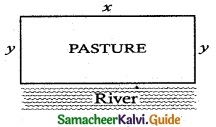
  2. They are then arranged into sections and stitched.
  3. The sides of the book are cut neatly and covered with a suitable brown paper.
  4. Two card board sheets slightly bigger than the book must be pasted on both sides.
  5. A calico cloth should be pasted on the closed side of the book to hold the cardboards and be allowed to dry.

Question 39.
Expand the news headlines in a sentence each.
(a) Suman Rao selected the new Miss India.
(b) 12 Injured as Buses Collide.
(c) Indian Team on the high in T20s in England.
Answer:
(a) 20-year old Miss Rajasthan 2019, Suman Rao, was awarded the most covetous crown Miss India at the finals held at Sardar Vallabhbhai Patel Indoor Stadium, Mumbai.

(b) Due to poor visibility of street lights and negligence of the State Transport Drivers two buses collided on the narrow stretch of Nammakal district near Ambedkar statue. 12 passengers including a six month old baby boy were rushed to the nearby Government hospital for treatment.

(c) Indian Team bagged the winner’s trophy and is expected to return next Monday at the Mumbai airport.

Tamil Nadu 11th English Model Question Paper 5

Question 40.
Complete the proverbs using the words given below.
(а) The harder you ………… the luckier you get. (throw, work, try)
(b) There is no time like the ……….. (present, future, past)
(c) ……….. and tide wait for no man. (Wind, Sea, Time)
Answer:
(a) work
(b) present
(c) Time

PART – IV

IV. Answer the following: [7 × 5 = 35]

Question 41.
How does the speaker highlight the importance of giving back to the society?
Answer:
The graduates have drawn largely from the social chest. The largest taken from the society needs to be replenished. If graduates fail to pay back, ordinary people’s coffer will be empty. The supervisor’s education enjoins greater responsibility to society. Apart from their own individual advancement, society has got a right to expect an adequate return from the graduates.

The society does not expect them to payback in cash. But they must pay back in terms of service. They should tone up the society by bringing a light into the dark alleys. They should herald sunshine into dingy places. They must give solace to the affiliated people. They should also give hope unto the despondent and thus ensure a new life unto every one.

[OR]

As a narrator, make a diary entry about the tight corner you faced at Christie’s and how you were saved from the dire situation.
Answer:
Thursday, 17th Nov. 20xx
I was lunching at a club in King James’s street. While passing along Kingstreet later, my friend suggested that we peeped in at Christie’s where an auction of Barbizon pictures was going on. The pieces of the paintings were pertaining to forest scenes, pools at evening, shepherdesses, and the regular subjects were tremendous for each ranging from two to three thousand guineas each. The remarkable thing was that nothing was sold at three figures.

After watching the auction for fun for a while I found myself bidding. I had exactly sixty three pounds in my account in the bank. I knew that any bidder must have a minimum of five hundred pounds in the bank to stand as security to bid for the artistic works. I enthusiastically participated in many bids as the starting price for each painting was a modest fifty to hundred guineas. Things went on well for me for quite sometime. But a cruel fate awaited me. A short red-faced man electrified the room by fixing the starting price at 4000 guineas. There was a rustle of excitement followed by terrible silence. But I found myself saying “and fifty”.

The dealer looked at the opener and at the company. To my surprise and horror, the dealer shot his bolt. My heart stopped and my blood congealed. I was in possession of the picture I did not want to buy. I was the top purchaser in the auction with just 63 pounds in the bank account. I turned to my friend for some moral support but he had deserted me to have a hearty laugh at a distance. With great alarm, I saw many other Barbizon pictures being put up and sold.

The auction came to an end. The bidders stood in a queue to pay the price and collect the pictures. I stayed behind at the end of the queue as I could not recall the name of any uncle, aunt or even a relative who could offer me 4050 guineas to buy the painting. I wished that a firing squad could give me a welcome relief by shooting me down. I preferred death to public disgrace.

But something divine turned my tragedy into a comedy. Just then one gentleman enquired if I was the gentlemen who bought “big Daubigny”. I admitted. The mediator asked if I could take 50 guineas for my interest and give up my claim. I would have hugged him and wept for joy of relief from the tight comer. But I had the guile/presence of mind to ask, “Is that the most he would offer?”

The mediator said that there was no harm in trying for a bit more. I said, “Tell him I will take hundred” myself and my friend started laughing. But when I saw the cheque for hundred guineas, I became grave. My friend said to me that it was he who brought me to Christie. I admitted, “I shall never forget it. It is indelibly branded in letters of fire on my heart”.

Tamil Nadu 11th English Model Question Paper 5

Question 42.
Describe the various reasons for King Richard’s grief and distress.
Answer:
King Richard II is a popular king. He has many nobles at the service. His rebellious cousin Bolingbroke attacks him with 10,000 men on his side. He sends message to the Welsh King for sending his army to defeat Bolingbroke. But to his shock, Welsh army is not sent. He realizes with alarm the terrible fate he would suffer in the hands of his foe and his most impending death in captivity. King Richard is reminded of the power of death that overshadows everything else. Death scoffs at the power of rulers.

Losing the battle, non¬receipt of Welsh army and the prospect of being jailed and killed worries Richard II. He realizes that in the hollow crown death had reigned him. In fact, death, a jester had misled him to believe that he was monarchising England. He can now only own a small patch of barren land. He is not an impregnable castle of brass anymore. He is an ordinary mortal. He too needs friends and needs to taste grief and face death.

[OR]

The poem ’Everest is not the only peak’ does not focus on the destination but the journey towards it. Discuss.
Answer:
The poet discusses the merits of efforts, duty and devotion and values of honesty, uprightness and service-mindedness. He does not have any special appreciation to those who reach great peaks like Himalayas. He appreciates the process, the journey and not the destination. When the whole world has a perspective of seeking glory using any foul method or underhand dealing, the poet differs from it.

For him the means is more important than the end. However modest may be one’s position is, it is adorable if attained by competence and merit. Pride is not in heights one reaches but in a life that knows no bending or kneeling. The poet respects one who does not stoop as a king. Thus the poet pays importance to the journey of life not the destination.

Question 43.
Write an essay of about 150 words by developing the following hints.
“After Twenty Years,” – time – 10 o’clock at night, – depeopled the streets – Only two men – on street – that night – policeman approaches – lurking man – light from his match – shows a pale face – keen eyes, a scar in eyebrow – a scarf pin – diamond – expensive watch – all hints as to the man’s past.
Answer:
The short story “After Twenty Years” Jakes place around 10 p.m. along a dark, windy New York City business avenue, mostly within the darkened doorway of a closed hardware-store.- This particular location had been a restaurant until five years ago. The plot begins with a policeman “on the beat” who discovers a.man standing in the dark doorway. The man then proceeds to explain why he is there. He and his best friend, Jimmy Wells had parted exactly twenty years ago to make their fortunes and had promised to meet at that spot “After Twenty Years”. He had gone west and gotten rich and was sure his friend, Jimmy would meet him if he were alive.

They talked a while and the policeman carried on. The man from the west wonders if his friend will come. The drama increases in anticipation of the rendezvous. Twenty minutes later, another man, whom we assume is his long lost friend, greets him warmly and they walk arm in arm discussing careers until they come to a well-lit comer near a drug store.

The man from the west gets a good look at his companion and discovers that he is not his friend, Jimmy. We are treated to several surprises for the man from the west is under arrest and secondly he is actually ‘Silky Bob’, a gangster from Chicago and finally the stranger is a plainclothes policeman. However, it seems that these three surprises are not enough. We get the “real” surprise when Jimmy Wells, the original policeman didn’t have the heart to arrest Bob, because he was his friend.

Tamil Nadu 11th English Model Question Paper 5

[OR]

Narrator – wants – photograph – photographer wait for an hour – comments – angry – called on Saturday – proof – Narrator shocked – photograph – not like him – worthless bauble.
Answer:
‘With the Photographer’ by Stephen Leacock is narrated in the first person. The narrator while sitting in the photographer’s studio begins to read some magazines and sees how other people look and the narrator begins to feel insecure about his appearance. It is also noticeable that the photographer takes a dislike to his face judging it to be wrong. What should have been a simple process of taking a photograph becomes something of a nightmare for the narrator. How confident the narrator becomes is noticeable when he returns to the photographer’s studio the following Saturday.

He realises that the photograph that has been taken of him looks nothing like him. This angers the narrator as he was simply looking for a photograph that would show his likeness. He accepts that he may not be to everybody’s liking when it comes to his physical appearance but is angered by the changes made. The photographer has retouched the photograph so much that the narrator does not recognise himself. The end of the story is also interesting as the reader realises that it is just a worthless bauble when he begins to cry. He has been judged solely by his appearance by the photographer whose job was to simply take a life like photograph.

Question 44.
Write a summary or Make notes of the following passage.
Answer:
The greatness of a country depends upon its people. India is fortunate to have vast human resources. Our countrymen are second to none in intelligence and in doing hard work. From the ancient period Indians excelled in art, architecture, knowledge of metals, medicines, literature etc., After our independence in 1947, the Government took steps to improve our country in all sphere. By the first Five-Year Plan was specially designed to improve our irrigational methods.

By the five year plans, provisions are made for the development of the country. The first Five-Year Plan was specially designed to improve our irrigational methods. By the green revolution we attained self sufficiency in the field of agricultural production. The present age is the atomic age. India too established an Atomic Energy Commission under the guidance of Dr. BhabhaI India made the first successful nuclear explosion on 18th Mary, 1974 which made India the sixth member of the world nuclear club. No other country’s scientists helped; it was purely Indian efforts. We have sent our Indian cosmonaut to space also. On April 3, 1984 Shri Rakesh Sharma, the best pilot of Indian Air Forse, travelled into space with two Soviet spacemen in Spyuz II spaceship.
Answer:
Summary
No. of words given in the original passage: 199
No. of words to be written in the summary: 199/3 = 66 ± 5

Rough Draft
India is fortunate to have vast human resources. Our countrymen are second to none in inteIligence and in doing hard work. Ancient Indians excelled in art, architecture, metallurgy, medicine, literature etc., After Independence, by the five year plans, provisions are made for the development of the country. By the green revolution self sufficiency in agricultural production was attained. Present age is the atomic age. An Atomic Energy Commission under the guidance of Dr. Babha. Due to the successful nuclear explosion in 1974, India the sixth member of the world nuclear club. It was purely Indian efforts. We have to sent Rakesh Sharma to space in Soyuz II.

Fair Draft
Greatness of India
India is fortunate to have vast human resources. Ancient Indians excelled in art, architecture, metallurgy, medicine, literature etc. After Independence by the green revolution self sufficiency in agricultural production was attained. Present age is the atomic age. Atomic Energy Commission was established under the guidance of Dr. Bhabha. Due to the successful nuclear explosion in 1974, India is the sixth member of the world nuclear club.

No. of words in the summary: 64

Tamil Nadu 11th English Model Question Paper 5

[OR]

Note-making
Title: Greatness of India
Answer:
1. Greatness of the country
people
our country men are second to none
from the ancient times Indians excelled in arts, architecture, metallurgy, medicine, literature etc.

2. Post Independence
government took steps to improve in all spheres
the first five-year plan was designed
Green Revolution attained self sufficiency

3. Present age
atomic age
India made the first nuclear explosion in 1974
sixth member of the world nuclear club
India sent cosmonaut, Shri Rakesh Sharma to space with two Soviet spacemen in Soyuz II spaceship.

Question 45.
You are Anita. You recently visited a hill station along with your parents. It was an exhilarating, adventurous and joyful experience. Write a letter to your friend sharing your experience in 150-200 words.
Answer:

25th June, 2020

From
Anitha
6, West street,
Chennai
To
Mercy
6, Abraham Street
PeriyarNagar
Chennai – 600 014

Dear Mercy,
Hope my letter finds you in the best of your health. Have you been to your grandparents house for vacation? I had recently gone to Matheran with my parents and really missed you. Matheran is the smallest hill station in the Indian state of Maharashtra and is located on the Western Ghats range at an elevation of around 800 m above sea level. It is about 90 km from Mumbai. Matheran’s proximity to many metropolitan cities makes it a popular weekend getaway for urban residents. Matheran, which means “forest on the forehead” is an eco-sensitive region declared by the Government of India.

It is Asia’s only automobile-free hill station. Doesn’t that spark an exhilarating, adventurous and joyful experience? Yes, from the foothills of the mountain, you either need to walk up the mountain to lodges and cottages there for your accommodation or need to hire Cycle rickshaws or ponies to travel. We all took a horse each and my little brother got on to a pony. Our baggage was loaded on to a wheel barrow to be brought up to our destination.

There are around 38 designated viewpoints in Matheran, including the Panorama Point that provides a 360-degree view of the surrounding area and also the Neral town. From this point, the view of sunset and sunrise is dramatic. The Louisa Point offers crystal clear view of the Prabal Fort. The other points are the One Tree Hill Point, Heart Point, Monkey Point, Porcupine Point, Rambagh Point, and more. We stayed in a Parsi bungalow. Beautiful old British-style architecture is preserved in Matheran. The roads are not metalled and are made of red laterite earth. As anticipated, there are many monkeys around and even the summer season was very pleasant.

I hope to visit the place again and I hope we will get an opportunity to visit it together. Why don’t you ask your parents if both our families could go to Matheran during our next vacation? My parents too were talking about going there again since it’s such a pollution free spot to relax and enjoy. Looking forward to meeting you in person to share the photographs we have taken here.

Yours loving friend,
Anita
Address on the Envelope
To
Mercy
6, Abraham Street
PeriyarNagar
Chennai – 600 014

Tamil Nadu 11th English Model Question Paper 5

[OR]

Write an essay in about 150 words on ‘Punctuality’
Answer:
Punctuality is essential to succeed in one’s career. In business schools, Time management is also taught. Those who are punctual prove that they respect the time of those whom they visit. Those who have missed interviews, flights, Olympic golds and even the opportunity to win goes by milliseconds know the value of time. We should cultivate the quality of being punctual right from our student days. Maintaining a calendar of action and keeping track of time all the time would help one to be punctual. God gives twenty four hours to each one of us, if we are punctual and make most of the given time we would definitely succeed in life.

Question 46.
Read the following sentences, spot the errors and rewrite the sentences correctly.
(a) There is an University at Madurai.
(b) He is confident on his success.
(c) Though he is old but he walks steadily.
(d) Sam is junior than me.
(e) His father is a honest man.
Answer:
(a) There is a University at Madurai.
(b) He is confident of his success.
(c) Though he is old he walks steadily.
(d) Sam is junior to me.
(e) His father is an honest man.

[OR]

Fill in the blanks appropriately.
(a) The story told by the ……….. fat man is not ………… (credible/credulous)
(6) My keys ……….. be in the car. (Fill in with a modal verb)
(c) This watch …………. belong to my father, (use semi-modal)
(d) The strike was announced ………… the disagreement between the management and the employees on the bonus issue. (Use a suitable link word)
Answer:
(a) credulous, credible
(b) must
(c) used to
(d) on account of

Tamil Nadu 11th English Model Question Paper 5

Question 47.
Identify each of the following sentences with the fields given below.
(a) Robots are steadily moving from fiction to fact.
(b) Examination should evaluate all aspects of learning.
(c) Indian players have performed well in the Commonwealth Games.
(d) Napoleon Bonaparte was considered an enlightened monarch of France.
(e) “Health is Wealth” but pollution takes it all away.
(Sports, Environment, History, Science, Education)
Answer:
(a) Science
(b) Education
(c) Sports
(d) History
(e) Environment

[OR]

Read the following passage carefully and answer the questions that follow.

I have always been attracted by people of unusual habits. By this, I do not imply hippies and drop-outs or anyone of that band of unhappy people for whom modem society is too sick and uncivilized to bear. No, I mean those quiet, orderly people, living apparently blameless lives, who enrich their har humdrum existences by adopting odd quirks and passions, unlikely, routines or harmless manias for useless objects. Like the secretary I had, who collected earwigs, though what she did with them I never knew, I believe that she loved them because they were small and thin like herself and had a way of scuttling about in very much the same way she did. Life, I am sure, would be very much poorer without such people in it. Sometimes, I feel I am lacking in personality, since I have none of these strange habits.. Unless you count the fact that I never eat eggs unless they are boiled in milk.
Questions.

  1. What attracted the author?
  2. According to the author, who are the people who have unusual habits?
  3. What did the author’s secretary collect?
  4. Why did she love them, according to the author?
  5. Do you think that the author has any strange habit? If so, what is it?

Answer:

  1. Unusual habits of others attracted the author.
  2. Quite orderly people living blameless lives have unusual habits.
  3. The author’s secretary collected ‘earwigs’.
  4. They were small and thin like herself scuttling about.
  5. Yes, he has a habit of eating eggs which are only boiled in milk.

Tamil Nadu 11th English Model Question Paper 5

Tamil Nadu 11th English Model Question Paper 4

Students can Download Tamil Nadu 11th English Model Question Paper 4 Pdf, Tamil Nadu 11th English Model Question Papers helps you to revise the complete Tamilnadu State Board New Syllabus, helps students complete homework assignments and to score high marks in board exams.

TN State Board 11th English Model Question Paper 4

General Instructions:

  1. The question paper comprises of four parts.
  2. You are to attempt all the parts. An internal choice of questions is provided wherever applicable.
  3. All questions of Part I, II, III and IV are to be attempted separately.
  4. Question numbers 1 to 20 in Part I are Multiple Choice Questions of one mark each.
    These are to be answered by choosing the most suitable answer from the given four alternatives and writing the option code and the corresponding answer
  5. Question numbers 21 to 30 in Part II are two-mark questions. These are to be answered in about one or two sentences.
  6. Question numbers 31 to 40 in Part III are three-mark questions. These are to be answered in above three to five short sentences.
  7. Question numbers 41 to 47 in Part IV are five-mark questions. These are to be answered in detail Draw diagrams wherever necessary.

Time: 3:00 Hours
Maximum Marks: 90

PART – I

I. Answer all the questions. [20 × 1 = 20]
Choose the correct synonyms for the underlined words from the options given.

Question 1.
She yanked at the zip of the bag.
(a) jerked
(b) yearned
(c) yelled
(d) jumped
Answer:
(a) jerked

Question 2.
The felicitation programme was highly commendable.
(a) falcon
(b) congratulatory
(c) felling
(d) calliper
Answer:
(b) congratulatory

Tamil Nadu 11th English Model Question Paper 4

Question 3.
I dare not answer my mother when she is hysterical.
(a) avoid
(b) dauntless
(c) desire
(d) aggravate
Answer:
(b) dauntless

Choose the correct antonyms for the underlined words from the options given.

Question 4.
I had to ponder on the situation.
(a) consider
(b) contemplate
(c) ignore
(d) reflect
Answer:
(c) ignore

Question 5.
I relished the fruit and its taste.
(a) savoured
(b) enjoyed
(c) disliked
(d) candies
Answer:
(c) disliked

Question 6.
The students protested against child abuse.
(a) dissent
(b) proclaimed
(c) accepted
(d) averted
Answer:
(c) accepted

Question 7.
Choose the blended form of “picture and element”.
(a) pixel
(b) picel
(c) piclem
(d) picment
Answer:
(a) pixel

Tamil Nadu 11th English Model Question Paper 4

Question 8.
Choose the right definition for the given term “cartography”.
(a) One who is tenacious of a strict adherence to official formalities
(b) The ethical theory that pleasure is the highest good and proper aim of human life
(c) Prejudice, stereotyping, or discrimination on the basis of a person’s sex or gender
(d) The science of drawing maps
Answer:
(d) The science of drawing maps

Question 9.
Choose the meaning of the idiom ‘Back to the drawing board’.
{a) The person you are talking about arrives
(b) Do something to save money
(c) Do or say something exactly right
(d) Failure leads to a time to start all over
Answer:
(d) Failure leads to a time to start all over

Question 10.
Choose the meaning of the foreign word in the sentence.
Mithwin really likes singing karaoke, even though he doesn’t have an amazing voice,
(a) songs with karate steps
(b) baila
(c) country songs
(d) sing along
Answer:
(d) sing along

Question 11.
Choose the word from the options given to form a compound word with “land”.
(a) owner
(b) lord
(c) rent
(d) estate
Answer:
(b) lord

Question 12.
Form a new word by adding a suitable prefix to the root word “charge”.
(a) sur
(b) pre
(c) un
(d) out
Answer:
(a) sur

Question 13.
Choose the expanded form of “DARE”.
(a) Documentation Automatic Retrieval Equipment
(b) Documents Arrangements Retrieval Equipment
(c) Documentation Automatic Retrieval Experience
(d) Drug Abuse Resistance Education
Answer:
(d) Drug Abuse Resistance Education

Question 14.
Choose the correct sentence pattern.
He shows kindness to his patients.
(a) SVOA
(b) SVOIO
(c) SVIODO
(d) SVCA
Answer:
(b) SVOIO

Tamil Nadu 11th English Model Question Paper 4

Question 15.
One who is concerned with usefulness is called as …………
(a) Psychiatrist
(b) Technologist
(c) Pragmatist
(d) Editorialist
Answer:
(c) Pragmatist

Question 16.
Fill in the blank with the suitable preposition.
Ram was a thin, tall and handsome bachelor ………. a Roman nose.
(a) far
(b) with
(c) of
(d) on
Answer:
(b) with

Question 17.
Add a suitable question tag to the following statement.
Nobody could do it, ……….. ?
(a) could they
(b) should they
(c) have they
(d) ain’t they
Answer:
(a) could they

Question 18.
Substitute the underlined word with the appropriate polite alternative.
The press release said the band split up because of problems among artists.
(a) problems
(b) creative indifference
(c) creative differences
(d) fights
Answer:
(c) creative differences

Question 19.
Substitute the phrasal verb in the sentence with a single word.
Dravid was so far away, we really couldn’t make out what he was trying to say.
(a) understand
(b) deliver
(c) hear
(d) record
Answer:
(a) understand

Question 20.
Fill in the blank with a suitable relative pronoun.
What is the name of the prison ……… Nelson Mandela stayed?
(a) which
(b) when
(c) where
(d) whose
Answer:
(c) where

Tamil Nadu 11th English Model Question Paper 4

PART – II

II. Answer any seven of the following: [7 × 2 = 14]
(i) Read the following sets of poetic lines and answer any four of the following. [4 × 2 = 8]

Question 21.
“To unlearn all these muting things
Most of all, I want to relearn”
(a) What does the poet want to relearn?
(b) Explain ‘muting things’.
Answer:
(a) The poet has forgotten to laugh naturally. He wants to relearn to laugh because his laugh in front of the mirror shows his teeth like a snake’s bare fangs.
(b) Muting things are; superficial and unnatural behaviours like portrait smiles and heartless handshake.

Question 22.
“The birds around me hopp’d and play’d
Their thoughts I cannot measure,
But the least motion which they made
It seem’d a thrill of pleasure”
(а) What is the rhyme scheme?
(b) Name the poem and poet.
Answer:
(a) The rhyme scheme is ‘abab’.
(b) The poem is ‘Lines Written in Early Spring’ written by William Wordsworth.

Question 23.
“A life that knows no kneeling and bending
We are proud and feel so tall”
(a) What kind of a life, does the poet talk about?
(b) Pick out the alliterated words.
Answer:
(a) The poet speaks about a life where there is no necessity to stoop before others for any ‘gain’. This makes people live with self-dignity which makes them feel proud.
(b) A life that knows no kneeling and bending.

Question 24.
“I live with bread like you, feel want,
Taste grief, need friends – subjected thus,
How can you say to me, I am a king?”
(а) Mention the figure of speech employed in the last line.
(b) What is surprising about the king’s words to his loyal friends?
Answer:
(а) Interrogation
(b) The king feels he is also an ordinary mortal deceived by the jester ‘death’. He also needs to taste grief and needs the support of friends during distress. This surprises his loyal friends.

Tamil Nadu 11th English Model Question Paper 4

Question 25.
“His coat is dusty from neglect, his whiskers are uncombed.”
(а) How does Macavity differ from domestic/tamed cat?
(b) Identify the figure of speech.
Answer:
(a) Macavity’s coat is dusty. His whiskers are uncombed.
(b) Personification.

Question 26.
“With all my heart I do admire Athletes who sweat for fun or hire,”
(a) Pick out the rhyming words.
(b) What does the second line mean?
Answer:
(a) Admire and hire are the rhyming words.
(b) The second line means there are two categories of athletes. The first play just for pleasure. The second category is players who are hired by corporate to play the big leagues or tournaments.

(ii) Do as Directed: (Answer any three) [3 × 2 = 6]

Question 27.
Rewrite into Direct speech:
Anitha : I want to order a big pineapple cake for my brother’s birthday.
Confectioner : When is it?
Answer:
Anne told a confectioner that she wanted to order a big birthday cake for her brother. The confectioner asked when his birthday was.

Question 28.
Change into passive/active voice of the following sentence.
The Baboon tasted the sour grapes.
Answer:
The sour grapes was tasted by the Baboon.

Question 29.
Put the milk in the fridge. It will go sour. (Combine using ‘if’)
Answer:
If you don’t put the milk in the fridge, it will go sour.

Question 30.
He was ill, but he came for practice. (Change into a simple sentence)
Answer:
In spite of his illness he came for practice.

PART – III

III. Answer any seven of the following: [7 × 3 = 21]
(i) Explain any two of the following with Reference to the Context: [2 × 3 = 6]

Question 31.
………. and feel
At home, once, twice
Answer:
Reference: This line is from the poem, “Once upon a time” written by Gabriel Okara.

Context: The poet says these words while describing people’s attitude if someone visits their house.

Explanation: The semblance of cordiality will disappear if one visits for the third time. When they say “feel at home”, it applies only once or twice. In fact, they would shut the door on his face. One should not believe those words and visit their houses frequently. Familiarity breeds contempt.

Tamil Nadu 11th English Model Question Paper 4

Question 32.
The birds around me hopp’d and play’d,
Their thoughts I cannot measure,
Answer:
Reference : These lines are from the poem “Lines Written in Early Spring” written by William Wordsworth.

Context: The poet says these words while enjoying the beauty and peace that prevailed in the woodland. The poet said these words while trying to fathom their thoughts.

Explanation : The poet was overwhelmed with delight in the company of birds, plant kingdom and the brook. The birds were oblivious to the presence of the poet. They hopped and chirped around him in absolute bliss. He tried hard to understand the thoughts of the birds through the bird’s language. But he couldn’t succeed. He simply inferred that they were thrilled and enjoying the jocund company.

Question 33.
(I might mention Mungojerrie, I might mention Griddlebone)
Are nothing more than agents for the Cat who all the time.
Just controls their operations: the Napoleon of Crime.
Answer:
Reference: These words are from the poem “Macavity – the mystery cat” written by T.S. Eliot.

Context: The poet compares the leadership skills of Macavity to his own fictional characters.

Explanation: Those functional characters Mungojerrie and Griddlebone portrayed in T.S. Eliot’s “Old Possom’s book of Practical Cats” are not to be compared with Macavity. He is a commander in chief of criminals or Napolean of criminals. He directs all thefts and crimes in London very cleverly.

(ii) Answer any two of the following briefly: [2 × 3 = 6]

Question 34.
Why did the grandma chant the morning prayer in a sing song voice?
Answer:
Grandma started the mornings with a sing-song prayer because she wanted the author to learn the prayers by heart.

Question 35.
What should the youngsters aim in life after their graduation?
Answer:
The youngsters should aim in life after graduation for an aristocracy of achievements arising out of a democracy of opportunities. As youngsters they should aim at toning up the society, bringing light into dark alleys, sunshine into dingy places, solace into the afflicted, hope into the despondent and a new life into every one.

Tamil Nadu 11th English Model Question Paper 4

Question 36.
When does human memory work with less than its usual capacity?
Answer:
Human memory works with less than its usual capacity in matters like taking medicine. The author explains that human memory represents the willingness to remember certain things. It forgets what it does not wish to remember. Humans are blessed with “selective amnesia”.

(iii) Answer any three of the following briefly: [3 × 3 = 9]

Question 37.
Re-arrange the shuffled words and frame into meaningful sentences, (change to pie chart/graph or table)

  1. the/Indian/English/exploited/the farmers.
  2. on/camel/has/hump/its/a/big/back.
  3. elephant/land animal/present/largest/is/day/the/of/the.

Answer:

  1. The English exploited the Indian farmers.
  2. Camel has a big hump on its back.
  3. Elephant is the largest land animal of the present day.

Question 38.
Build a dialogue of minimum three exchanges between a waiter and a customer.
Answer:
Kavya : Could I get something to eat immediately?
Waiter : Yes Ma’am. We have hot idlies.
Kavya : Do you have Podi Dosa?
Waiter : Yes ma’am, we do have Podi Dosa.
Kavya : Can you give two sets of Podi Dosa with a vada please?
Waiter : Yes ma’am, it will be served in ten minutes.

Question 39.
Describe the process of polishing your shoes.
Answer:

  1. Shoes are cleaned of dust with a brush.
  2. A layer of polish is coated over the shoes.
  3. One should wait a little till the polish soaks the leather.
  4. Then shoes are brushed to shine.

Tamil Nadu 11th English Model Question Paper 4

Question 40.
Complete the proverbs using the words given below.
(a) Every cloud has a ……… lining, (golden, silver, white)
(b) Fortune favors the ……….. (brave, courageous, poor)
(c) Get out while the going is ………… (good, high, best)
Answer:
(a) silver
(b) brave
(c) good

PART – IV

IV. Answer the following: [7 × 5 = 35]

Question 41.
How does the speaker highlight the importance of giving back to the society?
Answer:
The graduates have drawn largely from the social chest. The largest taken from the society needs to be replenished. If graduates fail to pay back, ordinary people’s coffer will be empty. The supervisor’s education enjoins greater responsibility to society. Apart from their own individual advancement, society has got a right to expect an adequate return from the graduates. The society does not expect them to payback in cash. But they must pay back in terms of service. They should tone up the society by bringing a light into the dark alleys. They should herald sunshine into dingy places. They must give solace to the affiliated people. They should also give hope unto the despondent and thus ensure a new life unto every one.

[OR]

What are the observations of Lynd on the capacity of humans to remember and forget things?
Answer:
Robert Lynd is amazed at the efficiency of human memory. Modem man remembers telephone numbers, names of film stars, cricketers, football champions and even notorious murderers. He remarks wittily that man does not forget a single item of his clothing. No one forgets to shut the door when leaving the house. The institution of family survives in modem cities because ordinary people have extraordinary memory power. In some matters, the memory is less than perfect, causes could be psychological. We tend to forget things we don’t wish to remember.

For example, many people forget to take medicines. Medicine needs to be taken before / after meals. Robert Lynd remarks that chemists make a lot of money because people tend to forget to take medicines. It aggravates the disease and people are forced to buy more and more medicines. Most people forget to post.letters. The author himself would not trust his letters to be posted by others. The author himself never remembered to post letters entrusted to him. He had to apologise for the unposted letters kept with him for long. Likewise, the author forgets his walking sticks often.

Tamil Nadu 11th English Model Question Paper 4

Question 42.
“Face is the index of the mind.” Does this adage concur with the views of the poet?
Answer:
Unlike the people of the past, people in modem times “laugh only with their teeth” while their ice-block cold eyes search for something. Now, people shake hands without hearts. There is no human warmth in social relations. While they shake hands, they look for evidences to judge the financial status of a person. People say ‘feel at home’ and ‘come again’. But if a person visits a third time he is not welcomed. They all have cocktail faces ready for all occasions. Their conforming smiles are like fixed portrait smiles. They wear standard, deceitful, artificial smile for all occasions. They have faces like masks.

The poet has learnt from them how to use faces like dresses, home face, office face, street face, host face etc. Their faces, like the teeth of the elephant, show only what is accepted. The ugly side of their personality is cleverly hidden behind their deceitful smiles and polite words. So, the poet’s views do not concur with the adage “Face is the index of the mind”.

[OR]

Write a short summary of the poem “The Hollow Crown”.
Answer:
Shakespeare portrays the fleeting nature of human glory. King Richard II, on the verge of surrender to his rebellious cousin Bolingbroke, talks about the nature of temporal power and death. He talks about graves, epitaphs and worms. He explains how even monarchs leave nothing behind as their own except a small patch of land in which they are buried. The dejected king talks on various ways kings get killed. Some are slain in the battle field, some poisoned to death by their own spouses.

The kings who believed their bodies to be impregnable brass are shattered by just a pinprick. In fact, death is in supreme command which waits for the king, and only allows the king to act as if he were ruling and in control of everything. He chides his loyal friends who still believe that he is a monarch and tells them that he is an ordinary mortal just like them. He is humbled as he is powerless before the impending death.

Tamil Nadu 11th English Model Question Paper 4

Question 43.
Write an essay of about 150 words by developing the following hints.
C.V. Burgess-master craftsman-reveals-few names-first patient Joe-wife Emily- surgical room-Emily apprehensive-two children-Dorothea-Dentist hospital becomes play area-snobbish woman-whole play resolves-dramatic irony of patients’ guess- the dentists’ room -opening the tool cabinet-The groaning noise-vexation of Emily-Joe add to the dramatic irony-nurse moves about-feigned seriousness-the fact of the misplacement of key-which adds comic.
Answer:
C.V. Burgess is a master craftsman who reveals only a few names. The first patient Joe and his wife Emily are the most dominant characters. Joe is inside the surgical room. Emily is anxious about the husband. Among the two children the dramatist uses only the girl’s name Dorothea and the Dentist hospital becomes a play area for Dorothea and the little boy who claim the same magazine for reading. The snobbish woman who goes on showing her photo album gives us an impression if she came to see the doctor or to show her photos.

The whole play revolves around the dramatic irony of patients’ guess as to what happened inside the dentists’ room and what really happened. The pliers, hack saw and the huge hammer were taken inside the dentist’s room only for opening the tool cabinet. But the patients wondered how these would be used in dental surgery. The groaning noise from inside the dentist’s rooms and the vexation of Emily Joe add to the fear of the patients waiting. A few women patients leave the waiting room scared of subjecting themselves to the torture of having their bad teeth extracted with carpentry tools. The nurse moves about with all feigned seriousness without disclosing the fact of the misplacement of key.

[OR]

Miss Meadows, a music teacher – gets a letter – feels upset – Fiance not interested – reflects her gloom on students – changes the happy song to a sad one – Headmistress calls – delivers a telegram – Fiance agrees to wedding – Meadows happy – changes the song again to a cheerful one.
Answer:
Miss Meadow was heart-broken. The letter written by Basil had pierced her heart and she was bleeding. Her hatred and anger became a knife and she carried it with her. Her icy cold response to Science Mistress demonstrates it. She is least bothered about the tender feelings of young children who look at her face all time for a friendly nod or smile of approval.

Her favourite pupil Mary Beazley is baffled at her treatment of the chrysanthemum she had brought with so much love. The choice of the song “A lament” perfectly jells well with her worst mood. She is in fact in her heart lamenting over the loss of love, trust and future hopes. She is unnecessarily severe with young children forcing them to redo the singing which drives them to despair, pain and tears they manage to stifle.

After she receives the telegram from Basil apologizing for his insane letter, her mood changes to joy. She takes the chrysanthemum and keeps it close to her lips to conceal her blush. She goads the children to sing a song of joy congratulating someone for success. She persuades them to show warmth in their voices. Her warm and lively voice dominates the tremulous voices of the young ones. The young ones now realize that Miss Meadow who was in a wax earlier is now in her elements.

Tamil Nadu 11th English Model Question Paper 4

Question 44.
Write a summary or make notes of the following passage.
Moral courage is of the mind, while physical courage is of the body; but mind and body are so closely connected that I think it is impossible to separate the one sort of courage from the other. In many instances of human daring, moral courage combined with physical to a resolute endurance of physical suffering becomes added to a consciousness of duty. But while physical courage in a human being implies at the least, the moral courage implies much more.

This moral courage is the courage which braces us always to do our duty. This is the noblest form of courage and yet it is the courage most commonly required. It is the courage which everyday, almost every hour demands of us all.
Answer:
Summary
No. of words given in the original passage: 123
No. of words to be written in the summary: 123/3 = 41 ± 5

Rough Draft
Moral courage is of the mind and physical courage of the body. Human daring involves both and duty consciousness. It is impossible to separate the one sort of courage from the other. Of the two, moral courage is the noblest form of courage which is demanded of us all the time.

Fair Draft
Moral Courage Vs Physical Courage
Moral courage is of the mind and physical courage of the body. Human daring involves both and duty consciousness. Of the two, moral courage is the noblest form of courage which is demanded of us all the time.

No. of words in the summary: 38

[OR]

Note-making
Title: Moral Courage Vs Physical Courage Courage
Answer:
Courage
Mind – Moral courage
Body – Physical coinage
Human daring involves
both moral and physical courage and consciousness of duty Moral courage
inspires us to do our duty – needed all the time.

Tamil Nadu 11th English Model Question Paper 4

Question 45.
You are Neena. The wedding of your elder sister Meena is going to be held on the 15th May, 2020 at Hotel Lake View, Ooty. Write an informal invitation to your friend Sherrin requesting her to attend the function.
Answer:

20th April, 2020

From
Neena
2, Gandhi street
Ooty

To
Sherrin
12, Hill view Road,
Raj Nagar,
Ooty.
Dear Sherrin,

You will be pleased to know that the wedding of my elder sister Meena is going to be held on the 15th May, 2020 at Hotel Lake View, Ooty. The whole family will move there in the morning. I invite you to join us at lunch in the hotel on the 15th. The wedding ceremony will take place at 8 in the evening.
I do hope you will join us on the auspicious occasion.

Yours sincerely,
Neena
Address on the Envelope
To
Sherrin
12, Hill view Road
Raj Nagar
Ooty

[OR]

Write an essay in about 150 words on ‘Self medication is an unhealthy practice’.
Answer:
Self-medication is defined as the selection and use of medicines by individuals to treat self- diagnosed symptoms. Self-medication is thought to reduce the load on the medical services, decrease the time spent in waiting to see the physician, and save cost especially among economically deprived people. Since it is instant, there is no expense of the doctor but when they ultimately suffer from severe health issues, their medical expense increases two-fold.

Self-medication as a habit can damage one’s health irrevocably, causing disabilities and even premature death. Self-medication is okay to many of us. It’s just a crocin or some ‘safe’ antibiotic we believe we are taking as going to the doctor can be time consuming and expensive. But there are side-effects to this and very harmful ones at that. The idea of self¬medication even for small health issues can lead to complications. People tend to pop pills as they are popping candies. Medicines such as pain relief drugs, cough syrups, laxatives, antibiotics, anti-allergy medicines, vitamins and even antacids. Since these are drugs that can be bought over the counter meds, these are easier to acquire.

Popping pills may get us instant relief but what we don’t realize is that it is. not free of side-effects. This is because one drug may react differently when consumed with another drug. This can even lead to death. Hence, consulting a doctor is a must and self-medication is an unhealthy practice.

Tamil Nadu 11th English Model Question Paper 4

Question 46.
Read the following sentences, spot the errors and rewrite the sentences correctly.
(а) Children are fond to coconuts.
(b) After all a sculptor’s labours had came to an end.
(c) As he looking on, he was overwhelmed by the image.
(d) All the furnitures in her house is sold.
(e) Each of the student has participated in the competition.
Answer:
(a) Children are fond of coconuts.
(b) After all a sculptor’s labours had come to an end.
(c) As he looked on, he was overwhelmed by the image.
(d) All the furniture in her house is sold.
(e) Each of the students has participated in the competition.

[OR]

Fill in the blanks appropriately.
(a) When teaching my daughter how to drive, I told her if she didn’t hit the ………. in time she would ……….. the car’s side mirror, (break/ brake)
(b) ………. you like a cup of tea? (Fill in with a modal verb)
(c) We ……….. go grocery shopping, (use semi-modal)
(d) Take my umbrella ………… rain. (Use a suitable link word)
Answer:
(a) brake, break
(b) Would
(c) need to
(d) in case of

Tamil Nadu 11th English Model Question Paper 4

Question 47.
Identify each of the following sentences with the fields given below.
(a) General Elections take place after every five years in India.
(b) The Reserve Bank revised the interest rate.
(c) One thousand interest connections were given in Pollachi.
(d) The new serial will begin on Monday.
(e) Athletics rarely gets coverage in the Media.
(Commerce, Politics, Sports, Maths, Computer)
Answer:
(a) Politics
(b) Commerce
(c) Computer
(d) Media
(e) Sports

[OR]

Read the following passage carefully and answer the questions that follow.
It is not the pride or incivility on either side that keeps us remote from each other. It is simply our London way. People are so plentiful that they lose their identity…. In London men are as lonely as Oysters, each living in his own shell. We go out in the country to find neighbours. If the man next door took a cottage a mile away from me in the country. I should probably know all about him, his affairs, his family, his calling and his habits inside a week. This is not always so idyllic as it seems. Village life can be poisoned by neighbours until the victim pines for the solitude of a London street, where neighbours are so plentiful that you are no more conscious of their individual existence than if they were black berries on a hedge row.
Questions.

  1. What keeps people in London remote from each other?
  2. How are men described? Why?
  3. Why do we seek country life?
  4. What is the disadvantage of village life?
  5. What can you say in this context about our interaction with our neighbours the life style in our country?

Answer:

  1. People are so plentiful that they lose their identity.
  2. Men are described as oyster shells. The being inside the oyster shell never wishes to know who lives outside.
  3. We seek country life to find neighbours.
  4. Village life is not idyllic. Neighbours tend to poison village life.
  5. India has not deteriorated to the level of London city. We still care for the neighbours as neighbours care for us.

Tamil Nadu 11th English Model Question Paper 4

Tamil Nadu 11th English Model Question Paper 3

Students can Download Tamil Nadu 11th English Model Question Paper 3 Pdf, Tamil Nadu 11th English Model Question Papers helps you to revise the complete Tamilnadu State Board New Syllabus, helps students complete homework assignments and to score high marks in board exams.

TN State Board 11th English Model Question Paper 3

General Instructions:

  1. The question paper comprises of four parts.
  2. You are to attempt all the parts. An internal choice of questions is provided wherever applicable.
  3. All questions of Part I, II, III and IV are to be attempted separately.
  4. Question numbers 1 to 20 in Part I are Multiple Choice Questions of one mark each.
    These are to be answered by choosing the most suitable answer from the given four alternatives and writing the option code and the corresponding answer
  5. Question numbers 21 to 30 in Part II are two-mark questions. These are to be answered in about one or two sentences.
  6. Question numbers 31 to 40 in Part III are three-mark questions. These are to be answered in above three to five short sentences.
  7. Question numbers 41 to 47 in Part IV are five-mark questions. These are to be answered in detail Draw diagrams wherever necessary.

Time: 3:00 Hours
Maximum Marks: 90

PART – I

I. Answer all the questions, [20 × 1 = 20]
Choose the correct synonyms for the underlined words from the options given.

Question 1.
I pulled myself together and handed over the card nonchalantly.
(a) indifferently
(b) carefully
(c) cautiously
(d) sentimentally
Answer:
(a) indifferently

Question 2.
The incident is clearly etched in my memory.
(a) erased
(b) melted
(c) imprinted
(d) refrained
Answer:
(c) imprinted

Tamil Nadu 11th English Model Question Paper 3

Question 3.
The libraries are a repository of knowledge.
{a) refractory
(b) refrigerator
(c) storeroom
(d) management
Answer:
(c) storeroom

Choose the correct antonyms for the underlined words from the options given.

Question 4.
It is important that even the mediocre are given due recognition.
(a) middling
(b) ordinary
(c) exceptional
(d) middleman
Answer:
(c) exceptional

Question 5.
I managed to solve the complex problem.
(a) intricate
(b) compound
(c) simple
(d) complicated
Answer:
(c) simple

Question 6.
It is compulsory to donate one day salary for the flood victims.
(a) obligation
(b) optional
(c) obeisance
(d) obstruction
Answer:
(b) optional

Question 7.
Choose the blended form of “hazardous and material”.
(a) hazardmat
(b) hazat
(c) hazmat
(d) mathaz
Answer:
(c) hazmat

Tamil Nadu 11th English Model Question Paper 3

Question 8.
Choose the right definition for the given term “etymology”.
(a) A person perceived to be either uncivilized or primitive
(b) A study about the history and origin of a word
(c) The hutnanistic study of language and literature
(d) The belief that all events in life are predetermined and inevitable
Answer:
(b) A study about the history and origin of a word

Question 9.
Choose the meaning of the idiom ‘A penny for your thoughts’.
(a) Current issues spoken by many people
(b) To worsen an unfavourable situation
(c) Everything about the case
(d) Asking what someone is thinking
Answer:
(d) Asking what someone is thinking

Question 10.
Choose the meaning of the foreign word in the sentence.
Our daughter is going to turn 5 next year, so we’ve been trying to find a good kindergarten for her.
(a) preschool
(b) children’s garden
(c) school material
(d) play school
Answer:
(b) children’s garden

Question 11.
Choose the word from the options given to form a compound word with “while”.
(a) mean
(b) teach
(c) scene
(d) weather
Answer:
(a) mean

Question 12.
Choose the word from the options given to form a compound word with “qualified”.
(a) sur
(b) dis
(c) in
(d) mis
Answer:
(b) dis

Tamil Nadu 11th English Model Question Paper 3

Question 13.
Choose the expanded form of “FTCL”.
(a) Fellow Tribal Colleges of Linguistics
(b) Federal Trinity College of Libya
(c) Fellowship Trinity College of London
(d) Feminine Travellers Chambers of Ladies
Answer:
(c) Fellowship Trinity College of London

Question 14.
Use for dramatic works involving the downfall or destruction of the protagonist due to character flaws, catastrophe, or reversal of fortune.
(a) Comedy
(b) Monologue
(c) Tragedy
(d) Historical Plays
Answer:
(c) Tragedy

Question 15.
A passion for writing is known as ………..
(a) Animator
(b) Graphomania
(c) Sonettomania
(d) Eulogomania
Answer:
(b) Graphomania

Question 16.
Fill in the blank with the suitable preposition.
Latha laughed till the tears ran ……… her cheeks.
(a) down
(b) with
(c) on
(d) in
Answer:
(a) down

Question 17.
Choose the correct sentence pattern.
Reading made him a complete man.
(a) SVOA
(b) SVOC
(c) SVIODO
(d) SVCA
Answer:
(b) SVOC

Question 18.
Substitute the underlined word with the appropriate polite alternative.
Excuse me, driver. My mother needs use the toilet urgently.
(a) comfort stop
(b) nature calls
(c) rest room
(d) powder room
Answer:
(a) comfort stop

Question 19.
Substitute the phrasal verb in the sentence with a single word.
I don’t know where my book is. I have to look for it.
(a) retrieve
(b) look
(c) search
(d) find
Answer:
(c) search

Tamil Nadu 11th English Model Question Paper 3

Question 20.
Fill in the blank with a suitable relative pronoun
They finally found the murderer, ………. was hiding in a small town.
(a) where
(b) which
(c) who
(d) that
Answer:
(c) who

PART – II

II. Answer any seven of the following: [7 × 2 = 14]
(i) Read the following sets of poetic lines and answer any four of the following. [4 × 2 = 8]

Question 21.
“And I have learned too
To laugh with only my teeth
And shake hands without my heart”
(a) Explain ‘To laugh with only my teeth’.
(b) Why is he shaking hands without heart?
Answer:
(a) Laughing with only teeth means laughing without genuine emotions of love, warmth and friendliness. It is fake.
(b) The heart is a symbol of genuine emotions. The poet recalls the time when people used to smile and shake hands with their hearts. Now, things have become different.

Question 22.
“For he’s a fiend in feline shape, a monster of depravity
(a) Identify the poem and the poet.
(b) Explain the phrase ‘monster of depravity’.
Answer:
(a) The poem is ‘Macavity – The Mystery Cat’ written by T.S. Eliot.
(b) Satan is called the master of depravity. T.S. Eliot calls Macavity, the master of depravity. He means that the cat is an embodiment of evil. He is wicked and all the time involved in doing something evil.

Question 23.
“We deem it our duty and mission in life,
To bless and praise the deserving ones;
Never shall we fail in what we commit,
Shall nourish the ones that nourish the world.”
(a) What is the poet’s mission in life?
(b) Explain the last line.
Answer:
(a) The poet’s mission is to identify deserving people with natural talents and appreciate them.
(b) The poet claims that simple people like farmers, teachers and other noble professionals nourish those who nourish the world.

Question 24.
“As if this flesh which walls about our life
Were brass impregnable and, humour’d thus”
(а) What does the king realize?
(b) Explain the phrase ‘brass impregnable’.
Answer:
(a) The king realises that his mortal body also will come to an end like others.
(b) ‘Brass impregnable’ means someone that is unconquerable.

Tamil Nadu 11th English Model Question Paper 3

Question 25.
“I heard a thousand blended notes While in a grove I sate reclined,”
(a) What do you mean by‘blended notes’?
(b) What was the poet doing there?
Answer:
(a) The blended notes mean the combined music of birds which cohabit in the grove.
(b) The poet was relaxed and was listening to the music of the birds.

Question 26.
“My limp and bashful spirit feeds On other people’s heroic deeds”
(a) What does the poet say about his own temperament?
(b) How does the poet feed his love for games?
Answer:
(a) The poet agrees that he is weak, shy and reluctant.
(b) He derives vicarious pleasure watching others play heroically on the sports field.

(ii) Do as Directed: (Answer any three) [3 x 2 = 6]

Question 27.
Report the following dialogue:
Shilo : How are you Cathy? Please check mail regarding your travel arrangements to Muscat.
Cathy : Could you please send it again since I haven’t received any mail from you.
Answer:
Shilo asked Cathy how she was and to check mail regarding her travel arrangements to Muscat. Cathy requested Shilo to send it again as she hasn’t received any mail from him.

Question 28.
Change into active voice of the following sentence.
The work can be done by Shanthini.
Answer:
Shanthini can do the work.

Question 29.
Rewrite the sentence making an inversion in the conditional clause.
If we’d bought that property, we would have been rich by now.
Answer:
Had we bought that property, we would have been rich by now.

Question 30.
The firefighters made several attempts. They could not save the drowning cub. (Change into a simple sentence)
Answer:
In spite of making several attempts, the firefighters could not save the drowning cub.

PART – III

III. Answer any seven of the following: [7 × 3 = 21]
(i) Explain any two of the following with Reference to the Context: [2 × 3 = 6]

Question 31.
They do not ever in their dealings
Consider one another’s feelings…
Answer:
Reference: The poet Ogden Nash says these words in the poem “Confession of a Bom Spectator’.

Context: The poet says these words, while highlighting the callous indifference of players to the pain and injuries of fellow players.

Explanation: Every player considers the player in the opposite team as a deadly rival. He looks for an opportunity. We do find hockey players hitting good players on the ankle with the stick to prevent them from playing great shots. Bowlers try to hit the body of batsman with the ball. They don’t seem to notice cracking wrists and snapping knees as their focus is only on victory and glory. In short, the players do not have feelings for the fellow players.

Tamil Nadu 11th English Model Question Paper 3

Question 32.
The birds around me hopp’d and play ’d,
Their thoughts I cannot measure.
Answer:
Reference: These lines are from the poem “Lines’Written in Early Spring” written by William Wordsworth.

Context: The poet was quite impressed with the beauty and peace that prevailed in the woodland. The birds were oblivious to the presence of the poet. They hopped and chirped around him in absolute bliss. The poet said these words while trying to fathom their thoughts.

Explanation: The poet was overwhelmed with delight in the company of birds, plant kingdom and the brook. He tried hard to understand the thoughts of the birds through the bird’s language. But he couldn’t succeed. He simply inferred that they were thrilled and enjoying the jocund company.

Question 33.
He’s the bafflement of Scotland Yard, the Flying Squad’s despair:
Answer:
Reference: These words are from the poem, “ Macavity – the mystery cat, written by T.S., Eliot.

Context: The poet says these words while describing the criminal activities and how he eludes the detection by Scotland Yard Police.

Explanation: Scotland Yard Police is known world over for quick disposal of criminal cases. But Macavity is such a criminal that the Scotland Yard policemen are unable to produce evidence to arrest him. So, they are baffled. The flying squad is unable to pursue him soon after the crime is committed. So, they are desperate to nab him.

(ii) Answer any two of the following briefly: {2 × 3 = 6]

Question 34.
What does the author mean when he says the letter in his pocket leads an unadventurous life?
Answer:
The poet forgets the letters kept in his pocket. Whenever the friend enquires about the unposted letters, it embarrasses him. then he is forced to produce the evidence of his guilt (i.e.,) the unposted letters. This awkward humiliation is said to be unadventurous.

Question 35.
What is a tight corner? What happens when one finds oneself in a tight corner?
Answer:
Tight comer is a difficult situation. When one finds oneself in a tight comer, one worries and thinks seriously about the ways of getting out of it.

Question 36.
Why did the author’s concern over tobacco shift to his finger?
Answer:
When the author saw the racing tobacco box disgorging its content, he worried about the need to buy expensive tobacco in England. But when he saw his own bleeding finger that he had gashed while forcefully opening the jammed zip, he shifted his cry to his finger.

Tamil Nadu 11th English Model Question Paper 3

(iii) Answer any three of the following: [3 × 3 = 9]

Question 37.
Study the pie-chart and answer the questions that follow:
The factors which affect health are given percentage-wise in the pie-chart.
Tamil Nadu 11th English Model Question Paper 3 1
Questions

  1. What percent of diseases are caused due to pollution?
  2. Fifty one percent of illnesses are caused by what factors?
  3. What is the least percent of health affected by?

Answer:

  1. Nineteen percent of diseases are caused due to pollution.
  2. Fifty one percent of the causes of illness is jointly shared by lifestyle, smoking, obesity, stress and diet.
  3. Lack of medical facilities.

Question 38.
Build a dialogue of minimum three exchanges between bank manager and a student who wants to open a bank account.
Answer:
Vanin : Sir, I want to open a savings account.
Bank Manager : Have you brought your aadhar card and two copies of photograph?
Varun : Yes, sir.
Bank Manager : Fill in this application and the challan and pay the initial amount in the 3rd counter.
Varun : Sir, the pass book.
Bank Manager : You can collect it tomorrow evening.
Varun : Thank you sir.

Question 39.
Describe the process of pitching a tent.
Answer:
Select a location free of debris and an area that is as level as possible for your campsite.
Lay down your footprint or ground cloth.
Position the tent over the footprint with the doors facing away from the wind for the best ventilation.
Lay out the poles and assemble them.
Insert the tent poles and secure it to take up the tension in the poles.
Pull the tent upright.

Question 40.
Complete the proverbs choosing the suitable words given in brackets.

  1. Don’t blow your own ……….. (horn, trumpet, whistle)
  2. Early ………. catches the worm, (man, hen, bird)
  3. Empty bags cannot ………. upright, (stand, sit, lie)

Answer:

  1. trumpet
  2. bird
  3. stand

PART – IV

IV. Answer the following: [7 × 5 = 35]

Question 41.
Why was Mary Kom named the “Queen of Boxing”?
Answer:
After Mary Korn’s first silver medal in Pennsylvania in 2001, there was no looking back. Her medal haul continued even after her marriage putting an end to the speculation of family and friends that her marriage may slow down her career progression. She retained the world title in the third World Women’s Boxing Championship at Podolsk in Russia in 2005. She won her fourth gold also in 2006. She had won several golds for India from 2001 to 2004. She had won all the Senior Women’s Boxing Championships, Second Women’s Championship (2002), Second Asian Women’s Boxing Championship at Hisar (2003) and the Witch Cup Boxing Championship at Paes, Hungary.

There were a number of other International World Championships in Taiwan, Vietnam, Denmark and so on. But it was retaining her World title in 2006 by defeating Steluta Duta of Romania which was considered as Mary Korn’s greatest achievement in life. With this hat-trick of World Championship wins, the media has rightly christened her, “Queen of Boxing”.

Tamil Nadu 11th English Model Question Paper 3

[OR]

Bill Bryson “ached to be suave”. Was he, successful in his mission? If not what are the reasons.
Answer:
Bill Bryson expresses his genuine desire to be “suave”. He would love just once in his life time to rise from the dinner table as if he had not experienced an “extremely localized seismic event, get into a car without leaving 14 inch coat outride, wear light-coloured trousers without ever discovering at the end of the day that he had at various times and places sat on chewing gum, ice-cream cough syrup and motor oil. No, Bill Bryson was not successful in his mission.

Twice he spilled his drinks on a sweet nun who happened to sit next to him. He tried to show off his wisdom to another attractive lady. As usual, he was sucking his pep. His shirt, teeth and gum carried the unscrubbable navy blue stain for many days. He always did “liquid mischief’. His clumsy behaviour in the aeroplane made the saintly nun use abusive language. To avoid unsuave ways, he gave up air-travel with his family members. His wife and children supported him yet failed to refine his manners.

Question 42.
How is it true that Macavity is indeed a mystery cat?
Answer:
Macavity is an elusive master criminal who leaves no evidence after he commits a crime. He baffles Scotland Yard police and the flying squad as he disappears before their arrival to the scene of crime. He is called a “Hidden paw“ because even Scotland Yard is unable to arrest him after he commits any crime. He does not leave his foot prints in the spot of crime. He defies law of gravity and his powers of levitation make the fakir stare with wonder.

Other cats are lazy and just stay in the kitchen and take the food offered by their master. But Macavity is agile and defies law of the land and laws of gravity. Despite doing all wicked things, he pretends to be innocent. So, the poet claims one can never come across such a cat of “Deceitfulness and suavity”. When he appears to be half-asleep with his half-closed eyes, he would be wide-awake. He is an enigma to everyone. Macavity is indeed a mystery.

[OR]

Trace the confessions of a born Spectator as listed out by Ogden Nash.
Answer:
This poem is about a bom spectator who confesses about his views on Sports and sportsmen. He says that they injure each other as they prance and feel happy on others heroic deeds. His limp and bashful spirit feeds on the heroism of other players. He has seen zealous athletes playing so rough that they never consider the feelings of fellow players. He watches with a palpitating heart when ‘A’ runs ninety yards to bag a medal. He watches with obvious alarm when ‘B’ knocks another boxer down cracking his vertebrae and spines.

They.are insensitive to the cracking wrist and snapping knees of fellow players. When his ego and prudence clashed, ego told him to seek glory in sports, but his prudence always ignored it. Thus common sense prevailed, he remained a cheerful life-time fan of successful athletes. He was contented as a spectator of all kinds of games and sports and world famous athletes. The crazy desire for championship titles and the light of fame on them leads them to ignore swollen eyes, snapping of knee joints or cracking of wrists.

Tamil Nadu 11th English Model Question Paper 3

Question 43.
Write a paragraph (150 words) by developing the following hints
“After Twenty Years,” – time -10 o’clock at night – depeopled the streets – only two men – on street – that night – policeman approaches – lurking man – light from his match – shows a pale face – keen eyes, a scar in eyebrow – a scarf pin – diamond – expensive watch – all hints as to the man’s past.
Answer:
The short story “After Twenty Years” takes place around 10 p.m. along a dark, windy New York City business avenue, mostly within the darkened doorway of a closed hardware store. This particular location had been a restaurant until five years ago. The plot begins with a policeman “on the beat” who discovers a man standing in the dark doorway. The man then proceeds to explain why he is there. He and his best friend, Jimmy Wells had parted exactly twenty years ago to make their fortunes and had promised to meet at that spot “After Twenty Years”. He had gone west and gotten rich and was sure his friend, Jimmy would meet him if he were alive. They talked a while and the policeman carried on. The man from the west wonders if his friend will come.

The drama increases in anticipation of the rendezvous. Twenty minutes later, another man, whom we assume is his long lost friend, greets him warmly and they walk arm in arm discussing careers until they come to a well-lit comer near a drug store. The man from the west gets a good look at his companion and discovers that he is not his friend, Jimmy. We are treated to several surprises for the man from the west is under arrest and secondly he is actually ‘Silky Bob’, a gangster from Chicago and finally the stranger is a plainclothes policeman. However, it seems that these three surprises are not enough. We get the “real” surprise when Jimmy Wells, the original policeman didn’t have the heart to arrest Bob, because he was his friend.

[OR]

Philip – travels – train – Brill Manor – meets Bertie – second son – left purse – four quids – needs money – requests Philip to lend him – two pounds -did not help – true . son – mistaken for a fraud.
Answer:
The young man who entered the coach gave out a smothered curse, he was engaged in searching something elusive angrily and uselessly. From time to time, he dug a six penny bit out of a waist coat pocket and stared at it sadly, then resumed his search. He voluntarily broke the silence. He exclaimed that Mr. Sletherby was going to Bill Manor. He introduced himself as Bertie, the younger son of Mrs. Saltpen-Jago. He admitted that he was away for about six months and had not seen his own mother.

Making use of the lucky coincidence that he was going to Brill Manor, he asked for a loan of three pounds as he had lost his sovereign purse and was desperately in need of help. He promised to meet him on the subsequent Monday. There is a dramatic irony when the son himself gives a different version of his mom’s appearance. This influences the decision of Mr. Sletherby in refusing to lend Bertie a loan of three pounds and mistaking the true son Bertie to be a fraud.

Tamil Nadu 11th English Model Question Paper 3

Question 44.
Write a summary or make notes of the following passage.
The word procrastination comes from two Latin terms meaning to ‘put forward until tomorrow’. Standard dictionary definitions include the idea of postponement or delay. Steel, a psychologist who has reviewed hundreds of studies on the subject, states that to procrastinate is “to voluntarily delay an intended course of action despite expecting to be worse-off for the delay”.

Another expert, Dr. Joseph R. Ferrari, distinguishes between people who tend to put things off and “chronic” or “real” procrastinators for whom this is their life and who might even need therapy. Ferrari categorizes procrastinators into three types: (a) stimulation types that get a thrill from beating a deadline, (b) avoiders put off doing things that might make others think badly of them, and (c) decisional procrastinators who postpone making a decision until they have enough information to avoid making a wrong choice.

Chronic procrastinators tend to have low self-esteem and focus on the past more than the future. The Discounted Expectancy Theory illustrates with a student like Sam who puts off writing a paper. When the deadline is far off, the rewards for socializing now are greater than those for finishing a task not due until later. As the deadline looms, the rewards or consequences for finishing the paper becomes more important.

Tice and Baumeister found that procrastinators on the average got lower grades and had higher levels of stress and illness. Chu and Choi however, say that not all procrastinators are lazy and undisciplined. “Passive procrastinators” are more stressed and so less efficient. “Active procrastinators prefer to work under pressure” and “if something unexpectedly comes up, they will knowingly switch gears and engage in new tasks they perceive as more urgent.”
Answer:
Summary
No. of words given in the original passage: 280
No. of words to be written in the summary: 280/3 = 93 ± 5

Rough Draft
procrastination is a Latin word. Hundreds of studies reviewed by Steel, a psychologist states that to procrasinate is “to voluntarily delay an intended course of action despite expecting to be worse-off for the delay”. Another expert Dr. Joseph R. Ferrari, distinguishes between “chronic” or “real” procrastinators into three types: stimulation types avoiders and decisional procrastinators. Chronic procrastinators self-esteem.

Tice and Baumeister found that procrastinators get lower grades and have higher levels of stress. Chu and Choi, say that “Passive procrastinators” are more stressed and so less efficient. “Active procrastinators prefer to work under pressure” and “if something unexpectedly comes up, they will knowingly switch gears and engage in new tasks they perceive as more urgent.

Fair Draft
Procrastination
Procrastination is a Latin word. Hundreds of studies reviewed by Steel, a psychologist states that to procrastinate is “to voluntarily delay an intended course of action despite expecting to be worse-off for the delay”. Another expert, Dr. Joseph R. Ferrari, distinguishes between “chronic” or “real” procrastinators. Ferrari categorizes procrastinators into three types: stimulation types avoiders and decisional procrastinators. Chronic procrastinators have low self-esteem.

Tice and Baumeister found that procrastinators get lower grades and are stressed. Chu and Choi, say that “Passive procrastinators” are more stressed and less efficient. “Active procrastinators” work under pressure and if something more urgent comes up they change their focus.

No. of words in the summary: 104

Tamil Nadu 11th English Model Question Paper 3

[OR]

Note-making
Title: Procrastination
Answer:
1. Intro A proctn
Origin – Latin
Meaning – Put fwd till tomorrow – Idea A postponement or delay Steel (psychologist) – voluntary delay – despite expecting to be worse-off

2. Categorn
a. Dr. Joseph R. Ferrari
Stimln types – thrill 4m beating a deadline
Avoiders – avoid things // make others think badly A them
Decisional – postpone making a decsn (until enough information)
Real procs – way A life (might need therapy)
Chronic procs:
Low self esteem
Focus on past

b. Tice and Baumeister
Procs got lower grades
Higher levels A stress and illness

c. Chu and Choi
Passive procs – stressed, less efficient
Active procs – prefer to work under pressure, knowingly engage in new tasks

Conclusion: The word procrastination comes from two Latin terms meaning to ‘put forward until tomorrow’.
Abbreviations: Intro – Introduction; A – of; Proctn – procrastination; Fwd – forward; Stimln – stimulation; Categorn – categorization; 4m – from; // – that; decsn – decision; procs – procrastinators

Question 45.
Write a letter to the Editor of a famous daily, Dindigul about the incidents of violence taking place with the aged living alone at home, drawing the attention of authorities towards the problem.
Answer:

22nd July 2020

From
Vinitha
Railway Colony
Dindigul

To
The Editor
Daily Thanthi
Dindigul
Respected Sir,
Sub: Violence against the aged living alone at home.
I wish to draw your attention towards the security of the aged people living alone at home in Dindigul. Almost every day we find the newspapers full of such incidents. The miscreants rob the people and then murder them. Many times the servants of the house are found involved in these incidents. The aged are the gullible people and are easily made target.

I hope after publishing this letter in your esteemed newspaper, the police will take some necessaiy actions for their safety.
Thanking you

Yours faithfully,
Vinitha
Address on the Envelope
To
The Editor
Indian Express
Chennai

Tamil Nadu 11th English Model Question Paper 3

[OR]

Write an essay in about 150 words on ‘Where there is a will, there is a way.’
Answer:
Where there is a will, there is a way
Where there is a will, there is a way is an old saying in English which teaches us about the most significant subject of getting success in life. Reaching a nice target becomes our maxim. However achieving a target needs strong determination and commitment. People without having will power never achieve the victory and they curse their destiny. This common saying simply means that if the person is strong-minded enough to get something done, he/ she always will find a way to do that. Fortitude is necessary to get completion in the task as it helps a person to fight with all difficulties and get success.

Without grit and will power, we generally tend to give up very easily in the initial stages as we become desperate facing small teething issues. To learn or achieve something in life, will power acts as a channel and enhances the speed of action. It needs a firm and incessant exercise to deeply learn things. We can pass the exam by reading the lessons just a night before the exam. However, we cannot be ranked first in the class, district or state without hard work for the entire year. One needs to be systematic, meticulous and focused to with a strong will power to pave way for success. So, it is good to have determination even to the smallest tasks in life and never yield to petty things easily.

Question 46.
Read the following sentences, spot the errors and rewrite the sentences correctly.
(a) He was tall and thin and has giant features.
(b) The stories he read are all about adventure.
(c) In general mass media means various ways communication.
(d) This is due the various advancements and achievements in the field of communication.
(e) Mohan Das Karamchand Gandhi go to England for higher studies at the age of 19.
Answer:
(a) He was tall and thin and had giant features.
(b) The stories he read were all about adventure.
(c) In general mass media means various ways of communication.
(d) This is due to the various advancements and achievements in the field of communication.
(e) Mohan Das Karamchand Gandhi went to England for higher studies at the age of 19.

[OR]

Fill in the blanks appropriately.
(a) I can ………. the bell from ……… (hear/here)
(b) I ………. swim quite well when I was younger. (Fill in with a modal verb)
(c) She ……….. spend more time for practice, (use semi-modal)
(d) England lost their test match against India ………… over confidence and less preparation. (Use a suitable link word)
Answer:
(a) hear, here
(b) could
(c) ought to
(d) due to

Tamil Nadu 11th English Model Question Paper 3

Question 47.
Identify each of the following sentences with the fields given below.
(a) As in January 2005, the rate of inflation came down to 3%.
(b) At the international level, global warming Has increased the anxiety of many nations.
(c) A new rocket launching station is commissioned in Andhra Pradesh.
(d) Your monitor is not working. Get it repaired.
(e) Mr. Venkatraghavan is one of the best umpires in the world.
(Science, Computer, Sports, Commerce, Environment)
Answer:
(a) Commerce
(b) Environriient
(c) Science
(d) Computer
(e) Sports

[OR]

Read the following passage carefully and answer the questions that follow.

Today we don’t think of a cartoon as being associated with great art, but at one time it was. During the period of Italian Renaissance, the term ‘cartoon’ meant the first sketch in actual size of a large work of art, such as a mural (wall painting). When newspapers and magazines began to use drawings to illustrate news and editorial opinion and to provide amusement, these drawings came to be known as cartoons. In the days before the newspaper, artists like Hogarth, Daumier and Rawlandson made a series of drawings on a single theme. Sometimes such a series of drawings pictured and adventures of a single character. They were the ancestors of present-day cartoons and comic strips.

In the nineteen and early twentieth centuries, there were a number of magazines which specialised in cartoons. In Paris there was one called ‘Charivari’ and in London there was the famous ‘Punch’. Nowadays movies based on cartoons characters are also made. Movies featuring Tom and Jerry, Dennis the Menace, Tarzen, Mickey Mouse and Donald Duck are very popular with children.
Questions.

  1. Identify the purposes for which cartoons were used in newspapers.
  2. In what sense did the Italians use the term ‘cartoon’ during the Renaissance period?
  3. Who were the ancestors of present-day cartoons and comic strips?
  4. Name the two magazines mentioned in the passage which specialised in cartoons.
  5. Name the famous cartoon character you are familiar with.

Answer:

  1. Cartoons were associated with great art. It is a large work of art.
  2. During the Renaissance period the term ‘cartoon’ was used to mean first sketch of a large work of art.
  3. Artists like Hogarth, Daumier and Rawlandson were the ancestors of the present-day cartoon and comic strips.
  4. Charivari and punch were the two magazines which specialised in cartoons.
  5. Mickey mouse and Donald Duck are the famous cartoon characters I am familiar with.

Tamil Nadu 11th English Model Question Paper 3

Tamil Nadu 11th English Model Question Paper 2

Students can Download Tamil Nadu 11th English Model Question Paper 2 Pdf, Tamil Nadu 11th English Model Question Papers helps you to revise the complete Tamilnadu State Board New Syllabus, helps students complete homework assignments and to score high marks in board exams.

TN State Board 11th English Model Question Paper 2

General Instructions:

  1. The question paper comprises of four parts.
  2. You are to attempt all the parts. An internal choice of questions is provided wherever applicable.
  3. All questions of Part I, II, III and IV are to be attempted separately.
  4. Question numbers 1 to 20 in Part I are Multiple Choice Questions of one mark each.
    These are to be answered by choosing the most suitable answer from the given four alternatives and writing the option code and the corresponding answer
  5. Question numbers 21 to 30 in Part II are two-mark questions. These are to be answered in about one or two sentences.
  6. Question numbers 31 to 40 in Part III are three-mark questions. These are to be answered in above three to five short sentences.
  7. Question numbers 41 to 47 in Part IV are five-mark questions. These are to be answered in detail Draw diagrams wherever necessary.

Time: 3:00 Hours
Maximum Marks: 90

PART – I

I. Answer all the questions. [20 × 1 = 20]
Choose the correct synonym for the underlined words from the options given.

Question 1.
The face shone bright through the delicate shroud.
(a) linen
(b) veil
(c) fabric
(d) saree
Answer:
(b) veil

Question 2.
The basket of apples rolled across the concourse.
(a) carriage
(b) cavalry
(c) courtyard
(d) candour
Answer:
(c) courtyard

Tamil Nadu 11th English Model Question Paper 2

Question 3.
The ordinary man seldom forgets things.
(a) often
(b) rarely
(c) frequently
(d) random
Answer:
(b) rarely

Choose the correct antonyms for the underlined words from the options given.

Question 4.
We were so amused with the quick response from the three year old.
(a) annoyed
(b) pleased
(c) happy
(d) entertained
Answer:
(a) annoyed

Question 5.
I cherished the moist imprint as the last sign of physical presence.
(a) dry
(b) clammy
(c) sultry
(d) soggy
Answer:
(a) dry

Question 6.
Her lips moved in inaudible prayer.
(a) indistinct
(b) muted
(c) audible
(d) altered
Answer:
(c) audible

Question 7.
Choose the unclipped form of “lunch”.
(a) lunchtime
(b) luncher
(c) lunchent
(d) luncheon
Answer:
(d) luncheon

Question 8.
Choose the right definition for the given term “fratricide”.
(a) The fear of the future
(b) One who makes major changes in the education system
(c) Killing small babies
(d) The murder of your sibling
Answer:
(d) The murder of your sibling

Question 9.
Choose the meaning of the idiom ‘Add insult to injury’.
(a) Hear from the authoritative source
(b) Everything about the case
(c) To worsen an unfavourable situation
(d) To see that two agree on something
Answer:
(c) To worsen an unfavourable situation

Tamil Nadu 11th English Model Question Paper 2

Question 10.
Choose the meaning of the foreign word in the sentence.
I saw an old lady wearing a babushka walking down the street.
(a) gown or night dress
(b) scarf or head covering
(c) rain coat
(d) baboons dress
Answer:
(b) scarf or head covering

Question 11.
Choose the word from the options given to form a compound word with “ran”.
(a) down
(b) floor
(c) sack
(d) town
Answer:
(c) sack

Question 12.
Form a new word by adding a suitable suffix to the root word, “nourish”.
(a) ly
(b) ile
(c) ment
(d) ness
Answer:
(c) ment

Question 13.
Choose the expanded form of “CPWD”.
(a) Centralised Public Works Department
(b) Central Public Works Director
(c) Central Public Works Department
(d) Central Private Works Department
Answer:
(c) Central Public Works Department

Question 14.
The correct syllabification of the word “circumstance” is………..
(a) cir-cum-stan-ces
(b) cir-cum-stance
(c) cir-cu-m-stance
(d) circ-um-stance
Answer:
(b) cir-cum-stance

Question 15.
The fear of being in the dark is known as…………
(a) Nyctophobia
(b) Topophobia
(c) Chronophobia
(d) Acronymania
Answer:
(a) Nyctophobia

Question 16.
Fill in the blank with the suitable preposition.
Aijun saw the train moving ……….. the lady with a cell phone on the track.
(a) for
(b) beneath
(c) towards
(d) from
Answer:
(c) towards

Question 17.
Add a suitable question tag to the following statement.
I haven’t answered your questions, ……….. ?
(d) haven’t I
(b) have I
(c) will I
(d) shan’t I
Answer:
(b) have I

Tamil Nadu 11th English Model Question Paper 2

Question 18.
Substitute the underlined word with the appropriate polite alternative.
John is jobless at the moment so I don’t think he can afford to come on holiday with us.
(a) firing
(b) hiring
(c) after jobs
(d) between jobs
Answer:
(d) between jobs

Question 19.
Substitute the phrasal verb in the sentence with a single word.
Monisha takes after her dad.
(a) follows
(b) receives
(c) resembles
(d) remembers
Answer:
(c) resembles

Question 20.
Fill in the blank with a suitable relative pronoun
This is the stream ……….. was contaminated with plastics.
(a) which
(b) that
(c) what
(d) whose
Answer:
(a) which

PART – II

II. Answer any seven of the following: [7 × 2 = 14]
(i) Read the following sets of poetic lines and answer any four of the following. [4 × 2 = 8]

Question 21.
“Cocktail face with all their conforming smiles
Like a fixed portrait smile”
(a) What is meant by ‘conforming smiles’?
(b) Mention the figure of speech employed in the first line.
Answer:
(a) The conforming smile symbolizes the artificial and stiff smile meant only for appearances or occasions.
(b) Metaphor

Question 22.
“I am just glad as glad can be
That I am not them, that they are not me.
With all my heart I do admire
Athletes who sweat for fun or hire”
(a) Who does he admire? Why?
(b) Pick out the rhyming words.
Answer:
(a) The poet admires athletes who play games and sweat for fun and money.
(b) ‘be, me’ and ‘admire, hire’ are the rhyming words.

Question 23.
“He’s outwardly respectable (They say he cheats at cards)
And his footprints are not found in any file of Scotland Yard’s”
(a) Identify the poem and the poet.
(b) Whose footprints are not found in any file of Scotland Yard’s?
Answer:
(a) The poem is ‘Macavity – The Mystery Cat’ written by T.S. Eliot.
(b) Macavity’s footprints are not found in any file of Scotland Yard’s.

Tamil Nadu 11th English Model Question Paper 2

Question 24.
“Let’s choose executors and talk of wills.
And yet not so – for what can we bequeath
Save our deposed bodies to the ground?”
(a) What do you mean by ‘deposed bodies’?
(b) Why should they choose executors and talk about the wills?
Answer:
(a) It means dead bodies.
(b) As the king’s death is nearing the king wants to talk about executors and wills.

Question 25.
“Our pride springs from the way we live.”
(a) Under normal circumstances what makes one feel proud?
(b) What is unique about the pride mentioned above?
Answer:
(а) One’s material wealth, high social standing and popularity makes one feel proud.
(b) The sense of pride springs from the way the people live their lives and not from positions or possessions.

Question 26.
“And much it grieved my heart to think
What Man has made of Man.”
(а) What grieves the poet?
(b) What is the significance of the second line?
Answer:
(a) Man’s greed to exploit natural resources and man’s moving away from nature gives ‘grief’ to the poet.
(b) The poet is unhappy with unnatural aspects of industrial revolution, the misery caused by wars, greedy and aggressive behaviour causing suffering in humans.

(ii) Do as directed (any three) [3 × 2 = 6]

Question 27.
Rewrite the following dialogue in reported form.
Paul : Do you know that Mrs. Kalpana was awarded the Best Teacher Trophy this year by the Rotary club?
Shanmugam : Is that so? I am glad. She is a deserving teacher.
Answer:
Paul asked Shanmugam if he knew that Mrs. Kalpana was awarded the Best Teacher Trophy that year by the Rotary club. Shanmugam enquired if that was so and that he was glad about it as she was a deserving teacher.

Question 28.
Rewrite the following sentence in its passive form.
He buys a portrait.
Answer:
A portrait is bought by him.

Question 29.
Priya did not start early. She was late to school. (Combine using ‘If’)
Answer:
If Priya had started early she wouldn’t have been late to school.

Tamil Nadu 11th English Model Question Paper 2

Question 30.
Convert the following complex sentence into a simple sentence.
This is the place where the meeting will be held.
Answer:
This is the venue of the meeting.

PART – III

III. Answer any seven of the following: [7 × 3 = 21]
(i) Explain any two of the following with Reference to the Context: [2 × 3 = 6]

Question 31.
There was a time indeed.
They used to shake hands with their hearts
But that’s gone, son
Answer:
Reference: This line is from the poem “Once upon a time” written by Gabriel Okara.

Context: The poet speaks about the falsity concealed behind smiles and the lack of innocence of childhood.

Explanation: The poet, Okara observes a marked change in the altitude of Africans. Those who were once so genuine, warm and sincere, have now suddenly turned cold and hostile towards him. He realizes that the early values like sincerity, good-naturedness, simplicity, whole-heartedness, hospitality, friendliness, originality and uniqueness have now drastically changed. The earlier warmth has gone.

Question 32.
We are proud of the position we
Hold; humble as we are
Answer:
Reference: These lines are from the poem “Everest is not the Only Peak” written by Kulothungan.

Context: The poet admits that he is proud of people’s humble positions because their pride springs not from positions or possessions but the way they live.

Explanation: The poet just doesn’t bother the height of the peak one reaches. It could even be a hillock. Their life knows no bending. What matters is how one reaches that spot. If merit and competence have paved the way for their success and positions, however humble they are, the poet admires them.

Question 33.
“For God’s sake let us sit upon the ground
And tell sad stories of the death of kings:”
Answer:
Reference: These lines are from the poem “The Hollow Crown” by William Shakespeare. The poem is an excerpt from the play “Richard II”.

Context: This poem speaks of the vanity of life and how Death is the ultimate conqueror.

Explanation: King Richard started feeling distressed about his impending death. He realises his possessions will be reduced to a patch of land. His will bequeathing his wealth to his son will be treated like dust. He recalls how kings get slain in battlefield and cries on losing his belongings. The king feels he is also an ordinary mortal deceived by the jester ‘death’. He also needs to taste grief and needs the support of friends during distress.

Tamil Nadu 11th English Model Question Paper 2

(ii) Answer any two of the following questions briefly: [2 x 3 = 6]

Question 34.
What was Mary Kom’s first impression about America?
Answer:
America was cold and beautiful. What little she saw was very pleasing to her eyes. Americans were enormously nice too. She felt that this would be the place and event that would change her life.

Question 35.
What is the difference between a physical and mental tight corner?
Answer:
Physical tight comers are those situations which threaten the life of An individual. Mental tight comers are worries for which no solution is in sight. It upsets the individuals and confounds them.

Question 36.
How does Arignar Anna highlight the duties and responsibilities of graduates to the society?
Answer:
The graduates must acquire the means of a decent living. But it should be the only objective. As their education is funded by the tax from poor people, they have on obligation to pay back to the society if not in cash in terms of service. They must bring light into the dark alleys, sunshine into dingy places, solace into the affiliated hope unto the despondent and a new life into every one.

(iii) Answer any three of the following: [3 × 3 = 9]

Question 37.
Study the pie-chart and answer the questions that follow:
Tamil Nadu 11th English Model Question Paper 2 1
Questions.

  1. What percent of body weight constitutes of skin?
  2. Forty percent of the body weight constitutes of ………..
  3. Bones take up ……… percent of the body weight.

Answer:

  1. Ten percent of the body weight constitutes of skin.
  2. Hormones and enzymes
  3. Twenty

Question 38.
Build a dialogue of minimum three exchanges between a two friends.
Answer:
Mani : What’s wrong, Tarun? You look terrible!
Tarun : My car slid into a tree, because the roads were slippery.
Mani : Slippery roads and speed don’t mix Tarun. You should be careful.
Tarun : 1 know. But I have one more problem. I didn’t have my driver’s license with me.
Mani : Why were you driving without your license?
Tarun : Well, 1 lost my wallet some days ago, while I was travelling in the bus to work.

Tamil Nadu 11th English Model Question Paper 2

Question 39.
Describe the process of Assembling a piece of furniture.
Answer:

  1. Arrange the pieces of furniture to be assembled on the floor neatly.
  2. Follow the instructions given in the manual.
  3. Take inventory of all of the parts and pieces of your new furniture before you start building it.
  4. Keep aside the tools you required to fix the furniture.
  5. Reread all instructions and double check your handiwork before you proceed to the next step in the instruction manual.
  6. Screw in all the parts as seen in the manual tightly. Check for any loose contacts.
  7. Many furniture companies have videos and FAQ’s on their sites that are useful.
  8. Now the furniture is ready for use.

Question 40.
Complete the proverbs using the words given below.
(a) Appearances can be ……….. (funny, deceptive, tricky)
(b) Better ……….. than never, (late, soon, forget)
(c) Don’t ………. the hand that feeds you. (admire, thank, bite)
Answer:
(a) deceptive
(b) late
(c) bite

PART – IV

IV. Answer the following: [7 x 5 = 35]

Question 41.
“….But, when it’s my own – well, I think hysterics are fully justified’ – How?
Answer:
The author had planned to go to England with all his family members. He arrived at the Logan airport at Boston. When they were checking in, he suddenly remembered that he forgot to use his frequent flier card (British Airways). He also remembered how he had left it in a bag. He tried to open the bag. The zip was jammed. He tried to open it by force. After several attempts, it gave away spilling all the contents in a sprawling corridor in the airport. He ignored the flying documents, silver coins and even passport.

He worried about the tobacco box which was rolling away crazily disgorging its content on the way. He cried “My Tobacco” remembering how expensive it would be to buy tobacco for his pipe in England. Just then he realized that he was bleeding profusely. He had made a gash on his finger while trying to open the zip of his bag by force. He cried hysterically on seeing his own blood, “My finger” My finger”. In general, he was not comfortable flowing other’s blood. But when it came to spilling his own blood “hysterics” was really justified.

[OR]

How do Universities mould students apart from imparting academic education to them?
Answer:
Universities mould students by providing various opportunities to develop their soft skills and to develop values which would contribute to the process of nation building. They enable graduates to develop patience and perseverance. They help them develop faith in their own inherent ability to shoulder responsibilities. They are oriented to become citizens of democracy and repay to the society quality services which would reform the lives of the poor people.

They develop true spirit of democracy among young graduates. They enable appreciation of others point of view. The graduates are also provided opportunities to adjust with difference through amicable discussions. The universities, apart from imparting education mould the students’ character and personality too.

Tamil Nadu 11th English Model Question Paper 2

Question 42.
Give reasons to prove that the future generations remember easily the Victor more than the Vanquished with relevant references from King Richard’s speech.
Answer:
Unusually future generations remember victors. But there are rare instances of just rulers falling due to the conspiracy and greed of an aggressor. On such occasions, future generations remember the vanquished. A Shiva devotee king was very generous. His enemies entered his kingdom under the guise of Shiva devotees in saffron clothes and slew the king and captured his kingdom. Alexander, King Richard was a just ruler. He was loved by his subjects and loyal nobles.

He was defeated by his rebellious cousin simply because he wanted to be a king. When Richard was thinking about the welfare of his subjects, Bolingbroke was secretly raising an army to dethrone him. People who are mad after power resort to unjust means. So, British subjects respected and loved the vanquished but were helpless. Defeated Porus had fought so valiantly and wanted to be treated with respect befitting a king. Alexander himself respected him and returned his kingdom and sealed a life time friendship with him. From King Richard’s speech one understands that he was good at heart but in the strategy of war, he was not good.

Like a crooked end of a straight walking stick, a ruler has to have some secret deals with neighbouring countries to be protected during crisis. Bolingbroke turned out to be a more assertive and Shrewd king. But people would remember a just and noble person more even if defeated.

[OR]

When humanity fails to live in harmony with Nature, its effects are felt around the world. Justify.
Answer:
Man, the worst predator, kills for no reason. Man has to protect forests and live in harmony with nature. Instead man is callous. He kills elephants for their tusks, Rhinoceros for their horn, and polar bears for their fur. Huge trees, in Rainforests, which have been protecting lives of many species and insects, are being felled for timber and industrialization. Due to the increase in the denudation of forests, global warming has increased. Water levels in the ocean is increasing.

Heat waves are threatening the lives of people. Polar ice is melting. Scientists fear that if this persists, there will be hostility caused by water-sharing. Like Karnataka and Tamil Nadu, there will be political unrest and community conflicts demanding share in drinking water and water for irrigation purposes. In South Africa, zero water day is fast approaching. The scarcity of portable water is going to be a huge humanitarian crisis. As we have failed to protect the national resources, carbon foot print is expanding to alarming levels.

Delhi experiences difficulty as planes struggle to land or take off dufe to thick smog in and around Delhi. As toxic waste is released by Sterlyte and other industries people in Thoothukudi are becoming victims of cancer and other lung related disorders. Atomic power plants also retain potential hazards like radio-activity. Thus humanity’s failure to live in harmony with nature is threatening to wipe out human race.

Question 43.
Write a paragraph (150 words) by developing the following hints.
Miss Meadows – upset – remains gloomy – in class – taxes the students – sing sad – the girls sense her change – Basil – She thinks of the letter – called by headmistress – telegram – happy and returns to the class with vigour and good cheer.
Answer:
The Singing Lesson, written by Katherine Mansfield, is all about a surprising d&y of a music teacher’s life. Miss Meadows, a music teacher, receives a letter from her fiance which states quite plainly that Basil, her fiance, isn’t ready to marry her and feels that the marriage would fill him with disgust. Naturally she’s filled with despair, anger and sadness. Her usual calm and cheery demeanor turns gloomy and angry that day and this change doesn’t go unnoticed by her students.

During the lesson she’s rather harsh with her students. She tells them that today they would be practising a lament. Then she tells them that they must feel the despair, the pain and the sorrow in order to perform the piece perfectly. During the lesson she’s informed by another colleague that Basil, her fiance, has sent a telegram for her. Her first thought is that Basil has committed suicide! Yes, you read that right. It’s because the school has a rule; telegram can be sent to the workers during working hours only in case of death or emergency situation. But in the telegram Basil had asked her to ignore the first letter and that he had bought the hat-stand which they had been thinking of lately. In short, the marriage is happening.

The content of the telegram definitely lights up her mood. She returns and continues her class, now practicing a cheerful song, singing with expressions, more loudly and cheerfully than any of her students.

Tamil Nadu 11th English Model Question Paper 2

[OR]

Jack and Jill – call their house – a little nest – like birds make their nests – all collected free of cost – Jack and Jill – made their nest – right from villa – bought in instalment – take years to own.
Answer:
The Never Never Nest is a comic one-act play about a young couple who make full use of the buy-now-pay-later system. Jack and Jill were a young married couple who had a small baby. One day Aunt Jane visited them and was surprised to find that even though Jack’s salary was not high, they lived in a beautiful house with all comforts. She began to wonder whether, as a wedding gift she had given them 2000 pounds instead of 20 pounds. Otherwise how did Jack and Jill buy all these things? Then Jane understood that though they had everything, nothing really belonged to them. They bought everything on instalments.

Only a steering wheel of the car, a wheel and two cylinders had been paid for. The total amount to be paid towards instalments was more than their earnings. Aunt Jane was shocked at the way Jack and Jill ran their family. Before she left, she gave ten pounds to Jill and told them to make at least one article completely theirs, using that money. While Jack went with aunt Jane to the bus stop, Jill sent the money to Dr. Martin. Jack came back and said that he wanted to pay .two months instalments on the car using the aunt’s gift. But Jill said that by paying this money to Dr. Martin, their baby would become completely theirs.

Question 44.
Write a summary or Make notes of the following passage.
The interior maintenance of a house reflect the personality of the people who live in it. Attractive home furnishings set the stage for pleasant living. A home should have unity within each room and throughout the house. Each room should, harmonize with each other. The colour and styling of each room, particularly, should fit into the colour and styling of the rooms which run out of it. However, furnishings and surroundings expressive of just the right note of restfulness, or elegant simplicity are not often assembled by accident.

Most of the home decorators plan extensively by trying colour schemes, finding ingenious ways to make the best of what you have. They shop around to search out the right purchases at prices you can afford to pay. There is a keen pleasure in striving for the perfect result, and great satisfaction in achieving it.

A successful house and successful rooms will depend upon the proper relationship of each element used in it to the others and to the whole. Therefore, in selecting each piece it is well to consider the background, the usage, the ‘draperies, the floor covering, the upholstering materials, the woods, shapes, colour scheme, and the “feeling” you prefer for the room.

Work and plan to enjoy your house. Limit the expenditures of time, effort and money to the extent of your abilities. Elegance and delicate things may be a drain you can afford only in a limited way. If you can’t afford outside help, select a house and furnishings that require less care. Plan your activities so that tumult and upset are limited to a few rooms-an activity room or a bedroom, or a comer of the dining room.

You’ll get more pleasure out of a house if you have a hobby connected with it – collecting antiques or glass, gardening or indoor flower growing ceramics, art, cooking, decorating, flower arrangements, etc. And you’ll get more satisfaction and a great deal of help from studying household activities.

You can select a pleasing combination of colours from a wallpaper, a fabric, a flower or scene, or even a picture in a magazine. It is a good idea to make up a colour scheme. Let one colour predominate. Limit a colour scheme to two or three colours, with white or gray tones.
Answer:
Summary
No. of words given in the original passage: 369
No. of words to be written in the summary: 369/3 = 123 ±5
Rough Draft
The maintenance of the house reflects the personality of the people who live in that. So the distinctive decoration is as important as one attire in good clothes. A unity in the home can only be seen if the rooms in the house have a degree of harmony, colour and styling. Furniture is a working strategy for the pleasant living. If there is an expression of oneself then one will have a mental satisfaction every time one enter one’s home.

To attain such satisfaction one need to pore over plants, try colour schemes, window shopping to search the best thing for one’s home. Most of the home decorators plan extensively By trying colour schemes, finding ingenious ways to make the best of what you have. They shop around to search out the right purchases at prices you can afford to pay. There is a keen pleasure in striving for the perfect result, and great satisfaction in achieving it.

Fair Draft
Interior design of One’s Home
The interior furnishings of’ a house reflect the personality of the people who live in it. It is as important as one dresses in good clothes. A unity in the home can only be seen if the rooms in the house have a degree of harmony, colour and styling. Furniture also enhances one’s perception on pleasant living. One will have a mental satisfaction every time one enter one’s home.

To attain such satisfaction one need to plan extensively, try colour schemes, window shopping to search the best thing for one’s home within their budget. Home decorators helps one decide on these matters. One can get more pleasure out of a house if they have a hobby connected with it like collecting antiques, gardening, art, cooking, decorating, flower arrangements, etc.

No. of words in the summary: 129

Tamil Nadu 11th English Model Question Paper 2

[OR]

Notes
Title: Interior design of One’s Home
Answer:
Home reflects:

  • personality of house-owner
  • unity & harmony bet. rooms
  • colour & styling sh’d be uniform

Elements of decoration:

  • selection of colour schemes
  • draperies, rugs, upholstery, woods

Plan to enjoy the House:

  • limit time, effort & money
  • select furnish’gs which require little care
  • hobby connected with house-great pleasure.

Choice of Colours:

  • one colour sh’d predominate
  • calm colours for restfulness; intense for liveliness
  • colours sh’d harmonise with furniture, draperies, carpets

Abbreviations used: bet. – between; sh’d – should; fumish’gs – furnishings;

Question 45.
Read the following advertisement and prepare a resume/bio-data/CV considering yourself fulfilling the conditions specified.
[Write XXXX for your name and YYYY for your address]
Wanted
Computer Operator – Diploma holder with computer knowledge, fluency in English and good communication skills, Minimum 3 Years Experience.
Apply with your bio-data to : Post Box No : 545
C/o. The Hindu
Trichy- 620001.
Answer:

25.09.XXXX

From
XXXX
YYYY

To
Post box No. 545
C/o The Hindu
Trichy – 620001

Sir,
Sub: Applying for the post of Computer Operator – Reg.
I hereby apply for the post of Computer Operator vacant in your esteemed concern. I have the necessary qualification. My particulars are furnished below for your kind consideration. Bio-data

Name: XXXX
Father’s Name : Mr. R. Karthick
Address: YYYY
Qualification : B.Sc. Computer Science, 1st class, Madurai Kamaraj University
Technical Qualification : Tally, C++, PGDCA
Experience : Seven years of service in Aircel
Age: 28
Languages known : Tamil, English
Joining date : Can join immediately
Reference : My previous employer
Mr. Raj (9876543210)
I look forward to receiving your call letter. I shall offer my services to the best of my superiors’ satisfaction sir.

Yours sincerely
XXXX
Address on the Envelope
To
Post box No. 545
C/o. The Hindu
Trichy-620001

Tamil Nadu 11th English Model Question Paper 2

[OR]

Write an essay in about 150 words on ‘Cyber safety’.
Answer:
Cyber safety
Every child needs to be taught the basics of cyber safety. All of us are aware of the fact that ‘Blue Whale’ game cost lives of many young ones across the globe. Children who are befriended through social websites reveal personal information unwittingly and are exploited by persons who have access to their personal details. Children must be advised to refrain from sharing things with total strangers. Even adults are exploited through social websites and their budding lives are at stake. So, students must not evince keen interest in making friends with strangers online. If children do not do anything that is shameful to admit to parents, cyber crimes will be reduced to minimum.

Question 46.
Read the following sentences, spot the errors and rewrite the sentences correctly.
(a) There is nothing much selfish you can do than come to work sick.
(b) Elimination for child labour is undoubtedly one of the biggest challenge of our country.
(c) Today democracy is often assume to be a liberal form of governance.
(d) In the traditional sense prayer means communicating on God Almighty.
(e) Some of them have been converted into museums but libraries.
Answer:
(a) There is nothing more selfish you can do than come to work sick.
(b) Elimination of child labour is undoubtedly one of the biggest challenge of our country.
(c) Today democracy is often assumed to be a liberal form of governance.
(d) In the traditional sense prayer means communicating with God Almighty.
(e) Some of them have been converted into museums and libraries.

[OR]

Fill in the blanks appropriately.
(a) The Police tried ……….. to information from the boot leggar who used to sell ………. liqour. (illicit/ elicit)
(b) All citizens ………. obey the laws of the land. (Fill in with a modal verb)
(c) We ……….. go grocery shopping, (use semi-modal)
(d) ………. he is rich, he lives in a small house. (Use a suitable link word)
Answer:
(a) elicit, illicit
(b) must
(c) need to
(d) Although

Tamil Nadu 11th English Model Question Paper 2

Question 47.
Identify each of the following sentences with the fields given below.
(a) The board has decided to give the shareholders a dividend of 25 percent.
(b) A salaried employee in the highest slab pays income tax at 33.66 percent.
(c) For programming, people use the binary system.
(d) Every plant organ has a definite form and structure and performs certain specific functions.
(e) “My goal is winning a Grand Slam”, says Sania Mirza.
(Botany, Sports, Taxation, Business, Computer)
Answer:
(a) Business
(b) Taxation
(c) Computer
(d) Botany
(e) Sports

[OR]

Read the following passage carefully and answer the questions that follow.
Once upon a time a frog croaked in Bingle Bog all the night beginning from dusk to dawn. All the creatures hated his loud and unpleasant voice but still they did not have any other option. The voice came out from the sumac tree where every night the frog sang till morning.

He was so determined and also shameless that neither stones, prayers or sticks nor the insults or complaints could divert him from singing. One night, a nightingale started casting her melody in the moonlight to which both the frog and the other creatures were left dumbstruck. The whole bog remained, rapt and admired her voice and applauded her when she ended. The frog was obviously jealous of his rival and had finally decided to eliminate her.

So, the next night when the nightingale was again preparing to sing, the frog’s croak disturbed her. On being asked about himself by the nightingale he answered that he owned the sumac tree and he had been known for his splendid voice. Also he said that he had written a number of songs for the Bog Trumpet. The nightingale asked him whether he liked her song or not.

The frog said that the song wasn’t bad but too long and it lacked some force. The nightingale was greatly impressed that such a critic had discussed her song. She said that she was happy that the song was her own creation. To this the frog said that she needed a proper training to obtain a strong voice otherwise she would remain a beginner only. He also said that he would train her but would charge some fee.

Now, the nightingale was flushed with confidence and was a huge sensation, attracting animals from miles away and the frog with a great accuracy charged all of them admission fee. The frog began her vocal training despite of the bad and rainy weather where even the nightingale had first refused to sing. But the frog forced her to sing for six hours continuously till she was shivering and her voice had become rough and unclear. But, somehow her neck got clear the next day and she was able to sing again collecting a breathless crowd including rich ladies kings queens etc. To all this, the frog had both sweet and bitter feelings. Sweet because he was earning lots of money and bitter because of jealously as his rival was earning name and fame.

Every day, the frog scolded her to practice even longer finding out her little mistakes like nervousness not laying more trills and frills etc. He reminded her that she still owed him sixty shillings and that’s why the crowd should increase. But the condition of nightingale was getting worse. Her tired and uninspired song could no longer attract the crowd. She could not resist this as she had become used to applause and thus had become miserable too.

The heartless frog scolded her even then calling her a brainless bird. She trembled, puffed up, burst a vein and died. The frog said that he had tried to teach her but she was foolish, nervous and tensed and moreover much prone to influence. Then, once again the frog’s fog horn started blearing unrivalled in the bog.

The moral of the poem is that being inspired and influenced by someone much unknown and strange is indeed a foolish work. The nightingale could have very well, judged that how could the frog with such a harsh voice be music maestro and she had to suffer for her misjudgement. Many people in the human society also try to take advantage of the innocence or ignorance of the people.
Questions.

  1. How do you know that the frog was of a determined nature?
  2. A bog is a
  3. What did the nightingale become?
  4. Pick out one word from the passage which means ‘genius’.
  5. What is the moral of the story?

Answer:

  1. He was so determined and also shameless that neither stones, prayers or sticks nor the insults or complaints could divert him from singing.
  2. quagmire.
  3. The nightingale became a huge sensation.
  4. Maestro’ is the word which means genius.
  5. The moral of the story is that being inspired and influenced by someone much unknown and strange is indeed a foolish work.

Tamil Nadu 11th English Model Question Paper 2

Tamil Nadu 11th English Model Question Paper 1

Students can Download Tamil Nadu 11th English Model Question Paper 1 Pdf, Tamil Nadu 11th English Model Question Papers helps you to revise the complete Tamilnadu State Board New Syllabus, helps students complete homework assignments and to score high marks in board exams.

TN State Board 11th English Model Question Paper 1

General Instructions:

  1. The question paper comprises of four parts.
  2. You are to attempt all the parts. An internal choice of questions is provided wherever applicable.
  3. All questions of Part I, II, III and IV are to be attempted separately.
  4. Question numbers 1 to 20 in Part I are Multiple Choice Questions of one mark each.
    These are to be answered by choosing the most suitable answer from the given four alternatives and writing the option code and the corresponding answer
  5. Question numbers 21 to 30 in Part II are two-mark questions. These are to be answered in about one or two sentences.
  6. Question numbers 31 to 40 in Part III are three-mark questions. These are to be answered in above three to five short sentences.
  7. Question numbers 41 to 47 in Part IV are five-mark questions. These are to be answered in detail Draw diagrams wherever necessary.

Time: 3:00 Hours
Maximum Marks: 90

PART – I

I. Answer all the questions. [20 × 1 = 20]
Choose the correct synonym for the underlined words from the options given.

Question 1.
A peaceful pallor spread on his face.
(a) paleness
(b) rosiness
(c) ruddy
(d) rejuvenation
Answer:
(a) paleness

Question 2.
It was indeed a sensational bid.
(a) astounded
(b) ordinary
(c) sensitive
(d) exciting
Answer:
(a) astounded

Tamil Nadu 11th English Model Question Paper 1

Question 3.
I had a sumptuous meal to sate my hunger.
(a) sadden
(b) suppress
(c) satisfy
(d) struggle
Answer:
(c) satisfy

Choose the correct antonym for the underlined words from the options given.

Question 4.
The vessels dropped and scattered all over.
(a) speckled
(b) sprinkled
(c) gathered
(d) grew
Answer:
(c) gathered

Question 5.
There a curious smothering noise from my friend.
(a) suppressed
(b) expressed
(c) smoothened
(d) suffocated
Answer:
(b) expressed

Question 6.
Her face was wrinkled and weird.
(a) smooth
(b) creased
(c) lined
(d) crippled
Answer:
(a) smooth

Question 7.
Choose the clipped form of “percolate”.
(a) perk
(b) per
(c) perc
(d) colate
Answer:
(a) perk

Question 8.
Choose the right definition for the given term “plagiarist”.
(a) A student of bees
(b) One who accumulates; one who collects
(c) One who purloins the words, writings, or ideas of another, and passes them off as his own; a literary thief
(d) One who is tenacious of a strict adherence to official formalities
Answer:
(c) One who purloins the words, writings, or ideas of another, and passes them off as his own; a literary thief

Question 9.
Choose the meaning of the idiom ‘Beat around the bush’.
(a) Indirectly talking about an issue
(b) Do or say something exactly right
(c) To go to bed
(d) Without any hesitation; instantly
Answer:
(a) Indirectly talking about an issue

Question 10.
Choose the meaning of the foreign word in the sentence.
I’d like to learn taekwondo though it might not be the best option for me.
(a) Japanese language
(b) Chinese preparation
(c) Floor dancing
(d) Kick fist martial art
Answer:
(d) Kick fist martial art

Tamil Nadu 11th English Model Question Paper 1

Question 11.
Choose the word from the options given to form a compound word with “goat”.
(a) male
(b) female
(c) scape
(d) major
Answer:
(c) scape

Question 12.
Form a new word by adding a suitable suffix to the root word, “hero”?
(a) ity
(b) ism
(c) ness
(d) ish
Answer:
(b) ism

Question 13.
Choose the expanded form of “NSC”.
(a) National Savings Certificate
(b) National Service Certificate
(c) National Savings Career
(d) National Service Certificate
Answer:
(a) National Savings Certificate

Question 14.
The correct syllabification of the word “psychology” is…………..
(a) psych-ol-ogy
(b) psy-chol-ogy
(c) ps-ycho-logy
(d) psy-chol-o-gy
Answer:
(d) psy-chol-o-gy

Question 15.
A craze for establishing banks is known as …………..
(a) Etymology
(b) Stampomania
(c) Eulogomania
(d) bancomania
Answer:
(d) bancomania

Question 16.
Fill in the blank with the suitable preposition.
Ramesh went……….. Tom’s place to settle the bills.
(a) to
(b) on
(c) in
(d) from
Answer:
(a) to

Question 17.
Add a suitable question tag to the following statement.
He never fails in his duty,………..?
(a) isn’t he
(b) won’t-he
(c) will he
(d) does he
Answer:
(d) does he

Question 18.
Substitute the underlined word with the appropriate polite alternative.
Sagar’s cat had to be killed because it had cancer.
(a) put in
(b) put down
(c) put up
(d) put out
Answer:
(b) put down

Tamil Nadu 11th English Model Question Paper 1

Question 19.
Substitute the phrasal verb in the sentence with a single word.
However hard she tried, she could not figure out the meaning of the proverb.
(a) appreciate
(b) condemn
(c) understand
(d) faint
Answer:
(c) understand

Question 20.
Fill in the blank with a suitable relative pronoun
The children ……… shouted in the street are not from our school.
(a) which
(b) whose
(c) who
(d) that
Answer:
(c) who

PART – II

II. Answer any seven of the following: [7 × 2 = 14]
(i) Read the following sets of poetic lines and answer any four of the following. [4 × 2 = 8]

Question 21.
“I have learned to wear many faces like dresses”
(а) State the figure of speech in the above line.
(b) Who does the term ‘I’ refer to?
Answer:
(a) Simile
(b) 1 refers to the poet, Gabriel Okara.

Question 22.
“ When swollen eye meets gnarled fist
When snaps the knee, and cracks the wrist”
(a) What is the figure of speech employed in the second line.
(b) Why are the eyes swollen?
Answer:
(a) Onomatopoeia
(b) The eyes are swollen as they were injured by the opponent.

Question 23.
“Or the greenhouse glass is broken, and the trellis past repair
Ay, there’s the wonder of the thing! Macavity’s not there!”
(a) What is a greenhouse and a trellis?
(b) What is a wonder after the greenhouse glass is broken?
Answer:
(a) Greenhouse is a glass building in which plants that need protection from cold weather are grown. Trellis is a framework of light wooden or metal bars used as a support for fruit trees or creeper.
(b) Macavity is to be found nowhere when one finds out that the greenhouse glass is broken.

Question 24.
“Let’s talk of graves, of worms, and epitaphs,
Make dust our paper, and with rainy eyes
Write sorrow on the bosom of the earth.”
(a) What do you understand by rainy eyes?
(b) Identify the figure of speech in the first line.
Answer:
(a) Eyes shedding tears is said to be rainy eyes.
(b) Metaphor

Tamil Nadu 11th English Model Question Paper 1

Question 25.
“And I must think, do all I can,
That there was pleasure there…”
(a) What did the poet notice about the twigs?
(b) What was the poet’s thought about then?
Answer:
(a) The budding twigs spread out their fan to catch the breezy air.
(b) The poet thought the twigs were experiencing the j oy of their contact with the breezy air.

Question 26.
“The height you reach is not that we care;”
(a) How different is the poet’s perception of success?
(b) How does the poet use the word ‘height’?
Answer:
(a) Those who reach great heights in terms of scholarship, wealth and positions are not deemed great. Those who have competence and merit alone are respected.
(b) In terms of mountain climbing, climbing Everest is said to be the highest achievement.
But even scaling a small hillock is an achievement. Every human effort to succeed needs to be appreciated.

(ii) Do as directed (any three) [3 × 2 = 6]

Question 27.
Rewrite the following dialogue in reported form.
Kiran : Will you exchange the defective torch I had bought from you yesterday?
Shopkeeper : Do you have the receipt with you?
Answer:
Kiran asked the shopkeeper if he would exchange the defective torch he had bought from him the day before. The shopkeeper enquired if Kiran had the receipt with him.

Question 28.
Rewrite the following sentence in its passive form.
She had already cooked the food.
Answer:
The food had already been cooked by her.

Question 29.
Convert the following complex sentence to a compound sentence.
I called for Arjun who came at once.
Answer:
I called for Aijun and he came at once.

Question 30.
Hurry up. You will miss the flight. (Combine using ‘Unless’)
Answer:
Unless you hurry up, you will miss the flight.

PART – III

III. Answer any seven of the following: [7 × 3 = 21]
(i) Explain any two of the following with Reference to the Context: [2 × 3 = 6]

Question 31.
“Have I not reason to lament What Man has made of Man?”
Answer:
Reference: These lines are from the poem “Lines Written in Early Spring” written by William Wordsworth.

Context: Amidst happy nature, William Wordsworth couldn’t help feeling sad. At that occasion, he said these words.

Explanation: The mixed feelings of happiness and sadness is well brought out in these lines. He was inspired by a small woodland grove, a landscape of beauty. He came upon this spot when walking near Alford village. While sensing the blissful mood and happiness of birds, plants, creepers and the murmuring brook, he juxtaposed what humans did to their kind in Napoleonic wars.

Tamil Nadu 11th English Model Question Paper 1

Question 32.
“I am just glad as glad can he
That I am not them, that they are not me. ”
Answer:
Reference: The poet Ogden Nash says these words in the poem “Confession of a Bom Spectator’.

Context: While discussing about the athletes he admires, the poet says these words.

Explanation: The poet was a bom spectator. Right from his boyhood, he had seen boys aspire for sports championships. He had wondered at their ability to specialize in horse riding, to play hockey or basketball. He had seen young ones trying to play center in the football or be a tackle or offender in a game like kabaddi. But he has been absolutely glad that he is not them and they are not him.

Question 33.
We deem it our duty and mission in life,
To bless and praise the deserving ones
Answer:
Reference: These lines are from the poem “Everest is not the Only Peak” written by Kulothungan.

Context: The poet says these words highlighting the virtues of unsung heroes.

Explanation: The unsung heroes adhere to their ethical principles in life. Even if they have not reached great heights. They consider it their duty and mission to identify deserving people with natural talents and appreciate them.

(ii) Answer any two of the following questions briefly: [2 × 3 = 6]

Question 34.
Why was the author left with his grandmother in the village?
Answer:
The author was left with his grandmother in the village because his parents had to go to the city for work.

Question 35.
What difficulty did Mary Kom experience while eating Chinese preparation?
Answer:
Once Mary Kom and her team mates were given chopsticks to eat their food in China. Other friends, asked for spoons and managed. But Mary Kom ended up using both her hands to hold the chopsticks to pick up the food and push it into her mouth. She managed the complex work and satisfied her hunger.

Question 36.
What were the contents of Bryson’s bag?
Answer:
The contents of the bag were frequent flyer card, newspaper cuttings, loose papers, tobacco pipe, magazines, passport, English money and film.

(iii) Answer any three of the following: [3 × 3 = 9]

Question 37.
Re-arrange the shuffled words and frame into meaningful sentences, (change to pie chart/graph or table)

  1. pillars/there/human life/man/of/woman/and/are/two
  2. uppermost/soil layer/is/earth/the/of/the
  3. it/palnts/which/supports/food/provide/all/living things/to/planet/on/this

Answer:

  1. There are two pillars of human life – man and woman.
  2. Soil is the uppermost layer of the earth.
  3. It supports plants which provide food to all living things on this planet.

Question 38.
Describe the process of pitching a tent.
Answer:

  1. Select a location free of debris and an area that is as level as possible for your camp site. Lay down your footprint or ground cloth.
  2. Position the tent over the footprint with the doors facing away from the wind for the best ventilation.
  3. Lay out the poles and assemble them.
  4. Insert the tent poles and secure it to take up the tension in the poles.
  5. Pull the tent upright.

Tamil Nadu 11th English Model Question Paper 1

Question 39.
Expand the following news headlines:

  1. Scientists Develop Synthetic Cornea.
  2. World Leaders Meet at Geneva.
  3. ATMs Without Security Guards to Close.

Answer:

  1. A newly developed implant made of plastic may soon offer patients the chance to see again as Scientists from Germany have developed synthetic corneas.
  2. German Chancellor Angela Merkel and US President Donald Trump will converge upon the snowy Swiss town of Davos this week for the World Economic Forum’s Annual Meeting.
  3. The Prime Minister Shri Narendra Modi has requested all ATM’S without proper security to be closed down.

Question 40.
Complete the proverbs choosing the suitable words given in brackets.

  1. A stitch in ………. saves nine, (tear, time, line)
  2. A thing begun is ……….. done, (half, full, not)
  3. Beauty is in the ………… of the beholder, (imagination, mind, eye)

Answer:

  1. time
  2. half
  3. eye

PART – IV

IV. Answer the following: [7 × 5 = 35]

Question 41.
Describe Mary Kom’s personal experiences during her first International Championship match from the time of selection to winning the medal.
Answer:
Mary Kom flew to Pennsylvania, USA to compete under 48 kg World Women’s Boxing Championship in 2001. On landing, she rushed to the sports arena and weighed. She was lucky as she could rest enough to face her opponent the following day. As soon as she won her opponent in the first match, she gained enormous confidence. Her fear of facing new opponents in the ring vanished completely. While her team-mates went on losing one after another, she went on to reach the finals.

She was even hopeful of winning gold. She had defeated Nadia Hokmi of Poland by RSC. She also defeated Jamie Behai of Canada by 21-9. The greatest disadvantage just before finals was that she lost her appetite. She was not accustomed to American food. However hard she tried, she could not eat. She lost her weight. She was just 46 kg before the finals. This cost her, her long cherished dream of gold medal and she lost to Hula Sahin of Turkey 13-5. She won her silver but was very sad. But the biggest thing she took home from Pennsylvania was not the medal but the conviction that she could take on any boxer in the world.

[OR]

Trace the thoughts that went on in the mind of the narrator when picture after picture was put up and sold at the auction.
Answer:
The author was enthusiastically participating in the bid at Christie with very little money on him. He sailed smooth for a long time raising the stakes on many paintings and carefully staying behind other competitors. It was fun watching till he got trapped in a net, set by his own tongue. When one particular painting was offered for 4000 guineas, the bidders maintained an uncomfortable silence when the author heard himself foolishly saying “and fifty”. The auctioneer banged the hammer finalizing the deal in the narrator’s favour.

It was then the narrator realized with alarm that he had no money on him. Suddenly he lost interest in fun- bidding. He started thinking fast for a way out of the tight comer he had created for himself. Many small and big paintings were offered and sold out fast. The Barbizon pictures were selling fast like hot cakes for 2000 to 3000 guineas. The author was running over the names of friends, relatives and even money lenders who might bail him out of the tight comer. He even speculated on the possibility of confessing his poverty to the staff of Christie and request them to put up the picture again for sale. Such a genuine mistake could have been rectified at the early stages of auction.

As he had enthusiastically participated in the bid for many paintings, the auctioneers wouldn’t buy his justification for the “genuine mistake”. As bidders stood in a queue to hand in their cheques/cash to collect their paintings, the narrator stood deliberately at the end. He never felt such a fool or had colder feet all his life.

Tamil Nadu 11th English Model Question Paper 1

Question 42.
According to the poet what contributes most to the injuries sustained by the athletes?
Answer:
According to the poet, zealous athletes play so rough that they do not even consider one another’s feelings in their dealings with other players. The players are mostly goaded by prize money or glory from the media’s light on them. They maim each other as they romp. Cracking vertebrae and spines don’t stop the rough players. Most of the players don’t have sportsmanship.

They don’t treat success and failure equally. In order to get the light of fame on their face, they are ready to permanently disable a rival player too. The crazy desire for championship titles and the light of fame on them leads them to ignore swollen eyes, snapping of knee joints or cracking of wrists. In short, the poet believes the apathy of zealous players and obvious indifference to the pain and debilitating injury contribute most to the injuries sustained by athletes.

[OR]

Explain how ‘Lines Written in Early Spring’ stresses the fact that Nature is meant for Man’s joy and pleasure to be preserved by Man.
Answer:
Nature’s holy plan is to offer joy and peace to all forms of life on earth. He firmly believes that man is meant to spend his days blissfully taking part in the vitality and joy surrounding him. The poet believes that the harmonious, peaceful and happy co-existence of birds, plants, trees and brooks soothes the troubled mind of man. But he remembered the depravity of man which was evident in Napoleonic wars. He was fed up with man’s capacity to destroy innocent lives and property.

The poet is unhappy with unnatural aspects of industrial revolution, the misery caused by wars, greedy and aggressive behaviour causing suffering in humans. Man has lost his sensitivity to listen to the joyful lessons of nature and has gone to the extent of denuding the forest which really sustains life on earth. The poet stands to reason that nature functions on God’s plan but the man changes the holy plan wrecking the natural joy of human life.

Question 43.
Write an essay of about 150 words by developing the following hints.
C.V. Burgess-master craftsman-reveals-few names-first patient Joe-wife Emily- surgical room-Emily apprehensive-two children-Dorothea-Dentist hospital becomes play area-snobbish woman-whole play resolves-dramatic irony of patients’ guess- the dentists’ room -opening the tool cabinet-The groaning noise-vexation of Emily- Joe add to the dramatic irony-nurse moves about-feigned seriousness-the fact of the misplacement of key-which adds comic.
Answer:
C.V. Burgess is a master craftsman who reveals only a’few names. The first patient Joe and his wife Emily are the most dominant characters. Joe is inside the surgical room. Emily is anxious about the husband. Among the two children the dramatist uses only the girl’s name Dorothea and the Dentist hospital becomes a play area for Dorothea and the little boy who claim the same magazine for reading. The snobbish woman who goes on showing her photo album gives us an impression if she came to see the doctor or to show her photos. The whole play revolves around the dramatic irony of patients’ guess as to what happened inside the dentists’ room and what really happened.

The pliers, hack saw and the huge hammer were taken inside the dentist’s room only for opening the tool cabinet. But the patients wondered how these would’be used in dental surgery. The groaning noise from inside the dentist’s rooms and the vexation of Emily Joe add to the fear of the patients waiting. A few women patients leave the waiting room scared of subjecting themselves to the torture of having their bad teeth extracted with carpentry tools. The nurse moves about with all feigned seriousness without disclosing the fact of the misplacement of key.

Tamil Nadu 11th English Model Question Paper 1

[OR]

Narrator – wants – photograph – photographer wait for an hour – comments – angry – called on Saturday – proof – Narrator shocked – photograph – not like him – worthless bauble.
Answer:
‘With the Photographer’ by Stephen Leacock is narrated in the first person. The narrator while sitting in the photographer’s studio begins, to read some magazines and sees how other people look and the narrator begins to feel insecure about his appearance. It is also noticeable that the photographer takes a dislike to his face judging it to be wrong.

What should have been a simple process of taking a photograph becomes something of a nightmare for the narrator. How confident the narrator becomes is noticeable when he returns to the photographer’s studio the following Saturday. He realises that the photograph that has been taken of him looks nothing like him. This angers the narrator as he was simply looking for a photograph that would show his likeness. He accepts that he may not be to everybody’s liking when it comes to his physical appearance but is angered by the changes made. The photographer has retouched the photograph so much that the narrator does not recognise himself.

The end of the story is also interesting as the reader realises that it is just a worthless bauble when he begins to cry. He has been judged solely by his appearance by the photographer whose job was to simply take a life like photograph.

Question 44.
Write a summary or Make notes of the following passage.
Goa is a vibrant, living entity and more than just a geographical sunspot on the western coast of India. Famous for its silver sands and mesmeric sunsets, its recorded history datesback to the 3rd century B.C. It is blessed with marvelous weather, fabulous beaches, picturesque hill-top forts, gracious people and awe inspiring cathedrals. Arombol, 50 km north of Panaji, is a unique beach, which is both rocky and sandy.

It was a sweet water pond right near the seashore that’s very pleasant to bask in. Goa not only has almost 120 km long silver beaches but also offers long, wide and picturesque rivers and scenic lakes. Aqua sports hold great attraction for tourists to Goa. Some of the most popular aqua sports are swift rides on water scooters and speedboats at the Bay of Doha Paula. The best time to visit Goa, the ideal Serene Beach Resort is during the relatively cool winter months between late September and mid-March.
Answer:
Summary
No. of words given in the original passage: 160
No. of words to be written in the summary: 160/3 = 51 ± 5
Rough Draft
Goa is in the western coast of India. It is famous for silver sands, sunsets, weather, beaches, forts, gracious people and eathedrals. Arombol is a rocky and sandy beach with a small water pond with sweet water. Aqua sports like swift rides on water scooters and speedboats are available at the Bay of Dona Paula. It is good to visit Goa between late September and mid March.

Fair Draft
Goa
Goa is in the western coast of India. It is famous for silver sands, sunsets, weather, beaches, forts, gracious people and cathedrals. Arombol is a rocky and sandy beach with a small water pond with sweet water. Aqua sports like swift rides on water scooters and speedboats are available at the Bay of Dona Paula. It is good to visit Goa between late September and mid March.

No. of words in the summary: 67

Tamil Nadu 11th English Model Question Paper 1

[OR]

Note-making
Title: Goa
Answer:
Location:
western coast of India

Tourist attraction:
silver sands, sunsets, weather, beaches, forts, gracious people and cathedrals Arombol beach – sweet water pond Aqua sports held at at the Bay of Dona Paula

Best time to visit:
between late September and mid-March

Question 45.
Read the following advertisement and respond to it with a resume/bio-data/CV considering yourself fulfilling the conditions specified:
[Write XXXX for your name and YYYY for your address]
Wanted:
Applications are invited for the post of a Typist in a reputed school of Madurai. The . candidate must have at least 5 years of experience. The applicant must have a pleasant personality. He/she should be good in English. Attractive salary. Interested candidates should apply to The Principal, AKS International, Indirapuram, Madurai within 10 days with detailed resume.

14th January, 2020

From
Savitha
2, Gandhi street
Madurai
To
The Correspondent
AKS International School
Indirapuram
Madurai
Respected Sir/Madam,
Sub: Application for the post of a Typist
With reference to your advertisement dated 8th January 2019,1 hereby wish to apply for the post of a typist. I have rich experience and can communicate well with a pleasing personality. If given an opportunity, I will satisfy my superiors to the best of my ability.
Please find enclosed my resume for your kind perusal.

Yours sincerely,
Savitha
Address on the Envelope To
The Correspondent
AKS International School
Indirapuram
Madurai

Resume:
Name : Savitha Rajeev
Date Of Birth : 8th May, 1991
Marital Status : Married
Husband’s Name : Mr. Rajeev
Address For Communication : Yyy
Contact Number – Mobile: 9988776655
Residence : 22445566
Mother Tongue : Tamil
Language Known : English and Tamil
Educational Background:
Tamil Nadu 11th English Model Question Paper 1 1
Professional Experience:
Tamil Nadu 11th English Model Question Paper 1 2
Hobbies : Photograph, Gardening, Reading, Travelling.
Expected Salary : 27,000/ per month
Salary Drawn : 23,000/ per month
Reference : 1. Mr. Ravi (Manager -no. 9998887777
2. Mrs. Rani (Manager-Raj Enterprises) 9900000222

Declaration
I hereby declare that the above given information is true to my knowledge.
Station: YYY
Date. 14.01.2020

Savitha
Signature of the Applicant

Tamil Nadu 11th English Model Question Paper 1

[OR]

Write an essay in about 150 words on ‘Convincing the public not to discriminate against those with AIDS’.
Answer:
Abolish discrimination against those with AIDS
People living with HIV infection and AIDS should have the same basic rights and responsibilities as those which apply to all citizens of the country. They have the same rights to liberty and autonomy, security of the person and to freedom of movement as the rest of the population. No restrictions should be placed on the free movement of HIV-infected people, and they may not be segregated, isolated or quarantined in prisons, schools, hospitals or elsewhere merely because of their HIV-positive status.

Only a sexual relationship without proper precautions will be a risk factor. Therefore they should be accepted whole heartedly without any discrimination. People with HIV infection or AIDS are entitled to the right to make their own decisions about any matter that affects marriage and child-bearing – although counselling about the consequences of their decisions should be provided. Due to the fear of isolation, ignorance, denial, and discrimination, people will allow HIV to develop into AIDS, further decreasing life expectancy, since the body’s immune system function will have been significantly lowered.

Along with family bonds and intimate relationships, a spiritual relationship is also strained. Fear and vulnerability included fear of punishment from God, fear of being discovered as HIV/ AIDS-positive and fear of the future and death. They should be given the love, warmth, psycho-social and emotional support.

Question 46.
Read the following sentences, spot the errors and rewrite the sentences correctly.
(a) People of diverse cultures lives in India.
(b) There is many people who exhibit unity on diversity.
(c) Water is needed to irrigating the fields.
(d) We live in times when incomes is rising.
(e) The opening ceremony for the 2016 Summer Olympic Games took place in Maracan stadium.
Answer:
(a) People of diverse cultures lives in India.
(b) There are many people who exhibit unity on diversity.
(c) Water is needed to irrigate the fields.
(d) We live in times when incomes are rising.
(e) The opening ceremony of the 2016 Summer Olympic Games took place in Maracana stadium.

Tamil Nadu 11th English Model Question Paper 1

[OR]

Fill in the blanks appropriately.
(a) They could ……….. untie the ………. (knot / not)
(.b) The world ………….. avoid war in the larger interest of human race. (Fill in with a modal verb)
(c) Every student …………. respect the national symbols, (use semi-modal)
(d) ……….. you have the hall ticket you can enter the examination hall. (Use a suitable link word).
Answer:
(a) not, knot
(b) should
(c) must
(d) If

Question 47.
Identify each of the following sentences with the fields given below.
(a) The flight was cancelled due to fog.
(b) Spicy food can cause acidity in the stomach.
(c) Meena stumbled upon a chance to practice running a race.
(d) The company has recommended a dividend of 75 percent.
(e) The monitor is not working. Get it repaired.
(Sports, Weather, Commerce, Nutrition and Dietetics, Computer)
Answer:
(a) Weather
(b) Nutrition and Dietetics
(c) Sports
(d) Commerce
(e) Computer

Tamil Nadu 11th English Model Question Paper 1

[OR]

Read the following passage carefully and answer the questions that follow.
For millions of people in India, river Ganga is the most sacred river. It is considered as mother and goddess. It is also a lifeline to millions of Indians who live along its course and depend on it for their daily needs. River Ganga is the third largest river in the world by the amount of water that flows through it. It is the longest river in India. The river water of Ganga is used for irrigation, transportation and fishing. The Gangetic plain formed by river Ganga is one of the most fertile lands on earth.

This is why almost 10% of the world population lives here and earns its livelihood. The Ganga, in India is the most worshipped body of water. The irony here is that in spite of being the most worshipped river, it is also the dirtiest one. It carries some metals thrown out by tanneries, waste produced by industries and urban waste from different cities. All this has made river Ganga the fifth most polluted river in the world. Another major reason that adds to the Ganga river pollution is the coal based power plants on its banks which burn tons of coal every year and produce tons of fly ash. This ash mixed with domestic waste water is released, in the river.

This bad situation calls for an urgent need to make efforts to reduce pollution and revive river Ganga. To achieve these objectives, Government of India has started a programme named “Namami Ganga Programme”. The main pillars of this programme are sewage treatment, river surface cleaning, afforestation, riverfront development and public awareness. The importance of the success of ‘Namami Gange Programme’ can be seen through the following lines; “If Ganga dies, India dies. If Ganga thrives, India thrives. No Ganga, No India.”
Questions.

  1. For whom is river Ganga a lifeline?
  2. For what purpose is the Ganga river water used?
  3. Most people in India consider the Gan^a as
  4. What are the pollutants that make the river dirty?
  5. Write any two pillars of the “Namami Gange”?

Answer:

  1. River Ganga is a lifeline for millions of Indians.
  2. The Ganga river water used for irrigation, transportation and fishing.
  3. Goddess
  4. Metals thrown out by tanneries, waste produced by industries and urban waste from different cities makes the river dirty.
  5. The pillars of this programme are sewage treatment, river surface cleaning, afforestation, riverfront development and public awareness.

Tamil Nadu 11th English Model Question Paper 1

Tamil Nadu 12th Economics Model Question Paper 5 English Medium

Students can Download Tamil Nadu 12th Economics Model Question Paper 5 English Medium Pdf, Tamil Nadu 12th Economics Model Question Papers helps you to revise the complete Tamilnadu State Board New Syllabus, helps students complete homework assignments and to score high marks in board exams.

TN State Board 12th Economics Model Question Paper 5 English Medium

General Instructions:

  1. The question paper comprises of four parts.
  2. You are to attempt all the parts. An internal choice of questions is provided wherever applicable.
  3. All questions of Part I, II, III and IV are to be attempted separately.
  4. Question numbers 1 to 20 in Part I are Multiple Choice Questions of one mark each.
    These are to be answered by choosing the most suitable answer from the given four alternatives and writing the option code and the corresponding answer
  5. Question numbers 21 to 30 in Part II are two-mark questions. These are to be answered in about one or two sentences.
  6. Question numbers 31 to 40 in Part III are three-mark questions. These are to be answered in above three to five short sentences.
  7. Question numbers 41 to 47 in Part IV are five-mark questions. These are to be answered in detail Draw diagrams wherever necessary.

Time: 3.00 Hours
Maximum Marks: 90

PART – I

Choose the correct answer. Answer all the questions:

Question 1.
Macro economics is a study of …………
(a) Individuals
(b) firms
(c) nations
(d) aggregates
Answer:
(d) aggregates

Question 2.
State whether the statements are true or false.
(i) Profit Motive of Capitalist Economy.
(ii) Basic problems are solved by customs and traditions.
(a) Both (i) and (ii) are true
(b) Both (i) and (ii) are false
(c) (i) is true but (ii) is false
(d) (i) is false but (ii) is true
Answer:
(c) (i) is true but (ii) is false

Question 3.
………. is also known as Disposable Personal Income.
(a) Personal Income
(b) Disposable Income
(c) Consumer Income
(d) Product Income
Answer:
(b) Disposable Income

Question 4.
Assertion (A): National Income is a measure of the total value of the goods and services produced in an economy for a year.
Reason (R): GNP – is the total value of output produced and income received in a year by domestic residence of a country.
(a) Both ‘A’ and ‘R’ are true and ‘R’ is the correct explanation to ‘A’
(b) Both ‘A’ and ‘R’ are true but ‘R’ is not the correct explanation to ‘A’
(c) ‘A’ is true but ‘R’ is false
(d) ‘A’ is false but ‘R’ is true
Answer:
(a) Both ‘A’ and ‘R’ are true and ‘R’ is the correct explanation to ‘A’

Tamil Nadu 12th Economics Model Question Paper 5 English Medium

Question 5.
The basic concept used in Keynes Theory of Employment and Income is
(a) Aggregate demand
(b) Aggregate supply
(c) Effective demand
(d) Marginal Propensity Consume
Answer:
(c) Effective demand

Question 6.
State whether the statements are true or false.
(i) Keynesian theory is – Aggregate demand – Aggregate supply approach. Saving – Investment approach.
(ii) This approach explained the determination level of Income and employment.
(a) Both (i) and (ii) are true
(b) Both (i) and (ii) are false
(c) (i) is true but (ii) is false
(d) (i) is false but (ii) is true
Answer:
(a) Both (i) and (ii) are true

Question 7.
It the MPC is 0.5, the multiplier is……..
(a) 2
(b) 1/2
(c) 0.2
(d) 20
Answer:
(a) 2

Question 8.
Which of the following is correctly matched:
(a) Aftalion – 1909
(b) Hawtrey – 1914
(c) Bickerdike – 1915
(d) J.M. Clark – 1916
Answer:
(a) Aftalion – 1909

Question 9.
MV stands for………….
(a) demand for money
(b) supply of legal tender money
(c) supply of bank money
(d) total supply of money
Answer:
(b) supply of legal tender money

Question 10.
The modern economy is described as………….
(a) Demand Economy
(b) Supply Economy
(c) Money Economy
(d) Wage Economy
Answer:
(c) Money Economy

Question 11.
EXIM bank was established in……………
(a) June 1982
(b) April 1982
(c) May 1982
(d) March 1982
Answer:
(d) March 1982

Question 12.
Match the following and choose the correct answer by using codes given below:
Tamil Nadu 12th Economics Model Question Paper 5 English Medium 1
Code:
Tamil Nadu 12th Economics Model Question Paper 5 English Medium 2
Answer:
(b) A-4, B-3, C-1, D-2

Question 13.
Balance of Trade means:……….
(a) Import and export of invisible items only
(b) Import and export of both visible and invisible items
(c) Import of visible items only
(d) Import and export of visible items only
Answer:
(d) Import and export of visible items only

Question 14.
Which of the following is correctly matched:
(a) SDR – Special Drawing Rights
(b) IMF – India Monetary Fund
(c) BOP – Balance of Price
(d) BOT – Balance of Technology
Answer:
(a) SDR – Special Drawing Rights

Question 15.
The word budget has been derived from the French word “bougette” which means:……….
(a) A small bag
(b) An empty box
(c) A box with papers
(d) None of the above
Answer:
(a) A small bag

Question 16.
Assertion (A): Canons of Taxation are Economical, Equitable, Convenient, Certain Efficient and Flexible.
Reason (R): Adam Smiths four canons of taxation are Canon of Ability, Canon of Certainty, Canon of Convenience, Canon of Economy.
(a) Both ‘A’ and ‘R’ are true and ‘R’ is the correct explanation to ‘A’
(b) Both ‘A’ and ‘R’ are true but ‘R’ is not the correct explanation to ‘A’
(c) ‘A’ is true but ‘R’ is false
(d) ‘A’ is false but ‘R’ is true
Answer:
(a) Both ‘A’ and ‘R’ are true and ‘R’ is the correct explanation to ‘A’

Tamil Nadu 12th Economics Model Question Paper 5 English Medium

Question 17.
Which one of the following causes of global warming?
(a) Earth gravitation force
(b) Oxygen
(c) Centripetal force
(d) Increasing temperature
Answer:
(d) Increasing temperature

Question 18.
Heavy machineries located inside big factories and industrial plants also emit pollutants into the ………..
(a) land
(b) soil
(c) air
(d) water
Answer:
(c) air

Question 19.
Match the following and choose the correct answer by using codes given below:
Tamil Nadu 12th Economics Model Question Paper 5 English Medium 3
Code:
Tamil Nadu 12th Economics Model Question Paper 5 English Medium 4
Answer:
(a) A-2, B-1, C-4, D-3

Question 20.
Econometrics is the amalgamation of
(a) 3 subjects
(b) 4 subjects
(c) 2 subjects
(d) 5 subjects
Answer:
(a) 3 subjects

PART – II

Answer any seven question in which Question No. 30 is compulsory. [7 × 2 = 14]

Question 21.
Write the Disposable Income.
Answer:

  1. Disposable Income is also known as Disposable personal income.
  2. It is the individuals income after the payment of income tax.
  3. This is the amount available for households for consumption.

Question 22.
Write a short note on “Educational Unemployment”.
Answer:

  1. Sometimes educated people are underemployed or unemployed when qualification does not match the job.
  2. Faulty education system, lack of employable skills, mass student turnout and preference for white collar jobs are highly responsible for educated unemployment in India.

Question 23.
Write the Accelerator Assumptions.
Answer:
Assumptions:

  1. Absence of excess capacity in consumer goods industries.
  2. Constant capital – output ratio
  3. Increase in demand is assumed to be permanent
  4. Supply of funds and other inputs is quite elastic
  5. Capital goods are perfectly divisible in any required size.

Question 24.
Explain disinflation.
Answer:
Disinflation: Disinflation is the slowing down the rate of inflation by controlling the amount of credit (bank loan, hire purchase) available to consumers without causing more unemployment. Disinflation may be defined as the process of reversing inflation without creating unemployment or reducing output in the economy.

Question 25.
Write the meaning of Money supply.
Answer:

  1. In India, currency notes are issued by the Reserve Bank of India (RBI) and coins are issued by the Ministry of Finance, Government of India (GOI).
  2. Besides these, the balance is savings, or current account deposits, held by the public in commercial banks is also considered money.
  3. The currency notes are also called fiat money and legal tenders.

Question 26.
Define Commercial banks.
Answer:
Commercial bank refers to a bank, or a division of a large bank, which more specifically deals with deposit and loan services provided to corporations or large/middle-sized business – as opposed to individual members of the public/small business.

Question 27.
Define “Cash Reserve Ratio”.
Answer:

  1. Under this system the Central Bank controls credit by changing the Cash Reserves Ratio.
  2. For example, if the Commercial Banks have excessive cash reserves on the basis of which they are creating too much of credit,this will be harmful for the larger interest of the economy.
  3. So it will raise the cash reserve ratio which the Commercial Banks are required to maintain with the Central Bank.

Question 28.
Write a brief note on flexible exchange rate.
Answer:
Flexible Exchange Rates: Under the flexible exchange rate (also known as floating exchange rate) system, exchange rates are freely determined in an open market by market forces of demand and supply.

Tamil Nadu 12th Economics Model Question Paper 5 English Medium

Question 29.
Define World Trade Organisation.
Answer:

  1. WTC headquarters located at New York, USA.
  2. It featured the landmark Twin Towers which was established on 4th April 1973.
  3. Later it was destroyed on 11th September 2001 by the craft attack.
  4. It brings together businesses involved in international trade from around the globe.

Question 30.
Define “Public Revenue”.
Answer:

  1. Public revenue occupies an important place in the study of public finance.
  2. The Government has to perform several functions for the welfare of the people.
  3. They involve substantial amount of public expenditure which can be financed only through public revenue.
  4. The amount of public revenue to be raised depends on the necessity of public expenditure and the people’s ability to pay.

PART – III

Answer any seven question in which Question No. 40 is compulsory. [7 × 3 = 21]

Question 31.
Write a note on Mixed Economy.
Answer:
Mixed Economy (Mixedism):

  1. In a mixed economy system both private and public sectors co-exist and work together towards economic development.
  2. It is a combination of both capitalism and socialism. It tends to eliminate the evils of both capitalism and socialism.
  3. In these economies, resources are owned by individuals and the government.
  4. India, England, France and Brazil are the examples of mixed economy.

Question 32.
Define the term “Household sector”.
Answer:

  1. The household sector is the sole buyer of goods and services, and the sole supplier of factors of production, i.e., land, labour, capital and organisation.
  2. It spends its entire income on the purchase of goods and services produced by the business sector.
  3. The household sector receives income from firm sector by providing the factors of production owned by it.

Question 33.
List out the assumptions of Say’s law.
Answer:
The Say’s Law of market is based on the following assumptions:

  1. No single buyer or seller of commodity or an input can affect price.
  2. Full employment.
  3. People are motivated by self interest and self – interest determines economic decisions.
  4. The laissez faire policy is essential for an automatic and self adjusting process of full employment equilibrium. Market forces determine everything right.
  5. There will be a perfect competition in labour and product market.
  6. There is wage-price flexibility.
  7. Money acts only as a medium of exchange.
  8. Long – run analysis.
  9. There is no possibility for over production or unemployment.

Question 34.
Aggregate Supply Function meaning and components.
Answer:
Aggregate supply function is an increasing function of the level of employment. Aggregate supply refers to the value of total output of goods and services produced in an economy in a year. In other words, aggregate supply is equal to the value of national product, i.e., national income.
The components of aggregate supply are:

  1. Aggregate (desired) consumption expenditure (C)
  2. Aggregate (desired) private savings (S)
  3. Net tax payments (T) (Total tax payment to be received by the government minus transfer payments, subsidy and interest payments to be incurred by the government) and
  4. Personal (desired) transfer payments to the foreigners (Rf) (e.g. Donations to international relief efforts)

Question 35.
State the concept of super multiplier.
Answer:
Super Multiplier: (k and p interaction)

  1. The super multiplier is greater than simple multiplier which includes only autonomous investment and no induced investment, while super multiplier includes induced investment.
  2. In order to measure the total effect of initial investment on income, Hicks has combined the k and p mathematically and given it the name of the Super Multiplier.
  3. The super multiplier is worked out by combining both induced consumption and induced investment.

Question 36.
Explain the primary functions of money.
Answer:
(i) Money as a medium of exchange:
This is considered as the basic function of money. Money has the quality of general acceptability, and all exchanges take place in terms of money.

(ii) Money as a measure of value:
The second important function of money is that it measures the value of goods and services. In other words, the prices of all goods and services are expressed in terms of money. Money is thus looked upon as a collective measure of value.

Tamil Nadu 12th Economics Model Question Paper 5 English Medium

Question 37.
Distinguish between CRR and SLR.
Answer:

S.No. CRR SLR
1. The Central Bank controls credit by changing the Cash Reserv es Ratio. Statutory Liquidity Ratio (SLR) is the amount which a bank has to maintain in the form of cash, gold or approved securities.
2. Commercial Banks have excessive cash reserves on the basis of which they are creating too much of credit, this will be harmful for the larger interest of the economy. The quantum is specified as some percentage of the total demand and time liabilities.
3. So it will raise the cash reserve ratio which the Commercial Banks are required to maintain with the Central Bank. The liabilities of the bank which are payable on demand anytime, and those liabilities which are accruing in one month’s time due to maturity.

Question 38.
Write Adam Smith’s theory of Absolute Cost Advantage Assumptions.
Answer:
Assumptions:

  1. There are two countries and two commodities (2 × 2 model).
  2. Labour is the only factor of production.
  3. Labour units are homogeneous.
  4. The cost or price of a commodity is measured by the amount of labour required to produce it.
  5. There is no transport cost.

Question 39.
Explain the major achievements of WTO.
Answer:
The major achievements of WTO are as follows

  1. Use of restrictive measures for BoP problems has declined markedly;
  2. Services trade has been brought into the multilateral system and many countries, as in goods, are opening their markets for trade and investment;
  3. The trade policy review mechanism has created a process of continuous monitoring of trade policy developments.

Question 40.
State and explain instruments of fiscal policy.
Answer:
Fiscal Instruments:
Fiscal Policy is implemented through fiscal instruments also called ‘fiscal tools’ or fiscal levers: Government expenditure, taxation and borrowing are the fiscal tools.
(i) Taxation:

  1. Taxes transfer income from the people to the Government.
  2. Taxes are either direct or indirect.
  3. An increase in tax reduces disposable income.
  4. So taxation should be raised to control inflation.
  5. During depression, taxes are to be reduced.

(ii) Public Expenditure:

  1. Public expenditure raises wages and salaries of the employees and thereby the aggregate demand for goods and services.
  2. Hence public expenditure is raised to fight recession and reduced to control inflation

(iii) Public debt:

  1. When Government borrows by floating a loan, there is transfer of funds from the public to the Government.
  2. At the time of interest payment and repayment of public debt, funds are transferred from Government to public.

PART – IV

Answer all the questions. [7 × 5 = 35]

Question 41 (a).
Briefly explain the objective factors of consumption functions.
Answer:
Objective Factors:
(i) Income Distribution:
If there is large disparity between rich and poor, the consumption is low because the rich people have low propensity to consume and high propensity to save.

(ii) Price level:

  • Price level plays an important role in determining the consumption function.
  • When the price falls, real income goes up; people will consume more and propensity to save of the society increases.

(iii) Wage level:

  • Wage level plays an important role in determining the consumption function and there is positive relationship between wage and consumption.
  • Consumption expenditure increases with the rise in wages.
  • Similar is the effect with regard to windfall gains.

(iv) Interest rate:

  • Rate of interest plays an important role in determining the consumption function.
  • Higher rate of interest will encourage people to save more money and reduces consumption.

(v) Fiscal Policy:
When government reduces the tax the disposable income rises and the propensity to consume of community increases.

(vi) Consumer credit:

  • The availability of consumer credit at easy installments will encourage households to buy consumer durables like automobiles, fridge, computer.
  • This pushes up consumption.

(vii) Demographic factors:

  • Ceteris paribus, the larger the size of the family, the grater is the consumption.
  • Besides size of family, stage in family life cycle, place of residence and occupation affect the consumption function.

(viii) Duesenberry hypothesis:
Duesenberry has made two observations regarding the factors affecting consumption.

  • The consumption expenditure depends not only on his current income but also past income and standard of living.
  • Consumption is influenced by demonstration effect. The consumption standards of low income groups are influenced by the consumption standards of high income groups..

(ix) Windfall Gains or losses:
Unexpected changes in the stock market leading to gains or losses tend to shift the consumption function upward or downward.

Tamil Nadu 12th Economics Model Question Paper 5 English Medium

[OR]

(b) Explain the keynes psycological law of consumption asumptions.
Answer:
Keynes’s Law is based on the following assumptions:
(i) Ceteris paribus (constant extraneous variables):
The other variables such as income distribution, tastes, habits, social customs, price movements, population growth, etc. do not change and consumption depends on income alone.

(ii) Existence of Normal Conditions:

  • The law holds good under normal conditions.
  • If, however, the economy is faced with abnormal and extraordinary circumstances like war, revolution or hyperinflation, the law will not operate.
  • People may spend the whole of increased income on consumption.

(iii) Existence of a Laissez-faire Capitalist Economy:

  • The law operates in a rich capitalist economy where there is no government intervention.
  • People should be free to spend increased income.
  • In the case of regulation of private enterprise and consumption expenditures by the State, the law breaks down.

Question 42 (a).
What are the effects of Inflation on the Economy?
Answer:
The effects of inflation can be classified into two heads:

  1. Effects on Production and
  2. Effects on Distribution.

1. Effects on Production:
When the inflation is veiy moderate, it acts as an incentive to traders and producers. This is particularly prior to full employment when resources are not fully utilized. The profit due to rising prices encourages and induces business class to increase their investments in production, leading to generation of employment and income.

  • However, hyper-inflation results in a serious depreciation of the value of money.
  • When the value of money undergoes considerable depreciation, this may even drain out the foreign capital already invested in the country.
  • With reduced capital accumulation, the investment will suffer a serious set-back which may have an adverse effect on the volume of production in the country.
  • Inflation also leads to hoarding of essential goods both by the traders as well as the consumers and thus leading to still higher inflation rate.
  • Inflation encourages investment in speculative activities rather than productive purposes.

2. Effects on Distribution:

  • Debtors and Creditors: During inflation, debtors are the gainers while the creditors are losers.
  • Fixed-income Groups: The fixed income groups are the worst hit during inflation because their incomes being fixed do not bear any relationship with the rising cost of living.
  • Entrepreneurs: Inflation is the boon to the entrepreneurs whether they are manufacturers, traders, merchants or businessmen, because it serves as a tonic for business enterprise.
  • Investors: The investors, who generally invest in fixed interest yielding bonds and securities have much to lose during inflation.

[OR]

(b) Describe the functions of IDBI.
Answer:
Functions of IDBI:

  1. The functions of IDBI fall into two groups (i) Assistance to other financial institutions; and (ii) Direct assistance to industrial concerns either on its own or in participation with other institutions.
  2. The IDBI can provide refinance in respect of term loans to industrial concerns given by the IFC, the SFCs, other financial institutions notified by the Government, scheduled banks and state cooperative banks.
  3. A special feature of the IDBI is the provision for the creation of a special fund known as the Development Assistance Fund.
  4. The fund is intended to provide assistance to industries which require heavy investments with low anticipated rate of return.
  5. Such industries may not be able to get assistance in the normal course.
  6. The financing of exports was also undertaken by the IDBI till the establishment of EXIM BANK in March, 1982.

Question 43 (a).
Describe the subject matter of International Economics.
Answer:
Subject Matter of International Economics:
The subject matter of International Economics includes large number of segments which are
classified into the following parts.
1. Pure Theory of Trade: This component explains the causes for foreign trade, composition, direction and volume of trade, determination of the terms of trade and exchange rate, issues related to balance of trade and balance of payments.

2. Policy Issues: Under this part, policy issues such as free trade vs. protection, methods of regulating trade, capital and technology flows, use of taxation, subsidies and dumping, exchange control and convertibility, foreign aid, external borrowings and foreign direct investment, measures of correcting disequilibrium in the balance of payments etc are covered.

3. International Cartels and Trade Blocs: This part deals with the economic integration in
the form of international cartels, customs unions, monetary unions, trade blocs, economic unions and the like. It also discusses the operation of Multi National Corporations (MNCs).

4. International Financial and Trade Regulatory Institutions: The financial institutions like International Monetary Fund IMF, IBRD, WTO etc which influence international economic transactions and relations shall also be the part of international economics.

Tamil Nadu 12th Economics Model Question Paper 5 English Medium

[OR]

(b) Bring out the components of balance of payments account.
Answer:
Components of BOPs:
The credit and debit items are shown vertical lv in the BOP account of a country. Horizontally, they are divided into three categories, i.e.

  1. The current account,
  2. The capital account and
  3. The official settlements account or official reserve assets account.

1. The Current Account: It includes all international trade transactions of goods and services, international service transactions (i.e. tourism, transportation and royalty fees) and international unilateral transfers (i.e. gifts and foreign aid).

2. The Capital Account: Financial transactions consisting of direct investment and purchases of interest-bearing financial instruments, non-interest bearing demand deposits and gold fall under the capital account.

3. The Official Reserve Assets Account: Official reserve transactions consist of movements of international reserves by governments and official agencies to accommodate imbalances arising from the current and capital accounts.

The official reserve assets of a country include its gold stock, holdings of its convertible foreign currencies and Special Drawing Rights (SDRs) and its net position in the International Monetary Fund (IMF).
Tamil Nadu 12th Economics Model Question Paper 5 English Medium 5

Question 44 (a).
What are trade blocks?
Answer:
1. Trade blocks cover different kinds of arrangements between or among countries for mutual benefit. Economic integration takes the form of Free Trade Area, Customs Union, Common Market and Economic Union.

2. A free trade area is the region encompassing a trade bloc whose member countries have signed a free-trade agreement (FTA). Such agreements involve cooperation between at least two countries to reduce trade barriers, e.g. SAFTA, EFTA.

3. A customs union is defined as a type of trade block which is composed of a free trade area with no tariff among members and (zero tariffs among members) with a common external tariff, e.g. BENELUX (Belgium, Netherland and Luxumbuarg).

4. Common market is established through trade pacts. A group formed by countries within a geographical area to promote duty free trade and free movement of labour and capital among its members, e.g. European Common Market (ECM).

5. An economic union is composed of a common market with a customs union. The participant countries have both common policies on product regulation, freedom of movement of goods, services and the factors of production and a common external trade policy, (e.g. European Economic Union).

[OR]

(b) Briefly explain the achievements of SAARC.
Answer:
Achievements of SAARC:

  1. The establishment of SAARC Preferential Trading Agreement (SAPTA) and reduction in tariff and non-tariff barriers on imports.
  2. The setting up of Technical Committees for economic cooperation among SAARC countries relating to agriculture, communications, education, health and population, rural development, science and technology, tourism, etc.
  3. SAARC has established a three-tier mechanism for exchanging information on poverty reduction programmes which is passed on to member countries.
  4. SAARC Agricultural Information Centre (SAIC) in 1988 works as a central information institution for agriculture related resources like fisheries, forestry, etc.
  5. South Asian Development Fund (SADF) for development projects, human resource development and infrastructural development projects. With all these tall claims, the inter- SAARC Trade has not gone beyond three percent in the last 30 years.

Question 45 (a).
Explain the methods of debt redemption.
Answer:
The process of repaying a public debt is called redemption. The Government sells securities to the public and at the time of maturity, the person who holds the security surrenders it to the Government. The following methods are adopted for debt redemption.
(i) Sinking Fund:

  • Under this method, the Government establishes a separate fund known as “Sinking Fund”.
  • The Government credits every year a fixed amount of money to this fund.
  • By the time the debt matures, the fund accumulates enough amount to pay off the principal along with interest.
  • This method was first introduced in England by Walpol.

(ii) Conversion:

  • Conversion of loans is another method of redemption of public debt.
  • It means that an old loan is converted into a new loan.
  • Under this system a high interest public debt is converted into a low interest public debt.
  • Dalton felt that debt conversion actually relaxes the debt burden.

(iii) Budgetary Surplus:

  • When the Government presents surplus budget, it can be utilised for repaying the debt.
  • Surplus occurs when public revenue exceeds the public expenditure.
  • However, this method is rarely possible.

(iv) Terminal Annuity:

  • In this method, Government pays off the public debt on the basis of terminal annuity in
    equal annual installments. .
  • This is the easiest way of paying off the public debt.

(v) Repudiation:

  • It is the easiest way for the Government to get rid of the burden of payment of a loan.
  • In such cases, the Government does not recognise its obligation to repay the loan.
  • It is certainly not paying off a loan but destroying it.
  • However, in normal case the Government does not do so; if done it will lose its credibility.

(vi) Reduction in Rate of Interest:
Another method of debt redemption is the compulsory reduction in the rate of interest, during the time of financial crisis.

(vi) Capital Levy:

  1. When the Government imposes levy on the capital assets owned by an individual or any institution, it is called capital levy.
  2. This levy is imposed on capital assets above a minimum limit on a progressive scale.
  3. The fund so collected can be used by the Government for paying off war time debt obligations.
  4. This is the most controversial method of debt repayment.

Tamil Nadu 12th Economics Model Question Paper 5 English Medium

[OR]

(b) Describe the various types of deficit in budget.
Answer:
The Indian Government budget, budget deficit is of four major types.

  1. Revenue Deficit
  2. Budget Deficit
  3. Fiscal Deficit, and
  4. Primary Deficit

1. Revenue Deficit:
It refers to the excess of the government revenue expenditure over revenue receipts. It does not consider capital receipts and capital expenditure. Revenue deficit implies that the government is living beyond its means to conduct day-to-day operations.
Revenue Deficit (RD) = Total Revenue Expenditure (RE) – Total Revenue Receipts (RR) When RE – RR > 0

2. Budget Deficit:
Budget deficit is the difference between total receipts and total expenditure (both revenue and capital)
Budget Deficit = Total Expenditure – Total Revenue

3. Fiscal Deficit:
Fiscal deficit (FD) = Budget deficit + Government’s market borrowings and liabilities

4. Primary Deficit:
Primary deficit is equal to fiscal deficit minus interest payments. It shows the real burden of the government and it does not include the interest burden on loans taken in the past. Thus, primary deficit reflects borrowing requirement of the government exclusive of interest payments.
Primary Deficit (PD) = Fiscal deficit (PD) – Interest Payment (IP)

Question 46 (a).
Briefly explain classification of Public expenditure.
Answer:
Classification of public expenditure are as follows:
(i) Classification on the Basis of Benefit:
Cohn and Plehn have classified the public expenditure on the basis of benefit into four classes:

  • Public expenditure benefiting the entire society, e.g., the expenditure on general administration, defence, education, public health, transport.
  • Public expenditure conferring a special benefit on certain people and at the same time common benefit on the entire community, e.g., administration of justice etc.
  • Public expenditure directly benefiting particular group of persons and indirectly the entire society, e.g., social security, public welfare, pension, unemployment relief etc.
  • Public expenditure conferring a special benefit on some individuals, e.g., subsidy granted to a particular industry.

(ii) Classification on the Basis of Function:
Adam Smith classified public expenditure on the basis of functions of government in the ‘ following main groups:

  • Protection Functions: This group includes public expenditure incurred on the security of the citizens, to protect from external invasion and internal disorder, e.g., defence, police, courts etc.
  • Commercial Functions: This group includes public expenditure incurred on the development of trade and commerce, e.g., development of means of transport and communication etc.
  • Development Functions: This group includes public expenditure incurred for the development infrastructure and industry.

Tamil Nadu 12th Economics Model Question Paper 5 English Medium

[OR]

(b) Explain Balanced and Unbalanced Budget.
Answer:
Balanced Budget
Balanced budget is a situation, in which estimated revenue of the government during the year is equal to its anticipated expenditure.

Unbalanced Budget
The budget in which Revenue & Expenditure are not equal to each other is known as Unbalanced Budget.
Unbalanced budget is of two types:

  1. Surplus Budget
  2. Deficit Budget

1. Surplus Budget
The budget is a surplus budget when the estimated revenues of the year are greater than anticipated expenditures.

2. Deficit Budget
Deficit budget is one where the estimated government expenditure is more than expected revenue.

Question 47 (a).
Write a note on
(a) Climate change and
(b) Acid rain.
Answer:
(a) Climate Change:
The climate change refers to seasonal changes over a long period with respect to the growing accumulation of greenhouse gases in the atmosphere.

Recent studies have shown that human activities since the beginning of the industrial revolution, have contributed to an increase in the concentration of carbon dioxide in the atmosphere by as much as 40%, from about 280 parts per million in the pre-industrial period, to 402 parts per million in 2016, which in turn has led to global warming.

Several parts of the world have already experienced the warming of coastal waters, high temperatures, a marked change in rainfall patterns, and an increased intensity and frequency of storms. Sea levels and temperatures are expected to be rising.

(b) Acid Rain:

  1. Acid rain is one of the consequences of air pollution.
  2. It occurs when emissions from factories, cars or heating boilers contact with the water in the atmosphere.
  3. These emissions contain nitrogen oxides, sulphur dioxide and sulphur trioxide which when mixed with water becomes sulfurous acid, nitric acid and sulfuric acid.
  4. This process also occurs by nature through volcanic eruptions.
  5. It can have harmful effects on plants, aquatic animals and infrastructure.

[OR]

(b) Discuss the economic determinants of economic development Economic Factors?
Answer:
Economic Factors:
1. Natural Resource: The principal factor affecting the development of an economy is the availability of natural resources. The existence of natural resources in abundance is essential for development.

2. Capital Formation: Capital formation is the main key to economic growth. Capital formation refers to the net addition to the existing stock of capital goods which are either tangible like plants and machinery or intangible like health, education and research.

3. Size of the Market: Large size of the market would stimulate production, increase employment and raise the National per capita income. That is why developed countries expand their market to other countries through WTO.

4. Structural Change: Structural change refers to change in the occupational structure of the economy. Any economy of the country is generally divided into three basic sectors: Primary sector such as agricultural, animal husbandry, forestry, etc; Secondary sector such as industrial production, constructions and Tertiary sector such as trade, banking and commerce.

5. Financial System: Financial system implies the existence of an efficient and organized banking system in the country.

6. Marketable Surplus: Marketable surplus refers to the total amount of farm output cultivated by farmers over and above their family consumption needs. This is a surplus that can be sold in the market for earning income.

7. Foreign Trade: The country which enjoys favorable balance of trade and terms of trade is always developed. It has huge forex reserves and stable exchange rate.

8. Economic System: The countries which adopt free market mechanism (laissez faire) enjoy better growth rate compared to controlled economies.

Tamil Nadu 12th Economics Model Question Paper 5 English Medium

Tamil Nadu 12th Economics Model Question Paper 4 English Medium

Students can Download Tamil Nadu 12th Economics Model Question Paper 4 English Medium Pdf, Tamil Nadu 12th Economics Model Question Papers helps you to revise the complete Tamilnadu State Board New Syllabus, helps students complete homework assignments and to score high marks in board exams.

TN State Board 12th Economics Model Question Paper 4 English Medium

General Instructions:

  1. The question paper comprises of four parts.
  2. You are to attempt all the parts. An internal choice of questions is provided wherever applicable.
  3. All questions of Part I, II, III and IV are to be attempted separately.
  4. Question numbers 1 to 20 in Part I are Multiple Choice Questions of one mark each.
    These are to be answered by choosing the most suitable answer from the given four alternatives and writing the option code and the corresponding answer
  5. Question numbers 21 to 30 in Part II are two-mark questions. These are to be answered in about one or two sentences.
  6. Question numbers 31 to 40 in Part III are three-mark questions. These are to be answered in above three to five short sentences.
  7. Question numbers 41 to 47 in Part IV are five-mark questions. These are to be answered in detail Draw diagrams wherever necessary.

Time: 3.00 Hours
Maximum Marks: 90

PART – I

Choose the correct answer. Answer all the questions: [20 × 1 = 20]

Question 1.
An economic system where the economic activities of a nation are done both by the private and public together is termed as……….
(a) Capitalistic Economy
(b) Socialistic Economy
(c) Globalisic Economy
(d) Mixed Economy
Answer:
(d) Mixed Economy

Question 2.
In a socialist economy, all decisions regarding production and distribution are taken by
(a) market forces
(b) central planning authority
(c) customs and traditions
(d) private sector
Answer:
(b) central planning authority

Question 3.
State whether the statements are true or false.
(i) Capitalism and Socialism are same approaches.
(ii) Capitalism and Socialism are two extreme and opposite approaches.
(a) Both (i) and (ii) are true
(b) Both (ii) and (ii) are false
(c) (i) is true but (ii) is false
(d) (i) is false but (ii) is true
Answer:
(d) (i) is false but (ii) is true

Tamil Nadu 12th Economics Model Question Paper 4 English Medium

Question 4.
Net National product at factor cost is also known as………….
(a) National Income
(b) Domestic Income
(c) Per capita Income
(d) Salary
Answer:
(a) National Income

Question 5.
……….. helps to build economic models both in short run and long run.
(a) National Income
(b) Personal Income
(c) Per Capita Income
(d) State Income
Answer:
(d) State Income

Question 6.
Match the following and choose the correct answer by using codes given below:
Tamil Nadu 12th Economics Model Question Paper 4 English Medium 1
Code:
Tamil Nadu 12th Economics Model Question Paper 4 English Medium 2
Answer:
(a) A-2, B-1, C-4, D-3

Question 7.
Assertion (A): The Income method is called Factor Earning Method.
Reason (R): This method approaches National Income from the distribution side.
(a) Both ‘A’ and ‘R’ are true and ‘R’ is the correct explanation to ‘A’
(b) Both ‘A’ and ‘R’ are true but ‘R’ is not the correct explanation to ‘A’
(c) ‘A’ is true but ‘R’ is false
(d) ‘A’ is false but ‘R’ is true
Answer:
(a) Both ‘A’ and ‘R’ are true and ‘R’ is the correct explanation to ‘A’

Question 8.
Keynes theory pursues to replace, laissez faire by……….
(a) No government intervention
(b) Maximum intervention
(c) State intervention in certain situation
(d) Private sector intervention
Answer:
(c) State intervention in certain situation

Question 9.
……….. defines “Full employment as that level of employment at which any further increase in spending would resort in an inflationary spiral of wages and prices”
(a) Lerner
(b) J.M. Keynes
(c) J.B. Say
(d) Adam Smith
Answer:
(a) Lerner

Question 10.
State whether the statements are true or false.
(i) The function of money is a medium of exchange on the one side and a store of value on the other side is called Keynesianism. ‘
(ii) Macro approach to national problems.
(a) Both (i) and (ii) are true
(b) Both (i) and (ii) are false
(c) (i) is true but (ii) is false
(d) (i) is false but (ii) is true
Answer:
(a) Both (i) and (ii) are true

Question 11.
The multiplier tells us how much……….changes after a shift in………..
(a) Consumption, income
(b) investment, output
(c) savings, investment
(d) output, aggregate demand
Answer:
(d) output, aggregate demand

Question 12.
Accelerator Model was made by………..
(a) J.M. Keynes
(b) J.M. Clark
(c) R.F. Khan
(d) Marshall
Answer:
(b) J.M. Clark

Question 13.
Which of the following is correctly matched:
(a) Aggregate Income – C
(b) Consumption expenditure – IA
(c) Autonomous Investment – Y
(d) Induced Private Investment – IP
Answer:
(d) Induced Private Investment – IP

Question 14.
During depression the level of economic activity becomes extremely………..
(a) high
(b) bad
(c) low
(d) good
Answer:
(c) low

Question 15.
Online Banking is also known as …………
(a) E-Banking
(b) Internet Banking
(c) RTGS
(d) NEFT
Answer:
(b) Internet Banking

Question 16.
Fixed Deposits are otherwise known as
(a) Bank Deposits
(b) Customer’s Deposits
(c) Time Deposits
(d) Money Deposits
Answer:
(c) Time Deposits

Tamil Nadu 12th Economics Model Question Paper 4 English Medium

Question 17.
IMF is a prerequisite to become a member of
(a) SDR
(b) SAF
(c) World Bank
(d) SAF
Answer:
(c) World Bank

Question 18.
Environmental goods are ………….
(a) Market goods
(b) Non-market goods
(c) Both
(d) None of the above
Answer:
(b) Non-market goods

Question 19.
Expansion of NITI Aayog?
(a) National Institute to Transform India
(b) National Institute for Transforming India
(c) National Institution to Transform India
(d) National Institution for Transforming India
Answer:
(d) National Institution for Transforming India

Question 20.
Which of the following is not correctly matched:
(a) Financial planning
(b) NITI Aayog
(c) Seven pillars of effective governance
(d) Physical planning
Answer:
(c) Seven pillars of effective governance

PART – II

Answer any seven question in which Question No. 30 is compulsory. [7 × 2 = 14]

Question 21.
Explain the Expenditure Method (Outlay Method) precautions. Precautions
Answer:

  1. Second hand goods: The expenditure made on second hand goods should not be included.
  2. Purchase of shares and bonds: Expenditures on purchase of old shares and bonds in the secondary market should not be included.
  3. Transfer payments: Expenditures towards payment incurred by the government like old age pension should not be included.
  4. Expenditure on intermediate goods: Expenditure on seeds and fertilizers by farmers, cotton and yam by textile industries are not to be included to avoid double counting. That is only expenditure on final products are to be included.

Question 22.
Give short note on frictional unemployment.
Answer:
Frictional Unemployment (Temporary Unemployment) :
Frictional unemployment arises due to imbalance between supply of labour and demand for labour. This is because of immobility of labour, lack of necessary skills, break down of machinery, shortage of raw materials etc. The persons who lose jobs and in search of jobs are also included under frictional unemployment.

Question 23.
Define Marginal Propensity to Save (MPS).
Answer:
Marginal Propensity to Save (MPS):
Marginal Propensity to Save is the ratio of change in saving to a change in income. MPS is obtained by dividing change in savings by change in income. It can be expressed algebraically as
MPS = \(\frac{ΔS}{ΔY}\)
ΔS = Change in Saving;
ΔY = Change in Income
Since MPC + MPS = 1
MPS = 1 – MPC and MPC = 1 – MPS

Tamil Nadu 12th Economics Model Question Paper 4 English Medium

Question 24.
What is the meaning of trade cycle?
Answer:
Meaning of Trade Cycle
A Trade cycle refers to oscillations in aggregate economic activity particularly in employment, output, income, etc. It is due to the inherent contraction and expansion of the elements which energize the economic activities of the nation. The fluctuations are periodical, differing in intensity and changing in its coverage.

Question 25.
What is the meaning of Open Market Operations?
Answer:
In narrow sense, the Central Bank starts the purchase and sale of Government securities in the money market. In Broad Sense, the Central Bank purchases and sells not only Government securities but also other proper eligible securities like bills and securities of private concerns.

Question 26.
What is credit creation?
Answer:
Credit Creation means the multiplication of loans and advances. Commercial banks receive deposits from the public and use these deposits to give loans: However, loans offered are many times more than the deposits received by banks. This function of banks is known as ‘Credit Creation’.

Question 27.
State any two merits of trade.
Answer:

  1. Trade is one of the powerful forces of economic integration.
  2. The term ‘trade’ means exchange of goods, wares or merchandise among people.

Question 28.
What is Secular Disequilibrium?
Answer:
Secular Disequilibrium: The secular or long-run disequilibrium in BOP occurs because of long-run and deep seated changes in an economy as it advances from one stage of growth to another. In the initial stages of development, domestic investment exceeds domestic savings and imports exceed exports, as it happens in India since 1951.

Question 29.
Who are “dialogue partners”?
Answer:
The ASEAN, there are six “dialogue partners” which have been participating in its deliberations. They are China, Japan, India, South Korea, New Zealand and Australia.

Question 30.
Mention the indicators of development.
Answer:

  1. Economic development is regarded as a process whereby there is an increase in the consumption of goods and services by individuals.
  2. From the welfare perspective, economic development is defined as a sustained improvement in health, literacy and standard of living.

PART – III

Answer any seven question in which Question No. 40 is compulsory. [7 x 3 = 21]

Question 31.
Enumerate the features of mixed economy.
Answer:
Features of Mixed Economy:
1. Ownership of Property and Means of Production: The means of production and properties are owned by both private and public. Public and Private have the right to purchase, use or transfer their resources.

2. Coexistence of Public and Private Sectors: In mixed economies, both private and public sectors coexist. Private industries undertake activities primarily for profit. Public sector firms are owned by the government with a view to maximize social welfare.

3. Economic Planning: The central planning authority prepares the economic plAnswer: National plans are drawn up by the Government and both private and public sectors abide. In general, all sectors of the economy function according to the objectives, priorities and targets laid down in the plan.

4. Solution to Economic Problems: The basic problems of what to produce, how to produce, for whom to produce and how to distribute are solved through the price mechanism as well as state intervention.

5. Freedom and Control: Though private has freedom to own resources, produce goods and services and distribute the same, the overall control on the economic activities rests with the government.

Tamil Nadu 12th Economics Model Question Paper 4 English Medium

Question 32.
What is the solution to the problem of double counting in the estimation of national income?
Answer:

  1. The value obtained is actually the GNP at market prices. Care must be taken to avoid double counting.
  2. The value of the final product is derived by the summation of all the values added in the productive process.
  3. To avoid double counting, either the value of the final output should be taken into the estimate of GNP or the sum of values added should be taken.
  4. Double counting is to be avoided under value added method.
  5. Any commodity which is either raw material or intermediate good for the final production should not be included.
  6. For example, value of cotton enters value of yam as cost, and value of yam in cloth and that of cloth in garments.
  7. At every stage value added only should be calculated.

Question 33.
Mention the expenditure method (or) out-lay method.
Answer:
The Expenditure Method (Outlay method): The total expenditure incurred by the society in a particular year is added together. To calculate the expenditure of a society, it includes personal consumption expenditure, net domestic investment, government expenditure on consumption as well as capital goods and net exports. Symbolically,
GNP = C + I + G + (X – M)
C – Private consumption expenditure
I – Private Investment Expenditure
G – Government expenditure
X – M = Net exports

Question 34.
Discuss the estimating the national income through the Income Method precautions.
Answer:

  1. Transfer payments are not to be included in estimation of national income as these payments are not received for any services provided in the current year such as pension, social insurance etc.
  2. The receipts from the sale of second hand goods should not be treated as part of national income as they do not create new flow of goods or services in the current year.
  3. Windfall gains such as lotteries are also not to be included as they do not represent receipts from any current productive activity.
  4. Corporate profit tax should not be separately included as it has been already included as a part of company profit.

Question 35.
Specify the limitations of the multiplier.
Answer:

  1. There is change in autonomous investment.
  2. There is no induced investment
  3. The marginal propensity to consume is constant.
  4. Consumption is a function of current income.
  5. There are no time lags in the multiplier process.
  6. Consumer goods are available in response to effective demand for them.
  7. There is a closed economy unaffected by foreign influences.
  8. There are no changes in prices.
  9. There is less than full employment level in the economy.

Question 36.
Explain the uses of multiplier.
Answer:
Uses of multiplier

  1. Multiplier highlights the importance of investment in income and employment theory.
  2. The process throws light on the different stages of trade cycle.
  3. It also helps in bringing the equality between S and I.
  4. It helps in formulating Government policies.
  5. It helps to reduce unemployment and achieve full employment.

Question 37.
Write a note on metallic money.
Answer:

  1. After the barter system and commodity money system, modem money systems evolved.
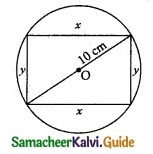
  2. Among these, metallic standard is the premier one.
  3. Under metallic standard, some kind of metal either gold or silver is used to determine the standard value of the money and currency.
  4. Standard coins made out of the metal are the principal coins used under the metallic standard.
  5. These standard coins are full bodied or full weighted legal tender.
  6. Their face value is equal to their intrinsic metal value.

Question 38.
What is the meaning of Crypto currency?
Answer:
Crypto Currency:
A digital currency in which encryption techniques are used to regulate the generation of units of currency and verify the transfer of funds, operating independently of a Central Bank,

Decentralised crypto currencies such as Bitcoin now provide an outlet for Personal Wealth that is beyond restriction and confiscation.

Question 39.
Write the TRIPs agreement.
Answer:
Agreement on Trade Related Intellectual Property Rights (TRIPs):

  1. Intellectual Property Rights include copy right, trade marks, patents, geographical indications, trade secrets, industrial designs, etc.
  2. TRIPS Agreement provides for granting product patents instead of process patents.
  3. The period of protection will be 20 years for patents, 50 years for copy rights, 7 years for trade marks and 10 years for layout designs.
  4. As a result of TRIPS, the dependence of LDCs on advanced countries for seeds, drugs, fertilizers and pesticides has increased.
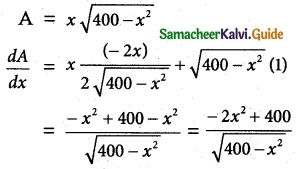
  5. Farmers are depending on the industrial firm for their seeds.

Tamil Nadu 12th Economics Model Question Paper 4 English Medium

Question 40.
What is Crony capitalism?
Answer:
Social Organization:

  1. People show interest in the development activity only when they feel that the fruits of development will be fairly distributed.
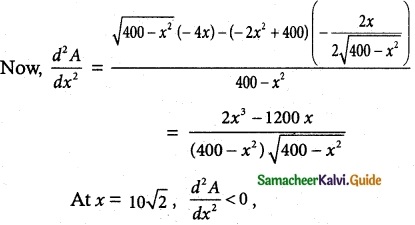
  2. Mass participation in development programs is a pre-condition for accelerating the ‘ development process.
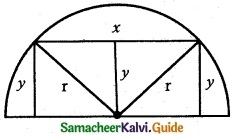
  3. Whenever the defective social organization allows some groups to appropriate the benefits of growth.
  4. Majority of the poor people do not participate in the process of development.
  5. This is called crony capitalism.

PART – IV

Answer all the questions. [7 x 5 = 35]

Question 41 (a).
Explain the Aggregate Demand Function with Diagram.
Answer:
In the Keynesian model, output is determined mainly by aggregate demand. The aggregate demand is the amount of money which entrepreneurs expect to get by selling the output produced by the number of labourers employed.

Therefore, it is the expected income or revenue from the sale of output at different levels of employment.
Aggregate demand has the following four components:

  1. Consumption demand
  2. Investment demand
  3. Government expenditure and
  4. Net Export (export – import)

The desired or planned demand (spending) is the amount that households, firms, the governments and the foreign purchasers would like to spend on domestic output.
Tamil Nadu 12th Economics Model Question Paper 4 English Medium 3

In other words, desired demand in the economy is the sum total of desired private consumption expenditure, desired investment expenditure, desired government spending and desired net exports (difference between exports and imports). Thus, the desired spending is called aggregate spending (demand), and can be expressed as:
AD = C + I + G + (X – M)
The diagram explains that aggregate demand price increases or decreases with an increase or decrease in the volume of employment. Aggregate demand curve increases at an increasing rate in the beginning and then increases at a decreasing rate.

This shows that as income increases owing to increase in employment, expenditure of the economy increases at a decreasing rate.

[OR]

(b) Describe the Effective demand.
Answer:

  1. The starting point of Keynes theory of employment and income is the principle of effective demand.
  2. Effective demand denotes money actually spent by the people on products of industry.
  3. The money which entrepreneurs receive is paid in the form of rent, wages, interest and profit.
  4. Therefore effective demand equals national income.
  5. An increase in the aggregate effective demand would increase the level of employment.
  6. A decline in total effective demand would lead to unemployment.
  7. Therefore, total employment of a country can be determined with the help of total demand of a country.
  8. According to the Keynes theory of employment, “Effective demand signifies the money spent on consumption of goods and services and on investment.
  9. The total expenditure is equal to the national income, which is equivalent to the national output”.
  10. The relationship between employment and output of an economy depends upon the level of effective demand which is determined by the forces of aggregate supply and aggregate demand.
    ED = Y = C + I = Output = Employment
  11. Effective demand determines the level of employment in the economy.
  12. When effective demand increases, employment will increase.
  13. When effective demand decreases, the level employment will decline.
  14. The effective demand will be determined by two determinants namely consumption and investment expenditures.
  15. The consumption function depends upon income of the people and marginal propensity to consume.
  16. According to Keynes, if income increases, consumption will also increase but by less than the increase in income.

Tamil Nadu 12th Economics Model Question Paper 4 English Medium

Question 42 (a).
Illustrate the working of Multiplier.
Answer:
Working of Multiplier:
1. Suppose the Government undertakes investment expenditure equal to Rs 100 crore on some public works, by way of wages, price of materials etc.
2. Thus income of labourers and suppliers of materials increases by Rs 100 crore. Suppose the MPC is 0.8 that is 80 %.
3. A sum of Rs 80 crores is spent on consumption (A sum of Rs 20 Crores is saved).
4. As a result, suppliers of goods get an income of Rs 80 crores.
5. They intum spend Rs 64 crores (80% of Rs 80 cr).
In this manner consumption expenditure and increase in income act in a chain like manner. The final result is ΔY = 100 + 100 × 4/5 + 100 × [4/5]² + 100 × [4/5]³ or,
ΔY = 100 + 100 × 0.8 + 100 × (0.8)² + 100 × (0.8)³
= 100 + 80+ 64 + 51.2… = 500
that is 100 × 1/1 – 4/5
100 × 1/1/5
100 × 5 = Rs 500 crores
For instance if C = 100 + 0.8Y, I = 100,
Then Y = 100+ 0.8Y + 100
0. 2Y = 200
Y = 200/0.2 = 1000 → Point B
If I is increased to 110, then
0. 2Y = 210
Y = 210/0.2 = 1050 → Point D
For Rs 10 increase in I, Y has increased by Rs 50.
This is due to multiplier effect.
At point A, Y = C = 500
C = 100 + 0.8 (500) = 500; S = 0
At point B, Y = 1000
C = 100 + 0.8 (1000) = 900; S = 100 = I
At point D, Y = 1050
C = 100 + 0.8 (1050) = 940; S = 110 = I
When I is increased by 10, Y increases by 50.
This is multiplier effect (K = 5)
K = \(\frac{1}{0.2}\) = 5

[OR]

(b) Explain about Marginal Efficiency of Capital [MEC] short run factors and long run factors.
Answer:
(a) Short – Run Factors
(i) Demand for the product:

  • If the market for a particular good is expected to grow and its costs are likely to fall, the rate of return from investment will be high.
  • If entrepreneurs expect a fall in demand for goods and a rise in cost, the investment will decline.

(ii) Liquid assets:

  • If the entrepreneurs are holding large volume of working capital, they can take advantage of the investment opportunities that come in their way.
    The MEC will be high.

(iii) Sudden changes in income:

  • The MEC is also influenced by sudden changes in income of the entrepreneurs.
  • If the business community gets windfall profits, or tax concession the MEC will be high and hence investment in the country will go up.
  • On the other hand, MEC falls with the decrease in income.

(iv) Current rate of investment:

  • Another factor which influences MEC is the current rate of investment in a particular industry.
  • If in a particular industry, much investment has already taken place and the rate of investment currently going on in that industry is also very large, then the marginal efficiency of capital will be low.

(v) Waves of optimism and pessimism:

  1. The marginal efficiency of capital is also affected by waves of optimism and pessimism in the business cycle.
  2. If businessmen are optimistic about future, the MEC will be likely to be high.
  3. During periods of pessimism the MEC is under estimated and so will be low.

(b) Long – Run Factors
The long run factors which influence the marginal efficiency of capital are as follows:
(i) Rate of growth of population:

  • Marginal efficiency of capital is also influenced by the rate of growth of population.
  • If population is growing at a rapid speed, it is usually believed that the demand of various types of goods will increase.
  • So a rapid rise in the growth of population will increase the marginal efficiency of capital and a slowing down in its rate of growth will discourage investment and thus reduce marginal efficiency of capital.

(ii) Technological progress:

  • If investment and technological development take place in the industry, the prospects of increase in the net yield brightens up.
  • For example, the development of automobiles in the 20th century has greatly stimulated the rubber industry, the steel and oil industry etc.
  • So we can say that inventions and technological improvements encourage investment in various projects and increase marginal efficiency of capital.

(iii) Monetary and Fiscal policies:
Cheap money policy and liberal tax policy pave the way for greater profit margin and so MEC is likely to be high.

(iv) Political environment:
Political stability, smooth administration, maintenance of law and order help to improve MEC.

(v) Resource availability:
Cheap and abundant supply of natural resources, efficient labour and stock of capital enhance the MEC.

Tamil Nadu 12th Economics Model Question Paper 4 English Medium

Question 43 (a).
Briefly explain the Monetary Economics and money.
Answer:
Monetary Economics is a branch of economics that provides a framework for analyzing money and its functions as a medium of exchange, store of value and unit of account. It examines the effects of monetary systems including regulation of money and associated financial institutions.

Meaning

  1. Money is anything that is generally accepted as payment for goods and services and repayment of debts and that serves as a medium of exchange.
  2. A medium of exchange is anything that is widely accepted as a means of payments.
  3. In recent years, the importance of credit has increased in all the countries of the world.
  4. Credit instruments are used on an extensive scale.
  5. The use of cheques, bills of exchange, etc., has gone up.
  6. It should however, be remembered that money is the basis of credit.

[OR]

(b) What are the objectives of Monetary Policy? Explain.
Answer:
The specific objectives of monetary policy are Objectives of monetary policy:

  1. Neutrality of Money
  2. Stability of Exchange Rates
  3. Price Stability
  4. Full Employment
  5. Economic Growth
  6. Equilibrium in the Balance of Payments

1. Neutrality of Money:

  • Economists like Wicksteed, Hayek and Robertson are the chief exponents of neutral money.
  • They hold the view that monetary authority should aim at neutrality of money in the economy.
  • Monetary changes could be the root cause of all economic fluctuations.
  • According to neutralists, the monetary change causes distortion and disturbances in the proper operation of the economic system of the country.

2. Exchange Rate Stability:

  • Exchange rate stability was the traditional objective of monetary authority.
  • This was the main objective under Gold Standard among different countries.
  • When there was disequilibrium in the balance of payments of the country, it was automatically corrected by movements.

3. Price Stability:

  • Economists like Crustave Cassel and Keynes suggested price stabilization as a main objective of monetary policy.
  • Price stability is considered the most genuine, objective of monetary policy.
  • Stable prices repose public confidence,
  • It promotes business activity and ensures equitable distribution of income and wealth.

4. Full Employment:

  • During world depression, the problem of unemployment had increased rapidly.
  • It was regarded as socially dangerous, economically wasteful and morally deplorable.
  • Thus, full employment was considered as the main goal of monetary policy.

5. Economic Growth:

  • Economic growth is the process whereby the real per capita income of a country increases over a long period of time.
  • It implies an increase in the total physical or real output, production of goods for the satisfaction of human wants.
  • Monetary policy should promote sustained and continuous economic growth by maintaining equilibrium between the total demand for money and total production capacity and further creating favourable conditions for saving and investment.

6. Equilibrium in the Balance of Payments:
Equilibrium in the balance of payments is another objective of monetary policy which emerged significant in the post war years.

Question 44 (a).
What do you mean by balance of payments?
Answer:
Balance of Payments (BOP):
1. BoP is a systematic record of a country’s economic and financial transactions with the rest of the world over a period of time.

2. When a payment is received from a foreign country, it is a credit transaction while a payment to a foreign country is a debit transaction.

3. The principal items shown on the credit side are exports of goods and services, transfer receipts in the form of gift etc., from foreigners, borrowing from abroad, foreign direct investment and official sale of reserve assets including gold to foreign countries and international agencies.

4. The principal items on the debit side include imports of goods and services, transfer payments to foreigners, lending to foreign countries, investments by residents in foreign countries and official purchase of reserve assets or gold from foreign countries and international agencies.

Tamil Nadu 12th Economics Model Question Paper 4 English Medium

[OR]

(b) Explain the relationship between Foreign Direct Investment and economic development.
Answer:
Foreign Direct Investment (FDI) and Trade:

  1. FDI is an important factor in global economy.
  2. Foreign trade and FDI are closely related. In developing countries like India
  3. FDI in the natural resource sector, including plantations, increases trade volume.
  4. Foreign production by FDI is useful to substitute foreign trade. .
  5. FDI is also influenced by the income generated from the trade and regional integration schemes.
  6. FDI is helpful to accelerate the economic growth by facilitating essential imports needed for carrying out development programmes like capital goods, technical know-how, raw materials and other inputs and even scarce consumer goods.
  7. FDI may be required to fill the trade gap.
  8. FDI is encouraged by the factors such as foreign exchange shortage, desire to create employment and acceleration of the pace of economic development.
  9. Many developing countries strongly prefer foreign investment to imports.
  10. However, the real impact of FDI on different sections of an economy.

Question 45 (a).
Describe the Types of Terms of Trades.
Answer:
Types of Terms of Trade:
The different concepts of terms of trade were classified by Gerald M.Meier into the following three categories:
Terms of Trade related to the Ratio of Exchange between Commodities:
Tamil Nadu 12th Economics Model Question Paper 4 English Medium 4
1. Net Barter Terms of Trade:
This type was developed by Taussig in 1927. The ratio between the prices of exports and of imports is called the “net barter terms of trade’. It is named by Viner as the ‘commodity terms of trade’.
It is expressed as:
Tn = (Px / Pm) × 100
Where,
Tn = Net Barter Terms of Trade
Px = Index number of export prices
Pm = Index number of import prices
This is used to measure the gain from international trade. If ‘Tn’ is greater than 100, then it is a favourable terms of trade which will mean that for a rupee of export, more of imports can be received by a country.

2. Gross Barter Terms of Trade:
This was developed by Taussig in 1927 as an improvement over the net terms of trade. It is an index of relationship between total physical quantity of imports and the total physical quantity of exports.
Tg = (Qm / Qx) × 100
Where,
Qm = Index of import quantities
Qx = Index of export quantities
If for a given quantity of export, more quantity of import can be consumed by a country, then one can say that terms of trade are favourable.

3. Income Terms of Trade:
The income terms of trade was given by G.S.Dorrance in 1948. It is the index of the value of exports divided by the price index for imports multiplied by quantity index of experts. In other words, it is the net barter terms of trade of a country multiplied by its exports- volume index.
Ty = (Px / Pm ) Qx
Where,
Px = Price index of exports
Pm = Price index of imports
Qx = Quantity index of exports

[OR]

(b) Write a note on ‘BRICS’.
Answer:
BRICS:

  1. BRICS is the acronym for an association of five major emerging national economies: Brazil, Russia, India, China and South Africa.
  2. Since 2009, the BRICS nations have met annually at formal summits.
  3. South Africa hosted the 10th BRICS summit in July 2018.
  4. The agenda for BRICS summit 2018 includes Inclusive growth, Trade issues, Global governance, Shared Prosperity, International peace and security.
  5. It’s headquarters is at Shanghai, China.
  6. The New Development Bank (NDB) formerly referred to as the BRICS Development Bank was established by BRICS States.
  7. The first BRICS summit was held at Moscow and South Africa hosted the Tenth Conference at Johanesberg in July 2018.
  8. India had an opportunity of hosting fourth and Eighth summits in 2009 and 2016 respectively.
  9. The BRICS countries make up 21 percent of global GDP. They have increased their share of global GDP threefold in the past 15 years.
  10. The BRICS are home to 43 percent of the world’s population.
  11. The BRICS countries have combined foreign reserves of an estimated $4.4 trillion

Tamil Nadu 12th Economics Model Question Paper 4 English Medium

Question 46 (a).
Bringout the objectives of SAARC.
Answer:
Objectives of SAARC:
According to Article I of the Charter of the SAARC, the objectives of the Association are as follows:

  1. To promote the welfare of the people of South Asia and improve their quality of life;
  2. To accelerate economic growth, social progress and cultural development in the region;
  3. To promote and strengthen collective self-reliance among the countries of South Asia;
  4. To contribute to mutual trust, understanding and appreciation of one another’s problems;
  5. To promote active collaboration and mutual assistance in the economic, social, cultural, technical and scientific fields;
  6. To strengthen co-operation with other developing countries;
  7. To strengthen cooperation among themselves in international forums on matters of common interest;
  8. To cooperate with international and regional organisations with similar aims and purposes.

[OR]

(b) Explain the principles of federal finance.
Answer:
Principles of Federal Finance:
In the case of federal system of finance, the following main principles must be applied:

  1. Principle of Independence.
  2. Principle of Equity.
  3. Principle of Uniformity.
  4. Principle of Adequacy.
  5. Principle of Fiscal Access.
  6. Principle of Integration and coordination.
  7. Principle of Efficiency.
  8. Principle of Administrative Economy.
  9. Principle of Accountability.

1. Principle of Independence:

  • Under the system of federal finance, a Government should be autonomous and free about the internal financial matters concerned.
  • It means each Government should have separate sources of revenue, authority to levy taxes, to borrow money and to meet the expenditure.
  • The Government should normally enjoy autonomy in fiscal matters.

2. Principle of Equity:
From the point of view of equity, the resources should be distributed among the different states so that each state receives a fair share of revenue.

3. Principle of Uniformity:
In a federal system, each state should contribute equal tax payments for federal finance.

4. Principle of Adequacy of Resources:

  • The principle of adequacy means that the resources of each Government i.e. Central and State should be adequate to carry out its functions effectively.
  • Here adequacy must be decided with reference to both current as well as future needs.
  • Besides, the resources should be elastic in order to meet the growing needs and unforeseen expenditure like war, floods etc.

5. Principle of Fiscal Access:

  • In a federal system, there should be possibility for the Central and State Governments to develop new source of revenue within their prescribed fields to meet the growing financial needs.
  • In nutshell, the resources should grow with the increase in the responsibilities of the Government.

6. Principle of Integration and coordination:

  • The financial system as a whole should be well integrated.
  • There should be perfect coordination among different layers of the financial system of the country.
  • Then only the federal system will survive.
  • This should be done in such a way to promote the overall economic development of the country.

7. Principle of Efficiency:

  • The financial system should be well organized and efficiently administered.
  • Double taxation should be avoided.

8. Principle of Administrative Economy:

  • Economy is the important criterion of any federal financial system.
  • That is, the cost of collection should be at the minimum level and the major portion of revenue should be made available for the other expenditure outlays of the Governments.

9. Principle of Accountability:
Each Government should be accountable to its own legislature for its financial decisions i.e. the Central to the Parliament and the State to the Assembly.

Question 47 (a).
What are the similarities of Public and Private Finance?
Answer:
(i) Rationality:

  • Both public finance and private finance are based on rationality.
  • Maximization of welfare and least cost factor combination underlie both.

(ii) Limit to borrowing:

  • Both have to apply restraint with regard to borrowing.
  • The Government also cannot live beyond its means.
  • There is a limit to deficit financing by the state also.

(iii) Resource utilisation:

  • Both the private and public sectors have limited resources at their disposal.
  • So both attempt to make optimum use of resources.

(iv) Administration:

  • The effectiveness of measures of the Government as well as private depends on the administrative machinery.
  • If the administrative machinery is inefficient and corrupt it will result in wastages and losses.

Tamil Nadu 12th Economics Model Question Paper 4 English Medium

[OR]

(b) What are the functions of NITI Aayog?
Answer:
Functions of NITI Aayog:

  1. Cooperative and Competitive Federalism: To enable the States to have active participation in the formulation of national policy.
  2. Shared National Agenda: To evolve a shared vision of national development priorities and strategies with the active involvement of States.
  3. Decentralized Planning: To restructure the planning process into a bottom-up model.
  4. Vision and Scenario Planning: To design medium and long-term strategic frameworks towards India’s future.
  5. Network of Expertise: To mainstream external ideas and expertise into government policies and programmes through a collective participation.
  6. Harmonization: To facilitate harmonization of actions across different layers of government, especially when involving cross-cutting and overlapping issues across multiple sectors; through communication, coordination, collaboration and convergence amongst all the stakeholders.
  7. Conflict Resolution: To provide platform for mutual consensus to inter-sectoral, inter¬departmental, inter-state as well as centre-state issues for all speedy execution of the government programmes.
  8. Coordinating Interface with the World: It will act nodal point to harness global expertise and resources coming from International organizations for India’s developmental process.
  9. Internal Consultancy: It provides internal consultancy to Central and State governments on policy and programmes.
  10. Capacity Building: It enables to provide capacity building and technology up-gradation across government, benchmarking with latest global trends and providing managerial and technical know-how.
  11. Monitoring and Evaluation: It will monitor the implementation of policies and progammes and evaluate the impacts.