Samacheer Kalvi 8th Maths Guide Chapter 4 Life Mathematics InText Questions

Tamilnadu State Board New Syllabus Samacheer Kalvi 8th Maths Guide Pdf Chapter 4 Life Mathematics InText Questions Text Book Back Questions and Answers, Notes.

Tamilnadu Samacheer Kalvi 8th Maths Solutions Chapter 4 Life Mathematics InText Questions

Try These (Text Book Page No. 122)

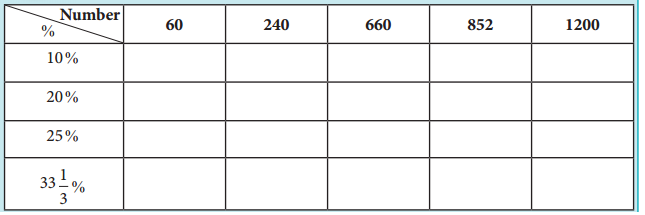
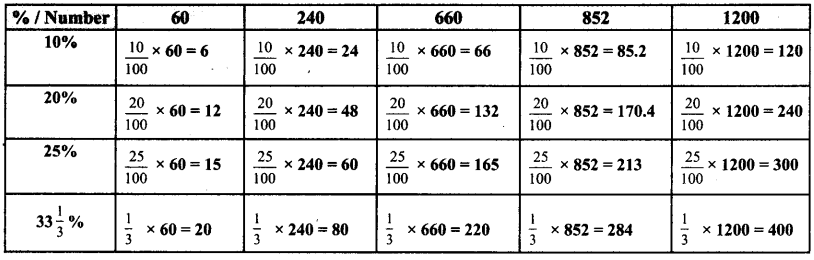
Find the indicated percentage value of the given numbers.
Samacheer Kalvi 8th Maths Guide Answers Chapter 4 Life Mathematics InText Questions 1
Answer:
Samacheer Kalvi 8th Maths Guide Answers Chapter 4 Life Mathematics InText Questions 2

Samacheer Kalvi 8th Maths Guide Chapter 4 Life Mathematics InText Questions

Try These (Text Book Page No. 124)

Question 1.
What percentage ola day is 10 hours?
Answer:
In a day, there are 24 hours .
∴ 10 hrs out of 24 hrs is \(\frac{10}{24}\)
As a percentage, we need to multiply by 100
∴ Percentage = \(\frac{10}{24}\) × 100 = 41.67%

Question 2.
Divide ₹ 350 among P, Q and R such that P gets 50% of what Q gets and Q gets 50% of what R gets.
Answer:
Let R get x, Q gets 50% of what R gets
∴ Q gets = \(\frac{50}{100} \times x=\frac{x}{2}\)
P gets 50% of what Q gets .
∴ P gets = \(\frac{50}{100} \times \frac{x}{2}=\frac{x}{4}\)
Since 350 is divided among the three
∴ 350 = \(x+\frac{x}{2}+\frac{x}{4}\)
350 = \(\frac{4 x+2 x+x}{4}=\frac{7 x}{4}\) = 350
x = \(\frac{350 \times 4}{7}\)
Q gets = \(\frac{x}{2}=\frac{200}{2}\) = 100,
P gets = \(\frac{x}{4}=\frac{200}{4}\) = 50
∴ p = 50, Q = 100, R = 200

Samacheer Kalvi 8th Maths Guide Chapter 4 Life Mathematics InText Questions

Think (Text Book Page No. 124)

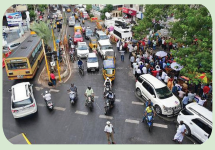
With a lot of pride, the traffic police commissioner of a city reported that the accidents had decreased by 200% in one year. He came up with this number by stating that the increase in accidents from 200 to 600 is clearly a 200% rise and now that it had gone down from 600 last year to 200 this year should be a 200% fall. Is this decrease from 600 to 200, the same 200% as reported by him? Justify.
Samacheer Kalvi 8th Maths Guide Answers Chapter 4 Life Mathematics InText Questions 3
Answer:
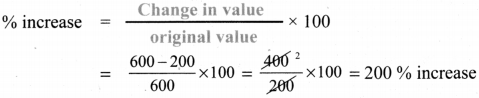
Increase from original value 200 to 600
Samacheer Kalvi 8th Maths Guide Answers Chapter 4 Life Mathematics InText Questions 4
Decrease from original value 600 to 200
Samacheer Kalvi 8th Maths Guide Answers Chapter 4 Life Mathematics InText Questions 5
here original value is 600
% decrease = \(\frac{600-200}{600}\) × 100 = \(\frac{400}{600}\) × 100 = 66.67 % decrease
Increase from 200 → 600 and % decrease from 600 → 200 are not the same

Samacheer Kalvi 8th Maths Guide Chapter 4 Life Mathematics InText Questions

Try These (Text Book Page No. 126)

Question 1.
If the selling price of an article is less than the cost price of the article, then there is a ________ .
Answer:
Loss

Question 2.
An article costing 5000 is sold for ₹ 4850. Is there a profit or loss? What percentage is it?
Answer:
Loss
Percentage of Loss
Samacheer Kalvi 8th Maths Guide Answers Chapter 4 Life Mathematics InText Questions 6

Samacheer Kalvi 8th Maths Guide Chapter 4 Life Mathematics InText Questions

Question 3.
If the ratio of cost price and the selling price of an article is 5:7, then the profit / gain is ________ %.
Answer:
C.P = 5x
S.P = 7x
Profit = 7x – 5x = 2x
Samacheer Kalvi 8th Maths Guide Answers Chapter 4 Life Mathematics InText Questions 7

Think (Text Book Page No. 129)

A shopkeeper marks the price of a marker board 15% above the cost price and then allows a discount of 15% on the marked price. Does he gain or lose in the transaction?
Answer:
Let cost price of marker board be 100
CP = 100 Marks it 15% above CP
∴ Marked price MP = \(\frac{15}{100}\) × CP + CP
= \(\frac{15}{100}\) × 100 + 100 = 15 + 100 = 115
Discount % = 15 %
Samacheer Kalvi 8th Maths Guide Answers Chapter 4 Life Mathematics InText Questions 8
∴ He sells it 97.75 which is less than his cost price. Therefore he loses
Loss = 97.75 – 100 = – 2.25

Samacheer Kalvi 8th Maths Guide Chapter 4 Life Mathematics InText Questions

Try These (Text Book Page No. 129)

Question 1.
The formula to find the simple interest for a given principal is ________ .
Answer:
\(\frac{\mathrm{PNR}}{100}\)

Question 2.
Find the simple interest on ₹ 900 for 73 days at 8% p.a.
Answer:

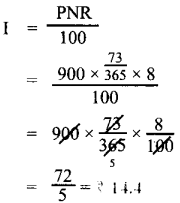
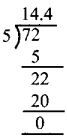
Samacheer Kalvi 8th Maths Guide Answers Chapter 4 Life Mathematics InText Questions 10

Samacheer Kalvi 8th Maths Guide Chapter 4 Life Mathematics InText Questions

Question 3.
In how many years will ₹ 2000 become ₹ 3600 at 10% p.a simple interest?
Answer:
I = 3600 – 2000 = 1600
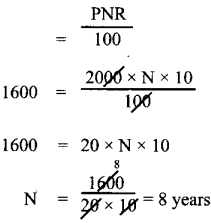
Samacheer Kalvi 8th Maths Guide Answers Chapter 4 Life Mathematics InText Questions 11

Try These (Text Book Page No. 141)

Question 1.
Classify the given examples as direct or inverse proportion:
(i) Weight of pulses to their cost.
Answer:
As weight increases cost also increases.
∴ Weight and cost are direct proportion.

(ii) Distance travelled by bus to the price of ticket.
Answer:
As the distance increases price to travel also increases,
∴ Distance and price are direct proportion.

Samacheer Kalvi 8th Maths Guide Chapter 4 Life Mathematics InText Questions

(iii) Speed of the athelete to cover a certain distance.
Answer:
As the speed increases, the time to cover the distance become less.
So speed and üme are in indirect proportion.

(iv) Number of workers employed to complete a construction in a specified time.
Answer:
As the number of workers increases, the amount of work become less, so they are in indirect proportion.

(v) Area of a circle to its radius.
Answer:
If the radius of the circle increases its area also increases.
∴ Area and radius of circles are direct proportion.

Samacheer Kalvi 8th Maths Guide Chapter 4 Life Mathematics InText Questions

Question 2.
A student can type 21 pages in 15 minutes. At the same rate, how long will it take student to type 84 pages?
Answer:
Direct proportion
No. of minutes = x
k = \(\frac{21}{15}\)
\(\frac{21}{15}=\frac{84}{x}\)
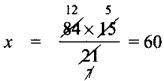
Samacheer Kalvi 8th Maths Guide Answers Chapter 4 Life Mathematics InText Questions 12

Question 3.
If 35 women can do a piece of work in 16 days, In how many days will 28 women do the same work?
Answer:
Inverse proportion
No. of days = x
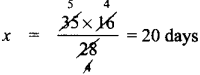
k = 35 × 16
∴ 28 × x = 35 × 16
Samacheer Kalvi 8th Maths Guide Answers Chapter 4 Life Mathematics InText Questions 13

Samacheer Kalvi 8th Maths Guide Chapter 4 Life Mathematics InText Questions

Try These (Text Book Page No. 145)

Question 1.
If x and y vary directly, find k when x = y = 5.
Answer:
I If x andy vary directly then \(\frac{x}{y}\) = k.
Here x = 5; y = 5
∴ k = \(\frac{5}{5}\)
k = 1

Question 2.
If x and y vary inversely, find the constant of proportionality when x = 64 and y = 0.75
Answer:
Gìven x = 64, y = 0.75
and also given x andy vary inversely.
∴ xy = k. the constant of variation.
∴ Constant = 64 × 0.75
Constant of variation = 48

Samacheer Kalvi 8th Maths Guide Chapter 4 Life Mathematics InText Questions

Activity (Text Book Page No. 145)

Draw a circle of a given radius. Then, draw its radii in such a way that the angles between any two consecutive pair of radii are equal. Start drawing 3 radii and end with drawing 12 radii in the circle. List and prepare a table for the number of radii to the angle between a pair of consecutive radii and check whether they are in inverse proportion. What is the proportionality constant?
Answer:

Samacheer Kalvi 8th Maths Guide Answers Chapter 4 Life Mathematics InText Questions 15
As the number of radii increases angle decreases.
Hence they are in inverse proportion
∴ xy = 4 proportional constant
3 × 120° = 360° = k = 360°

Samacheer Kalvi 8th Maths Guide Chapter 4 Life Mathematics InText Questions

Try These (Text Book Page No. 147)

Identify the different variations present in the following questions:

Question 1.
24 men can make 48 articles in 12 days. Then, 6 men can make _____ articles in 6 days.
Answer:
Let the required no. of articles be x

Men (P)Days (D)Articles (W)
241248
66x

(i) Mens and days are Indirect variables.
(ii) Men and Articles are direct vanables
(iii) Days and articles are also direct variables using formula.
Let
P1 = 24
P2 = 6

D1 = 12
D2 = 6

W1 = 48
W1 = x

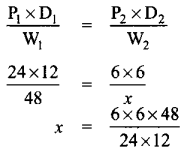
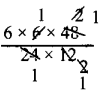
Samacheer Kalvi 8th Maths Guide Answers Chapter 4 Life Mathematics InText Questions 17
x = 6 Articles

Samacheer Kalvi 8th Maths Guide Chapter 4 Life Mathematics InText Questions

Question 2.
15 workers can lay a road of length 4 km in 4 hours. Then, _____ workers can lay a road of length 8 km in 8 hours.
Answer:
Let the required no. of workers be x

Length (work)HoursWorkers
4 km4 hrs15
8 km8 hrsx

(i) Length and workers are direct variable as more length need more workers.
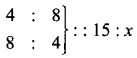
The proportion is 4 : 8 : : 15 : x ——– (1)
(ü) Hours and workers are indirect variables as more working hours need less men.
∴ The proportion is : 4 : : 15 : x ——– (2)
Combining (1) and (2)
Samacheer Kalvi 8th Maths Guide Answers Chapter 4 Life Mathematics InText Questions 18
Product of the extremes = Product of the mean
4 × 8 × x = 8 × 4 × 15
x = \(\frac{8 \times 4 \times 15}{4 \times 8}\)
x = 15 workers

Samacheer Kalvi 8th Maths Guide Chapter 4 Life Mathematics InText Questions

Question 3.
25 women working 12 hours a day can complete a work in 36 days. Then, 20 women must work hours a day to complete the same work in 30 days.
Answer:
Let the required hours be x.

WomenDaysHours
253612
2030x

As women increases hours to work decreases
∴ It is an inverse proportion.
∴ Multiplying factor is \(\frac{25}{20}\)
As days increases hours needed become less
∴ It is also an indirect variation.
∴ Multiplying factor is \(\frac{36}{30}\)
∴ x = \(12 \times \frac{25}{20} \times \frac{36}{30}\)
x = 18 hours

Question 4.
In a camp there are 420 kg of rice sufficient for 98 persons for 45 days. The number of days that 60 kg of rice will last for 42 persons is .
Answer:
Let the required number of days be x.

Rice (kg)MenDays
4209845
6042x

If amount of rice is more it will last for more days;
∴ It is Direct Proportion
∴ Multiplying factor is \(\frac{60}{420}\)
If men increases number of days the rice lasts decreases
∴ It is an inverse proportion.
∴ Multiplying factor is \(\frac{98}{42}\)
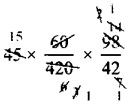
x = \(45 \times \frac{60}{420} \times \frac{98}{42}\)
Samacheer Kalvi 8th Maths Guide Answers Chapter 4 Life Mathematics InText Questions 19
x = 15 days

Samacheer Kalvi 8th Maths Guide Chapter 4 Life Mathematics InText Questions

Try These (Text Book Page No. 150)

Question 1.
Vikram can do one-third of work in p days. He can do th of work In ________ days.
Answer:
\(\frac{1}{3}\) of the work will be done mp days.
∴ Full work will be completed in 3p days
\(\frac{3}{4}\) th of the work will be done in = 3p x \(\frac{3}{4}\)
= \(\frac{9}{4}\)p = 2\(\frac{1}{4}\) p days.

Question 2.
If m persons can complete a work in n days, then 4m persons can complete the same
work in ______ days and \(\frac{m}{4}\) persons can complete the same work in ______ days.
Answer:
Givenm persons complete a work in n days
(i) Then work measured in terms of Man days = mn
4 m men do the work it will be completed in \(\frac{m n}{4 m}\) days = \(\frac{m}{4}\) days.

Samacheer Kalvi 8th Maths Guide Answers Chapter 4 Life Mathematics InText Questions 20

Samacheer Kalvi 8th Maths Guide Chapter 4 Life Mathematics Ex 4.5

Tamilnadu State Board New Syllabus Samacheer Kalvi 8th Maths Guide Pdf Chapter 4 Life Mathematics Ex 4.5 Text Book Back Questions and Answers, Notes.

Tamilnadu Samacheer Kalvi 8th Maths Solutions Chapter 4 Life Mathematics Ex 4.5

Question 1.
A fruit vendor bought some mangoes of which 10% were rotten. He sold 33\(\frac{1}{3}\) % of the rest. Find the total number of mangoes bought by him initially, if he still has 240 mangoes with him.
Samacheer Kalvi 8th Maths Guide Answers Chapter 4 Life Mathematics Ex 4.5 1
Answer:
Let the number of mangoes bought by fruit seller initially be x.
Given that 10% or mangoes were rotten
∴ Number of rotten mangoes = \(\frac{10}{100}\) × x
Number of good mangoes = x – no. of rotten mangoes
= \(x-\frac{10}{100} x=\frac{100 x-10 x}{100}=\frac{90}{100} x\) …….. (1)
Number of mangoes sold = 33\(\frac{1}{3}\)% of good mangoes = \(\frac{100}{3}\)%
∴ Mangoes sold = \(\frac{100}{3} \times \frac{90}{100} \times \times \frac{1}{100}=\frac{30}{100} x\) ……. (2)
Number of mangoes remaining = No. of good mangoes – No. of mangoes sold
From (1) and (2)
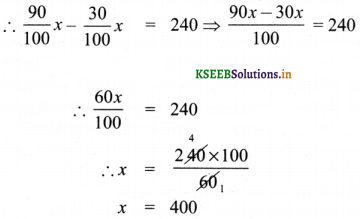
Samacheer Kalvi 8th Maths Guide Answers Chapter 4 Life Mathematics Ex 4.5 2
∴ Intially he had 400 mangoes

Samacheer Kalvi 8th Maths Guide Chapter 4 Life Mathematics Ex 4.5

Question 2.
A student gets 31 % marks in an examination but fails by 12 marks. If the pass percentage is 35%, find the maximum marks of the examination.
Answer:
Let the maximum marks in the exam be ‘x’
Pass percentage is given as 35%
∴ Pass mark = \(\frac{35}{100} \times x=\frac{35}{100} x\)
Student gets 31% marks = \(\frac{31}{100} \times x=\frac{31}{100} x\)
But student fails by 12 marks → meaning his mark is 12 less than pass mark.
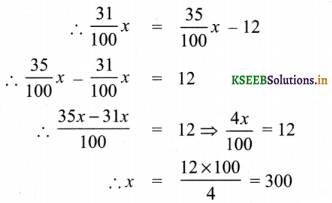
Samacheer Kalvi 8th Maths Guide Answers Chapter 4 Life Mathematics Ex 4.5 3
Maimum mark is 300

Samacheer Kalvi 8th Maths Guide Chapter 4 Life Mathematics Ex 4.5

Question 3.
Sultana bought the following things from a general store. Calculate the total bill amount paid by her.
(i) Medicines costing ₹ 800 with GST at 5%
Samacheer Kalvi 8th Maths Guide Answe
Answer:
Formula for bill amount is cost \(\left(1+\frac{\mathrm{GST} \%}{100}\right)\)
Medicine: bill amount is \(800\left(1+\frac{5}{100}\right)=800 \times \frac{105}{100}=840\)

(ii) Cosmetics costing ₹ 650 with GST at 12%
Samacheer Kalvi 8th Maths Guide Answers Chapter 4 Life Mathematics Ex 4.5 5
Answer:
Formula for bill amount is cost \(\left(1+\frac{\mathrm{GST} \%}{100}\right)\)
Cosmetics: Bill amount is \(550\left(1+\frac{12}{100}\right)=650 \times \frac{112}{100}=728\)

(iii) Cereals costing ₹ 900 with GST at 0%
Samacheer Kalvi 8th Maths Guide Answers Chapter 4 Life Mathematics Ex 4.5 6
Answer:
Formula for bill amount is cost \(\left(1+\frac{\mathrm{GST} \%}{100}\right)\)
Cereals: Bill amount is \(900\left(1+\frac{0}{100}\right)\) = 900

(iv) Sunglass costing ₹ 1750 with GST at 18%
Samacheer Kalvi 8th Maths Guide Answers Chapter 4 Life Mathematics Ex 4.5 7
Answer:
Formula for bill amount is cost \(\left(1+\frac{\mathrm{GST} \%}{100}\right)\)
Sunglass: Bill amount is \(1750\left(1+\frac{18}{100}\right)=1750 \times \frac{118}{100}=2065\)

(v) Air Conditioner costing ₹ 28500 with GST at 28 %
Samacheer Kalvi 8th Maths Guide Answers Chapter 4 Life Mathematics Ex 4.5 8
Answer:
Formula for bill amount is cost \(\left(1+\frac{\mathrm{GST} \%}{100}\right)\)
Air Conditioner: Bill amount is \(28500\left(1+\frac{28}{100}\right)=28500 \times \frac{128}{100}=36480\)
∴ Total Bill amount = 840 + 728 + 900 + 2065 + 36480
= ₹ 41,013 (total bill amount)

Samacheer Kalvi 8th Maths Guide Chapter 4 Life Mathematics Ex 4.5

Question 4.
P’s income is 25 % more than that of Q. By what percentage is Q’s income less than P’s?
Answer:
Let Q’s income be 100.
P’s income is 25% more than that of Q.
∴ P’s income = 100 + \(\frac{25}{100}\) × 100 = 125
Q’s income is 25 less than that of P
In percentage terms, Q’s income is less than P’s with respect to P’s income is
\(\frac{\mathrm{P}-\mathrm{Q}}{\mathrm{P}}\) × 100 = \(\frac{125-100}{125}\) × 100 = \(\frac{25}{125}\) × 100 = 20%

Samacheer Kalvi 8th Maths Guide Chapter 4 Life Mathematics Ex 4.5

Question 5.
Vaidegi sold two sarees for ₹ 2200 each. On one she gains 10% and on the other she loses 12%. Find her total gain or loss percentage in the sale of the sarees.
Samacheer Kalvi 8th Maths Guide Answers Chapter 4 Life Mathematics Ex 4.5 9
Answer:
Saree 1 :
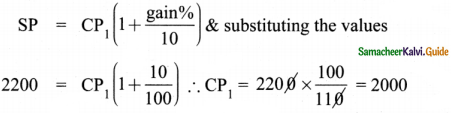
The selling price is ₹ 2200, let cost price be CP1, gain is 10%
Cost price? Using the formula
Samacheer Kalvi 8th Maths Guide Answers Chapter 4 Life Mathematics Ex 4.5 10

Saree 2 :
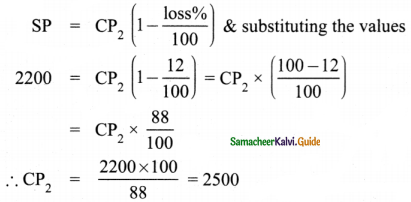
The selling price is 2200, let cost price be CP2, loss is given as 12%. We need to find CP2
using the formula as before,
Samacheer Kalvi 8th Maths Guide Answers Chapter 4 Life Mathematics Ex 4.5 11
∴ Cost price of both together is CP1 + CP2
= 2000 + 2500 = 4500 …….. (1)
Selling price of both together is 2 × 2200 = 4400 …… (2)
Since net selling price is less than net cost price, there is a loss.
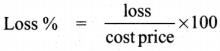
Samacheer Kalvi 8th Maths Guide Answers Chapter 4 Life Mathematics Ex 4.5 12
Loss = Net cost price – Net selling price
(1) – (2) = 4500 – 4400 = 100
100 100 20 2
∴ loss % = \(\frac{100}{4500}\) × 100 = \(\frac{100}{45}=\frac{20}{9}=2 \frac{2}{9}\)%
= 2\(\frac{2}{9}\)%loss

Samacheer Kalvi 8th Maths Guide Chapter 4 Life Mathematics Ex 4.5

Question 6.
If 32 men working 12 hours a day can do a work in 15 days, then how many men working 10 hours a day can do double that work in 24 days?
Answer:

Days (D)Hours (H)Men (P)
151232
2410x

Let
P1 = 32
P2 = x

H1 = 12
H2 = 10

D1 = 15
D2 = 24

W1 = 1
W2 = 1
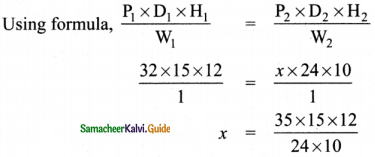
Samacheer Kalvi 8th Maths Guide Answers Chapter 4 Life Mathematics Ex 4.5 13
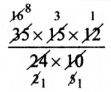
Samacheer Kalvi 8th Maths Guide Answers Chapter 4 Life Mathematics Ex 4.5 14
x = 24 persons
To complete the same work 24 men needed.
To complete double the work 24 × 2 = 48 men are required.

Samacheer Kalvi 8th Maths Guide Chapter 4 Life Mathematics Ex 4.5

Question 7.
Amutha can weave a saree in 18 days. Anjali is twice as good a weaver as Amutha. If both of them weave together, then in how many days can they complete weaving the saree?
Answer:
Amutha can weave a saree in 18 days.
Anjali is twice as good as Amutha.
ie. 1f Amutha weave for 2 days, Anjali do the same work in 1 day.
If Anjali weave the saree she will take
\(\frac{18}{2}\) = 9 days.
Hence time taken by them together ab
= \(\frac{a b}{a+b}\) days
= \(\frac{18 \times 9}{18+9}=\frac{18 \times 9}{27}\) = 6 days

Samacheer Kalvi 8th Maths Guide Answers Chapter 4 Life Mathematics Ex 4.5 27
In 6 clays they complete weaving the saree.

Samacheer Kalvi 8th Maths Guide Chapter 4 Life Mathematics Ex 4.5

Question 8.
P and Q can do a piece of work in 12 days and 15 days respectively. P started the work alone and then after 3 days, Q joined him till the work was completed. How long did the work last?
Answer:
P can do a piece of work in 12 days.
∴ P’s 1 day work = \(\frac{1}{12}\)
P’s 3 day’s work = 3 × \(\frac{1}{12}=\frac{3}{12}\)
Q can do a piece of work in 15 days.
∴ Q’s 1 day work = \(\frac{1}{15}\)
Remaining work after 3 days = 1 – \(\frac{3}{12}=\frac{9}{12}\)
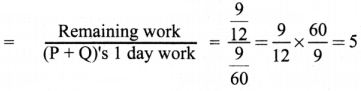
Samacheer Kalvi 8th Maths Guide Answers Chapter 4 Life Mathematics Ex 4.5 15
∴ Number of days required to finish the remaining work 9
Samacheer Kalvi 8th Maths Guide Answers Chapter 4 Life Mathematics Ex 4.5 16
Remaining work lasts for 5 days
Total work lasts for 3 + 5 = 8 days.

Samacheer Kalvi 8th Maths Guide Chapter 4 Life Mathematics Ex 4.5

Question 9.
If the numerator of a fraction is increased by 50% and the denominator is decreased by 20%, then it becomes \(\frac{3}{5}\). Find the original fraction.
Answer:
Original fraction = \(\frac{x}{y}\)
numerator increased by 50%
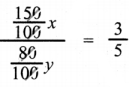
∴ Numerator = \(\frac{150}{100} x\)
Denominator decreased by 20%
∴ Denominator = \(\frac{80}{100} y\)
Hence
Samacheer Kalvi 8th Maths Guide Answers Chapter 4 Life Mathematics Ex 4.5 17
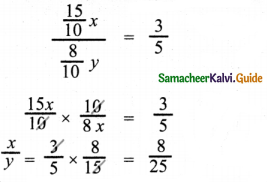
Samacheer Kalvi 8th Maths Guide Answers Chapter 4 Life Mathematics Ex 4.5 18

Samacheer Kalvi 8th Maths Guide Chapter 4 Life Mathematics Ex 4.5

Question 10.
Gopi sold a laptop at 12% gain. If it had been sold for ₹ 1200 more, the gain would have been 20%. Find the cost price of the laptop.
Samacheer Kalvi 8th Maths Guide Answers Chapter 4 Life Mathematics Ex 4.5 19
Answer:
Let the cost price of the laptop be ‘x
Gain = 12%
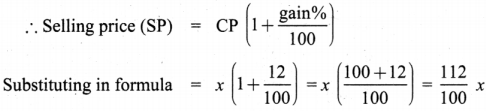
Samacheer Kalvi 8th Maths Guide Answers Chapter 4 Life Mathematics Ex 4.5 20
If the selling price was 1200 more
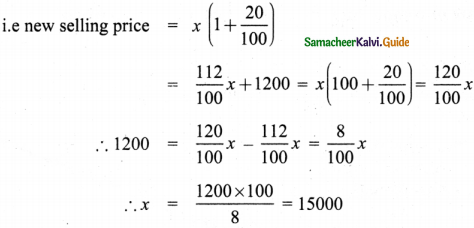
i.e \(\frac{112}{100} x\) + 1200, the gain is 2o%
Samacheer Kalvi 8th Maths Guide Answers Chapter 4 Life Mathematics Ex 4.5 21
Cost price of the laptop is ₹ 15,000/-

Samacheer Kalvi 8th Maths Guide Chapter 4 Life Mathematics Ex 4.5

Question 11.
A shopkeeper gives two successive discounts on an article whose marked price is ₹ 180 and selling price is ₹ 108. Find the first discount percentage if the second discount is 25%.
Answer:
Marked price is given as ₹ 180
Let 1 discount be d1 % = ? (to find)
2nd discount be d2 % = 25%
Selling price is 108 (given)
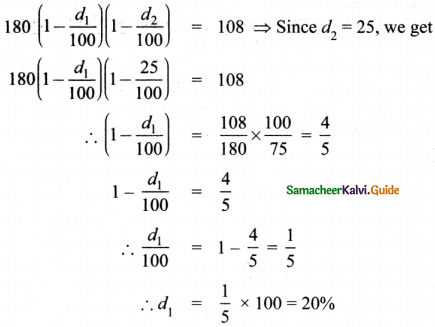
Price after 1st discount = 180 \(\left(1-\frac{d_{1}}{100}\right)\) = P …… (1)
Price after 2nd discount = P1 \(\left(1-\frac{d_{2}}{100}\right)\) = 108
Substituting for P1 from (1), we get
Samacheer Kalvi 8th Maths Guide Answers Chapter 4 Life Mathematics Ex 4.5 22
1st discount = 20%

Samacheer Kalvi 8th Maths Guide Chapter 4 Life Mathematics Ex 4.5

Question 12.
Find the rate of compound interest at which a principal becomes 1.69 times itself in 2 years.
Answer:
Let principal be ‘P’
Amount is given to be 1.69 times principal
i.e 1.69 P
Time period is 2yrs. = (n)
Rate of interest = r = ?(required)
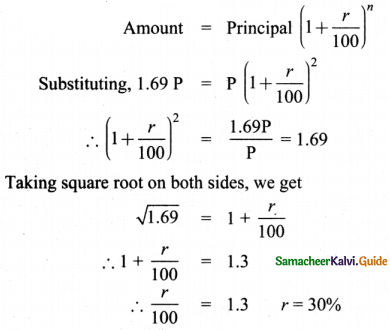
Applying the formula,
Samacheer Kalvi 8th Maths Guide Answers Chapter 4 Life Mathematics Ex 4.5 23
∴ rate of compound interest is 30%

Samacheer Kalvi 8th Maths Guide Chapter 4 Life Mathematics Ex 4.5

Question 13.
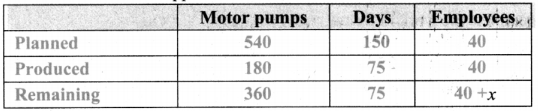
A small – scale company undertakes an agreement to make 540 motor pumps in 150 days and employs 40 men for the work. After 75 days, the company could make only 180 motor pumps. How many more men should the company employ so that the work is completed on time as per the agreement?
Answer:
Let the number of men to be appointed more be x.
Samacheer Kalvi 8th Maths Guide Answers Chapter 4 Life Mathematics Ex 4.5 24
To produce more pumps more men required
∴ It is direct variation.
∴ The multiplying factor is \(\frac{360}{180}\)
More days means less employees needed.
∴ It is Indirect proportion. 75
∴ The multiplying factor is \(\frac{75}{75}\)
Now 40 + x = 40 × \(\frac{360}{180} \times \frac{75}{75}\)
40 + x = 80
x = 80 – 40
x = 40
40 more man should be employed to complete the work on time as per the agreement.

Samacheer Kalvi 8th Maths Guide Chapter 4 Life Mathematics Ex 4.5

Question 14.
P alone can do \(\frac{1}{2}\) of a work in 6 days and Q alone can do \(\frac{2}{3}\) of the same work in 4 days. in how many days will they finish \(\frac{3}{4}\) of the work, working together?
Answer:
\(\frac{1}{2}\) of the work is done by P in 6 days
Samacheer Kalvi 8th Maths Guide Answers Chapter 4 Life Mathematics Ex 4.5 25
\(\frac{2}{3}\) of work done byQin4days.
Samacheer Kalvi 8th Maths Guide Answers Chapter 4 Life Mathematics Ex 4.5 26
(P + Q) will finish the whole work in \(\frac{a b}{a+b}\) days= \(\frac{12 \times 6}{12+6}=\frac{12 \times 6}{18}\)= 4 days
(P + Q) will finish \(\frac{-3}{4}\) of the work in 4 × \(\frac{3}{4}\) = 3 days.

Samacheer Kalvi 8th Maths Guide Chapter 4 Life Mathematics Ex 4.5

Question 15.
X alone can do a piece of work in 6 days and Y alone in 8 days. X and Y undertook the work for ₹ 48000. With the help of Z, they completed the work in 3 days. How much is Z’s share?
Answer:
X can do the work in 6 days.
X’s I day work = \(\frac{1}{6}\)
X’s share for 1 day = \(\frac{1}{6}\) × 48000 = ₹ 800
X’s share for 3 days = 3 × 800 = ₹ 2400
Y can complete the work in 8 days.
Y’s 1 day work = \(\frac{1}{8}\)
Y’s I day share = \(\frac{1}{8}\) × 4800 = ₹ 600
Y’s 3 days share = ₹ 600 × 3 = ₹ 1800
(X+Y)’s 3days share = ₹ 2400 + ₹ 1800 = ₹ 4200
Remaining money is Z’s share
∴ Z’s share = ₹ 4800 – ₹ 4200 = ₹ 600

Samacheer Kalvi 8th Maths Guide Chapter 4 Life Mathematics Ex 4.4

Tamilnadu State Board New Syllabus Samacheer Kalvi 8th Maths Guide Pdf Chapter 4 Life Mathematics Ex 4.4 Text Book Back Questions and Answers, Notes.

Tamilnadu Samacheer Kalvi 8th Maths Solutions Chapter 4 Life Mathematics Ex 4.4

Question 1.
Fill in the blanks
(i) A can finish a job in 3 days whereas B finishes it in 6 days. The time taken to complete the job working together is __________days.
Answer:
2 days

(ii) If 5 persons can do 5 jobs in 5 days, then 50 persons can do 50 jobs in _________ days.
Answer:
5

Samacheer Kalvi 8th Maths Guide Chapter 4 Life Mathematics Ex 4.4

(iii) A can do a work in 24 days. If A and B together can finish the work in 6 days, then B alone can finish the work in ________ days.
Answer:
8

(iv) A alone can do a piece of work in 35 days. If B is 40% more efficient than A, then B will finish the work in ___________days.
Answer:
25

(v) A alone can do a work in 10 days and B alone in 15 days. They undertook the work for ₹ 200000. The amount that A will get is .
Answer:
₹ 1,20,000

Question 2.
210 men working 12 hours a day can finish ajob in 18 days. How many men are required to finish the job in 20 days working 14 hours a day?
Answer:
Let the required number of men be x.

HoursDay Men
1218210
1420x

More working hours ⇒ less men required.
∴ It is inverse proportion.
∴ Multiplying factor is \(\frac{12}{14}\)
Also more number of days ⇒ less men
∴ It is an inverse proportion.
∴ Multiplying factor is \(\frac{18}{20}\)
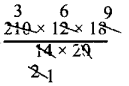
∴ x = \(210 \times \frac{12}{14} \times \frac{18}{20}\)

Samacheer Kalvi 8th Maths Guide Answers Chapter 4 Life Mathematics Ex 4.4 1
x = 162 men
162 men are required.

Samacheer Kalvi 8th Maths Guide Chapter 4 Life Mathematics Ex 4.4

Question 3.
A cement factory makes 7000 cement bags in 12 days with the help of 36 machines. How many bags can be made in 18 days using 24 machines?
Answer:
Let he required number of cement bags be x.

DaysMachines Cement bags
12367000
1824x

Number of days more ⇒ More cement bags.
∴ It is direct variation.
∴ The multiplying factor = \(\frac{18}{12}\)
Number of machines more ⇒ More cement bags.
∴ It is direct variation.
∴ The multiplying factor = \(\frac{24}{36}\)
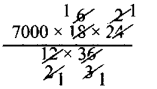
∴ x = \(7000 \times \frac{18}{12} \times \frac{24}{36}\)

Samacheer Kalvi 8th Maths Guide Answers Chapter 4 Life Mathematics Ex 4.4 3
x = 7000 cement bags
7000 cement bags can be made

Samacheer Kalvi 8th Maths Guide Chapter 4 Life Mathematics Ex 4.4

Question 4.
A soap factory produces 9600 soaps in 6 days working 15 hours a day. In how many days will it produce 14400 soaps working 3 more hours a day?
Answer:
Let the required number of days be x.

SoapsHours Days
9600156
14400(15 + 3) = 18x

To produce more soaps more days required.
∴ It is direct proportion.
∴ Multiplying factor = \(\frac{14400}{9600}\)
If more hours spend, less days required.
∴ It is indirect proportion
∴ Multiplying factor = \(\frac{15}{18}\)
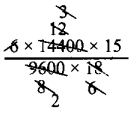
∴ x = \(6 \times \frac{14400}{9600} \times \frac{15}{18}\)

Samacheer Kalvi 8th Maths Guide Answers Chapter 4 Life Mathematics Ex 4.4 3
x = \(\frac{15}{2}\)
\(\frac{15}{2}\) days will be needed.

Samacheer Kalvi 8th Maths Guide Chapter 4 Life Mathematics Ex 4.4

Question 5.
If 6 container lorries can transport 135 tonnes of goods in 5 days, how many more lorries are required to transport 180 tonnes of goods in 4 days?
Answer:
Let the number of lorries required more = x.

Container lorriesGoods (tonnes) Days
61355
6 + x1804

As the goods are more ⇒ More lorries are needed to transport.
∴ It is direct proportion.
∴ Multiplying factor = \(\frac{180}{135}\)
Again if more days ⇒ less number of lorries enough.
∴ It is direct proportion.
∴ Multiplying factor = \(\frac{5}{4}\)
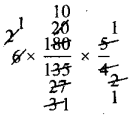
∴ 6 + x = \(6 \times \frac{180}{135} \times \frac{5}{4}\)

Samacheer Kalvi 8th Maths Guide Answers Chapter 4 Life Mathematics Ex 4.4 5
6 + x = 10
x = 10 – 6
x = 4
∴ 4 more lorries are required.

Samacheer Kalvi 8th Maths Guide Chapter 4 Life Mathematics Ex 4.4

Question 6.
A can do a piece of work in 12 hours, B and C can do it 3 hours whereas A and C can do it in 6 hours. How long will B alone take to do the same work?
Answer:
Time taken by A to complete the work = 12 hrs.
∴ A’s 1 hr work = \(\frac{1}{12}\) —— (1)
(B + C) complete the work in 3 hrs.
∴ (B + C)’s 1 hour work = \(\frac{1}{3}\) —— (2)
(1) + (2) ⇒
∴ (A + B + C)’s 1 hour work = \(\frac{1}{12}+\frac{1}{3}=\frac{1+4}{12}=\frac{5}{12}\)
Now (A + C) complete the work in 6 hrs.
∴(A + C)’s 1 hour work = \(\frac{1}{6}\)
∴ B’s 1 hour work = (A+ B + C)’s 1 hour work – (A + C)’s 1 hr work
\(=\frac{5}{12}-\frac{1}{6}=\frac{5-2}{12}=\frac{3}{12}=\frac{1}{4}\)
∴ B alone take 4 days to complete the work.

Samacheer Kalvi 8th Maths Guide Chapter 4 Life Mathematics Ex 4.4

Question 7.
A and B can do a piece of work in 12 days, while B and C can do it in 15 days whereas A and C can do it in 20 days. How long would each take to do the same work?
Answer:
(A + B) complete the work in 12 days.
∴ (A + B)’s 1 day work = \(\frac{1}{12}\) —— (1)
(B + C) complete the work in 15 days
∴ (B + C)’s 1 day work = \(\frac{1}{15}\) —— (2)
(A + C) complete the work in 20 days
∴ (A + C)’s 1 day work = \(\frac{1}{20}\) —— (3)
Now (1) + (2) + (3) =
[(A + B)+ (B + C) + (A + C)]’s 1 day work = \(\frac{1}{12}+\frac{1}{15}+\frac{1}{20}\)
(2A + 2B + 2C)’s 1 day work = \(\frac{5}{60}+\frac{4}{60}+\frac{3}{60}\)
2(A + B + C)’s 1 day work = \(\frac{5+4+3}{60}\)

Samacheer Kalvi 8th Maths Guide Answers Chapter 4 Life Mathematics Ex 4.4 5
LCM = 5 × 4 × 3 = 60
(A + B + C)’s 1 day work = \(\frac{12}{60 \times 2}\)
(A + B + C)’s 1 day work = \(\frac{1}{10}\)
Now A’s I day’s work = (A + B + C)’s 1 day work – (B + C)’s 1 day work
\(=\frac{1}{10}-\frac{1}{15}=\frac{3}{30}-\frac{2}{30}=\frac{1}{30}\)
∴ A takes 30 days to complete the work.
B’s 1 day work – (A + B + C)’s 1 day’s work – (A + C)’s 1 day’s work
\(=\frac{1}{10}-\frac{1}{20}=\frac{6}{60}-\frac{3}{60}\)
\(=\frac{6-3}{60}=\frac{3}{60}=\frac{1}{20}\)
B takes 20 days to complete the work.
C’s 1 day work (A + B + C)’s I day work – (A + B)’s I day work
\(=\frac{1}{10}-\frac{1}{12}=\frac{6}{60}-\frac{5}{60}=\frac{6-5}{60}=\frac{1}{60}\)
∴ C takes 60 days to complete the work.

Samacheer Kalvi 8th Maths Guide Chapter 4 Life Mathematics Ex 4.4

Question 8.
Carpenter A takes 15 minutes to fit the parts of a chair while Carpenter B takes 3 minutes more than A to do the same work. Working together, how long will it take for them to fit the parts for 22 chairs?
Answer:
Time taken by A to fit a chair = 15 minutes
Time taken by B = 3 minutes more than A
= 15 + 3 = 118 minutes
∴ As 1 minute work = \(\frac{1}{15}\)
B’s 1 minute work = \(\frac{1}{18}\)
(A+B)’s 1 minutes work = \(\frac{1}{15}+\frac{1}{18}\)
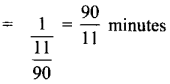
\(\frac{12}{180}+\frac{10}{180}=\frac{22}{180}=\frac{11}{90}\)
∴ Time taken by (A + B) to fit a chair

Samacheer Kalvi 8th Maths Guide Answers Chapter 4 Life Mathematics Ex 4.4 13
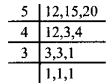
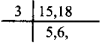
LCM = 3 × 5 × 6 = 180
Samacheer Kalvi 8th Maths Guide Answers Chapter 4 Life Mathematics Ex 4.4 8
∴ Time taken by (A + B) to fit a chair
= \(\frac{90}{11}\) × 22 = 180 minutes
= \(\frac{180}{60}\) = 3 hours

Samacheer Kalvi 8th Maths Guide Chapter 4 Life Mathematics Ex 4.4

Question 9.
A can do a work In 45 days. He works at it for 15 days and then, B alone finishes the remaining work in 24 days. Find the time taken to complete 80% of the work, if they work together.
Answer:
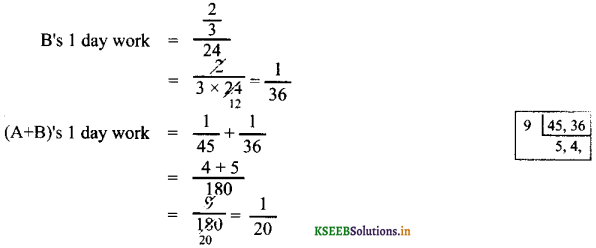
A completes the work in 45 days.
∴ A’s 1 day work = \(\frac{1}{45}\)
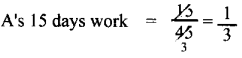
Samacheer Kalvi 8th Maths Guide Answers Chapter 4 Life Mathematics Ex 4.4 9
Remaining work = \(1-\frac{1}{3}=\frac{3-1}{3}=\frac{2}{3}\)
B finishes \(\frac{2}{3}\) rd work in 24 days
Samacheer Kalvi 8th Maths Guide Answers Chapter 4 Life Mathematics Ex 4.4 10
Let x days required
Samacheer Kalvi 8th Maths Guide Answers Chapter 4 Life Mathematics Ex 4.4 11

Samacheer Kalvi 8th Maths Guide Chapter 4 Life Mathematics Ex 4.4

Question 10.
A is thrice as fast as B. If B can do a piece of work in 24 days then, find the number of days they will take to complete the work together.
Answer:
If B does the work in 3 days, A will do it in I day.
B complete the work in 24 days.
∴ A complete the same work in \(\frac{24}{3}\) = 8 days.
∴ (A + B) complete the work in \(\frac{a b}{a+b}\) days
= \(\frac{24 \times 8}{24+8}\) days
= \(\frac{24 \times 8}{32}\) days = 6 days

Samacheer Kalvi 8th Maths Guide Answers Chapter 4 Life Mathematics Ex 4.4 12
They together complete the work in 6 days.

Samacheer Kalvi 9th English Guide Prose Chapter 2 I Can’t Climb Trees Anymore

Tamilnadu State Board New Syllabus Samacheer Kalvi 9th English Guide Pdf Prose Chapter 2 I Can’t Climb Trees Anymore Text Book Back Questions and Answers, Summary, Notes.

Tamilnadu Samacheer Kalvi 9th English Solutions Prose Chapter 2 I Can’t Climb Trees Anymore

9th English Guide I Can’t Climb Trees Anymore InText Questions and Answers

Question 1.
What was the old house built with?
Answer:
The old house was built with solid block of granite.

Question 2.
Does the narrator still live in the house?
Answer:
No, the narrator does not live in the house still.

Samacheer Kalvi 9th English Guide Prose Chapter 2 I Can’t Climb Trees Anymore

Question 3.
How did the narrator get the iron cross?
Answer:
The visitor hid some marbles, a book, a few old coins, and an Iron Cross in the jackfruit tree.

Question 4.
Do you think the girl kept the iron cross?
Answer:
Yes, the author gave the cross to the girl. Though she hesitated to accept it, she kept it for herself.

9th English Guide I Can’t Climb Trees Anymore Textbook Questions and Answers

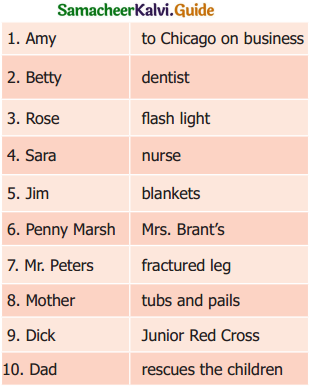
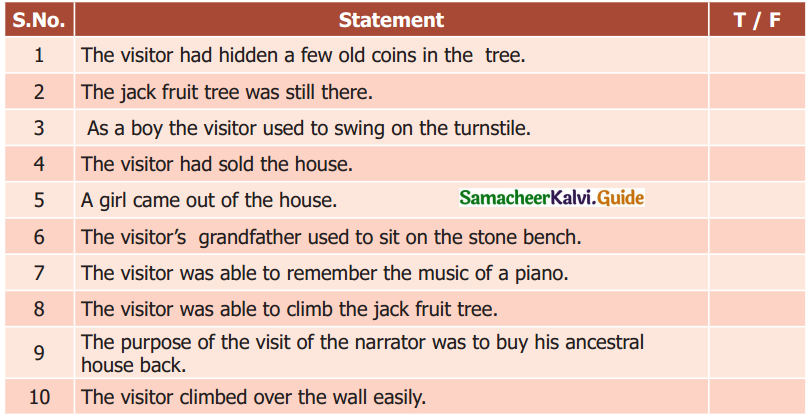
A. Based on your understanding of the story, indicate either ‘T'(True) or ‘F’( False) against the columns.

Samacheer Kalvi 9th English Guide Prose Chapter 2 I Can’t Climb Trees Anymore
Answer:

  1. True
  2. True
  3. True
  4. True
  5. True
  6. False
  7. True
  8. False
  9. False
  10. False

B. Based on your understanding of the story, answer the following questions by choosing the correct answer.

Question 1.
The story I Can’t Climb Trees Anymore highlights the importance of ________
(a) old age.
(b) youth.
(c) adulthood.
(d) middle age.
Answer:
(b) youth.

Question 2.
The house which was visited by the man ________
(a) remained unchanged.
(b) was totally changed.
(c) was slightly repaired.
(d) was given a facelift
Answer:
(a) remained unchanged.

Samacheer Kalvi 9th English Guide Prose Chapter 2 I Can’t Climb Trees Anymore

Question 3.
Who said, “A blessing rests on the house where the shadow of a tree falls”?
(a) grandmother
(b) grandfather
(c) uncle
(d) the narratoi
Answer:
(a) grandmother

Question 4.
The author came back to the house because he ________
(a) wanted to see the jackfruit tree.
(b) was looking for his lost youth.
(c) wanted to look again at his old house
(d) wanted to buy the house.
Answer:
(c) wanted to look again at his old house

Samacheer Kalvi 9th English Guide Prose Chapter 2 I Can’t Climb Trees Anymore

Question 5.
He gifted ________ to the little girl.
(a) an iron cross
(b) a bronze medal
(c) marbles
(d) old coins
Answer:
(a) an iron cross

C. Answer the following questions in a sentence or two.

Question 1.
Explain: “Blessings rest on the house where the shadow’ if a tree falls.”
Answer:
We, humans, treat Nature as God. Nature’s gifts have always been thanked and taken. If a house has the shadow of a tree falling on it, then the inmates of the house have a feeling of being protected, guarded, and blessed under the bowers of God.

Question 2.
What did the writer observe about the house?
Answer:
The writer observed that the house stood firm and it was not altered even after many years. So he was glad to see the house and the jackfruit tree beside it. hi.

Samacheer Kalvi 9th English Guide Prose Chapter 2 I Can’t Climb Trees Anymore

Question 3.
What was the local superstition about trees?
Answer:
The belief the local people had about trees was that when the shadow of the tree falls on a house that house is blessed by God.

Question 4.
What did the Narrator do with the turnstile when he was a boy?
Answer:
When the narrator was a boy, he used to swing on the turnstile going round and round until he was quite dizzy.

Samacheer Kalvi 9th English Guide Prose Chapter 2 I Can’t Climb Trees Anymore

Question 5.
Who is the owner of the house now?
Answer:
Colonel is the owner of the house now.

Question 6.
Why did the narrator return to his old house?
Answer:
The narrator wanted to see the old house and his treasures which he had left in the jack-fruit tree when they sold the house.

Question 7.
How did he get back the Iron Cross?
Answer:
The girl who lived in the house where Bond had spent his early days climbed up the tree and got for him the old Iron Cross from the hollow space. Bond kept it there approximately twenty-five years before.

Samacheer Kalvi 9th English Guide Prose Chapter 2 I Can’t Climb Trees Anymore

Question 8.
Who did the house belong to originally?
Answer:
The old house belonged to the narrator’s grandparents originally. It was sold after the grandmother’s death.

Question 9.
What did he do with the old Iron Cross?
Answer:
He returned the old Iron Cross to the girl because Bond did not go there in search of the Cross but for his youth.

Question 10.
Where had he left his childhood treasures?
Answer:
He had left his childhood treasures in a small hollow in the jack fruit tree.

Additional questions and answers:

Question 1.
What is a turnstile?
Answer:
A turnstile is a mechanical gate consisting of revolving horizontal arms fixed to a vertical post. Only one person at a time can pass through it.

Question 2.
What is trapaze?
Answer:
A trapaze is a horizontal bar hanging by two ropes and free to swing, used by acrobats in a circus.

Samacheer Kalvi 9th English Guide Prose Chapter 2 I Can’t Climb Trees Anymore

Question 3.
How old was the girl? How was she?
Answer:
The girl was only twelve or thirteen years old. She was with lively eyes and long black hair.

Question 4.
What did the narrator decide instead of going around the gate?
Answer:
He decided to climb over the wall instead of going around the wall

Question 5.
Where and how did the narrator slither down?
Answer:
The narrator slithered down into a flower – bed shattering the stem of a hollyhock.

Question 6.
Why did not the narrator want to climb the tree?
Answer:
The narrator did not want to climb the tree because he was breathing heavily when he climbed over the wall.

Samacheer Kalvi 9th English Guide Prose Chapter 2 I Can’t Climb Trees Anymore

Question 7.
What did the narrator keep in a small hollow?
Answer:
‘Hie narrator kept some of his treasures in a small hollow in the tree.

Question 8.
What did the treasures contain?
Answer:
The treasures contained marbles he had won, a book he wasn’t supposed to read, a few old coins, and his grandfather’s Iron cross.

Question 9.
What did the narrator compare him with?
Answer:
The narrator compared him with a bit of a crow collecting the bright things and putting them away.

Question 10.
What was the iron cross?
Answer:
The Iron cross was a German decoration awarded for bravery during world war I.

Samacheer Kalvi 9th English Guide Prose Chapter 2 I Can’t Climb Trees Anymore

Question 11.
What is meant by German decoration?
Answer:
A. German decoration is the bravery award given to a soldier who fought bravely and selflessly.

Question 12.
Why did the narrator forget all about the Iron cross?
Answer:
The narrator was so excited while packing and saying goodbye to people and thinking about the ship he was going to sail. So he simply forgot all about the Iron cross.

Question 13.
Why did she run breathlessly?
Answer:
She found a rusty old medal. So she ran breathlessly towards the narrator to give it to him.

Question 14.
What would have happened if the girl hadn’t climbed the tree?
Answer:
If the girl hadn’t climbed the tree the old medal would have remained in the three for another twenty five years.

Samacheer Kalvi 9th English Guide Prose Chapter 2 I Can’t Climb Trees Anymore

Question 15.
What did he do at the end?
Answer:
He looked back and waved to her. Then he quickened his steps and moved briskly towards the bus stop. There was sprightliness in his step and something cried aloud in his heart.

Question 16.
What made the Mood course in his veins?
Answer:
The mango scented summer breeze made the blood course in his veins.

Question 17.
What did the narrator forget for a moment?
Answer:
The narrator forgot for a moment that he couldn’t climb trees anymore.

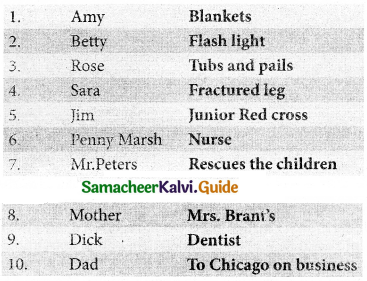
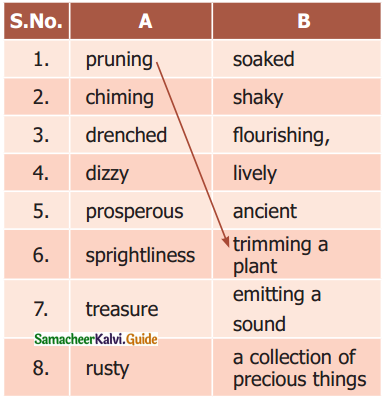
D. Match the words in column A with the meanings in column B by drawing a line as shown.

Samacheer Kalvi 9th English Guide Prose Chapter 2 I Can’t Climb Trees Anymore
Answer:

  1. f
  2. e, h
  3. a
  4. b
  5. c, j
  6. d
  7. c, j
  8. i
  9. e, h
  10. g

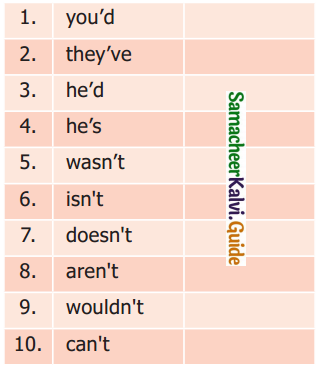
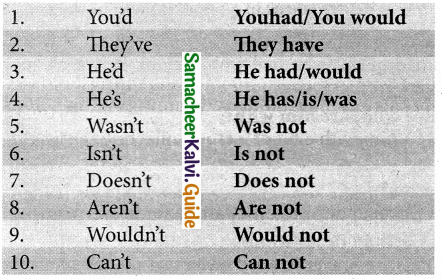
E. Read these shortened forms of words and write the full form for the remaining words and complete the table given below.

won’t : will not
I’d : I had/1 would
I’ll : I will

Samacheer Kalvi 9th English Guide Prose Chapter 2 I Can’t Climb Trees Anymore
Answer:
Samacheer Kalvi 9th English Guide Prose Chapter 2 I Can’t Climb Trees Anymore

Speaking

F. You are visiting the primary school where you studied classes I to IV, after six years. You get a chance to go to your standard two classroom and you are permitted to sit at the same place where you used to sit.

Question 1.
What would you remember?
Answer:
I would remember the happy times spent in my classroom with my friends. My place in the classroom and learn writing again in the four lines on the board etc.

Question 2.
Describe your feelings at that time.
Answer:
I was happy and proud to come back to my standard two classroom to sit on the small bench after six years with the little kids.

Samacheer Kalvi 9th English Guide Prose Chapter 2 I Can’t Climb Trees Anymore

Question 3.
Who do you miss very badly, your friends or teachers?
Answer:
Of course friends, we cannot deny the very important role played by the teachers in shaping us into what we are today. Missing only the friends because every second of the school timings was made a memorable one by them only.

Question 4.
Share your thoughts with the class.
Answer:
I recall my memory. It is still fresh. I was too small. I used to sit in the front row. I remember the lots of sum we had to do in arithmetic. I was good at arithmetic. So I was my teacher’s pet. My classmates were very friendly as I stood first in my class. I am proud of my friends and teachers.

Writing

G. On seeing these pictures, you would have gone down your memory lane. Write a paragraph in about 50 words describing your favorite sport when you were young.

Samacheer Kalvi 9th English Guide Prose Chapter 2 I Can’t Climb Trees Anymore
Answer:
My Favourite Sport:
Everyone has a favourite sport. My favourite sport is football. It is a fun game to watch and play. I like every sport but football is my favourite because I love to play it. All my life I have been playing football, from the backyard to high school. Football has also provided me with a lot of memories that I can never forget. One memory is winning the Junior football trophy in high school. That is something I will never forget. Also, my family is a football family. My dad is also a football player.

Samacheer Kalvi 9th English Guide Prose Chapter 2 I Can’t Climb Trees Anymore

H. Based on the story and your own ideas write your answers in about 80 to 100 words each.

Question 1.
Imagine yourself as the writer. Narrate the story of your visit to your ancestral house.
Answer:
I decided in the middle of my age to relive some of the moments by practically visiting the spot. So, I went to Dehra where I spent my childhood days with my grandparents. I observed from far and noticed that the house has not changed much. I was happy to see the blocks of granite building and the jackfruit tree. Turnstile, where I swung round and round, was missing. Tall hollyhocks grew on one side of the wall that was built in that place.

When the girl invited me inside the house I climbed over the wall but couldn’t land safely. I didn’t enter the house but spent some time sitting on the stone bench under a mango tree. I recalled the music of a piano, the chiming of a grandfather clock, the cranking up of the old car of my grandfather, the constant Twitter of budgerigars on the veranda, and my treasure stacked in a hollow space of the jackfruit tree. All these memories relived gave me a lot of strength, happiness, and boosted me too.

(OR)

One day I had been to our ancestral house. The house was old but strong. I waited at the gate. A boy came and asked about me. He took me into his house. His mother was there. His father had gone on a business trip. My eyes searched for my precious things. I had left them when we left the house. I took the boy into an inner room. I climbed up the ladder and searched in the upper shelf. I found it at last. I became very happy.

It was my grand father’s air-gun. I brought it down carefully. They were surprised to see my precious treasure. I was allowed to take it with me. I thanked them and left the place. Tears rolled down my cheek in joy as I walked down the road as fast as I could. I will be very careful to keep it with me in remembrance of my old grandfather.

Samacheer Kalvi 9th English Guide Prose Chapter 2 I Can’t Climb Trees Anymore

Question 2.
The man who came to the house gave the cross as a gift to the girl. Why did he do this? What do you think would have happened if he had taken back the cross with him? Paragraph for Toppers
Answer:
Lesson : I can’t climb trees anymore
Author : Ruskin Bond
Character : High expectations lead to high disappointments
Theme : Author and the girl

The man visited his old house. The girl allowed him to enter the house. She was kind and polite. The man realized that he too was old after climbing over the wall. He lost his hope of climbing the tree to find out his treasures. The girl climbed the tree and brought down the Iron cross. He was glad to see the dusted cross. He wanted to show his gratitude to her. So he gave it to the girl

If the writer had not given the Iron cross to the girl, he would have failed to be thankful. He might have been happy. But he would have missed the opportunity to express his kindness and love to the girl. The girl was also happy to accept the Iron cross as an honor for her adventure. The kind act of the ran made both the giver and the receiver happy at the same time. Let us give our love to mankind with all our kinds.

“Giving is better than receiving”

(OR)

Hie man visited his old house. A girl in the house invited him. The man could not climb over the wail. He understood that he had grown old. So he felt that it was not easy to climb up the tree. The girl was smart to climb up the tree and help him. The girl found out the iron cross, marbles and old coins. He was very happy to see the rusted iron cross. He gave it to her as his gift.

If the writer had not given the iron cross to the girl, he would have failed to be thankful. His happiness might be a normal one. Their friendship might not last long. The girl had no mind to own it. As she got it as a gift, she could understand the greatness of the man. By giving the iron cross to the girl, he won her heart. They exchanged their love which was priceless.

“God blesses the giver than the receiver”

Samacheer Kalvi 9th English Guide Prose Chapter 2 I Can’t Climb Trees Anymore

I. Write a letter to your friend describing your ancestral house.

Answer:

75, Peace street,
Angel Nagar, Nagercoil – 16
7th July, 2018

Dear Queeny,

I am delighted to write to you about my visit to our ancestral house. Last Saturday I had gone there with my parents. It is an old house built with granite stones. There are lot of trees and garden plants in the garden. My grandparents still live there. There was an old swing beside the house. I started swinging for some time. 1 found some of my toys and dolls. I remembered my childhood days. I took some of them with me. I wish to spend my vacation there. I realized that rural life is comfortable than city life. We who live in the towns and cities miss the comforts a lot. Well, convey my love and regards to your mom and dad.

Yours lovingly
Angelina.

To

S. Queeny,
D/O Mr. K. Sukumar
52, Dolly villa
Mahima Nagar, Thakkalay.


Grammar:

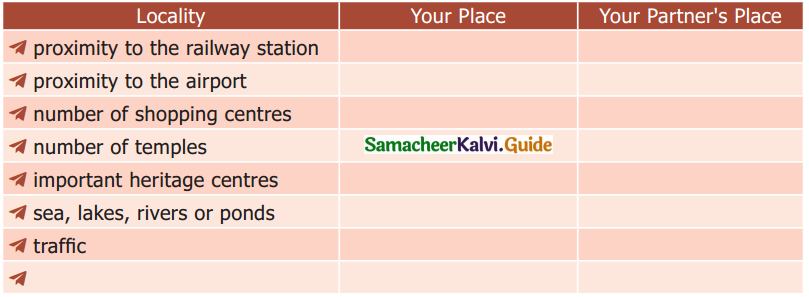
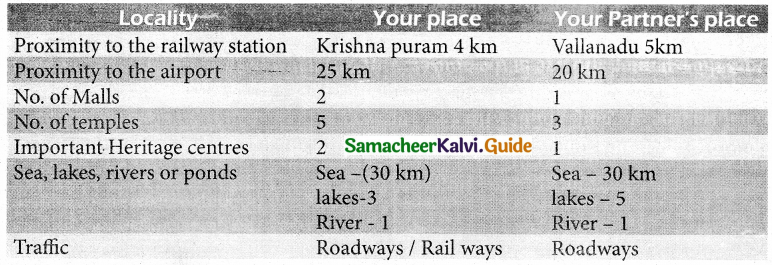
A. Work with a partner and fill in the table with information about your locality. You may add more information, if necessary. When you finish filling the table, write a short paragraph comparing the two places.

Samacheer Kalvi 9th English Guide Prose Chapter 2 I Can’t Climb Trees Anymore
Answer:
Samacheer Kalvi 9th English Guide Prose Chapter 2 I Can’t Climb Trees Anymore

B. Give your opinion and compare the items in each picture using -er, more, less, or an irregular form. Use the words. You may form your sentences in more than one way.

Question 1.
Healthy, wholesome, calorific
Answer:
a. Fresh food is healthier than junk food.
b. Fresh food is more wholesome than junk food
c. Fresh food is more calorific than junk food

Samacheer Kalvi 9th English Guide Prose Chapter 2 I Can’t Climb Trees Anymore

Question 2.
eco – friendly economical, safer
Answer:
a. Cycling is more eco – friendly than motorcycling
b. Cycling is more economical than motorcycling
c. Cycling is safer than motorcycling

Samacheer Kalvi 9th English Guide Prose Chapter 2 I Can’t Climb Trees Anymore

Question 3.
educational, interesting, trendy
Answer:
a. A mobile phone is more educational than a radio
b. A mobile phone is more interesting than a radio
c. A mobile phone is trendier than radio

Question 4.
safe, comfort table, quick
Answer:
a. Train journey is safer than bus journey
b. Train journey is more comfortable than bus journey,
c. Train journey is quicker than bus journey

Samacheer Kalvi 9th English Guide Prose Chapter 2 I Can’t Climb Trees Anymore

Question 5.
cozy, costly, sturdy
Answer:
a. A sofa is cozier than a chair
b. A sofa is costlier than a chair
c. A sofa is sturdier than a chair

C. Look at the bar-graph. Write five sentences using the appropriate degrees of comparison.

Samacheer Kalvi 9th English Guide Prose Chapter 2 I Can’t Climb Trees Anymore

Answer:
1. Bungee jumping is the most popular adventure sports in 2017
2. Paragliding is as popular as surfing in 2001.
3. Rock climbing in 2017 is as popular as paragliding and surfing in 2011.
4. Surfing is the least popular adventure sort in the year 2017.
5. In the year 2011 Rafting is as popular as Bungee jumping.

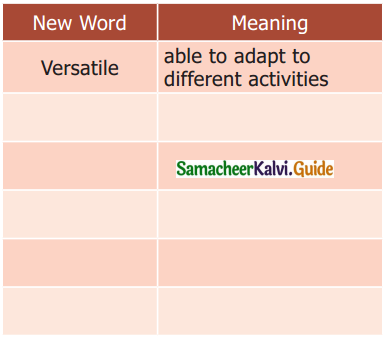
D. Listen to the conversation between Leena and her mother and list down a few new words. Using a dictionary find out the meaning for those words.
Samacheer Kalvi 9th English Guide Prose Chapter 2 I Can’t Climb Trees Anymore

Answer:
Samacheer Kalvi 9th English Guide Prose Chapter 2 I Can’t Climb Trees Anymore

Samacheer Kalvi 9th English Guide Prose Chapter 2 I Can’t Climb Trees Anymore

E. Just a Minute

Sample Speech:
Respected principal/Headmaster/Headmistress, teachers and friends. We are all proud citizens of India. 26th of January is celebrated as Republic Day in India every year. On this day in 1950, India became a Democratic Republic. Celebrations are held every year on this day throughout the country. On 26th January, 1950 the constitution came into force.

We commemorate this day to recall and show respect to the day on which the foundation was officially laid in our country. This means that the people of our country rule themselves and all are equal and free. The government is ruled by elected representatives by the people of our country and hence the supreme power is held by the people of India.

A few suggested topics:

  • My school
  • My country
  • friendship
  • Teachers Day
  • Independence Day
  • Children’s Day
  • Pongal celebration
  • Deepavali
  • Christmas
  • Forest and its uses.

Samacheer Kalvi 9th English Guide Poem 6 The Comet

Tamilnadu State Board New Syllabus Samacheer Kalvi 9th English Guide Pdf Poem 6 The Comet Questions and Answers, Summary, Notes.

Tamilnadu Samacheer Kalvi 9th English Solutions Poem 6 The Comet

9th English Guide The Comet Textbook Questions and Answers

B. Read the following lines and answer the questions.
1. Rampaging through the heavens
Never stopping day or night.

Question (a).
How does the comet travel?
Answer:
The comet travels through the sky, making a lot of noise and causing damage.

Question (b).
Which word could you replace ‘rampaging’ with?
Answer:
Speeding

2. Faster than a cheetah
with a tail that’s miles long.

Question (a).
Why is the comet compared to a cheetah?
Answer:
Comet is compared with the cheetah due to its speed.

Question (b).
Whose tail is compared here?
Answer:
The tail of the comet is compared here.

Samacheer Kalvi 9th English Guide Poem 4 The Spider and the Fly

3. With shockwave reaching to the ground
causing the land to quake.

Question (a).
What is reaching the ground?
Answer:
The shockwave produced by the comet reaches the ground.

Question (b).
What is causing the land to quake?
Answer:
The shockwave is causing the land to quake.

4. In the dust they leave behind could have started life
on the earth which resulted in mankind

Question (a).
What does the word ‘they’ refer to?
Answer:
The word They’ refers to the comets.

Question (b).
According to scientists how did life start on earth?
Answer:
According to scientists, life started on the earth by the dust left behind by these comets.

Samacheer Kalvi 9th English Guide Poem 6 The Comet

5. But I know no better spectacle
Then a comet in full flight

Question (a).
Who does T ‘refer to?
Answer:
T refers to the poet.

Question (b).
What is the best spectacle mentioned in the above lines?
Answer:
The flight of the comet is the best spectacle mentioned in the above lines.

Additional Questions And Answers

1. A spectacle of a lifetime A comet is in full flight.
Question (a).
What is a spectacle?
Answer:
A spectacle is an unusual event that attracts attention and interest.

Question (b).
What is the spectacle of a lifetime?
Answer:
The flight of the comets is a spectacle of a lifetime.

Question (c).
What is in full flight?
Answer:
A comet is in full flight.

Question (d).
What is meant by ‘flight’?
Answer:
A flight is a journey made by flying.

Samacheer Kalvi 9th English Guide Poem 6 The Comet

2. Bigger than a mountain
So powerful and strong

Question (a).
What is bigger than a mountain?
Answer:
A comet is bigger than a mountain.

Question (b).
Which is so powerful and strong?
Answer:
The comet is so powerful and strong.

Samacheer Kalvi 9th English Guide Poem 6 The Comet

3. And leaves a trail behind
it As it travels on its course

Question (a).
What does ‘it’ refer to?
Answer:
‘It’ refers to the comet.

Question (b).
What does the comet leave behind it?
Answer:
The comet leaves a trail behind it.

Question (c).
What is a trail?
Answer:
A trail is a path made for a purpose.

Question (d).
Where does the comet travel?
Answer:
The comet travels on its course.

Question (e).
What is meant by “course” here?
Answer:
Here, course means “line of action’’.

Samacheer Kalvi 9th English Guide Poem 6 The Comet

4. The outer ice is melting
causing vapor from the force.

Question (a).
What is melting?
Answer:
The outer ice is melting.

Question (b).
What is outer ice?
Answer:
The ice that has covered the comet is the outer ice.

Question (c).
How is vapor caused?
Answer:
Vapour is caused by the force.

5. If one should come too close to
earth The atmosphere will shake

Question (a).
What does ‘one’ refer to?
Answer:
‘One’ refers to a comet.

Samacheer Kalvi 9th English Guide Poem 6 The Comet

Question (b).
What will happen if a comet comes too close to the earth?
Answer:
If a comet comes too close to the earth the atmosphere will shake.

Question (c).
What is meant by the atmosphere?
Answer:
The atmosphere is the mixture of gases surrounding the earth.

6. I cannot say if this is true
I do not have the right

Question (a).
Who is T?
Answer:
I is the poet.

Question (b).
What doubt does the poet raise here?
Answer:
The poet raises the doubt that he cannot say if all said about the comet is true or not.

Samacheer Kalvi 9th English Guide Poem 6 The Comet

Question (c).
What does he admit?
Answer:
He admits that he has no right.

Question (d).
What is meant by ‘right’?
Answer:
Right is something one may do or have by law.

C. Complete the summary by filling in the given space with suitable words phrases given below.

The poet describes a moving comet which speeds through the heavens and never takes a break by (1)………… or night. When a comet is in full flight, it gives a (2)…………. which can never be compared to anything else for a lifetime. The comet is compared to (5)………….. for its speed and a mountain as it is (3)………….. The (4)…………. melts which cause a vapour from the force and leaves behind (6)………… as it travels on its way. If it comes very close to the atmosphere, it causes a shake which in turn produces (7)…………. that reach the Earth’s surface. According to the (8)…………. the comets leave behind chemicals in the form of dust which resulted in the (9)……….. and mankind came into existence. But the poet is not sure whether this principle is true or not but he knows for sure that whatever the truth may be, the sight of the comet in full flight is the best (10)…………
Answer:

  1. day
  2. spectacular scene
  3. a cheetah
  4. powerful and strong
  5. outer ice
  6. a trail
  7. a shock wave
  8. scientist
  9. emerging of life on earth
  10. spectacular

Samacheer Kalvi 9th English Guide Poem 6 The Comet

D. Poem Appreciation

If one should come too close to the earth
The atmosphere will shake,
With shock wave reaching to the ground Causing the land to quake

Question 1.
Pick out the rhyming words.
Answer:
Shake and quake are rhyming words.

Question 2.
Mention the rhyme scheme of the stanza.
Answer:
The rhyme scheme is a b c b.

Question 3.
When you read the poem aloud, you can feel/hear a rhythm. What according to you gives rhythm to the poem- the rhymes or the words in a line. Support your answer with examples from the poem?
Answer:
When I read the poem aloud, I feel a musical rhythm and feel a regular pattern of sound. This is due to the number of syllables in lines 1 and 3 which is similar to the number of syllables in lines 2 and 4.

Samacheer Kalvi 9th English Guide Poem 6 The Comet

The consistency of(the verses in each stanza is well managed and controlled. The first and third lines do not rhyme at all. If we consider the poem stanza wise, the lines are metered uniformly. The rhyme scheme of each stanza is abcb. The poet has used simple language to make the readers to enjoy the poem meaningfully.

D. Answer the following questions in about 80 -100 words.

Question 1.
Narrate how the poet describes the comet.
Answer:
Title: The Comet (Poem)
Author: Norman Littleford (Poet)
Characters: Poet and Comet.
Theme: Comets are like libraries storing the record of our formation in tiny particles.

The poet Norman Littleford wonders at the beautiful spectacle of the comet in the sky. The comet is moving through the heavens at a great speed. It has never stopped day or night. When a comet is a complete flight, it gives a spectacular scene. The poet says that it can never be compared with anything else for a lifetime. He says that a comet runs faster than a cheetah.

To him, a comet is more powerful and stronger than a mountain. The outer ice melts causing a vapour from its force. As it travels on its way, it leaves behind a trail. If the comet comes very close to the atmosphere, it can cause a shake which in turn produces a shockwave that reaches the Earth’s surface.

Samacheer Kalvi 9th English Guide Poem 6 The Comet

The scientists are of the opinion that the comets leave behind chemicals in the form of dust that has resulted in the emerging of life on earth and thus the mankind has come into existence. But it is not very sure whether this concept is true or not. However, he knows for certain that whatever the truth may be, the appearance of the comet in full flight is the best spectacular in the sky.
“A comet is an incredible and incomparable spectacle ”.

(OR)

Norman Littleford describes a moving comet in his poem. It speeds through, the heavens never stopping day or night. In its full flight, the comet gives a spectacle and it has no comparison to anything else. It is compared to a cheetah for its speed. It is stronger and more powerful than a mountain.

The outer ice melts causing a vapour and leaving a trail as it travels. Coming close to the atmosphere it causes a shake with shock waves resulting from an earthquake. The scientists say that the comets leave behind chemicals as dust and it produced life on earth. But the poet is doubtful if it is true or not. However, he is certain that the comet in full flight is the best spectacular scene.
“A Comet is an incomparable spectacle.

Samacheer Kalvi 9th English Guide Poem 6 The Comet

Question 2.
Give a detailed account of various effects caused by the comet to the earth.
Answer:
Comets are cosmic snowballs of frozen gases, rock and dust that orbit the sun. The dust and gases form a tail that stretches away from the sun for millions of miles. The poet describes the comet that travels at a great speed. He says that it is faster than a cheetah and stronger as a mountain. He imagines that the comet is very large in size and it can shake the earth if it comes very close to it.

He thinks that the shake can cause shockwaves and it can result in an earthquake. The comets leave behind the chemicals in the form of dust. The poet says that life could have started then on the earth. He also affirms that it might have resulted in mankind. However, the poet is not very sure whether this is true or not. But he admires that there can be no better spectacle than a comet in full flight.
“Amidst all dangers, a comet is spectacular”.

(OR)

A comet is a ball of mostly ice that moves around in outer space. It travels at great speed on its way. The comet is big in size and very powerful and strong. If the comet comes very close to the earth, the atmosphere will shake. The shockwave reaches the ground.

It certainly causes the land to quake. The comet leaves behind the chemicals in the form of dust. Then life started on the earth. And it resulted in mankind. The poet is not sure if this is true or not. But he is confident that there is no better spectacular scene than a comet in full flight.

Samacheer Kalvi 9th English Guide Poem 6 The Comet

F. Listening

Listen to the passage on ‘Comet’ and fill in the blanks with the correct answer.

Question 1.
Comets are believed to be remnants of the materials created by the
(a) Moon
(b) Sun
(c) Star
(d) Asteroids
Answer:
(b) Sun

Question 2.
Comets are mostly made of
(a) dust
(b) ice
(c) sand
(d) snow
Answer:
(b) ice

Question 3.
The can be seen in the night sky as bright, quickly-moving light.
(a) head
(b) star
(c) tail
(d) wings
Answer:
(c) tail

Samacheer Kalvi 9th English Guide Poem 6 The Comet

Question 4.
Comets orbit at the very edge of the galaxy, past the
(a) Earth
(b) Neptune
(c) Pluto
(d) Saturn
Answer:
(c) pluto

Question 5.
State whether the statement is true or false.
The melting process causes bits of dust and debris to trail behind the comet.
Answer:
True

G. Speaking
Imagine you are interviewing an astronaut about his/her experiences in space. Select a partner to be an astronaut and present the interview as a role-play in front of the class.
“Interviewing an astronaut”

You: We are lucky to welcome you, sir. I would like to ask you a few questions.
Astronaut: Thank you. It’ll be my pleasure to answer your questions.
You: What is the view like from space?
Astronaut: The first time you look out the window once you’re in space, I think the reaction of every astronaut is the same; first there’s a huge gap. It goes ‘AW, Vow!’ You just can’t believe what you’re looking at. I was amazed at the blackness of space. It was a darker, richer colour than I had ever seen before.
You: What are the best views of Earth from space?
Astronaut: I always loved passing over Egypt. To see the Nile River the bright green
pathway cutting through the centre of Egypt was just spectacular.
You see the blue water of the Mediterra nean and the brown desert areas.
This contrast between, green and bright blue was just breathtaking and, because I had been there on Earth, it was extra special for me to see from space.
You: What’s the in-flight food and entertainment like on a spacecraft?
Astronaut: The food is not good, but it is not horrible. I think the most popular
entertainment for astronauts is looking out the window. I love sitting near the window and just watching the Earth go by.
You: Do you think space is the future of travel?
Astronaut: Space tourism is definitely coming and we’re very close to it. I think there’s going to be a long line of people who want to get in on that. The more people that can get up to space to look back at planet Earth, I think the better off we’re all going to be. I wanted everybody to see the perspective that I just had.

Samacheer Kalvi 9th English Guide Poem 6 The Comet

Writing

H. Imagine that you and your friend get a chance to visit another planet there you befriend an alien who takes you around the planet. After reaching the earth, write a letter thanking him for all the help he did.
Answer:

Dear alien,

We landed on the earth safely. It was an amazing experience to travel in space. My friend and 1 were very fortunate to be a friend of yours on the strange planet. We felt at home after meeting on the new planet. But for your help, we could not have made our visit a success. We are very thankful to you for your friendship and entertainment.

We have enough confidence to make another visit there as you are there to host us. We are heartened to feel that we are not alone in the universe. We are sure that you are friendly beings, as we have observed you all. We invite you to visit us. Please come and live among us and share your wisdom with us. We do really need it. If you come to earth, I am sure that you would like it. On behalf of all humanity, I welcome you to Earth. Looking forward to your early arrival.


Yours Sincerely,
Jegan Kumar

Samacheer Kalvi 9th English Guide Poem 6 The Comet

Samacheer Kalvi 9th English Guide Poem 5 The River

Tamilnadu State Board New Syllabus Samacheer Kalvi 9th English Guide Pdf Poem 5 The River  Questions and Answers, Summary, Notes.

Tamilnadu Samacheer Kalvi 9th English Solutions Poem 5 The River

9th English Guide The River Textbook Questions and Answers

B. Read the following lines and answer the questions given below:

1. O’er the yellow pebbles dancing
through the flowers and foliage glancing.

Question (a)
How does the river flow?
Answer:
The river flows over the yellow pebbles dancing through the flowers and leaves in a playful manner.

Question (b)
What is meant by ‘foliage’?
Answer:
Foliage means a cluster of leaves and branches of a tree or plant.

2. River; river! Swelling river!
On you rush through rough and smooth.

Question (a).
Why does the poet mention the river to be swelling?
Answer:
The poet mentions the river to be swelling because the river is like a reckless youth.

Samacheer Kalvi 9th English Guide Poem 5 The River

3. Over rocks, by rose – banks, sweeping
like impetuous youth.

Question (a).
Where does the rose grow?
Answer:
The rose grows by rose-banks

Question (b).
Which stage of men is compared here?
Answer:
The youth of men is compared here.

Samacheer Kalvi 9th English Guide Poem 5 The River

4. Broad and deep, and still as time Seeming still, yet still in motion.

Question (a).
What is broad and deep?
Answer:
The river is broad and deep.

Question (b).
Is time still?
Answer:
Yes, the time is still.

5. Tending onward to the ocean,
Just like a mortal prime.

Question (a).
Where is the river flowing to?
Answer:
The river is flowing to the ocean.

Question (b).
What does the poet mean by ‘mortal prime’?
Answer:
Mortal prime means a man in the best of his life.

Samacheer Kalvi 9th English Guide Poem 5 The River

Poetic Devices:

C. Road the following lines and answer the questions.

1. Bright you sparkle on your way;
O’er the yellow pebbles dancing.
Through the flowers and foliage glancing Like a child at play.
Pick out the rhyming words,
Answer:
Dancing and glancing; way and play are the rhyming words.

2. Mention the rhyme scheme of the poem.
Answer:
The rhyme scheme of the poem is abba.

3. Through the flowers and foliage glancing like a child at play.
Mention the figure of speech used in the above line.
Give various other examples from the poem.
The figure of speech used is “simile”
Other examples of the simile in this poem.
Answer:

  1. “Like impetuous youth”
  2. Just like mortal prime
  3. Still as time
  4. Like eternity”.

Samacheer Kalvi 9th English Guide Poem 5 The River

4. Seeming still, yet still in motion.
Question (a).
Pick out the words in alliteration from the above lines.
Answer:
The alliterated words are seeming, still, and still.

Question (b).
Identify other examples from the poem for alliteration.
Answer:
Other examples for alliteration from this poem:

  1. River, river, little river
  2. Through the flowers and foliage glancing
  3. River, river Swelling river!
  4. On you rush through rough and smooth
  5. Over rocks, by rose – banks, sweeping
  6. River, river! Brimming river!
  7. River, river! Headlong river!
  8. Down you dash into the sea.
  9. The sea that line hath never sounded
  10. The sea that sail hath never rounded.

5. Pick out the examples for epithet from the poem.
Answer:

  1. Swelling river
  2. Brimming river
  3. Mortal prime
  4. impetuous youth.

Samacheer Kalvi 9th English Guide Poem 5 The River

6. Pick out the examples for imagery from the poem.
Answer:

  1. Through the flowers and foliage glancing.
  2. On you rush through rough and smooth
  3. Louder, faster, brawling leaping
  4. Broad and deep and still
  5. Seeming still, yet still in motion
  6. By rose – banks.

Additional Questions And Answers

1. River, river, little river!
Bright you sparkle on your way.

Question (a).
What sort of river is it?
Answer:
It is a little river.

Question (b).
How does the river look?
Answer:
The river looks bright and it sparkles on its way.

2. O’er the yellow pebbles dancing Like a child at play

Question (a).
What are the pebbles?
Answer:
The pebbles are small smooth and round stones.

Question (b).
What is dancing over the yellow pebbles?
Answer:
The river is dancing ever the yellow pebbles.

Samacheer Kalvi 9th English Guide Poem 5 The River

Question (c)
How does the river dance?
Answer:
The river dances like a child at play.

3. River, river! Headlong river!
Down you dash into the sea,

Question (a).
What is meant by ‘Headlong’?
Answer:
Headlong means with the head first and the rest of the body following.

Question (b).
Where does the river dash into?
Answer:
The river dashes into the sea.

Question (c).
Who does ‘you’ refer to?
Answer:
You refer to the (little) river.

Samacheer Kalvi 9th English Guide Poem 5 The River

4. Sea that line hath never – sounded Sea that sail hath never rounded,
Like eternity.

Question (a).
What is meant by ‘line’ here?
Answer:
Here, the line means a long rope used for a particular purpose.

Question (b).
What is meant by ‘sail’ here?
Answer:
Sail means a trip in a boat or ship.

Question (c).
What is ‘eternity’?
Answer:
Eternity is life continuing without end after death.

Question (d).
Pick out the rhyming words in these lines.
Answer:
The rhyming words are sounded and rounded,

Samacheer Kalvi 9th English Guide Poem 5 The River

D. Answer the following in a paragraph of about 120 – 150 words.

Question 1.
How does the poet bring about the comparison of life with the river? Explain it with reference to the poem.
Answer:
‘The River’ is a poem describing the beauty of a river, in all its glory. Caroline Ann Bowles says that the river is a dynamic and vital symbol of nature. The poem has philosophical undertones also. The flow of the river shows the journey of life to eternity. The different stages of life are brought in through the imagery used in the poem. Initially, the river is compared to the yellow pebbles dancing.

This indicates childhood. The river then rushes through rough and smooth paths, brawling and leaping referring to the stage of reckless youth. When the river ebbs and flows, appearing to be broad and deep, inclining towards the ocean, one can see the prime phase of a human being. The flow of the river shows the journey of life to eternity.

As human life passes through childhood, youth, old age, and eternity, likewise the river also undergoes changes in its course of action. The gentle, sparkling dancing river, faster, brawling, leaping river, its stillness, and the merging with the sea towards the end of the poem, indicate the different stages of the river like the stages of human life.

(OR)

In the poem ‘The River’ the poet compares the river with the different stages in a man’s life. The river is bright sparkling on its way. It dances over the yellow pebbles. It glances through the flowers and foliage. It is like a child at play. The river is selling and rushing through rough and smooth surfaces. It is brawling and leaps. It goes through the rough rocks and rose-banks. It is compared to a reckless youth.

Samacheer Kalvi 9th English Guide Poem 5 The River

The river is full, wide, and deep. it is still like time. It appears motionless but keeps moving to the ocean. It is like life in its prime. l’he river runs quickly into the sea. The line has never measured the depth of the sea. No ship has ever rounded the sea company. the river is compared to eternity.
‘The river of knowledge has no depth’.

Question 2.
Describe how the poem clearly describes the features, functions, and destructive power of the river.
Answer:
Title: The River
Poet: Caroline Ann Bowles (1786-1854)
Theme: Rivers can favour but courses fear too.

A river is a natural watercourse usually freshwater flowing towards an ocean, sea on another river. Small rivers can be referred to as streams, brooks, and rills. Rivers are part of the hydrological cycle. Water generally collects in a river from precipitation through a . drainage basin from surface runoff. The other sources are groundwater recharge, springs, and glaciers. Rivers can flow down from mountains, through valleys, or along planes.

Rivers source to the river mouth, do not necessarily take the shortest path. Rivers are sources of water for consumption, agriculture, and industry. A river provides transportation routes, energy, and a means of disposal of wastes. The flow of water in rivers is never constant. High amounts of water flowing in rivers after leads to flooding. Flooding is one of the more common and costly types

Samacheer Kalvi 9th English Guide Poem 5 The River

after leads to flooding. Flooding is one of the more common and costly types of natural disasters. A flood results when a river runs out of its confines and submerges the surrounding areas. However, floods have enormous destructive power. Floods occur naturally. Floods can devastate an environment. It is not always possible to prevent floods, but it is after possible to minimize flood, damage.
“A river doesn’t just carry water, it carries life.”

(OR)

A river is a natural flowing watercourse towards an ocean. Rivers are part of the hydrological cycle. Water generally collects in a river from precipitation through a drainage basin from the surface runoff. Groundwater recharge, springs and glaciers are the other sources. Rivers can flow from mountains, through valleys or along planes. Rivers are sources of water consumption, agriculture and industry. The flow of water in rivers is never constant.

High amount of water flowing in rivers after leads to flooding. Flooding is one of the more common and costly types of disasters. A flood results when a river runs out of its confines and submerges the surrounding areas. However, floods have enormous destructive power. Flood occur naturally. They can environment. It is not always possible to prevent floods but it is after possible to minimize flood damage.
“We forget that the water cycle and the life cycle are one”

E. Based on your understanding of the poem, complete the summary of the poem by choosing the words/phrases given below :

In the poem ‘The River’, the poet compares the flow of the river with different (1)……………….. The first stanza explains how the sparkling river goes dancing over (2)……………….. and glancing through the flowers and leaves. These acts of the river is compared to a curious and innocent (3)……………….. at play. The second stanza compares the river to a (4)……………….. who goes through rough and smooth patches of life. Like a youth, here the river becomes louder, faster, and (5)……………….. everything all along the way. In the third stanza, the river becomes like a hard-working man who is at the (6)……………….. of life. Here the deep and broad river seems (7)……………….. but it keeps moving towards the sea like a matured man who silently marches towards the goal. In the last stanza, the long (8)……………….. of the river reaches the endless sea like a human life attains eternity
Answer:

  1. Stages of human life.
  2. The yellow pebbles
  3. Child.
  4. Reckless youth
  5. Sweeping
  6. Prime phase
  7. Motionless
  8. Journey

Samacheer Kalvi 9th English Guide Poem 5 The River

Samacheer Kalvi 5th Tamil Guide Chapter 9.4 மரபுத்தொடர்கள்

Tamilnadu State Board New Syllabus Samacheer Kalvi 5th Tamil Guide Pdf Chapter 9.4 மரபுத்தொடர்கள் Text Book Back Questions and Answers, Summary, Notes.

Tamilnadu Samacheer Kalvi 5th Tamil Solutions Chapter 9.4 மரபுத்தொடர்கள்

Samacheer Kalvi 5th Tamil Guide Chapter 9.4 மரபுத்தொடர்கள்

மதிப்பீடு

வினாக்களுக்கு விடையளிக்க.

படிப்போம்! சிந்திப்போம்! எழுதுவோம்!

அ. கீழ்க்காணும் தொடர்களில் ஏற்ற மரபுத்தொடரைத் தேர்ந்தெடுத்து எழுதுக.

1. நாங்கள் …………………… உழவுத்தொழில் செய்து வருகிறோம். (வாழையடி வாழையாக/விடிவெள்ளியாக)
Answer:
வாழையடி வாழையாக

2. அவனுக்கு நடைமுறை அறிவு எதுவும் கிடையாது. அவன் ஒரு…. (அவரசக்குடுக்கை /புத்தகப்பூச்சி) –
Answer:
புத்தகப்பூச்சி

Samacheer Kalvi 5th Tamil Guide Chapter 9.4 மரபுத்தொடர்கள்

3. பாரதிதாசன் கவிதை உலகில் …………………ப் பறந்தார். (பற்றுக்கோடாக/கொடி கட்டி)
Answer:
கொடி கட்டி

ஆ. பொருத்துக
1. கயிறு திரித்தல் – பொய் அழுகை
2. ஓலை கிழிந்தது – விடாப்பிடி
3. முதலைக் கண்ணீ ர் – இல்லாததைச் சொல்லல்
4. குரங்குப்பிடி – மறைந்து போதல்
5. நீர் மேல் எழுத்து – வேலை போய்விட்டது
Answer:
1. கயிறு திரித்தல் – இல்லாததைச் சொல்லல்
2. ஓலை கிழிந்தது – வேலை போய்விட்டது
3. முதலைக் கண்ணீ ர் – பொய் அழுகை
4. குரங்குப்பிடி – விடாப்பிடி
5. நீர் மேல் எழுத்து – மறைந்து போதல்

Samacheer Kalvi 5th Tamil Guide Chapter 9.4 மரபுத்தொடர்கள்

இ. காலை வாரிவிடுகிறது – இம்மரபுத்தொடர், கீழ்க்காணும் எந்தத் தொடருக்குப் பொருத்தமாக அமையும்?

1. காலம் பொன் போன்றது. இருந்தாலும் நம்மைக் ………….
2. காலை எழுந்தவுடன் தூக்கம், நம்மைத் ……………
3. மறதி நம்மை அடிக்கடி …………
4. இளமைக்காலம் நம்மை அடிக்கடி.
Answer:
3. மறதி நம்மை அடிக்கடி காலை வாரிவிடுகிறது.

ஈ. மலையேறி விட்டது – இம்மரபுத்தொடர் குறிக்கும் பொருளைத் தேர்ந்தெடுக்க.
1. மாயச் செயல்
2. கதை விடுதல்
3. மாற்றம் பெறுதல்
4. பயனில்லாது இருத்தல்
Answer:
3. மாற்றம் பெறுதல்

Samacheer Kalvi 5th Tamil Guide Chapter 9.4 மரபுத்தொடர்கள்

உ. வினாக்களுக்கு விடையளிக்க.

Question 1.
மரபுத்தொடர் என்றால் என்ன? ஓர் எடுத்துக்காட்டு தருக.
Answer:

  • இணைமொழிகள் போன்று கருத்தாழமும் நடையழகும் கொண்ட தொடர்கள் மரபாக தொன்று தொட்டு வழக்கில் பயன்படுத்தப்பட்டு வருவது மரபுத்தொடர் எனப்படும்.
  • எ.கா. கானல் நீர்

Question 2.
பின்வரும் மரபுத்தொடர்களைக் கொண்டு தொடரமைத்து எழுதுக.
Answer:
அ) தோலிருக்கச் சுளை விழுங்கி
தோலிருக்கச் சுளை விழுங்கியது போல் அத்தனை உப்புக்களையும் கபளீகரம் செய்திருக்கிறது இந்த பேயாறு.

ஆ) மதில் மேல் பூனை
கண்ணன் மதில் மேல் பூனை போல் படிப்பில் ஒரு நிலையில்லாமல் இருந்தான்.

Samacheer Kalvi 5th Tamil Guide Chapter 9.4 மரபுத்தொடர்கள்

கற்பவை கற்றபின்

Question 1.
மரபுத்தொடர்களின் பொருளை அறிந்துகொள்க முயல்க.
Answer:
மரபுத்தொடர்களின் பொருள் :
Samacheer Kalvi 5th Tamil Guide Chapter 9.4 மரபுத்தொடர்கள் - 1 Question 2.
அன்றாட வாழ்வில் நம்மைச் சுற்றியுள்ளவர்களின் பேச்சில் காணப்படும் மரபுத்தொடர்களைத் தொகுத்து வருக.
Answer:
Samacheer Kalvi 5th Tamil Guide Chapter 9.4 மரபுத்தொடர்கள் - 2

Samacheer Kalvi 5th Tamil Guide Chapter 9.4 மரபுத்தொடர்கள்

Question 3.
மரபுத்தொடர்களைப் பயன்படுத்தி தொடர்கள் எழுதுக.
Answer:

  • அடுப்பூதும் பெண்ணுக்குப் படிப்பதற்கு என்று சொன்ன காலம் மலையேறிவிட்டது.
  • திருமணம் நிகழ்வதைப் பெரியோர் ஆயிரங்காலத்துப் பயிராகக் கருதுவர்.
  • அரசியல்வாதிகளின் வாக்குறுதி ஆகாயத்தாமரை போல் உள்ளது.
  • கந்தன் எடுத்ததெற்கெல்லாம் முதலைக்கண்ணீர் வடிப்பான்.
  • என் தங்கையின் செயல் எல்லாமே அவலை நினைத்து உரலை இடிப்பது போல இருக்கும்.

மொழியை ஆள்வோம்

பேசுதல்

Question 1.
உனது வாழ்வின் உயர்வுக்கு எந்தெந்தப் பண்புகள் உதவியாக இருக்கும்? கலந்துரையாடுக.
Answer:
மாணவன்-1 : வணக்கம்! நான் வாழ்வில் உயர்வதற்கு என்னென்ன பண்புகளை வளர்த்துக் கொள்ள வேண்டும் என்று என் அப்பாவிடம் கேட்டேன்.
மாணவன்-2 : அப்படியா? என்னவென்று கூறேன். அனைவரும் அறிந்து கொள்ளலாம். மாணவன்-1 : முதல் பண்பு ஒழுக்கத்துடன் இருத்தல் வேண்டும்.

மாணவன்-2 : ஒழுக்கம் என்றால் நாம் எவ்வாறு செயல்பட வேண்டும்?
மாணவன்-1 : பள்ளி மாணவர்களாகிய நமக்குத் தேவையான ஒழுக்கம்.
1. பள்ளிக்கு நேரத்துடன் செல்லல்.
2. ஒழுங்கான சீருடையுடன் பள்ளிக்குச் செல்லல்.
3. வாரம் ஒருமுறை நகம் வெட்டுதல்.
4. மாதம் ஒருமுறை தலைமுடியை வெட்டுதல்.
5. அன்றாட வீட்டுப் பாடங்களை எழுதுதல்.

Samacheer Kalvi 5th Tamil Guide Chapter 9.4 மரபுத்தொடர்கள்

மாணவன்-2 : இவையெல்லாம் நாம் கடைப்பிடிப்பதுதான்.
மாணவன்-1 : சரியாகச் சொன்னாய். இவற்றுடன் பெற்றோரை மதித்தல், பெற்றோர் கூறும் அறிவுரைகளைக் கேட்டு நடத்தல், அனைவரிடமும் அன்புடன் பழகுதல் ஆகியவையும் நற்பண்புகளாகும்.
மாணவன்-2 : அன்புடன் பழகுதல் மற்றும் அதனுடன் பணிவுடன் திகழ்தல் போன்றவையும் நற்பண்புகள்தான்.

மாணவன்-1 : ஆம்! மற்றவர்களைப் புண்படுத்தும்படிப் பேசக்கூடாது. பிறருடைய எண்ணங்களுக்கும் கருத்துகளுக்கும் மதிப்பளித்தல். இந்தப் பணிவு, அன்புடன் பழகுதல், விட்டுக்கொடுத்துப் பழகும் குணம் இவையெல்லாம் பெற்றோரிடம் பாசமுடன் வளரும் குழந்தைகளிடன் இயல்பாகவே அமையும். இப்பண்புகளின் தொகுப்பே ஒழுக்கம் ஆகும்.
மாணவன்-2 : அப்படியா? இனிமேல் நாம் அனைவரும் இந்த நற்பண்புகளைப்
பின்பற்றி வாழ்வோம் என உறுதியேற்போம்.

Question 2.
அன்னை தெரேசாவின் தொண்டுகளைப் பற்றி 5 மணித்துளி பேசுக.
Answer:
அவையோர்க்கு வணக்கம்!
‘அன்னை ‘ என்று இந்திய மக்களால் பெருமையுடன் குறிப்பிடப்படுபவர் தெரேசா. இவர் அயல்நாட்டைச் சேர்ந்தவராக இருந்த போதிலும் இந்திய மண்ணையே தனது தாய் மண்ணாக எண்ணி வாழ்ந்து சிறந்தவர்தான் அன்னை தெரேசா.

இவர் இந்தியக் குடியுரிமை பெற்ற உரோமன் கத்தோலிக்க அருட்சகோதரி ஆவார். இவர் 1910 ஆம் ஆண்டு ஆகஸ்ட் மாதம் 27 ஆம் நாள் யுகோஸ்லாவியா நாட்டில் பிறந்தவர். இவருடைய இயற்பெயர் ஆக்னஸ் என்பதாகும்.

Samacheer Kalvi 5th Tamil Guide Chapter 9.4 மரபுத்தொடர்கள்

அன்னை தெரேசா கிறித்துவ மதத்தைப் பரப்பும் எண்ணத்துடன்தான் இந்தியாவிற்கு வருகை புரிந்தார். கல்கத்தாவில் ஒரு ஆசிரியையாக தன் பணியினைத் தொடங்கினார். கல்கத்தாவில் அவரைச் சூழ்ந்துள்ள பகுதிகளின் வறுமை நிலை அவரை அதிகமாக மனம் கலங்கச் செய்தது. பஞ்சம் ஒரு புறம் இந்து – முஸ்லிம் வன்முறை மற்றொரு புறம். இதனால் தெரேசா மிகவும் மனம் வருந்தினார்.

1948 ஆம் ஆண்டு தனது சேவையை ஆரம்பித்தார். நீல கரையிடப்பட்ட சாதாரண வெண்ணிற பருத்தி புடவையை அணிந்தவராய், இந்திய குடியுரிமையினைப் பெற்றுக் கொண்டு குடிசை பகுதிகளுக்குள் சேவை செய்தார்.
ஆதரவற்றோர் மற்றும் பசியினால் வாடுவோரின் தேவைகளை நிறைவேற்றத் தொடங்கினார். அதனைத்தொடர்ந்து பிறர் அன்பின்பணியாளர் சபையைத் தொடங்கினார். உண்ண உணவற்றவர்கள், வீடற்றவர்கள், தொழு நோயாளிகள் போன்றோர்களைக் கவனித்தல் போன்ற பணிகளைச் செய்வதனைக் குறிக்கோளாய்க் கொண்டார்.

1952 இல் கொல்கத்தா நகரில் ஒதுக்கப்பட்ட இடத்தில் அன்னை தெரேசா இறப்பின் வாயிலிருப்போருக்கு முதல் இல்லத்தை ஏற்படுத்தினார். இந்திய அதிகாரிகளின் துணை கொண்டு அவர் புழக்கமற்ற ஒரு இந்துக் கோயிலை ஏழைகளுக்கான நல்வாழ்வு மையமாக மாற்றினார். இவ்வில்லத்திற்குக் கொண்டு வரப்படுபவர்களுக்கு அவரவர் சமயத்திற்கேற்ப நல்லடக்கம் செய்ய ஏற்பாடு செய்தார்.

Samacheer Kalvi 5th Tamil Guide Chapter 9.4 மரபுத்தொடர்கள்

இவருக்கு இங்கிலாந்து, டென்மார்க், ஜெர்மனி, அமெரிக்கா போன்ற நாடுகள் அவருடைய சேவைகளுக்காகப் பொருளுதவி செய்து மகிழ்ந்தன.

அன்பிற்கோர் எடுத்துக்காட்டாய் வாழ்ந்த அன்னை தெரேசாவின் வாழ்க்கையை நினைவில் வைப்போம். நம்மால் இயன்றதொண்டினைச்செய்வோம். வாய்ப்பளித்தமைக்கு நன்றி கூறி விடைபெறுகிறேன்.

எழுதுதல்

Question 1.
சொல்லக் கேட்டு எழுதுக.
Answer:
1. பெண்ணின் பெருமையைப் பாடியவர் பாரதிதாசன்.
பாரதிதாசன் பெயரால் விருது வழங்கப்படுகிறது. கவிஞர் வாணிதாசன் புதுச்சேரியைச் சேர்ந்தவர்.
வானம் வசப்படும் என்ற நூலை எழுதியவர், பிரபஞ்சன்.

Question 2.
சொற்களைத் தொடரில் அமைத்து எழுதுக.
1. பொறுமை – ………………………….
2. நூல்கள் – ………………………….
3. தமிழ்மொழி – ………………………….
4. அன்பு – ………………………….
5. கவிஞர் – ………………………….
Answer:
1. பொறுமை – நிலத்தைப் போல் நாம் பொறுமையாக இருக்க வேண்டும்.
2. நூல்கள் – நூலகத்தில் பல துறை நூல்கள் பெருகி இருக்கும்.
3. தமிழ்மொழி – நம் தமிழ்மொழி மிகவும் தொன்மையானது.
4. அன்பு – எல்லோரிடமும் அன்புடன் பழகுதல் வேண்டும்.
5. கவிஞர் – இருபதாம் நூற்றாண்டுக் கவிஞர்களுள் பாரதியார் பெரும்புகழ் பெற்றவர்.

Question 3.
பொருத்துக

பாரதியார் – என் தமிழ் இயக்கம்
பாரதிதாசன் – கொடி முல்லை
வாணிதாசன் – குயில் பாட்டு
திருமுருகன் – வானம் வசப்படும்
பிரபஞ்சன் – தமிழியக்கம்
Answer:
1. பாரதியார் – குயில் பாட்டு
2. பாரதிதாசன் – தமிழியக்கம்
3. வாணிதாசன் – கொடி முல்லை
4. திருமுருகன் – என் தமிழ் இயக்கம்
5. பிரபஞ்சன் – வானம் வசப்படும்

Samacheer Kalvi 5th Tamil Guide Chapter 9.4 மரபுத்தொடர்கள்

Question 4.
அண்ணல் காந்தியடிகளின் உள்ளம் கவர்ந்த குஜராத்திய பாடலின் தமிழாக்கம்
தீமை செய்தவர்க்கும் நன்மை செய், எல்லாரும் ஒன்று என்பதைக் கூறும் மனித நேயப் பாடலைப் படித்து உணர்க.
Answer:
உண்ணும் நீர் தந்த ஒருவனுக்குக் கைம்மாறாய்
விண்ணமுதைப்போல் அன்னம் விரும்பிப் படைத்திடுவாய்!
அன்போடு கும்பிட்டால் அடிபணிந்து நீ தொழுவாய்!
செம்பான காசுக்குச் செம்பொன்னைத் தந்திடுவாய்!
உயிர்காத்தோன் துன்பத்தை உயிர்கொடுத்து நீ துடைப்பாய்!
செயலாலும் சொல்லாலும் சிந்தையினாலும் பெரியோர்
சின்னஞ்சிறு உதவி செய்தவர்க்கு எந்நாளும்
ஒன்றுக்குப் பத்தாய் உவந்து செய்வர் பேருதவி!
வையத்தார் எல்லாரும் ஒன்றெனவே மாண்புடையோர்
ஐயப்பாடின்றி அறிந்திருக்கும் காரணத்தால்
இன்னா செய்தாரை ஒறுக்க அவர் நாண
நன்னயம் செய்துவிடுவர் இந்த நானிலத்தே!

Samacheer Kalvi 5th Tamil Guide Chapter 9.4 மரபுத்தொடர்கள்

Question 5.
ஆம் வகுப்பு பிறமொழிச் சொற்கள் கலவாமல் எழுதுக.
அழகன், பிரெண்ட்ஸோடு கிரவுண்டுக்குச் சென்றான். அங்கு அனைவருடனும் ஜாலியாகக் கிரிக்கெட் விளையாடினான். அதனால், அவன் மிகவும் டையர்டாக இருந்தான்.
Answer:
அழகன், நண்பர்களுடன் திடலுக்குச் சென்றான். அங்கு அனைவருடனும் மகிழ்ச்சியாகக் மட்டைப்பந்து விளையாடினான். அதனால், அவன் மிகவும் சோர்வாக இருந்தான்.

Question 6.
பாடலை நிறைவு செய்க.
im 7
Answer:
Samacheer Kalvi 5th Tamil Guide Chapter 9.4 மரபுத்தொடர்கள் - 3

Samacheer Kalvi 5th Tamil Guide Chapter 9.4 மரபுத்தொடர்கள்

Question 7.
பின்வரும் விளம்பரத்தைப் படித்து வினாக்களுக்கு விடையளிக்க.
Answer:
Samacheer Kalvi 5th Tamil Guide Chapter 9.4 மரபுத்தொடர்கள் - 4

வினாக்கள் :

Question 1.
நீங்கள் மேலே படித்தது என்ன?
அ) பாடல்
ஆ) கதை
இ) விளம்பரம்
Answer:
இ) விளம்பரம்

Samacheer Kalvi 5th Tamil Guide Chapter 9.4 மரபுத்தொடர்கள்

Question 2.
பயிற்சி அளிக்கப்படும் விளையாட்டு எது?
அ) மட்டைப்பந்து
ஆ) கபடி
இ) சதுரங்கம்
Answer:
ஆ) கபடி

Question 3.
மாணவர்களுக்கு எத்தனை மணி நேரம் பயிற்சி வழங்கப்படுகிறது?
அ) 1 மணி
ஆ) 2 மணி
இ) 3 மணி
Answer:
இ) 3 மணி

Question 4.
மைதானம் – இந்தச் சொல்லுக்குரிய பொருள் எது?
அ) பூங்கா
ஆ) அரங்கம்
இ) திடல்
Answer:
இ) திடல்

Samacheer Kalvi 5th Tamil Guide Chapter 9.4 மரபுத்தொடர்கள்

Question 5.
விளம்பரத்திலிருந்து நீங்கள் புரிந்து கொண்டது என்ன?
அ) கபடி விளையாட்டுப் பயிற்சி இலவசமாகக் கற்றுத் தரப்படுகிறது.
ஆ) கபடி விளையாட்டில் மாணவர் மட்டுமே சேர்த்துக் கொள்ளப்படுவர்.
இ) கபடி விளையாட்டு நடைபெறுமிடம் பெரியார் விளையாட்டு மைதானம்.
Answer:
அ) கபடி விளையாட்டுப் பயிற்சி இலவசமாகக் கற்றுத் தரப்படுகிறது

மொழியோடு விளையாடு

1. குறுக்கெழுத்து புதிர்
Samacheer Kalvi 5th Tamil Guide Chapter 9.4 மரபுத்தொடர்கள் - 5
இடமிருந்து வலம்

1. இவர் எட்டயபுரத்துக் கவிஞர்
Answer:
பாரதியார்

2. இது வெண்ணிறப் பறவை.
Answer:
புறா

Samacheer Kalvi 5th Tamil Guide Chapter 9.4 மரபுத்தொடர்கள்

3. தூக்கத்தில் வருவது.
Answer:
கனவு

கீழிருந்து மேல்

1. புத்தகத்தைக் குறிக்கும் சொல்
Answer:
நூல்

வலமிருந்து இடம்

1. பாராட்டி வழங்கப்படுவது
Answer:
விருது

2. மக்கள் பேசுவதற்கு உதவுவது
Answer:
மொழி

3. சுதந்திரத்தைக்  குறிக்கும் தமிழ்ச்சொல்
Answer:
விடுதலை

குறுக்கும் நெடுக்குமாக

Question 1.
முத்தமிழுள் ஒன்று
Answer:
நாடகம்

Samacheer Kalvi 5th Tamil Guide Chapter 9.4 மரபுத்தொடர்கள்

Question 2.
குறிப்புகள் கொண்டு விடை எழுதுக.

1. தலைகீழாய் என் வீடு. -………………………………..
2. என் பார்வை கூர்நோக்கு. – ………………………………..
3. நானும் ஒரு தையல்காரி. – ………………………………..
4. வருமீன் வரும்வரை காத்திருப்பேன். – ………………………………..
5. எனக்கு வீடு கட்டத் தெரியாது. – ………………………………..
Samacheer Kalvi 5th Tamil Guide Chapter 9.4 மரபுத்தொடர்கள் - 6
Answer:
1. தலைகீழாய் என் வீடு. – தூக்கணாங்குருவி
2. என் பார்வை கூர்நோக்கு. – கழுகு
3. நானும் ஒரு தையல்காரி. – சிட்டுக்குருவி
4. வருமீன் வரும்வரை காத்திருப்பேன். – கொக்கு
5. எனக்கு வீடு கட்டத் தெரியாது. – குயில்

3. சொல்லிருந்து புதிய சொல்
1. பாரதியார் . – ……………………, ……………………, ……………………, ……………………
2. மணிக்கொடி – ……………………, ……………………, ……………………, ……………………
3. பாவேந்தர் – ……………………, ……………………, ……………………, ……………………
4. நாடகம் – ……………………, ……………………, ……………………, ……………………
5. விடுதலை – ……………………, ……………………, ……………………, ……………………
Answer:
1. பாரதியார் – பா, ரதி, யார், பார், பாதி
2. மணிக்கொடி – மணி, கொடி, மடி
3. பாவேந்தர் – பா, வேந்தர், வேர், பார்
4. நாடகம் – நா, நாம், நாகம், கடம்
5. விடுதலை – விடு, தலை, விலை, தடு

Samacheer Kalvi 5th Tamil Guide Chapter 9.4 மரபுத்தொடர்கள்

4. சொற்களைக் கொண்டு புதிய தொடர் உருவாக்குக.
எ.கா. உண்மை – நாம் எப்பொழுதும் உண்மையே பேச வேண்டும்.
1. பெருமை – ……………………
2. பாடல் – ……………………
3. நாடகம் – ……………………
4. தோட்டம் – ……………………
5. பரிசு – ……………………
Answer:
1. பெருமை – நாம், பிறர் பெருமைப்படும் செயல்களைச் செய்ய வேண்டும்.
2. பாடல் – திருவிழாக்கள் என்றாலே மக்கள் ஆடல் பாடல் என்று
மகிழ்ச்சியுடன் இருப்பார்கள்.

3. நாடகம் – தொலைக்காட்சியில் வரும் நாடகங்களைப் பார்த்து நேரத்தை
வீணாக்கக்கூடாது.
4. தோட்டம் – கந்தன் அவன் வீட்டில் மாடித் தோட்டம் அமைத்துள்ளான்.
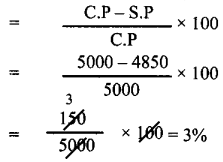
5. பரிசு – கோகிலா பேச்சுப் போட்டியில் முதல் பரிசு பெற்றாள்.

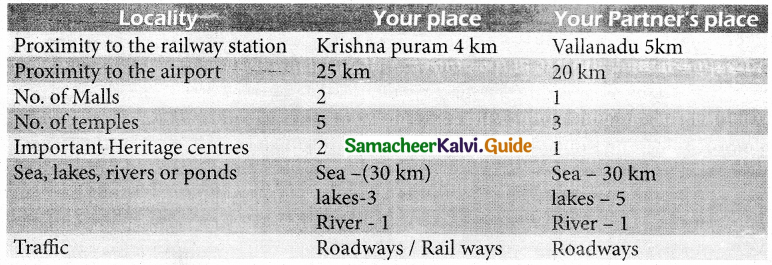
5. முறைமாறியுள்ள சொற்களை முறைப்படுத்தித் தொடரமைக்க.

Question 1.
பெருமை பாரதிதாசன் தமிழுக்குச் சேர்த்துள்ளார்.
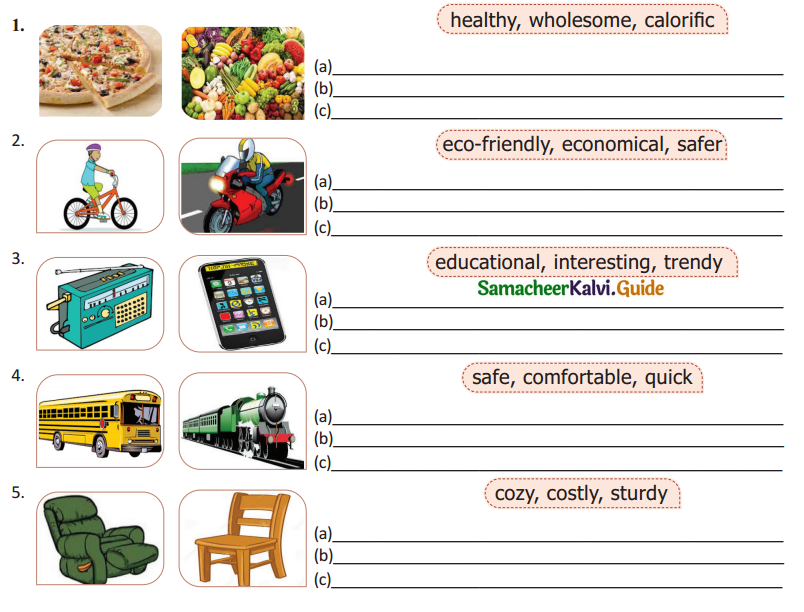
Answer:
பாரதிதாசன் தமிழுக்குப் பெருமை சேர்த்துள்ளார்.
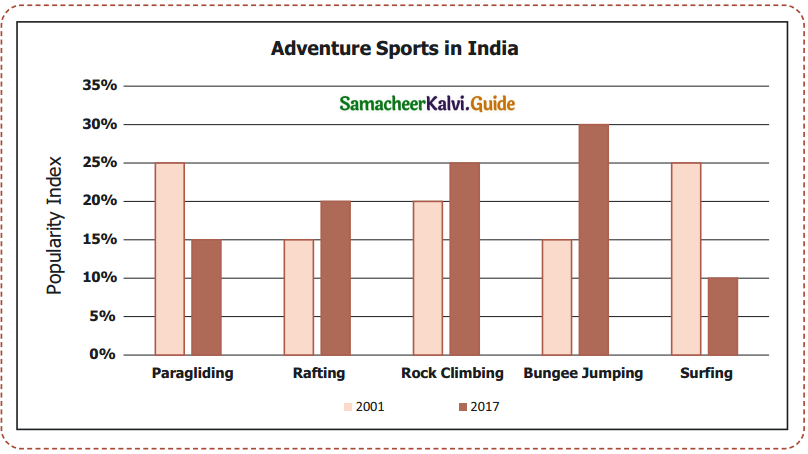
Question 2.
பறவை அழகான புறா
Answer:
புறா அழகான பறவை.

Samacheer Kalvi 5th Tamil Guide Chapter 9.4 மரபுத்தொடர்கள்

Question 3.
தமிழ் உண்டாகிறது மேல் ஆர்வம்.
Answer:
தமிழ் மேல் ஆர்வம் உண்டாகிறது.

Question 4.
போற்றும் உலகம் எழுத்தாளர் உயர்ந்த
Answer:
உலகம் போற்றும் உயர்ந்த எழுத்தாளர்.

அறிந்து கொள்வோம்

மனிதநேயம்

அன்பென்று கொட்டு முரசே
மக்கள் மக்கள் அத்தனை பேரும் நிகராம்
இன்பங்கள் யாவும் பெருகும் – இங்கு
யாவரும் ஒன்றென்று கொண்டால்

நிற்க அதற்குத் தக

1. உயிர்களிடத்தில் அன்பு செலுத்துவேன்.
2. நல்ல நல்ல நூல்களைத் தேடிப் படிப்பேன்.
3, மரக்கன்றுகளை நட்டு வளர்ப்பேன்.

Samacheer Kalvi 5th Tamil Guide Chapter 9.4 மரபுத்தொடர்கள்

செயல் திட்டம்

தமிழ்மொழி வளர்ச்சிக்குத் தொண்டாற்றிய கவிஞர்களுள் ஐவரின் படத்தை ஒட்டி, ஒவ்வொருவரையும் பற்றி 5 வரிகள் எழுதி வருக.
Answer:

1. மகாகவி பாரதியார் :

  • பெற்றோர் – சின்னசாமி அய்யர் – லட்சுமி அம்மாள்.
  • சிறுவயதிலேயே கவி பாடும் ஆற்றல் பெற்றதால் ‘பாரதி’ என்ற பட்டத்தைப் பெற்றவர்.
  • தமது கவிதைகள் மூலம் தமிழ் மக்களுக்குத் தமிழ்ப்பற்றையும், தேசபக்தியையும் ஊட்டி வளர்த்தவர் பாரதியார்.
  • சென்னையில் ‘இந்தியா’ என்ற வார இதழைத் தொடங்கியவர்.
  • பாரதியார் கண்ணன் பாட்டு, குயில் பாட்டு, பாஞ்சாலி சபதம் ஆகிய நூல்களை இயற்றியுள்ளார்.
  • நிவேதிதா தேவியைத் தமது ஞானகுருவாக ஏற்றுக் கொண்டவர். ‘தேசிய கவி’, ‘மகாகவி’ எனப் பாராட்டப்பட்டவர்.

2. புரட்சிக் கவிஞர் பாரதிதாசன் :

  • பெற்றோர் – கனகசபை – மகாலட்சுமி.
  • தமிழைத் தனது உயிராய்க் கொண்டு வாழ்ந்து, தனது புரட்சிக் கவிதைளால் தமிழில் மறுமலர்ச்சி ஏற்படுத்தியவர்.
  • பாரதியார் மீது கொண்ட பற்றினால் தம் பெயரைப் பாரதிதாசன் என மாற்றிக் கொண்டவர்.
  • இருண்ட வீடு, குடும்ப விளக்கு, அழகின் சிரிப்பு, பாண்டியன் பரிசு முதலிய நூல்களை இயற்றியுள்ளார்.
  • புரட்சிக் கவிஞர், புதுமை கவிஞர், பாவேந்தர் என்றெல்லாம் போற்றப்பட்டார்.

Samacheer Kalvi 5th Tamil Guide Chapter 9.4 மரபுத்தொடர்கள்

3. நாமக்கல் கவிஞர் ராமலிங்கம் பிள்ளை :

  • பெற்றோர் – வெங்கட்ராமன் – அம்மணி அம்மாள்.
  • தமிழக அரசின் முதல் அரசவைக் கவிஞர் என்ற சிறப்புப் பெயர் பெற்றவர்.
  • இவர் ஓவியம் வரைவதில் வல்லவர். 1912ஆம் ஆண்டு 5 ஆம் ஜார்ஜ் மன்னரின் முடிசூட்டு விழாவையொட்டி டெல்லியில் நடந்த ஓவியக் கண்காட்சியில் இவரது ஓவியம் இடம் பெற்றுத் தங்கப்பதக்கம் பரிசு பெற்றது.
  • நாடகங்களுக்குப் பாட்டு எழுதிக் கொடுப்பார்.
  • காந்தியக் கொள்கைகளால் ஈர்க்கப்பட்டவர். உப்புச் சத்தியாகிரகத்தின்போது வழிநடைப் பாடலாகக் ‘கத்தியின்றி ரத்தமின்றி’ பாடலைப் பாடிப் புகழ் பெற்றவர்.
  • ‘என் கதை’ என்ற பெயரில் தன் சுயசரிதையை எழுதியுள்ளார்.
  • மலைக்கள்ளன், நாமக்கல் கவிஞர் பாடல்கள், கம்பனும் வால்மீகியும், திருக்குறளும் பரிமேலழகரும் ஆகிய நூல்கள் இவரது படைப்புகளுள் சில.

4. ஈரோடு தமிழன்பன் :

  • பெற்றோர் – செ.இரா. நடராசன், வள்ளியம்மாள்.
  • சிறந்த கவிஞராகவும், தொலைக்காட்சியில் செய்தி வாசிப்பதிலும் முத்திரை பதித்தவர்.
  • புரட்சிக் கவிஞர் பாரதிதாசனுடன் பத்தாண்டுகள் பழகியவர்.
  • அமெரிக்கத் தமிழ்ச் சங்கங்களின் அழைப்பை ஏற்று அமெரிக்காவில் சுற்றுப் பயணம் செய்து, இலக்கியச் சொற்பொழிவுகள் நிகழ்த்தினர்.
  • “வசந்தத்தில் ஒரு வானவில்” என்ற படத்திற்குக் கதை எழுதினார். 1983ல் ரோம் நகரில் நடந்த சர்வதேசப் படவிழாவில் இப்படம் பரிசு பெற்றது. இவருடைய நூல்களில் பல ஆங்கிலத்தில் மொழிபெயர்க்கப்பட்டுள்ளன.

Samacheer Kalvi 5th Tamil Guide Chapter 9.4 மரபுத்தொடர்கள்

5. உவமைக் கவிஞர் சுரதா ;

  • பெற்றோர் – திருவேங்கடம் – செண்பகம்.
  • புரட்சிக் கவிஞர் பாரதிதாசன் பரம்பரையில் வந்தவர் முதுபெரும் கவிஞர் சுரதா.
  • பாரதிதாசன் மீது கொண்ட பற்றினால் சுப்புரத்தினதாசன் என்று மாற்றிக் கொண்டார். இதன் சுருக்கமே சுரதா என்றானது.
  • ‘காவியம்’ என்ற கவிதை வார இதழைத் தொடங்கி நடத்தியவர். கவிதைக்காகவே தொடங்கப்பட்ட முதல் வார இதழ் ஆகும்.
  • இவருடைய ‘தேன்மழை’ என்ற கவிதை நூலுக்குத் தமிழக அரசின் பரிசு கிடைத்தது. கலைமாமணி பட்டம் பெற்றவர். 1987-ல் தமிழக அரசு ஏற்படுத்திய பாரதிதாசன் விருதை முதன்முதலாகப் பெற்றவர் இவரே. ‘மூத்த தமிழறிஞர்’ என்ற விருதை 2000 ஆம் ஆண்டில் பெற்றுள்ளார்.

Samacheer Kalvi 9th English Guide Poem 3 On Killing a Tree

Tamilnadu State Board New Syllabus Samacheer Kalvi 9th English Guide Pdf Poem 3 On Killing a Tree Questions and Answers, Summary, Notes.

Tamilnadu Samacheer Kalvi 9th English Solutions Poem 3 On Killing a Tree

9th English Guide On Killing a Tree Textbook Questions and Answers

B. Read the following lines from the poem and answer the questions in a sentence or two.

1. It takes much time to kill a tree,
Not a simple jab of the knife Will do it.

Question 1.
Can a ‘simple jab of the knife’ kill a tree?
Answer:
No, a simple jab of the knife cannot kill a tree.

Question 2.
Why does it take much time to kill a tree?
Answer:
It is because the tree is very strong and its root is deep in the earth.

Samacheer Kalvi 9th English Guide Poem 3 On Killing a Tree

2. It has grown
Slowly consuming the earth,
Rising out of it, feeding Upon its crust, absorbing

Question 1.
How has the tree grown?
Answer:
The tree has grown slowly.

Question 2.
What does the tree feed on the crust?
Answer:
The tree feeds water from the crust.

3. And out of its leprous hide
Sprouting leaves.

Question 1.
What does the phrase ‘leprous hide’ mean?
Answer:
‘Leprous hide’ means the bark of the tree. It has rough skin with scales.

Question 2.
What comes out of the leprous hide?
Answer:
Tiny leaves come out of the leprous hide.

Samacheer Kalvi 9th English Guide Poem 3 On Killing a Tree

4. The bleeding bark will heal
And from close to the ground
Will rise curled green twigs,
Miniature boughs

Question 1.
What will happen to the bleeding bark?
Answer:
The bleeding bark will heal.

Question 2.
What will rise from close to the ground?
Answer:
The curled green twigs will rise from close to the ground.

5. The root is to be pulled out
One of the anchoring earth;

Question 1.
Why should the root be pulled out?
Answer:
The root should be pulled out to dry it and kill the tree.

Question 2.
What does ‘anchoring earth’ mean?
Answer:
‘Anchoring earth’ means fixing the tree firmly inside the earth (like a ship in the sea).

Samacheer Kalvi 9th English Guide Poem 3 On Killing a Tree

Additional  Questions and Answers

1. It takes much time to kill a tree,
Not a simple jab of the knife.

Question (a).
How long does it take to kill a tree?
Answer:
It takes much time to kill a tree.

Question (b).
What is “a jab of the knife”?
Answer:
It means “a poke or thrust with a sharp tool”.

2. It has grown
Slowly consuming the earth,
Rising out of it, feeding
Upon its crust, absorbing

Question (a).
What is tree consuming?
Answer:
The tree is consuming the earth.

Question (b).
What is rushing out of the earth?
Answer:
The tree is rushing out of the earth.

Question (c).
What is the tree feeding?
Answer:
The tree is feeding upon the earth’s crust.

Samacheer Kalvi 9th English Guide Poem 3 On Killing a Tree

3. absorbing
Years of sunlight, air, water
And out of its leprous hide
Sprouting leaves.

Question (a).
What is the tree absorbing?
Answer:
The tree is absorbing sunlight, air, and water.

Question (b).
How long is it absorbing them?
Answer:
It is absorbing them for many years.

Question (c).
What is it doing out of its leprous hide?
Answer:
It is sprouting leaves out of its leprous hide?

Question (d).
What is meant by ‘leprous’ and ‘hide’?
Answer:
‘Leprous’ means covered with scales,
‘Hide’ means the strong thick outer skin.

Samacheer Kalvi 9th English Guide Poem 3 On Killing a Tree

4. So hack and chop
But this alone won’t do it.

Question (a).
Explain the phrase: “hack and chop”
Answer:
‘Hack’ means cut something with heavy blows,
‘chop’ means cut into pieces with a tool like a knife.

Question (b).
Will this do the work?
Answer:
No, this alone won’t do it.

5. And from close to the ground
Will rise curled green twigs
Miniature boughs

Question (a).
What will rise from close to the ground?
Answer:
Curled green twigs will rise

Question (b).
What will become miniature boughs?
Answer:
The curled green twigs will become miniature boughs.

Question (c).
Explain the phrase: “Miniature boughs”
Answer:
Miniature means very small. So the phrase “miniature boughs” means a very small size of the large branches of the tree.

Samacheer Kalvi 9th English Guide Poem 3 On Killing a Tree

6. Miniature boughs
Which if unchecked will expand again.
To former size

Question (a).
What will expand if unchecked?
Answer:
The miniature boughs will expand if unchecked.

Question (b).
How will the unchecked bough expand?
Answer:
The unchecked bough will expand to the former size.

7. Out from the earth-cave
And the strength of the tree exposed The source, white and wet,
The most sensitive, hidden For years inside the earth.

Question (a).
From where the strength of the tree exposed.
Answer:
The strength of the tree exposed from the earth-cave.

Question (b).
What did the strength of the tree expose?
Answer:
The strength of the tree exposed the source.

Question (c).
How long is the tree hidden inside the earth?
Answer:
The tree is hidden for years inside the earth.

Samacheer Kalvi 9th English Guide Poem 3 On Killing a Tree

8. Then the matter
Of scorching and chocking
In sun and air,
Browning hardening
Twisting, whitening,
And then it is done,

Question (a).
What is the matter?
Answer:
The tree that is felled down is the matter.

Question (b).
What happens to the matter?
Answer:
It is scorching and chocking in the sun and air.

Question (c).
What takes place at the end?
Answer:
The tree turns brown and hardens, twists and withers

Question (d).
What is done in the end?
Answer:
In the end, the tree is killed.

Samacheer Kalvi 9th English Guide Poem 3 On Killing a Tree

C. Based on the understanding of the poem, write down the summary of the poem by filling in the blanks.

The poet explains the process of (1) ……….. A lot of work has to be done in order to (2)……….. completely. It cannot be accomplished by merely cutting it with (3)……….. The tree has grown strong with the help (4)………… of for a countless of years. Even the (5)………… of the tree gives rise to (6)………. The (7)………… sprouts new twigs and leaves. In a short period, they grow into a new tree. So, to (8)……….. completely, one should take out its roots completely from the soil. Then they should be exposed to (9)……….. Only then the tree will be completely killed.
Answer:

  1. killing a tree
  2. kill it
  3. a knife
  4. the earth
  5. branch
  6. boughs
  7. bough
  8. kill a tree
  9. the sun and air

Samacheer Kalvi 9th English Guide Poem 3 On Killing a Tree

D. Based on the understanding of the poem, answer the following questions in a sentence or two.

Question 1.
What is the poem about?
Answer:
The poem is about killing a tree.

Question 2.
What are the lessons to be learned from the poem?
Answer:
We must grow trees and protect them. We must not kill the trees. We must be eco-friendly.

Question 3.
What are the life sources needed for a tree to grow?
Answer:
Soil, Water, Oxygen, and Sunlight.

Question 4.
What does the poet mean by ‘bleeding bark’?
Answer:
By bleeding bark, the poet means that the bark bleeds when it is cut with a knife.

Question 5.
Why the poet says ‘No’ at the beginning of the third stanza?
Answer:
He wants to emphasize that it is not so easy to kill a tree.

Question 6.
How should the root be pulled out?
Answer:
The root should be pulled out of the anchoring earth.

Samacheer Kalvi 9th English Guide Poem 3 On Killing a Tree

Question 7.
What is hidden inside the earth for years?
Answer:
Life and legacy are hidden inside the earth.

Question 8.
What finally happens to the tree in this poem?
Answer:
The tree is totally exposed to the sunlight and air. Thus it is killed completely.

E. Answer the following questions in about 80-100 words.

Question 1.
How well does the poet bring out the pain of the tree?
Answer:
Title: On killing a tree
Poet/Author: Dr. Gieve Patel
Character: Tree, the woodcutter
Theme: “Thou shall not kill” (even a tree)

The poet compares the killing of a tree with the killing of a man. As humans feel the pain, the poet imagines the feeling of the pain by the tree. A tree has a life so it must have sensitively. Every poke or thrust with a sharp knife must give some severe pain to the tree. It is hard to cut the crust of the tree. It is like leprous hide. The bark of the tree bleeds when the cut is deep. The tree endures pain but still, it has life.

Samacheer Kalvi 9th English Guide Poem 3 On Killing a Tree

It is not killed until its root of a tree is cut off and taken away from the earth. The root of the tree is like the heart of man. A man dies only when the heart is damaged. Likewise, a tree struggles to hold its life until it is uprooted. The root has anchored in the earth and stands straight and firm on the earth. The tree undergoes all unspeakable pain’ when it is felled. Though it does not cry but mankind my try to feel and be kind to it.
“killing a tree is like killing a man”

(OR)

“On killing a tree” speaks about the felling of a tree. A woodcutter cuts a tree with his sharp tool. It takes’ a lot of time to cut a tree. As the tree has life, it will definitely have a sense of feeling. So doubtlessly a tree must feel the pain at every poke or thrust with a sharp tool or knife. Though the pain is severe, the tree is unable to make its cry audible. We are unable to hear though we stand near the tree.

Slowly the parts of the tree start losing its life. But it is killed completely only when its root is brought out of the earth. The root is dried in the sun and air. Thus it undergoes all the pain as it is murdered by man. The killing of a tree may be compared to the killing of a man. A man dies when his heart is attacked. In the same way, a tree is killed when the root is detached from the earth.
“Save trees to pave the way to life”

Samacheer Kalvi 9th English Guide Poem 3 On Killing a Tree

Question 2.
‘A tree doesn’t grow in a day/ Explain it with reference to the poem.
Answer:
Outline:
Tree-a big plant-takes years to grow-some grow quickly-some grow slowly-no tree grows over a night-as grows slowly lives longer-some trees live more than 100 years.

Trees and shrubs are not all grown the same same. Some species grow rapidly, putting their energy into getting established quickly and putting on fast growth. Some are fast-growing trees with lower density and weaker woods. They are popular willow and box elders. Longer lived trees associate more resources into developing dense wood fiber rather than rapid growth. When planted, these trees typically take a longer time to get established and often one wonders if they will ever start growing.

Eventually, they do, and often of the saying goes, “It’s worth the wait”. Trees such as oaks and Ginko’s are prime examples of slower-growing trees that have longevity. It is rare to see these trees failing storms and they are largely resistant to decay and insect damage. There are trees which take 10 to 15 years to grow and even some other trees take 20 to 30 years. So it is certain the trees do not grow in a day.
“One cannot become a millionaire overnight”

Samacheer Kalvi 9th English Guide Poem 3 On Killing a Tree

(OR)

Trees are the bigger plants. They live long. According to its longevity, the trees have a long span of life. Any plant that grows overnight may not live long. The trees with lower density grow faster than the trees with greater density. Insects cannot easily damage the latter ones. Some trees are slow growers which take 20-30 years. Some are fast growers and they take 10-15 years.

As the saying goes, “It’s worth, the wait”, they do eventually. Trees grow slowly but steadily. Their roots go very deep anchoring the earth. The trunk of it is very strong with many branches and leaves. Their uses are many but many fail to know. Certain trees take a few decades to grow and its yield is enjoyed only by the next generation. Thus it is clear that a tree cannot grow in a day.
“Rome was not built in a day”

Samacheer Kalvi 9th English Guide Poem 3 On Killing a Tree

Question 3.
Why do you think the poet describes the act of cutting a tree? What effect does it have on you as a reader?
Answer:
Outline:
The killing of a tree – a cruel act – tree intends to live-even plants expand its species-man is a killer-very unkind towards trees-too selfish-destroys nature – a murder eventually-similar to killing a man-tree dies with its root cut-man dies with his heart attack.

(OR)

The poet is a physician. He considers the act of killing of a tree as an evil act. He is of the view that it is nothing but murder. The woodcutter tries to cut down the tree. He cuts the trunk of the tree. Even after felling the tree, it can sprout from the bottom-most part of the trunk. Thus the effort is to be made to uproot it. Unless the anchored root is cut off and removed from the earth, killing is not complete.

The root is brought out to dry it in the sun and the air. The poet compares it to the killing of a man. The root is compared to the heart of a man. Every life is finished when the heart stops functioning. As the heart circulates the blood in the body, the root does the work of supplying water to every part of the tree. The reader is getting an awareness that he or

she should not indulge in the evil or cruel act of killing a tree that can live for a long time. It gives the realization that the killing of a tree and a man are one and the same. So every reader will stand against this cruelty and join hands for planting and growing trees.

Samacheer Kalvi 9th English Guide Poem 3 On Killing a Tree

(OR)

The killing of a tree is a cruel act. The poet has made us realize that the felling of a tree is killing it. The word “Killing” is very effectively and earnestly used in this poem. Being a physician, the poet has dealt with life and death of the tree. A man dies when the heart is affected. Similarly, a tree becomes lifeless only when its root is removed from the earth. The root of a tree is compared to the heart of a man.

The poem teaches a lesson to the readers that we must not be cruel towards any living thing, either a tree or man. Killing a tree is synonymous with murdering a man. Thus it is clear that the poet wants the readers to be kind to mankind. As readers, we must feel the pain inflicted on others by every one of our cruel act through our word and deed.
“Let us not fell the trees before they fall”

F. Complete the table by identifying lines, against the poetic devices from the poem.
Samacheer Kalvi 9th English Guide Poem 3 On Killing a Tree
Answer:

  1. Poetic lines Poetic Devices / Figures of Speech
  2. It takes much time to kill a tree. Personification
  3. The bleeding bark will heal. Personification
  4. One of the anchoring earth Imagery

Listening

G. Listen to the passage about Nammazhwar, an environmental crusader from Tamil Nadu. As you listen, answer the following questions. The listening activities can be repeated if required.

Question 1.
Who is Nammazhwar? What is his contribution to farmers and farming?
Answer:
Nammazhwar was a graduate in agriculture. His contribution was that all inputs must come from within the form and the waste should be recycled and used as input.

Question 2.
What was the turning point in the life of Nammazhwar?
Answer:
The revelation of recycling the waste to be used as an output in farming was his turning point.

Samacheer Kalvi 9th English Guide Poem 3 On Killing a Tree

Question 3.
How is the “Bread sandwich method” a boon to the farmers?
Answer:
The soil is made ready and the suggested practices followed without working on the soil for the second time. The farmers can go on sowing and reaping throughout the year. This is the boon to the farmers.

Question 5.
Pick out ideas from the passage to show that he learned first and then shared with farmers.
Answer:
He never stopped learning from the farmers. He became a vast repository of farming practices and knowledge. He never pushed ideas down anyone’s throat. According to the farmer’s understanding and conditions, each farm is unique.

Question 6.
Explain in your own words the meaning of “Farming ……….. even in the 21st Century”
Answer:
Farming is not for making but a way of living and it is possible in the 21st century.

Samacheer Kalvi 9th English Guide Poem 3 On Killing a Tree

Question 7.
Give the synonyms of ‘rely’ and ‘sustainable’.
Answer:
Synonyms of ‘rely’ is depending
Synonyms of sustainable is maintainable

Question 8.
“He never pushed ideas down anyone’s throat” means
(a) favored
(b) compelled
(c) opposed
Answer:
(c) Compelled.

Writing

H. Based on the reading of the poem complete the web chart given below.
Samacheer Kalvi 9th English Guide Poem 3 On Killing a Tree
Answer:
Samacheer Kalvi 9th English Guide Poem 3 On Killing a Tree

  • Cutting a tree is an act of murder.
  • Failure to preserve the forest.
  • To create a new awareness in the minds of the people
  • Lack of eco-friendly attitude.
  • Disapproval of mankind is a failure to care for the earth
  • deforestation and destruction of nature

Samacheer Kalvi 9th English Guide Poem 3 On Killing a Tree

I. Look at the two trees. One is a green flourishing tree and the other, a brown withering tree.
Samacheer Kalvi 9th English Guide Poem 3 On Killing a Tree
The class will now be divided into two groups. Group A will list down the agents that support a tree’s growth. Group B will list down those that prevent it. Once the groups are ready with their lists, a feu unto lives from each group will go to the board and write down the lists.

Taking clues from the lists on the board, complete the following chart.
Samacheer Kalvi 9th English Guide Poem 3 On Killing a Tree
Answer:
Samacheer Kalvi 9th English Guide Poem 3 On Killing a Tree

Samacheer Kalvi 9th English Guide Poem 3 On Killing a Tree

J. Work in pairs. Create three slogans on ‘Saving Trees’ 
Remember

  • Use catchy, meaningful phrases.
  • Do not write complete sentences.
  • Ensure that the words at the end rhyme.

Answer:

  • “Save the tree and have the air fresh”.
  • “Make not trees rare; keep them with care”.
  • “Trees on; Global warming has gone”.

K. Deliver a short speech for about five minutes on the following.

Question 1.
Imagine what will happen if all the trees in the earth disappear. Discuss with your friends and share it with your classmates.
Answer:
Life will not exist on Earth if trees disappear. Trees produce most of the oxygen that humans and wildlife need to live. Trees absorb Carbon dioxide from the atmosphere and release oxygen using the process of photosynthesis. Lack of rain will be a major concern. If there is no rain, there will be no forests. Forests act as giant air filters in the world. They also prevent soil erosion. They break the force of wind and rain on soil helping their roots bind the soil. The decayed leaves absorbed by the earth to enrich the soil.

Samacheer Kalvi 9th English Guide Poem 3 On Killing a Tree

Question 2.
Think of a situation where all the trees can speak. What will they talk about?
Answer:
Dear mates,
It is quite interesting and awesome to think of a situation like this. If all trees start speaking, we may have to be spellbound.
The trees may speak about their goodness and benefits to us. They do a great deal to us. They will tell us that they help us breathe fresh air and lead a healthy life. They may be proudly telling us that they provide us shade to save us from the scorching sun. They may ask us to water them regularly.

They may tell others or fellow trees if they are not taken care of. They may tell us not to harm them if we tend to cut the branches or the tree itself, They may lead us not to kill them. They may start advising us to take care of the trees. They may tell us to plant more and more trees and make domestic and civilized forests. They may tell us to have more rain to increase water resources.

Moreover, they will try to be human friendly and make us trees friendly. We need not search for anything in the tree. They would tell us if they have anything to give us. The antisocial elements cannot use the forest as their hideout. The trees will propagate all about the movements of the wild animals in the forest. It would be very thrilling and amazing when the trees can speak the human tongue. Let us talk to the trees and listen to what they want to tell us.

Samacheer Kalvi 9th English Guide Poem 3 On Killing a Tree

Let US laugh together

Question 1.
How do trees access the internet?
Answer:
They simply wave in

Question 2.
What will the tree do, if the banks are closed?
Answer:
It will start its own branches

Question 3.
What types of tree fits in your hand?
Answer:
A Palm tree.

Samacheer Kalvi 9th English Guide Poem 3 On Killing a Tree

Samacheer Kalvi 9th English Guide Poem 4 The Spider and the Fly

Tamilnadu State Board New Syllabus Samacheer Kalvi 9th English Guide Pdf Poem 4 The Spider and the Fly Questions and Answers, Summary, Notes.

Tamilnadu Samacheer Kalvi 9th English Solutions Poem 4 The Spider and the Fly

9th English Guide The Spider and the Fly Textbook Questions and Answers

B. Read the following lines from the poem and answer the questions in a sentence or two.

1. The way into my parlour is up a winding stair,
And I’ve many curious things to show when you are there”

Question (a).
How to reach the spider’s parlour.
Answer:
The spider’s parlour can be reached through a winding stair.

Question (b).
What will the fly get to see in the parlour?
Answer:
The fly will get to see many curious things in the parlour.

Samacheer Kalvi 9th English Guide Poem 4 The Spider and the Fly

2. ” Oh no, no,” said the little Fly, “kind Sir, that cannot be,
I’ve heard what’s in your pantry, and I do not wish to see!”

Question (a).
Is the fly willing to enter the spider’s pantry?
Answer:
No. The fly is not willing to enter the spider’s pantry.

Question (b).
Can you guess what was in the pantry?
Answer:
No, I cannot guess what was in the pantry.

3. “Sweet creature!” said the Spider, “you’re witty and you’re wise,
How handsome are your gauzy wings, how brilliant are your eyes!”

Question (a).
List the words used by the spider to describe the fly.
Answer:
Sweet, witty, wise, handsome, gauzy, brilliant.

Question (b).
Why does the spider say that the fly is witty?
Answer:
The spider is flattering. So it says that the fly is witty.

Samacheer Kalvi 9th English Guide Poem 4 The Spider and the Fly

4. The Spider turned him round about, and went into his den,
For well he knew the silly Fly would soon come back again:

Question (a).
Why is the poet using the word den to describe the spider’s web?
Answer:
The spider is like a lion in its web. So the poet uses the word.

Question (b).
Why was the spider sure that the fly would come back again?
Answer:
The fly was silly and ignorant. So the spider was sure that the fly would come back again.

Samacheer Kalvi 9th English Guide Poem 4 The Spider and the Fly

5. With buzzy wings she hung aloft, then near and nearer drew,
Thinking only of her brilliant eyes, and green and purple hue

Question (a).
Who does she’ refer to?
Answer:
She refers to the fly.

Question (b).
What was she thinking of?
Answer:
She was thinking of her brilliant eyes and green and purple hue.

6. And now dear little children, who may this story read,
To idle, silly flattering words, I pray you ne’er give heed:

Question (a).
Who does T’ refer to?
Answer:
T refers to a poet

Question (b).
What is the advice given to the readers?
Answer:
The poet advises us not to fall prey to flattery and sweet words.

Samacheer Kalvi 9th English Guide Poem 4 The Spider and the Fly

Additional  Questions and Answers

1. ‘I’m sure you must be weary, dear, with soaring up so high
Will you rest upon my little bed? “said the spider to the fly.

Question (a).
Who does T’ refer to?
Answer:
I refers to the spider.

Question (b).
Who does ‘You’ refer to?
Answer:
You refers to the fly

Question (c).
Who was weary according to the spider?
Answer:
The fly was weary.

Question (d).
Why was the fly weary?
Answer:
It was because the fly was going up very high by flying.

Question (e).
What did the spider ask the fly?
Answer:
The spider asked the fly if she would rest upon his little bed.

Samacheer Kalvi 9th English Guide Poem 4 The Spider and the Fly

2. There are pretty curtains drawn around; the sheets are fine and thin.
And if you like to rest awhile.
I’ll snugly tuck you in.

Question (a).
Describe the spider’s bed.
Answer:
There are pretty curtains around and the sheets are fine and thin.

Question (b).
What is the condition laid by the spider?
Answer:
If the fly likes to rest awhile, the spider will snugly tuck the fly in.

3. I have within my pantry, good store of all that’s nice;
I’m sure you’re very welcome – will you please to take a slice?

Question (a).
What is the pantry?
Answer:
A pantry is a room where beverages, food, dishes are used.

Question (b).
What kind of pantry is it?
Answer:
It is good pantry of all nice things.

Samacheer Kalvi 9th English Guide Poem 4 The Spider and the Fly

4. So he wove a subtle web, in a little corner sly
And set is table ready, to dine up the fly.

Question (a).
Who wove a subtle web?
Answer:
The spider wove subtle web.

Question (b).
What is a subtle web?
Answer:
A subtle web is the dwelling place of a spider.

Question (c).
What is the table mentioned here?
Answer:
It is the dining table.

Question (d)
What is the table ready?
Answer:
The table is ready for eating the fly.

Samacheer Kalvi 9th English Guide Poem 4 The Spider and the Fly

5. Your robes are green and purple – there’s a crest upon your head
Your eye are like the diamond bright, but mine are dull as lead.

Question (a).
Whose robes are green and purple?
Answer:
The fly’s robes are green and purple.

Question (b).
What is there upon the fly’s head?
Answer:
A crest is upon the fly’s head.

Question (c).
What are the fly’s eyes compared to?
Answer:
The fly’s eyes are to bright diamond.

Question (d).
Whose eye are dull like lead?
Answer:
The spider’s eyes are dull like lead.

Samacheer Kalvi 9th English Guide Poem 4 The Spider and the Fly

6. Up jumped the cunning spider, and fiercely held her fast,
He dragged her up his winding stair, into his dismal den.

Question (a).
Why did the spider jump up?
Answer:
The spider caught the fly so he jumped up.

Question (b).
How did the spider hold the fly?
Answer:
The spider fiercely held the fly fast.

Question (c).
Who dragged whom up the winding stair?
Answer:
The spider dragged the fly up the winding stair.

Question (d).
Where did the spider take the fly?
Answer:
The spider took the fly into his dismal den.

Question (e)
What is meant by dismal den?
Answer:
“Dismal den’ means a gloomy or horrible cave.

Question (f).
What is the dismal den?
Answer:
The dismal den is the cobweb (home of the spider).

Question (g).
Why is it called a dismal den?
Answer:
The spider kills and eats his prey in the cobweb. So it is called a dismal den.

Samacheer Kalvi 9th English Guide Poem 4 The Spider and the Fly

7. Unto an evil counsellor, close heart, and ear and eye,
And take a lesson from this tale, of the spider and the fly.

Question (a).
To whom one should close heart, ear and eye?
Answer:
One should close heart, ear and eye to an evil counsellor.

Question (b).
What lesson do the readers take from this tale?
Answer:
Don’t listen to evil counsellor and don’t take their advice, is the lesson from this tale.

Question (c).
Do you want to be the spider or the fly?
Answer:
I don’t want to be the spider or the fly.

Question (d).
Who is an evil counsellor in general?
Answer:
In general, the one who makes the other as his prey through their evil advice.

Question (e).
What is the advice given here?
Answer:
“Beware of evil counsellors” is the advice given here.

Samacheer Kalvi 9th English Guide Poem 4 The Spider and the Fly

B. Complete the summary.
The poem begins with the spider’s (1)…………… of the fly. He (2)…………. to the fly to come into its home. The spicier describes his parlour as the (3)…………. one. The spider kindles the curiosity of the fly so that she may enter his home. Fortunately, the fly was (4)……….. and refused to get into his home. Now the spider pretends to be a(5) ……….. man and asks her to come and rest in his home. He offers her (6)………… and a. thin fine sheets to rest. This time also the fly (7)………… the spider’s offer very politely. The next weapon that the spider uses is (8)……….. The spider praises the (9)……….. and (10)………. of the fly and also praises her (11)……… He invites her to look at herself in the (12)………… which is in his parlour. The fl y is (13)……….. by the words of the spider and she falls a (14)………. to her (15)……….
Answer:

  1. Friendliness
  2. requests
  3. prettiest
  4. wise
  5. good
  6. bed
  7. refuses
  8. flattery
  9. wing
  10. eyes
  11. head
  12. mirror
  13. enticed/tempted
  14. prey
  15.  enemy

Samacheer Kalvi 9th English Guide Poem 4 The Spider and the Fly

C. Answer the following

Question 1.
Write a character sketch of the spider.
Answer:
Title : The spider and the fly
Author/poetess : Mary Botham Howttv (1799 -1888)
Characters : Spider and fly
Theme : Beware of evil councellors.

In the poem, the spider first tries to inveigle the fly into the spider’s house. He tells the fly that his parlour is comfortable he will be welcoming the fly. The spider promises the fly a rest on his bed and treats from his pantry. The fly wisely resists these attempts to get her to enter the spider’s house. However, she cannot resist the spider’s flattery. The spider praises her wings and eyes and offers her a chance to look into the mirror.

Motivated by her great vanity, the fly enters the spider’s den and is ensnared. The poet tells the readers not to be tricked by “idle, sjlly, flattering words” at the end of the poem. The spider is cunning and full of vice. Spider wins in its. He deceived the fly at the end. Vanity makes people susceptible to doing foolish things. So the people need to be wary of others who flatter them only to deceive them. The poet advises the readers to close their hearts, eyes and ears to the evil counsellors.
“Look before you leap”

(OR)

The spider is a cunning creature. He tries to inveigle the fly into his house. He tells the fly about the comforts in his parlour. He wishes to welcome the fly. The spider promises the fly a rest on his bed and treats from his pantry. The fly resists firstly. The spider flatters but the fly fails to resists. The spider praises her eyes, and wings. He offers a mirror to look into.

Vanity defeats the fly. She enters the spiders den. The fly is trapped. The poetess tells the readers not to be deceived by “idle, silly, flattering words. Spider makes fly his prey. Vanity makes the people susceptible to do foolish thing to doing foolish thing. So people must be wary of others who flatter them only to cheat them.

Samacheer Kalvi 9th English Guide Poem 4 The Spider and the Fly

Question 2.
What happens if we fall prey to flattery? Give instances from the poem The spider and the fly’.
Answer:
Title : The spider and the Fly
Poetess : Mary Botham Howitt
Characters : Spider and fly
Theme : Prevention is better than cure Flattery is a deadly weapon to defeat the enemies. The poem stresses the idea that cam be seen in social trends today. If individuals succumb to superficiality, bad things are not far behind. The fly is ensnared because of the superficial praises of the spider.

“To idle, silly, flattering words, I pray you never give heed. Unto an evil counsellor, close heart and ear and eye” The spider is able to ‘ weave a web’ to ensnare the fly because of the superficial praise heaped on it. When the fly gives into this praise, believing it as truth, the fly is destroyed. In the society, if the people are giving into tempting words and praises then they fall a prey to flattery. Just as the fly is destroyed by the spider, the people will also be affected by the flatterers.
” Don’ t be penny wise and pound foolish”

(OR)

Title: The Spider and the Fly
Poetess: Mary Botham Howitt (1799 -1888)
Characters: spider and fly
Theme: “Look before you leap”

Flattery is a deadly weapon to overcome enemies. The poem stress this idea. It is seen in society. If people who succumb to superficiality, bad things approach them easily. The spider praises the fly excessively. The fly becomes prey to the flattery of the spider. The spider is able to ‘weave a web.

Samacheer Kalvi 9th English Guide Poem 4 The Spider and the Fly

The spider ensnares the fly by his praises. Trusting the flattery, the fly gives in to destroy herself. There are people in the society, who yield to the tempting words fall prey to their enemies. The poet advises the readers not to keep their hearts, eyes and ears open to the evil counsellors.
“All that glitters is not gold”

Question 3.
In your own Give a detailed description of:
(a) The spider’s parlour
Answer:
The story “The spider and the fly” tells of a cunning spider who ensnares a na’ive fly through the use of seduction and flattery. The spider invites the fly to his parlour. The way to the parlour is up a winding stair. It is the prettiest little parlour that the fly had ever spied. There are many curious things. The spider wants to show them to the fly. There is a little bed to rest upon. There are pretty curtains drawn around. The sheets are fine and thin. On the whole the spider’s parlour is the best and the prettiest.

(OR)

(b).  The fly’s appearance.
Answer:
The spider tries to flatter the fly by praising her appearance and inviting her in to look into a mirror. The spider tells the fly that she has handsome gauzy wings and brilliant eyes. The spider further tells the fly is pretty with pearl and silver wing. The fly’s robes are green and purple hue. There is a crest upon the fly’s head. Her eyes are like a bright diamond. On the whole, the fly is elegant and beautiful.
“Appearance is deceptive”

Samacheer Kalvi 9th English Guide Poem 4 The Spider and the Fly

Appreciate the poem
Figures of speech

1. Consonance:
Repetition of similar consonant sounds in the neighbouring words.
Ex: “T is the prettiest little parlour that ever you did spy;
Pick out one more instance of consonance from the poem.
Hearing his wily, flattering words, came slowly flitting by;
So he wove a subtle web, in a little corner sly.

2. Assonance:
Repetition of similar vowel sounds in the neighbouring words.
Ex: “T is the prettiest little parlour that ever you did spy;
Pick out one more instance of consonance from the poem.
The spider turned him roundabout and went into his den,
“I’m sure you must be weary, dear, with soaring up so high.”

Samacheer Kalvi 9th English Guide Poem 4 The Spider and the Fly

3. Anaphora:
Repetition of a word or a phrase at the beginning of a sequence of sentences, paragraphs and lines.
Ex: How handsome are your gauzy wings, how brilliant are your eyes!
Identify the figures of speech.
“Your eyes are like the diamond bright, but mine are dull as lead! ’’
A simile is the figure of speech.

4. Alliteration:
Repetition of consonant sounds at the beginning of words.
Pick out the words in alliteration.
“Sweet creature! ” said the Spider, “you’re witty and you ’re wise,”
Sweet – Spider; and witty – wise are alliterated.

Samacheer Kalvi 9th English Guide Poem 4 The Spider and the Fly

Listening

D. Listen to the passage and fill in the blanks with appropriate answers:

1. Without trust there is no …………..
2. ………….. is a very rare thing to find in life.
3. When people betray you learn from the …………
4. Don’t let ………….. on the road throw you back.
5. If we keep moving forward you will have a wonderfully …………
Answer:

  1. relationship
  2. Trust
  3. situation.
  4. small bumps
  5. fulfilling life

Speaking:

E. The cunning spider was waiting for a chance to put the fly into its web and it used all the possible ways to trap her. Have you ever been trapped by flattery to do something you did not want to do? Discuss in pairs and share your experience in the class.
Answer:
A jay and I are – friends. A jay is elder to me by a year of age. We used to go everywhere to¬gether. Ajay is cleverer than me. We both were studying in the same class. We occupied the same bench in the class. Many have called us twin though we don’t look alike nor brothers even. Ajay was in the habit of making fun of me often. But I never minded it. One day he told me about going to the river and bathe there. He knows swimming.

But I don’t swim well. He flattered me that day saying that I could swim well and he promised me to make me swim well and he promised me to make me swim better. Even though I refused to swim, he com¬pelled me to get into the river. 1 trusted him and jumped into the river. The river was deep and the water was flowing faster. He saw me struggling in the river shouting for help. Ajay took it as fun and did not come to my rescue.

I thought that I would die. But to my surprise, a few people were watching me in this panic-stricken situation swam across the river and took me to the bank of the river. They advised Ajay not to be playful and betraying anyone. He was ashamed for his senseless active. Later I was taken to my house. I forgave Ajay but never wanted to be his friend anymore.
” Only a friend in need is a friend indeed”

Samacheer Kalvi 9th English Guide Poem 4 The Spider and the Fly

Writing

F. The fly gives into flattery and becomes the spider’s prey. I you are asked to give a happy ending to the poem, how will you save the fly? Write in your own words.
Answer:
The cunning spider tried to ensnare the fly. Firstly the fly refused to accept the invitation to enter the spider’s parlour. Then the spider used flattery to seduce the fly. The spider started praising the fly. The fly believed the spider’s words and gave into his praises. At last the spider jumped up and caught the flypast. The fly released the danger and wanted to escape. While the spider was trying to make the fly its prey, there came a lizard.

The spider was scared of it. So the spider went up leaving the fly-half – dead. The fly became alert. It struggled hard to come out of the thin thread of half hazard. The fly got some hope. In the last attempt, the fly fell down and flew away from there. The spider’s hard effort with great flattery entered in vain. The spider had to wait for another chance to get any little creatures as it prey.
“Where there is a will, there is a way”


Samacheer Kalvi 5th Tamil Guide Chapter 9.3 நன்மையே நலம் தரும்

Tamilnadu State Board New Syllabus Samacheer Kalvi 5th Tamil Guide Pdf Chapter 9.3 நன்மையே நலம் தரும் Text Book Back Questions and Answers, Summary, Notes.

Tamilnadu Samacheer Kalvi 5th Tamil Solutions Chapter 9.3 நன்மையே நலம் தரும்

Samacheer Kalvi 5th Tamil Guide Chapter 9.3 நன்மையே நலம் தரும்

மதிப்பீடு

வினாக்களுக்கு விடையளிக்க.

Question 1.
பறவைக் குஞ்சுகளை எடுக்க நினைத்த தமிழ்மணிக்குத் தாய்கூறிய அறிவுரை யாது?
Answer:
பறவைக் குஞ்சுகளை எடுக்க நினைத்த தமிழ்மணிக்கு, அவனுடைய தாய் “நீ அப்படியெல்லாம் செய்யக்கூடாது. தாயிடமிருந்து பிரித்துவிட்டால், அவை மிகுந்த துன்பமடையும்” என்று அறிவுரை கூறினாள்.

Question 2.
தமிழ்மணியின் பிறந்தநாள் விழாவில், பீட்டர் செய்த செயல் யாது?
Answer:
தமிழ்மணியின் பிறந்த நாள் விழாவிற்கு வந்த பீட்டர், அங்கு மரத்தில் இருந்த பறவைக் கூட்டின் மீது கல்லெறிந்தான்.

Samacheer Kalvi 5th Tamil Guide Chapter 9.3 நன்மையே நலம் தரும்

Question 3.
பீட்டரின் செயலைக் கண்ட தமிழ்மணி என்ன கூறினான்?
Answer:
பீட்டரின் செயலைக் கண்ட தமிழ்மணி, “பீட்டர், ஏன் இப்படிச் செய்தாய்? அந்தப் பறவைக் குஞ்சுகள் பாவம் இல்லையா? நீ எறிந்த கல் அந்தச் சின்னஞ்சிறிய பறவைக் குஞ்சுகளின் மேல் பட்டிருந்தால் என்னவாயிருக்கும்? உன் வீட்டை யாராவது இடித்துத் தள்ளினால், நீயும் உன் குடும்பத்தாரும் என்ன செய்வீர்கள்? அதுபோன்று தானே அந்தப் பறவைகளின் நிலையும். இதை ஏன் நீ புரிந்து கொள்ளவில்லை ” என்று கூறினான்.

Samacheer Kalvi 5th Tamil Guide Chapter 9.3 நன்மையே நலம் தரும்

Question 4.
உயிர்களிடத்து அன்பு காட்டுவது குறித்துத் தமிழ்மணியின் தந்தை என்ன கூறினார்?
Answer:
தமிழ்மணியின் தந்தை கூறியது :
நம்மைப் போலத்தான் இவ்வுலகில் எல்லா உயிர்களும் வாழ்கின்றன. அவற்றிடம் நாம் அன்பு காட்ட வேண்டும். மற்ற உயிர்களுக்குச் செய்யும் தீங்கு, நமக்கு நேர்ந்தது போன்று உணர வேண்டும். நமக்கு வலித்தால் அவற்றிற்கும் வலிக்கும் அல்லவா” என்று தமிழ்மணியின் தந்தை உயிர்களிடத்து அன்பு காட்டுவது குறித்துக் கூறினார்.

Samacheer Kalvi 5th Tamil Guide Chapter 9.3 நன்மையே நலம் தரும்

சிந்தனை வினா.

நீங்கள் செல்லும் வழியில் நாய்குட்டியொன்று நடக்க முடியாமல் துன்பப்படுகிறது. அதற்கு நீங்கள் எப்படி உதவுவீர்கள்?
Answer:
நான் ஒருநாள் பள்ளியில் இருந்து என் அப்பாவுடன் வீட்டிற்கு வந்து கொண்டிருந்தேன். அப்போது சாலையோரத்தில் ஒரு நாய்க்குட்டியொன்று நடக்க முடியாமல் குரைத்துக் கொண்டிருந்தது. பள்ளி மாணவர்களை அழைத்துச் சென்ற மகிழுந்து வேகமாக வந்ததில் நாய்க்குட்டி பயந்து போய் ஓடியதில் அதனுடைய காலில் அடிபட்டுவிட்டது.

நான் என் அப்பாவிடம் அந்த நாய்க்குட்டியை கால்நடை மருத்துவமனைக்கு அழைத்துச் செல்லலாம் என்று கூறினேன். அப்பாவும் சரியென்று கூறிவிட்டு அந்த நாய்க்குட்டியை மருத்துவமனைக்குத் தூக்கிச் சென்றோம். அதற்கு ஊசி போட்டு, கொஞ்சம் மாத்திரைகளைக் கொடுத்தனர். வீட்டிற்குத் தூக்கி வந்து அதற்குப் பால் சாதம் கொடுத்தேன். கொஞ்ச நேரத்திற்குப் பிறகு மாத்திரையைக் கரைத்துக் கொடுத்தேன். இரண்டு நாட்கள் தொடர்ந்து கொடுத்தேன். அந்த நாய்க்குட்டி பழையபடி நன்றாக நடந்தது. அதற்குப் பிறகுதான் எனக்கு நிம்மதியாக இருந்தது.

Samacheer Kalvi 5th Tamil Guide Chapter 9.3 நன்மையே நலம் தரும்

கற்பவை கற்றபின்

Question 1.
இக்கதையை உம் சொந்த நடையில் கூறுக.
Answer:
நன்மையே நலம் தரும்

தமிழ்மணியின் வீட்டில் உள்ள தோட்டத்தில் உள்ள மரம், செடி, கொடிகள் இருப்பதால், அங்கு எப்போதும் குளிர்ந்த தூய்மையான காற்று இருக்கும். மாலைநேரத்தில், தமிழ்மணி அங்குள்ள மரக்கிளையில் ஊஞ்சல் ஆடுவான். அம்மரக்கிளையில் பறவையொன்று கூடுகட்டியிருந்தது. அதில் இரண்டோ மூன்றோ பறவைக் குஞ்சுகள் இருந்தன.

தமிழ்மணி தன் தந்தையிடம் “தாய்ப் பறவை இல்லாத நேரத்தில் பறவைக் குஞ்சுகளை எடுக்கட்டுமா?” என்று கேட்டான். உடனே அவன் அம்மா, அவ்வாறு செய்யக்கூடாது என்றும், தாயிடமிருந்து பிரித்துவிட்டால் பறவைக் குஞ்சுகள் துன்பமடையும் என்றும் அறிவுறுத்தினாள்.

தமிழ்மணியின் பிறந்த நாளன்று அவனுடைய நண்பர்கள் வீட்டுக்கு வந்தனர். வந்தவர்கள் தோட்டத்தில் விளையாடினர். நண்பர்களுள் ஒருவரான ரஷீத் பறவைக் குஞ்சுகள் இருப்பதைப் பார்த்து அனைவருக்கும் கூறினான். அப்போது எதிர்பாரா வகையில் மற்றொரு நண்பன் பீட்டர் அந்தக் கூட்டின் மீது கல்லெறிந்தான். அக்கல் கிளையில் பட்டு பூந்தொட்டியின் மீது விழுந்தது. இதைக் கண்டதும் தமிழ்மணிக்குச் சினம் வந்தது.

பீட்டரிடம் “உன் வீட்டை யாராவது இடித்தால் நீயும் உன் குடும்பத்தாரும் என்ன செய்வீர்கள்?” அது போல் தானே இப்பறவைகளும், நீ ஏன் புரிந்து கொள்ளவில்லை” என்று படபடவெனப் பேசினான் தமிழ்மணி. பீட்டர் தன் தவற்றை உணர்ந்து தலைகுனிந்து நின்றான்.

அப்போது அங்கு வந்த தமிழ்மணியின் பெற்றோர் நடந்ததை அறிந்தனர். “இவ்வுலகில் உள்ள எல்லா உயிர்களும் நம்மைப் போலத்தான். அவற்றிடம் அன்பு காட்ட வேண்டும். நமக்கு வலிப்பது போல் அவற்றிற்கும் வலிக்கும்.” என்று தமிழ்மணியின் தந்தை கூறினார்.

தமிழ்மணியும் நண்பர்களும் “இனி நாங்கள் யாரையும் துன்புறுத்தமாட்டோம்” என்று உறுதி கூறினர். மேலும், பறவைகளின் கூடுகளைப் பாதுகாப்போம் என்றனர்.

பறவைகளுக்குத் தானியங்களும் தண்ணீரும் கொடுத்து உதவுவோம் என்று உறுதி அளித்தனர். பிறர்க்கு உதவுவதே சிறந்த பிறந்த நாள் பரிசு என்று தமிழ்மணியை வாழ்த்திச் சென்றனர்.

Samacheer Kalvi 5th Tamil Guide Chapter 9.3 நன்மையே நலம் தரும்

Question 2.
நீங்கள் விலங்குகளிடம் அன்பு காட்டிய நிகழ்வொன்றை அனைவருக்கும் கூறுக.
Answer:
நான் கோடை விடுமுறையில் என் தாத்தா பாட்டி வீட்டுக்குச் சென்றேன். எங்கள் தாத்தா வீட்டில் பெரிய தோட்டம் உள்ளது. வீட்டைச் சுற்றியும் பூச்செடிகளும் மரங்களும் நிறைந்துள்ளன.

ஆடு, மாடுகள் உள்ளன. செல்லப் பிராணியான நாய், பூனையும் உள்ளன. பச்சைக்கிளி, புறா ஆகிய பறவைகளும் உள்ளன. கோழி, சேவல் ஆகியவற்றையும் – வளர்க்கின்றனர். என் தாத்தா வீட்டிற்குச் சென்றால் எனக்கு நேரம் போவதே தெரியாது.

Samacheer Kalvi 5th Tamil Guide Chapter 9.3 நன்மையே நலம் தரும்

தினமும் நான் அவற்றிற்கு வேண்டிய தீனியைப் போடுவேன். அவைகளுக்கென வைக்கப்பட்ட கிண்ணங்களில் தண்ணீர் ஊற்றுவேன். அங்குள்ள விலங்குகள் மற்றும் பறவைகளை மிகவும் கவனமாகப் பார்த்துக் கொள்வேன். விடுமுறை முழுவதும் அவற்றை அன்பாகப் பார்த்துக் கொள்வதுதான் என் முழுநேர வேலையாகும்.